Sustainable Poultry Farming: How Smart Waste Use Transforms Soils, Energy, and Rural Incomes
Sustainable Poultry Farming
Poultry production is expanding rapidly worldwide, and with it comes a growing stream of manure, litter, feathers, and processing residues that are often viewed only as a disposal problem rather than a strategic resource. When these wastes are managed poorly through open dumping, uncontrolled spreading, or discharge into water bodies they contribute to foul odors, disease risks, nutrient pollution, and greenhouse gas emissions that degrade the environment and harm nearby communities. Yet the same poultry waste, whether generated by small household flocks or large vaccinated commercial operations, contains high levels of organic matter and nutrients that can be transformed through controlled fermentation into biogas for energy and nutrient-rich digestate for soil improvement, supporting both environmental protection and local economic development.
1 -Household poultry waste Vs vaccinated poultry waste
Household poultry waste usually comes from small backyard flocks and includes manure, bedding, feathers, spilled feed, and kitchen scraps mixed together. This waste stream is often unmanaged or simply dumped on soil, which can create odor, flies, and localized contamination if it accumulates.
Vaccinated poultry waste mainly arises from commercial facilities and slaughterhouses where birds are regularly vaccinated and processed at scale. This waste is more concentrated, richer in proteins and fats, and often collected as sludge, guts, blood, and feathers, which makes it a high potential substrate for controlled anaerobic digestion but also a serious environmental risk if left untreated.
From a fermentation point of view, vaccinated poultry waste is typically more homogeneous, has higher organic load, and is already centralized in processing plants, which makes it easier to feed into a biogas plant. Household poultry waste is more dispersed and variable, but it can still be co-digested with other organic materials (like kitchen waste or cattle manure) in community-scale digesters.
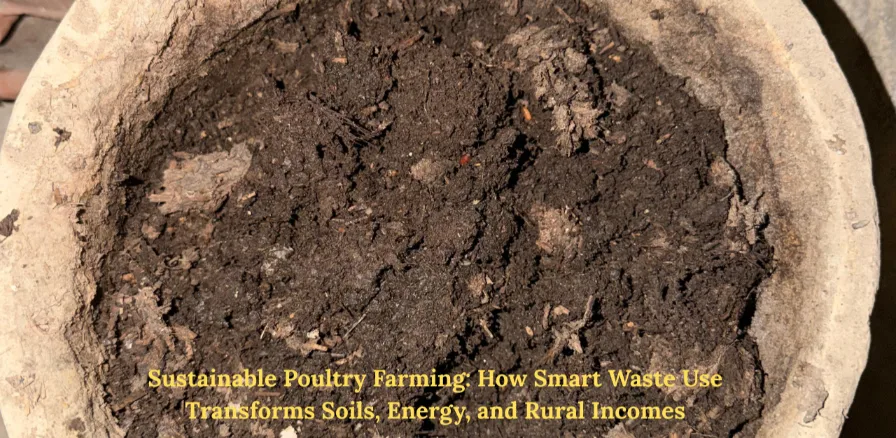
This video shows the poultry waste gathered in a pot and after few days the culture develop and these microrganism ready to part in the fermentation process
2- Statistics of poultry production
Global poultry production has been growing steadily for years, with chicken meat output reaching over 95 million tons in 2018 and forecast to exceed 98 million tons in subsequent years. Major producers include the United States, Brazil, China, and the European Union, where demand for affordable meat and exports have driven expansion of industrial poultry systems.
In the EU alone, exports of poultry products exceeded 1.8 million tons (carcass equivalent) in 2018, showing how integrated and large the poultry sector has become. This rapid growth translates directly into increasing volumes of manure, processing sludge, feathers, and other co-products that must be managed to avoid environmental damage and to capture their energy potential.
For countries with fast-growing poultry sectors, such as Poland and many developing economies, poultry waste generation already represents a significant share of agricultural residues available for bioenergy. This creates both a challenge due to pollution risk and an opportunity to convert these residues into biogas and biofertilizers through fermentation (Cybulska et al., 2021).
3- Environmental impact of poultry waste
Uncontrolled disposal of poultry waste leads to rancidity, spoilage, and uncontrolled decomposition, which releases foul odors, pathogens, and greenhouse gases such as methane and nitrous oxide. Landfills and open heaps of poultry residues can contaminate soil and water through nutrient leaching, as well as create public health concerns around insects, rodents, and disease transmission.
High-protein wastes like slaughter sludge and droppings can generate significant amounts of ammonia and hydrogen sulfide under anaerobic conditions if not managed, which are toxic to both ecosystems and the microorganisms needed for stable biogas production. Excess nitrogen from these wastes may also disrupt fermentation and lead to process failure when not balanced with high-carbon co-substrates such as straw or plant residues.
When poultry waste is diverted into well-designed biogas systems, the environmental load is reduced because organic matter is stabilized and emissions are controlled. Digestate from these systems can then be returned to the land as a nutrient source, closing the loop and reducing dependence on synthetic fertilizers while lowering overall pollution.
4- Fermentation of poultry waste
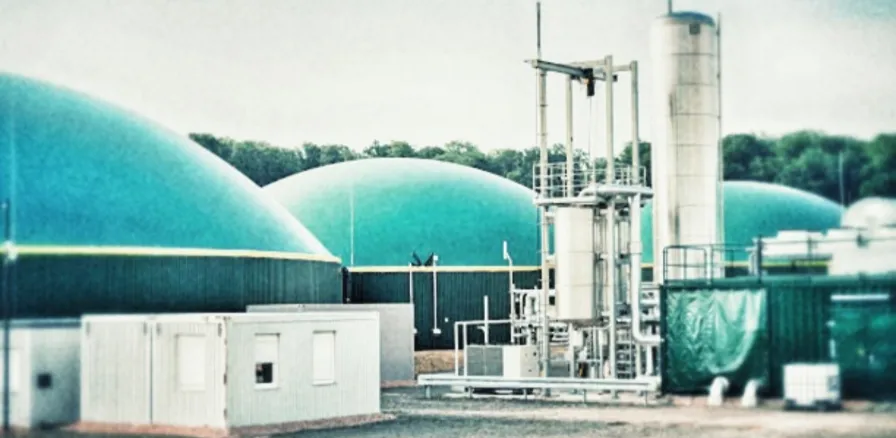
Methane fermentation (anaerobic digestion) of poultry waste uses bacteria that work without oxygen to convert organic matter into biogas (mainly methane and carbon dioxide) and a stabilized digestate. Poultry processing sludge and manures are attractive substrates because they are rich in proteins and fats, which give high biogas potential when the process is properly controlled.
In practice, poultry waste is often pre treated mechanically, chemically, or biologically before entering the digester to improve hydrolysis and reduce inhibitors. One effective approach is biological pre-treatment using specially selected bacterial strains that break down fats and proteins and reduce ammonia and hydrogen sulfide formation.
Laboratory scale studies on centrifuged sludge from poultry processing have shown that optimizing the substrate with bacterial inocula can significantly increase both total biogas production and methane yield compared to untreated sludge. In the cited work, combinations of bacterial strains labeled AC and EG produced much higher methane yields than the control or mixed strain treatments.
4- Stages of fermentation
The methane fermentation of poultry waste follows four main biological stages, all operating in parallel in the digester.
- Hydrolysis: Complex compounds such as proteins, fats, and polysaccharides are broken down by enzymes and water into simpler soluble molecules like amino acids, sugars, and long-chain fatty acids. This step is often rate-limiting for solid poultry residues and can be accelerated by pre-treatment or bioaugmentation.
- Acidogenesis: Acid-forming bacteria convert these soluble products into volatile fatty acids (VFAs) such as acetic, propionic, and butyric acids, along with gases like hydrogen and carbon dioxide. These acids lower pH and must be balanced to avoid inhibiting later stages.
- Acetogenesis: Specialized bacteria transform higher VFAs and alcohols into mainly acetic acid, hydrogen, and carbon dioxide, which are the key substrates for methane-forming microorganisms. Stability here depends on keeping hydrogen levels low and maintaining favorable pH and nutrient conditions.
- Methanogenesis: Methanogenic archaea convert acetic acid, hydrogen, and carbon dioxide into methane, completing the biogas production cycle. These organisms are particularly sensitive to temperature, pH, ammonia, and toxic compounds, so stable operating conditions are critical.
Maintaining balance between these phases requires careful control of temperature, pH (typically around neutral), and carbon-to-nitrogen ratio, especially with nitrogen-rich poultry wastes. If ammonia levels become too high due to excess protein, methane production can drop sharply and the process may partially or fully collapse.
5- Economical advantages of the fermentation for local commodity
For local communities, fermenting poultry waste delivers several economic benefits by generating energy, fertilizer, and new service opportunities. Biogas produced from poultry residues can be used for cooking, heating water, or generating electricity, reducing household and farm energy bills and lowering reliance on purchased LPG or grid power.
Digestate from poultry waste fermentation is rich in nutrients such as nitrogen, phosphorus, and potassium, and can replace a portion of chemical fertilizers in nearby fields. Application of fermented products as fertilizers can increase crop yields by 7–15%, further boosting farm profitability (Zhang et al., 2023). This helps small farmers cut input costs, improve soil organic matter, and potentially increase yields all of which enhance local food security and income.
On the enterprise side, poultry processors that introduce biogas systems can reduce their waste management fees and potentially sell excess electricity or biomethane, creating a new revenue stream. Treating sludge with optimized bacterial inocula has been shown to significantly improve methane yield, which increases the overall energy output and improves the economic viability of biogas plants.
At the community level, decentralized digesters that codigest household poultry waste, kitchen waste, and other manures can support local jobs in operation, maintenance, and digestate marketing. Such bioenergy projects support circular economy goals, reduce environmental clean-up costs, and keep more value from the poultry supply chain within the local area instead of losing it through unmanaged waste disposal.
Citations
Cybulska, K., Kołosowska, I., Kramkowski, K., Karpińska, M., Roszkowicz-Ostrowska, K., & Kowalczyk, P. (2021). Improvement of biogas yield by pre-treating poultry waste with bacterial strains. Energies, 14(18), 5601. https://doi.org/10.3390/en14185601
Zhang, L., Ren, J., & Bai, W. (2023). A Review of Poultry Waste-to-Wealth: Technological Progress, Modeling and Simulation Studies, and Economic- Environmental and Social Sustainability. Sustainability. https://doi.org/10.3390/su15075620.
Also checkout
Turning Landfill Liabilities into Liquid Gold — The Promise of Biomethanol Production