Cellulosic Ethanol

AI Robotics Biofuel Production China Future

How China using Robots and AI in Biofuel Technologies

The Green Intelligence Revolution: Why China using Robots and AI in Biofuel Technologies

In the rapidly emerging landscape of global technology, a new frontier is revolutionizing at the intersection of biological science and digital intelligence. Presently China, the world’s largest industrial market and a major energy consumer, is making a huge, multi-billion dollar decisions on what it calls “future industries”. The main part to this strategy is a practical integration of Artificial Intelligence (AI) and robotics into the production of biofuels and broader biomanufacturing.

This isn’t just about environmental sustainability; it is a calculated move to secure technological self-reliance, revitalize a slowing economy, and claim leadership in the global race toward Artificial General Intelligence (AGI).

The Strategic Vision: Biotech as Core Infrastructure

China shift toward AI-driven biofuel technology is guided by high-level political manifestos, specifically the 14th and 15th Five-Year Plans. Beijing has officially categorized biomanufacturing which includes the production of advanced biofuels alongside quantum computing and 6G as the foundational pillars of its future economy.

Real-Time Example: The Convergence of AI and Bio-Industrial Production

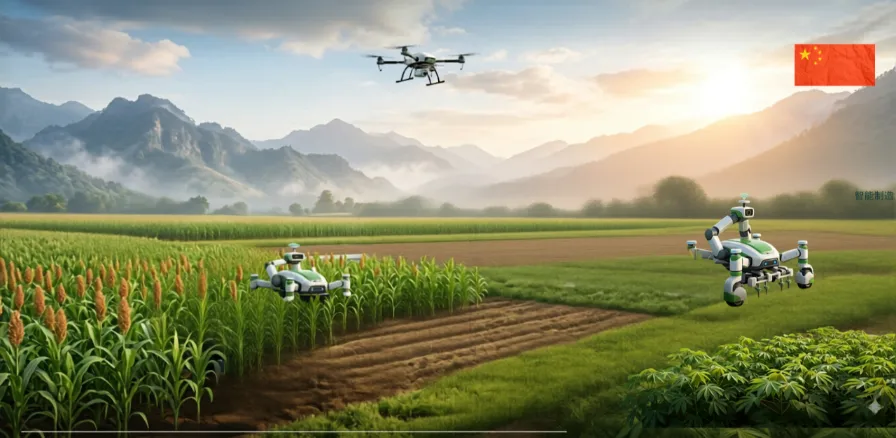
A prominent real-time example of this strategy in action is the deployment of humanoid “Embodied AI” robots in complex industrial settings, which Beijing intends to scale into the biomanufacturing sector.

In early 2025, at the Zeekr factory, a team of UBTech humanoid robots powered by multimodal reasoning modelssuccessfully carried out coordinated tasks such as parts assembly and quality checks without human intervention. While currently used in automotive manufacturing, this “Embodied AI” is explicitly targeted by the government to revolutionize biomanufacturing production lines.

The strategic intent is to use these robots to:

  1. Operate in Bio-Hazardous Environments: Biofuel production often involves high temperatures or hazardous chemical processes that are undesirable for human workers; AI-powered robots are being designed to substitute for human labor in these roles.
  2. Achieve 24-Hour Autonomous Operation: A newer model, the Walker S2, is the world’s first humanoid capable of autonomously changing its own batteries, allowing for uninterrupted operation in refineries or fermentation plants.
  3. Optimize Advanced Bio-Fermentation: China already operates the world’s first industrial-scale project converting steel industry tail gas into fuel ethanol via bio-fermentation. These types of facilities are the primary targets for the new “AI+” tools, which use predictive models to optimize the living microbial “factories” within the fermentation tanks, a task far more complex than traditional chemical refining.

From Raw Growth to Value-Density

For decades, China’s economic engine relied on raw scale and low-margin extraction. However, recent policy shifts indicate a transition toward “value-density”. This means moving away from simply producing large volumes of goods to developing resilient industrial capacities that can deliver complex bio-ingredients and high energy fuels at optimized costs and quality. By integrating AI and robots, China aims to transform research into advanced production that is both sustainable and highly profitable.

Why Biofuels? The Energy and Environmental Necessity

China’s interest in biofuels is driven by its massive domestic demand. The country possesses the world’s largest car fleet and the second-largest gasoline market. As transportation-related greenhouse gas emissions continue to rise, the government has set an ambitious “Action Plan for Carbon Dioxide Peaking before 2030”.

National Targets and Advanced Fuels

China is aggressively pursuing a national E10 fuel ethanol target (a 10% ethanol blend). While current production is largely grain-based, the industry is pivoting toward advanced biofuels, such as:

  • Cellulosic Bioethanol: Derived from non-food biomass like agricultural and forestry waste.
  • Sustainable Aviation Fuel (SAF): Seen as a critical strategic reserve for industry decarbonization, with a goal of consuming 50,000 tons during the 14th Five-Year Plan period.
  • Green Methanol: Emerging as a low-carbon solution for the maritime shipping industry.

To make these complex fuels commercially viable, China is turning to the precision and efficiency of AI and robotics.

The “AI+” Factor: Digital Intelligence in the Bio-Lab

In China, “AI+” is a national action plan. In the context of biofuels, AI is no longer just a digital tool; it is a core biotech toolchain used to solve the fundamental biological puzzles that have previously made advanced biofuels too expensive or difficult to produce at scale.

labs and Focused the Digital Intelligence with AI in china

Protein Design and Strain Optimization

The production of biofuels often relies on specific enzymes and microbial strains that can break down tough plant matter (lignocellulose). China is using AI-powered compute resources to support:

  • Protein Design: Creating synthetic enzymes that are more efficient at converting waste into fuel.
  • Strain Optimization: Using AI models to predict how microbial “factories” can be engineered for maximum yield.
  • Adaptive Control: Real-time AI monitoring of fermentation processes to ensure optimal production conditions, reducing waste and increasing batch-pass rates.

Speeding Up the “Bench-to-Plant” Pipeline

The integration of AI allows for systematic transformation, where grant-funded laboratory discovery is tied directly to manufacturing-ready processes. By using Quality Control (QC) automation and digital-bio economy infrastructure, China is shortening the time it takes to move a new biofuel technology from a laboratory bench to a full-scale industrial plant.

Embodied AI: The Rise of Bio-Robots

While many Western companies focus on digital AI applications like chatbots, Beijing is placing a fundamentally different bet on “Embodied AI”—AI-powered robotics that can autonomously operate in the physical world.

Automating the Biomanufacturing Floor

Biofuel production can involve hazardous materials, extreme temperatures, and repetitive, high-precision tasks. Embodied AI systems, such as the humanoid robots developed byUBTech and Unitree, are being designed to bridge the gap between digital reasoning and real-world action. These robots can:

  • Learn from Humans: Using multimodal sensors (vision, touch, and sound), these robots can learn tasks directly from human workers on the factory floor.
  • Operate Uninterrupted: Humanoid robots like the Walker S2 can autonomously change their own batteries, enabling 24-hour operation in biofuel refineries without human assistance.
  • Handle Hazardous Environments: Robots can substitute for human labor in roles that expose people to dangerous chemicals or environments common in chemical bio-processing.

Revolutionizing Human-Machine Collaboration

The China Academy of Information and Communications Technology (CAICT) envisions these robots eventually becoming the most flexible units on industrial production lines, capable of making adjustments in response to changing conditions on the fly.

The Economic and Geopolitical “Why”

China’s investment in these technologies is motivated by several pressing domestic and strategic challenges.

1. Revitalizing the “Real Economy”

President Xi Jinping has long emphasized the “real economy”—sectors that produce tangible goods as the foundation of national strength. By integrating AI into the production of physical goods like biofuels, China hopes to turbocharge productivity and revive economic growth following the property-market crisis.

2. Addressing an Aging Population

China faces a rapidly aging population and potential labor shortages. AI-powered robots are viewed as a way to maintain industrial output even as the human workforce shrinks, particularly in the demanding sectors of energy and manufacturing.

3. Achieving Global Leadership and AGI

Some Chinese thought leaders believe that Embodied AI is the true path to Artificial General Intelligence (AGI). By training AI to interact with and learn from the complex physical world of a biofuel plant or a manufacturing facility, they believe they can develop AI that replicates the full spectrum of human capabilities.

Furthermore, if China can leverage its massive manufacturing base to become the world’s leading supplier of these advanced bio-robotic systems, it could create a level of global dependence on Chinese technology that surpasses current reliance on 5G or solar panels.

Regional Powerhouses: Scaling the Innovation

To achieve these goals, Beijing is using a “pilot first, scale later” approach, encouraging wealthy provinces to specialize in different segments of the AI and bio-industrial supply chain.

  • Beijing: Focusing on high-performance AI chips tailored for embodied intelligence.
  • Shanghai: Concentrating on core sensor technologies like LiDAR, which is essential for robotic navigation.
  • Guangdong and Zhejiang: Leading the development of complete platforms, including multipurpose humanoid robots from companies like UBTech and Unitree.
  • Hubei: Establishing specialized laboratories for automotive embodied intelligence, directly linking AI to the future of transportation and fuel.
Bio AI and robotics Strategy For Natural Biomanufacturing in China

Obstacles to the Bio-Robotic Dream

Despite this immense momentum, China faces significant hurdles:

  • The Financing Gap: Many local governments have accumulated substantial debt, which may limit their ability to sustain long-term investments in these emerging industries.
  • Technology Plateaus: It remains uncertain whether robots can truly match the dexterity and adaptability of human workers in the near future.
  • Access to Advanced Hardware: China still trails the West in access to the most advanced AI chips for model training and high-precision sensors like torque and force sensors.
  • Data Access: Industry leaders are currently calling on the government to grant broader access to the rich datasets held by state-owned enterprises, which are critical for training these AI models.

Conclusion: A Global Shift in Power

China is not just building robots or making biofuels; it is building a new industrial ecosystem where the lines between biology, physical hardware, and digital intelligence are blurred. By committing substantial political will and financial resources to this “long-term strategic bet,” Beijing aims to solve its domestic problems while simultaneously positioning itself as the dominant player in the next phase of the global economy.

As these technologies mature over the next five to ten years, the world may find itself increasingly reliant on Chinese Embodied AI to power everything from transportation and logistics to the very energy that moves them. The success of this gambit will not only determine the future of China’s economy but could fundamentally reshape the global balance of military and economic power.

How China using Robots and AI in Biofuel Technologies Read More »

A diverse team of five financial investors reviews holographic data charts in front of a large, glowing, first-of-a-kind (FoAK) advanced biofuel plant and integrated renewable energy complex with solar and wind power at sunset.

Financing Opportunities for First-of-a-Kind (FoAK) Advanced Biofuel Plants: What Investors Need to Know

Powering a Greener Future: Financing Opportunities for First-of-a-Kind (FoAK) Advanced Biofuel Plants

The global push for decarbonization has put advanced biofuels in the spotlight. Unlike first-generation biofuels derived from food crops, First-of-a-Kind (FoAK) advanced biofuel plants utilize non-food sources like agricultural residues, forestry waste, and even municipal solid waste. These fuels are “drop-in” replacements for fossil fuels, meaning they can be used in existing infrastructure and engines, making them a critical component in the transition to a low-carbon economy, especially for hard-to-abate sectors like aviation, shipping, and heavy-duty transport.

What are the possible FoAK Advance biofuels for Financial opportunities

Investing in First-of-a-Kind (FoAK) advanced biofuel plants presents a compelling financial opportunity due to the diversity of technologies and the high demand for sustainable fuels. A significant number of these projects are focused on a variety of feedstocks, going beyond traditional agricultural residues and forestry waste. Key FoAK advanced biofuel plants are emerging that utilize innovative sources like waste from dairy products, which can be converted into bioethanol or bio-oil using fermentation or thermochemical processes. Fast-growing, non-food crops such as genetically optimized poplar trees are another promising feedstock, as their high cellulose and low lignin content make them ideal for conversion into cellulosic ethanol. Other sources include the biodegradable fraction of municipal and industrial waste, which can be processed through technologies like gasification or fast pyrolysis to produce liquid fuels, and even animal fats and used cooking oils, which are hydrotreated to create renewable diesel and sustainable aviation fuel (SAF). These diverse and often localized feedstocks provide investors with a wide range of opportunities to tap into a rapidly growing market while simultaneously addressing waste management and resource efficiency.

Regional and Economical Viability

The regional and economic viability of First-of-a-Kind (FoAK) advanced biofuel plants is highly dependent on the local availability of diverse and low-cost feedstocks. Economically, these projects are most attractive when they can co-locate with a source of waste or a dedicated, fast-growing energy crop. For instance, plants utilizing dairy waste are most viable in regions with a high concentration of dairy farms, as this minimizes transportation costs and provides a reliable, year-round feedstock stream that also offers a solution to an existing waste management problem. Similarly, facilities converting poplar trees or other dedicated energy crops are particularly suited to regions with available marginal land and favorable growing conditions. The economic model is further enhanced by policies that incentivize waste-to-energy projects and by the valorization of co-products, such as bio-fertilizer or renewable electricity generated from the plant’s byproducts, which can be sold back to the grid or used to power the facility, thereby increasing the overall profitability and regional economic benefits.

1- Cellulosic Ethanol

Technique used in manufacturing:

The primary manufacturing techniques are biochemical and thermochemical conversion.

  • Biochemical Process: This involves a pretreatment phase to break down the lignocellulosic material. This is followed by hydrolysis, which uses enzymes or dilute acid to break down cellulose into simple sugars. These sugars are then fermented by microbes into ethanol.
  • Thermochemical Process: This method uses heat and chemicals to convert biomass into syngas, a mixture of hydrogen and carbon monoxide. This syngas is then catalytically converted into ethanol and other liquid products.

Feedstock:

Cellulosic ethanol is produced from lignocellulosic biomass, which is non-food plant material. This includes agricultural residues (like corn stover and wheat straw), herbaceous biomass (like switchgrass), woody biomass (like poplar and pine trees), and municipal solid waste.

Funding Opportunities:

Global investment in cellulosic ethanol has declined in recent years, with a 35% drop in new biofuels power capacity investment in 2015 compared to 2014, reaching $3.1 billion. This decline is largely due to high production costs and the financial instability of pioneering companies, despite successful pilot and demonstration plants in the US, EU, and elsewhere.  Funding is often directed toward projects that demonstrate cost-effective, scalable technologies or offer new insights into commercial viability (Sharma et al., 2022). Cellulosic ethanol remains a promising but under-commercialized biofuel, with future funding opportunities closely tied to technological breakthroughs, integrated biorefinery models, and supportive policy frameworks. The next wave of investment is expected to focus on overcoming persistent cost and scalability barriers while maximizing the value of lignocellulosic biomass.

Regional viability:

This biofuel is most viable in regions with abundant agricultural and forestry resources. The U.S. Midwest, with its vast corn production, is a prime location for utilizing corn stover. The Pacific Northwest and Southeast, with their large forestry industries, are ideal for using woody biomass.

ROI (Return on Investment):

The ROI for cellulosic ethanol plants can be challenging due to high initial capital costs, but it is projected to improve as technology advances and economies of scale are achieved. Recent techno-economic analyses show that cellulosic ethanol production costs typically range from $0.81 to $1.44 per liter (about $3.07–$5.45 per gallon), depending on the process and feedstock used. A meta-analysis of studies found the minimum fuel selling price (MFSP) averages $2.65/gallon, with a wide range from $0.90 to $6.00/gallon, reflecting significant variability in technology, scale, and assumptions. At a selling price of $1.50/L, some models achieve a positive net present value (NPV), but profitability is highly sensitive to process yields and capital costs (Olughu et al., 2023).

2- Biodiesel from Algae

Technique used in manufacturing:

The process involves three main stages:

  1. Cultivation: Microalgae are grown in either open ponds or closed photobioreactors, which provide the necessary sunlight, water, and carbon dioxide.
  2. Harvesting and Oil Extraction: The algae biomass is harvested from the water, and the natural oils (lipids) are extracted. Common methods include oil presses or solvent extraction.
  3. Transesterification: The extracted algal oil is reacted with an alcohol (like methanol) and a catalyst to produce biodiesel.

Feedstock:

Microalgae and macroalgae. A key advantage is that algae can be grown on non-arable land and in a variety of water sources, including wastewater and saline water, which does not compete with food crops.

Funding Opportunities:

Funding opportunities are emerging across several dimensions to address these hurdles. Public funding plays a critical role, with national and regional programs in the US, EU, China, and Brazil supporting research, pilot projects, and demonstration plants, while policies such as renewable fuel standards, tax credits, and capital cost grants enhance economic feasibility and attract private investors. Research and innovation grants prioritize solutions for key bottlenecks, including improving algal strain productivity, lowering cultivation and harvesting costs, and advancing efficient lipid extraction and conversion methods, with additional emphasis on integrating algae cultivation with wastewater treatment and CO₂ capture to reduce costs and deliver environmental benefits. Furthermore, funding is increasingly directed toward biorefinery models that couple biodiesel production with high-value co-products such as biofertilizers, bioplastics, and nutraceuticals, making projects more attractive to both public and private stakeholders by enhancing profitability and sustainability .

Regional viability:

Algae-based biofuel production is most viable in regions with a high number of daylight hours per year, such as tropical or subtropical climates. Access to low-cost water sources (including wastewater) and abundant carbon dioxide (e.g., from industrial emissions) is also crucial for commercial viability.

ROI (Return on Investment):

 Updated techno-economic analyses estimate current algal biodiesel production costs at $0.42–$0.97 per liter ($1.59–$3.67 per gallon), which is still higher than fossil diesel but shows improvement over earlier estimates.

ROI Examples: A recent techno-economic study of a macroalgae-based biodiesel plant reported a return on investment (ROI) of 25.39% and an internal rate of return (IRR) of 31.13%, with a payback period of 3.94 years—though these figures are highly dependent on scale, technology, and local conditions (Ravichandran et al., 2023).

3- Sustainable Aviation Fuel (SAF) from Woody Biomass

Technique used in manufacturing:

One prominent technique is catalytic fast pyrolysis (CFP) followed by hydrotreating. In this process, woody biomass is heated rapidly in the absence of oxygen to produce bio-oil. This stabilized bio-oil is then hydrotreated to remove impurities and upgraded into a drop-in ready sustainable aviation fuel.

Feedstock:

Woody biomass, including forest residues (like treetops, branches, and sawdust), as well as dedicated woody energy crops.

Funding Opportunities:

The current funding landscape is shaped by federal, state, and local programs, with the U.S. Inflation Reduction Act (2022) introducing new federal tax credits that provide a foundational layer of support for SAF producers. However, state-level incentives remain necessary to achieve cost competitiveness; for instance, pilot-scale gasification Fischer-Tropsch (GFT) SAF production in Virginia would require approximately $3.61 per gallon in state incentives, while pyrolysis-based SAF would need around $0.75 per gallon. A mix of funding mechanisms—such as tax credits, loan forgiveness, and direct grants plays a critical role in shaping project economics and ensuring benefits for stakeholders, from feedstock suppliers to conversion facilities. Strategic funding priorities include advancing technology development to improve conversion efficiency, scale up production, and reduce costs across woody biomass-to-SAF pathways, alongside investments in supply chain logistics, facility siting, and blending infrastructure to enable regional deployment. At the same time, policymakers face the challenge of balancing economic feasibility with environmental benefits, as lower-cost pathways do not always deliver the highest greenhouse gas reductions, underscoring the need for carefully designed incentives that maximize both sustainability and market viability (Davis et al., 2024).

Regional viability:

Production of woody biomass SAF is most viable in regions with large, accessible, and sustainably managed forests. This includes areas like the Pacific Northwest, the Southeastern U.S., and parts of Canada and Northern Europe.

ROI (Return on Investment):

Recent techno-economic models estimate SAF from woody biomass costs between $1.92–$2.25 per liter ($7.27–$8.52 per gallon) using the Ethanol-to-Jet (ETJ) pathway, depending on production scale and demand . Fischer-Tropsch (FT) pathways show production costs of $2.31–$2.81 per gallon gasoline equivalent . Integration with existing bioethanol plants or use of economic incentives can reduce costs to as low as $0.40–$0.70 per liter ($1.51–$2.65 per gallon) (Guimarães et al., 2023) Hong et al. (2025).

Cost Drivers: Capital investment accounts for about 77% of total unit cost, with operating costs at 22% . Feedstock price and renewable fuel incentives are the most sensitive variables affecting ROI .

ROI Potential: Standalone woody biomass SAF projects struggle to achieve positive ROI at current market prices without policy support. However, integration with mature biofuel routes and carbon credit incentives can make projects profitable, with some models showing high probabilities (>96%) of profitability at current SAF prices in favorable policy environments .

4- Biogas from Dairy Waste

Technique used in manufacturing:

Anaerobic Digestion is the primary process. This involves placing dairy waste (manure, wastewater, whey) into a sealed, oxygen-free tank called a digester. Microbes naturally break down the organic material, producing a biogas rich in methane, which can be captured and used as fuel.

Feedstock:

Dairy waste, including manure, wastewater, and dairy processing by-products like whey.

Funding Opportunities:

Many countries and regions provide direct subsidies, grants, and cost-share programs to support the construction and operation of anaerobic digesters on dairy farms, helping reduce methane emissions and promote renewable energy. In California, governmental incentive programs partially fund eligible dairy digester projects, while in Poland and other EU countries, subsidies often cover 40–60% of the investment cost for biogas plants, a level of support necessary to ensure satisfactory economic efficiency. In addition to grants and subsidies, soft loans and low-interest financing from government and private sources are available, further encouraging rural and community-level biogas development and improving the overall financial viability of such projects Kusz et al. (2024).

Regional viability:

This biofuel is highly viable in regions with a dense population of dairy farms, such as the U.S. Midwest, California’s Central Valley, and parts of Europe.

ROI (Return on Investment):

Most studies indicate payback periods for anaerobic digestion projects ranging from 4 to 13 years, depending on plant size, technology, co-digestion practices, and the availability of subsidies. For instance, a 400-cow farm in Iran achieved payback in under 4 years, generating annual net incomes of $6,400–$38,000 depending on the scenario, while a 500 kW biogas plant in Poland using dairy manure and straw reported a payback of less than 6 years and €332,000/year more profit compared to conventional dairy farming. In contrast, small-scale plants in Ireland demonstrated longer payback periods of 8–13 years, though capital grants improved their economic feasibility. Internal Rates of Return (IRR) generally range between 9% and 15% for well-designed, subsidized, or co-digestion projects, as seen in a Malaysian on-farm system reporting a 13% IRR with a 7-year payback (Bywater & Kusch-Brandt, 2022). Net Present Value (NPV) also tends to be positive for medium-to-large farms or when co-digestion strategies, such as integrating food waste or straw, are adopted further enhanced by tipping fees that significantly improve overall returns

5- Ethanol from Poplar Trees

Technique used in manufacturing:

The process is similar to cellulosic ethanol from other woody biomass. It involves a pretreatment phase (often with steam or chemicals) to break down the lignin and hemicellulose. This is followed by enzymatic hydrolysis to convert the cellulose into fermentable sugars, which are then fermented into ethanol.

Feedstock:

Hybrid poplar trees, which are cultivated as a fast-growing, short-rotation energy crop.

Funding Opportunities:

Government and research grants for poplar-based ethanol are available through national and regional programs targeting advanced biofuels, such as the USDA NIFA in the US and the EU Renewable Energy Directive II (REDII) in Europe, which support research, demonstration, and pilot projects, particularly those utilizing marginal lands or integrating ecosystem services. Economic analyses and stakeholder assessments emphasize the importance of direct subsidies, capital grants, and policy incentives to ensure competitiveness with fossil fuels and other biomass sources, since purpose-grown poplar often faces higher feedstock costs that make it financially unfeasible without such support. In addition, poplar plantations can benefit from ecosystem service payments through programs that reward land restoration, flood mitigation, or wastewater management, creating diversified revenue streams for growers and enhancing the overall economic viability of poplar-based ethanol production.

Regional viability:

Poplar-based biofuel is most viable in temperate regions with suitable land for short-rotation woody crop plantations, such as the Pacific Northwest and parts of the Midwest in the U.S., as well as certain regions of Canada and Europe.

ROI (Return on Investment):

Production Costs: Recent techno-economic analyses estimate the minimum ethanol selling price (MESP) for poplar ethanol at $1,095/tonne, or roughly $2.65/gallon—comparable to the average for cellulosic ethanol but above current market prices for gasoline and first-generation biofuels .

Profitability: ROI is highly sensitive to feedstock price, plant scale, and technology. Large-scale plants with optimized processes and policy support can achieve positive net present value (NPV) and internal rates of return (IRR), but unsubsidized projects often struggle to be profitable (Pei et al., 2024).

Key Metrics: Payback periods and IRR are rarely reported directly, but positive NPV and profitability are possible in integrated biorefinery models or with strong policy incentives.


ROI, Payback Period, and Funding Opportunities for FoAK Advanced Biofuels

Conclusion

The advanced biofuels and techniques discussed in this report represent a critical step toward a more sustainable energy future. The examples of cellulosic ethanol, algae biodiesel, sustainable aviation fuel from woody biomass, and biofuels from dairy waste and poplar trees highlight the diversity of feedstocks and conversion technologies available. It’s important to note that these are just a few examples; many other promising techniques and feedstocks are being developed and commercialized around the world. As technology continues to improve and policy frameworks evolve, advanced biofuels will play an increasingly vital role in decarbonizing the transportation and industrial sectors.

Citations

Sharma, J., Kumar, V., Prasad, R., & Gaur, N. (2022). Engineering of Saccharomyces cerevisiae as a consolidated bioprocessing host to produce cellulosic ethanol: Recent advancements and current challenges.. Biotechnology advances, 107925 . https://doi.org/10.1016/j.biotechadv.2022.107925.

Olughu, O., Tabil, L., Dumonceaux, T., Mupondwa, E., Cree, D., & Li, X. (2023). Technoeconomic analysis of a fungal pretreatment-based cellulosic ethanol production. Results in Engineeringhttps://doi.org/10.1016/j.rineng.2023.101259.

Ravichandran, P., Rajendran, N., Al-Ghanim, K., Govindarajan, M., & Gurunathan, B. (2023). Investigations on evaluation of marine macroalgae Dictyota bartayresiana oil for industrial scale production of biodiesel through technoeconomic analysis.. Bioresource technology, 128769 . https://doi.org/10.1016/j.biortech.2023.128769.

Davis, C., Sreekumar, S., Altman, R., Clarens, A., Lambert, J., & Colosi, L. (2024). Geospatially Explicit Technoeconomic Assessment of Sustainable Aviation Fuel Production: A Regional Case Study in Virginia. Fuel Communicationshttps://doi.org/10.1016/j.jfueco.2024.100114.

Guimarães, H., Bressanin, J., Motta, I., Chagas, M., Klein, B., Bonomi, A., Filho, M., & Watanabe, M. (2023). Decentralization of sustainable aviation fuel production in Brazil through Biomass-to-Liquids routes: A techno-economic and environmental evaluation. Energy Conversion and Managementhttps://doi.org/10.1016/j.enconman.2022.116547.

Hong, J., Chen, B., Wang, T., & Zhao, X. (2025). A promising technical route for converting lignocellulose to bio-jet fuels based on bioconversion of biomass and coupling of aqueous ethanol: A techno-economic assessment. Fuelhttps://doi.org/10.1016/j.fuel.2024.133670.

Kusz, D., Kusz, B., Wicki, L., Nowakowski, T., Kata, R., Brejta, W., Kasprzyk, A., & Barć, M. (2024). The Economic Efficiencies of Investment in Biogas Plants—A Case Study of a Biogas Plant Using Waste from a Dairy Farm in Poland. Energieshttps://doi.org/10.3390/en17153760.

Bywater, A., & Kusch-Brandt, S. (2022). Exploring Farm Anaerobic Digester Economic Viability in a Time of Policy Change in the UK. Processeshttps://doi.org/10.3390/pr10020212.

Pei, X., Fan, M., Zhang, H., & Xie, J. (2024). Assessment for industrial production of poplar ethanol after analysis of influencing factors and predicted yield. Cellulosehttps://doi.org/10.1007/s10570-024-06236-6

Exploring Regional Biomass Supply Hubs: Business Potential and Funding Mechanisms

Financing Opportunities for First-of-a-Kind (FoAK) Advanced Biofuel Plants: What Investors Need to Know Read More »