environmental impact

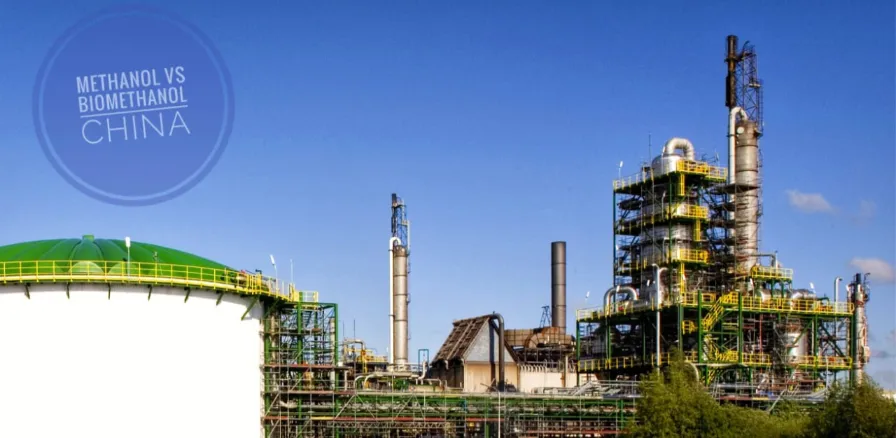
Industrial plant in China highlighting the comparison between methanol and biomethanol production.

Comparing Biomethanol and Coal-Based Methanol for Cleaner Energy in China

Fuelling China Future: The Green Promise of Biomethanol vs. the Legacy of Coal-Based Methanol

This blog offers a deep dive into the environmental and chemical distinctions between coal-based and biomethanol in China, emphasizing the urgent shift towards greener energy solutions.

Advantage: Reading this blog equips you with crucial insights into sustainable energy trends, highlighting China’s pivotal role in the global transition to cleaner fuels and the innovations driving this change.

China, the world’s largest consumer and producer of methanol, faces a crucial moment in its energy transition. The country has a huge demand for this versatile chemical, which is used in fuels, plastics, and pharmaceuticals. It struggles to balance economic growth with environmental sustainability. For decades, coal-based methanol has supported this industry by using China’s plentiful coal reserves. However, the urgent need for cleaner energy options has drawn attention to biomethanol as a promising, eco-friendly alternative. This blog explores a detailed comparison of these two methanol production methods, looking at their chemical processes, emissions, environmental effects, and the roles of key industry players. It ultimately underscores the urgent need to move toward greener alternatives.

The Methanol Mandate: A Chemical Comparison
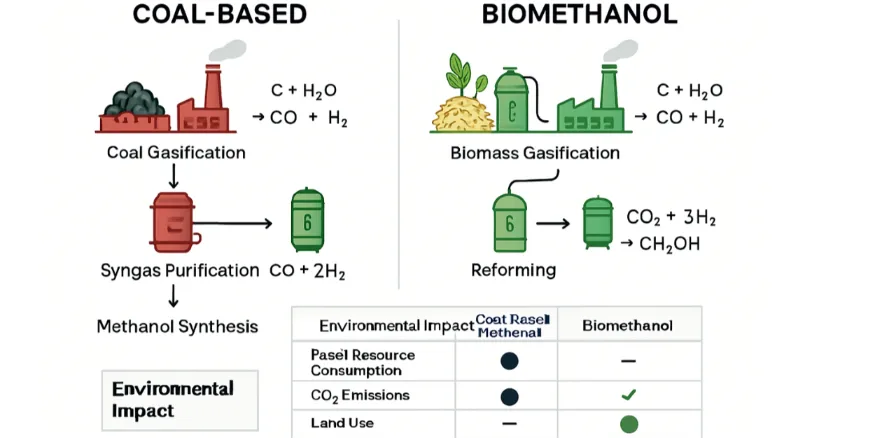
Coal Based Methanol Vs Biomethanol

The image provides an overview of the production pathways and environmental impacts of coal based methanol and biomethanol. It visually contrasts the traditional, carbon-heavy coal gasification route, which produces significant CO₂ emissions and air pollutants from non renewable coal, with the more sustainable biomethanol processes that use renewable biomass or captured CO₂ along with green hydrogen. The diagram shows each step, from feedstock preparation to methanol synthesis, highlighting how biomethanol results in much lower carbon emissions, reduced air pollutants, and better sustainability. A side by side comparison table further underscores the clear differences in carbon intensity, feedstock sources, air pollution, water use, and overall energy balance. This makes the environmental benefits of moving towards biomethanol and especially green methanol using captured CO₂ and renewable energy—very apparent.

Emissions Data:

  • Greenhouse Gas (GHG) Emissions: Coal-to-methanol (CTM) processes are among the most GHG-intensive pathways for methanol production nowadays. Life cycle assessments (LCA) consistently show that CTM has a very high carbon footprint, often exceeding that of traditional fossil fuels like gasoline and diesel. Studies indicate that CTM processes contribute significantly to global warming potential (GWP), with reported figures in the range of hundreds of kg CO2 equivalent per tonne of methanol, often up to three times higher than natural gas-based methanol.
  • Air Pollutants: Beyond CO2, coal gasification releases substantial amounts of other harmful air pollutants, including sulfur dioxide (SO2), nitrogen oxides (NO2), particulate matter (PM), and heavy metals. These contribute to acidification, photochemical oxidation, and respiratory diseases.
  • Water Consumption: CTM plants are also highly water-intensive, consuming vast quantities of water for cooling, gasification, and other processes, putting strain on water resources in often arid regions of China where these plants are typically located.
  • Solid Waste: Coal ash and other solid wastes are byproducts, posing disposal challenges and potential contamination risks.

Biomethanol: A Greener Horizon

Biomethanol offers a significantly lower environmental impact due to its renewable feedstock and potential for carbon neutrality or even negativity.

Emissions Data:

  • Greenhouse Gas (GHG) Emissions: The carbon footprint of biomethanol is substantially lower. When produced from sustainable biomass or captured CO2 with green hydrogen, the net CO2 emissions can be reduced by 70-95% compared to fossil-based methanol. The “climate neutrality” of end use emissions is often highlighted because the carbon released during combustion was originally absorbed by the biomass during its growth. In cases like methanol from manure-based biomethane, it can even have a negative carbon footprint by avoiding methane emissions that would have occurred anyway.
  • Air Pollutants: While biomass gasification still produces some pollutants, the overall emissions of SOx, NOx, and PM are significantly lower compared to coal, especially with advanced purification technologies. Biomethanol as a fuel drastically cuts NOx (up to 80%), SOx (up to 99%), and particulate matter emissions at the point of use.
  • Water Consumption: While still requiring water, the overall life cycle water consumption for biomethanol can be lower, particularly for certain feedstocks and processes, and can often be managed within a circular economy framework.
  • Waste Valorization: Utilizing agricultural and municipal waste as feedstock offers the dual benefit of producing energy while mitigating waste accumulation and associated environmental problems like landfill methane emissions.

Environmental Impact Data Comparison (Illustrative, specific values vary by technology and feedstock):

Impact CategoryCoal-Based Methanol (per tonne CH3OH)Biomethanol (per tonne CH3OH)
Global Warming Potential (kgCO2eq)500-1000+ (High)<100 (Potentially negative)
Acidification Potential (kgSO2eq)Moderate to HighLow
Eutrophication Potential ModerateLow
Human Toxicity PotentialHighLow to Moderate
Water ConsumptionHighModerate
Solid Waste GenerationHighLow (waste valorization)

Note: These are illustrative ranges. Actual figures depend heavily on specific plant configurations, energy sources for auxiliary processes, and feedstock origins.

The landscape of methanol production in China features both entrenched coal-to-methanol giants and emerging players in the biomethanol space.

Companies Utilizing Coal-Based Methanol in China:

China’s coal-based chemical industry is vast, with many large state owned enterprises and private companies involved. These companies often operate integrated facilities that produce a range of chemicals from coal, with methanol being a key intermediate.

  • Yankuang Energy Group Co Ltd. (Yulin Methanol power station): One of the prominent players, their Yulin Methanol power station is a significant coal to methanol facility in Shaanxi province. While they contribute to China’s energy security, their operations are rooted in coal.
    • URL: While a direct corporate URL for their methanol operations is not readily available, information can be found via their parent company: http://www.yankuanggroup.com/
  • Shenhua Group (now part of China Energy Investment Corporation): A massive state-owned energy company, Shenhua has invested heavily in coal to chemicals projects, including methanol, throughout China.
  • Datang Energy Chemical: Another large state-owned enterprise with significant investments in coal to chemicals, including methanol production, particularly in Inner Mongolia.
    • URL: Information often found through general news and industry reports, a direct specific URL for their methanol operations is not consistently available.
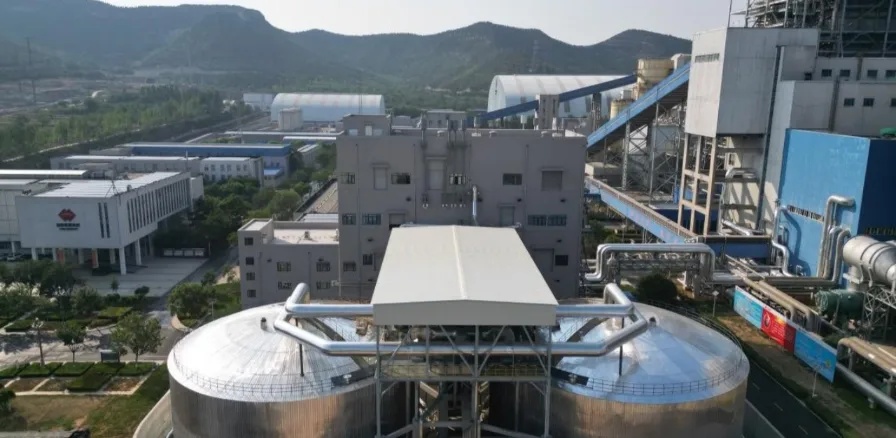
Chinese Companies Biomethanol

Companies Embracing Biomethanol (Green Methanol) in China:

The green methanol sector is nascent but growing rapidly, driven by environmental mandates and the increasing availability of sustainable feedstocks.

  • The Hong Kong and China Gas Company Limited (Towngas): Towngas is a notable pioneer in green methanol. Their methanol production plant in Ordos, Inner Mongolia, utilizes proprietary technology to convert biomass and municipal waste into green methanol, holding ISCC EU and ISCC PLUS certifications. They are actively involved in promoting green methanol as a marine fuel.
  • Hyundai Merchant Marine (HMM) & Shanghai International Port Group (SIPG) collaboration: While HMM is a South Korean shipping company, their collaboration with SIPG in Shanghai indicates a growing demand and supply chain for biomethanol in China. SIPG, as a major port operator, facilitates the bunkering of biomethanol. This signifies the adoption of biomethanol as a clean fuel in the maritime sector within China.
  • Shenghong Petrochemical: This company has initiated operations of large scale CO2 to methanol plants, demonstrating a commitment to carbon capture and utilization (CCU) for methanol production. While not strictly biomass, utilizing captured CO2 is a key pathway for “green” methanol.
    • URL: Specific information might be found within news releases or industry reports, but a direct corporate URL for this specific project is not readily available. Shenghong Petrochemical itself is a large integrated refining and chemical enterprise.

Mitigation Strategies: Paving the Way for a Cleaner Future

Addressing the environmental impact of methanol production, particularly from coal, is paramount for China’s sustainable development. Several mitigation strategies are being explored and implemented.

For Coal-Based Methanol (Transitioning towards lower impact):

  • Carbon Capture, Utilization, and Storage (CCUS): This technology aims to capture CO2 emissions from coal fired plants and either store them underground or utilize them in other industrial processes (e.g., for enhanced oil recovery or even in CO2to methanol synthesis). This can significantly reduce the carbon footprint, although it adds to the energy consumption and cost.
    • Relevant research and development is ongoing in China, with many universities and research institutes collaborating with industrial players.
    • Example: China National Petroleum Corporation (CNPC) and China Petrochemical Corporation (Sinopec) are actively involved in CCUS research and pilot projects.
  • Improved Energy Efficiency: Optimizing the energy utilization efficiency of CTM processes through advanced heat exchanger networks and process integration can reduce overall energy consumption and, consequently, emissions.
  • Integration with Renewable Energy: Powering ancillary processes in CTM plants with renewable electricity (solar, wind) can indirectly lower the carbon intensity of the final product.

For Biomethanol (Enhancing Sustainability and Scalability)

  • Sustainable Feedstock Sourcing: Ensuring that biomass feedstocks are sustainably harvested or sourced from waste streams to avoid land use change impacts and competition with food production. Certifications like ISCC (International Sustainability and Carbon Certification) play a crucial role.
  • Technological Advancement: Continued investment in research and development to improve the efficiency and cost effectiveness of biomass gasification and methanol synthesis technologies. This includes novel catalysts and reactor designs.
  • Policy Support and Incentives: Government policies, subsidies, and mandates are critical to accelerate the adoption and scale-up of biomethanol production, making it more competitive with fossil-based alternatives. China’s national renewable energy targets and carbon neutrality commitments provide a strong impetus.
  • Circular Economy Integration: Developing integrated systems where waste from one industry becomes a feedstock for biomethanol production, fostering a true circular economy.

Conclusion: A Pivotal Shift for China

The comparison between biomethanol and coal-based methanol for cleaner energy in China highlights a clear need for change. Coal-based methanol has long met China’s industrial demands, but its significant environmental impact including greenhouse gas emissions, air pollution, and high water use is not sustainable given today’s global climate challenges. Biomethanol, which has a much lower carbon footprint and can utilize waste, presents a vital path toward a cleaner and more sustainable energy future for China.

Transitioning to biomethanol will present challenges. These include the need for large-scale sustainable sourcing of biomass, scaling up technology, and ensuring economic competitiveness. However, increasing investments from companies like Towngas and growing partnerships in green methanol bunkering at ports like Shanghai indicate a promising shift. By focusing on mitigation strategies, investing in renewable technology, and creating supportive policies, China can transform its methanol industry from a major polluter into a leader in clean energy innovation. Moving toward a biomethanol-driven economy is not just an environmental necessity; it’s also a strategic chance for China to build a resilient and sustainable energy future.

Also Checkout

Investing in Biomethanol Stocks – Advanced Biofuels and Market Trends

Comparing Biomethanol and Coal-Based Methanol for Cleaner Energy in China Read More »
A Chinese biorefinery plant with a field of rice straw at sunset

China Rice Straw Biomethanol: Energy, Cost & Emissions”

China Rice Straw Biomethanol: Energy, Cost & Emissions

From Field Waste to Fuel: China Rice Straw Biomethanol Revolution with Rice Straw

China has a vast agricultural output and has long faced challenges with crop residue disposal. Rice straw is particularly noteworthy due to its large volume, often causing environmental problems like open burning that significantly pollutes the air. Increasingly, this agricultural byproduct is seen as a valuable resource for producing biomethanol, Rice straw-to-biomethanol conversion achieves energy efficiencies around 42.7% for methanol synthesis via gasification , with yields of 0.308 kg methanol per kg rice straw 1. Alternative bioenergy routes, such as biodiesel from rice straw, report even higher energy efficiencies (up to 56.1%). This blog explores China’s efforts in harnessing rice straw for biomethanol production, focusing on its energy efficiency, economic viability, and environmental impact.

The Biomethanol Promise: A Sustainable Alternative

Biomethanol is a flexible alcohol produced from various biomass sources, including agricultural residues like rice straw. The real cost of biomethanol production is estimated at 2,685 RMB/ton (with economic and environmental costs separated) for a 50,000-ton plant . This is currently higher than coal-based methanol due to high investment and operational costs. However, cost reductions are possible through technological improvements, renewable electricity integration, and policy incentives . For comparison, biodiesel from rice straw is reported at CNY 3.03/kg, with payback periods of 7–9 years depending on market prices. It creates a sustainable energy source and helps solve the environmental problems tied to agricultural waste disposal (Wang et al., 2024).

China Move into Rice Straw Biomethanol: A National Necessity

China is committed to cutting carbon emissions and improving energy security. This has led to considerable investments and research in renewable energy technologies. Acknowledging the potential of its agricultural sector, the Chinese government actively supports the conversion of agricultural waste into valuable products like biomethanol. Many pilot and commercial projects across the country demonstrate the feasibility and scalability of this initiative.

The Energy Balance: How Efficient is Rice Straw Biomethanol?

To assess the energy efficiency of rice straw biomethanol production, we need to look at the total energy input necessary for the entire process. This includes collecting the feedstock, pretreating it, and finally synthesizing and purifying the methanol.

Feedstock Collection and Transportation: After harvesting rice, the rice straw needs to be collected from the fields and transported to the biorefinery. The energy used in this stage depends on collection methods, transportation distances, and the density of the baled straw. Improving logistics and using efficient transport systems are essential to reduce energy use.

Pretreatment: Raw rice straw contains cellulose, hemicellulose, and lignin, which are complex structures. Pretreatment is crucial to breaking down these components, making the cellulose and hemicellulose easier to convert later. Many pretreatment methods exist, including physical (like steam explosion, milling), chemical (like dilute acid, alkaline), and biological (like enzymatic hydrolysis). Choosing the most efficient and cost-effective method is key.

Conversion: The pretreated rice straw is then processed into syngas (a mix of carbon monoxide, hydrogen, and carbon dioxide) or sugars, depending on the method used.

  • Gasification: In this thermochemical process, the pretreated biomass is heated at high temperatures in a controlled environment with limited oxygen or steam to create syngas. The syngas must be cleaned before entering a methanol synthesis reactor.
  • Hydrolysis and Fermentation: This method involves enzymatic hydrolysis of pretreated cellulose and hemicellulose into fermentable sugars. Microorganisms then convert these sugars into bio-alcohols, including methanol.

The efficiency of this conversion stage relies heavily on the chosen technology and the optimization of process settings.

Methanol Synthesis and Purification: If syngas is used, it is catalytically converted to methanol in a synthesis reactor. The resulting crude methanol must undergo distillation to achieve fuel-grade quality. Both synthesis and purification require energy.

Overall Energy Balance: Studies on rice straw-to-biomethanol pathways show varying energy outcomes depending on specific technologies and the efficiency of each stage. Improvements in pretreatment methods, better gasification or fermentation techniques, and optimized methanol synthesis catalysts will continue to enhance the overall energy efficiency. Ideally, the energy output as biomethanol should greatly exceed the total energy input needed for production.

The Cost Factor: Can Rice Straw Biomethanol Compete?

The economic feasibility of rice straw biomethanol is crucial for its broader acceptance. Various factors influence production costs:

Feedstock Cost: Rice straw is often viewed as waste with little or negative value because of disposal expenses. Building a reliable supply chain for large-scale biomethanol production will incur costs linked to collection, baling, storage, and transportation. These costs vary by location, farming practices, and rice crop density.

Pretreatment and Conversion Technology Costs: The investments and operational costs associated with the selected pretreatment and conversion technologies impact overall production costs significantly. More advanced technologies may have higher initial costs but can lower operational expenses through reduced energy use or improved yields.

Chemicals and Utilities: The production process requires several chemicals and utilities like water and electricity, affecting operating costs. Improving resource use and examining renewable energy sources for biorefinery operations can help cut these costs.

Scale of Production: Larger biomethanol plants usually benefit from economies of scale, resulting in lower unit production costs compared to smaller facilities. Government support and incentives for developing large biorefineries can enhance cost competitiveness.

By-product Valorization: Many processes for producing rice straw biomethanol create valuable by-products, such as lignin for energy or materials, and process leftovers that can be used as fertilizers. Using these by-products can provide additional income and improve the overall economic viability.

Comparison with Fossil Methanol: The competitiveness of rice straw biomethanol ultimately depends on its production cost against conventional methanol from natural gas. Changes in fossil fuel prices and carbon pricing can affect this comparison. As biomass conversion technologies advance and production scales up, biomethanol’s cost is expected to become more competitive.

Emissions Reduction: The Environmental Benefit of Rice Straw Biomethanol

One key reason to pursue rice straw biomethanol is its ability to significantly lower greenhouse gas emissions when compared to fossil fuels.

Avoiding Open Burning: Using rice straw for biomethanol provides a sustainable alternative to open burning, which releases large amounts of pollutants like particulate matter and carbon monoxide, worsening air quality and climate change.

Carbon Neutral Potential: Biomass is labeled a renewable resource because plants absorb carbon dioxide through photosynthesis, which is re-released during biomass conversion to energy or fuel. If the entire lifecycle of rice straw biomethanol production is managed sustainably, with minimal fossil fuel use, net carbon emissions can be far lower than those from fossil methanol.

Lifecycle Assessment: A thorough lifecycle assessment (LCA) is essential for evaluating the environmental impact of rice straw biomethanol. Lifecycle assessments show that rice straw biomethanol can reduce GHG emissions by 59–76% compared to fossil-based methanol, meeting or exceeding EU Renewable Energy Directive III standards . The largest emission reductions are achieved by using renewable electricity and optimizing upstream agricultural practices . Sensitivity analyses highlight the importance of reducing energy consumption in pre-processing steps (Wang et al., 2023).

Displacing Fossil Fuels: Switching from fossil methanol to biomethanol in different applications, like fuel blending and direct fuel use in specialized engines, can help cut overall greenhouse gas emissions in these sectors.

Soil Health Benefits: In some cases, removing excess rice straw from fields can improve soil health by preventing the buildup of decomposing material, which can create anaerobic conditions and release methane, a potent greenhouse gas. However, sustainable management of straw that considers nutrient recycling and soil carbon is essential.

Challenges and Opportunities for China Rice Straw Biomethanol Industry

Rice straw biomethanol in China faces several challenges. There is a need for a strong supply chain with efficient collection, storage, and transport systems. Further research and development are necessary to improve technology and increase production. Efforts must also focus on making it cost-competitive through innovations, economies of scale, and supportive government actions. A consistent policy and regulatory framework that includes subsidies and renewable fuel blending mandates is vital. It is equally important to ensure environmental sustainability by managing resources, waste, and emissions responsibly.

Despite these hurdles, rice straw biomethanol offers significant opportunities. It can reduce dependence on imported fossil fuels. It provides a sustainable solution for managing agricultural waste. It can also create new jobs and promote economic growth in rural areas. Additionally, it plays a crucial role in reducing greenhouse gas emissions, supporting China’s goals for climate change mitigation and carbon neutrality.

Conclusion: A Sustainable Pathway for China Rice Straw Biomethanol Energy Future

China’s innovative approach to using rice straw for biomethanol production marks a vital step toward a more sustainable energy future. By converting an agricultural waste product into a valuable renewable fuel, China is tackling environmental issues while promoting a circular economy in agriculture. Challenges related to energy efficiency, cost, and technology optimization still exist, but the benefits of rice straw biomethanol in terms of emissions reduction and energy security are considerable. Continued innovation, supportive government policies, and smart investments will be critical to realizing the full potential of this promising renewable fuel and fostering a greener, sustainable China.

CITATIONS

Reducing the lifecycle carbon emissions of rice straw-to-methanol for alternative marine fuel through self-generation and renewable electricity. Energy Conversion and Managementhttps://doi.org/10.1016/j.enconman.2024.119202.

Assessing the prospect of bio-methanol fuel in China from a life cycle perspective. Fuelhttps://doi.org/10.1016/j.fuel.2023.130255.

also read the latest about

Policy Recommendations for Scaling Biomethanol in China’s Marine Industry

Learn how targeted policies, incentives, and regulatory support can accelerate biomethanol adoption in China’s marine and shipping sectors.

China Rice Straw Biomethanol: Energy, Cost & Emissions” Read More »

Industrial refinery at dusk with bright lights, representing fossil fuel infrastructure compared to cleaner biomethanol alternatives.

Biomethanol Vs Fossil Fuel: Which Ones Win For The Planet

Biomethanol Vs Fossil Fuel

As the world grapples with a climate crisis and the urgent need for decarbonization, the energy sector is undergoing significant change. One of the key debates is the move from fossil fuels to renewable alternatives. Biomethanol, a renewable form of methanol made from biomass and waste, is becoming a popular choice as a sustainable fuel and chemical feedstock. But how does it compare to traditional fossil fuels? Which option is better for the planet, both environmentally and economically? This analysis looks at the science, benefits, challenges, and future potential of biomethanol versus fossil fuels.

What Are Fossil Fuels?

Fossil fuels coal, oil, and natural gas—are energy sources formed from ancient organic matter over millions of years. They have fueled industrial growth but are now seen as the main contributors to greenhouse gas emissions, air and water pollution, and various environmental and health issues.

Environmental Impact: Biomethanol vs Fossil Fuel

Greenhouse Gas Emissions
Fossil Fuels: Burning fossil fuels releases large amounts of CO₂, methane, and other greenhouse gases. In 2019, fossil fuels were responsible for 74% of U.S. greenhouse gas emissions, with about 25% from public lands. These emissions drive global warming, rising sea levels, and extreme weather.
Biomethanol: Biomethanol can achieve up to 90% reduction in greenhouse gas emissions compared to fossil methanol, and even more when compared to fossil fuels overall. The carbon released during burning was previously absorbed during biomass growth, making it nearly carbon-neutral. Some biomethanol processes, like those using manure or waste, can even lead to net-negative emissions.

Air and Water Pollution
Fossil Fuels: Extracting, refining, and burning fossil fuels emit harmful air pollutants (SO₂, NOₓ, particulates, mercury) and contribute to acid rain, smog, and water pollution from oil spills and fracking. These pollutants damage ecosystems, agriculture, and human health.
Biomethanol: Burning biomethanol produces many fewer air pollutants. It burns cleaner, emitting less SO₂, NOₓ, and particulates, which improves urban air quality and reduces respiratory issues.

Ocean Acidification and Plastic Pollution
Fossil Fuels: At least a quarter of CO₂ from fossil fuels is taken up by oceans, leading to increased acidity and threats to marine life. Fossil fuels are also the primary source of plastics, with over 99% of plastics made from them, resulting in significant plastic pollution and climate problems.
Biomethanol: As a renewable fuel, biomethanol does not contribute to ocean acidification or plastic pollution in the same way. Its production can even use waste streams, decreasing landfill and ocean-bound waste.

Land and Resource Use
Fossil Fuels: Extracting and processing fossil fuels can ruin landscapes, destroy habitats, and contaminate soil and water. Oil spills and mining activities have long-lasting ecological effects.
Biomethanol: Producing biomethanol uses waste and residues, encouraging a circular economy and lessening the need for new resource extraction. However, large-scale production requires careful feedstock management to prevent land use conflicts.

Energy Efficiency and Net Energy Gain
Fossil Fuels: Extracting and processing fossil fuels require a lot of energy, resulting in significant losses along the supply chain. Their net energy gain is decreasing as resources become more challenging to extract.
Biomethanol: Producing biomethanol can be very efficient, especially with waste feedstocks. It is easy to store and transport and can be used in existing infrastructure and engines, making it a practical alternative.

Economic and Social Impacts

Market Costs and Externalities
Fossil Fuels: Market prices for fossil fuels do not reflect their actual environmental and health costs—known as externalities. These include climate change, air and water pollution, and healthcare expenses from pollution-related illnesses. Extreme weather events, rising sea levels, and disaster recovery costs add hundreds of billions to the true cost of fossil fuels.
Biomethanol: While the initial production costs for biomethanol may be higher, its environmental and health advantages can lead to long-term economic savings. As policies increasingly account for carbon pricing and promote renewables, biomethanol is becoming more competitive.

Job Creation and Rural Development
Fossil Fuels: The fossil fuel industry relies heavily on capital and is becoming more automated, leading to job losses as mines and wells close.
Biomethanol: Biomethanol production boosts rural economies by creating jobs in biomass collection, processing, and plant management. It diversifies energy supply chains and reduces reliance on fluctuating fossil fuel markets.

Biomethanol in Transportation and Industry

Transportation
Fossil Fuels: Fuels derived from oil dominate road, air, and sea transport, making up nearly a quarter of global CO₂ emissions. Continuing to use these fuels conflicts with international climate goals.
Biomethanol: Biomethanol serves as a drop-in fuel for cars, trucks, ships, and aviation. It helps decarbonize sectors that are hard to electrify and can blend with gasoline or be used in dedicated engines.

Industry
Fossil Fuels: Fossil methanol and other petrochemicals are used in plastics, fertilizers, and many industrial goods, sustaining the fossil economy.
Biomethanol: Biomethanol serves as a sustainable feedstock for green chemicals and materials. It lowers the carbon footprint of manufacturing and aids the shift to a circular, low-carbon economy.

Health and Environmental Justice

Fossil Fuels: Communities near extraction sites, refineries, and power plants often experience higher rates of asthma, cancer, and other health issues. Fossil fuel pollution disproportionately harms low-income and marginalized communities.
Biomethanol: Cleaner burning and reduced pollution from biomethanol enhance public health and lower healthcare costs, promoting social fairness and environmental justice.

Limitations and Challenges

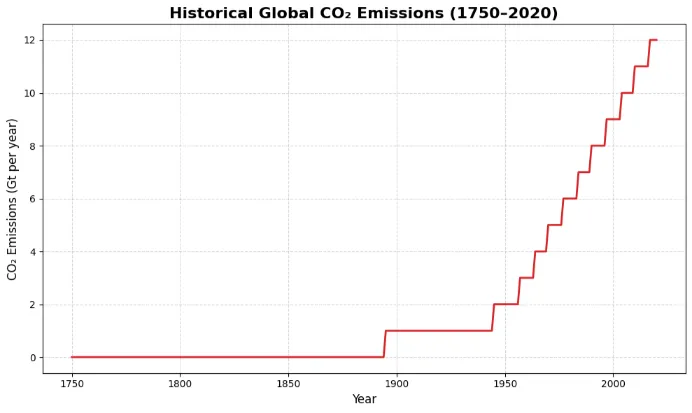
 Global CO2 Emissions rate(1750-2020)

Biomethanol

  • Feedstock Availability: Large-scale biomethanol production relies on organized and sustainable waste feedstock supply chains, which are still developing in many areas.
  • Production Technology: Efficient conversion methods are still under research and scaling.
  • Land Use: Unsustainable growth could compete with food production or lead to deforestation if not managed properly.

Fossil Fuels

  • Finite Resources: Fossil fuels are non-renewable and becoming harder and more costly to extract.
  • Climate Incompatibility: Ongoing fossil fuel use conflicts with global climate targets and will result in escalating environmental and economic damage.

Regulatory and Policy Landscape

Fossil Fuels: Governments are reducing fossil fuel subsidies, implementing carbon pricing, and introducing stricter emissions standards to speed up the shift to clean energy.
Biomethanol: Policies like the EU Renewable Energy Directive, Fit-for-55, and FuelEU Maritime are encouraging renewable fuels, including biomethanol, giving them an edge over fossil fuels.

The Verdict: Which One is Better for the Planet?

Biomethanol

  • Greatly reduces greenhouse gas emissions—up to 90% versus fossil fuels.
  • Burns cleaner with fewer air and water pollutants.
  • Supports a circular economy and waste reduction.
  • Fosters rural development and job creation.
  • Works with existing infrastructure and vehicles.
  • Becomes more cost-competitive as carbon pricing and regulations grow.

Fossil Fuels

  • Major source of greenhouse gases and pollution.
  • Limited, non-renewable, and subject to unstable markets.
  • Heavy environmental and health-related costs.
  • Incompatible with a sustainable, decarbonized future.

Conclusion:


For the planet, biomethanol clearly outperforms fossil fuels. It provides a sustainable, scalable, and economically viable route to decarbonization, cleaner air and water, and a healthier, more just society. While there are challenges in scaling up production and ensuring a sustainable feedstock supply, the environmental and social benefits of biomethanol far outweigh those of fossil fuels. As policies and markets evolve, biomethanol’s role in the clean energy transition will continue to grow.

Biomethanol Vs Fossil Fuel: Which Ones Win For The Planet Read More »