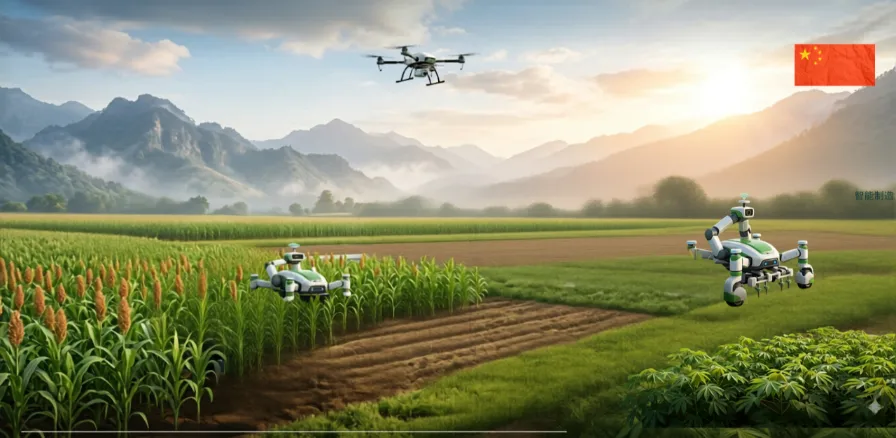
green methanol

AI Robotics Biofuel Production China Future

How China using Robots and AI in Biofuel Technologies

The Green Intelligence Revolution: Why China using Robots and AI in Biofuel Technologies

In the rapidly emerging landscape of global technology, a new frontier is revolutionizing at the intersection of biological science and digital intelligence. Presently China, the world’s largest industrial market and a major energy consumer, is making a huge, multi-billion dollar decisions on what it calls “future industries”. The main part to this strategy is a practical integration of Artificial Intelligence (AI) and robotics into the production of biofuels and broader biomanufacturing.

This isn’t just about environmental sustainability; it is a calculated move to secure technological self-reliance, revitalize a slowing economy, and claim leadership in the global race toward Artificial General Intelligence (AGI).

The Strategic Vision: Biotech as Core Infrastructure

China shift toward AI-driven biofuel technology is guided by high-level political manifestos, specifically the 14th and 15th Five-Year Plans. Beijing has officially categorized biomanufacturing which includes the production of advanced biofuels alongside quantum computing and 6G as the foundational pillars of its future economy.

Real-Time Example: The Convergence of AI and Bio-Industrial Production

A prominent real-time example of this strategy in action is the deployment of humanoid “Embodied AI” robots in complex industrial settings, which Beijing intends to scale into the biomanufacturing sector.

In early 2025, at the Zeekr factory, a team of UBTech humanoid robots powered by multimodal reasoning modelssuccessfully carried out coordinated tasks such as parts assembly and quality checks without human intervention. While currently used in automotive manufacturing, this “Embodied AI” is explicitly targeted by the government to revolutionize biomanufacturing production lines.

The strategic intent is to use these robots to:

  1. Operate in Bio-Hazardous Environments: Biofuel production often involves high temperatures or hazardous chemical processes that are undesirable for human workers; AI-powered robots are being designed to substitute for human labor in these roles.
  2. Achieve 24-Hour Autonomous Operation: A newer model, the Walker S2, is the world’s first humanoid capable of autonomously changing its own batteries, allowing for uninterrupted operation in refineries or fermentation plants.
  3. Optimize Advanced Bio-Fermentation: China already operates the world’s first industrial-scale project converting steel industry tail gas into fuel ethanol via bio-fermentation. These types of facilities are the primary targets for the new “AI+” tools, which use predictive models to optimize the living microbial “factories” within the fermentation tanks, a task far more complex than traditional chemical refining.

From Raw Growth to Value-Density

For decades, China’s economic engine relied on raw scale and low-margin extraction. However, recent policy shifts indicate a transition toward “value-density”. This means moving away from simply producing large volumes of goods to developing resilient industrial capacities that can deliver complex bio-ingredients and high energy fuels at optimized costs and quality. By integrating AI and robots, China aims to transform research into advanced production that is both sustainable and highly profitable.

Why Biofuels? The Energy and Environmental Necessity

China’s interest in biofuels is driven by its massive domestic demand. The country possesses the world’s largest car fleet and the second-largest gasoline market. As transportation-related greenhouse gas emissions continue to rise, the government has set an ambitious “Action Plan for Carbon Dioxide Peaking before 2030”.

National Targets and Advanced Fuels

China is aggressively pursuing a national E10 fuel ethanol target (a 10% ethanol blend). While current production is largely grain-based, the industry is pivoting toward advanced biofuels, such as:

  • Cellulosic Bioethanol: Derived from non-food biomass like agricultural and forestry waste.
  • Sustainable Aviation Fuel (SAF): Seen as a critical strategic reserve for industry decarbonization, with a goal of consuming 50,000 tons during the 14th Five-Year Plan period.
  • Green Methanol: Emerging as a low-carbon solution for the maritime shipping industry.

To make these complex fuels commercially viable, China is turning to the precision and efficiency of AI and robotics.

The “AI+” Factor: Digital Intelligence in the Bio-Lab

In China, “AI+” is a national action plan. In the context of biofuels, AI is no longer just a digital tool; it is a core biotech toolchain used to solve the fundamental biological puzzles that have previously made advanced biofuels too expensive or difficult to produce at scale.
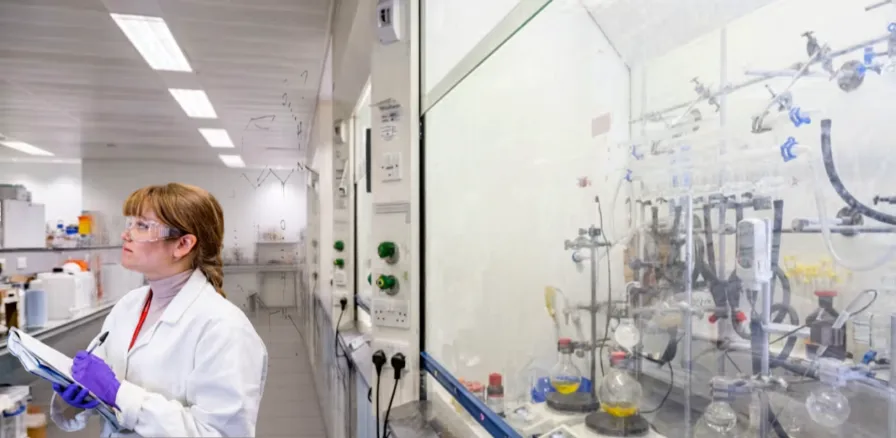
labs and Focused the Digital Intelligence with AI in china

Protein Design and Strain Optimization

The production of biofuels often relies on specific enzymes and microbial strains that can break down tough plant matter (lignocellulose). China is using AI-powered compute resources to support:

  • Protein Design: Creating synthetic enzymes that are more efficient at converting waste into fuel.
  • Strain Optimization: Using AI models to predict how microbial “factories” can be engineered for maximum yield.
  • Adaptive Control: Real-time AI monitoring of fermentation processes to ensure optimal production conditions, reducing waste and increasing batch-pass rates.

Speeding Up the “Bench-to-Plant” Pipeline

The integration of AI allows for systematic transformation, where grant-funded laboratory discovery is tied directly to manufacturing-ready processes. By using Quality Control (QC) automation and digital-bio economy infrastructure, China is shortening the time it takes to move a new biofuel technology from a laboratory bench to a full-scale industrial plant.

Embodied AI: The Rise of Bio-Robots

While many Western companies focus on digital AI applications like chatbots, Beijing is placing a fundamentally different bet on “Embodied AI”—AI-powered robotics that can autonomously operate in the physical world.

Automating the Biomanufacturing Floor

Biofuel production can involve hazardous materials, extreme temperatures, and repetitive, high-precision tasks. Embodied AI systems, such as the humanoid robots developed byUBTech and Unitree, are being designed to bridge the gap between digital reasoning and real-world action. These robots can:

  • Learn from Humans: Using multimodal sensors (vision, touch, and sound), these robots can learn tasks directly from human workers on the factory floor.
  • Operate Uninterrupted: Humanoid robots like the Walker S2 can autonomously change their own batteries, enabling 24-hour operation in biofuel refineries without human assistance.
  • Handle Hazardous Environments: Robots can substitute for human labor in roles that expose people to dangerous chemicals or environments common in chemical bio-processing.

Revolutionizing Human-Machine Collaboration

The China Academy of Information and Communications Technology (CAICT) envisions these robots eventually becoming the most flexible units on industrial production lines, capable of making adjustments in response to changing conditions on the fly.

The Economic and Geopolitical “Why”

China’s investment in these technologies is motivated by several pressing domestic and strategic challenges.

1. Revitalizing the “Real Economy”

President Xi Jinping has long emphasized the “real economy”—sectors that produce tangible goods as the foundation of national strength. By integrating AI into the production of physical goods like biofuels, China hopes to turbocharge productivity and revive economic growth following the property-market crisis.

2. Addressing an Aging Population

China faces a rapidly aging population and potential labor shortages. AI-powered robots are viewed as a way to maintain industrial output even as the human workforce shrinks, particularly in the demanding sectors of energy and manufacturing.

3. Achieving Global Leadership and AGI

Some Chinese thought leaders believe that Embodied AI is the true path to Artificial General Intelligence (AGI). By training AI to interact with and learn from the complex physical world of a biofuel plant or a manufacturing facility, they believe they can develop AI that replicates the full spectrum of human capabilities.

Furthermore, if China can leverage its massive manufacturing base to become the world’s leading supplier of these advanced bio-robotic systems, it could create a level of global dependence on Chinese technology that surpasses current reliance on 5G or solar panels.

Regional Powerhouses: Scaling the Innovation

To achieve these goals, Beijing is using a “pilot first, scale later” approach, encouraging wealthy provinces to specialize in different segments of the AI and bio-industrial supply chain.

  • Beijing: Focusing on high-performance AI chips tailored for embodied intelligence.
  • Shanghai: Concentrating on core sensor technologies like LiDAR, which is essential for robotic navigation.
  • Guangdong and Zhejiang: Leading the development of complete platforms, including multipurpose humanoid robots from companies like UBTech and Unitree.
  • Hubei: Establishing specialized laboratories for automotive embodied intelligence, directly linking AI to the future of transportation and fuel.
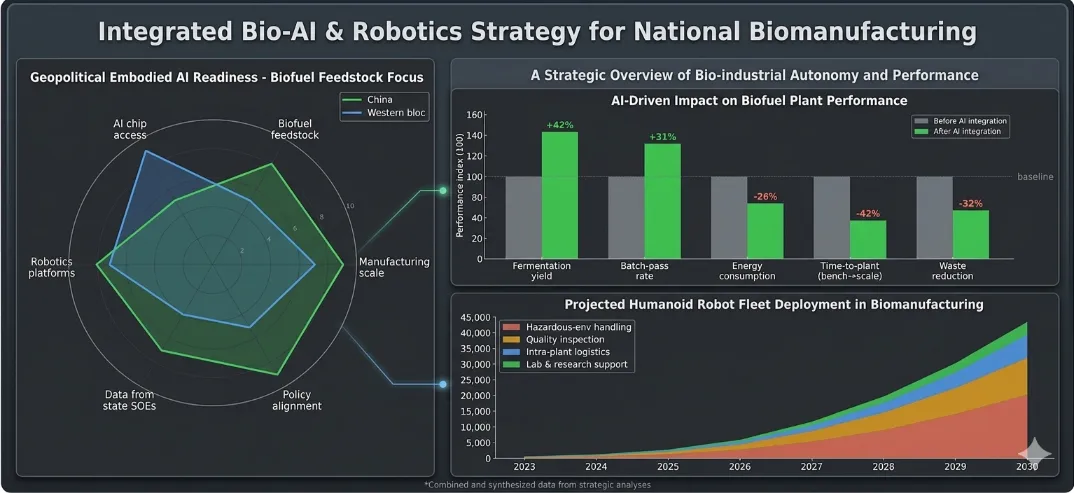
Bio AI and robotics Strategy For Natural Biomanufacturing in China

Obstacles to the Bio-Robotic Dream

Despite this immense momentum, China faces significant hurdles:

  • The Financing Gap: Many local governments have accumulated substantial debt, which may limit their ability to sustain long-term investments in these emerging industries.
  • Technology Plateaus: It remains uncertain whether robots can truly match the dexterity and adaptability of human workers in the near future.
  • Access to Advanced Hardware: China still trails the West in access to the most advanced AI chips for model training and high-precision sensors like torque and force sensors.
  • Data Access: Industry leaders are currently calling on the government to grant broader access to the rich datasets held by state-owned enterprises, which are critical for training these AI models.

Conclusion: A Global Shift in Power

China is not just building robots or making biofuels; it is building a new industrial ecosystem where the lines between biology, physical hardware, and digital intelligence are blurred. By committing substantial political will and financial resources to this “long-term strategic bet,” Beijing aims to solve its domestic problems while simultaneously positioning itself as the dominant player in the next phase of the global economy.

As these technologies mature over the next five to ten years, the world may find itself increasingly reliant on Chinese Embodied AI to power everything from transportation and logistics to the very energy that moves them. The success of this gambit will not only determine the future of China’s economy but could fundamentally reshape the global balance of military and economic power.

How China using Robots and AI in Biofuel Technologies Read More »
A split image featuring a teal background with a "United States of America" seal and the text "Advanced Biofuels: Biomethanol Potential to Decarbonize US Transport" on the left, next to a golden yellow field with visible tire tracks on the right.

Advanced Biofuels: Biomethanol Potential to Decarbonize US Transport

Advanced Biofuels: Biomethanol’s Potential to Decarbonize US Transport A Game Changer for Hard to Subsides Sectors

Introduction: The Urgent Need for Advanced Biofuels

The US transport sector, a bedrock of the national economy, is simultaneously one of the largest emitters of greenhouse gases. While electrification offers a viable path for light-duty vehicles, the “hard-to-abate” sectors—namely, marine shipping, aviation, and heavy-duty trucking—present a formidable challenge. These industries require high energy density liquid fuels that can operate within existing infrastructure and engine technology. This is precisely where advanced biofuels emerge not just as an alternative, but as a necessity.

Advanced biofuels, defined primarily by their sustainable, non-food-crop-based feedstocks (such as agricultural residues, municipal solid waste, and forestry byproducts), offer a path to deep decarbonization. Unlike first-generation biofuels like corn ethanol, these fuels significantly reduce the lifecycle carbon intensity (CI) without competing with the food supply chain. Among the diverse portfolio of next-generation solutions, biomethanol is rapidly gaining recognition as one of the most promising advanced biofuels poised to revolutionize US transport.

This post delves into the specifics of biomethanol, exploring its production pathways, its distinct advantages over other fuels, the critical policy support in the U.S., and the challenges that must be overcome to fully realize its potential to decarbonize US transport.

Biomethanol: The Next Evolution in Advanced Biofuels

Methanol CH3OH is a simple chemical compound that is already a globally traded commodity, used extensively in the production of everyday materials like plastics, paints, and solvents. Biomethanol, or renewable methanol, is chemically identical to its fossil counterpart but is produced exclusively from sustainable biomass and waste streams, offering a profoundly reduced carbon footprint.

Production Pathways: Waste-to-Fuel Excellence

The primary advantage of biomethanol lies in its flexible and sustainable sourcing. Unlike conventional fuels, its production leverages waste-to-fuel technology, creating a circular economy model. Key production pathways include:

  1. Biomass Gasification: This is the most established method. Dry biomass (like wood residue, agricultural waste, or municipal solid waste) is heated in a controlled-oxygen environment to produce “syngas” (a mixture of hydrogen and carbon monoxide). This syngas is then catalytically converted into methanol. This process turns a carbon liability (waste) into a carbon-neutral fuel.
  2. Biogas Conversion: Methane captured from landfills or anaerobic digestion of organic waste (biogas) is reformed into syngas, which is then synthesized into renewable methanol.
  3. Power-to-Methanol (e-Methanol): Though not strictly a biofuel, this process represents a highly sustainable route where captured carbon dioxide CO2 is combined with green hydrogen (produced via electrolysis using renewable electricity) to synthesize methanol. The combination of biomethanol and e-methanol is often grouped under the umbrella of “green methanol,” offering a scalable, fully renewable solution.

This reliance on sustainable feedstocks is why biomethanol is classified as an advanced biofuel and enjoys significant regulatory support under frameworks like the US Renewable Fuel Standard (RFS) and state-level Low Carbon Fuel Standards (LCFS).

California Case Study: Biomethanol for Maritime Decarbonization

A detailed techno-economic and environmental assessment focused on California demonstrates that renewable methanol from forest residues can achieve substantial lifecycle greenhouse gas (GHG) reductions ranging from 38% to 165% compared to conventional shipping fuels. With carbon capture and storage (CCS) during production, biomethanol can even become carbon-negative, with net lifecycle emissions as low as –57 gCO₂eq/MJ. The study uses county level US data for biomass supply and aligns with California’s forest management and climate policies. While biomethanol is currently more expensive than fossil fuels, US and California carbon credit incentives could make it cost-competitive at $150–$300 per ton CO₂eq abated (De Fournas & Wei, 2022).

The Decarbonization Power: Biomethanol’s Unique Advantages

For US transport, biomethanol is more than just a low carbon fuel; it’s a strategically versatile energy carrier that can slot into several segments of the economy with immediate effect.

1. Drastic Reduction in Carbon Intensity (CI)

The most compelling case for biomethanol potential is its environmental performance. Depending on the feedstock and production pathway, renewable methanol can achieve life cycle greenhouse gas (GHG) emission reductions of up to 95% compared to fossil fuels. The carbon released during combustion is essentially the same carbon that was recently sequestered by the biomass source or captured from an industrial process, effectively creating a near neutral carbon loop. The Low Carbon Fuel Standard in California, for instance, provides higher credits for fuels with lower CI scores, directly incentivizing the use of advanced biofuels like biomethanol.

2. Versatility in Hard-to-Abate Sectors

Biomethanol’s liquid state at ambient temperature and pressure makes it significantly easier to store and handle than compressed natural gas (CNG) or cryogenically stored hydrogen H2. This is a massive advantage for:

  • Maritime Shipping: The global maritime industry is rapidly adopting methanol dual-fuel engines. Shipowners are increasingly placing orders for methanol-powered vessels, and biomethanol serves as the perfect advanced biofuel for an immediate, high-volume decarbonization solution. It cuts sulfur oxide (SOx), nitrogen oxide (NOx), and particulate matter emissions dramatically.
  • Heavy-Duty Transport: While electric trucks are emerging, long-haul freight still relies heavily on liquid fuels. Methanol can be blended into gasoline (M85 is a common blend) or used in purpose-built flex-fuel or dual-fuel engines in trucks.
  • Aviation (Future SAF Feedstock): While biomethanol itself isn’t a direct Sustainable Aviation Fuel (SAF), it is an intermediate chemical that can be converted into jet fuel via the Methanol-to-Jet (MTJ) pathway. This makes renewable methanol a critical component in the long-term strategy to scale up sustainable aviation fuel (SAF) production.

3. Infrastructure and “Drop-In” Compatibility

One of the largest hurdles for new fuels is the cost of building new infrastructure. Methanol is a well-established commodity, meaning a global infrastructure for storage and transport (pipelines, terminals, and tankage) is already in place, particularly near major ports and industrial hubs. While dedicated engine changes are required for neat (pure) methanol use, the existing chemical supply chain simplifies the logistics for advanced biofuels distribution, enabling rapid phasing-in compared to completely novel energy carriers.

Policy and Market Tailwinds: Catalyzing US Adoption

The transition to advanced biofuels in the U.S. is being propelled by a powerful combination of ambitious regulatory mandates and significant financial incentives.

The Role of the US Renewable Fuel Standard (RFS)

The RFS program, administered by the Environmental Protection Agency (EPA), requires a minimum volume of renewable fuel to be blended into the nation’s transportation fuel supply. It specifically includes a category for advanced biofuels, offering financial incentives (RIN credits) that help bridge the cost gap between fossil fuels and sustainable alternatives. As the EPA focuses on setting higher, more realistic volumetric obligations, the demand signal for fuels like biomethanol is strengthening.

The Inflation Reduction Act (IRA) and Tax Credits

The passage of the Inflation Reduction Act (IRA) in 2022 provided unprecedented financial backing for clean energy technologies. Crucially, the IRA offers a production tax credit (PTC), specifically the 45Z Clean Fuel Production Credit, which rewards fuels based on their life cycle carbon intensity (CI). Because biomethanol and renewable methanol derived from waste streams have extremely low CI scores, they are highly competitive for these credits, fundamentally improving the economics and attractiveness of new production facility investments in the US. This policy certainty is the crucial factor driving the current boom in planning and investment for advanced biofuels facilities.

State-Level Leadership

Programs like the California Low Carbon Fuel Standard (LCFS) and similar initiatives in states like Oregon and Washington are market drivers. These policies create a premium market for low CI fuels, including renewable methanol, that is essential for early-stage commercialization and technological scaling. They act as laboratories for effective decarbonization strategies that can eventually be adopted nationwide.

Navigating the Challenges: From Lab to Large-Scale Transport

Despite the enormous biomethanol potential, its full deployment in US transport faces several commercial and technical hurdles that require sustained focus from government and industry.

1. Economics and Cost Parity

Currently, the production cost of advanced biofuels, including biomethanol, remains higher than fossil-derived methanol. For California-based biorefineries using forestry residues, the minimum fuel selling price (MFSP) for renewable methanol is higher than fossil shipping fuels. However, with US and California CO₂ abatement credits, biomethanol can become competitive at credit values of $150–$300 per ton CO₂eq abated.

Georgia State Statistics: Sustainable Aviation Fuel (SAF) from Logging Residues

  • Production Cost: The minimum aviation fuel selling price (MASP) for sustainable aviation fuel (SAF) produced from logging residues in Georgia is $2.71/L (Ethanol-to-Jet, ETJ) and $2.44/L (Iso-Butanol-to-Jet, Iso-BTJ). With federal tax credits and Renewable Identification Number (RIN) credits, the MASP can drop to $0.83–$2.29/L (ETJ) and $0.59–$2.04/L (Iso-BTJ).
  • Carbon Intensity: The carbon intensity for these fuels is 758 g CO₂e/L (ETJ) and 976 g CO₂e/L (Iso-BTJ), with carbon savings of 70.6% (ETJ) and 62.1% (Iso-BTJ) compared to conventional aviation fuel.
  • Abatement Cost: The minimum abatement cost is $59/tCO₂e (ETJ) and –$59.3/tCO₂e (Iso-BTJ) with incentives, indicating that Iso-BTJ can be cost-negative (profitable) for carbon abatement under current US policy (Akter et al., 2024). 

2. Sustainable Feedstock Supply

While waste is abundant, the sustainable aggregation and consistent supply of non food biomass and waste streams remain a logistical challenge. The geographical dispersion and varying quality of feedstocks like agricultural residue or municipal solid waste require robust, localized supply chains to ensure production facilities operate efficiently year round. Any increase in demand for advanced biofuels must be met with equally aggressive development of sustainable feedstock sourcing.

3. Competition and Policy Stability

Biomethanol competes with other emerging advanced biofuels like Hydrotreated Vegetable Oil (HVO/renewable diesel) and true synthetic SAFs. Furthermore, policy instability, particularly around the US Renewable Fuel Standard (RFS) and future tax credit extensions, creates investment risk. Investors require long-term policy certainty to commit the billions of dollars necessary to build the infrastructure needed to truly decarbonize US transport.

Conclusion: The Future is Advanced

US-wide analyses show that biofuels, including biomethanol, could supply up to 12% of total final energy demand by 2050, with significant GHG reductions beyond electrification alone. However, large scale adoption will require increased investment, supportive policy, and infrastructure development .

Advanced biofuels, and specifically biomethanol, represent a critical, near term solution for tackling the emissions from the toughest sectors of the US transport economy. Its versatility, deep carbon reduction capabilities, and compatibility with a rapidly adopting global maritime fleet make it an unavoidable pillar of the national decarbonization strategy.

The combination of technological maturity in waste to fuel technology and the robust financial backing provided by the IRA and the US Renewable Fuel Standard (RFS) has set the stage for a dramatic market expansion. As supply chains mature, production costs drop, and new marine and heavy-duty vehicles come online, renewable methanol will shift from a niche alternative to a mainstream commodity.

The path to net-zero emissions requires a mosaic of solutions. For the ships, planes, and long-haul trucks that keep the US transport engine running, the future is liquid, sustainable, and increasingly fueled by advanced biofuels like biomethanol. Investors, policymakers, and industry leaders must continue to collaborate to fully unlock the biomethanol potential and secure a cleaner, more sustainable future.

CITATIONS

De Fournas, N., & Wei, M. (2022). Techno-economic assessment of renewable methanol from biomass gasification and PEM electrolysis for decarbonization of the maritime sector in California. Energy Conversion and Managementhttps://doi.org/10.1016/j.enconman.2022.115440.

Oke, D., Dunn, J., & Hawkins, T. (2024). Reducing Economy-Wide Greenhouse Gas Emissions with Electrofuels and Biofuels as the Grid Decarbonizes. Energy & Fuelshttps://doi.org/10.1021/acs.energyfuels.3c04833.

Akter, H., Masum, F., & Dwivedi, P. (2024). Life Cycle Emissions and Unit Production Cost of Sustainable Aviation Fuel from Logging Residues in Georgia, United States. Renewable Energyhttps://doi.org/10.1016/j.renene.2024.120611.

Related Reading: Investing in Biomethanol

Want to know where the market is heading? Explore investment opportunities and stock trends in advanced biofuels.

View Investment Guide

Advanced Biofuels: Biomethanol Potential to Decarbonize US Transport Read More »

Scaling Sustainable Transport Lessons From China Biomethanol Revolution

Scaling Sustainable Transport: Lessons From China Biomethanol Revolution

Scaling Sustainable Transport: Lessons From China Biomethanol Revolution

The global push to decarbonize transport is urgent due to climate change and urban air pollution. While electric vehicles (EVs) gain attention, China biomethanol revolution offers a powerful, complementary approach to sustainable transport, especially for heavy duty and maritime sectors. This blog breaks down China’s success in scaling biomethanol as a clean, renewable fuel and what the world can learn from it.

The Urgency of Sustainable Transport in China

China leads in methanol vehicle deployment, with over 30,000 vehicles and nearly 10 billion kilometers traveled. Biomethanol vehicles outperform coal and CO₂ to methanol vehicles in environmental and economic terms. For shipping, methanol is favored for retrofits and new builds due to its compatibility with dual-fuel engines and ease of storage. Single fuel methanol engine technologies are advancing, with spark ignition and pre chamber systems showing promise for efficiency and emissions (Pu et al., 2024). 

China, the world’s largest energy consumer, faces two main challenges in transport:

  • Decarbonizing transport emissions to meet climate goals.
  • Reducing reliance on imported oil for energy security.

China historically used coal to methanol (CTM) but shifted toward biomethanol (from agricultural and waste biomass) and e-methanol (from captured CO₂ and green hydrogen) to align with Carbon Peak (2030) and Carbon Neutrality (2060) targets. EVs can’t meet all transport needs alone, especially for commercial fleets, making biomethanol vital.

Why Biomethanol Is a Game Changer for Clean Mobility

Methanol (CH₃OH) is a clean burning, high octane alcohol fuel. Biomethanol is renewable, produced from biomass, with near zero net carbon emissions. Key benefits driving China’s adoption include:

  • Abundant feedstocks: Agricultural residues and waste provide sustainable local fuel sources.
  • Mature technology: Production and engine adaptation are proven and scalable.
  • Engine compatibility: Methanol fuels work in adapted internal combustion engines (M15, M85 blends, or M100 neat fuel).
  • Cleaner emissions: Methanol combustion reduces particulate matter, SOx, and NOx compared to diesel and gasoline.

Biomethanol offers significant CO₂ emission reductions up to 59% compared to coal-derived methanol and 54% per km versus conventional diesel in marine applications. While the life cycle cost of biomethanol is about 24% higher than coal to methanol, it can save 14.8% per km in marine operations compared to diesel, making it economically attractive in the long run. In shipping, biomethanol can cut lifecycle GHG emissions by 37%, with operational costs rising by 8–25% (De B. P. Viana et al., 2025).

Effective Policy Driving Biomethanol Growth

China’s government created clear policies to foster methanol fuel adoption:

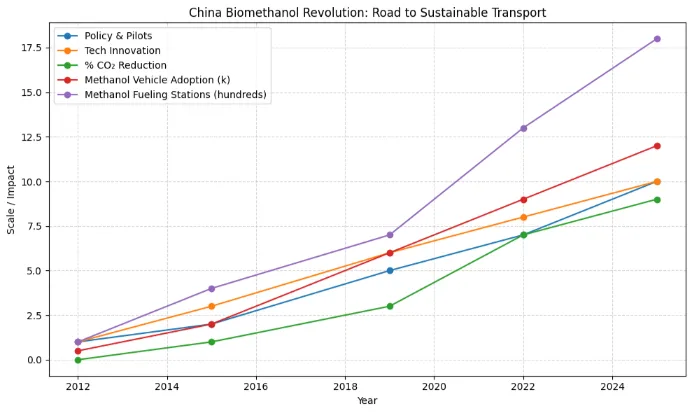
  • Pilot programs (2012): Multi city trials tested M100 fuels in taxis, buses, and trucks, proving safety and efficiency.
  • National promotion (2019): Multi agency policy signaled long term commitment to methanol vehicles.
  • Focus on heavy-duty fleets: Targeted commercial fleets to maximize pollution and fuel impact.
  • Standardization: National fuel and vehicle standards ensured safety and consistency.

Key Technological Innovations

Transitioning methanol from lab to road required solving technical challenges:

  • Dedicated methanol engines: Companies like Geely created optimized M100 engines with better power and efficiency.
  • Corrosion resistance: Specialized fuel system components were developed to handle methanol’s corrosive nature.
  • Cold start technology: Advanced methods ensured engine performance in cold climates.
  • Green methanol production: Scaling biomethanol from biomass and e-methanol from captured CO₂ plus renewable hydrogen.

Building Biomethanol Transport Infrastructure

China overcame the “chicken and egg” problem by:

  • Deploying targeted fueling stations along commercial routes and pilot regions.
  • Leveraging existing liquid fuel infrastructure for cost-efficient storage and distribution.
  • Creating circular economy synergy between agriculture, chemical, and transport sectors.

Environmental and Economic Benefits

The success of biomethanol scaling shows measurable impacts:

  • Carbon reduction: Biomass-based methanol cuts CO₂ emissions by over 59% vs. coal methanol.
  • Air quality: Lower PM, NOx, and SOx emissions improve urban health.
  • Energy security: Domestic biomass feedstock reduces crude oil dependency and price risks.
  • Economic growth: Innovation and jobs grow with methanol vehicle production.
  • Decarbonizing hard-to-abate sectors: Biomethanol fuels trucks and ships where batteries struggle.

Challenges and Solutions

China’s experience highlights key hurdles:

  • Ensuring sustainable biomass feedstocks to avoid deforestation or food conflicts.
  • Transitioning fully away from coal methanol to biogenic and e-fuel pathways for true carbon neutrality.
  • Gaining public acceptance through testing, safety standards, and trusted commercial fleet adoption.

Future of Biomethanol in China Transport

Looking ahead, China emphasizes:

  • E-methanol from renewable hydrogen and captured CO₂ as a carbon neutral fuel cycle.
  • Expanding biomethanol use for heavy duty trucks, marine shipping, and even as a pathway for Sustainable Aviation Fuel (SAF).
, illustrating China’s transition to sustainable transport and the adoption of renewable biomethanol fuel for cleaner mobility.

What the World Can Learn From China Biomethanol Revolution

Five critical lessons emerge for global sustainable transport:

  1. Don’t rely solely on EVs; combine EVs, hydrogen, and biomethanol.
  2. Government-driven policy certainty is vital for scaling investment.
  3. Prioritize early adoption in commercial fleets like taxis and trucks.
  4. Leverage abundant domestic biomass and CO₂ for energy security.
  5. Keep innovating waste-to-fuel and e-fuel technologies for full lifecycle sustainability.

China biomethanol revolution proves that sustainable liquid fuels are essential for large-scale decarbonization. Its strategic approach is a scalable, pragmatic roadmap for countries seeking clean, secure, and economically sound transport solutions worldwide.

Citations

De B. P. Viana, L., Wei, H., Szklo, A., Rochedo, P., & Müller-Casseres, E. (2025). Paving the Way for Low‐Carbon Shipping Fuels in Long‐Haul Trade Routes. International Journal of Energy Researchhttps://doi.org/10.1155/er/8835499.

Pu, Y., Dejaegere, Q., Svensson, M., & Verhelst, S. (2024). Renewable Methanol as a Fuel for Heavy-Duty Engines: A Review of Technologies Enabling Single-Fuel Solutions. Energieshttps://doi.org/10.3390/en17071719.

From Field Waste to Fuel: China’s Rice Straw Biomethanol Revolution – Energy Efficiency, Economic Analysis, and Environmental Benefits

Scaling Sustainable Transport: Lessons From China Biomethanol Revolution Read More »

Sugarcane fields in South Africa showcasing agricultural biomass as a feedstock for sustainable biomethanol production

Sugarcane Biorefineries in South Africa: Methanol & Beyond

Introduction: Why Sustainable Biorefineries Matter for South Africa

With rising energy challenges, environmental harm, and economic pressures, South Africa faces a crucial moment in rethinking its energy and industrial future. Sustainable biorefineries provide an innovative solution that uses the country’s abundant biomass resources, especially sugarcane residues, to create renewable fuels like bio-methanol. This approach fits with global trends to reduce reliance on fossil fuels while encouraging a circular bioeconomy that supports rural development and job creation 215.

By converting agricultural waste into methanol, South Africa can greatly lessen greenhouse gas emissions, reduce waste disposal issues, and strengthen its industrial sector. This blog explores the technical, environmental, economic, and social aspects of setting up sustainable methanol biorefineries using sugarcane bagasse and trash, highlighting their strategic importance and feasibility within South Africa’s bioeconomy roadmap 216.

The Sugarcane Industry in South Africa: A Biomass Powerhouse

Sugarcane Production and Residue Availability

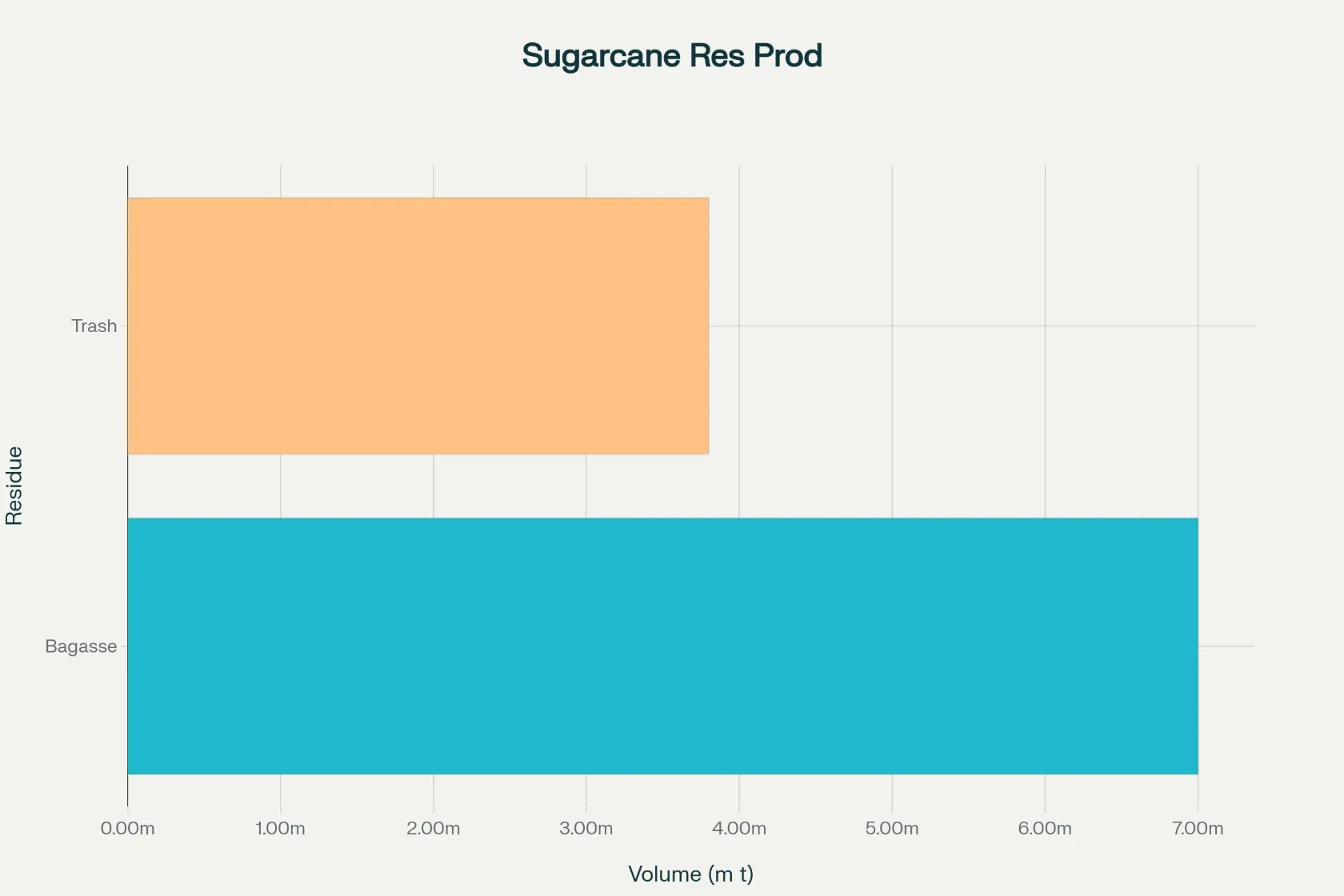
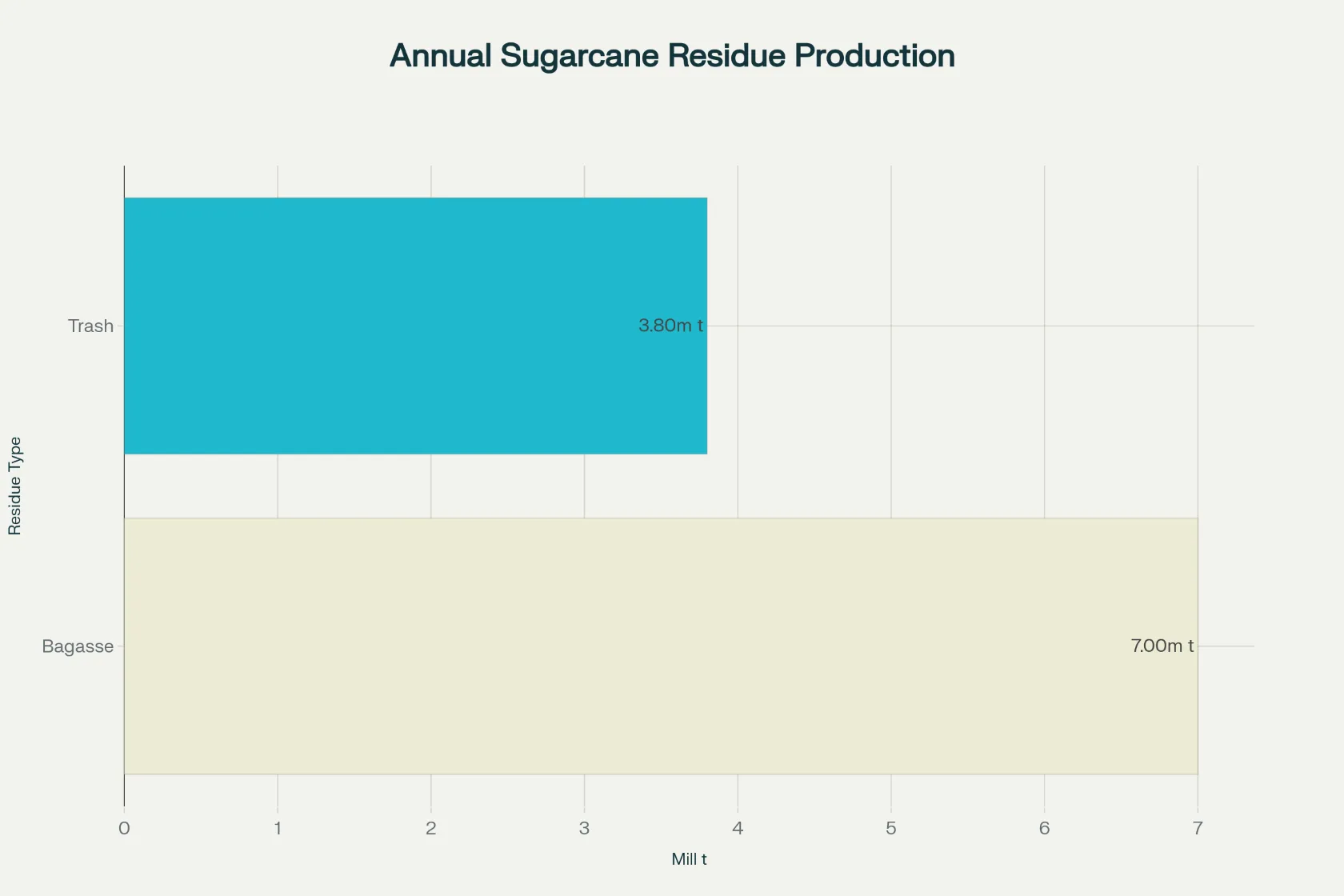
South Africa’s sugarcane sector is a strong agricultural foundation generating around 19 million tons of cane each year, mainly in KwaZulu-Natal and Mpumalanga. Processing this large quantity yields about 7 million tons of bagasse, which is a fibrous byproduct, along with significant amounts of trash (leaf residues). Typically seen as waste, these residues currently create environmental issues due to poor disposal, but they also represent an untapped biomass resource for sustainable biorefineries 215.

Locating biorefineries at existing sugar mills can greatly cut logistics costs and utilize established infrastructure, making methanol production from bagasse both sensible and affordable. The large quantity and geographic concentration of sugarcane residues give South Africa an excellent feedstock advantage that’s hard to match with other biomass types 27.

Why Valorize Sugarcane Residues?

  • Waste reduction: Reduce environmental problems linked to burning or dumping residues.
  • Green energy: Create renewable fuels and chemicals, cutting fossil fuel dependence.
  • Rural development: Promote local job creation and diversify farmer income streams.
  • Support circular economy: Turn waste into valuable products and close resource loops 25.

Methanol Production from Sugarcane Residues: Technology Overview

Key Process Stages

The process of converting lignocellulosic sugarcane residues into methanol involves several connected steps:

  1. Biomass Pre-treatment: Drying reduces moisture from about 45% to 15% and size reduction prepares the feedstock for gasification.
  2. Gasification: Thermochemical partial oxidation changes bagasse and trash into synthetic gas (syngas) rich in hydrogen (H₂) and carbon monoxide (CO).
  3. Syngas Cleaning & Conditioning: Removing contaminants like sulfur and tars protects the catalysts and modifies the gas composition.
  4. Methanol Synthesis: A catalytic reaction, usually with Cu/Zn/Al catalysts, turns conditioned syngas into methanol under high pressure and temperature.
  5. Purification: Distillation and separation produce high-purity methanol ready for further use 2516.

Advances in Gasification Technology

South Africa’s biorefineries can utilize established gasification technologies like fixed bed, fluidized bed, and drag bed reactors. Each technology has its own trade-offs in terms of efficiency, tar production, and scalability:

  • Downdraft fixed bed gasifiers: High tar removal and simpler cleaning.
  • Circulating fluidized bed (CFB): More even combustion and higher efficiency, but complicated operation.
  • Drag bed reactors: High throughput and nearly tar-free syngas 25.

Tailoring gasifiers for fibrous sugarcane bagasse enhances conversion rates and supports economic viability.

Cutting-edge Catalysts for Methanol Synthesis

Commercial methanol synthesis catalysts commonly use copper-based systems (Cu/Zn/Al₂O₃), often improved with promoters like cerium-zirconium oxides for better activity and durability. Ongoing research in South Africa focuses on catalysts that can handle impurities from biomass-derived syngas and enable CO₂ utilization, which is essential for sustainability and carbon-negative products 216.

Environmental Benefits of Sugarcane Based Methanol Biorefineries

Significant Reduction of Greenhouse Gas Emissions

Compared to fossil methanol, biomass-based methanol can cut lifecycle greenhouse gas emissions by 25-60%. Studies even show negative carbon footprints under optimal conditions. This directly supports South Africa’s climate commitments and helps move the country toward a low-carbon economy 216.

Efficient Waste Valorization and Pollution Mitigation

By converting waste residues into useful fuel, biorefineries address the significant environmental issue of biomass residue disposal, which otherwise causes air pollution and pest issues. Also, modern biorefineries use integrated heat and power systems to reduce overall emissions and improve energy efficiency 25.

Water and Land Use Considerations

South Africa’s water scarcity requires careful resource management. Sustainable biorefineries focus on using existing residues instead of expanding farmland, limiting water use and food-vs-fuel conflicts. Applying precision agriculture and water-efficient practices in the sugar industry can also help ease environmental trade-offs 215.

Economic Viability and Market Potential for Methanol from Sugarcane Residues

Techno economic Insights and Investment Returns

Feasibility studies show that methanol biorefineries paired with sugar mills can achieve internal rates of return (IRR) around 15-17%, making them appealing investment options. However, competing with fossil methanol pricing remains a challenge, with bio-methanol currently costing 1.5 to 4 times more 27.

Strategies to Overcome Cost Barriers

  • Government Incentives: Production subsidies, tax breaks, and grants can help close price gaps and reduce investment risks.
  • Multi-product Biorefineries: Producing bioelectricity, other chemicals (like ethanol and lactic acid), and feedstocks can improve economic stability.
  • Technological Improvements: Better gasifier efficiency and catalyst performance can bring down operational costs 27.

Global and Local Market Opportunities

With global methanol demand expected to exceed 500 million tons per year by 2050, South Africa stands to gain both domestically and through exports. Building a bio-methanol industry also enhances energy security and aligns with global shifts towards cleaner fuels 215.

Social Impacts: Empowering Rural Communities and Addressing Equity

Job Creation and Skills Development

Building and running sugarcane biorefineries can create thousands of direct and indirect jobs, especially in rural areas where sugarcane is grown. This supports poverty reduction and skill development in communities often left out of industrial growth 715.

Enhancing Rural Economies and Smallholder Involvement

Inclusive value chains allow small-scale farmers to engage in residue collection and supply, diversifying their incomes beyond traditional sugar sales. Fair contracts and training programs are vital for equity 715.

Mitigating Food-vs-Fuel Concerns

Using residues instead of dedicated energy crops avoids direct competition with food production, reducing food security risks. Combined with sustainable water use policies, this approach promotes balanced social and ecological development 215.

Policy and Regulatory Framework: Accelerating South Africa’s Bioeconomy

Current Support and Gaps

South Africa’s Bio-economy Strategy and National Development Plan provide a basis for supporting biorefineries and renewable fuels. However, clearer and more consistent incentives are needed to encourage private investment and commercialization 15.

Recommendations for Policy Makers

  • Stable incentives: Long-term subsidies and guaranteed purchase agreements.
  • Streamlined regulations: Simplify licensing and environmental permits.
  • R&D Funding: Increase funding for catalyst and gasification technology development.
  • Infrastructure Support: Enhance biomass logistics and grid integration 15.

Challenges and Future Outlook

The creation of sugarcane residue methanol biorefineries faces obstacles, including managing the biomass supply chain, high initial costs, and technical complexity. Overcoming these challenges requires:

  • Strong public-private partnerships involving government, academia, and industry.
  • Pilot and demonstration projects to prove technical and economic feasibility.
  • Capacity building for the local workforce and technology transfer 215.

South Africa’s unique combination of sugarcane biomass availability, renewable energy potential, and policy ambition positions it strongly to lead in sustainable methanol production. This will support the growth of a circular bioeconomy and a resilient energy future.

Conclusion: A Strategic Path Forward for South Africa

Using sugarcane residues for methanol biorefineries offers South Africa an effective strategy to tackle energy shortages, lower carbon emissions, and promote rural development. With proven technologies and ample resources, scaling bio-methanol production aligns with national and global sustainability goals.

To achieve this potential, focused efforts on technology optimization, policy support, multi-product biorefining, and community engagement are essential. South Africa can convert agricultural waste into a green energy and chemical hub, setting an inspiring example for sustainable development in Africa and beyond.

For more information on sugarcane biorefineries, visit:

By leveraging sugarcane residues, South Africa can unlock a sustainable future one where waste becomes wealth, energy becomes cleaner, and rural communities thrive.

Bar chart of sugarcane residue production
Bar chart of sugarcane residue production analysis

This information offers important insights into South Africa’s expanding biorefinery sector. It highlights key players, their production capabilities, and new methods for using resources sustainably. By learning about these industry leaders and research initiatives, stakeholders can spot chances for investment, collaboration, or adopting new technologies in the bioeconomy. The detailed profiles, which include production figures and official links, serve as a trustworthy reference for anyone looking into renewable energy and circular economy solutions in South Africa, including policymakers, potential investors, and academic researchers.

South Africa’s biorefinery sector is still developing. Most large-scale operations are part of existing industries like pulp and paper and sugar production. Standalone, multi-product biorefineries are uncommon. However, several key players are adopting biorefinery principles by converting biomass into energy, chemicals, and materials to improve sustainability and economic value.

Here’s a look at the top five notable biorefinery initiatives and facilities in South Africa:

1. Sappi – Forest Biorefinery Leader

Sappi (Saiccor & Ngodwana Mills)

Sappi, known as a pulp and paper giant, is moving toward a forest biorefinery model. They extract high-value biomaterials from wood. Their operations produce dissolving wood pulp (DWP) and are expanding into nanocellulose (Valida), lignin, furfural, xylose, and organic acids. Their Ngodwana Mill hosts South Africa’s first biomass power plant under the Renewable Energy Independent Power Producer Procurement Programme (REIPPPP).

Production Details:

  • 1.15 million tons of dissolving pulp annually (Southern Africa operations).
  • Biomaterial production (lignin, nanocellulose) is growing but not yet fully commercial.

2. Illovo Sugar Africa Sugarcane Based Biorefinery

Illovo Sugar South Africa (Pty) Ltd.

Illovo, a leading sugar producer, processes sugarcane into raw, brown, and refined sugar. They also produce furfural, ethyl alcohol (from molasses), and lactulose. Their operations follow biorefinery principles by turning waste streams into chemicals and energy.

Production Details:

  • 550,000+ tons of sugar annually.
  • 65,000+ litres of high-grade ethanol per year for beverages.

3. DSI-CSIR Biorefinery Industry Development Facility (BIDF) – R&D Hub

DSI-CSIR Biorefinery Industry Development Facility (BIDF)

This government-funded R&D facility in Durban supports the development of biorefinery technology. It works with forestry, agriculture, and waste sectors to produce biofuels, biochemicals, and biomaterials. While not a commercial plant, it plays a crucial role in improving South Africa’s biorefinery capabilities.

Production Details:

  • Focuses on pilot-scale and technology development, not commercial output.

4. Ngodwana Energy Biomass Project (Sappi) Renewable Energy from Biomass

Ngodwana Energy Biomass Project (Sappi’s Ngodwana Mill)

Located at Sappi’s Ngodwana Mill, this biomass power plant generates renewable electricity from forestry waste. It contributes to South Africa’s energy transition.

Production Details:

  • One of the largest biomass-to-energy projects in the country.

5. Industrial Biogas Plants Waste to Energy Solutions

Various industrial biogas plants

Several municipal and agricultural biogas plants convert organic waste, sewage, and agro-residues into biogas for electricity, heat, and transport fuel. While smaller in scale, they represent key biorefinery applications in South Africa’s circular economy.

Production Details:

  • Decentralized operations, with no single dominant player.

Conclusion

South Africa’s biorefinery sector is still emerging. Most large-scale activities are linked to existing industries like pulp and paper (Sappi) and sugar (Illovo). Research initiatives like the CSIR’s BIDF are critical for future growth. Biomass energy and biogas projects show practical waste-to-value applications.

As technology advances, we expect more standalone biorefineries producing biofuels, biochemicals, and biomaterials at scale. For now, these five players lead the way in South Africa’s bioeconomy transition.

Biomethanol from Corn Straw: A Life Cycle Insight

Sugarcane Biorefineries in South Africa: Methanol & Beyond Read More »

Modern methanol-powered vehicle in China showcasing clean fuel innovation.

Green Methanol Vehicles in China: Biomethanol Role in Sustainable Transportation

Green Methanol Vehicles in China: The Future of Sustainable Transport

China Clean Fuel Revolution

China stands at a crossroads in its energy transformation, where biomethanol emerges as a game-changing solution for sustainable transportation. As the world’s largest methanol producer and consumer, China currently relies heavily on coal-based methanol – an energy-secure but carbon-intensive option. The shift toward green methanol promises to slash lifecycle carbon emissions by over 65% while completely eliminating harmful sulfur oxide emissions.

The country is making bold strides with more than 100 green methanol projects underway, representing 12 million tonnes of annual production capacity. Industry leaders like GoldWind, CIMC Enric, and Shanghai Electric are driving this transformation. While initial focus centers on marine applications, the benefits will soon extend to road transport as infrastructure develops and economies of scale take effect.

Why Methanol Matters for China Energy Future

With over 408 million vehicles on its roads, China faces immense pressure to balance energy security with environmental responsibility. The nation’s methanol vehicle program, dating back to the 1980s, has evolved through three distinct phases:

  1. Early Development (1980s-2011): Initial pilots in Shanxi province tested various methanol blends
  2. Expansion (2012-2018): Government-led trials across 10 cities accumulated 200 million kilometers of real-world testing
  3. National Rollout (2018-present): Over 30,000 methanol vehicles now operate nationwide

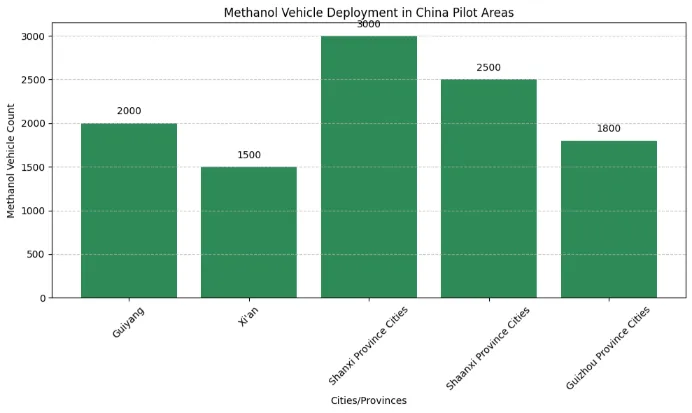
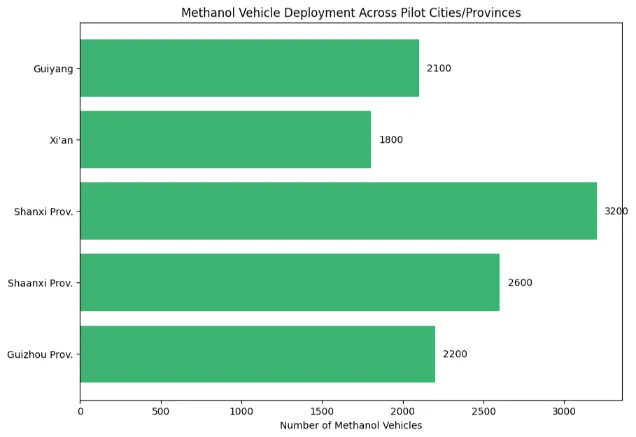
Cities like Guiyang demonstrate methanol’s potential, where 2,000 methanol-powered taxis – about 70% of the city’s fleet – showcase the technology’s viability. Advanced methanol-electric hybrids have already achieved impressive efficiency gains, reducing fuel consumption from 14 liters to just 9.2 liters per 100 kilometers.

From Agricultural Waste to Clean Fuel

China’s biomethanol production leverages abundant domestic resources:

  • 829 million tons of agricultural residues (2020 figures)
  • 1.87 billion tons of livestock manure
  • Growing volumes of municipal solid waste

Major projects are scaling up across the country. GoldWind’s Inner Mongolia facilities will produce 500,000 tonnes annually using straw and wind-powered hydrogen. Shanghai Electric’s Liaoning plant combines wind and biomass inputs, while CIMC Enric’s Guangdong facility focuses on flexible production scaling.

Environmental Advantages Over Conventional Fuels

Biomethanol’s environmental credentials are compelling:

  • 65-90% reduction in greenhouse gas emissions compared to fossil fuels
  • 80% lower NOx emissions
  • Zero sulfur oxide emissions
  • Avoids food-vs-fuel conflicts by using waste streams

When compared to electric vehicles in China’s coal-dependent grid, biomethanol often delivers superior full lifecycle emissions performance. It also serves as an efficient hydrogen carrier, bridging today’s combustion engines with tomorrow’s fuel cell vehicles.

Overcoming Economic and Infrastructure Challenges

While methanol fuel costs just 2.16 yuan per liter – less than half the price of gasoline – significant hurdles remain:

  • High upfront capital costs for production facilities
  • Competition for biomass feedstocks from other biofuel sectors
  • Uneven fueling infrastructure concentrated in coal-rich regions

Successful adoption will require:

  • National policy coordination to replace fragmented regional approaches
  • Targeted financial incentives for producers and consumers
  • Strategic feedstock allocation to prevent shortages
  • Dedicated “green corridors” with methanol fueling stations
  • Public education to build consumer confidence

The Road Ahead

Biomethanol represents a golden opportunity for China to leverage its existing methanol expertise while transitioning to cleaner energy. The technology aligns perfectly with national goals to peak emissions by 2030 and achieve carbon neutrality by 2060.

As production scales up and infrastructure expands, biomethanol’s benefits will extend beyond shipping to transform road transportation. With coordinated policy support and continued technological advancement, China can position itself as a global leader in sustainable fuel solutions.

For those interested in learning more about China’s methanol vehicle program and green fuel initiatives, valuable resources are available from leading research institutions and industry reports. The country’s experience offers important lessons for nations worldwide seeking practical pathways to decarbonize transportation.

Further Reading:

Biomethanol from Corn Straw: A Life Cycle Insight

Bar chart of methanol vehicle counts
Bar chart of methanol vehicle deployment

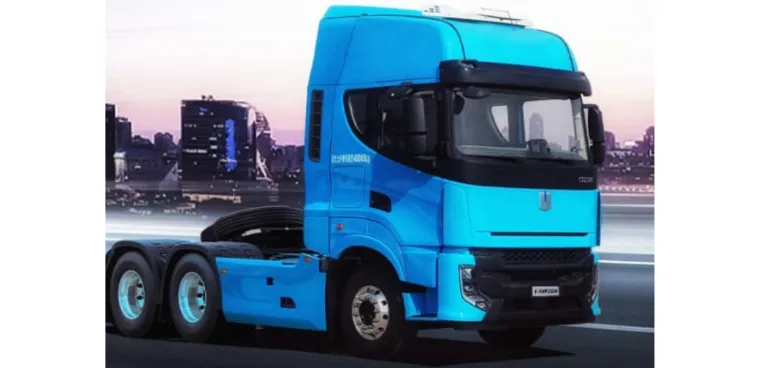
Farizon G Methanol Hybrid Heavy Truck

  • CompanyFarizon Auto (a Geely Holding Group brand)
  • Description: Designed for long-haul logistics, this heavy-duty truck boasts a 1,500 km range and is part of Farizon’s G Truck Product Series. It combines methanol hybrid technology with Geely’s GXA-T architecture, offering reduced operational costs and emissions-free performance 28.
  • Key Feature: No AdBlue required—runs solely on renewable methanol.
Farizon G Methanol Hybrid Heavy Truck

2. Farizon Homtruck (Methanol REV Tractor)

  • CompanyFarizon Auto
  • Description: A next-gen semi-truck with methanol range-extended electric (REV) technology, featuring a 260kW powertrain and XL flagship cabin. Ideal for green logistics, it holds China’s first M100 methanol engine certification 118.
  • Highlight: Used to transport equipment for the 2023 Asian Games, powered by Geely’s zero-carbon methanol 11.
 Farizon Homtruck (Methanol REV Tractor)

3. Farizon SV (Methanol REV)

  • CompanyFarizon Auto
  • Description: Completes Farizon’s methanol REV lineup, designed for urban and regional freight. Built on the GXA-M architecture, it earned a Euro NCAP Platinum safety rating and is praised for its charging efficiency and cargo space 112.
  • Global Reach: Already deployed in Europe, the Middle East, and Asia-Pacific 2.

4. Geely Emgrand Methanol Hybrid

  • CompanyGeely Auto
  • Description: A pioneer in methanol passenger cars, this sedan features a 1.8L flex-fuel engine (methanol/gasoline) and seamless cold-start capability. Tested in Iceland, it reduces CO2 emissions by 70% versus gasoline 107.
  • Legacy: The world’s first mass-produced methanol vehicle, with fleets operational in China since 2015 7.

5. Geely Galaxy L6 Super Methanol Hybrid

  • CompanyGeely Galaxy
  • Description: Part of Geely’s “Methanol+Electric” dual-strategy, this plug-in hybrid sedan uses the NordThor 8848 system for a 1,370 km combined range. The 2025 refresh introduces a naturally aspirated methanol variant to rival BYD’s hybrids 123.
  • Tech: Features a 13.2-inch AI cockpit and Qualcomm 8155 chip for smart connectivity 3.
Geely Galaxy Series Methanol Hybrid

Why Methanol? Geely’s Strategic Edge

Geely’s methanol vehicles address critical challenges in decarbonizing transport:

  • Infrastructure-Friendly: Liquid methanol requires no expensive storage upgrades 10.
  • Performance Parity: Comparable range and power to diesel, with 80% lower PM2.5 emissions 7.
  • Global Projects: From Iceland’s CO2-to-methanol plants to Alxa’s 500,000-ton green methanol facility, Geely is building a full supply chain 102.

For more on Geely’s methanol ecosystem, explore their brand page or Farizon’s global portal.

HVO Diesel Role in Creating a Sustainable Mining Operation

Green Methanol Vehicles in China: Biomethanol Role in Sustainable Transportation Read More »

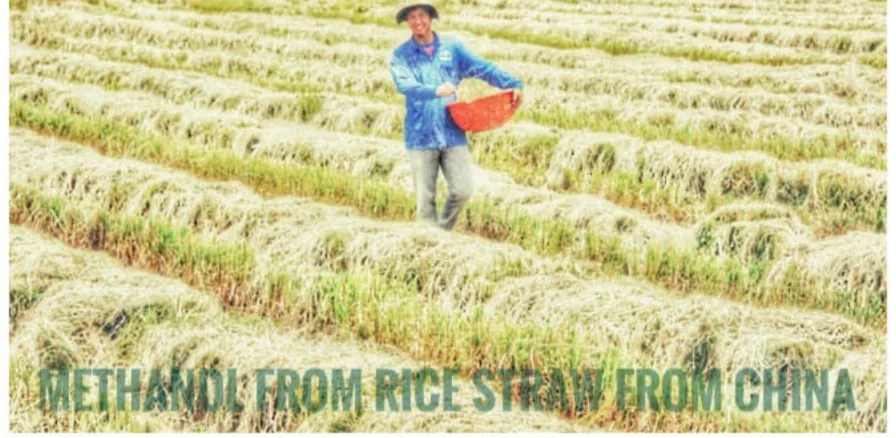
Farmer collecting rice straw in China for sustainable methanol and biofuel production.

Energy, Economy, and Environment: Biomethanol from Rice Straw in China

Energy, Economy, and Environment: Biomethanol from Rice Straw in China

Imagine mountains of agricultural waste that used to be a problem. Now, they can become a clean burning fuel. This fuel powers vehicles and industries, cleans the air, and supports rural economies. This isn’t a distant dream but a growing reality in China. The country is turning its large amounts of rice straw into biomethanol. China produces a significant portion of the world’s rice, generating nearly 222 million tons of rice straw every year. In the past, much of this waste was disposed of by burning it. This practice had serious environmental consequences. However, a major change is happening. Biomethanol from rice straw is becoming a key part of China’s sustainable development plans. (Ran et al., 2023). This post will delve into China’s motivations for adopting this innovative method, the profound benefits it offers, its inspiring global implications, and the key Chinese companies at the forefront of this green revolution.

Why China Adopted This Method: A Multifaceted Approach

China pivot towards biomethanol from rice straw is driven by a convergence of critical environmental, energy security, and economic imperatives. It represents a pragmatic and visionary solution to several pressing national challenges.

Environmental Imperative: Cleaning the Air and Reducing Emissions

For decades, burning rice straw in open fields has significantly polluted the air in China, especially in farming areas. This practice releases large amounts of particulate matter, nitrogen oxides, and greenhouse gases into the air. This worsens smog, increases respiratory issues, and contributes to climate change. Biomethanol production provides a cleaner alternative. By turning rice straw into a liquid fuel, it removes the need for open burning, which reduces harmful emissions. Additionally, since rice plants absorb CO2 as they grow, using rice straw for biomethanol can be seen as carbon-neutral or even carbon-negative when paired with carbon capture technologies. This process effectively stores carbon that would otherwise be released. China aims to peak CO2 emissions by 2030 and achieve carbon neutrality by 2060, driving the development of low-carbon energy policies (Yang & Lo, 2023).

Energy Security and Diversification: Less Reliance on Imports

China, as a rapidly developing and industrialized nation, faces the persistent challenge of ensuring energy security. Its considerable reliance on imported fossil fuels, particularly oil, creates vulnerabilities in its energy supply chain and subjects its economy to global price fluctuations. The domestic production of biomethanol from rice straw significantly enhances China’s energy independence. By converting an abundant, domestically available agricultural residue into a versatile fuel, China can reduce its reliance on external energy sources, thereby bolstering its national energy security. Biomethanol’s direct applicability in various sectors, especially transportation, allows for a strategic diversification of the energy mix, making the nation less susceptible to geopolitical disruptions affecting oil supplies.

Economic Benefits and Rural Development: Transforming Waste into Wealth

Beyond environmental and energy concerns, the biomethanol initiative offers significant economic advantages, especially for China large rural populations. Rice straw, once seen as waste with disposal costs, is now transformed into a valuable resource. This shift creates new income opportunities for farmers, enabling them to earn money from collecting and selling their agricultural residues. Setting up biomethanol production facilities in rural areas boosts local economies by generating jobs in feedstock collection, transportation, processing, and plant operation. Additionally, a useful byproduct of biomethanol production through anaerobic digestion is digestate. This nutrient-rich organic fertilizer can help reduce farmers’ reliance on costly chemical fertilizers. This improves agricultural sustainability while providing another financial benefit. The relationship between agriculture and energy production supports a strong circular economy in rural areas.

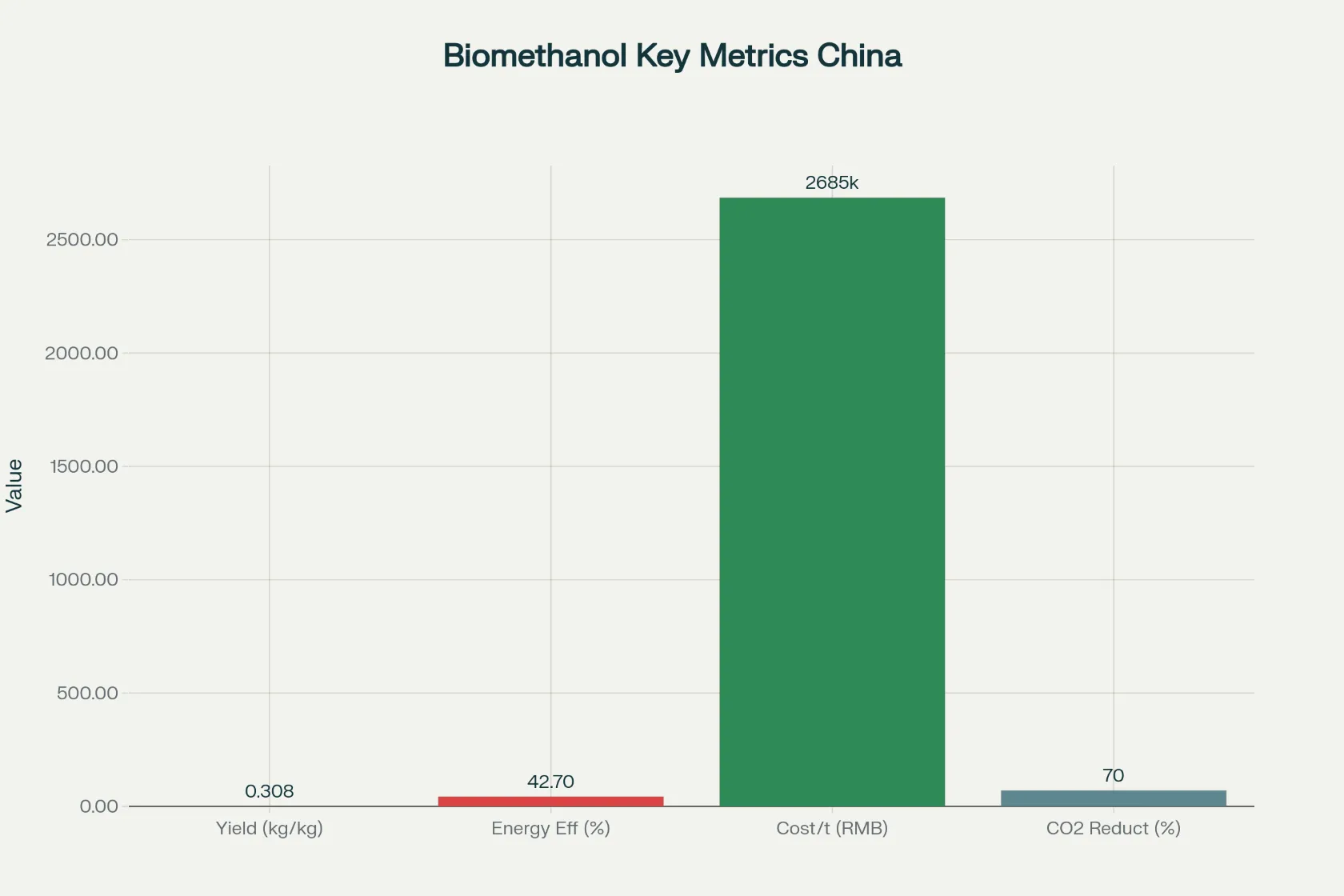
Biomethanol production from rice straw in China offers a sustainable solution. It meets energy needs, cuts greenhouse gas emissions, and effectively uses agricultural waste. Biomethanol yields are around 0.308 kg per kg of rice straw, and the energy efficiency is approximately 42.7% when using gasification technologies. This indicates that China has significant potential for bioenergy from rice straw. Currently, production costs are higher than those of fossil methanol, about 2,685 RMB per ton for a 50,000-ton plant. However, economic competitiveness should improve with policy support, technological innovation, and scaling up.

Using biomethanol from rice straw can reduce carbon emissions by over 70% compared to fossil-based methanol. It also helps decrease air pollution from open-field burning of straw. Improvements in process integration, like combining with renewable electricity, can further boost efficiency and lower lifecycle emissions. Overall, China’s biomethanol pathways show a mix of energy, economic, and environmental benefits Wang, et.al (2024). Continued innovation and supportive policies are essential for wider adoption and lower costs.

Bar Chart for Biomethanol key metrics in China

Inspiring the World: Global Implications of China Biomethanol Success

China is leading the way in scaling biomethanol production from rice straw. This initiative provides a strong and replicable example for other countries dealing with agricultural waste and shifting to renewable energy. The progress made has significant global implications for sustainable development for details..

China’s large agricultural sector and focused efforts on industrializing biomethanol production show that converting agricultural waste into valuable fuel is both possible and cost-effective. This serves as a powerful case study for other rice-producing countries in Asia, Africa, and Latin America, which face similar challenges with agricultural residues and the related environmental and health issues.

China’s efforts also support several United Nations Sustainable Development Goals (SDGs), including SDG 7 (Affordable and Clean Energy), SDG 12 (Responsible Consumption and Production), and SDG 13 (Climate Action). By turning waste into energy and cutting down on pollution, China is showing a real commitment to a more sustainable future. The technological advancements, especially in biomass conversion methods like gasification and anaerobic digestion, being developed in China provide valuable insights and models that can be reused around the world. This encourages a quicker and more effective shift to sustainable energy sources everywhere. The process of converting rice straw into biomethanol reflects the principles of a circular economy. Here, waste is reduced, resources are continually reused, and value is generated from materials that would typically be thrown away.

For a broader understanding of global renewable energy trends and the potential of biomass energy, readers can explore reports from the International Energy Agency (IEA). The IEA regularly publishes comprehensive analyses on the evolving energy landscape, including detailed insights into bioenergy’s role in the global transition to clean energy. https://www.iea.org/

Chinese Companies Leading the Way in Biomethanol from Rice Straw in China

The burgeoning biomethanol industry in China is propelled by a combination of established industrial giants and innovative clean energy companies. These enterprises are not only developing cutting-edge technologies but also forging strategic partnerships to scale up production and meet growing demand.

Among the prominent players, CIMC Enric Holdings Limited stands out for its significant involvement in constructing biomethanol plants. CIMC Enric, a leading intelligent manufacturer in the clean energy industry, has been instrumental in the development of crucial infrastructure for biomethanol production. They are actively engaged in constructing biomethanol facilities in China, with ambitious capacity targets to supply green methanol for various applications, including marine fuel. For more details on their clean energy initiatives, you can visit the CIMC Enric website or consult industry news regarding their green energy projects. (As of recent reports, CIMC Enric is constructing a biomethanol plant in Zhanjiang, Guangdong, targeting an initial annual production of 50,000 tonnes by late 2025, with plans to expand to 200,000 tonnes by 2027. You can find more information through reputable industry news sources that cover their clean energy ventures.)

Another major force in the sector is GoldWind Science & Technology Co., Ltd., a global leader in wind power solutions, which has expanded its portfolio to include biomethanol production. GoldWind has made headlines for its long-term agreements to supply green methanol, notably with shipping giant Maersk. This partnership underscores the growing demand for sustainable marine fuels and GoldWind’s commitment to large-scale green energy production. GoldWind’s innovative approach involves leveraging wind energy to produce both green bio-methanol and e-methanol, showcasing a holistic sustainable energy model. Their official website often features updates on their green energy projects. (GoldWind signed a landmark agreement with Maersk in November 2023 to supply 500,000 tonnes of green methanol annually, with production expected to begin in 2026 at a new facility in Hinggan League, Northeast China. More information can be found on GoldWind’s official news section or through maritime industry news outlets.)

Furthermore, ESGTODAY specializes in agricultural waste treatment, particularly in straw biogas plants and pretreatment technologies, which are foundational to efficient biomethanol production from rice straw. Their expertise in converting agricultural residues into biogas and further refining it into valuable resources positions them as a crucial enabler within this ecosystem. Their focus on sustainable and environmentally friendly agricultural waste management aligns perfectly with China’s biomethanol ambitions. You can explore their technologies at: https://www.esgtoday.com/maersk-signs-its-largest-ever-green-methanol-deal-to-drive-fleet-decarbonization/

These companies, alongside other emerging players and research institutions, are continually pushing the boundaries of technology and scaling up production, signaling a robust and dynamic future for biomethanol in China.

To gain further insights into the broader renewable energy industry in China and the specific contributions of these companies, reports from reputable financial news outlets or clean energy analysis firms can be highly informative.

Challenges and Future Outlook

While China’s biomethanol journey is inspiring, it’s not without its challenges. Logistical hurdles in collecting and transporting vast quantities of diffuse rice straw, the initial capital investment required for large-scale plants, and the ongoing need for technological refinement to optimize conversion efficiency remain important considerations. However, the immense potential of biomethanol from rice straw for China and the world far outweighs these challenges. Continuous research and development, coupled with strong government policy support and private sector investment, are paving the way for further innovation and expansion. This includes advancements in enzyme technologies, more efficient gasification processes, and improved integration with existing infrastructure.

Conclusion

China’s proactive embrace of biomethanol from rice straw represents a truly transformative approach to energy, economy, and environment. By converting what was once considered waste into a valuable, clean-burning fuel, China is not only addressing its own critical environmental concerns and enhancing energy security but also providing a powerful blueprint for sustainable development globally. The economic uplift for rural communities, coupled with the significant reduction in air pollution and greenhouse gas emissions, underscores the multifaceted benefits of this innovation. As Chinese companies continue to lead the way in technological advancements and scale up production, their efforts serve as a beacon, inspiring a global shift towards a greener, more sustainable future powered by ingenuity and collaboration. The journey of rice straw to biomethanol in China is a testament to the power of human innovation in building a truly green future.

Citations

Yang, Y., & Lo, K. (2023). China’s renewable energy and energy efficiency policies toward carbon neutrality: A systematic cross-sectoral review. Energy & Environment, 0958305X2311674. https://doi.org/10.1177/0958305×231167472

Ran, Y., Ghimire, N., Osman, A. I., & Ai, P. (2023). Rice straw for energy and value-added products in China: a review. Environmental Chemistry Letters, 1–32. https://doi.org/10.1007/s10311-023-01612-3

Reducing the lifecycle carbon emissions of rice straw-to-methanol for alternative marine fuel through self-generation and renewable electricity. Energy Conversion and Managementhttps://doi.org/10.1016/j.enconman.2024.119202.

For a detailed life cycle analysis and insights on biomethanol production from corn straw in China, explore the comprehensive study at Biomethanol from Corn Straw in China: A Life Cycle Insight .

Energy, Economy, and Environment: Biomethanol from Rice Straw in China Read More »

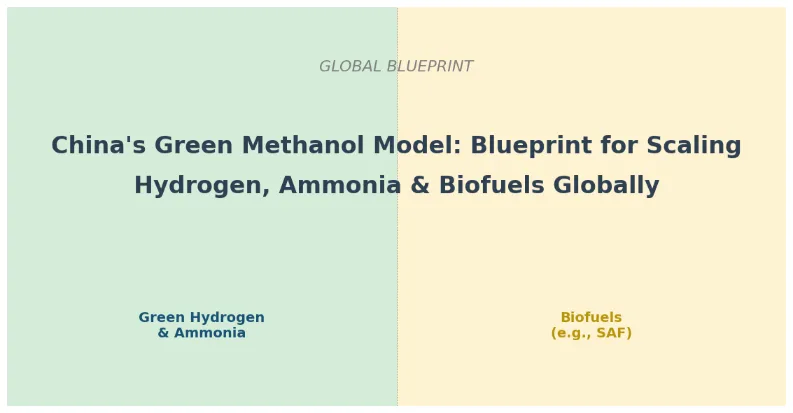
Split-color image featuring the text "China's Green Methanol Model: Blueprint for Scaling Hydrogen, Ammonia & Biofuels Globally.

Fueling Profits: The Chinese Model for Low Cost, High Gains Biomethanol

China’s Green Tidal Wave: How 30 Million Tonnes of Methanol Capacity is Decarbonizing Global Shipping and Charting the Chinese Model for Low Cost, High Gains Biomethanol

The global shipping industry, a colossal engine of international commerce, faces an undeniable mandate: decarbonization. This challenge is not merely about shifting fuels but establishing entirely new supply chains, production infrastructures, and commercial paradigms at a world-spanning scale. Against this backdrop of urgency and immense logistical complexity, the announcements emerging from China, detailed at the Argus Green Marine Fuels Asia conference in Singapore, represent far more than local business development; they constitute a strategic blueprint for the world’s transition to clean maritime fuel. Chinese green energy firms, by championing the development of biomethanol plants, are establishing green methanol as the singularly attractive, high-volume option to purify the global shipping fleet’s carbon footprint, setting critical goals and directions for every nation to follow.

Biomethanol production in China using rice straw, bagasse, or other biomass can reduce CO₂ emissions by 54–59% compared to coal-based methanol, and even achieve carbon-negative outcomes in some integrated processes (Su et al., 2024).

The initial analysis of the market confirms the strategic positioning of green methanol. According to Shutong Liu, founder of biofuel brokerage Motion Eco, the immediate future of alternative marine fuels is a two horse race: Used Cooking Oil (UCO) methyl ester (Ucome) based marine biodiesel and green methanol. However, the same expert points to a fundamental constraint that elevates biomethanol’s long-term importance. The supply of feedstock UCO is inherently limited and must be distributed across an ever-growing array of sectors, including marine bio-bunkering, on road transportation, and, critically, aviation fuel demand. This competition for limited UCO resources essentially places a ceiling on the growth potential of marine biodiesel. Consequently, biomethanolwhich utilizes biomass as its feedstock is strategically positioned for greater future expansion, making the Chinese focus on it a prescient move that secures a scalable fuel source for the long haul, benefitting the ultimate goal of full maritime decarbonization.

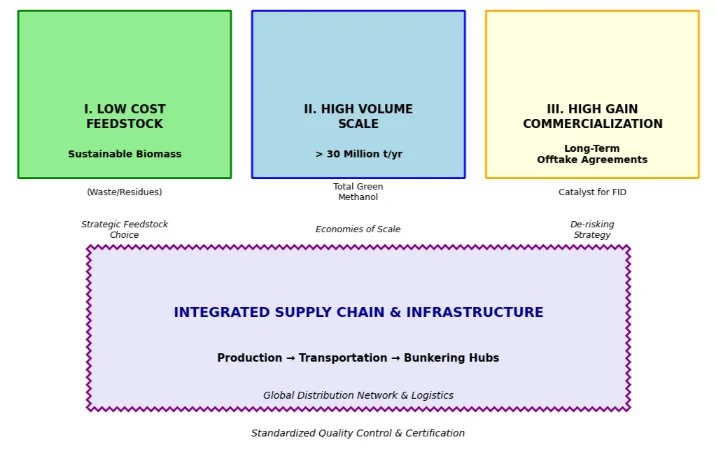
The scale of China’s commitment is what provides the most profound benefit to the global biomethanol goal. The sheer ambition, as disclosed by Liu, involves Chinese green methanol suppliers announcing over 100 projects designed to collectively produce a staggering volume of more than 30 million tonnes per year (t/yr) of green methanol. However, current production costs for biomethanol are 3–5 times higher than coal-based methanol (e.g., 2685 RMB/t vs. 1593 RMB/t), mainly due to high capital and feedstock costs (Bazaluk et al., 2020, p. 3).. This massive capacity commitment shatters previous conceptions of what is commercially possible in the alternative fuel space. The planned projects are strategically divided, comprising 12 million t/yr of biomethanol capacity and 18 million t/yr of e-methanol capacity.

This immense, multi million tonne annual capacity is the single most important factor benefiting the biomethanol goals. By injecting such a massive projected supply into the market, these projects move biomethanol from being a boutique, trial fuel to a globally relevant, commercially validated commodity. This volume provides the necessary confidence for naval architects to design new vessels optimized for methanol, for ports to invest in bunkering infrastructure, and for financial markets to confidently back further production initiatives globally. It signals an irreversible commitment to the fuel’s future. In essence, China is single-handedly building the required industrial base to transition a segment of the global shipping industry.

Concrete examples of this commitment provide a tangible direction for the rest of the world. The energy, chemical engineering, and food equipment firm CIMC Enric is already constructing a biomethanol plant in Zhanjiang, Guangdong. This facility is planned to produce 50,000 t/yr by the fourth quarter of 2025, with a clear, aggressive scaling path targeting an increase to 200,000 t/yr by 2027, as stated by the company’s director, David Wang. The accompanying detail that the factory includes 20,000 tonnes of storage capacity for biomethanol underscores that this is not just a theoretical capacity announcement but a firm investment in physical infrastructure. Similarly, the Chinese wind turbine supplier and biomethanol producer GoldWind is pursuing an even larger capacity goal. Their plans involve the start up of two substantial 250,000 t/yr biomethanol plants, with one unit scheduled to commence operations by the end of 2025 and the second following in late 2026, according to company vice-president Chen Shi. These hard deadlines, associated with significant and verifiable industrial capacity, define a goal-setting direction based on timely execution.

Furthermore, China’s projects offer critical insights into the preferred technological pathways for meeting immediate decarbonization goals. Biomethanol is produced by converting biomass into syngas through a process of gasification, frequently supplemented with the addition of green hydrogen, before reacting with a catalyst to synthesize the final methanol product. This is a relatively established chemical engineering process. While the overall Chinese plan includes a substantial 18 million t/yr of e methanol produced by combining captured CO2 with green hydrogen the market perspective presented is telling. E methanol is currently viewed as “far less commercially viable” than biomethanol due to a combination of higher production costs and less established technological maturity. The world can learn from this strategic insight: to meet pressing, near-term goals, the focus should initially be placed on the commercially ready, cost-effective, and scalable biomethanol pathway, using the e methanol route as a critical but longer-term objective. The versatility of both fuels, which share identical molecular properties with conventional fossil methanol, further simplifies the transition, as they can be blended with the traditional fuel for immediate marine usage without requiring radical engine changes across the global fleet.

However, the Chinese experience also illuminates the commercial and financial directions that must be set globally. Panellists at the conference highlighted that ‘money matters,’ citing a slowing Chinese economy and high initial investment costs as significant barriers to quickly ramping up biomethanol production. This global challenge requires a global solution, and the Chinese firms have provided the perfect model for de-risking these massive investments.

Susana Germino, Swire’s shipping and bulk chief sustainability officer, emphasized the need for securing long-term offtake agreements (LTAs) with reputable end-users to progress green fuel projects at scale. This model is being directly applied by Chinese producers. Crucially, GoldWind’s experience offers the ultimate blueprint: they signed a long-term offtake agreement for biomethanol with the Danish container shipping giant Maersk in 2023. This LTA, a critical commercial guarantee, directly enabled the project to reach a Final Investment Decision (FID) on its Inner Mongolia biomethanol unit the following year. This sequence LTA first, then FID is arguably the most important direction the world can glean from the Chinese projects. It is a model of shared risk and mutual commitment, whereby shipowners provide the demand assurance necessary to unlock the billions of dollars needed for production infrastructure.

The final financial hurdle is pricing. Shutong Liu noted that green methanol must benchmark itself against its primary rival, marine biodiesel, to attract the necessary buyers, a challenge compounded by green methanol’s higher production costs. This is further complicated by the fact that marine biofuels like biodiesel are often seen as more attractive because they are “operationally easier to bunker.” The direction for the world, therefore, must be to follow China’s lead in achieving unparalleled scale to drive down unit production costs, while simultaneously innovating to simplify the bunkering and handling operations to achieve competitive parity with biodiesel.

In conclusion, the collective announcement of over 30 million t/yr of green methanol capacity by Chinese firms serves as a powerful, non-negotiable benchmark for the world. It is the clearest articulation yet of how to achieve global biomethanol goals. The directions set by China are precise:

  1. Prioritize Scale: Target multi-million-tonne annual capacity to ensure global supply and drive down costs.
  2. Strategic Feedstock Use: Acknowledge the constraint of UCO and strategically pivot towards the more scalable biomethanol pathway.
  3. De-Risk Investment with LTAs: Adopt the GoldWind/Maersk model of securing long-term offtake agreements before making the final investment decision.
  4. Execute on Tangible Infrastructure: Follow the CIMC Enric example of committing to hard deadlines, concrete facilities, and verifiable storage capacity.

By blending state-backed ambition with clear-eyed commercial execution and a focus on proven technologies, China’s green methanol projects are not just a domestic initiative; they are the most comprehensive, detailed, and aggressive blueprint available to the international maritime community, demonstrating exactly what is required to make clean shipping a global reality. The age of green methanol has begun, and the course for the world has been charted from the east.

Diagram showing China's three-pillar biomethanol model for maritime decarbonization: Low Cost Feedstock, High Volume Scale, and High Gain Commercialization feeding into an integrated supply chain to achieve decarbonized shipping

Viability of CHINESE MODEL

The viability of China’s “low-cost and high-gain” biomethanol model for global adoption is best viewed as a successful blueprint for scale, not a guaranteed replication of cost. China’s commitment to building over 100 green methanol projects, including 12 million tonnes per year of bio-methanol capacity, offers the critical benefit of industrial scale necessary to drive down long-term technology and production costs worldwide. Furthermore, their strategy of securing long-term offtake agreements (LTAs) with major shippers like Maersk before reaching Final Investment Decision (FID) provides a proven commercial mechanism for de-risking massive capital investments—a vital lesson for nations struggling to finance their own decarbonization projects. This focus on integrated supply chains, from production in biomass-rich regions to bunkering at major ports, demonstrates the necessary high-gain structure required for international maritime fuel supply.

However, replicating the “low-cost” element globally faces significant challenges rooted in local economic disparities and feedstock logistics. While China may produce the fuel cheaply relative to global green alternatives, its cost remains higher than conventional fossil fuels, necessitating the establishment of robust government incentives or carbon pricing schemes—policies that vary widely outside of China. Crucially, the model relies on the large, centralized availability of specific low-cost biomass and waste feedstocks, which may not be transferable to countries with different agricultural practices or waste management systems. Therefore, while the high-gain strategy of massive scaling, integrated infrastructure, and commercial de-risking is highly viable and essential for global adoption, the low-cost element will only materialize for other countries if they can overcome these local feedstock and policy hurdles.

Scalability of China’s Green Methanol Blueprint for Global Fuels

The viability of China’s “low cost and high gain” biomethanol model for global fuel adoption lies in its successful blueprint for industrial scale and commercial de risking, principles that are highly transferable to other green fuels like green hydrogen, ammonia, and advanced biofuels. The model’s core strength is its strategy of leveraging massive capacity build outs to achieve long term economies of scale, a necessary step for any high CAPEX, emergent green energy technology to compete with fossil fuels. Crucially, the focus on securing Long Term Offtake Agreements (LTAs) with major shipping companies before Final Investment Decision (FID) provides a robust commercial mechanism for de-risking capital investments. This financing strategy is universally applicable and essential for funding green hydrogen and green ammonia projects, where significant upfront investment in electrolyzers and renewable energy is the main barrier to entry.

However, the “low-cost” pillar of the model faces varied constraints when applied to different fuels, primarily driven by feedstock and logistical complexities. For hydrogen and ammonia, the “feedstock” is renewable electricity, making the model’s cost achievable only in regions with abundant, cheap solar and wind resources. In contrast, other advanced biofuels, like Sustainable Aviation Fuel (SAF) made from Used Cooking Oil (UCO), often face a severe global constraint on feedstock availability, preventing the massive volume scaling that the methanol model relies upon. Furthermore, while liquid e fuels like ammonia and e-methanol benefit from existing transport infrastructure, pure green hydrogen requires entirely new, expensive transport and storage infrastructure. Therefore, while the commercial de-risking and scale-up components of China’s model are a vital global roadmap, the low cost outcome is contingent upon resolving these specific local feedstock and infrastructure challenges for each unique fuel type.

Citatiuons

Su, G., Jiang, P., Zhou, H., Zulkifli, N., Ong, H., & Ibrahim, S. (2024). Integrated production of methanol and biochar from bagasse and plastic waste: A three-in-one solution for carbon sequestration, bioenergy production, and waste valorization. Energy Conversion and Managementhttps://doi.org/10.1016/j.enconman.2024.118344.

Bazaluk, O., Havrysh, V., Nitsenko, V., Baležentis, T., Štreimikienė, D., & Tarkhanova, E. (2020). Assessment of Green Methanol Production Potential and Related Economic and Environmental Benefits: The Case of China. Energieshttps://doi.org/10.3390/en13123113

Read the full blog on BiofuelsPK: Carbon Tax & Biofuels

Fueling Profits: The Chinese Model for Low Cost, High Gains Biomethanol Read More »

European Union flag concept with yellow stars forming a circle on a textured blue background, representing EU funding and support for green biomethanol initiatives

Financing Biomethanol Projects: Accessing Green Funds and EU Support Mechanisms

Financing Biomethanol Projects: Accessing Green Funds and EU Support Mechanisms

Biomethanol is emerging as a key renewable fuel with significant potential to reduce greenhouse gas emissions and support the transition to a low-carbon economy. Financing such projects requires navigating a complex landscape of EU support mechanisms, green funds, and evolving global finance trends, while demonstrating strong environmental and economic impacts to attract investors. Biomethanol is rapidly gaining traction as a key player in the transition to renewable energy, thanks to its potential for decarbonizing sectors like shipping, chemicals, and power. Funding and strategic investment are essential for scaling up production, and both the European Union and global financial markets are increasingly supportive of these green initiatives.

Understanding Accessing Green Funds and EU Support Mechanisms

The European Union champions the green transition through a complex ecosystem of funding instruments. Major programs include the Innovation Fund (which supports large-scale demonstration of low-carbon technologies) and Strategic Programs under Horizon Europe (Cluster 5 – Climate, Energy, and Mobility). The European Investment Bank (EIB) provides loans and financial products targeted at renewable energy expansion, and the Modernisation Fund and EU ETS mechanisms channel auction revenues back into clean tech, including biomethanol.

The EU provides various support systems for renewable energy, including biomethanol, through grants, subsidies, and regulatory incentives. These mechanisms are designed to foster innovation, reduce investment risk, and accelerate market adoption, but require clear policy frameworks and long-term orientation to be effective . EU-funded projects, such as those under INTERREG and Horizon programs, have already supported biomethanol research and pilot plants (Srivastava et al., 2024).

Green Funds

Private and public green funds supplement EU funding by investing in projects with high climate impact and innovation potential. Examples include public-private partnerships, national green banks, and international finance institutions offering grants, equity, and low-interest loans for projects that can directly contribute to emissions reduction and sustainable fuel markets. These funds aim to fast-track commercialization, especially for advanced and second-generation biofuels. Green finance, including dedicated green funds, plays a pivotal role in enabling capital flow to sustainable projects. Tools such as green credit guarantee schemes, public-private partnerships, and community-based trust funds help reduce risk and improve access to long-term financing for bioenergy projects. However, challenges remain, such as limited financial sector involvement and short-term investment horizons. 

Why Biomethanol Deserves the Investment

Biomethanol has a compelling investment case:

  • It delivers deep carbon savings by converting biomass and waste into valuable fuel, supporting a circular economy.
  • It can be blended with or replace fossil methanol across industrial, energy, and mobility sectors, particularly shipping, where regulations demand rapid decarbonization.
  • The market is expanding, attracting growing investment and collaborative partnerships from energy majors, technology firms, and public bodies alike.

Biomethanol offers substantial environmental benefits, including up to 95% lower CO₂ emissions compared to fossil fuels, and supports energy security and circular economy goals. Its production from diverse biomass feedstocks and waste streams enhances sustainability and economic viability, making it attractive for both public and private investors. 

Navigation of Grant Applications and Funding Calls

Access to EU funding and green grants requires a systematic approach:

  • All applications for EU-level grants—including the Innovation Fund and Horizon Europe calls must be submitted through the EU’s Funding & Tenders Portal after creating an official EU Login account.
  • Funding calls detail eligibility, consortium requirements, and evaluation criteria (usually focused on emissions reduction, innovation, and scalability). Advance preparation, strong project partnerships, and clear alignment with call objectives are critical for success.
  • Most calls require Life Cycle Assessments (LCA), robust impact metrics, and demonstration of cost-effective scalability.

Official EU Funding Resources and Portals

For project developers seeking to secure funding for biomethanol and other bio-based initiatives, navigating the official European Union channels is paramount. Below is a curated list of key entities and their direct links, serving as your reliable guide to EU grants and support mechanisms.

Entity/Portal Official URL
EU Funding & Tenders Portal (Single Electronic Data Interchange Area – SEDIA) https://ec.europa.eu/info/funding-tenders/opportunities/portal/screen/home
European Commission Innovation Fund https://commission.europa.eu/funding-tenders/find-funding/eu-funding-programmes/innovation-fund_en
OR
https://climate.ec.europa.eu/eu-action/eu-funding-climate-action/innovation-fund_en
Circular Bio-based Europe Joint Undertaking (CBE JU) https://www.cbe.europa.eu/
European Climate, Infrastructure and Environment Executive Agency (CINEA) https://cinea.ec.europa.eu/

bookmark these essential links to stay informed on the latest calls, guidelines, and support available for your sustainable bioenergy projects.

Leveraging Data and Impact Metrics for Investors

Investors prioritize projects presenting:

  • Quantified GHG emission reductions (via LCA).
  • Project scalability and cost curves, with future cost reduction projections.
  • Potential for integration with renewable hydrogen and other green value chains.
  • Economic impact (job creation, local value addition) and market competitiveness.

Advanced data modeling, transparent environmental monitoring, and clear reporting on sustainability KPIs make projects more attractive to institutional and private investors.

The Most Lucrative Part of Financing Biomethanol Projects

Projects that integrate multiple revenue streams (e.g., biomethanol, biomethane, carbon credits) and utilize innovative financing tools (e.g., spillover tax, de-risking mechanisms) are most attractive to investors. EU incentives and green funds can significantly improve project profitability when combined with strong impact metrics.

The highest value and funding opportunities often align with:

  • Large-scale production facilities meeting advanced low-carbon criteria under the Innovation Fund or similar EU programs; grants may cover up to 60% of capital expenses.
  • Projects integrated with carbon capture, renewable hydrogen, or waste valorization, which can attract layered funding and higher margins.
  • Early market leadership—projects that secure initial funding may partner with major industry or energy suppliers for rapid commercialization and market access.

Beyond EU: Global Green Finance Trends

Green finance for biomethanol is surging globally. Governments and private investors in countries like China, India, the US, and Brazil are bolstering support for sustainable fuels through incentives, direct investments, and PPP models. In the past two decades, over $2 billion has been invested in feedstock cultivation alone, with much larger sums flowing into the full value chain—especially for sugar-based ethanol and advanced methanol.

Major trends include:

  • Growing preference for responsible investment and environmental, social, and governance (ESG) criteria.
  • New financial instruments integrating sustainability-linked metrics, fostering long-term partnerships, and cross-national consortia.
  • Focus on holistic policies that blend domestic incentives with international green finance flows for resilient and sustainable biomethanol scale-up.

Biomethanol’s investment landscape is rapidly evolving, and bold, well-structured funding strategies—supported by transparent metrics and strong ESG focus can unlock transformative opportunities for developers and investors worldwide.

Globally, green finance is expanding, with new instruments and standards emerging to support biofuel projects. However, regulatory uncertainty, greenwashing risks, and the need for clear sustainability criteria remain challenges. 

Citations

Srivastava, R., Sarangi, P., Sahoo, U., Thakur, T., Singh, H., & Subudhi, S. (2024). Biocatalysts for biomethanol production: Advancements and future prospects. Applied Chemical Engineeringhttps://doi.org/10.24294/ace.v7i1.2646.

Financing Biomethanol Projects: Accessing Green Funds and EU Support Mechanisms Read More »

Industrial refinery at dusk with bright lights, representing fossil fuel infrastructure compared to cleaner biomethanol alternatives.

Biomethanol Vs Fossil Fuel: Which Ones Win For The Planet

Biomethanol Vs Fossil Fuel

As the world grapples with a climate crisis and the urgent need for decarbonization, the energy sector is undergoing significant change. One of the key debates is the move from fossil fuels to renewable alternatives. Biomethanol, a renewable form of methanol made from biomass and waste, is becoming a popular choice as a sustainable fuel and chemical feedstock. But how does it compare to traditional fossil fuels? Which option is better for the planet, both environmentally and economically? This analysis looks at the science, benefits, challenges, and future potential of biomethanol versus fossil fuels.

What Are Fossil Fuels?

Fossil fuels coal, oil, and natural gas—are energy sources formed from ancient organic matter over millions of years. They have fueled industrial growth but are now seen as the main contributors to greenhouse gas emissions, air and water pollution, and various environmental and health issues.

Environmental Impact: Biomethanol vs Fossil Fuel

Greenhouse Gas Emissions
Fossil Fuels: Burning fossil fuels releases large amounts of CO₂, methane, and other greenhouse gases. In 2019, fossil fuels were responsible for 74% of U.S. greenhouse gas emissions, with about 25% from public lands. These emissions drive global warming, rising sea levels, and extreme weather.
Biomethanol: Biomethanol can achieve up to 90% reduction in greenhouse gas emissions compared to fossil methanol, and even more when compared to fossil fuels overall. The carbon released during burning was previously absorbed during biomass growth, making it nearly carbon-neutral. Some biomethanol processes, like those using manure or waste, can even lead to net-negative emissions.

Air and Water Pollution
Fossil Fuels: Extracting, refining, and burning fossil fuels emit harmful air pollutants (SO₂, NOₓ, particulates, mercury) and contribute to acid rain, smog, and water pollution from oil spills and fracking. These pollutants damage ecosystems, agriculture, and human health.
Biomethanol: Burning biomethanol produces many fewer air pollutants. It burns cleaner, emitting less SO₂, NOₓ, and particulates, which improves urban air quality and reduces respiratory issues.

Ocean Acidification and Plastic Pollution
Fossil Fuels: At least a quarter of CO₂ from fossil fuels is taken up by oceans, leading to increased acidity and threats to marine life. Fossil fuels are also the primary source of plastics, with over 99% of plastics made from them, resulting in significant plastic pollution and climate problems.
Biomethanol: As a renewable fuel, biomethanol does not contribute to ocean acidification or plastic pollution in the same way. Its production can even use waste streams, decreasing landfill and ocean-bound waste.

Land and Resource Use
Fossil Fuels: Extracting and processing fossil fuels can ruin landscapes, destroy habitats, and contaminate soil and water. Oil spills and mining activities have long-lasting ecological effects.
Biomethanol: Producing biomethanol uses waste and residues, encouraging a circular economy and lessening the need for new resource extraction. However, large-scale production requires careful feedstock management to prevent land use conflicts.

Energy Efficiency and Net Energy Gain
Fossil Fuels: Extracting and processing fossil fuels require a lot of energy, resulting in significant losses along the supply chain. Their net energy gain is decreasing as resources become more challenging to extract.
Biomethanol: Producing biomethanol can be very efficient, especially with waste feedstocks. It is easy to store and transport and can be used in existing infrastructure and engines, making it a practical alternative.

Economic and Social Impacts

Market Costs and Externalities
Fossil Fuels: Market prices for fossil fuels do not reflect their actual environmental and health costs—known as externalities. These include climate change, air and water pollution, and healthcare expenses from pollution-related illnesses. Extreme weather events, rising sea levels, and disaster recovery costs add hundreds of billions to the true cost of fossil fuels.
Biomethanol: While the initial production costs for biomethanol may be higher, its environmental and health advantages can lead to long-term economic savings. As policies increasingly account for carbon pricing and promote renewables, biomethanol is becoming more competitive.

Job Creation and Rural Development
Fossil Fuels: The fossil fuel industry relies heavily on capital and is becoming more automated, leading to job losses as mines and wells close.
Biomethanol: Biomethanol production boosts rural economies by creating jobs in biomass collection, processing, and plant management. It diversifies energy supply chains and reduces reliance on fluctuating fossil fuel markets.

Biomethanol in Transportation and Industry

Transportation
Fossil Fuels: Fuels derived from oil dominate road, air, and sea transport, making up nearly a quarter of global CO₂ emissions. Continuing to use these fuels conflicts with international climate goals.
Biomethanol: Biomethanol serves as a drop-in fuel for cars, trucks, ships, and aviation. It helps decarbonize sectors that are hard to electrify and can blend with gasoline or be used in dedicated engines.

Industry
Fossil Fuels: Fossil methanol and other petrochemicals are used in plastics, fertilizers, and many industrial goods, sustaining the fossil economy.
Biomethanol: Biomethanol serves as a sustainable feedstock for green chemicals and materials. It lowers the carbon footprint of manufacturing and aids the shift to a circular, low-carbon economy.

Health and Environmental Justice

Fossil Fuels: Communities near extraction sites, refineries, and power plants often experience higher rates of asthma, cancer, and other health issues. Fossil fuel pollution disproportionately harms low-income and marginalized communities.
Biomethanol: Cleaner burning and reduced pollution from biomethanol enhance public health and lower healthcare costs, promoting social fairness and environmental justice.

Limitations and Challenges

 Global CO2 Emissions rate(1750-2020)

Biomethanol

  • Feedstock Availability: Large-scale biomethanol production relies on organized and sustainable waste feedstock supply chains, which are still developing in many areas.
  • Production Technology: Efficient conversion methods are still under research and scaling.
  • Land Use: Unsustainable growth could compete with food production or lead to deforestation if not managed properly.

Fossil Fuels

  • Finite Resources: Fossil fuels are non-renewable and becoming harder and more costly to extract.
  • Climate Incompatibility: Ongoing fossil fuel use conflicts with global climate targets and will result in escalating environmental and economic damage.

Regulatory and Policy Landscape

Fossil Fuels: Governments are reducing fossil fuel subsidies, implementing carbon pricing, and introducing stricter emissions standards to speed up the shift to clean energy.
Biomethanol: Policies like the EU Renewable Energy Directive, Fit-for-55, and FuelEU Maritime are encouraging renewable fuels, including biomethanol, giving them an edge over fossil fuels.

The Verdict: Which One is Better for the Planet?

Biomethanol

  • Greatly reduces greenhouse gas emissions—up to 90% versus fossil fuels.
  • Burns cleaner with fewer air and water pollutants.
  • Supports a circular economy and waste reduction.
  • Fosters rural development and job creation.
  • Works with existing infrastructure and vehicles.
  • Becomes more cost-competitive as carbon pricing and regulations grow.

Fossil Fuels

  • Major source of greenhouse gases and pollution.
  • Limited, non-renewable, and subject to unstable markets.
  • Heavy environmental and health-related costs.
  • Incompatible with a sustainable, decarbonized future.

Conclusion:


For the planet, biomethanol clearly outperforms fossil fuels. It provides a sustainable, scalable, and economically viable route to decarbonization, cleaner air and water, and a healthier, more just society. While there are challenges in scaling up production and ensuring a sustainable feedstock supply, the environmental and social benefits of biomethanol far outweigh those of fossil fuels. As policies and markets evolve, biomethanol’s role in the clean energy transition will continue to grow.

Biomethanol Vs Fossil Fuel: Which Ones Win For The Planet Read More »

Airport runway with multiple aircraft, highlighting biomethanol aviation fuel potential.

Is Biomethanol the future of Aviation Fuel? Exploring the Possibilities

Biomethanol the future of Aviation Fuel

The aviation industry is at a critical point. With global air travel rebounding and climate change pressures increasing, the search for sustainable aviation fuels (SAF) is more urgent than ever. Among the promising options, biomethanol a renewable form of methanol made from biomass stands out as a potential game changer. But can biomethanol truly fuel the skies of tomorrow? This blog looks at the possibilities, challenges, and future outlook for biomethanol as a sustainable aviation fuel.

Understanding Biomethanol and Its Role in Aviation

Biomethanol is a type of methanol produced from renewable sources like agricultural waste, forestry waste, municipal solid waste, and biogas. Unlike traditional methanol made from fossil fuels, biomethanol has a much lower carbon footprint, often cutting greenhouse gas emissions by up to 90%.

In aviation, biomethanol can act as a feedstock for making sustainable aviation fuels through processes like methanol-to-jet (MTJ) synthesis. This creates drop-in fuels that work with existing aircraft engines and infrastructure. This flexibility is crucial for speeding up adoption without expensive modifications.

Why Sustainable Aviation Fuels Matter

The aviation industry contributes about 2-3% of global CO₂ emissions, and this share is expected to grow significantly in the coming decades. Unlike road transport, aviation has limited options for electrification because of energy density needs, which makes SAF vital for reducing carbon emissions.

Bar chart for Biomethanol SAF VS Fossil jet fuel GHG emission Reduction

Sustainable aviation fuels lower lifecycle emissions by using renewable feedstocks and modern production technologies. They are compatible with current aircraft and airports, allowing for immediate emissions reductions without compromising safety or performance.

Advantages of Biomethanol as Aviation Fuel Feedstock

1. Feedstock Flexibility and Availability
Biomethanol can be made from various biomass sources, including agricultural waste, forestry residues, and municipal solid waste. This variety ensures a steady, scalable supply chain and minimizes competition with food crops while boosting energy security.

Pie chart of Feedstock sources for Biomethanol production in AVIATION FUELS

2. Lower Carbon Footprint
When produced responsibly, biomethanol can cut greenhouse gas emissions by up to 90% compared to fossil jet fuel. This supports global climate goals and regulatory frameworks like the EU’s ReFuelEU Aviation and the ICAO Carbon Offsetting and Reduction Scheme for International Aviation (CORSIA).

3. Drop-In Fuel Compatibility
Biomethanol-derived synthetic jet fuels can blend with regular jet fuel or be used as 100% SAF in modified engines. This drop-in capability reduces the need for infrastructure changes and helps products enter the market quickly.

4. Supporting Power-to-Liquid (PtL) and E-Fuel Technologies
Producing biomethanol can work alongside renewable hydrogen and captured CO₂ to create e-methanol, an important step for synthetic SAF. This pathway supports a circular carbon economy and boosts fuel sustainability.

5. Economic and Regional Development Benefits
Biomethanol production promotes economic growth in rural areas by creating jobs in biomass collection and processing. It also helps ensure energy independence by using local feedstocks.

Current Developments and Industry Momentum

Several companies and projects are leading the way in biomethanol-based SAF:

  • Metafuels (Switzerland) is building an e-SAF production plant that uses green methanol as feedstock. They aim to comply with European sustainability standards and scale production by the mid-2020s.
  • Johnson Matthey and SunGas Renewables (USA) plan to create over 500,000 metric tonnes of biomethanol a year, enough to power multiple large aircraft.
  • Methanol-to-Jet (MTJ) technology is advancing quickly. Pilot plants are showing that converting biomethanol into high-quality jet fuel is feasible.

Challenges to Overcome

  • Production Cost and Scale: Biomethanol and SAF made from biomethanol currently have higher production costs than fossil jet fuel. Increasing production and improving process efficiency are critical for achieving cost parity.
  • Feedstock Sustainability and Supply Chain: It is crucial to ensure biomass is sourced sustainably without affecting food security or biodiversity. Developing strong, transparent supply chains is a top priority.
  • Regulatory and Certification Hurdles: SAF needs to meet strict aviation fuel standards (e.g., ASTM D7566) and receive regulatory approval. Continued collaboration among industry, regulators, and researchers is required.
  • Infrastructure and Market Adoption: While drop-in compatibility is helpful, investments in fuel distribution, airport storage, and blending facilities are necessary to support the widespread use of SAF.

The Future Outlook for Biomethanol in Aviation

The sustainable aviation fuel market is projected to grow at a compound annual growth rate (CAGR) of about 8.5% through 2035. This growth is driven by policy support, corporate commitments, and technological advances. With its flexible feedstock and potential integration with e-fuels, biomethanol is well-positioned to capture a significant portion of this market.

International initiatives like the EU’s ReFuelEU Aviation, the US Renewable Fuel Standard (RFS), and CORSIA are creating demand for SAF. These programs encourage investments in biomethanol production and MTJ technology.

Biomethanol the Future of Aviation Fuel

Biomethanol presents strong advantages as a sustainable aviation fuel feedstock. It is renewable, versatile, and capable of producing drop-in jet fuels that meet industry standards. While there are challenges in scaling production and cutting costs, ongoing technological advancements and supportive policies are driving progress.

As the aviation industry seeks ways to reach net-zero emissions, biomethanol stands out as a promising option for cleaner skies and a sustainable future for flight.

Projected growth of the SAF PRODUCTION 2035

The Quiet Rise of Biomethanol in Clean Aviation How Waste is Becoming Wings?

While we often hear about electric cars and solar power in the clean energy transition, there’s an unsung hero working behind the scenes to decarbonize aviation: biomethanol. This isn’t about pouring liquid fuel made from corn or wood chips directly into jet engines (though that would be fascinating). Instead, innovative companies are perfecting ways to transform this humble molecule into the sustainable aviation fuel (SAF) that will power our future flights.

The magic happens through “Methanol-to-Jet” (MtJ) technology think of it as alchemy for the 21st century, where companies like Honeywell UOP are turning agricultural waste and captured CO2 into jet fuel through their eFining™ technology. Meanwhile, startups like Switzerland’s Metafuels are building entire “aerobrew” plants (Rotterdam will host their first commercial operation) that can flexibly process different methanol types into SAF.

What makes this particularly exciting? Unlike some biofuels that compete with food crops, biomethanol can be made from municipal trash (thank you, Enerkem for your waste-to-fuel plants) or even recycled industrial emissions. ExxonMobil recently threw its hat in the ring with a proprietary methanol-to-jet process, while engineering firm Topsoe offers MTJet™ technology to anyone serious about making e-fuels.

The aviation industry isn’t just watching they’re actively preparing. While no commercial flights currently run on pure biomethanol-derived SAF (it’s still early days), airlines are hedging their bets. Virgin Atlantic made headlines with a 100% SAF transatlantic demo flight, while United, Emirates, and JetBlue have all inked major SAF supply deals. Over in Nova Scotia, the Simply Blue Group is developing an entire renewable energy park to produce both SAF and biomethanol from green hydrogen by 2026.

The beauty of biomethanol’s role in aviation? It’s not an either/or solution. As Neste’s existing SAF (made from different feedstocks) already powers flights for Alaska Airlines and Ryanair, MtJ technology adds another tool to the toolbox. This diversity matters there’s no single silver bullet for decarbonizing global aviation, but with every new pathway like methanol-to-jet, the industry gets closer to breaking its oil dependence.

Next time you see a plane overhead, consider this: within a decade, its descendants might be flying on fuel brewed from the very waste we’re learning to value rather than discard. Now that’s what we call turning trash into treasure literally.

For deeper dives:

Explore More on Biomethanol:

15 Surprising Applications of Biomethanol You Didn’t Know Were Changing Your Daily Life

Discover unexpected ways biomethanol is already influencing your everyday lifestyle and industries around you.

Biomethanol and Ethanol: Which Renewable Fuel Holds the Key to Our Future?

Compare the advantages of biomethanol and ethanol to understand which fuel will power a greener tomorrow.

Is Biomethanol the future of Aviation Fuel? Exploring the Possibilities Read More »