green mining

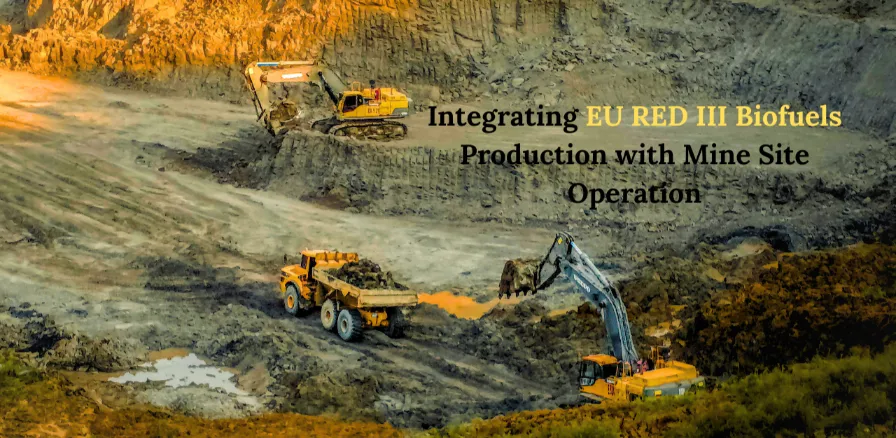
Heavy mining excavator loading a dump truck in an open-pit mine, illustrating the text "Integrating EU RED III Biofuels Production with Mine Site Operation."

The Green Mining Ecosystem: Integrating EU RED III Biofuels Production with Mine Site Operation

Fuelling the Future: How EU RED III Biofuels are Greening the Mining Ecosystem

The worldwide mining industry, always seen through the sneak peek of heavy machinery and significant environmental impact, is now profoundly transform. As global demands for sustainability deepen, a new paradigm is emerging: the Green Mining Ecosystem. Behind This innovative approach to energy, particularly the integration of on-site production of EU RED III biofuels, facilitating a truly sustainable future.

The mandate for Green Mining

Mining operations are energy conservation system, relying mainly primarly on fossil fuels from excavation and transportation to processing and site rehabilitation. This dependence contributes significantly to greenhouse gas emissions and high operational costs, making the shift to greener alternatives not just an environmental requirement but also an economicrequirement. The Green Mining Ecosystem imagines acomprehensive approach where environmental directions, resource efficiency, and renewable energy are weaved into every stage of the mining lifecycle.
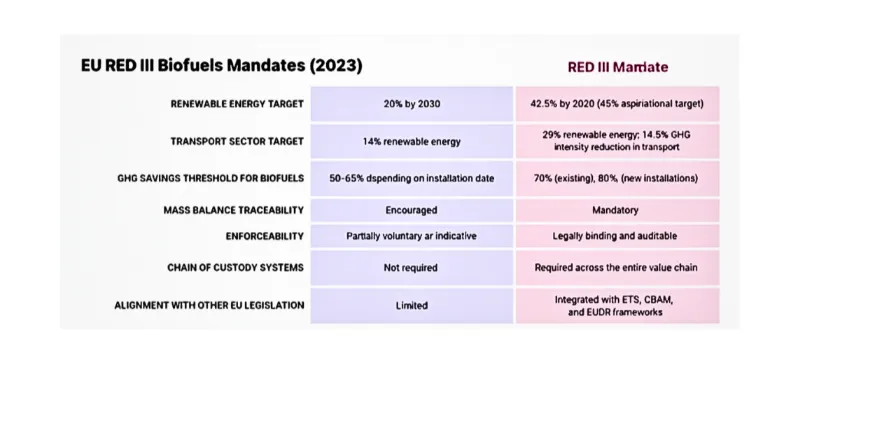
A table titled "EU RED III Biofuels Mandates (2023)" comparing RED II (2018) and RED III (2023) mandates. The RED III column shows: Renewable Energy Target 42.5% by 2020 (45% aspirational), Transport Sector Target 29% renewable energy (14.5% GHG intensity reduction), GHG Savings Threshold for Biofuels 70% (existing) and 80% (new installations), Mass Balance Traceability Mandatory, Enforceability Legally binding and auditable, Chain of Custody Systems Required across the entire value chain, and Alignment with other EU Legislation Integrated with ETS, CBAM, and EUDR frameworks.

What are EU RED III Biofuels and Why Are They Key?

The European Union’s Renewable Energy Directive (RED III) is a legislation that drives the transition to cleaner energy. EU RED III biofuels are liquid or gaseous fuels for transport produced from biomass that meet strict with sustainability and greenhouse gas saving criteria set out in the directive. These criteria ensure that the biofuels genuinely contribute to decarbonization without causing adverse impacts like deforestation or food insecurity.

For the mining sector, embracing EU RED III biofuels means:

  • Significant Emissions Reduction: Replacing diesel and other fossil fuels with EU RED III biofuels directly cuts down emissions from mining vehicles and equipment.
  • Enhanced Energy Security: Producing biofuels on-site reduces dependency on external fuel supply chains, offering greater stability and control over energy costs.
  • Circular Economy Principles: Biofuel production can often utilize waste streams (e.g., agricultural waste from nearby communities, or even certain organic byproducts from mining processes if applicable), encouraging a circular economy model.
  • Regulatory Compliance: Sticking to EU RED III biofuels standards helps mining companies meet increasingly strict environmental regulations and sustainability targets.
  • Utilization of Local Biomass: Studies highlight the feasibility of converting forestry and timber industry waste into biocoal or biofuels for use in energy-intensive mining operations, especially in regions transitioning away from coal . This can help mines meet EU renewable energy targets and reduce reliance on fossil fuels (Paredes et al., 2022).

Incorporating Biofuel Production into the Mining Site Operation

Imagine a mine site that isn’t just extracting minerals but is also a hub for renewable energy production. The EU is a global leader in biogas and biomethane production, with over 10 GW installed capacity and 17,400 biogas plants as of 2015 (Scarlat et al., 2018). This is the vision of the Green Mining Ecosystem. Integration can take several forms:

  1. Sustainable Feedstock Sourcing: This could involve cultivating dedicated energy crops on recovered land, combinning with local agricultural communities for sustainable waste biomass, or exploring algae based biofuel systems in water-rich areas. The key is ensuring the feedstock meets EU RED III biofuels sustainability criteria.
  2. On-Site Conversion Technologies: Advanced biorefineries, which might use processes like gasification, pyrolysis, or anaerobic digestion, can convert biomass into liquid biofuels (e.g., biodiesel, bioethanol) or biogas right at the mine site. This minimizes transportation costs and emissions associated with fuel delivery.
  3. Fleet Conversion and Optimization: Existing mining fleets can be adapted or replaced with vehicles capable of running on EU RED III biofuels. This requires careful planning and investment in new engine technologies or modifications.
  4. Waste-to-Energy Synergies: Beyond direct fuel for vehicles, residual biomass or waste from biofuel production can be used to generate electricity or heat for other mine site operations, further closing the loop on energy sustainability.

Challenges and Opportunities Aspects

While the potential is huge, the fastest growth in ethanol production has been observed in Finland, Ireland, and the Netherlands, while Germany and France remain the largest overall producers incorporating EU RED III biofuels production into mine site operations comes with challenges (Bórawski et al., 2019). These include initial capital investment, ensuring a continous and sustainable feedstock supply, and navigating the complexities of advanced biofuel technologies. The integration of biocoal and advanced biofuels into mining regions can significantly reduce CO₂ emissions and support the EU’s climate and energy targets (Chiaramonti et al., 2021).

However, the opportunities faroverbalance the hurdles. Companies that lead this charge will not only gain a competitive advantage through reduced operational costs and enhanced energy independence but will also significantly boost their environmental credentials and social license to operate. They will be seen as pioneers in building a truly Green Mining Ecosystem, one that respects the planet while still delivering the essential resources our modern world demands.

Conclusion

The vision of a Green Mining Ecosystem powered by on-site EU RED III biofuels production is no longer a distant dream. It’s a tangible pathway to transforming one of the world’s most critical industries into a beacon of sustainability. By embracing innovative energy solutions and adhering to robust environmental standards like those set by EU RED III biofuels, mining can indeed become an integral part of our planet’s green future.

Citations

Paredes, B., Paredes, J., & García, R. (2022). Integration of biocoal in distributed energy systems: A potential case study in the Spanish coal-mining regions. Energyhttps://doi.org/10.1016/j.energy.2022.125833.

Scarlat, N., Dallemand, J., & Fahl, F. (2018). Biogas: Developments and perspectives in Europe. Renewable Energyhttps://doi.org/10.1016/j.renene.2018.03.006.

Bórawski, P., Bełdycka-Bórawska, A., Szymańska, E., Jankowski, K., Dubis, B., & Dunn, J. (2019). Development of renewable energy sources market and biofuels in The European Union. Journal of Cleaner Productionhttps://doi.org/10.1016/j.jclepro.2019.04.242.

Chiaramonti, D., Talluri, G., Scarlat, N., & Prussi, M. (2021). The challenge of forecasting the role of biofuel in EU transport decarbonisation at 2050: A meta-analysis review of published scenarios. Renewable & Sustainable Energy Reviews, 139, 110715. https://doi.org/10.1016/j.rser.2021.110715.

Learn more about HVO Diesel’s role in Sustainable Mining Operations.
The Green Mining Ecosystem: Integrating EU RED III Biofuels Production with Mine Site Operation Read More »

Large mining excavator (shovel or dragline) operating at sunset, with an overlay text reading "HVO Diesel Role In Creating A Sustainable Mining Operations

Hvo Diesel Role In Creating A Sustainable Mining Operations

Fueling the Future: HVO Diesel and the Sustainable Mining Revolution

The global mining industry stands at a critical juncture. Essential for sourcing the materials needed for the clean energy transition (think lithium for batteries and copper for wiring), it must simultaneously confront its own substantial environmental footprint. Diesel fuel, the lifeblood of heavy mining machinery, is a major contributor to greenhouse gas (GHG) emissions. The path to truly sustainable mining operations demands a holistic approach, integrating cleaner fuels with cutting-edge operational philosophies.

Hydrotreated Vegetable Oil (HVO) Diesel a game changer that offers an immediate, ‘drop in’ solution for reducing emissions, acting as a crucial bridge to a fully electrified future. HVO can reduce CO₂ emissions by up to 75–90% compared to fossil diesel, depending on the feedstock and production process (Hor et al., 2022). However, the adoption of HVO must be coupled with the transformative power of principles like Lean, Artificial Intelligence (AI), Value Stream Mapping (VSM), and Multi-Criteria Decision Making (MADM) to achieve genuine operational and environmental sustainability.

The Immediate Impact: HVO Diesel as the Green Bridge

HVO, also known as renewable diesel, is a paraffinic biofuel produced through the hydrotreating of sustainable feedstocks such as waste vegetable oils, animal fats, and residue oils. HVO use results in lower emissions of nitrogen oxides (NOx), hydrocarbons (HC), carbon monoxide (CO), and particulate matter (PM), with reductions of up to 81% for CO and 55% for PM reported in engine tests . Unlike traditional biodiesel, its chemical structure is nearly identical to fossil diesel, making it a perfect “drop-in” replacement meaning it can be used in existing diesel engines and infrastructure without modification.

Key Benefits of HVO in Mining:

  • Significant Emission Reduction: HVO can reduce net lifecycle GHG emissions by up to 90% compared to fossil diesel, depending on the feedstock source. It also dramatically lowers tailpipe emissions of particulate matter and Nitrogen Oxides (NOx).
  • Operational Compatibility: HVO maintains comparable performance to conventional diesel. Mining operators can switch without needing to purchase new machinery, retrain staff, or update maintenance schedules.
  • Superior Stability and Storage: HVO is highly stable, resisting microbial growth and oxidation better than fossil diesel and traditional biodiesel. This is crucial for remote mining sites that require long-term fuel storage for backup power and equipment.
  • All-Weather Performance: Its high cetane number and superior cold-flow properties ensure reliable operation even in the extremely low temperatures often found at mining sites.

By adopting HVO, mining companies can immediately and efficiently reduce their Scope 1 emissions, demonstrating a clear commitment to environmental stewardship while maintaining the operational reliability essential for a heavy-duty industry.

Operational Excellence: The Lean Principle and VSM

VSM is a visual tool used to map material and information flows, identify waste, and streamline processes. When adapted for environmental goals (E-VSM), it helps pinpoint sources of pollution and inefficiency, supporting targeted sustainability improvements (Garza‐Reyes et al., 2018). While HVO addresses the fuel side of sustainability, transforming the process side requires embracing operational excellence philosophies like Lean and Value Stream Mapping (VSM).

The Lean Principle: Eliminating Waste in Mining

The Lean philosophy, originated by Toyota, is centered on maximizing value to the customer while minimizing waste. In mining, “waste” takes many forms that impact both efficiency and environmental harm:

  • Overproduction: Mining more ore than immediately necessary, leading to excess inventory and energy use.
  • Waiting: Equipment downtime, waiting for fuel, maintenance, or rock clearance.
  • Transportation: Unnecessary movement of materials, personnel, and equipment.
  • Inventory: Excessive stockpiles or spare parts storage.
  • Motion: Inefficient vehicle routes or non-value-adding movement by personnel.
  • Defects/Over-processing: Poor drill and blast precision leading to inefficient crushing, or faulty equipment requiring costly rework.

Applying Lean principles involves continuously identifying and eliminating these wastes. For instance, optimizing haul road design to reduce travel distance directly cuts fuel consumption (HVO or otherwise), vehicle wear, and emissions—a double win for efficiency and the environment.

Value Stream Mapping (VSM): Visualizing the Flow

Value Stream Mapping (VSM) is the core Lean tool for visualizing the entire process flow—from exploration to final product shipment identifying non value adding steps, or waste.

By mapping out the current state (including material flow, information flow, and time metrics like cycle time and lead time), mining teams can pinpoint bottlenecks and areas of excessive energy consumption. A VSM exercise might reveal that a specific step, such as material handling at a transfer point, contributes disproportionately to particulate emissions and fuel burn due to slow cycle times or idling. Developing a Future State Map allows the team to design leaner, faster, and more energy-efficient processes.

The Intelligence Factor: AI Integrations

To achieve next-level optimization, Lean and VSM must be powered by Artificial Intelligence (AI). AI integrations in mining operations drive efficiency, predictive maintenance, and real-time decision-making, significantly amplifying sustainability efforts.

AI’s Role in Smart Mining:

  • Predictive Maintenance: AI and machine learning can optimize key mining processes, such as load management, fuel consumption, and equipment efficiency. For example, AI models have reduced haul truck fuel use by 9–12% in surface mines, directly lowering emissions and operational costs (Soofastaei & Fouladgar, 2021).
  • Haulage Optimization: AI algorithms can analyze real-time data on road conditions, truck location, and dump queue lengths to dynamically assign the most efficient routes and speeds. This prevents idling (a huge source of fuel waste) and minimizes travel distance, drastically reducing HVO consumption per ton of material moved.
  • Process Control: AI models can optimize energy-intensive processes like crushing and grinding by autonomously adjusting variables based on ore characteristics. This ensures the least amount of energy (and therefore, less HVO-generated power) is used to achieve the desired output.
  • Safety and Environmental Monitoring: AI can process satellite imagery and drone data to monitor tailings dam stability and detect environmental changes, ensuring compliance and proactive risk mitigation.

AI provides the real time, data driven intelligence required to execute Lean strategies on a massive, dynamic scale, ensuring the operation is consistently running at its lowest carbon and cost intensity.

Strategic Decision-Making: Multi-Criteria Decision Making (MADM)

Switching to HVO and implementing complex digital strategies like AI integration requires careful evaluation of multiple, often conflicting, factors. This is where Multi Criteria Decision Making (MADM) methodologies become essential.

MADM for Sustainable Choices:

MADM tools, such as the Analytic Hierarchy Process (AHP) or TOPSIS, provide a structured, quantitative approach to evaluate complex options. In the context of a sustainable mining transition, MADM helps leadership balance:

  1. Environmental Impact (GHG/Particulate Reduction): The primary sustainability goal.
  2. Economic Cost (Fuel Price, Capital Investment, Maintenance): The bottom line.
  3. Operational Risk (Supply Chain Stability, Performance Loss): Reliability.
  4. Social License to Operate (Community Relations, Regulatory Compliance): Stakeholder value.

For instance, a MADM framework could be used to evaluate: HVO vs. LNG vs. Full Battery Electric Fleets. While HVO is the low-risk, it offers less total decarbonization than electrification. MADM allows the organization to systematically weigh the initial high capital cost and charging infrastructure needs of electric fleets against the immediate emissions reduction and operational ease of HVO, guiding the investment strategy for the next decade.

A Synergy for True Sustainability

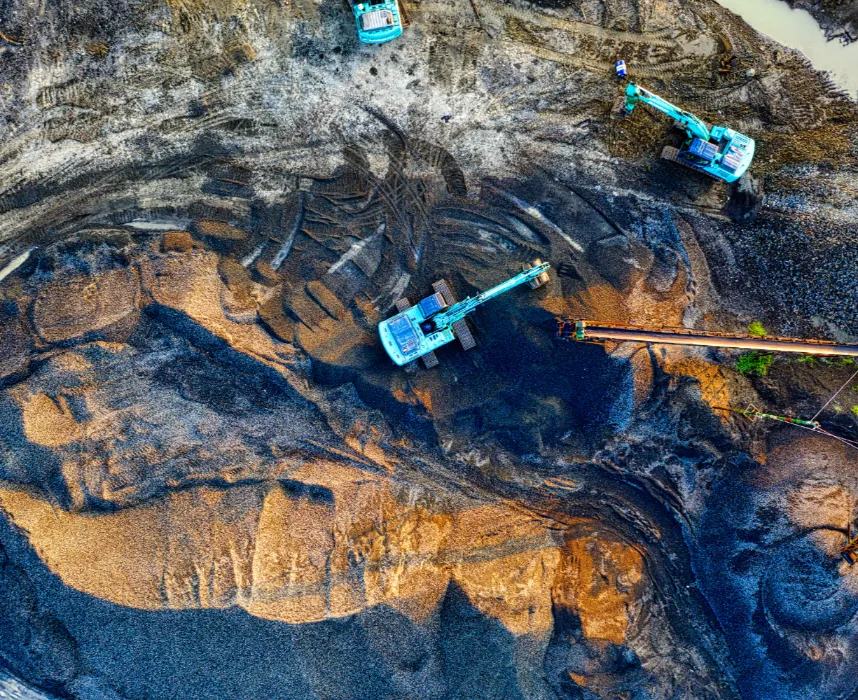
Aerial view of an open-pit mine with several teal-colored excavators and mining equipment working on piles of dark earth and golden-brown aggregate, showing tire tracks and a conveyor belt.

The successful creation of sustainable mining operations hinges on a synergistic blend of technology and philosophy. HVO Diesel offers the immediate, tangible reduction in the largest operational emission source. However, HVO’s full potential is unlocked only when the organization is simultaneously optimized through Lean principles and visualized using VSM, making every liter of cleaner fuel count. This efficiency is then hyper-charged by AI integrations, which drive precision, predictive power, and real-time optimal performance. Finally, MADM provides the necessary framework to make complex, long-term strategic decisions that balance the competing demands of profit, people, and the planet.

By embracing this comprehensive strategy, mining—the essential supplier of the materials for a green world—can finally move beyond its reputation and become a powerful force for a truly sustainable future.

CITATIONS

Hor, C., Tan, Y., Mubarak, N., Tan, I., Ibrahim, M., Yek, P., Karri, R., & Khalid, M. (2022). Techno-economic assessment of hydrotreated vegetable oil as a renewable fuel from waste sludge palm oil.. Environmental research, 220, 115169 . https://doi.org/10.1016/j.envres.2022.115169

Garza‐Reyes, J., Romero, J., Govindan, K., Cherrafi, A., & Ramanathan, U. (2018). A PDCA-based approach to Environmental Value Stream Mapping (E-VSM). Journal of Cleaner Production, 180, 335-348. https://doi.org/10.1016/j.jclepro.2018.01.121

Soofastaei, A., & Fouladgar, M. (2021). Improve Energy Efficiency in Surface Mines Using Artificial Intelligence. Energy Efficiency [Working Title]https://doi.org/10.5772/intechopen.101493.

The adoption of HVO is part of a global movement towards cleaner transport fuels. Countries worldwide are pursuing similar strategies; for instance, you can read more about **India’s Next Green Revolution** focusing on E20 fuel and biomethanol to decarbonize their own transport sector.

Hvo Diesel Role In Creating A Sustainable Mining Operations Read More »