Methanol Economy

Lush green grass background with text overlay "India Green E20 Fuel & Biomethanol Decarbonise Transport" where E20 is highlighted in a green box.

India Next Green Revolution: E20 Fuel and Biomethanol Dual Role in Decarbonising Transport

India’s push for a “Green Revolution” in transport centers on E20 fuel (20% ethanol blend) and biomethanol as key alternatives to fossil fuels. These biofuels promise to reduce emissions, enhance energy security, and support rural economies, but their widespread adoption faces technical, economic, and resource challenges.

The road to Net Zero by 2070 demands a radical shift in India’s energy matrix, particularly in the ever growing transport sector. As the world’s third largest energy consumer, India’s reliance on imported crude oil not only burdens its foreign exchange reserves but also contributes significantly to greenhouse gas (GHG) emissions. The solution to this dual challenge lies not in a single miracle cure, but in a portfolio of indigenous, renewable, and sustainable fuels. At the heart of this national energy revolution are two game changers: E20 fuel and biomethanol.

The Immediate Accelerator: Understanding E20 Fuel India‘s Mandate

India’s Ethanol Blended Petrol (EBP) Programme is perhaps the most aggressive and successful biofuel initiative in recent history. By advancing the target of 20% ethanol blending in petrol (E20) from 2030 to 2025, India has signaled an unwavering commitment to biofuels.

Effectiveness and Emission Impacts of E20 Fuel

E20 blends can be used in existing petrol engines without major modifications, offering significant reductions in carbon monoxide (CO), hydrocarbons (HC), particulate matter (PM), and particulate number (PN) emissions up to 44% in some cases . However, E20 use often leads to increased nitrogen oxide (NOx) emissions and a slight reduction in fuel economy (about 4%). Long-term studies show minimal impact on engine performance and durability, with a minor reduction in ozone formation potential (Mohamed et al., 2024). 

The Policy Push: Why E20 is a National Imperative

The push for E20 fuel India is driven by a powerful three-pronged strategy:

  • Energy Security and Forex Savings: Blending ethanol, a domestically produced fuel, with petrol significantly reduces the need for crude oil imports. This measure is projected to save billions of dollars in foreign exchange annually, bolstering India’s energy self-reliance and insulating the economy from global oil price volatility.
  • Environmental Gains: Ethanol burns cleaner than pure petrol. The government estimates that the use of E20 fuel can cut carbon monoxide emissions by up to 50% in two-wheelers and 30% in four-wheelers compared to unblended petrol. This is a crucial step in combating urban air pollution and meeting India’s climate targets.
  • Rural Prosperity and Circular Economy: The ethanol supply chain provides a vital link between the agricultural and energy sectors. By procuring ethanol from crops like sugarcane, maize, and surplus/damaged food grains, the programme guarantees stable income for farmers—effectively turning them into ‘Urjadaatas’ (energy providers). This also promotes a circular economy by utilising agricultural surplus and waste.

Navigating the Challenges of Mass Rollout

Despite the significant benefits, the rapid rollout of E20 fuel has encountered a few headwinds that must be addressed for sustained success.

  • Vehicle Compatibility and Consumer Concerns: A major challenge is the millions of vehicles sold before 2023 that were not originally designed or calibrated for a 20% ethanol blend. Consumers have reported issues such as a marginal drop in fuel efficiency (estimated at 1-2% for newer cars and up to 6-7% for older models), as well as concerns about engine wear, corrosion, and warranty voidance. The government and automotive industry are working to ensure that newer models are E20-compliant and to provide clarity on retrofitting older vehicles.
  • The Food vs. Fuel Debate: Although the policy encourages the use of surplus and waste material, a large-scale shift to crop-based ethanol raises questions about land-use changes, water intensity (especially for sugarcane), and potential implications for food security if essential food grains are diverted.
  • Ensuring Sustainability of Feedstock: To mitigate the ‘Food vs. Fuel’ concern, the focus must shift towards second generation (2G) ethanol production, which uses agricultural residues like rice straw, cotton stalk, and bagasse. This not only diversifies feedstock but also addresses the massive problem of agricultural waste burning.

The Long-Term Vision: Biomethanol as the Hydrogen-Ready Fuel

Biomethanol is a leading candidate for liquid organic hydrogen carriers (LOHCs), enabling safe, efficient hydrogen storage and transport (Valentini et al., 2022). While E20 fuel provides an immediate, scalable solution for light-duty vehicles, a truly deep decarbonisation strategy requires exploring high energy density, sustainable fuels for the future, particularly for the hard to abate sectors like long haul trucking and shipping. This is where biomethanol steps in as a vital part of the energy mix.

The Power and Versatility of Biomethanol

Biomethanol is a sustainable version of methanol, chemically identical to its fossil counterpart but produced from renewable sources such as municipal solid waste, agricultural residue (biomass), or captured carbon dioxide CO2 (e-methanol). Its role in India’s green revolution is multifaceted:

  • A Fully Green Fuel for Transport: Methanol can be used directly as an automotive fuel (M15, M85, M100 blends) or to power next-generation engines. It has a high-octane rating, offering superior engine performance, and its combustion results in significantly lower emissions of Sulphur Oxides (SOx), Nitrogen Oxides (NOx), and Particulate Matter compared to diesel.
  • The Best Green Hydrogen Carrier: Biomethanol is a highly efficient and safe liquid carrier for green hydrogen. It can be stored and transported using existing infrastructure and then easily converted into hydrogen on demand via reforming technology. This makes it a practical, immediately available bridge to the hydrogen economy, bypassing the significant logistical challenges of storing and transporting cryogenic or compressed hydrogen.
  • A Chemical Industry Decarbonizer: Beyond fuel, biomethanol is a fundamental building block for hundreds of chemical products, including formaldehyde, acetic acid, and various plastics. Replacing fossil methanol with biomethanol offers a direct path to decarbonising these energy-intensive industrial sectors.

Integrating Biomethanol into India’s Strategy

To fully harness the potential of biomethanol, India must:

  1. Develop Waste-to-Methanol Infrastructure: Incentivise the creation of large-scale facilities that convert municipal solid waste and agricultural residues into biomethanol. This simultaneously solves a waste management crisis and creates an indigenous fuel source.
  2. Pilot Methanol-Driven Fleets: Launch pilot projects for methanol-blended fuel in long-haul trucks, buses, and marine vessels to gather performance data and build public confidence, similar to the initial rollout of the EBP programme.
  3. Establish Clear Blending Standards: While the focus is currently on ethanol, the government should lay the groundwork for methanol blending standards to attract private investment and provide regulatory certainty.

A Dual Strategy for a Decarbonised Future

The Indian transport sector is too large and diverse for a one size fits all solution. The combination of E20 fuel and biomethanol offers a pragmatic, phased approach to decarbonisation:

E20 fuel is the immediate, volume-based solution, leveraging India’s strong agricultural base to transition the existing fleet and provide crucial energy security. Biomethanol represents the next leap—a strategic fuel for the future that can unlock the hydrogen economy and address the emissions from the hardest-to-abate segments. Together, they form the cornerstone of India’s indigenous and sustainable energy policy, paving the way for the nation’s “Next Green Revolution.”

Citations

Mohamed, M., Biswal, A., Wang, X., Zhao, H., Harrington, A., & Hall, J. (2024). Impact of RON on a heavily downsized boosted SI engine using 2nd generation biofuel – A comprehensive experimental analysis. Energy Conversion and Management: Xhttps://doi.org/10.1016/j.ecmx.2024.100557.

Valentini, F., Marrocchi, A., & Vaccaro, L. (2022). Liquid Organic Hydrogen Carriers (LOHCs) as H‐Source for Bio‐Derived Fuels and Additives Production. Advanced Energy Materials, 12. https://doi.org/10.1002/aenm.202103362.

India Next Green Revolution: E20 Fuel and Biomethanol Dual Role in Decarbonising Transport Read More »

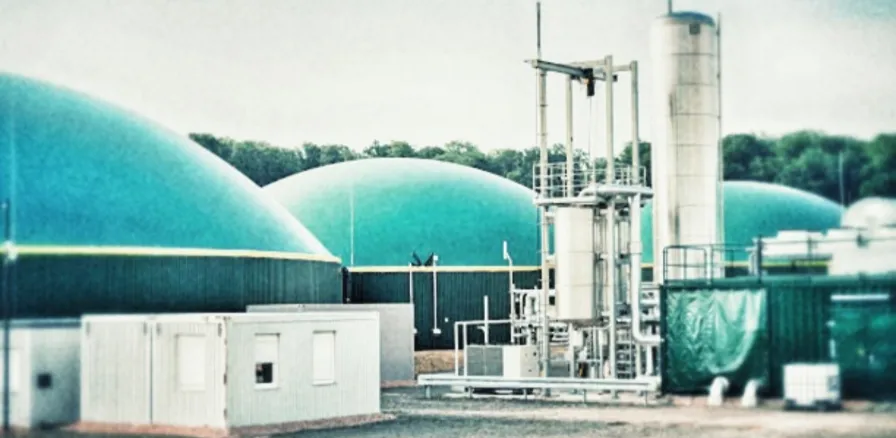
Biogas plant with large storage domes

Biogas to Methanol in India: Prospects and Barriers

Biogas to Methanol in India: A Pathway to a Sustainable and Self Reliant Future

India, with its ambitious goals for a “Methanol Economy” and a commitment to a net-zero future, is at a crossroads. The country’s growing energy demand, along with its large agricultural waste and organic residue, creates a unique chance to turn biogas into a clean, versatile fuel, methanol. However, this change comes with challenges. Although the future looks promising, we need to tackle important social, environmental, and financial obstacles to realize the full potential of this technology. This approach offers a way to transform abundant biogas resources into methanol, a versatile fuel and chemical feedstock, while reducing reliance on fossil fuels and lowering greenhouse gas emissions.

The Promising Prospect: Why Biogas to Methanol?

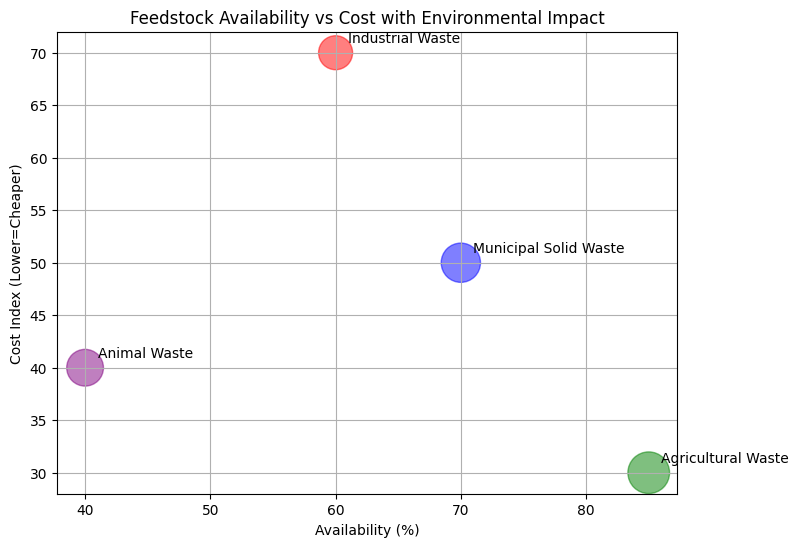
Methanol is a strategic energy product with multiple applications. It can be used as a clean-burning fuel for transportation (blended with petrol and diesel), a domestic cooking fuel, and a feedstock for various chemicals. Producing methanol from biogas, a product of anaerobic digestion of organic waste, offers a compelling solution to several of India’s pressing problems.  India generates large amounts of agricultural, municipal, and industrial waste, which can be converted to biogas. Using this biogas for methanol production supports waste valorization and a circular economy, turning waste into valuable products Gautam, P., , N., Upadhyay, S., & Dubey, S. (2020). 

First, it offers a way to achieve energy independence. India’s dependence on imported crude oil and natural gas creates a big economic burden. By producing methanol locally from plentiful biomass and organic waste, the country can greatly cut its import costs, which is a main goal of the NITI Aayog’s “Methanol Economy” program.

Second, it tackles the twin problems of waste management and air pollution. India produces millions of tons of agricultural waste and municipal solid waste each year. Much of this is poorly managed, resulting in landfill fires, methane emissions, and stubble burning. These issues lead to serious air pollution, especially in northern India.
Biogas-to-methanol can be economically viable, especially with policy support or carbon tax (Scomazzon, M., Barbera, E., & Bezzo, F. (2024).

Biogas-to-methanol plants can convert this waste into a valuable resource, creating a circular economy. The process also generates high-quality organic manure (digestate), which can replace chemical fertilizers, thereby improving soil health.

Third, it plays a major role in fighting climate change. Methane, the main part of biogas, is a powerful greenhouse gas that has a much greater effect than carbon dioxide over a short period. By capturing and turning biogas into methanol, we stop these emissions from getting into the atmosphere. The methanol we produce is a low-carbon fuel that can replace fossil fuels, which helps cut down greenhouse gas emissions even more.

The Roadblocks: Barriers to Implementation

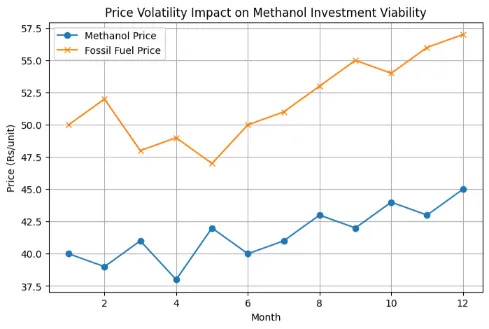
Methanol and fossil fuel price comparison

Despite these clear benefits, several hurdles stand in the way of widespread adoption of biogas-to-methanol technology in India. Policy, technology maturity, and supply chain issues remain challenges in India (Deng et al., 2024).

1. Financial and Economic Barriers

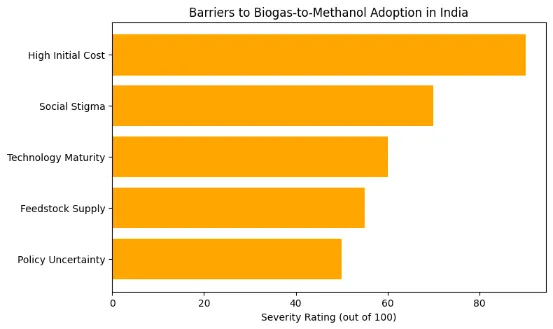
The high initial cost of setting up a biogas-to-methanol plant is probably the biggest challenge. A typical biogas plant already requires a significant investment for small operations. The extra equipment needed for gas upgrading and methanol production increases the costs even more. Lack of financing mechanisms and high upfront costs make it difficult for investors to fund large-scale biogas-to-methanol plants. This is a primary barrier identified by experts across sectors. Long payback periods and limited access to credit discourage private sector participation, especially for small and medium enterprises (Irfan et al., 2022). This makes it hard for project developers, especially smaller ones, to get financing.

Furthermore, the economic viability is heavily dependent on several factors that are often unpredictable. The cost and consistent supply of feedstock (agricultural waste, municipal solid waste, etc.) can be highly volatile. The price of methanol in the market, which is influenced by global fossil fuel prices, can also fluctuate, making it challenging to guarantee a stable return on investment.Targeted subsidies and feed-in tariffs for biogas and methanol production can make projects financially viable, especially for larger plants .

Investment support covering a high percentage of capital costs (up to 90–100%) is necessary for profitability in large-scale projects .

Innovative financing models and public-private partnerships can help mobilize capital and reduce risk  The current low import price of methanol in India also creates a disincentive for local production (Singh, Kalamdhad, & Singh, 2024).

Solutions and Prospects:

  • Policy Support and Subsidies: The government can help by providing capital subsidies and low-interest loans for project developers. This would lower the initial financial burden and draw in private investment.
  • Offtake Guarantees: Implementing a fixed-price offtake mechanism, similar to the SATAT (Sustainable Alternative Towards Affordable Transportation) initiative for compressed biogas (CBG), would provide financial security to project developers and de-risk investments.
  • Creating a Market for By-products: Establishing a robust market for the organic digestate (bio-fertilizer) would create a second revenue stream, improving the overall project economics.
  • Scalability and Decentralization: Comprehensive resource mapping and standardized procedures can reduce uncertainty and attract investment. Developing modular and scalable technologies can allow for smaller, decentralized plants that are more manageable and can cater to local waste streams, reducing transportation costs.Consistent policy frameworks and streamlined regulatory processes are needed to lower barriers and encourage private sector involvement.
Barriers to biogas adoption in India

2. Social and Cultural Barriers

The social and cultural context in India presents its own set of challenges. One of the primary barriers is the perception and acceptance of using certain types of waste, particularly animal and human waste, as feedstock for energy production. While anaerobic digestion is a well-established and hygienic process, social stigmas and a lack of awareness can hinder community acceptance and feedstock collection.

Additionally, the transition from traditional cooking fuels like firewood and LPG to methanol-based stoves requires behavioral change. In rural areas, where biogas could be a game-changer, the free availability of firewood often makes the financial investment in a biogas system seem unappealing to households, even with subsidies. The lack of awareness about the environmental and health benefits of clean cooking fuels is also a major impediment.

Solutions and Prospects:

  • Public Awareness Campaigns: Educating the public about the scientific process of anaerobic digestion, the hygienic nature of the technology, and the benefits of the resulting bio-fertilizer is critical. Highlighting the health benefits of using clean cooking fuel is also vital.
  • Community Engagement: Involving local communities in the planning and operation of biogas-to-methanol plants can foster a sense of ownership and build trust. This can be facilitated through community-level cooperatives.
  • Incentivizing Clean Cooking: Government programs that offer subsidized methanol cookstoves and a reliable supply of methanol canisters can encourage households to switch from traditional fuels.

3. Environmental and Technical Barriers

While the overall environmental impact of biogas-to-methanol is positive, there are specific challenges that need to be addressed. The process itself can be energy-intensive, and the source of the energy used is a key factor in determining the overall carbon footprint. For example, if the plant relies on fossil fuels for its own power needs, the environmental benefits are diminished. The management of the carbon dioxide (CO₂) separated from the biogas, a significant by-product, is also a critical issue. If vented, it reduces the overall environmental advantage.

Technologically, while the core processes of biogas reforming and methanol synthesis are well-established, their integration on a commercial scale, especially with a focus on efficiency and cost-effectiveness, is an ongoing area of research and development. Issues like the presence of impurities in biogas (such as hydrogen sulfide) can poison catalysts and reduce the efficiency and lifespan of the plant.

Solutions and Prospects:

Graph comparing waste types and costs
  • Integration with Renewable Energy: Powering biogas-to-methanol plants with renewable energy sources like solar or wind power would maximize their environmental benefits, ensuring a truly green process.
  • Carbon Capture and Utilization (CCU): Integrating carbon capture technologies to utilize the separated CO₂ for methanol synthesis or other industrial applications (e.g., urea production) is a key solution. This not only enhances the methanol yield but also makes the process more carbon-neutral.
  • Indigenous Technology Development: Investing in research and development to create robust, efficient, and cost-effective indigenous technologies for biogas upgrading and methanol synthesis is crucial. The work being done by institutions like BHEL and IIT Delhi in this area shows promise.
  • Operational Training: Providing technical training to local personnel for the operation and maintenance of the plants will ensure their long-term viability and reduce reliance on external expertise.

Calculating the Benefits: Financial and Environmental Impact

The financial and environmental benefits of a successful biogas-to-methanol ecosystem in India are substantial and multifaceted.

Financial Benefits

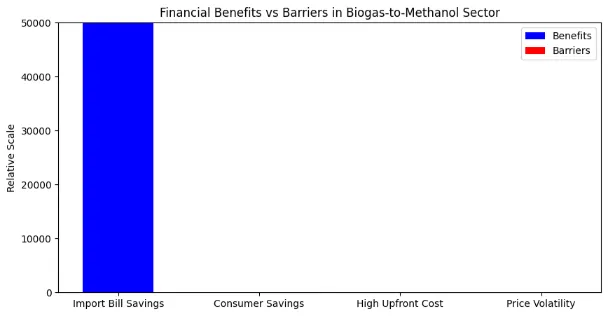
  • Reduced Import Bill: NITI Aayog estimates that the “Methanol Economy” can reduce India’s oil import bill by approximately Rs 50,000 crore annually. A significant portion of this saving can be attributed to indigenous methanol production from biomass .
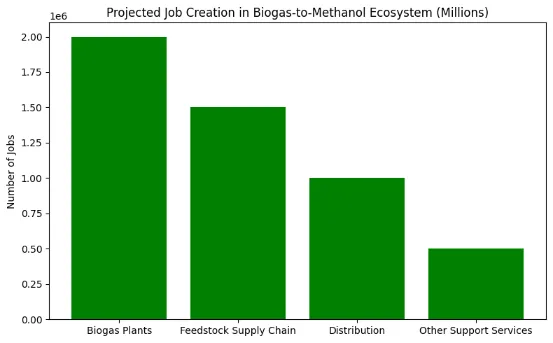
  • Job Creation: The establishment of biogas-to-methanol plants, along with the supporting supply chain for feedstock and distribution, can create millions of jobs, particularly in rural and semi-urban areas. NITI Aayog’s roadmap projects the creation of around 5 million jobs.
  • Rural Economic Development: The ability to sell agricultural residue as feedstock provides a new source of income for farmers, discouraging the practice of stubble burning and empowering rural economies.
  • Savings for Consumers: The use of methanol as a cooking fuel can result in significant savings for households, potentially lowering fuel costs by 20% compared to traditional LPG Ali, S., Yan, Q., Razzaq, A., Khan, I., & Irfan, M. (2022).
Bar chart of job creation projections

Environmental Benefits

Biogas-to-methanol development in India faces several environmental and technical barriers that limit its large-scale adoption. Addressing these challenges is essential for realizing the full potential of biogas as a sustainable methanol feedstock.

Bar graph comparing financial benefits and barriers
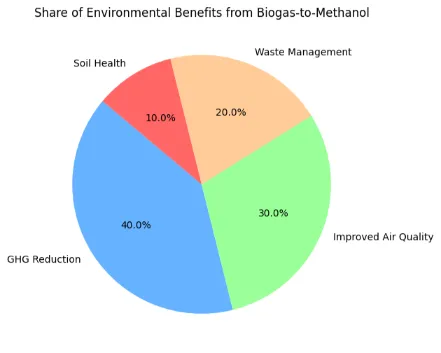
  • Greenhouse Gas Reduction: By preventing methane emissions from waste and replacing fossil fuels, biogas-to-methanol can be a major tool for climate change mitigation. The use of a 15% methanol blend (M15) in gasoline, for example, is estimated to reduce GHG emissions by up to 20%.
  • Improved Air Quality: The elimination of stubble burning and the use of clean-burning methanol fuel in vehicles and cookstoves will significantly reduce particulate matter, SOx, and NOx emissions, leading to a dramatic improvement in urban and rural air quality.
  • Waste Management: The widespread use of anaerobic digestion provides a sustainable and circular solution for managing organic waste, reducing the burden on landfills and improving sanitation.
  • Soil Health: The organic digestate produced as a by-product is a high-quality bio-fertilizer that can improve soil structure and fertility, reducing the need for chemical fertilizers, which have their own significant environmental footprint.
Pie chart of environmental benefits

Conclusion

The path from biogas to methanol in India looks promising. It offers a strong mix of economic, social, and environmental benefits. While there are challenges, such as high initial costs, social acceptance, and technology adoption, these challenges can be overcome. With focused policy support, public awareness efforts, and smart investment in local research and development, India can create a strong and decentralized biogas-to-methanol system. This will help the country reach its goals of energy independence and establishing a “Methanol Economy.” It will also foster a greener, cleaner, and more self-sufficient future for its people. The shift isn’t just about a new fuel; it involves creating a sustainable approach to waste management, energy security, and caring for the environment.

Citations

Bio-methanol as a renewable fuel from waste biomass: Current trends and future perspective. Fuel, 273, 117783. https://doi.org/10.1016/j.fuel.2020.117783.

Alternative sustainable routes to methanol production: Techno-economic and environmental assessment. Journal of Environmental Chemical Engineeringhttps://doi.org/10.1016/j.jece.2024.112674.

Biogas to chemicals: a review of the state-of-the-art conversion processes. Biomass Conversion and Biorefineryhttps://doi.org/10.1007/s13399-024-06343-1.

 Prioritizing and overcoming biomass energy barriers: Application of AHP and G-TOPSIS approaches. Technological Forecasting and Social Changehttps://doi.org/10.1016/j.techfore.2022.121524.

Unravelling barriers associated with dissemination of large-scale biogas plant with analytical hierarchical process and fuzzy analytical hierarchical process approach: Case study of India.. Bioresource technology, 131543 . https://doi.org/10.1016/j.biortech.2024.131543.

Modeling factors of biogas technology adoption: a roadmap towards environmental sustainability and green revolution. Environmental Science and Pollution Research International, 30, 11838 – 11860. https://doi.org/10.1007/s11356-022-22894-0.

Internal Link Card

Rice Straw to Methanol in India

Explore the potential of converting rice straw, a major agricultural waste, into methanol. This article examines the feasibility, emissions, and how this can boost India’s biofuel industry.

Read the Full Article

Biogas to Methanol in India: Prospects and Barriers Read More »

Industrial methanol production plant with tall distillation towers under a blue sky, overlaid text reading “The Methanol Economy – A Sustainable Future for Energy and Industry.”

The Methanol Economy: A Sustainable Future for Energy and Industry

The Methanol Economy: A Sustainable Future for Energy and Industry

The world is at a crossroads in its quest for sustainable energy solutions. As climate change intensifies, the need for cleaner, renewable energy sources has never been more critical. Enter the methanol economy a transformative concept that positions methanol as a key player in reducing our reliance on fossil fuels. This blog post will delve into what the methanol economy entails, its production processes, applications, and the environmental benefits it offers. By understanding this emerging field, environmental professionals and sustainability advocates can better advocate for policies and practices that support a greener future.

Understanding Methanol

What is Methanol?

Methanol, also known as methyl alcohol or wood alcohol, is a colorless, water-soluble liquid with a mild alcoholic odor. Its chemical formula is CH3OH, and it is the simplest of all alcohols, containing only one carbon atom2. It has a melting point of -97.6°C, a boiling point of 64.6°C, and a density of 0.791 kg m-3 at 20°C2. Methanol’s energy content is 5420 kcal kg-1 or 173.6 kcal mol-1

Historical context of methanol usage.

Methanol, originally called “spirit of the box,” was isolated in 1661 by Robert Boyle through the distillation of boxwood. Its chemical formula, CH₃OH, was identified in 1834 by Jean-Baptiste Dumas and Eugene Peligot. The term “methyl” originates from the Greek words for wine (methu) and wood (hyle). Initially produced as a by-product of wood distillation for charcoal manufacturing, methanol became known as wood alcohol. In the early 19th century, it was used for lighting, cooking, and heating but was later replaced by cheaper fuels like kerosene. Up until the 1920s, wood was the primary source of methanol, which was increasingly needed for the chemical industry. During World War I, methanol, along with other essential chemicals like acetone, was produced in charcoal furnaces. With the Industrial Revolution, coal replaced wood as a source, leading to the development of coal and coke gasification processes to produce methanol.

Production Methods

Overview of traditional production methods (natural gas reforming).

Methanol production primarily relies on synthesis gas (syngas), a mixture of carbon monoxide (CO) and hydrogen (H₂), derived from fossil fuels like natural gas or coal. Natural gas is the preferred feedstock, and syngas is produced through processes such as steam reforming, partial oxidation, or dry reforming. In steam reforming, methane reacts with steam over a catalyst at high temperatures to generate CO and H₂.

Emerging technologies (biomass conversion, CO2 utilization).

Methanol production is evolving with emerging technologies that include biomass conversion and CO₂ utilization:

Biomass Conversion:

  • Methanol can be made from biomass, such as wood, agricultural by-products, and municipal waste, via thermochemical or biotechnological pathways.
  • Biomass gasification followed by syngas purification and conversion is a common approach.
  • Biomethanol can also be produced from agricultural/industrial residual biomass and CO₂ from fossil fuel combustion.
  • The technology is still advancing, with performance influenced by plant type, process, raw materials, and co-products.

CO₂ Utilization:

  • Methanol can be synthesized by recycling CO₂ from natural, industrial, or atmospheric sources using hydrogen generated from renewable energy.
  • This process reduces fossil fuel reliance and CO₂ emissions.
  • Efficient catalysts (e.g., copper and zinc) aid CO₂ conversion, and a two-step process involving the reverse water-gas shift reaction (RWGS) is also viable.

Other Methods:

  • Methanol can be directly synthesized via methane’s oxidative or partial oxidation without producing syngas.

Methanol is a versatile feedstock for producing formaldehyde, acetic acid, ethylene, and propylene, which are used in polymers, synthetic fibers, adhesives, paints, biodiesel, anti-knock additives, solvents, and antifreeze.

The Role of Methanol in Energy Transition

Methanol as a Fuel Source

Methanol is a liquid chemical that can be used in many everyday products. It has a relatively high volumetric theoretical energy density.

It can be used as a fuel for transportation, either directly in internal combustion engines (ICE) or as a hydrogen carrier in fuel cells.

Methanol can be produced from fossil fuels, biomass, municipal waste, and even CO2 from flue gases.

Renewable methanol, or biomethanol, is produced from sustainable biomass or from carbon dioxide and hydrogen produced from renewable electricity.

Methanol is considered a “bridge fuel” between a fossil fuel-dominated present and a sustainable future.

Comparison with Traditional Fossil Fuels

Methanol can replace gasoline, diesel fuel, and natural gas.

Methanol has a high octane number, which allows for higher compression ratios and more efficient energy use in appropriate engines.

Compared to fossil fuels, the combustion of biomethanol can reduce nitrogen oxide emissions by up to 80%, carbon dioxide emissions by up to 95%, and eliminates sulfur oxide emissions.

Methanol is a cleaner-burning fuel than gasoline, reducing emissions of particulate matter, nitrogen oxides, and sulfur oxides.

Methanol is easier to handle, store, and transport than hydrogen.

Unlike hydrogen, methanol does not require energy-intensive procedures for pressurization or liquefaction.

Advantages of Using Methanol in Transportation

Methanol can be used in existing ICEs with only minor modifications.

It can be blended with gasoline, enhancing the fuel’s octane number and reducing CO2 emissions.

Methanol can act as a substitute for diesel fuel in modified diesel engines.

Methanol can be used in fuel cells for electricity generation, either through reforming to hydrogen or directly in direct methanol fuel cells (DMFC).

Methanol and dimethyl ether (DME), derived from methanol, are both excellent transportation fuels.

The use of methanol in the transportation sector is growing and is expected to change the need for and production capabilities of methanol.

Methanol can be used in cars, trucks, trains, and locomotives.

Methanol can also be used as a marine fuel, offering reduced emissions compared to heavy fuel oil.

Methanol Fuel Cells

Methanol can be used in fuel cells to generate electricity.

In some fuel cell applications, methanol is catalytically reformed with water to produce hydrogen and carbon dioxide; the hydrogen is then used to generate electricity.

Direct methanol fuel cells (DMFCs) are a type of fuel cell that can directly oxidize methanol with air to produce electricity, without requiring prior reforming4. This makes the technology simpler, lighter, and more efficient for some applications.

DMFCs are suited for portable electronic devices, motor scooters, and eventually cars.

DMFCs have the potential to eliminate the need for a methanol steam reformer, reducing the weight, cost, and complexity of the system while improving fuel economy.

DMFCs emit only water and CO2, eliminating other pollutant emissions (NOx, PM, SO2, etc.).

Current research is focused on the use of methanol as fuel for road and sea transport, as well as for use in fuel cells.

Fuel cells that use methanol have higher efficiencies than internal combustion engines, but their power output is currently limited and their lifetimes are shorter.

Hybrid systems combining fuel cells and batteries are being developed and tested in marine applications

Environmental Benefits of the Methanol Economy

Reducing Greenhouse Gas Emissions
Methanol produced from renewable sources can significantly reduce greenhouse gas (GHG) emissions compared to fossil fuels. Renewable methanol has the potential to lower carbon emissions by 65% to 95%, depending on the feedstock and conversion process. Methanol derived from renewable raw materials, such as wood residues and black liquor, can achieve a 75%–90% reduction in GHG emissions. Combustion of methanol produced from renewable sources is considered carbon neutral because the CO2 released during combustion equals the CO2 absorbed by plants during photosynthesis. Biomethanol also reduces nitrogen oxide emissions by up to 80%, carbon dioxide emissions by up to 95%, and eliminates sulfur oxide emissions. Methanol derived from black liquor and farmed wood can reduce well-to-wheel (WTW) CO2 emissions by 96% and 95%, respectively, while methanol from CO2 capture and recycling achieves reductions of about 98%. Additionally, e-methanol produced using renewable electricity can result in virtually zero WTW GHG emissions. Methanol’s combustion also produces lower emissions of SOx, NOx, volatile organic compounds (VOCs), and particulate matter (PM), making it an environmentally friendly alternative to traditional fuels.

Statistical Data on Emissions Reductions
The environmental benefits of methanol depend on its production process. Methanol production from coal and natural gas emits 3.8 and 1.6 kg CO2 per kg of methanol, respectively. In contrast, bio-methanol derived from woody biomass emits only 0.2 kg CO2 per kg of methanol. Methanol produced from CO2 recycling and hydrogen sourced from renewables has WTW CO2 equivalent emissions of 1.74 g CO2e/MJ, a significant reduction compared to the 83.8 g CO2e/MJ of fossil fuels. Methanol from black liquor, wood waste, and farmed wood has WTW CO2e emissions of 3.3, 5.32, and 7.32 g CO2e/MJ, respectively, while crude glycerin and biogas-based methanol result in slightly higher emissions of 30.6 and 34.4 g CO2e/MJ. Additionally, methanol produced from CO2 exhaust gas emissions emits about 0.8 kg CO2 per kg of methanol. Bio-methanol production overall can reduce GHG emissions by 25%–40% compared to fossil-based methanol.

Waste Utilization
Methanol can be synthesized from various waste materials, such as municipal solid waste (MSW), forestry residues, and agricultural by-products. Utilizing MSW to produce renewable methanol not only creates value from unrecyclable garbage but also alleviates the burden on landfill sites. Thermochemical gasification processes can convert carbon-rich residues from waste into synthesis gas, which serves as a precursor for methanol production. Similarly, biogas from landfills, wastewater treatment plants, and animal waste can be processed into methanol. By converting waste materials into methanol, the need for fossil fuels decreases, and greenhouse gas emissions are further mitigated. The waste-to-methanol (WtM) process reduces GHG emissions by approximately 40% compared to fossil methanol and by 30%–35% compared to bio-methanol.

Sustainable Practices
Methanol production can be enhanced by integrating it with other industrial processes to improve energy efficiency and minimize emissions. For instance, excess heat and off-gases from steel plants can be used for methanol production. Employing renewable energy sources such as solar, wind, or hydro-energy to power the production process or to generate hydrogen for CO2-based methanol synthesis significantly decreases environmental impact. Carbon capture technologies also play a pivotal role in sustainable methanol production by recycling CO2 emissions from industrial exhaust streams or directly from the air. The concept of the “Methanol Economy” emphasizes recycling CO2 from human activities and industrial sources into methanol, which can then be used as fuel or as a carbon source for synthetic hydrocarbons.

Several companies are leading sustainable methanol initiatives, including BioMCN in the Netherlands, Carbon Recycling International (CRI) in Iceland, and Enerkem in Canada. The use of methanol as a marine fuel is also gaining traction, as it provides an effective solution to reduce emissions from shipping. Some shipping companies are actively securing e-methanol and bio-methanol from dedicated production plants. These sustainable practices demonstrate how the methanol economy can significantly contribute to reducing emissions and promoting cleaner energy systems.

Economic Implications of the Methanol Economy

Understanding the Methanol Economy: Economic Implications and Opportunities

The methanol economy is emerging as a significant player in the global energy landscape, presenting various economic implications including market trends, job creation, and potential cost savings across multiple sectors. As the world shifts towards sustainable energy solutions, methanol’s role as a clean fuel and versatile chemical feedstock is becoming increasingly vital.

Market Trends and Forecasts

Rapid Growth: The global methanol market has experienced substantial growth, with production more than doubling from 32 million tonnes in 2004 to 70 million tonnes in 2015. By 2023, the market was valued at approximately $30.9 billion, projected to reach $38 billion by 2028, growing at a CAGR of 4.2%.

Diverse Applications: Methanol’s applications have expanded significantly. By 2016, its use in fuel applications accounted for over 20% of total consumption, up from less than 1% in 2000. This includes its role in producing methyl tert-butyl ether (MTBE), which is a common fuel additive.

Emerging Sectors: The methanol-to-olefins (MTO) process has become a rapidly growing sector, representing 12% of methanol consumption in 2016. The demand for methanol is further driven by its use as a feedstock in chemicals and polymers .

Global Demand: Countries like China are leading the way in utilizing methanol as an automotive fuel, while the bio-methanol market is expanding particularly in Europe. Projections suggest that maritime sector demand could exceed 200 million tonnes annually by 2050 due to decarbonization efforts.

Investment Trends: The methanol industry is shifting towards larger-scale production facilities, with new plants being constructed across regions including China, Qatar, and the United States. Capital investments are crucial, with typical U.S. plants driving about $1.1 billion in capital spending.

projected Growth of Methanol Production

Job Creation in the Methanol Sector

Employment Opportunities: The expansion of the methanol industry, especially in renewable production, is expected to create numerous jobs. For instance, U.S. methanol plants are projected to generate around 2,700 direct jobs with an average salary of $72,500, alongside thousands of indirect and construction jobs.

Rural Development: The methanol economy can provide job opportunities in rural areas through the cultivation of energy crops and the establishment of new production facilities. This shift supports local economies while promoting sustainable practices.

Integration with Other Industries: The integration of methanol production with existing industrial processes, such as steel manufacturing, can lead to additional job creation and business opportunities.

 Flow chart of Economic expansion of the Methanol

Economic Opportunities for Communities

  • Cost Savings Potential: Transitioning from diesel to methanol in power generation can yield significant cost savings. For example, a switch at a 100 MW power plant has demonstrated economic benefits .
  • Local Markets Development: Establishing local or national markets for fuel-grade methanol can provide economic advantages for communities by reducing reliance on imported fossil fuels and mitigating price volatility .
  • Waste Utilization: Methanol production from waste materials offers an innovative solution for managing unrecyclable garbage while generating revenue streams for communities .
  • Biomass Resources Advantage: Countries rich in biomass resources, like Canada and Brazil, stand to gain a competitive edge in large-scale renewable methanol production due to optimized feedstock supply chains .

Challenges Facing the Methanol Economy: Technological and Regulatory Hurdles

The methanol economy holds significant promise for sustainable energy solutions, yet it encounters various challenges that hinder its widespread adoption. These challenges primarily stem from technological barriers and regulatory hurdles that must be addressed to unlock the full potential of methanol as a clean fuel and versatile chemical feedstock.

Technological Barriers

  • Commercialization of Biomass Production: The production of methanol from biomass is not fully commercialized, necessitating advanced technologies to convert biomass into clean synthesis gas. This limitation restricts the scalability of bio-methanol production.
  • High Production Costs: The commercial-scale production of bio-methanol is hindered by high production and investment costs. Current methods for gasification, which is crucial for bio-methanol production, vary in performance, making economic competitiveness a challenge.
  • Energy Conversion Efficiency: The energy conversion efficiency from natural gas to methanol is around 67-68%, while from biomass it is about 60%. These efficiencies impact the overall viability of methanol as a sustainable energy source.
  • Electricity Requirements: Technologies that utilize hydrogen (H2) and carbon dioxide (CO2) as feedstocks require substantial electricity, raising concerns about the sustainability of the resulting methanol based on the energy source used.
  • Development Needs: While direct electrochemical reduction of CO2 to methanol is a possibility, it requires further technological development. Additionally, current methods for extracting hydrogen from methanol need improvement to enhance efficiency.
  • Scaling Challenges for E-Methanol: Scaling up e-methanol production remains a significant challenge, with projections indicating that sufficient volumes may not be achieved before 2030. The high investment costs associated with constructing bio-methanol plants further complicate commercialization efforts.
  • Corrosion Issues: Methanol’s properties can lead to corrosion issues due to its miscibility with water and high dipole moment. This necessitates specific material considerations in storage and handling.
  • Autoignition Difficulties: Methanol has a low cetane number, making autoignition difficult in certain engine applications, which may limit its use in transportation fuels.

Regulatory Hurdles

  • Legislation on Emissions: Government legislation aimed at reducing emissions presents challenges for compliance, creating opportunities for renewable fuels like bio-methanol but also imposing strict regulations that can slow adoption.
  • Need for Political Action: Transitioning to a circular economy alongside the methanol economy requires effective political action and policies that support investments in green methanol infrastructure, particularly in ports.
  • Incentives for Renewable Fuels: To drive demand for renewable fuels, including methanol, incentives such as sub-quotas are essential. Without these incentives, market adoption may lag.
  • EU Emission Trading System (ETS): While the EU ETS provides some incentive to reduce emissions, it may not fully bridge the price gap between fossil marine fuels and e-methanol, limiting competitiveness.
  • International Regulations: The International Maritime Administration is developing regulations for using methanol as a marine fuel under the International Code of Safety for Ships using Gases or other Low-Flashpoint Fuels (IGF CODE). Completion of these regulations will simplify approval processes but is still pending.
  • Resistance from the Oil Industry: The widespread adoption of methanol as a transportation fuel faces resistance from the oil industry and special interest groups, complicating regulatory acceptance and market entry.
  • Environmental and Social Impact Policies: Policies that account for the environmental and social impacts of fossil fuels and attribute economic value to emissions reductions are needed to enhance the competitiveness of bio-methanol.

Innovative Methanol Projects: Showcasing Versatility and Impact Across Sectors

The methanol economy is gaining traction worldwide, with several innovative projects illustrating its potential in various applications. From renewable methanol production to its use as a fuel in transportation and power generation, these initiatives highlight methanol’s versatility and its significant impact on different sectors.

Production of Renewable Methanol

  • BioMCN (Netherlands): This company is a pioneer in producing sustainable feedstock for transport and chemical applications, serving as a case study for commercial renewable methanol production. Their efforts underscore the viability of bio-methanol in the energy market.
  • Carbon Recycling International (CRI): CRI is at the forefront of renewable methanol production, partnering with Chinese automaker Geely to test methanol-powered vehicles. Their FReSMe project in Sweden aims to produce 50 kg of methanol per hour from residual blast furnace gases, demonstrating innovative use of industrial emissions.
  • Enerkem (Canada): Operating a biofuels plant in Alberta, Enerkem exemplifies industrial-scale renewable methanol production. Their facilities set a global standard in biofuels, chemicals, and waste management, showcasing effective waste-to-energy conversion.
  • Pilot Plant in Japan: A pilot facility has successfully synthesized methanol from CO2 and H2, achieving a production rate of 50 kg CH3OH/day with an impressive 99.8% selectivity for methanol.
  • German Plant Initiative: A planned facility aims to produce one ton of methanol daily from 1.5 tons of CO2 captured from cement factory emissions, utilizing hydrogen generated through renewable energy electrolysis.
  • Mitsubishi Heavy Industries (Japan): This company operates a pilot plant for producing methanol from cellulosic biomass, testing various feedstocks like ryegrass and rice straw to enhance sustainability.
  • VärmlandsMetanol (Sweden): Plans are underway for a full-scale plant producing 100,000 tons of fuel-grade methanol annually from forest residues while also providing district heating.
  • Chemrec (LTU Green Fuels, Sweden): This facility demonstrates the production of bio-DME where methanol serves as an intermediate at a pilot scale, with an annual capacity of 1,400 tons of renewable methanol.

Methanol as a Fuel

  • METHAPU Project: Funded by the EU, this initiative developed a methanol-powered solid oxide fuel cell (SOFC) for marine vessels. A prototype installed on a cargo ship achieved 45% power efficiency with low emissions.
  • FellowSHIP Project: This project installed a 330-kW molten carbonate fuel cell (MCFC) on a Norwegian offshore supply vessel capable of using either LNG or methanol as fuel.
  • Effship Project: Aimed at finding efficient solutions for the shipping industry, it identified methanol as one of the most cost-effective alternatives to heavy fuel oil for retrofitted ships.
  • SPIRETH Project: This project tested methanol and DME at full pilot scale in marine engines, demonstrating successful installation of storage and distribution systems on passenger ferries.
  • GreenPilot Project: A pilot boat was converted to operate on methanol, showcasing its feasibility in maritime applications.
  • Billion Miles Company (Singapore): Developing a 100% methanol engine for harbor craft highlights the potential for this fuel in local maritime operations.
  • China’s Automotive Sector: Methanol is widely used as an automotive fuel and for producing plastics through the methanol-to-olefins (MTO) process.
  • Electricity Generation in Israel: Methanol has been utilized in gas turbines for electricity generation and blended with gasoline to enhance performance.
  • Locomotive Experiments in South Africa and Brazil: These experiments demonstrate the adaptability of methanol as a power source across various transport modes.

Other Applications

Regenerative Methanol Innovation Network (Germany): Several small-scale projects are underway to develop innovative methods for producing renewable methanol efficiently.

Mitsui Chemicals (Japan): Constructed a demonstration plant producing methanol from CO2 and hydrogen generated by solar energy through photochemical splitting, emphasizing renewable energy integration.

Blue Fuel Energy (Canada): Plans to utilize hydroelectricity alongside concentrated CO2 emissions from natural gas processing to produce sustainable methanol.

Swiss Liquid Future AG (Switzerland): Demonstrated synthesis of methanol from CO2 and H2 on a small scale, using the fuel for yachts, highlighting its application in recreational industries.

Thyssenkrupp’s Carbon2Chem Project: This initiative aims to use emissions from blast furnaces to produce methanol, showcasing industrial synergies that reduce carbon footprints.

Conclusion

The methanol economy presents a viable pathway toward a more sustainable future, offering a multifaceted approach to energy production and consumption. However, its widespread adoption hinges on overcoming various technological, economic, and regulatory challenges.

Key Points

  • Methanol’s Versatility: Methanol is a highly versatile chemical feedstock, fuel, and energy storage medium. It can be produced from diverse sources, including fossil fuels, biomass, municipal waste, and CO2. Its applications range from internal combustion engines and fuel cells to the production of other chemicals, making it an essential component of the modern energy landscape.
  • Renewable Methanol Potential: Renewable methanol, derived from biomass, biogas, or captured CO2, provides a significant opportunity to reduce greenhouse gas emissions and lessen dependence on fossil fuels. E-methanol, produced using renewable energy and sustainable CO2 sources, is particularly promising for decarbonizing the shipping sector and various industries.
  • Technological Advancements: Innovations in production technologies are critical for advancing the methanol economy. Techniques such as biomass gasification and CO2 utilization are essential for sustainable methanol production. The chemical recycling of CO2 with hydrogen—derived from water electrolysis using renewable energy—represents a key technology for producing renewable methanol.
  • Economic Considerations: The economic viability of renewable methanol relies on reducing production costs and fostering market demand. Government incentives, supportive policies, and carbon pricing mechanisms are necessary to make renewable methanol competitive with traditional fossil fuels.
  • Overcoming Barriers: The methanol economy faces several technological hurdles, including the need for more efficient production methods for biomass gasification and CO2 capture. Regulatory challenges also exist, such as the absence of standardized emissions reduction accounting. Additionally, resistance from the oil industry and the need for new infrastructure pose significant barriers to widespread adoption.
  • Global Adoption: Methanol is already utilized on a large scale in countries like China as a transportation fuel and chemical feedstock. In regions such as Europe and North America, interest in methanol as a renewable fuel for shipping and other sectors is growing rapidly.
  • Methanol in Transportation: As a transportation fuel, methanol offers numerous advantages. It does not require energy-intensive pressurization or liquefaction processes and can be easily handled, stored, distributed, and transported onboard vehicles.
  • Methanol as a Marine Fuel: The shipping industry stands to benefit significantly from methanol due to its ease of handling and combustion properties. Methanol presents low environmental risks while providing sufficient energy density for most maritime voyages.
  • Real-World Applications: Numerous successful projects demonstrate the potential of methanol as both a renewable fuel and chemical feedstock. These initiatives span various sectors—including production plants, transportation projects, and power generation applications—showcasing methanol’s versatility.

Future Outlook

The future of the methanol economy depends on continued innovation, supportive government policies, and large-scale deployment of renewable methanol production technologies.

  • Transitioning from fossil fuels to renewable methanol can be facilitated by utilizing methanol derived from fossil feedstocks as a complementary solution.
  • Developing smaller-scale methanol plants could enhance local production capabilities and increase overall usage.
  • Implementing a “well-to-wake” approach for measuring greenhouse gas emissions is crucial for capturing the benefits of e-methanol.
  • Advancements in direct methanol fuel cells (DMFC) will further improve methanol’s efficiency as a transportation fuel.

Call to Action

To promote the growth of the methanol economy:

Promote Collaboration: Foster cooperation among researchers, industry stakeholders, and policymakers to overcome barriers and accelerate the adoption of the methanol economy.

Engage with Local Policies: Advocate for policies that support the production and use of renewable methanol through subsidies, tax credits, and emission standards favoring low-carbon fuels.

Support Innovation: Encourage research and development in renewable methanol production technologies such as biomass gasification and CO2 capture.

Raise Awareness: Educate the public and policymakers about the benefits of methanol as a sustainable energy source.

chekout also the : The Methanol Economy: Turning Waste into Energy

The Methanol Economy: A Sustainable Future for Energy and Industry Read More »

Fuel gauge pointing toward empty with the words “Methanol Economy,” symbolizing energy demand and the shift toward methanol-based fuels

The Methanol Economy: Turning Waste into Energy
The Methanol Economy

The “Methanol Economy” is a concept that promotes the use of methanol as a fuel and a chemical feedstock, aiming to reduce reliance on fossil fuels and mitigate climate change. This concept includes producing methanol from various sources, including waste materials, and using it for energy storage and as a transportation fuel.

Methanol Production from Waste and sources

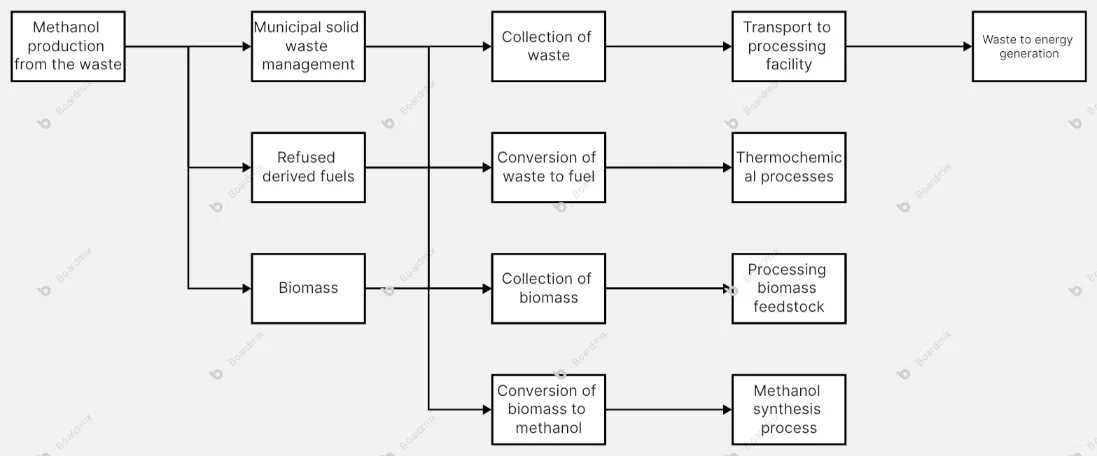
Municipal Solid Waste (MSW)
MSW is a major carbon source for methanol production through gasification. Using non recyclable MSW reduces landfill usage and waste incineration. The global MSW output is projected to grow from 1.3 billion metric tons annually to 2.2 billion by 2025.

Refuse Derived Fuel (RDF)
RDF, a fuel made from MSW, offers a sustainable methanol production method that lowers fossil fuel use and greenhouse gas emissions by about 40% compared to traditional fossil-based methods.

Biomass
Various biomass sources, including forestry residues, agricultural by products, wood waste, and black liquor from the pulp industry, are suitable for methanol production. Lignocellulosic biomass is particularly effective for gasification-based methanol synthesis. An example shown in the video by Research and development of the biofuelspk organization in which describes how you can easily make the Methanol in your home easily.

WASTE INTO METHANOL

in this simple technique a solution was made with the help of few fruit juices and add the dry leaves of some fruits and put into a bottles for 3 to 4 days. After fermentation starts in it and as shown in video the methanol can be easily extracted from the solution by process of Distillation.

Biogas
Biogas, primarily methane and CO2, comes from landfills, wastewater plants, and animal waste. It can be reformed and synthesized into methanol, with landfill gas being a notable source.

Industrial Waste and By-products
By-products like glycerol from biodiesel production and steelwork off-gases (e.g., coke oven gas) can be used for methanol synthesis, often in combination with biomass gasification products.

Carbon Dioxide (CO2)
Captured CO2 from industrial emissions or direct air capture can be converted into methanol. Recycling CO2 into methanol offers a way to mitigate climate change.

Flow diagram showing the process of methanol production from waste materials, illustrating conversion steps and energy pathways

Circular Economy Aspect

  • The “Methanol Economy” aligns with the principles of a circular economy, which aims to minimize waste and maximize resource utilization. The circular economy model emphasizes the recycling of materials and energy, where nothing is wasted.Methanol production is pivotal in the circular economy as it facilitates CO2 capture from industrial emissions and the atmosphere, utilizing it alongside hydrogen to create methanol. This approach not only reduces reliance on fossil fuels but also embodies the “Methanol Economy,” promoting a closed loop system of production and consumption. Furthermore, methanol can be derived from renewable feedstocks such as biomass and municipal waste, effectively diverting waste from landfills and transforming it into valuable resources. The hydrogen required for methanol synthesis can be sourced through renewable energy-powered electrolysis, fostering a sustainable cycle
  • Waste as a Resource: By using waste materials, such as MSW, agricultural waste, and forestry residues, as feedstocks for methanol production, the “Methanol Economy” transforms waste into a valuable resource.The integration of various waste streams into methanol production exemplifies the principles of a circular economy by minimizing waste and maximizing resource utilization. Municipal solid waste (MSW) serves as a primary feedstock, where it is converted into synthesis gas through processes like thermochemical gasification. Companies such as Enerkem utilize non-recyclable MSW to produce methanol, significantly increasing waste diversion rates and reducing landfill reliance. The global production of MSW, projected to reach 2.2 billion metric tons by 2025, presents a substantial opportunity for methanol production to make an impactful contribution to sustainable resource management.In addition to MSW, other waste types such as agricultural residues, forestry biomass, and byproducts from industries like paper and biodiesel can also be converted into biomethanol. The benefits of utilizing waste in methanol production include reduced greenhouse gas emissions, lower pollutant outputs, and potential cost reductions due to the use of locally available resources. Furthermore, the economic viability of waste-to-methanol plants is promising, with competitive production costs and attractive returns on investment. By leveraging waste materials, the methanol economy not only addresses energy needs but also tackles waste management challenges, fostering a more sustainable future.
  • Closing the Loop: The recycling of CO2 to produce methanol can create a closed-loop system, where the carbon dioxide emitted during energy production or industrial processes is captured and reused to create new fuels, reducing overall carbon emissions. This is described as an “anthropogenic carbon cycle”.

Benefits of Methanol

  • Versatile Fuel and Chemical Feedstock: Methanol is a versatile chemical feedstock and fuel that can be used in internal combustion engines (ICEs), fuel cells, and as a chemical building block.
  • Energy Storage: Methanol is a convenient way to store energy, especially compared to hydrogen, and it can be readily transported.
  • Reduced Emissions: Methanol produced from renewable sources can significantly reduce greenhouse gas emissions compared to fossil fuels.
    • Carbon Dioxide (CO2): The use of biomethanol reduces CO2 emissions. Methanol can be produced by recycling CO2 which helps to mitigate climate change.
    • Nitrogen Oxides (NOx): The combustion of biomethanol can reduce nitrogen oxide emissions.
    • Sulfur Oxides (SOx): The use of biomethanol eliminates sulfur oxide emissions.
  • Transition Fuel: Methanol can serve as a bridge fuel in the transition from fossil fuels to a sustainable future because it can be produced from fossil fuels, biomass, and recycled CO2.
  • Infrastructure Compatibility: Methanol can be used in existing infrastructure for transportation and energy production.

Methanol Production Technologies

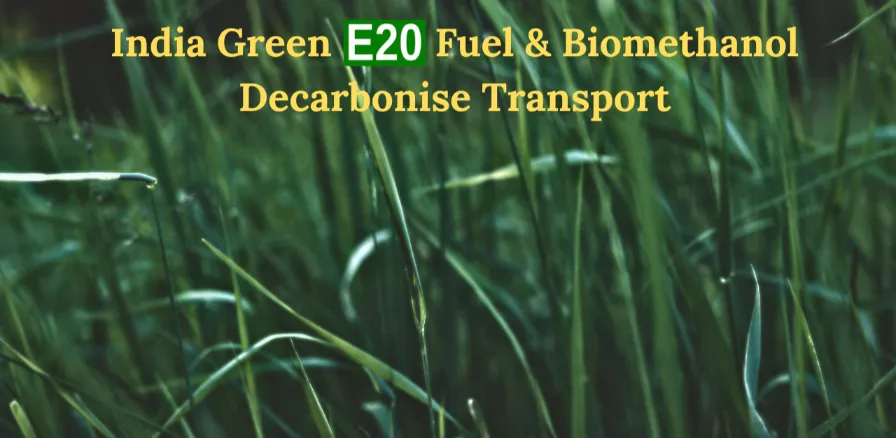
Gasification

Gasification is a thermochemical process that converts carbon containing feedstocks, such as biomass, municipal solid waste, and coal, into syngas a mixture of hydrogen, carbon monoxide, and carbon dioxide at high temperatures (700-1500°C) in an oxygen-limited environment. The process involves drying and pulverizing the feedstock, followed by heating it in a gasifier where partial oxidation occurs. This method is versatile but can face challenges like tar formation, which can complicate operations.

Electrolysis

Electrolysis involves using electricity to split water into hydrogen and oxygen, with the hydrogen then reacting with captured carbon dioxide to produce methanol. Ideally powered by renewable energy sources, this method is considered sustainable and clean. Electrolysis can also be integrated with biomass gasification to enhance methanol synthesis efficiency by utilizing the hydrogen produced alongside CO2 from gasification.

Biogas Reforming

Biogas reforming converts biogas primarily methane and carbon dioxide into syngas through reactions with steam or oxygen at high temperatures. This process valorizes waste streams from landfills, wastewater treatment plants, and animal waste, making it a valuable resource for methanol production. However, excess CO2 in biogas may need to be managed to optimize methanol synthesis.

Thermochemical Process

Thermochemical processes utilize heat to convert organic materials into syngas for methanol production. Companies like Enerkem employ a four-step method that includes sorting and treating municipal solid waste before converting it into syngas through gasification. This approach minimizes environmental impact by operating at lower pressures and temperatures, contributing to a circular economy by transforming waste into valuable biofuels and chemicals.

Flow diagram illustrating the gasification process in methanol production, showing feedstock input, gasifier unit, syngas cleaning, methanol synthesis, and final methanol output

Examples of Methanol Production from Waste

Enerkem: This company uses MSW to produce methanol and ethanol at its facility in Alberta, Canada, helping the city of Edmonton increase waste diversion from 50% to 90%.

BioMCN: This company uses biogas from various sources, including landfills and anaerobic digestion plants, to produce renewable methanol.

Carbon Recycling International (CRI): This company in Iceland uses waste CO2 from a geothermal power plant and renewable energy to produce methanol.

Södra: This company produces biomethanol from forest residues, reducing CO2 emissions by 99% compared to fossil fuels.

Revenue Generating Model

Funnel diagram showing the stages of methanol production, progressing from raw material inputs to processing steps and final methanol output

1. Primary Methanol Production & Sales

  • Fossil Fuel Sources: Methanol can be produced from natural gas, which is a primary source. Revenue would come from the sale of methanol as a fuel or chemical feedstock.
  • Biomass Sources: Biomass can be converted to methanol through gasification or fermentation. This includes sources like wood, agricultural residues, and municipal waste. Revenue comes from the sale of bio methanol.
  • CO2 Recycling: Capturing CO2 from industrial flue gasses or even the atmosphere and using it to create methanol is a key aspect of the methanol economy. This generates revenue through the sale of methanol and the potential avoidance of carbon emission costs.
  • Waste to Methanol: Using municipal solid waste (MSW) to produce methanol offers a way to both generate revenue and divert waste from landfills. This can generate revenue by selling the produced methanol and from avoided waste disposal costs.

2. Methanol as a Fuel

  • Transportation Fuel: Methanol can be used directly as a fuel in internal combustion engines (ICE) or blended with gasoline. It can also be used in fuel cells directly (DMFC) or indirectly via reforming to hydrogen. Revenue is generated by selling methanol as a transportation fuel and potentially from government incentives that encourage the use of cleaner fuels.
  • Marine Fuel: Methanol can be used as a marine fuel, potentially offering a cleaner alternative to traditional fuels. This would generate revenue from the sale of methanol to the shipping industry.
  • Power Generation: Methanol can be used in gas turbines or fuel cells for electricity generation. This creates revenue through the sale of electricity or methanol to power producers.

3. Methanol as a Chemical Feedstock

  • Production of Chemicals: Methanol is a versatile chemical feedstock used to make numerous everyday products. This includes plastics, formaldehyde, acetic acid, and more. Revenue streams come from the sale of these various chemical products derived from methanol.
  • Production of Synthetic Hydrocarbons: Methanol can be converted into olefins and synthetic hydrocarbons. These can then be used to produce gasoline and other products. Revenue comes from the sale of the derived hydrocarbons.
  • Protein Production: Methanol can be used as a feedstock for producing protein. This could generate revenue from the sale of alternative proteins.

4. Carbon Capture and Utilization (CCU) Incentives

  • Carbon Credits/Taxes: Policies that incentivize carbon capture and utilization can generate revenue. Utilizing CO2 to create methanol can help avoid carbon emission costs and potentially generate revenue through carbon credits.
  • Government Subsidies: Governments may offer subsidies or tax breaks for producing or using renewable methanol, particularly when produced from recycled carbon dioxide.

5. Technological Innovation & Licensing

  • Process Technologies: Developing and licensing innovative technologies for methanol production from various sources, such as more efficient catalysts or unique processes for converting waste to methanol.
  • Fuel Cell Technology: Innovation in direct methanol fuel cells (DMFCs) and related technologies offers revenue opportunities through patents and sales of fuel cell systems.

Funnel Diagram Concept

A funnel diagram would visually represent these revenue streams, with the widest part at the top representing the broadest input (various sources of carbon for methanol production) and narrowing down to specific applications and revenue generation at the bottom. Here’s a possible flow:

  1. Input (Top of Funnel):
    • Fossil Fuels (Natural Gas)
    • Biomass (Wood, Agricultural Waste, MSW)
    • CO2 (Industrial Flue Gas, Atmospheric Capture)
  2. Methanol Production:
    • Methanol Synthesis Plants
    • Bio-Methanol Plants
    • Waste-to-Methanol Plants
    • CO2-to-Methanol Plants
  3. Methanol Distribution & Sales:
    • Methanol as Fuel (transport, marine, power)
    • Methanol as Chemical Feedstock (plastics, other chemicals)
  4. End Products & Revenue Generation (Bottom of Funnel):
    • Sales of Methanol Fuel & Blends
    • Sales of Methanol-derived chemicals, synthetic hydrocarbons
    • Sales of Electricity from Methanol
    • Carbon Credits, Subsidies
    • Technology Licensing

This funnel model helps visualize how a diversified methanol economy can operate, generating revenue at multiple points from production to utilization. The specific size and order of each stage in the funnel can be tailored to reflect a specific business model or regional conditions.

Challenges and Considerations

Cost: The cost of biomethanol production depends on factors such as feedstock characteristics, initial investment, and plant location.

Technology Maturity: While the technology to produce methanol from waste is available, some processes are still under development.

Scale: Scaling up production to meet demand is a key challenge.

ALSO CHECKOUT METHANOL AS BIOFUEL

Conclusions

The “Methanol Economy,” by focusing on the use of waste as a feedstock for methanol, can significantly contribute to a more sustainable and circular economy.

The Methanol Economy offers a transformative approach to waste management and energy production, effectively utilizing various waste materials as feedstocks for methanol synthesis. By leveraging the versatility of waste, including municipal solid waste, agricultural residues, and biogas, this model minimizes waste while maximizing resource utilization. Key production processes such as gasification, thermochemical conversion, biogas reforming, and electrolysis facilitate the transformation of waste into valuable methanol, contributing to sustainability goals. The environmental benefits are significant, with reductions in greenhouse gas emissions and lower pollutant outputs compared to traditional fossil fuels. Economically, the production of biomethanol from waste is competitive, with favorable return on investment and potential revenue generation through carbon reduction. Overall, the Methanol Economy not only addresses energy needs but also promotes a circular economy by turning waste into a sustainable resource for fuels and chemicals.

ALSO CHECKOUT

Exploring Regional Biomass Supply Hubs: Business Potential and Funding Mechanisms

The Methanol Economy: Turning Waste into Energy Read More »