Faharyar Tahir

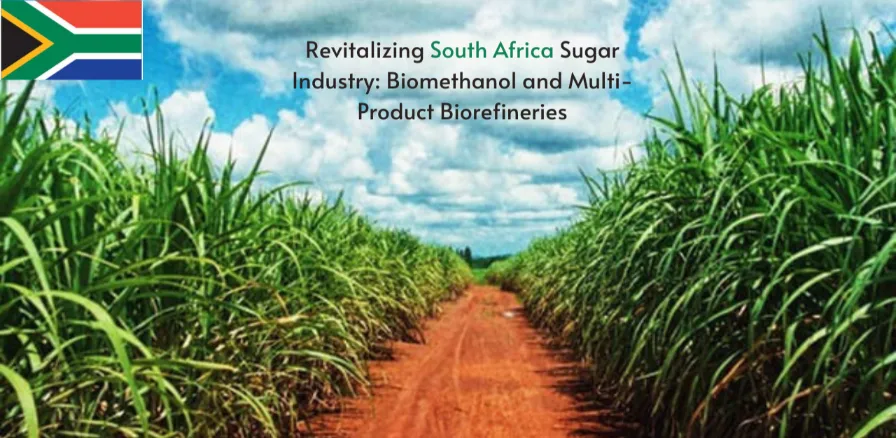
Sugarcane fields in South Africa showcasing agricultural biomass as a feedstock for sustainable biomethanol production

Sugarcane Biorefineries in South Africa: Methanol & Beyond

Introduction: Why Sustainable Biorefineries Matter for South Africa

With rising energy challenges, environmental harm, and economic pressures, South Africa faces a crucial moment in rethinking its energy and industrial future. Sustainable biorefineries provide an innovative solution that uses the country’s abundant biomass resources, especially sugarcane residues, to create renewable fuels like bio-methanol. This approach fits with global trends to reduce reliance on fossil fuels while encouraging a circular bioeconomy that supports rural development and job creation 215.

By converting agricultural waste into methanol, South Africa can greatly lessen greenhouse gas emissions, reduce waste disposal issues, and strengthen its industrial sector. This blog explores the technical, environmental, economic, and social aspects of setting up sustainable methanol biorefineries using sugarcane bagasse and trash, highlighting their strategic importance and feasibility within South Africa’s bioeconomy roadmap 216.

The Sugarcane Industry in South Africa: A Biomass Powerhouse

Sugarcane Production and Residue Availability

South Africa’s sugarcane sector is a strong agricultural foundation generating around 19 million tons of cane each year, mainly in KwaZulu-Natal and Mpumalanga. Processing this large quantity yields about 7 million tons of bagasse, which is a fibrous byproduct, along with significant amounts of trash (leaf residues). Typically seen as waste, these residues currently create environmental issues due to poor disposal, but they also represent an untapped biomass resource for sustainable biorefineries 215.

Locating biorefineries at existing sugar mills can greatly cut logistics costs and utilize established infrastructure, making methanol production from bagasse both sensible and affordable. The large quantity and geographic concentration of sugarcane residues give South Africa an excellent feedstock advantage that’s hard to match with other biomass types 27.

Why Valorize Sugarcane Residues?

  • Waste reduction: Reduce environmental problems linked to burning or dumping residues.
  • Green energy: Create renewable fuels and chemicals, cutting fossil fuel dependence.
  • Rural development: Promote local job creation and diversify farmer income streams.
  • Support circular economy: Turn waste into valuable products and close resource loops 25.

Methanol Production from Sugarcane Residues: Technology Overview

Key Process Stages

The process of converting lignocellulosic sugarcane residues into methanol involves several connected steps:

  1. Biomass Pre-treatment: Drying reduces moisture from about 45% to 15% and size reduction prepares the feedstock for gasification.
  2. Gasification: Thermochemical partial oxidation changes bagasse and trash into synthetic gas (syngas) rich in hydrogen (H₂) and carbon monoxide (CO).
  3. Syngas Cleaning & Conditioning: Removing contaminants like sulfur and tars protects the catalysts and modifies the gas composition.
  4. Methanol Synthesis: A catalytic reaction, usually with Cu/Zn/Al catalysts, turns conditioned syngas into methanol under high pressure and temperature.
  5. Purification: Distillation and separation produce high-purity methanol ready for further use 2516.

Advances in Gasification Technology

South Africa’s biorefineries can utilize established gasification technologies like fixed bed, fluidized bed, and drag bed reactors. Each technology has its own trade-offs in terms of efficiency, tar production, and scalability:

  • Downdraft fixed bed gasifiers: High tar removal and simpler cleaning.
  • Circulating fluidized bed (CFB): More even combustion and higher efficiency, but complicated operation.
  • Drag bed reactors: High throughput and nearly tar-free syngas 25.

Tailoring gasifiers for fibrous sugarcane bagasse enhances conversion rates and supports economic viability.

Cutting-edge Catalysts for Methanol Synthesis

Commercial methanol synthesis catalysts commonly use copper-based systems (Cu/Zn/Al₂O₃), often improved with promoters like cerium-zirconium oxides for better activity and durability. Ongoing research in South Africa focuses on catalysts that can handle impurities from biomass-derived syngas and enable CO₂ utilization, which is essential for sustainability and carbon-negative products 216.

Environmental Benefits of Sugarcane Based Methanol Biorefineries

Significant Reduction of Greenhouse Gas Emissions

Compared to fossil methanol, biomass-based methanol can cut lifecycle greenhouse gas emissions by 25-60%. Studies even show negative carbon footprints under optimal conditions. This directly supports South Africa’s climate commitments and helps move the country toward a low-carbon economy 216.

Efficient Waste Valorization and Pollution Mitigation

By converting waste residues into useful fuel, biorefineries address the significant environmental issue of biomass residue disposal, which otherwise causes air pollution and pest issues. Also, modern biorefineries use integrated heat and power systems to reduce overall emissions and improve energy efficiency 25.

Water and Land Use Considerations

South Africa’s water scarcity requires careful resource management. Sustainable biorefineries focus on using existing residues instead of expanding farmland, limiting water use and food-vs-fuel conflicts. Applying precision agriculture and water-efficient practices in the sugar industry can also help ease environmental trade-offs 215.

Economic Viability and Market Potential for Methanol from Sugarcane Residues

Techno economic Insights and Investment Returns

Feasibility studies show that methanol biorefineries paired with sugar mills can achieve internal rates of return (IRR) around 15-17%, making them appealing investment options. However, competing with fossil methanol pricing remains a challenge, with bio-methanol currently costing 1.5 to 4 times more 27.

Strategies to Overcome Cost Barriers

  • Government Incentives: Production subsidies, tax breaks, and grants can help close price gaps and reduce investment risks.
  • Multi-product Biorefineries: Producing bioelectricity, other chemicals (like ethanol and lactic acid), and feedstocks can improve economic stability.
  • Technological Improvements: Better gasifier efficiency and catalyst performance can bring down operational costs 27.

Global and Local Market Opportunities

With global methanol demand expected to exceed 500 million tons per year by 2050, South Africa stands to gain both domestically and through exports. Building a bio-methanol industry also enhances energy security and aligns with global shifts towards cleaner fuels 215.

Social Impacts: Empowering Rural Communities and Addressing Equity

Job Creation and Skills Development

Building and running sugarcane biorefineries can create thousands of direct and indirect jobs, especially in rural areas where sugarcane is grown. This supports poverty reduction and skill development in communities often left out of industrial growth 715.

Enhancing Rural Economies and Smallholder Involvement

Inclusive value chains allow small-scale farmers to engage in residue collection and supply, diversifying their incomes beyond traditional sugar sales. Fair contracts and training programs are vital for equity 715.

Mitigating Food-vs-Fuel Concerns

Using residues instead of dedicated energy crops avoids direct competition with food production, reducing food security risks. Combined with sustainable water use policies, this approach promotes balanced social and ecological development 215.

Policy and Regulatory Framework: Accelerating South Africa’s Bioeconomy

Current Support and Gaps

South Africa’s Bio-economy Strategy and National Development Plan provide a basis for supporting biorefineries and renewable fuels. However, clearer and more consistent incentives are needed to encourage private investment and commercialization 15.

Recommendations for Policy Makers

  • Stable incentives: Long-term subsidies and guaranteed purchase agreements.
  • Streamlined regulations: Simplify licensing and environmental permits.
  • R&D Funding: Increase funding for catalyst and gasification technology development.
  • Infrastructure Support: Enhance biomass logistics and grid integration 15.

Challenges and Future Outlook

The creation of sugarcane residue methanol biorefineries faces obstacles, including managing the biomass supply chain, high initial costs, and technical complexity. Overcoming these challenges requires:

  • Strong public-private partnerships involving government, academia, and industry.
  • Pilot and demonstration projects to prove technical and economic feasibility.
  • Capacity building for the local workforce and technology transfer 215.

South Africa’s unique combination of sugarcane biomass availability, renewable energy potential, and policy ambition positions it strongly to lead in sustainable methanol production. This will support the growth of a circular bioeconomy and a resilient energy future.

Conclusion: A Strategic Path Forward for South Africa

Using sugarcane residues for methanol biorefineries offers South Africa an effective strategy to tackle energy shortages, lower carbon emissions, and promote rural development. With proven technologies and ample resources, scaling bio-methanol production aligns with national and global sustainability goals.

To achieve this potential, focused efforts on technology optimization, policy support, multi-product biorefining, and community engagement are essential. South Africa can convert agricultural waste into a green energy and chemical hub, setting an inspiring example for sustainable development in Africa and beyond.

For more information on sugarcane biorefineries, visit:

By leveraging sugarcane residues, South Africa can unlock a sustainable future one where waste becomes wealth, energy becomes cleaner, and rural communities thrive.
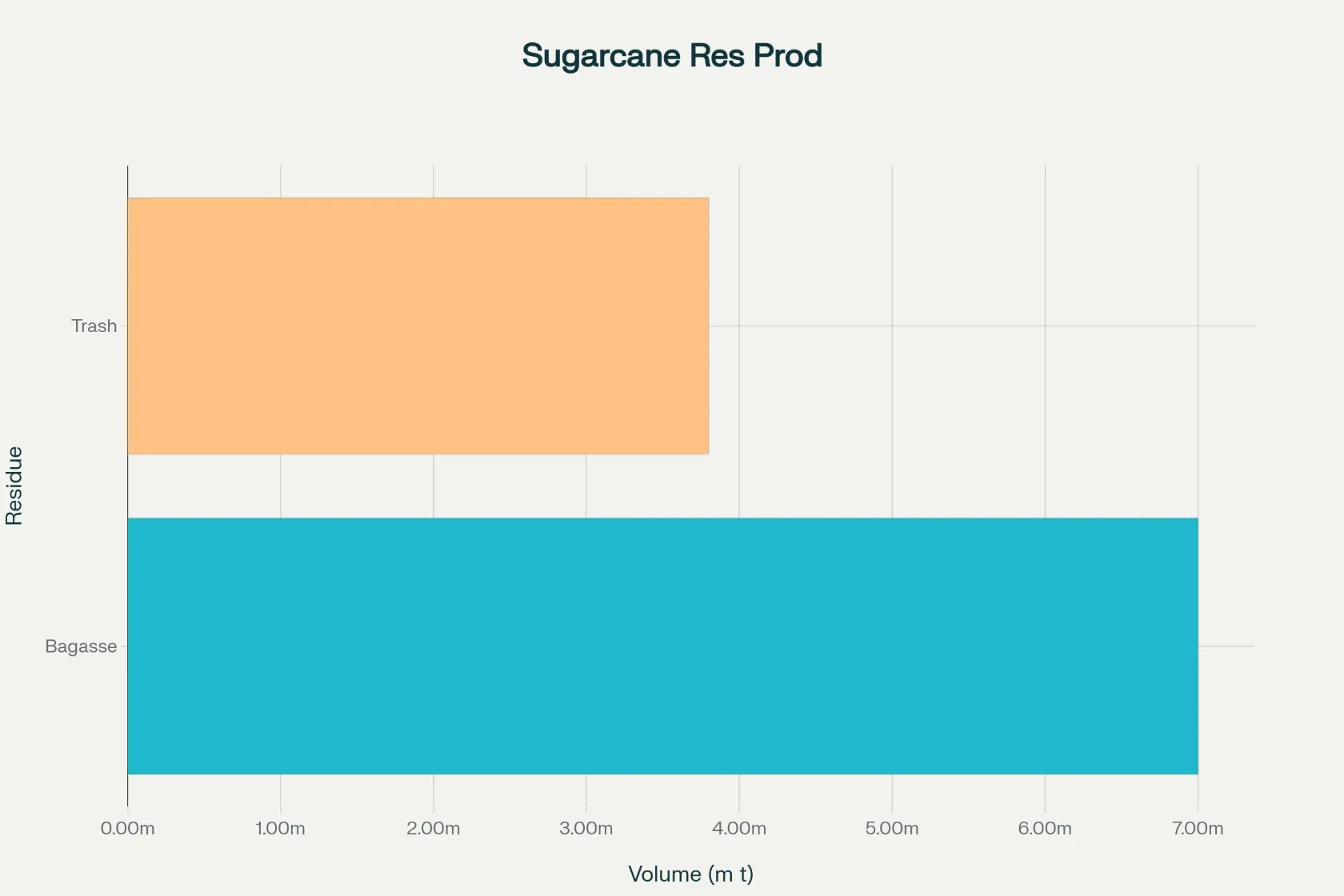
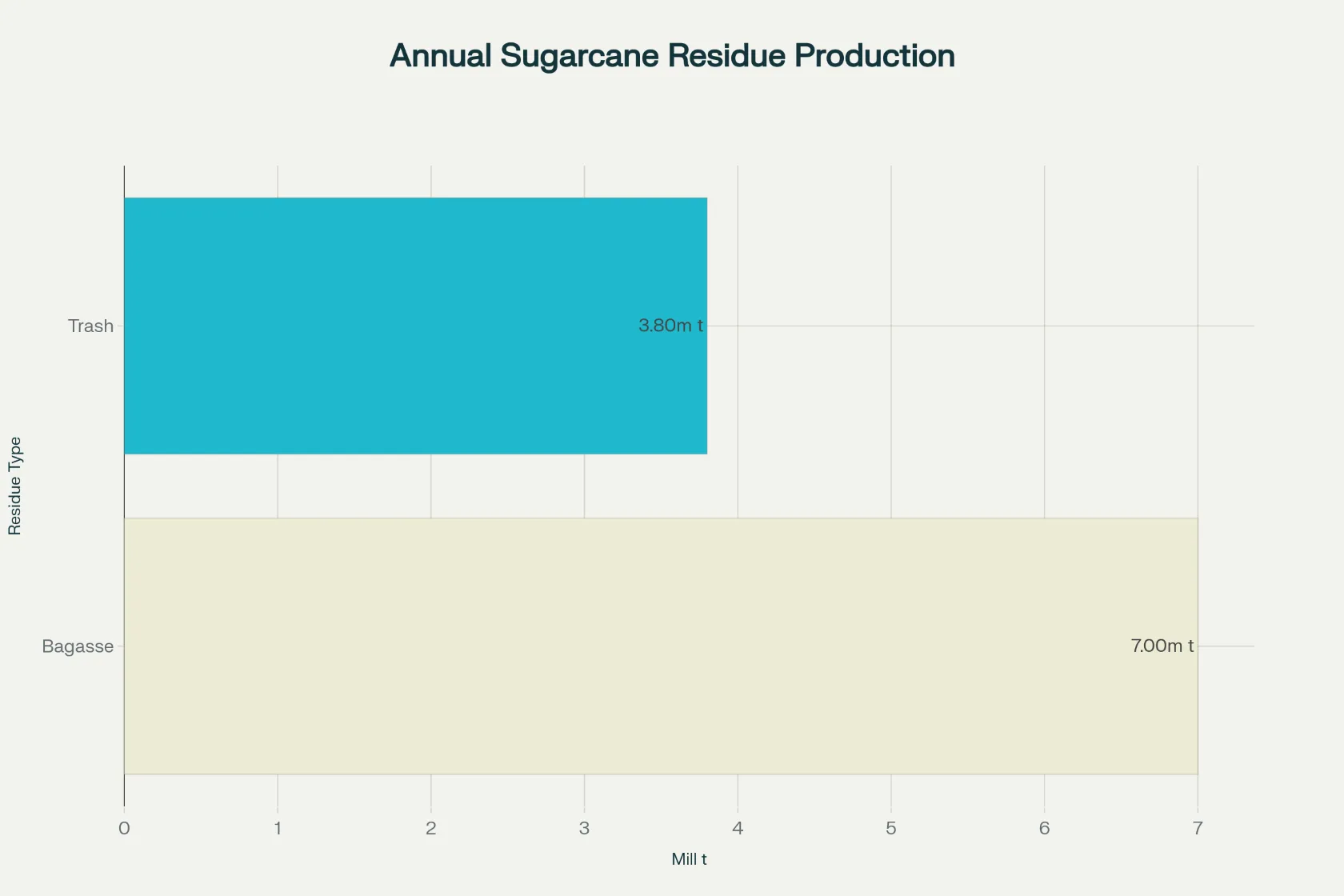
Bar chart of sugarcane residue production
Bar chart of sugarcane residue production analysis

This information offers important insights into South Africa’s expanding biorefinery sector. It highlights key players, their production capabilities, and new methods for using resources sustainably. By learning about these industry leaders and research initiatives, stakeholders can spot chances for investment, collaboration, or adopting new technologies in the bioeconomy. The detailed profiles, which include production figures and official links, serve as a trustworthy reference for anyone looking into renewable energy and circular economy solutions in South Africa, including policymakers, potential investors, and academic researchers.

South Africa’s biorefinery sector is still developing. Most large-scale operations are part of existing industries like pulp and paper and sugar production. Standalone, multi-product biorefineries are uncommon. However, several key players are adopting biorefinery principles by converting biomass into energy, chemicals, and materials to improve sustainability and economic value.

Here’s a look at the top five notable biorefinery initiatives and facilities in South Africa:

1. Sappi – Forest Biorefinery Leader

Sappi (Saiccor & Ngodwana Mills)

Sappi, known as a pulp and paper giant, is moving toward a forest biorefinery model. They extract high-value biomaterials from wood. Their operations produce dissolving wood pulp (DWP) and are expanding into nanocellulose (Valida), lignin, furfural, xylose, and organic acids. Their Ngodwana Mill hosts South Africa’s first biomass power plant under the Renewable Energy Independent Power Producer Procurement Programme (REIPPPP).

Production Details:

  • 1.15 million tons of dissolving pulp annually (Southern Africa operations).
  • Biomaterial production (lignin, nanocellulose) is growing but not yet fully commercial.

2. Illovo Sugar Africa Sugarcane Based Biorefinery

Illovo Sugar South Africa (Pty) Ltd.

Illovo, a leading sugar producer, processes sugarcane into raw, brown, and refined sugar. They also produce furfural, ethyl alcohol (from molasses), and lactulose. Their operations follow biorefinery principles by turning waste streams into chemicals and energy.

Production Details:

  • 550,000+ tons of sugar annually.
  • 65,000+ litres of high-grade ethanol per year for beverages.

3. DSI-CSIR Biorefinery Industry Development Facility (BIDF) – R&D Hub

DSI-CSIR Biorefinery Industry Development Facility (BIDF)

This government-funded R&D facility in Durban supports the development of biorefinery technology. It works with forestry, agriculture, and waste sectors to produce biofuels, biochemicals, and biomaterials. While not a commercial plant, it plays a crucial role in improving South Africa’s biorefinery capabilities.

Production Details:

  • Focuses on pilot-scale and technology development, not commercial output.

4. Ngodwana Energy Biomass Project (Sappi) Renewable Energy from Biomass

Ngodwana Energy Biomass Project (Sappi’s Ngodwana Mill)

Located at Sappi’s Ngodwana Mill, this biomass power plant generates renewable electricity from forestry waste. It contributes to South Africa’s energy transition.

Production Details:

  • One of the largest biomass-to-energy projects in the country.

5. Industrial Biogas Plants Waste to Energy Solutions

Various industrial biogas plants

Several municipal and agricultural biogas plants convert organic waste, sewage, and agro-residues into biogas for electricity, heat, and transport fuel. While smaller in scale, they represent key biorefinery applications in South Africa’s circular economy.

Production Details:

  • Decentralized operations, with no single dominant player.

Conclusion

South Africa’s biorefinery sector is still emerging. Most large-scale activities are linked to existing industries like pulp and paper (Sappi) and sugar (Illovo). Research initiatives like the CSIR’s BIDF are critical for future growth. Biomass energy and biogas projects show practical waste-to-value applications.

As technology advances, we expect more standalone biorefineries producing biofuels, biochemicals, and biomaterials at scale. For now, these five players lead the way in South Africa’s bioeconomy transition.

Biomethanol from Corn Straw: A Life Cycle Insight

Sugarcane Biorefineries in South Africa: Methanol & Beyond Read More »

China Green Methanol Vehicles

Green Methanol Vehicles in China: Energy & Cost Analysis

Green Methanol Vehicles in China: Energy & Cost Analysis – Driving Towards a Sustainable Future?

China, the world’s largest automotive market, is actively pursuing alternative fuel technologies to fight air pollution and decrease its dependence on imported oil. One promising option is green methanol, a renewable liquid fuel made from sustainable sources like biomass or captured carbon dioxide along with renewable hydrogen. This analysis explores the energy effects and cost effectiveness of green methanol vehicles in China. It looks at their potential role in the country’s move toward a cleaner transportation sector.

Green methanol vehicles are gaining attention in China as a promising pathway to reduce carbon emissions and enhance energy security. Unlike traditional methanol vehicles, which often rely on coal-derived methanol and have high emissions, green methanol is produced from renewable sources such as biomass or captured CO₂, offering significant environmental benefits.

Understanding Green Methanol:

Methanol (CH3OH), also known as wood alcohol, is a simple alcohol that can be used as a fuel. Traditional methanol production relies on fossil fuels like natural gas and coal, resulting in significant greenhouse gas emissions. Green methanol, however, offers a sustainable alternative by utilizing renewable feedstocks and energy sources throughout its production cycle.

Production Pathways for Green Methanol:

Several pathways exist for producing green methanol, each with its own energy and cost profile:

  • Biomass Gasification: This process involves converting organic matter like agricultural waste, forestry residues, or dedicated energy crops into a syngas, which is then catalytically converted to methanol.
  • Power to Methanol (PtM): This route utilizes renewable electricity to produce hydrogen through electrolysis of water. The hydrogen is then reacted with captured carbon dioxide (from industrial sources or direct air capture) to synthesize methanol.
  • Biogas Reforming: Biogas, produced from anaerobic digestion of organic waste, can be reformed to produce syngas, which is subsequently converted to methanol.

Energy Analysis of Green Methanol Production:

The energy balance of green methanol production is crucial for evaluating its sustainability. While specific energy inputs vary depending on the chosen pathway and technology, the overall goal is to minimize fossil fuel consumption and maximize the use of renewable energy sources.

  • Biomass Gasification: This method can be energy-efficient if sustainable biomass sources are readily available and transportation distances are minimized. However, the energy required for feedstock cultivation, harvesting, and pre-processing needs to be considered.
  • Power-to-Methanol (PtM): PtM is inherently energy-intensive due to the electrolysis of water and the subsequent synthesis steps. The overall efficiency of the process depends heavily on the efficiency of electrolyzers and the availability of low-cost renewable electricity.
  • Biogas Reforming: This pathway can offer a relatively energy-efficient route if biogas is produced sustainably and the reforming process is optimized.

Energy Density and Vehicle Efficiency:

Methanol has a lower energy density compared to gasoline or diesel, meaning a vehicle would need to carry a larger volume of methanol to achieve the same driving range. This can impact vehicle design and packaging. However, methanol burns cleaner than conventional fuels, potentially leading to lower emissions of particulate matter, nitrogen oxides (NOx), and sulfur oxides (SOx).

Dedicated methanol vehicles or flex fuel vehicles capable of running on both gasoline and methanol are necessary for widespread adoption. The efficiency of methanol fueled internal combustion engines (ICEs) is comparable to gasoline engines, although optimization for methanol can further improve performance.

Cost Analysis of Green Methanol Vehicles in China:

The economic viability of green methanol vehicles hinges on several factors, including the cost of green methanol production, vehicle manufacturing costs, and fuel infrastructure development.

Cost of Green Methanol Production:

Currently, green methanol production costs are generally higher than those of conventional methanol due to the higher cost of renewable energy and the relatively nascent stage of green methanol production technologies. However, costs are expected to decline as renewable energy prices continue to fall and production scales up.

  • Feedstock Costs: For biomass-based methanol, the cost and availability of sustainable biomass feedstocks are critical. For PtM, the cost of renewable electricity is the dominant factor.
  • Capital Costs: Building and operating green methanol production facilities require significant upfront investment. Technological advancements and economies of scale will be crucial for reducing capital costs.
  • Operating Costs: These include energy consumption, catalyst replacement, and maintenance. Optimizing production processes can help minimize operating costs.
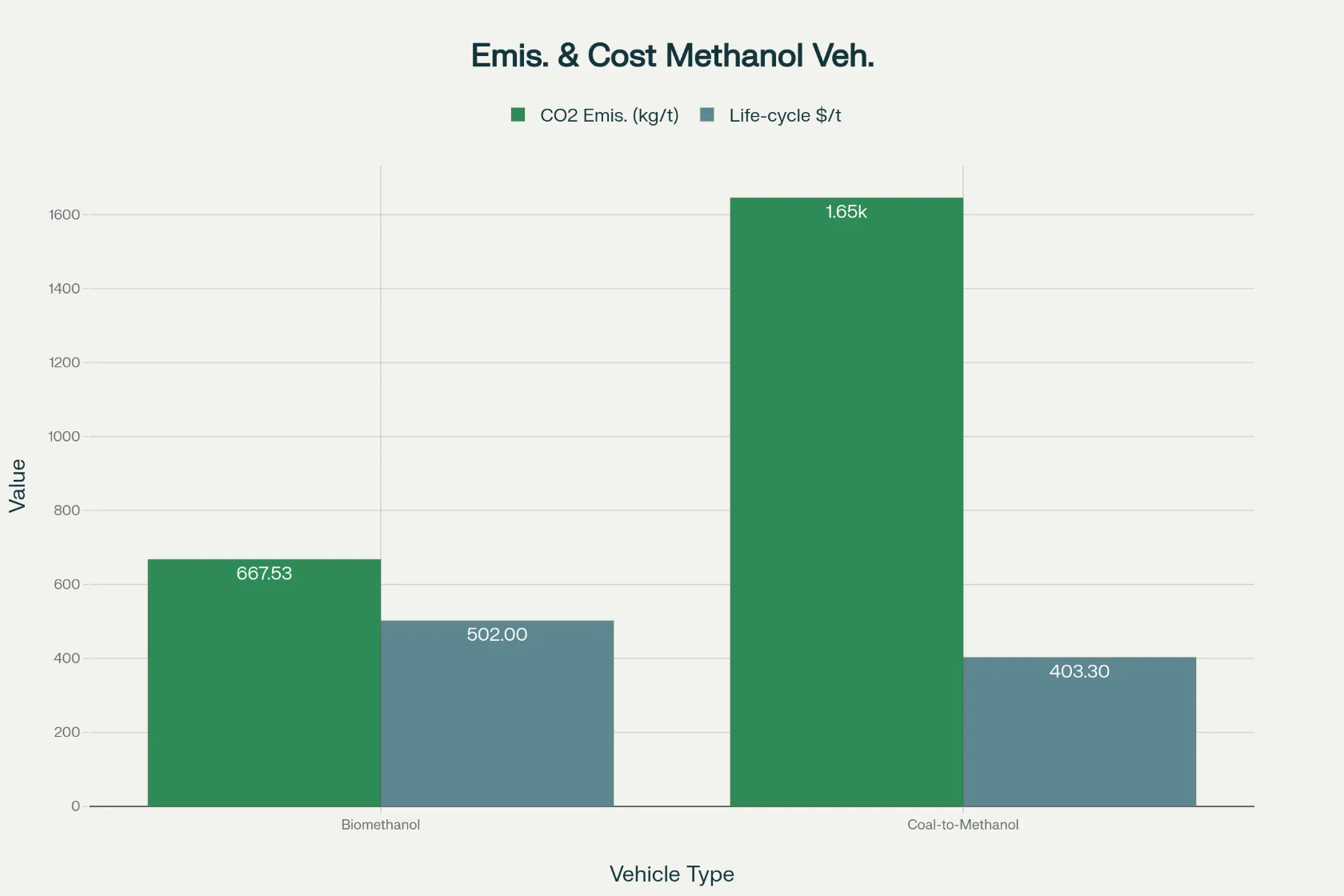
Bar chart showing biomethanol vehicles have lower CO₂ emissions but higher costs than coal-to-methanol vehicles

The image presents a comparative analysis of green methanol vehicles in China, focusing on biomethanol versus coal to methanol vehicles. It highlights the significant environmental advantage of biomethanol vehicles, which achieve a 59% reduction in CO₂ emissions (667.53 kg/ton) compared to coal to methanol vehicles (1,645.5 kg/ton). Despite having a higher life cycle cost about $502 per ton versus roughly $403 for coal to methanol biomethanol vehicles offer substantial emissions savings, underscoring their potential as a sustainable transport option. The data showcases how biomethanol vehicles currently balance higher costs with notable environmental benefits, emphasizing the importance of policy support and technological advancements to enhance economic competitiveness and accelerate adoption in China’s transport sector (Li et al., 2022).

Biomass-to-methanol vehicles (biomethanol) demonstrate the best overall performance, ranking highest in comprehensive evaluations of energy use, emissions, and cost. Biomethanol vehicles can reduce CO₂ emissions by up to 59% compared to coal to methanol vehicles and by 24% compared to gasoline vehicles, with minimal additional energy and water consumption . CO₂ to methanol vehicles also offer emission reductions but currently face high energy consumption and production costs

Vehicle Manufacturing Costs:

Producing methanol-specific or flex-fuel vehicles may involve some additional manufacturing costs compared to conventional gasoline or diesel vehicles due to modifications to the fuel system and engine components to handle methanol’s properties. However, these costs are expected to decrease with increasing production volumes and technological maturity.

Fuel Infrastructure Costs:

Establishing a refueling infrastructure for methanol vehicles is essential for their widespread adoption. This includes storage tanks at production facilities, transportation pipelines or tankers, and refueling stations. The cost of building this infrastructure can be substantial, but it can be phased in strategically, focusing initially on specific regions or applications.

Biomethanol vehicles are economically viable, with life cycle costs only moderately higher than coal-based methanol but with much greater environmental benefits . The cost of green methanol production is influenced by technology maturity, renewable energy prices, and policy incentives. For CO₂ to methanol, significant cost reductions in renewable hydrogen and process improvements are needed for competitiveness

summarizing key vehicle manufacturing costs

A clear, table summarizing key vehicle manufacturing costs: battery pack costs decreasing from $1,000/kWh in 2007 to $410/kWh in 2014, with projections of $100/kWh by 2025–2030; material costs showing steel as a baseline at 1.0 and aluminum at 0.85 relative cost; indirect manufacturing cost multipliers ranging from 1.05 to 1.45 times direct costs, representing R&D, overhead, and marketing expenses (Burd et al., 2020).”

Government Policies and Incentives:

The Chinese government plays a crucial role in shaping the adoption of alternative fuels. Supportive policies, such as subsidies for green methanol production and vehicle purchases, tax incentives, and mandates for the use of cleaner fuels in certain sectors, can significantly accelerate the deployment of green methanol vehicles.

Experts recommend dynamic policy support, including scaling up biomethanol vehicles where local conditions allow and advancing CO₂ to methanol technology for future deployment. Preferential policies and incentives are crucial for integrating green methanol vehicles into China’s new energy vehicle strategy. 

Potential Applications of Green Methanol Vehicles in China:

Green methanol can potentially power various vehicle segments in China:

  • Heavy Duty Trucks and Buses: Methanol’s higher density compared to compressed natural gas (CNG) and its suitability for combustion engines make it an attractive alternative fuel for long-haul transportation and public transit.
  • Passenger Cars: Flex fuel or dedicated methanol cars can offer a lower-emission alternative to gasoline vehicles, particularly in regions with high air pollution.
  • Marine and Rail Transport: Green methanol can also be used as a fuel for ships and trains, contributing to decarbonization efforts in these sectors.

Challenges and Opportunities:

Despite its potential, the widespread adoption of green methanol vehicles in China faces several challenges:

  • Production Scalability: Scaling up green methanol production to meet the demands of the transportation sector requires significant investment and technological advancements.
  • Infrastructure Development: Building a robust and cost-effective methanol refueling infrastructure is a major undertaking.
  • Public Awareness and Acceptance: Raising public awareness about the benefits of green methanol and ensuring consumer acceptance are crucial for market penetration.
  • Competition from Other Alternative Fuels: Battery electric vehicles (BEVs) and hydrogen fuel cell vehicles (FCEVs) are also being actively promoted in China, creating competition for green methanol.

However, there are also significant opportunities:

Conclusion:

Green methanol offers a promising way to cut emissions in China’s transportation sector. There are challenges, such as high production costs, the need for better infrastructure, and competition from other alternative fuels. However, the benefits include lower emissions, increased energy security, and new economic opportunities. With ongoing improvements in technology, supportive government policies, and smart investments, green methanol vehicles could be key in moving China toward a more sustainable and eco friendly transportation future. An energy and cost analysis shows that while initial costs may be higher, the long-term environmental and social benefits make green methanol worth more research, development, and deployment in China. Widespread adoption will need teamwork from governments, industry leaders, and consumers.

CITATIONS

Assessing the prospect of deploying green methanol vehicles in China from energy, environmental and economic perspectives. Energyhttps://doi.org/10.1016/j.energy.2022.125967.

Improvements in electric vehicle battery technology influence vehicle lightweighting and material substitution decisions. Applied Energy, 116269. https://doi.org/10.1016/j.apenergy.2020.116269.

checkout also

Green Methanol Vehicles in China & Biomethanol’s Role

Green Methanol Vehicles in China: Energy & Cost Analysis Read More »

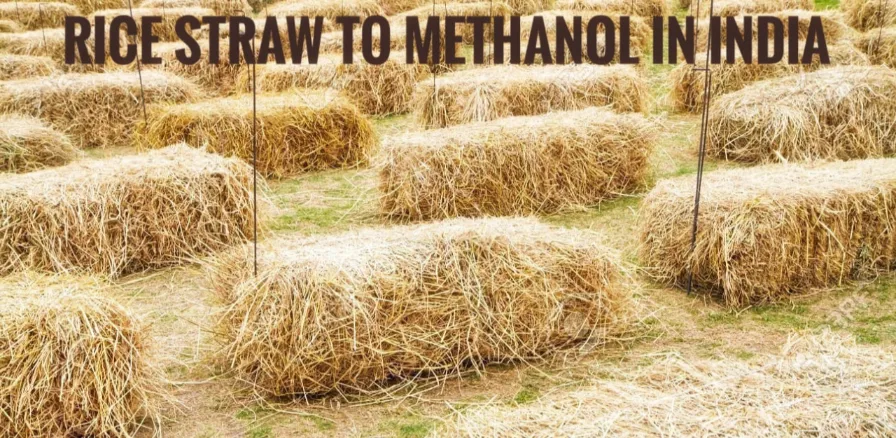
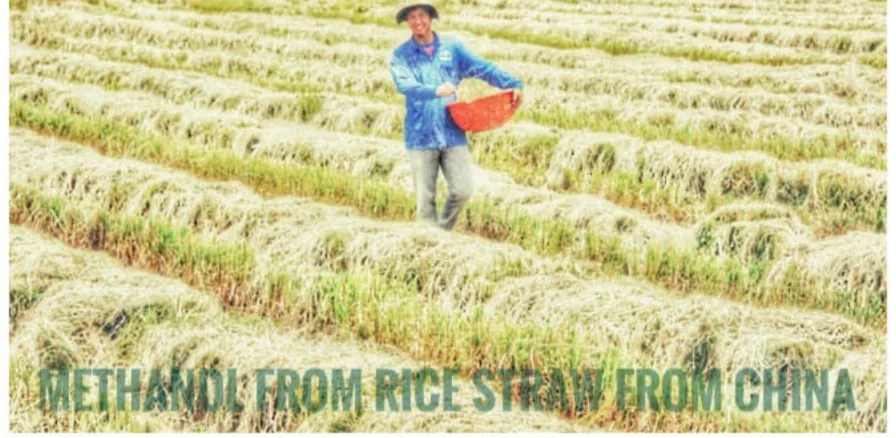
Rice straw biomass converted into methanol fuel in India for sustainable energy production

Rice Straw to Methanol in India: Emissions & Feasibility

Rice Straw to Methanol in India: A Pathway to Green Energy and Economic Prosperity

India, a nation deeply rooted in agriculture, faces a persistent challenge with rice straw management. Every year, vast quantities of rice straw are generated after harvest, and a significant portion is traditionally disposed of through open field burning. This practice, while seemingly convenient for farmers, unleashes a cascade of environmental and health hazards. However, a promising solution is emerging from this challenge: converting rice straw into methanol. This innovative approach not only tackles the emission problem but also unlocks significant economic opportunities, paving the way for a greener and more prosperous India.

The Genesis of Emissions: Why Rice Straw Burning is a Problem

The emissions from rice straw burning are multifaceted and begin with the sheer volume of agricultural residue produced.Farmers face a narrow 2-3 week period to clear fields post-harvest, making burning the quickest method. India contributes a substantial 126.6 million tons of the 731 million tons of rice straw generated globally each year, with approximately 60% of it being burnt in fields. This widespread practice is driven primarily by the short window between rice harvesting and the sowing of the subsequent crop (often wheat),  Burning is perceived as the cheapest and easiest option for managing crop residues, especially with the rise of mechanized harvesting(Kaur et al., 2022).

When rice straw is burnt in open fields, it undergoes incomplete combustion, releasing a cocktail of harmful pollutants into the atmosphere. These include:

  • Greenhouse Gases (GHGs): While the CO2​ released from burning is generally considered part of the natural carbon cycle (as it was sequestered by the plant during growth), the process also emits significant amounts of methane (CH4​) and nitrous oxide (N2​O). Both are far more potent greenhouse gases than CO2​, contributing significantly to global warming. Studies, such as “Assessing rice straw availability and associated carbon footprint for methanol production: A case study in India” [https://pure.qub.ac.uk/files/627785589/1-s2.0-S0961953424005336-main.pdf], have estimated that open field rice straw burning can lead to GHG emissions of up to 7300 kg CO2​-equivalent per hectare.
  • Particulate Matter (PM2.5): Fine particulate matter, particularly PM2.5, is a major component of the smoke. These microscopic particles can penetrate deep into the lungs, leading to respiratory illnesses, cardiovascular problems, and even premature death. Delhi and surrounding regions frequently experience severe air pollution during the stubble burning season, highlighting the direct impact on public health.
  • Toxic Gases: Carbon monoxide (CO), sulfur oxides (SOx​), and nitrogen oxides (NOx​) are also released. These gases are harmful to human health and contribute to smog formation and acid rain.
  • Loss of Soil Health: Beyond air pollution, burning destroys valuable organic matter in the soil, leading to a loss of essential nutrients like nitrogen, phosphorus, and potassium. It also eradicates beneficial soil microorganisms, reducing soil fertility and increasing dependence on chemical fertilizers. This not only incurs higher costs for farmers but also degrades the long-term productivity of the land.

Mitigation through Valorization: The Rise of Rice Straw to Methanol

The solution to these emissions lies in valorizing rice straw – transforming it from a waste product into a valuable resource. One of the most promising avenues is its conversion into methanol. Methanol, a versatile chemical, can be used as a clean-burning fuel, a chemical feedstock for various industries, and a potential blend component for traditional fuels.

The primary technology for converting rice straw to methanol is gasification, followed by syngas conditioning and methanol synthesis. Here’s a simplified breakdown:

  1. Feedstock Preparation: Rice straw is collected, dried, and sometimes pre-treated (e.g., densified into pellets) to improve its handling and energy density.
  2. Gasification: The prepared rice straw is fed into a gasifier, where it undergoes partial oxidation at high temperatures (800-1100°C) in a controlled oxygen environment (Dahmen et al., 2017). This process converts the solid biomass into a synthesis gas (syngas) primarily composed of carbon monoxide (CO) and hydrogen (H2​), along with some CO2​ and other impurities.
  3. Syngas Cleaning and Conditioning: The raw syngas contains impurities like tar, ash, and other undesirable compounds. These are removed through various cleaning processes. The syngas composition is then adjusted to achieve the optimal H2​:CO ratio for methanol synthesis.
  4. Methanol Synthesis: The cleaned and conditioned syngas is passed over a catalyst (typically copper-zinc-aluminum oxide) at high pressure and moderate temperature, leading to the chemical reaction that forms methanol (CO+2H2​→CH3​OH).
  5. Methanol Purification: The crude methanol is then purified through distillation to meet commercial specifications.

Another emerging technology is Hydrothermal Liquefaction (HTL), which can process wet biomass and produce a bio-crude that can then be upgraded to methanol or other fuels. The addition of co-solvents like methanol and catalysts can significantly improve the yield and quality of the bio-crude.

Mitigation’s Dual Benefit: A New Business Horizon

The transition from burning to methanol production offers a powerful mitigation plan with significant business implications:

  • Environmental Impact Reduction: By converting rice straw, the harmful emissions associated with open burning are drastically reduced, leading to cleaner air, improved public health, and a tangible contribution to India’s climate change commitments. Bio-methanol has the potential to reduce GHG emissions by 67-74% compared to fossil methanol, as highlighted in the study by M.K. Ghosal and JyotiRanjan Rath, “Assessing rice straw availability and associated carbon footprint for methanol production: A case study in India”.
  • Waste to Wealth: What was once considered a waste product becomes a valuable feedstock, generating economic value from agricultural residue. This aligns perfectly with the principles of a circular bioeconomy.
  • Rural Economic Development: Establishing rice straw-to-methanol plants in rural areas creates new jobs for feedstock collection, processing, and plant operations. This provides additional income streams for farmers, who can sell their straw instead of burning it, and generates employment opportunities in their local communities.
  • Energy Security: Producing methanol from domestic biomass reduces India’s reliance on imported fossil fuels, bolstering national energy security and saving valuable foreign exchange.
  • Sustainable Industrial Feedstock: Bio-methanol can serve as a sustainable alternative to fossil-derived methanol, which is a key building block for numerous chemicals, plastics, and other industrial products.

Indian Companies Leading the Charge

While the rice straw to methanol sector is still nascent in India, several entities are actively exploring and implementing similar waste-to-energy models, particularly in the biofuel space.

  • Jakson Green and NTPC: A notable development is the collaboration between energy transition company Jakson Green [https://www.jakson-green.com/] and NTPC (National Thermal Power Corporation) at the Vindhyachal Thermal Power Plant in Madhya Pradesh. This “first-of-its-kind” project in India successfully produces methanol from captured carbon dioxide (CO2​) directly from flue gas emissions. While this specific project focuses on CO2​ capture rather than direct rice straw to methanol, it demonstrates a strong commitment to green methanol production and sets a precedent for utilizing waste streams for fuel synthesis. The expertise gained in methanol synthesis and handling could be readily applied to biomass-to-methanol projects. NTPC’s motivation is driven by its vision to be a leading power utility with a strong focus on sustainability and diversifying its energy portfolio. The project aligns with India’s “Methanol Economy” vision to reduce carbon emissions and reliance on crude oil imports.
  • Steamax India (steamaxindia.com) is a growing company focused on creating new technologies to turn rice straw into methanol. They use thermochemical processes like pyrolysis and gasification to change agricultural waste, such as rice straw, into high-quality methanol fuel. By improving feedstock handling and streamlining processes, Steamax India aims to boost production efficiency and reduce environmental impact, supporting local bioeconomy growth. Their method follows recent research on converting rice straw to methanol, highlighting cost savings, lower carbon emissions, and scalable industrial use.  For more details about their technologies and projects, visit their official website: https://steamaxindia.com.
  • CSIR-Indian Institute of Petroleum (IIP): Research institutions like CSIR-IIP [https://www.iip.res.in/] are actively involved in developing and optimizing technologies for converting rice straw into valuable chemicals, including methanol and monomeric phenols, using processes like hydrothermal liquefaction. Their research is crucial for making these technologies more efficient and economically viable. Their mission is to develop deployable, resource-efficient, and environment-friendly technologies for sustainable use of renewable carbon resources.
  • Gujarat Enviro Protection and Infrastructure (GEPIL): Gujarat Enviro Protection and Infrastructure (GEPIL) [https://www.gepil.in/] is a private sector company focused on environmental infrastructure projects, including hazardous waste management, municipal solid waste management, and sustainable alternate fuel production. While their primary focus is broader waste management, their expertise in converting waste into alternate fuels, particularly through co-processing in cement plants, positions them well for future ventures into rice straw to methanol. Their work demonstrates a commitment to transforming waste into valuable resources, minimizing environmental impact, and supporting a circular economy. Their motivation is rooted in creating large-scale industrial solutions for waste management and contributing to a cleaner and greener environment across India. They achieve profitability by offering comprehensive, end-to-end waste management solutions that generate value from waste streams, adhering to strict environmental compliance, and leveraging their extensive experience and infrastructure across multiple states.

The Path to Perfect Profitability

For rice straw to methanol conversion to be perfectly profitable, several factors need to align:

  1. Efficient Feedstock Supply Chain: This is perhaps the most critical element. An optimized collection and transportation network for rice straw is essential to minimize costs. This involves:
    • Mechanized Collection: Utilizing balers and other machinery to efficiently collect and densify straw.
    • Farmer Engagement: Incentivizing farmers to sell their straw instead of burning it through fair pricing and reliable procurement. Government subsidies for straw collection equipment could also play a role.
    • Logistics Optimization: Strategic plant locations close to high rice-producing areas to reduce transportation distances and costs.
  2. Technological Advancement & Scale:
    • Improved Conversion Efficiency: Continued research and development to enhance the efficiency of gasification and methanol synthesis processes, maximizing methanol yield per ton of straw.
    • Economies of Scale: Building larger capacity plants can reduce per-unit production costs.
  3. Supportive Government Policies:
    • Biofuel Blending Mandates: Clear and ambitious blending mandates for bio-methanol in fuel or industrial applications create a guaranteed market demand.
    • Financial Incentives: Subsidies, tax breaks, and low-interest loans for setting up rice straw to methanol plants, as well as for the purchase of bio-methanol, can significantly de-risk investments. The Indian government’s emphasis on biofuels for energy independence and reducing logistics costs, as highlighted by Union Minister Nitin Gadkari, indicates a supportive policy environment.
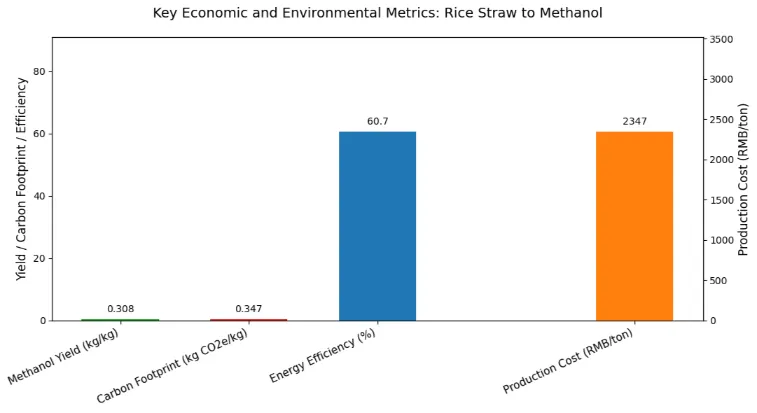
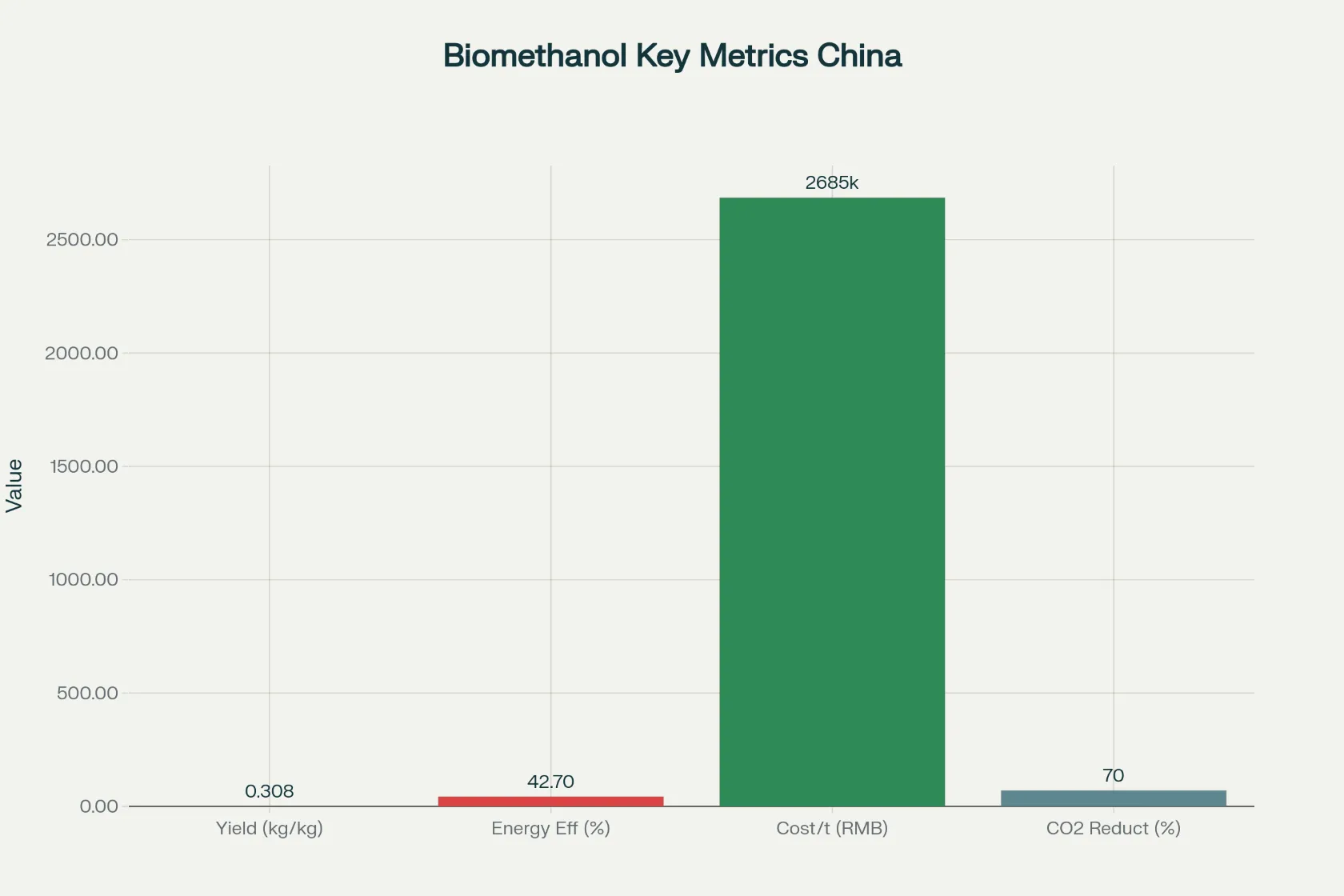
    • Rice straw-to-methanol conversion demonstrates promising economic and environmental potential, with methanol yields around 0.308 kg per kg of rice straw and energy efficiencies reaching up to 60.7% through integrated processes with CO₂ recycling. Plant scales vary from laboratory to industrial, such as 50,000 tons/year in China and over 1,200 tons/year in India. Production costs in China (2009) range between 2,347 and 2,685 RMB/ton, with environmental costs estimated at roughly 285 RMB/ton, which is about 76.84 yuan/ton cheaper than coal-based methanol, indicating competitive cost advantages. India’s production potential is approximately 1,215 tons/year from 4,411 tons of rice straw, and the carbon footprint of biomethanol is significantly lower at 0.347 kg CO₂e/kg—much less than fossil methanol. Economic profitability is driven by large-scale feedstock supply, optimized logistics, integration of pyrolysis, gasification, and methanol synthesis processes, and leveraging environmental credits from low carbon emissions. Further cost reductions and emission cuts are possible through logistics optimization and employing renewable or self-generated energy Deka, T., Budhiraja, B., Osman, A., Baruah, D., & Rooney, D. (2025). Overall, rice straw biomethanol holds strong prospects for economically viable and environmentally sustainable alternative fuel production in regions with abundant biomass and supportive policies.
    • Carbon Credits: The ability to earn carbon credits for reducing GHG emissions through straw valorization adds an additional revenue stream.
  4. Market Demand and Pricing:
    • Competitive Pricing: Ensuring that bio-methanol can compete with fossil methanol in terms of price. This can be achieved through a combination of efficient production and policy support.
    • Diversified Offtake: Exploring various applications for methanol, including fuel blending, chemical manufacturing, and potentially hydrogen production, to ensure stable demand.
key metrics of rice straw methanol

In conclusion, the conversion of rice straw to methanol in India presents a powerful synergy of environmental mitigation and economic opportunity. By addressing the pressing issue of agricultural waste burning and simultaneously fostering a domestic source of clean fuel and chemicals, India can move closer to its goals of energy independence, a cleaner environment, and a thriving rural economy. The success of pioneering companies and the increasing government focus on waste-to-energy initiatives signal a promising future where rice straw, once an environmental burden, becomes a cornerstone of India’s sustainable development

citations

Kaur, M., Malik, D. S., Malhi, G. S., Sardana, V., Bolan, N., Lal, R., & Siddique, K. H. M. (2022). Rice residue management in the Indo-Gangetic Plains for climate and food security. A review. Agronomy for Sustainable Development, 42(5). https://doi.org/10.1007/s13593-022-00817-0

Dahmen, N., Henrich, E., & Henrich, T. (2017). Synthesis Gas Biorefinery (Vol. 166, pp. 217–245). Springer, Cham. https://doi.org/10.1007/10_2016_63

. Assessing rice straw availability and associated carbon footprint for methanol production: A case study in India. Biomass and Bioenergy. https://doi.org/10.1016/j.biombioe.2024.107580.

Rice Straw to Methanol in India: Emissions & Feasibility Read More »

Map of China showing biomethanol production from corn straw, highlighting agricultural residue use and life cycle sustainability benefits.

Biomethanol from Corn Straw in China: A Life Cycle Insight

IBiomethanol from Corn Straw in China

The search for sustainable energy solutions is more urgent than ever. Biomethanol from Corn Straw in China is becoming a promising option in the global move away from fossil fuels. A detailed life cycle analysis (LCA) highlights notable environmental benefits, despite some economic challenges, making this biofuel a key part of China’s energy future.

The Green Advantage: Environmental Benefits of Corn Straw Biomethanol

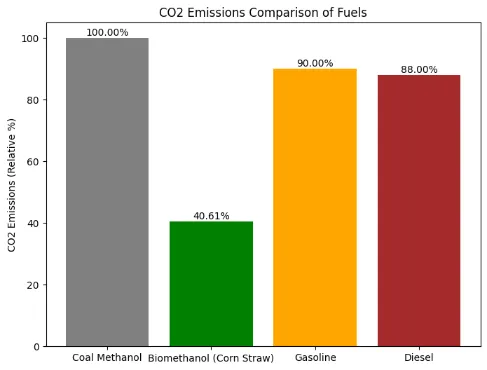
One of the main reasons to support biomethanol from corn straw in China is its significant reduction in environmental impact. Studies show that its production results in 59.39% lower CO2 emissions compared to coal derived methanol. This significant reduction shows corn straw biomethanol’s potential as a cleaner fuel option.

In addition to CO2, studies of corn straw bioenergy show greenhouse gas emissions ranging from 82 to 439 kilograms CO2 equivalent per ton of straw. Other important impact categories include fossil fuel depletion, global warming potential, toxicity, acidification, eutrophication, ozone depletion, photochemical ozone creation potential, and human toxicity potential.

Moreover, analyses reveal that converting corn straw can lower particulate matter emissions by up to 98%. This is particularly important as air quality continues to be a major concern in many areas. Corn straw also outperforms feedstocks like rice and soybean straw in terms of greenhouse gas emissions and energy balance. The flash pyrolysis method, for instance, has achieved coal savings up to 78.02% when processing corn straw.

Across ten different studies, all reported positive effects on greenhouse gas or carbon dioxide emissions, or global warming potential. For example, global warming potential dropped by 10 to 97% when compared to gasoline and 4 to 96% when compared to diesel. Absolute reductions in CO2-equivalent emissions were also significant, with figures surpassing 170 million tonnes annually in some national assessments.

Economic Realities: Costs and Opportunities

While the environmental benefits are evident, the economic situation of biomethanol from corn straw in China is more complex. The production cost of biomethanol from corn straw is reported to be 24.46% higher than that of coal methanol. The cost of biomethanol is around US$502.0 per ton.

However, certain applications show clear economic advantages. In maritime settings, for example, the fuel costs 14.81% less per kilometer than diesel, and it generates 54.01% lower CO2 emissions per kilometer. This indicates that specific industry sectors could take advantage of biomethanol’s cost benefits.

The economic viability also improves with potential by product savings, valued at 23.9 billion RMB in some instances. Additional economic benefits include biomethanol having the lowest emergy per unit of particulate matter and the fact that a carbon tax would benefit bioethanol. Advanced biofuels also offer a new income source for farmers. It is worth noting that economic reporting across studies varied, with many not discussing specific advantages or drawbacks.

Energy Efficiency: A Closer Look

The efficiency of producing biomethanol from corn straw is another key factor examined through life cycle analysis. The production system requires 510,200 megajoules per ton of corn straw. Despite this energy requirement, studies show positive energy balances for biofuels made from corn straw.

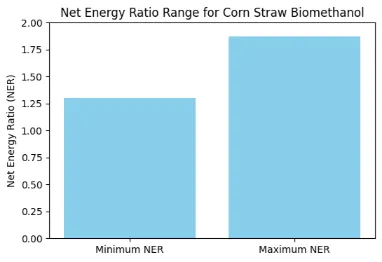
Net energy ratios (NER) for corn straw bioenergy typically range from 1.30 to 1.87. For example, one study indicated a net energy balance (NEB) of 6,902 megajoules per megagram of ethanol and a net energy ratio of 1.30. These numbers demonstrate that corn straw can produce more energy than is used in its production, although efficiency can vary based on the feedstock characteristics and conversion processes used.

Research Behind the Insights: How We Know This

The insights regarding Biomethanol from Corn Straw in China come from thorough academic research. A dedicated search was conducted using the phrase “Biomethanol from Corn Straw in China: A Life Cycle Insight” across over 126 million academic papers. Papers were selected based on specific criteria, including a focus on corn straw as a main feedstock, analysis within the Chinese context, inclusion of life cycle assessment (LCA) data, quantitative information on material flows, energy use, or environmental impacts, and examination of complete production processes grounded in empirical evidence.

A large language model was used for data extraction, gathering detailed insights on LCA methodology, biomass feedstock characteristics, environmental impact metrics, economic cost analysis, and potential industry applications. This systematic method ensures that the findings are solid and thorough.

Regional Perspectives & Future Potential

The studies explored various regions within China, from national-level assessments to analyses of multiple provinces (nine or thirty) and specific provinces like Heilongjiang. This regional variety offers a nuanced view of the potential and challenges in different areas.

Importantly, corn straw has been shown to outperform rice and soybean straw concerning greenhouse gas emissions and energy balance, making it a particularly appealing feedstock. Flash pyrolysis was singled out as the most effective straw treatment for coal savings. The potential for large-scale greenhouse gas reduction is strongest in provinces with abundant surplus stover and efficient supply chains. This suggests that optimizing collection and logistics will be essential to maximize the benefits of biomethanol from corn straw in China.

Conclusion

In conclusion, biomethanol from corn straw in China represents a significant step toward a more sustainable energy future. While the higher production costs compared to coal-derived methanol present challenges, the large reductions in CO2 and particulate matter emissions, combined with promising economic benefits in targeted applications and the potential for valuable by product savings, highlight its importance. Ongoing research and strategic implementation can further unlock the full potential of this renewable resource in China’s energy landscape.

Bar chart of energy ratios
Bar chart of CO2 emissions comparison
Is Biomethanol the Future of Aviation Fuel? Exploring the Possibilities

Biomethanol from Corn Straw in China: A Life Cycle Insight Read More »

BIOMETHANOL IN MARINE INDUSTRY

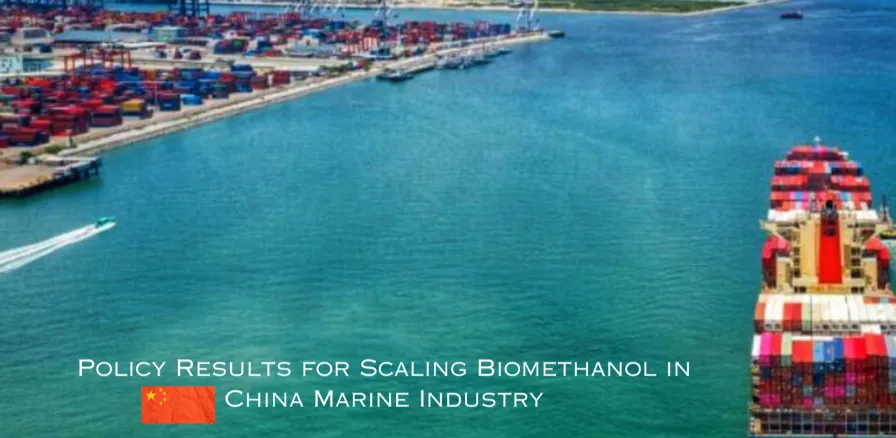
Policy Results for Scaling Biomethanol in China Marine Industry

Policy Results for Scaling Biomethanol in China’s Marine Industry

A Deep Dive into Impact, Opportunities, and Global Implications

China’s marine industry is a giant in global shipping and maritime activities. It faces increasing pressure to reduce carbon emissions to meet national and international climate goals. One promising fuel that is gaining popularity is biomethanol, a renewable liquid fuel made from biomass. The Chinese government recognizes its potential and has put in place several policies to promote the production, adoption, and scaling of biomethanol in its large marine sector. This blog post looks at the significant outcomes of these policies. It explores the positive aspects, the growing profitability landscape, innovative marketing and business models, environmental effects, and other important opportunities. Additionally, it discusses how other countries can learn from these methods to create similar sustainable changes in their own marine industries.

The Policy Landscape: Catalyzing Biomethanol Adoption

China’s approach to promoting biomethanol in the marine industry has been multifaceted, encompassing several key policy instruments. These include:

  • National Energy Transition Targets: Experts recommend adopting a dynamic, phased policy approach to support methanol-based transportation. Initially, regions should focus on coal-to-methanol and biomethanol vehicles, leveraging locally available resources. As technologies mature and carbon neutrality targets draw closer, the transition to green methanol solutions such as CO₂-to-methanol should be prioritized. In parallel, strong emphasis should be placed on infrastructure development, including transmission and distribution systems, advancing methanol production processes, and preparing for the integration of next-generation methanol technologies for maritime industry related businesses. learn more
  • Research and Development Funding: Significant government investment has been channeled into research and development initiatives focused on advanced biomethanol production technologies, engine modifications for methanol compatibility, and safety protocols for its use in marine vessels. Investments have facilitated the transition from fossil fuels to methanol, which is projected to capture 70% of the low-carbon fuel market by 2050 (Panchuk et al., 2024). This funding has been crucial in overcoming technological hurdles and improving the viability of biomethanol as a marine fuel. Engine modifications for methanol compatibility have shown promising results, with high efficiency and low emissions in combustion engines (Santasalo-Aarnio et al., 2020).
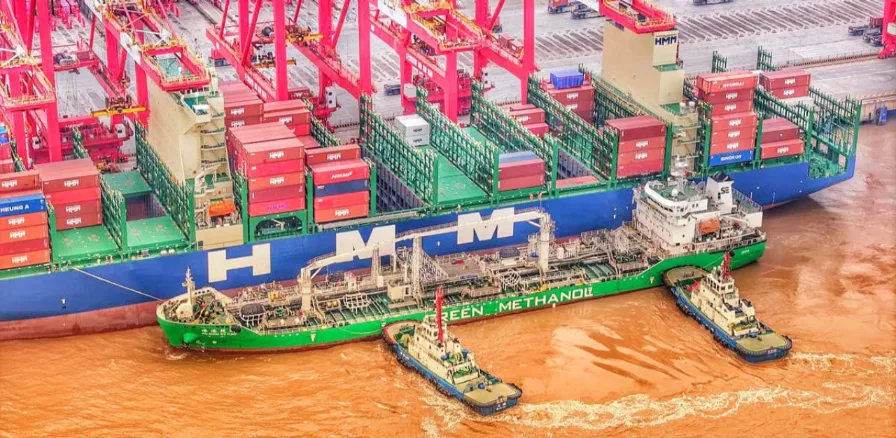
  • Pilot Programs and Demonstrations: Strategic pilot projects have started in important port cities and shipping routes to show the practicality and benefits of biomethanol-powered vessels. Biomethanol can cut CO₂ emissions by over 54% per kilometer in marine applications compared to diesel, and by nearly 60% compared to coal-to-methanol. These real-world trials offer useful data on performance, emissions reduction, and infrastructure needs, which helps build confidence among industry stakeholders. While biomethanol production is more expensive than coal-based methanol, it can reduce operating costs in the maritime sector by nearly 15% per kilometer compared to diesel Wang, S,et.al. (2024). 
  • Incentive Schemes and Subsidies: Financial incentives, such as tax breaks, subsidies for biomethanol production, and preferential treatment for vessels utilizing cleaner fuels, have played a vital role in making biomethanol economically competitive with traditional fossil fuels. Federal programs provide significant financial support for biofuels, including biomethanol, which can cover a substantial portion of production costs. These measures help to offset the initial costs associated with adopting new technologies and fuels.
  • Regulatory Frameworks and Standards: The development of clear regulatory frameworks and safety standards specifically for the use of biomethanol in marine applications provides the necessary certainty for ship owners, operators, and fuel suppliers. Methanol’s low flashpoint necessitates specific safety measures, which are being integrated into existing regulations to mitigate risks associated with its use. These standards cover aspects like fuel quality, storage, handling, and engine modifications.
  • International Collaboration: The International Maritime Organization (IMO) is actively working on regulations to reduce greenhouse gas emissions, which includes the promotion of methanol as a cleaner fuel option (Bilousov et al., 2024). Active participation in international forums and collaborations on maritime decarbonization allows China to learn from global best practices and contribute its own experiences in the adoption of biomethanol.
Maritime Organization (IMO)

Positive Policy Outcomes: A Flourishing Biomethanol Ecosystem

The concerted policy push has yielded significant positive results in scaling biomethanol within China’s marine industry:

  • Increased Biomethanol Production Capacity: Government support and incentives have encouraged investment in biomethanol production facilities. These facilities use various sustainable feedstocks, including agricultural waste, forestry residues, and captured carbon dioxide. This growth in domestic production capacity improves fuel security and lowers dependence on imported fossil fuels.
  • Growing Fleet of Biomethanol-Capable Vessels: The implementation of pilot programs and the availability of financial incentives have encouraged ship owners to invest in newbuilds or retrofit existing vessels to operate on biomethanol.Biomethanol significantly reduces emissions of sulfur oxides (SOx), nitrogen oxides (NOx), particulate matter (PM), carbon dioxide (CO2), and carbon monoxide (CO) compared to conventional marine fuels. For instance, a case study on a tanker vessel showed reductions in SOx by 90%, NOx by 76.80%, PM by 83.49%, CO2 by 6.43%, and CO by 55.63% (Ammar, 2023). This is gradually building a fleet capable of utilizing this cleaner fuel across various vessel types, from coastal ferries to cargo ships.
  • Development of Supply Chain Infrastructure: The successful testing of biomethanol-powered vessels has required the creation of support infrastructure, including bunkering facilities in important ports and efficient transportation networks for the fuel. This infrastructure development is essential for the broad adoption of biomethanol.
  • Technological Advancements: Focused R&D funding has led to important improvements in biomethanol production efficiency, engine technology designed for methanol combustion, and new safety systems. These technological advances make biomethanol a more viable and appealing option as a marine fuel.
  • Reduced Greenhouse Gas Emissions: The most significant environmental benefit of these policies is the demonstrable reduction in greenhouse gas emissions from the marine sector. Carbon emissions from marine fisheries have declined, with 2015 marking a major turning point. Carbon sinks (e.g., seaweed, shellfish) are growing rapidly, further offsetting emissions. Biomethanol, when produced sustainably, offers a significantly lower carbon footprint compared to traditional fossil fuels, contributing to China’s climate goals and improving air quality in port regions. Also learn for more information

The Profitability Proposition: New Economic Opportunities

The scaling of biomethanol in China marine industry is not solely driven by environmental concerns; it also presents significant economic opportunities and the emergence of new profitable business models:

The growing demand for biomethanol is opening up a lucrative market across multiple sectors, from sustainable fuel production and distribution to shipbuilding and waste management. Agricultural and forestry sectors can capitalize by supplying biomass feedstocks, while technology providers benefit from offering advanced production solutions. Using biomethanol can reduce marine sector operating costs by nearly 15% per kilometer compared to diesel, despite higher production costs than coal-based methanol. This is due to lower fuel consumption and improved efficiency in marine applications Harahap, F., Nurdiawati, A., Conti, D., Leduc, S., & Urban, F. (2023).

Simultaneously, the shift to biomethanol fuels opportunities in retrofitting existing vessels and constructing new methanol-powered ships, driving job creation and innovation in marine engineering. Ship owners and fuel producers can also generate carbon credits through sustainable practices, creating an additional revenue stream as carbon pricing gains prominence. Moreover, shipping companies adopting biomethanol can position themselves as green service providers, appealing to eco-conscious clients and securing premium rates. Finally, using waste streams for biomethanol production supports both energy generation and sustainable waste management, contributing to the circular economy and unlocking new business ventures

Marketing and New Ways of Business: Embracing Sustainability

The shift towards biomethanol is fostering innovative marketing strategies and the development of new business models within the marine industry:

  • Sustainability-Focused Branding: Shipping lines are focusing more on their commitment to sustainability. They are promoting cleaner fuels like biomethanol in their branding and marketing. This helps them attract environmentally conscious shippers and consumers..
  • Collaborative Partnerships: The transition needs teamwork along the value chain. This will create new partnerships between fuel producers, technology providers, ship owners, port authorities, and research institutions. Together, they can develop and apply biomethanol solutions..
  • Digital Platforms for Transparency: Digital platforms are emerging to track the environmental performance of shipping, including the use of biomethanol, providing transparency and accountability to stakeholders.
  • Lifecycle Assessment and Reporting: Businesses are adopting comprehensive lifecycle assessment approaches to quantify the environmental benefits of biomethanol, providing data for marketing and regulatory compliance.
  • Integration with Green Corridors: The development of “green corridors,” which are specific shipping routes with dedicated infrastructure for alternative fuels, offers a targeted way to increase the use of biomethanol. It also promotes these routes as low-emission options..

Environmental Effects: A Cleaner Marine Future

The widespread adoption of biomethanol offers significant environmental advantages for China’s marine industry and beyond:

  • Reduced Greenhouse Gas Emissions: As mentioned earlier, sustainably produced biomethanol significantly lowers carbon dioxide emissions compared to conventional marine fuels, contributing to climate change mitigation. While total GHG emissions increased due to production growth, emission intensity (GHG per unit of output) decreased from 7.33 to 6.34 t CO₂-eq/t between 1991 and 2020, indicating improved efficiency and mitigation.
  • Improved Air Quality: The combustion of biomethanol produces significantly lower levels of harmful air pollutants such as sulfur oxides (SOx), nitrogen oxides (NOx), and particulate matter (PM), leading to cleaner air in port cities and coastal regions, benefiting public health.
  • Biodegradability and Reduced Spill Impact: Methanol is readily biodegradable in the marine environment,
    Large-scale seaweed farming sequestered 35.49–72.93 Tg CO₂ from 2003–2021, making a substantial contribution to emission reduction and blue carbon storage Xu, T., Dong, J., & Qiao, D. (2023).
  • Sustainable Feedstock Utilization: Carbon trading pilots have promoted structural upgrades in the marine industry, indirectly supporting emission reductions, especially in provinces close to pilot regions. The marine sector is a major contributor to China’s national economy, with strong inter-industry linkages and employment effects. The adoption of new fuels like biomethanol can further stimulate economic activity and industrial upgrading.
  • Contribution to Ocean Health: By reducing emissions of greenhouse gases and air pollutants, the widespread use of biomethanol can contribute to mitigating ocean acidification and other harmful impacts of shipping on marine ecosystems. Advances in fishing and aquaculture technology have improved efficiency and reduced emissions per unit of production, though further gains depend on boosting technical efficiency.

Other Crucial Prospects and Considerations:

Beyond the immediate benefits, the scaling of biomethanol in China marine industry has other important prospects and considerations:

  • Energy Security: Domestic production of biomethanol from diverse feedstocks enhances China’s energy security and reduces its dependence on imported fossil fuels, which are subject to geopolitical instability and price volatility.
  • Job Creation: The development of a thriving biomethanol ecosystem, encompassing production, distribution, technology development, and vessel operations, creates new jobs in various sectors.
  • Rural Economic Development: Biomethanol production from agricultural residues (like corn straw) creates new markets for rural biomass, supporting rural economies and diversifying income sources for farmers..
  • Land Use and Feedstock Sustainability: Careful thoughts must go into the sustainability of biomethanol feedstocks to prevent negative outcomes like deforestation or competition with food production. Sustainable sourcing practices and improved feedstock technologies are essential..
  • Scalability and Cost Competitiveness: Continued technological advancements and policy support are needed to further improve the scalability and cost competitiveness of biomethanol compared to traditional fuels.

Global Implications: Lessons for the World

China’s experience in scaling biomethanol in its marine industry offers valuable lessons and potential pathways for other nations seeking to decarbonize their maritime sectors:

Strong policy signals, such as clear national targets, supportive regulations, and financial incentives, are essential for speeding up the adoption of alternative fuels like biomethanol and attracting ongoing investment. Government support for research, development, and pilot projects is critical for overcoming technological challenges and building industry confidence. Public-private partnerships that bring together government agencies, industry stakeholders, and research institutions can greatly increase the speed of biomethanol development and deployment. At the same time, planning and investing in bunkering and supply chain infrastructure are vital for enabling large-scale adoption. Using sustainable, non-competing feedstocks helps protect the environment while international collaboration and knowledge sharing can further advance global efforts toward cleaner marine fuel.s.

By studying and potentially adapting the policy frameworks, incentive mechanisms, and collaborative approaches implemented in China, other countries can learn valuable lessons in their own efforts to scale biomethanol and other sustainable fuels within their marine industries. The journey towards a decarbonized maritime sector requires commitment, innovation, and a willingness to learn from global experiences. China’s work with biomethanol provides an interesting case study on how targeted policies can bring real change for a more sustainable future in shipping. As the world steps up its fight against climate change, China’s biomethanol policies suggest great potential for a greener shipping industry.

Citations

Panchuk, A., Panchuk, M., Sładkowski, A., Kryshtopа, S., & Kryshtopa, L. (2024). Methanol Potential as an Environmentally Friendly Fuel for Ships. Naše More (Dubrovnik), 71(2), 75–83. https://doi.org/10.17818/nm/2024/2.5

Santasalo-Aarnio, A., Nyári, J., Wojcieszyk, M., Kaario, O., Kroyan, Y., Magdeldin, M., Larmi, M., & Järvinen, M. (2020). Application of Synthetic Renewable Methanol to Power the Future Propulsion. https://doi.org/10.4271/2020-01-2151

Assessing the prospect of bio-methanol fuel in China from a life cycle perspective. Fuelhttps://doi.org/10.1016/j.fuel.2023.130255.

Bilousov, E. V., Марченко, А. П., Savchuk, V., & Belousova, T. P. (2024). Use of methanol as motor fuel for marine internal combustion engines. Dvigateli Vnutrennego Sgoraniâ, 1, 43–51. https://doi.org/10.20998/0419-8719.2024.1.06

Ammar, N. R. (2023). Methanol as a Marine Fuel for Greener Shipping: Case Study Tanker Vessel. Journal of Ship Production and Design, 1–11. https://doi.org/10.5957/jspd.03220012

Renewable marine fuel production for decarbonised maritime shipping: Pathways, policy measures and transition dynamics. Journal of Cleaner Productionhttps://doi.org/10.1016/j.jclepro.2023.137906.

China’s marine economic efficiency: A meta-analysis. Ocean & Coastal Managementhttps://doi.org/10.1016/j.ocecoaman.2023.106633.

checkout also

a life-cycle insight into biomethanol from corn straw in China

Policy Results for Scaling Biomethanol in China Marine Industry Read More »

Industrial biorefinery plant processing sugarcane residues into methanol.

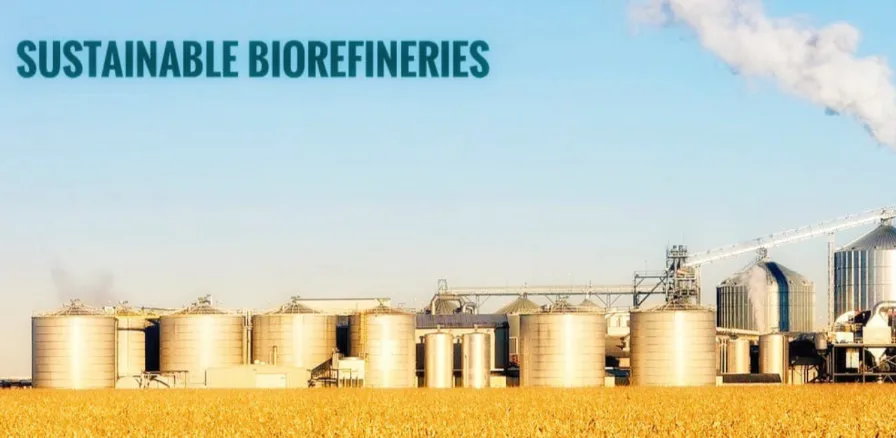
Sustainable Biorefineries in South Africa: Methanol from Sugarcane Residues

Sustainable Biorefineries in South Africa: Methanol from Sugarcane Residues Fueling a Greener Future

South Africa is a nation rich in agricultural resources. It faces the challenge of meeting its growing energy needs while reducing the environmental harm from fossil fuel reliance. In this situation, sustainable biorefineries provide a strong option for a more resilient and environmentally friendly future. Among the various feedstocks and bioproducts being considered, producing methanol from sugarcane residues is particularly promising for South Africa. This blog post examines the potential of sustainable biorefineries that use sugarcane bagasse and molasses for methanol production. It looks at the technological processes involved, the many benefits for South Africa’s future, and the major impacts on trade, the economy, GDP, and local markets when fully optimized.

The Promise of Sugarcane Residues: A Sustainable Feedstock

Sugarcane residues, such as bagasse and trash, are increasingly recognized as valuable resources for sustainable bioenergy and bioproducts in South Africa. With the country’s sugar industry facing economic and environmental challenges, utilizing these residues offers a promising pathway to support a circular bioeconomy, reduce waste, and diversify income streams. These can be converted into biofuels (ethanol, methanol, biogas), electricity, and biochemicals, or used for soil improvement and material development (Tshemese et al., 2023). Methanol can be produced from sugarcane residues via several technological pathways: gasification followed by catalytic synthesis (converting bagasse into syngas and then into methanol in a catalytic reactor under controlled conditions—a well-established technology suitable for large-scale production), biochemical conversion (using microorganisms to ferment sugars from pre-treated bagasse or molasses into methanol, an approach that is less mature but offers advantages in milder operating conditions and potentially lower energy consumption), and hybrid approaches (which combine thermochemical and biochemical elements to optimize efficiency and yield). The selection of the most appropriate technology ultimately depends on factors such as technological maturity, feedstock availability, desired scale, and economic context.

Future Benefits of Sustainable Biorefineries in South Africa

The establishment of sustainable methanol biorefineries in South Africa utilizing sugarcane residues offers a wide array of potential benefits for the nation’s future:

  • Energy Security and Diversification: Methanol can be a flexible liquid fuel. It mixes with gasoline, which helps cut down on the need for imported petroleum and improves energy security. Additionally, it can be used directly in vehicles made for it or transformed into other useful fuels and chemicals. This diversifies South Africa’s energy sources.
  • Greenhouse Gas Emission Reduction: Methanol is a versatile liquid fuel. It blends with gasoline, reducing the need for imported petroleum and improving energy security. It can also be used directly in vehicles designed for it or converted into other useful fuels and chemicals. This adds variety to South Africa’s energy sources.
  • Waste Valorization and Circular Economy: Transforming agricultural waste like bagasse and molasses into valuable products promotes a circular economy, reducing the environmental burden associated with waste disposal (such as open burning which contributes to air pollution) and maximizing the economic value of agricultural resources.
  • Rural Economic Development and Job Creation: The setup and running of biorefineries in sugarcane-producing areas will boost rural economic development by generating new jobs in feedstock supply, plant operation, maintenance, and related industries. This can reduce poverty and support inclusive growth in these regions.
  • Reduced Dependence on Fossil Fuel Imports: Substituting imported fossil fuels with domestically produced biomethanol can significantly reduce South Africa’s foreign exchange expenditure, strengthening its economic resilience.
  • Development of a Bio-based Economy: Techno-economic studies show that co-producing ethanol and electricity from sugarcane residues is more efficient and profitable than electricity generation alone, especially when advanced technologies are used 
  • Improved Air Quality: The use of biomethanol as a fuel or fuel blend can lead to lower emissions of harmful pollutants compared to conventional gasoline, contributing to improved air quality, particularly in urban areas. Methanol and ethanol-lactic acid co-production routes are particularly attractive, meeting investment criteria and offering environmental advantages 
  • Sustainable Agriculture Practices: Bioethanol production from sugarcane can boost GDP, create jobs, and reduce greenhouse gas emissions, but may require policy support or subsidies to be financially viable (Rodríquez-Machín et al., 2021).

Impacts on Trade, Economy, GDP, and Local Markets through Optimization

In regions where sugarcane is a major crop, optimizing residue use can contribute to GDP by increasing the value generated per hectare and supporting related industries. The expansion of sugarcane residue processing supports new industries (e.g., biogas, biofertilizers), which can create jobs and stimulate local economies, especially in rural areasWhen fully optimized, these biorefineries can have significant positive impacts on trade, economy, GDP, and local markets in South Africa:

Trade:

  • Diversification and Value Addition: Utilizing sugarcane residues (like bagasse, trash, and by-products) for bioenergy, chemicals, and bioplastics can reduce disposal costs, increase energy output, and expand the product portfolio of sugar mills, leading to higher revenues and economic growth 
  • Reduced Fuel Import Dependence: Optimized biomethanol production can significantly decrease South Africa’s reliance on imported petroleum fuels, leading to a more favorable balance of trade.
  • Job Creation and Local Development: The expansion of sugarcane residue processing supports new industries (e.g., biogas, biofertilizers), which can create jobs and stimulate local economies, especially in rural areas
  • Potential for Biofuel Exports: If production exceeds domestic demand, South Africa could potentially become an exporter of biomethanol or its derivative products to regional or international markets, generating valuable foreign exchange earnings.
  • Regional Competitiveness: Efficient residue utilization can lower production costs and improve the competitiveness of South African sugarcane products in both domestic and export markets.(Formann et al., 2020)
  • Attraction of Foreign Investment: A thriving biorefinery sector can attract foreign direct investment in technology, infrastructure, and market development, further boosting the economy.

Economy and GDP:

Local Markets:

  • GDP Growth: In regions where sugarcane is a major crop, optimizing residue use can contribute to GDP by increasing the value generated per hectare and supporting related industries 
  • Biorefineries set up in areas that produce sugarcane are expected to boost rural economies. They will create demand for goods and services, support local businesses, and improve people’s livelihoods. Their presence may also attract investments in local infrastructure, including transportation and utilities, benefiting the wider community beyond the biorefinery.
  • These facilities will also generate a variety of job opportunities. Positions will range from unskilled work in feedstock handling to technical and management roles. This range will help develop skills and strengthen local capacity. For sugarcane farmers, selling residues as feedstock for the biorefineries provides a new way to earn money, enhancing their economic stability. In addition, producing biomethanol or blended fuels locally could give regional markets more sustainable and potentially cheaper fuel options.

Get more details

Conclusion:

Sustainable biorefineries that use sugarcane residues for methanol production have a great chance to help South Africa achieve a greener and more prosperous future. By taking advantage of this easily accessible biomass resource, the country can improve its energy security, cut down greenhouse gas emissions, support rural economic growth, and encourage a bio-based economy. However, to make this potential a reality, a strong effort is needed to optimize the entire value chain, from supplying raw materials to developing markets. This should be backed by supportive policies and ongoing innovation. When fully optimized and strategically considered, these biorefineries can have a significant positive effect on South Africa’s trade balance, economy, GDP growth, and the well-being of local communities. This will lead to a truly sustainable industrial future. Transitioning to a bio-based economy, powered by resources like sugarcane residues, offers South Africa a vital opportunity to take the lead in sustainable development and create a more resilient and environmentally friendly future for all its citizens.

citations

An Overview of Biogas Production from Anaerobic Digestion and the Possibility of Using Sugarcane Wastewater and Municipal Solid Waste in a South African Context. Applied System Innovationhttps://doi.org/10.3390/asi6010013.

Fast pyrolysis of raw and acid-leached sugarcane residues en route to producing chemicals and fuels: Economic and environmental assessments. Journal of Cleaner Production, 296, 126601. https://doi.org/10.1016/J.JCLEPRO.2021.126601.

Beyond Sugar and Ethanol Production: Value Generation Opportunities Through Sugarcane Residues. , 8. https://doi.org/10.3389/fenrg.2020.579577.

Explore Policy Recommendations for China’s Biomethanol Marine Industry

Sustainable Biorefineries in South Africa: Methanol from Sugarcane Residues Read More »

Industrial plant in China highlighting the comparison between methanol and biomethanol production.

Comparing Biomethanol and Coal-Based Methanol for Cleaner Energy in China

Fuelling China Future: The Green Promise of Biomethanol vs. the Legacy of Coal-Based Methanol

This blog offers a deep dive into the environmental and chemical distinctions between coal-based and biomethanol in China, emphasizing the urgent shift towards greener energy solutions.

Advantage: Reading this blog equips you with crucial insights into sustainable energy trends, highlighting China’s pivotal role in the global transition to cleaner fuels and the innovations driving this change.

China, the world’s largest consumer and producer of methanol, faces a crucial moment in its energy transition. The country has a huge demand for this versatile chemical, which is used in fuels, plastics, and pharmaceuticals. It struggles to balance economic growth with environmental sustainability. For decades, coal-based methanol has supported this industry by using China’s plentiful coal reserves. However, the urgent need for cleaner energy options has drawn attention to biomethanol as a promising, eco-friendly alternative. This blog explores a detailed comparison of these two methanol production methods, looking at their chemical processes, emissions, environmental effects, and the roles of key industry players. It ultimately underscores the urgent need to move toward greener alternatives.

The Methanol Mandate: A Chemical Comparison

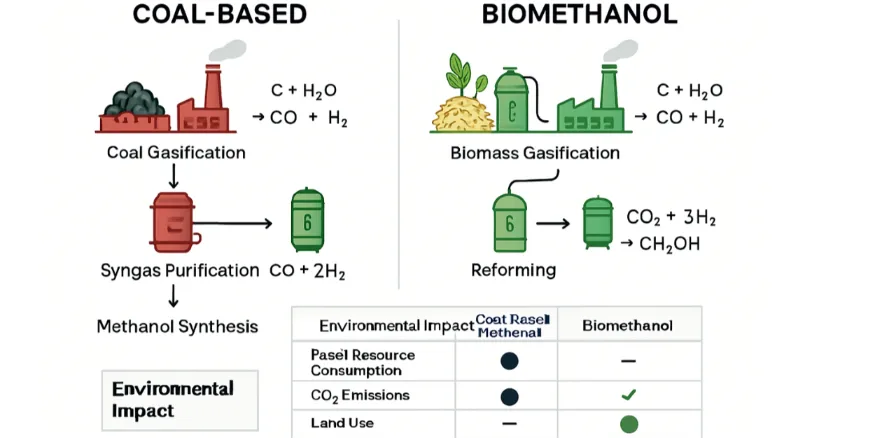
Coal Based Methanol Vs Biomethanol

The image provides an overview of the production pathways and environmental impacts of coal based methanol and biomethanol. It visually contrasts the traditional, carbon-heavy coal gasification route, which produces significant CO₂ emissions and air pollutants from non renewable coal, with the more sustainable biomethanol processes that use renewable biomass or captured CO₂ along with green hydrogen. The diagram shows each step, from feedstock preparation to methanol synthesis, highlighting how biomethanol results in much lower carbon emissions, reduced air pollutants, and better sustainability. A side by side comparison table further underscores the clear differences in carbon intensity, feedstock sources, air pollution, water use, and overall energy balance. This makes the environmental benefits of moving towards biomethanol and especially green methanol using captured CO₂ and renewable energy—very apparent.

Emissions Data:

  • Greenhouse Gas (GHG) Emissions: Coal-to-methanol (CTM) processes are among the most GHG-intensive pathways for methanol production nowadays. Life cycle assessments (LCA) consistently show that CTM has a very high carbon footprint, often exceeding that of traditional fossil fuels like gasoline and diesel. Studies indicate that CTM processes contribute significantly to global warming potential (GWP), with reported figures in the range of hundreds of kg CO2 equivalent per tonne of methanol, often up to three times higher than natural gas-based methanol.
  • Air Pollutants: Beyond CO2, coal gasification releases substantial amounts of other harmful air pollutants, including sulfur dioxide (SO2), nitrogen oxides (NO2), particulate matter (PM), and heavy metals. These contribute to acidification, photochemical oxidation, and respiratory diseases.
  • Water Consumption: CTM plants are also highly water-intensive, consuming vast quantities of water for cooling, gasification, and other processes, putting strain on water resources in often arid regions of China where these plants are typically located.
  • Solid Waste: Coal ash and other solid wastes are byproducts, posing disposal challenges and potential contamination risks.

Biomethanol: A Greener Horizon

Biomethanol offers a significantly lower environmental impact due to its renewable feedstock and potential for carbon neutrality or even negativity.

Emissions Data:

  • Greenhouse Gas (GHG) Emissions: The carbon footprint of biomethanol is substantially lower. When produced from sustainable biomass or captured CO2 with green hydrogen, the net CO2 emissions can be reduced by 70-95% compared to fossil-based methanol. The “climate neutrality” of end use emissions is often highlighted because the carbon released during combustion was originally absorbed by the biomass during its growth. In cases like methanol from manure-based biomethane, it can even have a negative carbon footprint by avoiding methane emissions that would have occurred anyway.
  • Air Pollutants: While biomass gasification still produces some pollutants, the overall emissions of SOx, NOx, and PM are significantly lower compared to coal, especially with advanced purification technologies. Biomethanol as a fuel drastically cuts NOx (up to 80%), SOx (up to 99%), and particulate matter emissions at the point of use.
  • Water Consumption: While still requiring water, the overall life cycle water consumption for biomethanol can be lower, particularly for certain feedstocks and processes, and can often be managed within a circular economy framework.
  • Waste Valorization: Utilizing agricultural and municipal waste as feedstock offers the dual benefit of producing energy while mitigating waste accumulation and associated environmental problems like landfill methane emissions.

Environmental Impact Data Comparison (Illustrative, specific values vary by technology and feedstock):

Impact CategoryCoal-Based Methanol (per tonne CH3OH)Biomethanol (per tonne CH3OH)
Global Warming Potential (kgCO2eq)500-1000+ (High)<100 (Potentially negative)
Acidification Potential (kgSO2eq)Moderate to HighLow
Eutrophication Potential ModerateLow
Human Toxicity PotentialHighLow to Moderate
Water ConsumptionHighModerate
Solid Waste GenerationHighLow (waste valorization)

Note: These are illustrative ranges. Actual figures depend heavily on specific plant configurations, energy sources for auxiliary processes, and feedstock origins.

The landscape of methanol production in China features both entrenched coal-to-methanol giants and emerging players in the biomethanol space.

Companies Utilizing Coal-Based Methanol in China:

China’s coal-based chemical industry is vast, with many large state owned enterprises and private companies involved. These companies often operate integrated facilities that produce a range of chemicals from coal, with methanol being a key intermediate.

  • Yankuang Energy Group Co Ltd. (Yulin Methanol power station): One of the prominent players, their Yulin Methanol power station is a significant coal to methanol facility in Shaanxi province. While they contribute to China’s energy security, their operations are rooted in coal.
    • URL: While a direct corporate URL for their methanol operations is not readily available, information can be found via their parent company: http://www.yankuanggroup.com/
  • Shenhua Group (now part of China Energy Investment Corporation): A massive state-owned energy company, Shenhua has invested heavily in coal to chemicals projects, including methanol, throughout China.
  • Datang Energy Chemical: Another large state-owned enterprise with significant investments in coal to chemicals, including methanol production, particularly in Inner Mongolia.
    • URL: Information often found through general news and industry reports, a direct specific URL for their methanol operations is not consistently available.
Chinese Companies Biomethanol

Companies Embracing Biomethanol (Green Methanol) in China:

The green methanol sector is nascent but growing rapidly, driven by environmental mandates and the increasing availability of sustainable feedstocks.

  • The Hong Kong and China Gas Company Limited (Towngas): Towngas is a notable pioneer in green methanol. Their methanol production plant in Ordos, Inner Mongolia, utilizes proprietary technology to convert biomass and municipal waste into green methanol, holding ISCC EU and ISCC PLUS certifications. They are actively involved in promoting green methanol as a marine fuel.
  • Hyundai Merchant Marine (HMM) & Shanghai International Port Group (SIPG) collaboration: While HMM is a South Korean shipping company, their collaboration with SIPG in Shanghai indicates a growing demand and supply chain for biomethanol in China. SIPG, as a major port operator, facilitates the bunkering of biomethanol. This signifies the adoption of biomethanol as a clean fuel in the maritime sector within China.
  • Shenghong Petrochemical: This company has initiated operations of large scale CO2 to methanol plants, demonstrating a commitment to carbon capture and utilization (CCU) for methanol production. While not strictly biomass, utilizing captured CO2 is a key pathway for “green” methanol.
    • URL: Specific information might be found within news releases or industry reports, but a direct corporate URL for this specific project is not readily available. Shenghong Petrochemical itself is a large integrated refining and chemical enterprise.

Mitigation Strategies: Paving the Way for a Cleaner Future

Addressing the environmental impact of methanol production, particularly from coal, is paramount for China’s sustainable development. Several mitigation strategies are being explored and implemented.

For Coal-Based Methanol (Transitioning towards lower impact):

  • Carbon Capture, Utilization, and Storage (CCUS): This technology aims to capture CO2 emissions from coal fired plants and either store them underground or utilize them in other industrial processes (e.g., for enhanced oil recovery or even in CO2to methanol synthesis). This can significantly reduce the carbon footprint, although it adds to the energy consumption and cost.
    • Relevant research and development is ongoing in China, with many universities and research institutes collaborating with industrial players.
    • Example: China National Petroleum Corporation (CNPC) and China Petrochemical Corporation (Sinopec) are actively involved in CCUS research and pilot projects.
  • Improved Energy Efficiency: Optimizing the energy utilization efficiency of CTM processes through advanced heat exchanger networks and process integration can reduce overall energy consumption and, consequently, emissions.
  • Integration with Renewable Energy: Powering ancillary processes in CTM plants with renewable electricity (solar, wind) can indirectly lower the carbon intensity of the final product.

For Biomethanol (Enhancing Sustainability and Scalability)

  • Sustainable Feedstock Sourcing: Ensuring that biomass feedstocks are sustainably harvested or sourced from waste streams to avoid land use change impacts and competition with food production. Certifications like ISCC (International Sustainability and Carbon Certification) play a crucial role.
  • Technological Advancement: Continued investment in research and development to improve the efficiency and cost effectiveness of biomass gasification and methanol synthesis technologies. This includes novel catalysts and reactor designs.
  • Policy Support and Incentives: Government policies, subsidies, and mandates are critical to accelerate the adoption and scale-up of biomethanol production, making it more competitive with fossil-based alternatives. China’s national renewable energy targets and carbon neutrality commitments provide a strong impetus.
  • Circular Economy Integration: Developing integrated systems where waste from one industry becomes a feedstock for biomethanol production, fostering a true circular economy.

Conclusion: A Pivotal Shift for China

The comparison between biomethanol and coal-based methanol for cleaner energy in China highlights a clear need for change. Coal-based methanol has long met China’s industrial demands, but its significant environmental impact including greenhouse gas emissions, air pollution, and high water use is not sustainable given today’s global climate challenges. Biomethanol, which has a much lower carbon footprint and can utilize waste, presents a vital path toward a cleaner and more sustainable energy future for China.

Transitioning to biomethanol will present challenges. These include the need for large-scale sustainable sourcing of biomass, scaling up technology, and ensuring economic competitiveness. However, increasing investments from companies like Towngas and growing partnerships in green methanol bunkering at ports like Shanghai indicate a promising shift. By focusing on mitigation strategies, investing in renewable technology, and creating supportive policies, China can transform its methanol industry from a major polluter into a leader in clean energy innovation. Moving toward a biomethanol-driven economy is not just an environmental necessity; it’s also a strategic chance for China to build a resilient and sustainable energy future.

Also Checkout

Investing in Biomethanol Stocks – Advanced Biofuels and Market Trends

Comparing Biomethanol and Coal-Based Methanol for Cleaner Energy in China Read More »

Biogas to biomethanol production plant supporting India’s methanol economy and renewable fuel transition

India Methanol Economy: Opportunities and Challenges for Biomethanol from Biogas

India Methanol Economy: Opportunities and Challenges for Biomethanol from Biogas

India is the third largest energy consumer in the world. It faces two big challenges: energy security and reducing carbon emissions. The country wants to lower its substantial oil import bill and meet its goal of net-zero emissions by 2070. This has led to innovative strategies. One key approach is the ‘Methanol Economy.’ Led by NITI Aayog, the nationwide effort aims to replace traditional fossil fuels with locally sourced methanol, especially biomethanol made from biogas. This shift represents a transformative solution that turns waste into valuable resources, offering significant environmental and social advantages.

This blog looks at India’s growing biomethanol sector, its potential, the policy landscape, and the challenges to widespread adoption.

India’s Methanol Economy: National Vision and Strategic Imperatives

NITI Aayog’s Methanol Economy Program
NITI Aayog launched the ‘Methanol Economy’ program in 2016. This initiative aims to change India’s energy landscape. The program supports national goals to:

  • Guide India towards a low-carbon and carbon-neutral future.
  • Significantly reduce the country’s oil import bill: blending 15% methanol (M15) with gasoline could cut crude oil imports by at least 15% and reduce national fuel costs by 30%.
  • Lower greenhouse gas emissions: blending methanol in fuels could cut particulate matter, NOx, and SOx by about 20%, with even greater reductions when using biomethanol from renewable sources.
  • Create jobs: methanol production, distribution, and use can generate up to 5 million jobs.
  • Turn waste into resources: convert abundant waste streams like high ash coal, agricultural residue, and municipal waste into valuable methanol, addressing waste management and sustainability.

Market Status and Demand Growth
India has an installed methanol capacity of 2 million tonnes per year (MTPA). However, it imports over 90% of its demand of 1.8 MTPA, a number expected to keep rising. The Indian methanol market was valued between $1.24 and $1.63 billion in 2024 and could reach $2.75 billion by 2035, growing at a steady annual rate of 4.4-4.9%.

To reduce dependency on imports and stabilize prices, India is investing in new domestic capacity:

Predicted Graphical Representation of India Mthanol market Growth projection (2024-2035)
  • Five methanol plants based on high-ash coal.
  • Five dimethyl ether (DME) plants.
  • One natural gas-based methanol facility (20 MMT/year) in collaboration with Israel.

The focus on self-sufficiency, known as Atmanirbhar Bharat, is driving policies and investment to shift from imports to locally sourced, including renewable, methanol.

Diverse Applications and Market Potential
Methanol’s flexibility makes it vital in India’s changing energy landscape:

  • Transport: it serves as a direct replacement for petrol and diesel (in road, rail, marine). Blends like M-15, M-85, and M-100 have been approved, with pilot programs starting in partnership with Indian Oil and others.
  • Power and Industry: used in diesel generators, boilers, tractors, and commercial vehicles. Indian manufacturers are testing DMFC (Direct Methanol Fuel Cell) applications in areas like telecom.
  • Cooking Fuel: methanol stoves, successfully demonstrated in Assam, provide cleaner, more affordable options for households, reducing annual cooking fuel expenses by 20%.
  • Feedstock: as a basic chemical, methanol helps produce formaldehyde, acetic acid, plastics, paints, and more.
Bar chart for the estimated Biomass Feedstock Potential for Biomethanol

Methanol also works as an efficient hydrogen carrier. It can be easily integrated with existing logistics and storage systems, making it a key link to a future hydrogen economy.

Why Biomethanol from Biogas

Environmental Advantages
Deep Decarbonization: Biomethanol sourced from biogas can cut CO2 emissions by up to 95% and NOx by up to 80% compared to fossil methanol.

Waste Management: India produces over 105 billion tonnes of organic waste each year, but only about 2% gets recycled. Biogas plants utilize agricultural waste, dung, municipal waste, and sewage to turn environmental liabilities into energy assets.

Air Quality: Methanol blends (M15) can lower urban air pollution by up to 40%. Cooking with methanol reduces household air pollution, providing major health benefits, particularly for women.

The process also produces nutrient-rich digestate, decreasing reliance on chemical fertilizers and supporting a strong circular economy.

Economic and Rural Impact
Energy Security: Biomethanol, produced domestically and renewably, reduces dependence on imported fuels and mitigates risks from volatile global markets.

Cost Savings: Production costs for methanol range from Rs 16-21 per litre (renewable/fossil), making it at least 30% cheaper than petrol or diesel.

Rural Development: Farmers earn additional income selling agricultural waste, and local jobs are created across the supply chain from collecting waste to operating plants.

Municipal Resilience: Waste-to-methanol plants lower municipal waste management costs and generate revenue.

Policy and Regulatory Momentum

The Indian government has laid a strong policy foundation for biomethanol through various initiatives:

  • National Biofuel Policy (2018, amended 2022): aims for 20% ethanol (petrol) and 5% biodiesel (diesel) blending by 2030; supports waste-based refineries.
  • GOBARdhan Scheme: turns rural organic waste into biogas/CBG and organic fertilizer, promoting rural entrepreneurship.
  • SATAT Program: plans to set up 5,000 CBG plants by 2024; mandates 1% CBG blending starting in 2025, increasing to 5% by 2028.
  • Methanol Economy Fund: INR 4,000-5,000 crore set aside for encouraging methanol adoption and capacity growth.
  • Green Hydrogen Mission: offers $2.3 billion in subsidies, including incentives for green methanol.
  • State-Level Support: provides additional capital subsidies, tax breaks, and favorable land terms for bioenergy in key states like UP, Gujarat, and MP.

Incentives and Mandates
Capital subsidies (up to 35% for green hydrogen, 30% for biofuels)
Excise/custom waivers, carbon credits, low-interest loans
Direct blending mandates for CBG, DME/LPG, and methanol in fuels
Guaranteed purchase agreements for CBG/methanol producers by oil marketing companies

Despite these initiatives, progress is slow due to regulatory delays, infrastructure challenges, and inconsistent policy execution.

Advances in Technology and Demonstration Projects

There is significant R&D and demonstration activity underway:

  • Thermochemical Conversion: biomass is turned into gas, then into methanol. This method is already effective for coal, but is now being adapted for biogenic feedstock.
  • Biochemical Conversion: organic waste first produces biogas, which is then converted to methanol. This method accommodates various waste streams and is a leading option for rural bio-refineries.
  • Indigenous Innovation: IISc Bangalore and Praj Industries have successfully produced syngas from biomass. BHEL Hyderabad and IIT Delhi are advancing coal-to-methanol pilot projects.
  • International Collaborations: Topsoe’s eSMR Methanol™ (CO2-neutral, biogas-based), NTPC-Tecnimont for commercial green methanol, and major Indian companies like Adani and Reliance are investing in biogas and biomethanol projects.

Pilot municipal projects, such as the one in Gurugram (processing 500 tonnes of waste daily into 50 kiloliters of methanol), demonstrate scalability and local value creation.

Major Challenges for Scaling Biomethanol from Biogas

1. Economic Viability
Cost Disparity: Fossil methanol prices range from $100–250/metric ton, while biomethanol costs $770/metric ton, making price parity a significant challenge for policy.

Energy Content: Methanol has a lower calorific value (22 MJ/kg compared to 45-46 MJ/kg for petrol/diesel), meaning users need a larger volume for the same energy, despite a lower price per litre.

Investment Gaps: Although subsidies and incentives are improving the situation, investor confidence is affected by the developing market and “green premium.”

2. Feedstock Collection, Logistics, and Supply Chain
Aggregation Problems: Only 5,000–7,000 tonnes of biomass are supplied daily to power plants, while 100,000 tonnes are required.

Seasonality/Volatility: The supply of agricultural residues varies, making pricing unpredictable.

Land Use: It is critical to avoid competing with food and agricultural production, focusing instead on non-food, waste-based sources.

3. Technical Hurdles
Biogas Purification: Removing impurities like H2S, CO2, and NH3 is costly and requires a lot of energy.

Conversion Efficiency: Directly converting methane to methanol is still being optimized; most industrial methods are still two-step and require significant investment.

Scaling Up: While demonstration projects show promise, fully commercial deployment is a work in progress.

4. Infrastructure and Distribution
Centralization vs. Decentralization: Biogas and biomethanol production are decentralized, but distribution tends to be centralized, creating logistical challenges.

Storage and Transport: Although methanol is easier to handle than hydrogen, the infrastructure for biomethanol is still under development nationwide.

Conclusion: The Way Forward

India’s biomethanol strategy using biogas represents a forward-thinking approach to turning waste into wealth, which is critical for the country’s sustainable energy future. While there have been significant advancements in policy, technology, and pilot projects, expanding this strategy will depend on:

  • Improving policy consistency and execution.
  • Strengthening supply chains and logistics for feedstock.
  • Accelerating research and development to lower costs and increase efficiency.
  • Providing strong incentives and securing market-based purchase agreements to attract private investment.
  • Encouraging technology transfer and local innovation, fostering collaboration among government, academia, and industry.

By fully utilizing its large biomass resources, enhancing rural livelihoods, and delivering clean, lowcarbon fuel, India can become a leader in biomethanol and biogas while serving as a model for circular, resilient energy economies globally.

Biomethanol from Corn Straw in China: A Life Cycle Insight

India Methanol Economy: Opportunities and Challenges for Biomethanol from Biogas Read More »

Farmer collecting rice straw in China for sustainable methanol and biofuel production.

Energy, Economy, and Environment: Biomethanol from Rice Straw in China

Energy, Economy, and Environment: Biomethanol from Rice Straw in China

Imagine mountains of agricultural waste that used to be a problem. Now, they can become a clean burning fuel. This fuel powers vehicles and industries, cleans the air, and supports rural economies. This isn’t a distant dream but a growing reality in China. The country is turning its large amounts of rice straw into biomethanol. China produces a significant portion of the world’s rice, generating nearly 222 million tons of rice straw every year. In the past, much of this waste was disposed of by burning it. This practice had serious environmental consequences. However, a major change is happening. Biomethanol from rice straw is becoming a key part of China’s sustainable development plans. (Ran et al., 2023). This post will delve into China’s motivations for adopting this innovative method, the profound benefits it offers, its inspiring global implications, and the key Chinese companies at the forefront of this green revolution.

Why China Adopted This Method: A Multifaceted Approach

China pivot towards biomethanol from rice straw is driven by a convergence of critical environmental, energy security, and economic imperatives. It represents a pragmatic and visionary solution to several pressing national challenges.

Environmental Imperative: Cleaning the Air and Reducing Emissions

For decades, burning rice straw in open fields has significantly polluted the air in China, especially in farming areas. This practice releases large amounts of particulate matter, nitrogen oxides, and greenhouse gases into the air. This worsens smog, increases respiratory issues, and contributes to climate change. Biomethanol production provides a cleaner alternative. By turning rice straw into a liquid fuel, it removes the need for open burning, which reduces harmful emissions. Additionally, since rice plants absorb CO2 as they grow, using rice straw for biomethanol can be seen as carbon-neutral or even carbon-negative when paired with carbon capture technologies. This process effectively stores carbon that would otherwise be released. China aims to peak CO2 emissions by 2030 and achieve carbon neutrality by 2060, driving the development of low-carbon energy policies (Yang & Lo, 2023).

Energy Security and Diversification: Less Reliance on Imports

China, as a rapidly developing and industrialized nation, faces the persistent challenge of ensuring energy security. Its considerable reliance on imported fossil fuels, particularly oil, creates vulnerabilities in its energy supply chain and subjects its economy to global price fluctuations. The domestic production of biomethanol from rice straw significantly enhances China’s energy independence. By converting an abundant, domestically available agricultural residue into a versatile fuel, China can reduce its reliance on external energy sources, thereby bolstering its national energy security. Biomethanol’s direct applicability in various sectors, especially transportation, allows for a strategic diversification of the energy mix, making the nation less susceptible to geopolitical disruptions affecting oil supplies.

Economic Benefits and Rural Development: Transforming Waste into Wealth

Beyond environmental and energy concerns, the biomethanol initiative offers significant economic advantages, especially for China large rural populations. Rice straw, once seen as waste with disposal costs, is now transformed into a valuable resource. This shift creates new income opportunities for farmers, enabling them to earn money from collecting and selling their agricultural residues. Setting up biomethanol production facilities in rural areas boosts local economies by generating jobs in feedstock collection, transportation, processing, and plant operation. Additionally, a useful byproduct of biomethanol production through anaerobic digestion is digestate. This nutrient-rich organic fertilizer can help reduce farmers’ reliance on costly chemical fertilizers. This improves agricultural sustainability while providing another financial benefit. The relationship between agriculture and energy production supports a strong circular economy in rural areas.

Biomethanol production from rice straw in China offers a sustainable solution. It meets energy needs, cuts greenhouse gas emissions, and effectively uses agricultural waste. Biomethanol yields are around 0.308 kg per kg of rice straw, and the energy efficiency is approximately 42.7% when using gasification technologies. This indicates that China has significant potential for bioenergy from rice straw. Currently, production costs are higher than those of fossil methanol, about 2,685 RMB per ton for a 50,000-ton plant. However, economic competitiveness should improve with policy support, technological innovation, and scaling up.

Using biomethanol from rice straw can reduce carbon emissions by over 70% compared to fossil-based methanol. It also helps decrease air pollution from open-field burning of straw. Improvements in process integration, like combining with renewable electricity, can further boost efficiency and lower lifecycle emissions. Overall, China’s biomethanol pathways show a mix of energy, economic, and environmental benefits Wang, et.al (2024). Continued innovation and supportive policies are essential for wider adoption and lower costs.

Bar Chart for Biomethanol key metrics in China

Inspiring the World: Global Implications of China Biomethanol Success

China is leading the way in scaling biomethanol production from rice straw. This initiative provides a strong and replicable example for other countries dealing with agricultural waste and shifting to renewable energy. The progress made has significant global implications for sustainable development for details..

China’s large agricultural sector and focused efforts on industrializing biomethanol production show that converting agricultural waste into valuable fuel is both possible and cost-effective. This serves as a powerful case study for other rice-producing countries in Asia, Africa, and Latin America, which face similar challenges with agricultural residues and the related environmental and health issues.

China’s efforts also support several United Nations Sustainable Development Goals (SDGs), including SDG 7 (Affordable and Clean Energy), SDG 12 (Responsible Consumption and Production), and SDG 13 (Climate Action). By turning waste into energy and cutting down on pollution, China is showing a real commitment to a more sustainable future. The technological advancements, especially in biomass conversion methods like gasification and anaerobic digestion, being developed in China provide valuable insights and models that can be reused around the world. This encourages a quicker and more effective shift to sustainable energy sources everywhere. The process of converting rice straw into biomethanol reflects the principles of a circular economy. Here, waste is reduced, resources are continually reused, and value is generated from materials that would typically be thrown away.

For a broader understanding of global renewable energy trends and the potential of biomass energy, readers can explore reports from the International Energy Agency (IEA). The IEA regularly publishes comprehensive analyses on the evolving energy landscape, including detailed insights into bioenergy’s role in the global transition to clean energy. https://www.iea.org/

Chinese Companies Leading the Way in Biomethanol from Rice Straw in China

The burgeoning biomethanol industry in China is propelled by a combination of established industrial giants and innovative clean energy companies. These enterprises are not only developing cutting-edge technologies but also forging strategic partnerships to scale up production and meet growing demand.

Among the prominent players, CIMC Enric Holdings Limited stands out for its significant involvement in constructing biomethanol plants. CIMC Enric, a leading intelligent manufacturer in the clean energy industry, has been instrumental in the development of crucial infrastructure for biomethanol production. They are actively engaged in constructing biomethanol facilities in China, with ambitious capacity targets to supply green methanol for various applications, including marine fuel. For more details on their clean energy initiatives, you can visit the CIMC Enric website or consult industry news regarding their green energy projects. (As of recent reports, CIMC Enric is constructing a biomethanol plant in Zhanjiang, Guangdong, targeting an initial annual production of 50,000 tonnes by late 2025, with plans to expand to 200,000 tonnes by 2027. You can find more information through reputable industry news sources that cover their clean energy ventures.)

Another major force in the sector is GoldWind Science & Technology Co., Ltd., a global leader in wind power solutions, which has expanded its portfolio to include biomethanol production. GoldWind has made headlines for its long-term agreements to supply green methanol, notably with shipping giant Maersk. This partnership underscores the growing demand for sustainable marine fuels and GoldWind’s commitment to large-scale green energy production. GoldWind’s innovative approach involves leveraging wind energy to produce both green bio-methanol and e-methanol, showcasing a holistic sustainable energy model. Their official website often features updates on their green energy projects. (GoldWind signed a landmark agreement with Maersk in November 2023 to supply 500,000 tonnes of green methanol annually, with production expected to begin in 2026 at a new facility in Hinggan League, Northeast China. More information can be found on GoldWind’s official news section or through maritime industry news outlets.)

Furthermore, ESGTODAY specializes in agricultural waste treatment, particularly in straw biogas plants and pretreatment technologies, which are foundational to efficient biomethanol production from rice straw. Their expertise in converting agricultural residues into biogas and further refining it into valuable resources positions them as a crucial enabler within this ecosystem. Their focus on sustainable and environmentally friendly agricultural waste management aligns perfectly with China’s biomethanol ambitions. You can explore their technologies at: https://www.esgtoday.com/maersk-signs-its-largest-ever-green-methanol-deal-to-drive-fleet-decarbonization/

These companies, alongside other emerging players and research institutions, are continually pushing the boundaries of technology and scaling up production, signaling a robust and dynamic future for biomethanol in China.

To gain further insights into the broader renewable energy industry in China and the specific contributions of these companies, reports from reputable financial news outlets or clean energy analysis firms can be highly informative.

Challenges and Future Outlook

While China’s biomethanol journey is inspiring, it’s not without its challenges. Logistical hurdles in collecting and transporting vast quantities of diffuse rice straw, the initial capital investment required for large-scale plants, and the ongoing need for technological refinement to optimize conversion efficiency remain important considerations. However, the immense potential of biomethanol from rice straw for China and the world far outweighs these challenges. Continuous research and development, coupled with strong government policy support and private sector investment, are paving the way for further innovation and expansion. This includes advancements in enzyme technologies, more efficient gasification processes, and improved integration with existing infrastructure.

Conclusion

China’s proactive embrace of biomethanol from rice straw represents a truly transformative approach to energy, economy, and environment. By converting what was once considered waste into a valuable, clean-burning fuel, China is not only addressing its own critical environmental concerns and enhancing energy security but also providing a powerful blueprint for sustainable development globally. The economic uplift for rural communities, coupled with the significant reduction in air pollution and greenhouse gas emissions, underscores the multifaceted benefits of this innovation. As Chinese companies continue to lead the way in technological advancements and scale up production, their efforts serve as a beacon, inspiring a global shift towards a greener, more sustainable future powered by ingenuity and collaboration. The journey of rice straw to biomethanol in China is a testament to the power of human innovation in building a truly green future.

Citations

Yang, Y., & Lo, K. (2023). China’s renewable energy and energy efficiency policies toward carbon neutrality: A systematic cross-sectoral review. Energy & Environment, 0958305X2311674. https://doi.org/10.1177/0958305×231167472

Ran, Y., Ghimire, N., Osman, A. I., & Ai, P. (2023). Rice straw for energy and value-added products in China: a review. Environmental Chemistry Letters, 1–32. https://doi.org/10.1007/s10311-023-01612-3

Reducing the lifecycle carbon emissions of rice straw-to-methanol for alternative marine fuel through self-generation and renewable electricity. Energy Conversion and Managementhttps://doi.org/10.1016/j.enconman.2024.119202.

For a detailed life cycle analysis and insights on biomethanol production from corn straw in China, explore the comprehensive study at Biomethanol from Corn Straw in China: A Life Cycle Insight .

Energy, Economy, and Environment: Biomethanol from Rice Straw in China Read More »

Sugarcane fields in South Africa illustrating biomethanol and multi-product biorefineries for revitalizing the sugar industry

Revitalizing South Africa’s Sugar Industry: Biomethanol and Multi-Product Biorefineries

Revitalizing South Africa’s Sugar Industry: The Promise of Biomethanol and Multi-Product Biorefineries

South Africa’s sugar industry is vital to its rural economy and provides many jobs. For many years, it has generated great value, with sugarcane cultivation and sugar production supporting the lives of over a million people. However, a series of challenges, such as low-cost, subsidized imports, the domestic sugar tax, and climate change, have put the sector in a tough spot. The old way of just producing sugar is no longer viable. To address these issues, researchers are exploring the integration of biorefineries that convert sugarcane and its by-products into a range of value-added products, including biomethanol, bioethanol, chemicals, and electricity.

This is not merely an economic issue; it is a social one. The decline of the sugar industry threatens the stability of entire rural towns in KwaZulu-Natal and Mpumalanga, South africa. As the number of sugarcane farmers has plummeted by 60% and jobs have decreased by an estimated 45% over the past two decades, the need for a radical shift has become undeniable (van der Merwe, 2024).

KwaZulu-Natal and Mpumalanga, South africa

The solution lies not in abandoning the industry, but in a revolutionary transformation: embracing a multi-product biorefinery model (Areeya et al., 2024). This approach goes beyond sugar. It uses the entire sugarcane plant to create a variety of valuable products, including an important renewable fuel: biomethanol. learn also about this south african official site about sugar cane prospective.

The Historical Context: From Prosperity to Precarity

The South African sugar industry has a rich history. The first commercial sugar shipment from Durban occurred in 1850. By 1975, domestic consumption exceeded one million tons. The industry then evolved into a global cost-competitive producer. It served as a major colonial activity that shaped the economy. In the post-apartheid era, it became an important force for land reform and socio-economic development. Since 1994, 21% of freehold land used for cane has been transferred to Black owners.

However, the industry’s resilience has been tested by a series of shocks. The introduction of the Health Promotion Levy (HPL), or “sugar tax,” in 2018 was a major blow, leading to a substantial decline in local demand. At the same time, the influx of heavily subsidized foreign sugar sold at prices lower than production costs has made it hard for local farmers to compete. These challenges, along with increasing operational costs, aging infrastructure, and the severe effects of droughts and floods, have created an unsustainable environment. The annual sugar production in South Africa has declined by nearly 25% over the last 20 years, from 2.75 million to 2.1 million tonnes per annum, forcing the industry to export surplus sugar at a loss (Formann et al., 2020).

Graphical representation of the Decline in sugar industry in South Africa (2000-2020)

The Biorefinery Revolution: A New Blueprint for Sustainability

The traditional sugar mill’s primary product is crystalline sugar, while by-products like molasses and bagasse are often underutilized. Bagasse, the fibrous residue of the sugarcane stalk, is typically burned in low-efficiency boilers to generate steam and power the mill. Molasses, a syrup-like by-product, is used in animal feed or fermented into small quantities of industrial ethanol.

A multi-product biorefinery fundamentally changes this approach. It sees the sugarcane plant as a versatile resource, a “green crude oil,” able to produce not just sugar but also a variety of valuable products. This range of products is essential for finding new revenue sources, stabilizing the industry, and building a more resilient and sustainable value chain.

The South African Sugarcane Value Chain Master Plan to 2030 is a joint effort between the government and industry. It clearly acknowledges the need for diversification. The plan points out opportunities for new products, including:

  • Bioethanol for fuel blending: Offering a cleaner alternative to traditional petrol.
  • Sustainable Aviation Fuel (SAF): A high-value product with significant potential in the global decarbonization of the aviation sector.
  • Bioplastics and biochemicals: Such as polylactic acid (PLA) and succinic acid, which can replace petroleum-based materials.
  • Electricity cogeneration: Utilizing the high energy content of bagasse to generate and export surplus electricity to the national grid.

Biomethanol: The Game-Changer

Among these diversification options, biomethanol is a particularly promising pathway for the South African sugar industry. Methanol is a key ingredient for thousands of chemical products and is becoming a popular fuel source for shipping and other industries aiming to reduce carbon emissions. Made from the thermochemical conversion of biomass like bagasse, biomethanol presents a real, large-scale opportunity.

Biorefinery Pathways and Products

  • Multi-Product Biorefineries: Various scenarios have been modeled for converting sugarcane residues (bagasse and trash) into products such as methanol, ethanol, lactic acid, furfural, butanol, and electricity. Methanol synthesis and ethanol-lactic acid co-production showed strong economic returns, with methanol production also offering the best environmental performance due to low reagent use Petersen, A., Louw, J., & Görgens, J. (2024).
  • Value Addition from Molasses: Single-stage crystallization processes produce A-molasses, which can be converted into high-value products like succinic acid and fructooligosaccharides. Co-production of these products can yield high internal rates of return (up to 56.1%), supporting economic sustainability and job creation Dogbe, E., Mandegari, M., & Görgens, J. (2020). 

Here’s why biomethanol is a perfect fit:

  • Resource Abundance: South Africa processes an average of 19 million tons of sugarcane and 8 million tons of bagasse each year. This provides a consistent and abundant supply of feedstock for biomethanol production.
  • Environmental Benefits: Biogenic methanol from sugarcane offers significant greenhouse gas (GHG) emission reductions compared to fossil fuel-based methanol, contributing to South Africa’s climate change goals.
  • Market Demand: The global demand for green methanol is accelerating, driven by the maritime industry’s need for sustainable fuels. A local production facility could serve both domestic and international markets, creating a new export commodity.
  • Economic Viability: Studies have shown that integrating a biorefinery with an existing sugar mill can lead to a high internal rate of return (IRR), with some scenarios demonstrating an IRR of over 50%. This makes the proposition attractive to potential investors.

The production of biomethanol creates a circular economy within the mill. The energy-rich bagasse, instead of being burned inefficiently, is converted into syngas through gasification. This syngas is then used to synthesize methanol. The leftover waste heat can still be used to generate electricity, maximizing the value obtained from every part of the sugarcane plant.

Lessons from Global Success: The Brazilian Model

South Africa doesn’t need to reinvent the wheel. The Brazilian sugar industry offers a powerful example of successful diversification and revitalization. Facing similar challenges in the 1970s and 80s, Brazil implemented its “Proálcool” program, which mandated the blending of ethanol with petrol (Coelho et al., 2015). This created a captive domestic market for bioethanol, transforming its sugarcane industry from a single-product commodity producer into a global leader in biofuel and sugar production.

Brazil’s success comes from its integrated biorefineries, called “usinas,” that produce both sugar and ethanol. The ability to switch production between the two based on market prices offers a vital buffer against price swings. They also create extra electricity from bagasse, which is sold back to the national grid. This boosts profitability and energy security. This model has shown to be strong and effective, and it offers a clear example of what South Africa can accomplish.

The Path Forward: Policy, Investment, and Innovation

To realize this vision, a concerted effort is needed from all stakeholders:

  • Supportive Policies: The government must provide a stable and predictable policy environment. This includes implementing a mandatory biofuels blending policy to create a secure market for bioethanol and biomethanol. A moratorium on the sugar tax and a more robust anti-dumping policy are also crucial for the industry’s short-term survival. The South African government’s commitment to the Master Plan is a vital step, but swift action is needed to move from a conceptual framework to tangible projects.
  • Investment and Infrastructure: The transition to a biorefinery model requires significant capital investment in new technologies and infrastructure. Public-private partnerships and targeted financial incentives will be essential to attract the necessary funding.
  • Research and Development: Continuous innovation is key. South African research institutions, such as the Sugar Milling Research Institute (SMRI), must continue to explore new product opportunities and optimize conversion processes.

The revitalization of South Africa’s sugar industry is not just about saving a legacy sector; it’s about building a modern, diversified, and sustainable bioeconomy. By embracing a multi-product biorefinery model centered on high-value products like biomethanol, the industry can secure its future, create jobs, and contribute to a greener, more prosperous South Africa. The time for transformation is now.

citations

van der Merwe, M. (2024). How do we secure a future for the youth in South African agriculture? Agrekon. https://doi.org/10.1080/03031853.2024.2341511

Areeya, S., Panakkal, E. J., Kunmanee, P., Tawai, A., Amornraksa, S., Sriariyanun, M., Kaoloun, A., Hartini, N., Cheng, Y., Kchaou, M., Dasari, S., & Gundupalli, M. P. (2024). A Review of Sugarcane Biorefinery: From Waste to Value-Added Products. Applied Science and Engineering Progress. https://doi.org/10.14416/j.asep.2024.06.004

Formann, S., Hahn, A., Janke, L., Stinner, W., Sträuber, H., Logroño, W., & Nikolausz, M. (2020). Beyond Sugar and Ethanol Production: Value Generation Opportunities Through Sugarcane Residues. Frontiers in Energy Research, 8. https://doi.org/10.3389/FENRG.2020.579577

Economic and Environmental Comparison of the Monosodium Glutamate (MSG) Production Processes from A‐Molasses in an Integrated Sugarcane Biorefinery. International Journal of Chemical Engineeringhttps://doi.org/10.1155/2024/2077515.

Revitalizing the sugarcane industry by adding value to A‐molasses in biorefineries. Biofuels, 14. https://doi.org/10.1002/bbb.2122.

Coelho, S. T., Gorren, R. C. R., Guardabassi, P., Grisoli, R. P. S., & Goldemberg, J. (2015). Bioethanol from sugar: the brazilian experience. https://repositorio.usp.br/item/002711539

Revitalizing South Africa’s Sugar Industry: Biomethanol and Multi-Product Biorefineries Read More »