Faharyar Tahir

Industrial refinery plant with modern processing units and pipelines under a clear blue sky, symbolizing clean energy transition.

The Business Case for Co-locating Advanced Biofuel Facilities with Existing Refineries

The Business Case for Co-locating Advanced Biofuel Facilities with Existing Refineries

The energy landscape is changing quickly. As nations commit to ambitious climate goals, there is pressure on every sector, especially the traditional fossil fuel industry, to innovate. For decades, oil refineries have been central to our transportation and industrial economies. Now, faced with stricter regulations and a global shift toward low-carbon fuels, these complex facilities find themselves at a crucial point. They can either become outdated or reinvent themselves as key players in a sustainable energy future.

This isn’t about closing down refineries; it’s about changing them. A strong and increasingly popular strategy is to set up advanced biofuel production units alongside existing petroleum refineries. This integrated approach is not just an odd idea; it is proving to be a smart, strategic way for major energy companies. By sharing infrastructure and using decades of operational experience, co-location gives refineries a real chance to transition profitably while significantly lowering their carbon footprint. It combines economic sense with environmental necessity, creating a win-win for businesses and the planet. Let’s look into the strong business case for this transformative strategy.

Merging Biofuels and Refineries

Co-location, in the context of biofuels, means placing new biofuel production units near or next to existing petroleum refineries. This involves more than just sharing a boundary; it focuses on working closely together. The new biofuel facility can take advantage of the infrastructure, utilities, and waste streams already available at the refinery and also get more information .

Think about a typical refinery with its network of pipelines, storage tanks, processing units, and skilled workers. Now picture a new unit producing sustainable aviation fuel (SAF) or renewable diesel being smoothly integrated into this setup. This integration brings immediate benefits. For example, feedstock for biofuel production—such as used cooking oil, animal fats, or agricultural residues—can be delivered and stored using the existing infrastructure. The biofuels produced can then be blended, stored, and distributed through the refinery’s established logistics.

The advantages are numerous. Shared utilities like hydrogen, steam, and electricity cut down on the need for new facilities. Analytical labs, maintenance teams, and safety protocols can be shared, which leads to smoother operations and lower costs. This cooperative relationship turns a potential competitor into a strong partner in the shift toward lower-carbon energy.

Economic Benefits: Driving Profitability in the Energy Transition

The economic arguments for co-locating advanced biofuel facilities are compelling, offering significant advantages over building entirely new, “greenfield” biofuel plants.

One of the most substantial benefits is the reduction in capital expenditure (CAPEX). Building a greenfield refinery or a standalone biofuel plant from scratch is an incredibly capital-intensive endeavor, requiring billions of dollars for land acquisition, permitting, civil works, and the construction of all necessary infrastructure. By co-locating, developers can tap into existing assets, significantly reducing these costs. This includes:

1. Lower Capital and Operating Costs

  • Existing Pipelines and Storage: Refineries possess extensive networks for transporting and storing crude oil, refined products, and various intermediates. These can often be adapted for biofuel feedstocks and finished products, avoiding the massive cost of building new infrastructure.
  • Utilities: Steam, electricity, cooling water, and industrial gases (like hydrogen) are already produced and distributed efficiently within a refinery. A co-located biofuel plant can simply tie into these existing utility grids, eliminating the need for new power plants, boilers, or water treatment facilities.
  • Permitting and Land: Refineries are already industrial sites, often pre-approved for heavy industrial activity. This can dramatically simplify and accelerate the permitting process compared to finding and developing new industrial land.
  • Shared Services: Facilities like control rooms, fire suppression systems, emergency response teams, security, and administrative offices are already in place, reducing the need for duplicate investments.
Refinary Integration for Biofuel Productions

Furthermore, operating expenses (OPEX) are also considerably lowered. Shared maintenance teams, analytical services, and a unified operational workforce lead to greater efficiency. The ability to leverage existing supply chain relationships for chemicals and catalysts further contributes to cost savings.

2. Faster Project Timelines

Time is money, especially in fast-changing markets like biofuels. Greenfield projects are known for their long development and construction timelines. These projects often take 5 to 10 years from idea to operation because of the detailed planning, permitting, and construction needed. Co-location can speed up project timelines. By using existing permits, infrastructure, and a skilled workforce, projects can shift from planning to commissioning more quickly. This helps companies seize market opportunities sooner and achieve returns on investment faster.

3. Opportunities for Joint Ventures and Partnerships

The size and complexity of refinery operations mean that big energy companies often have the money and knowledge to make changes. However, co-location opens up opportunities for new partnerships and joint ventures. Smaller, specialized biofuel tech companies can team up with large refiners, bringing their unique processes to a well-established industrial environment. This partnership approach spreads risk, combines knowledge, and can access funding that might be hard to get for individual projects. It also lets refiners expand their portfolios without facing all the risks of technological development.

Sustainability Gains: A Pathway to Decarbonization

Beyond the compelling economics, co-location offers profound sustainability advantages, directly contributing to the decarbonization of the energy sector and helping refiners meet environmental targets.

1. Reduction in Lifecycle Emissions

Integrating biofuel production into a refinery can significantly reduce the overall lifecycle emissions of fuels. Biofuels aim to lower greenhouse gas (GHG) emissions compared to fossil fuels, especially when made from sustainable feedstocks. By producing these fuels at a refinery, companies can cut down on emissions linked to transport, such as using pipelines instead of trucks or trains. They can also make better use of energy in an already efficient facility. The low-carbon fuels produced can be easily mixed into the current fuel supply, which immediately reduces the carbon intensity of gasoline, diesel, and jet fuel.

2. Efficient Use of Refinery By-products and Utilities

One of the most elegant sustainability benefits is the potential for circularity within the refinery gates. Refineries produce various by-products or consume large amounts of energy that can be beneficially utilized by a co-located biofuel unit:

Hydrogen, steam, heat, CO₂ streams, and water management work well together when biofuel facilities are located near refineries. Hydrogen (H₂) is crucial for hydrotreatment in renewable diesel and SAF production. Refineries already produce and use a lot of hydrogen, so this setup eliminates the need for new, energy-demanding production plants. As the industry moves toward green hydrogen, the advantages of sharing this resource will grow. Refineries also produce a large amount of steam and process heat. These can be effectively shared with biofuel operations, helping to cut overall energy use and improve thermal efficiency. Co-location creates chances for carbon capture, utilization, and storage (CCUS). Concentrated CO₂ streams from biofuel processes could be captured, reused in refinery operations, or stored, which supports a more circular carbon economy. Additionally, combining waste heat and water systems reduces energy loss and lowers the need for fresh water. This significantly boosts the environmental performance of the entire site.

Utility synergy for biofuels production

3. Potential to Retrofit Old Refineries for Circular, Low-Carbon Operations

Many existing refineries, some dating back decades, face an uncertain future as demand for fossil fuels is projected to decline. Co-location offers a viable and economically attractive path to retrofit and repurpose these valuable assets. Instead of decommissioning, which is costly and results in job losses, old refinery units can be converted or adapted to process sustainable feedstocks. This transformation can turn a potential liability into a strategic asset for the low-carbon economy. It also helps retain skilled labor, transitioning jobs from traditional refining to advanced biofuel production, supporting a just transition for refinery communities.

Case Studies of Refineries Leading Change: Global Pioneers

The concept of co-location is not merely theoretical; it is actively being implemented by some of the world’s largest and most forward-thinking energy companies. These pioneers are demonstrating the viability and benefits of integrating advanced biofuel production into their existing refinery footprints.

Neste (Finland/Netherlands/Singapore/USA)

Perhaps the most prominent example is Neste, a Finnish company that has become the world’s leading producer of renewable diesel and sustainable aviation fuel. Neste has strategically converted existing refinery capacity and built new, integrated facilities. Their Porvoo refinery in Finland and the Singapore refinery are prime examples where traditional petroleum refining infrastructure has been adapted and expanded for the production of biofuels from waste and residue feedstocks. They have also invested in the Martinez Renewable Fuels project in California, converting a conventional refinery into a renewable fuels facility in a joint venture. Neste’s strategy highlights the power of repurposing and scaling up biofuel production within an established industrial framework.

TotalEnergies (France)

French energy giant TotalEnergies is another leader in this space. They have transformed their Grandpuits refinery in France into a “zero-crude platform” dedicated to sustainable aviation fuel, renewable diesel, and bioplastics. This project demonstrates a complete pivot, leveraging existing infrastructure and skilled personnel to create a fully integrated bio-refinery. Similarly, their La Mède biorefinery, also in France, was converted from a conventional refinery to produce renewable diesel, showcasing how major industrial sites can be successfully repurposed.

Eni (Italy)

Italy’s Eni has been at the forefront of this transition since 2014, when it converted its Venice refinery into a biorefinery, followed by a similar conversion at Gela. These facilities produce HVO (hydrogenated vegetable oil) biofuel from various feedstocks, including used cooking oil and animal fats. Eni’s ongoing investments underscore the commitment to circularity and the strategic value of leveraging existing sites for sustainable fuel production.

Valero Energy (USA)

In the United States, Valero Energy has been a significant player. While many of their biofuel ventures have involved partnerships, their existing refinery infrastructure provides a robust backbone for integrating renewable fuel production. Projects like the Diamond Green Diesel joint venture with Neste, which operates facilities co-located with Valero refineries in Norco, Louisiana, and Port Arthur, Texas, exemplify how traditional refiners are strategically positioning themselves in the renewable fuels market by utilizing existing operational advantages.

These examples illustrate a clear trend: major global energy companies are not just exploring but actively investing in co-location and conversion projects. They recognize that their existing refineries, far from being legacy assets, can be transformed into key engines of the low-carbon future.

The Road Ahead: Policy, Profitability, and Sustainability

The journey toward widespread co-location of advanced biofuel facilities is gaining momentum, but its acceleration will depend on several critical factors, particularly policy support and continued market evolution.

1. The Role of Policy Incentives and Carbon Markets

Government policies and economic mechanisms are crucial enablers for this transition. Policy incentives, such as tax credits for renewable fuel production (e.g., the U.S. Renewable Fuel Standard (RFS), California’s Low Carbon Fuel Standard (LCFS), or European Union’s Renewable Energy Directive (RED II)), provide the necessary financial stimulus to make these projects economically viable. These policies reduce the risk for investors and help bridge the cost gap between conventional and advanced biofuels.

Carbon markets, whether cap-and-trade systems or carbon taxes, create a financial value for emissions reductions. As the cost of emitting carbon increases, the business case for investing in low-carbon solutions like co-located biofuel production becomes even stronger. These market mechanisms reward companies for reducing their carbon footprint, directly aligning sustainability goals with profitability. Consistent and long-term policy signals are essential to provide the certainty needed for the substantial investments required for refinery transformations.

2. Balancing Business Profitability with Sustainability Commitments

Ultimately, the widespread adoption of co-location strategies depends on its ability to balance business profits with sustainability commitments. For shareholders and stakeholders, the economic benefits—lower CAPEX and OPEX, faster timelines, and diversified revenue streams—are crucial. For the planet and future generations, the sustainability gains—reduced lifecycle emissions, efficient resource use, and circular economy principles—are essential.

Co-location offers a unique opportunity where these two goals come together. It enables established energy companies to use their strengths and existing resources to enter new and growing markets. This not only helps maintain their long-term importance but also allows them to contribute significantly to global efforts to reduce carbon emissions. This strategy positions them as leaders in the energy transition, attracting environmentally conscious investors and meeting the rising consumer demand for sustainable products.

Additionally, in areas facing energy security issues, domestic biofuel production at existing refineries can improve national energy independence by diversifying feedstock sources and cutting reliance on imported crude oil.

also learn more in this report

Call to Action: A Smart Business Decision for the Energy Transition

The urgent need to reduce carbon emissions in energy systems presents challenges and opportunities for refiners. Co-locating advanced biofuel facilities offers a smart solution. By working with existing refineries, companies can lower capital and operating costs, speed up project timelines, and access new revenue sources. This approach also helps reduce lifecycle emissions and make better use of by-products. Leading firms like Neste, TotalEnergies, Eni, and Valero are already demonstrating the profitability and scalability of this model. As regulations tighten and carbon markets grow, co-location is shifting from a compliance strategy to a competitive advantage. For energy companies, it has become a necessity, showing that profitability and sustainability can go together to ensure a low-carbon future.

BiofuelsPK Financing & Green Funds

How Financial Support and Green Funds Can Accelerate the Scale-Up of Advanced Biofuel Technologies

Explore funding models, de-risking tools, and policy levers that can speed commercialization and scale for advanced biofuels.

Read article

The Business Case for Co-locating Advanced Biofuel Facilities with Existing Refineries Read More »

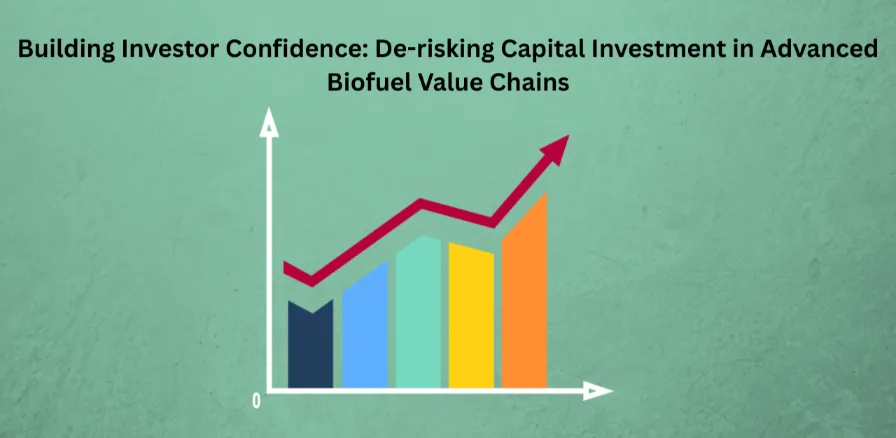
Graph illustrating growing investor confidence through de-risking capital investment in advanced biofuel value chains.

Building Investor Confidence: De risking Capital Investment in Advanced Biofuel Value Chains

De-risking Capital Investment: Building Investor Confidence in Advanced Biofuel Value Chains

The global push for decarbonization has put advanced biofuels in the spotlight as a crucial tool for a sustainable energy future. These next-generation fuels, derived from non food feedstocks like agricultural waste, algae, and forestry residues, offer a compelling alternative to fossil fuels. They don’t compete with food crops and have a significantly smaller carbon footprint, making them a more sustainable choice. However, despite their immense potential, the advanced biofuel sector has struggled to attract the scale of investment needed for widespread commercialization. Why? The simple answer is risk.

Investors, from private equity firms to venture capitalists, are wary of the technological and market uncertainties inherent in this nascent industry. They see a high risk, high capital landscape with unproven technologies and unpredictable policy environments. To unlock the trillions of dollars of capital required to build a robust advanced biofuel economy, we must systematically de risk the entire value chain. This isn’t just about building a plant; it’s about creating an ecosystem of confidence that benefits global markets and delivers a strong return on investment (ROI).

The Core Challenges: Understanding the Investor Mindset

Before we can build confidence, we must understand the sources of investor skepticism. The advanced biofuel value chain is complex, encompassing everything from feedstock sourcing to final fuel distribution. Each stage presents unique risks.

  • Technology Risk: Many advanced biofuel technologies are still in the demonstration or pilot phase. Investors fear that a promising lab scale process may not be economically viable or scalable for commercial production. There’s a concern about performance, reliability, and the potential for a “valley of death” where a technology fails to bridge the gap from R&D to commercial viability.
  • Feedstock Risk: A consistent and affordable supply of sustainable feedstock is the lifeblood of an advanced biofuel facility. Sourcing agricultural waste, municipal solid waste, or purpose grown energy crops at scale can be challenging due to seasonal variations, competition from other industries, and inconsistent quality. This creates significant supply chain volatility that directly impacts project economics.
  • Market Risk: The price of advanced biofuels is often tied to the volatile price of fossil fuels. Without robust, long-term policy support, a sudden drop in crude oil prices can make a biofuel project unprofitable overnight. Furthermore, the market for products like Sustainable Aviation Fuel (SAF) is still developing, and demand can be unpredictable.
  • Policy and Regulatory Risk: This is perhaps the most significant barrier. Government policies, such as blending mandates, tax credits, and carbon pricing mechanisms, are critical for making advanced biofuels competitive. However, frequent changes or a lack of long term policy stability can spook investors. They need a predictable regulatory environment to justify large, multi-decade investments.

De-risking the Value Chain: Strategies for Success

Building investor confidence is a multi faceted endeavor that requires collaboration between technology developers, governments, and financial institutions. By addressing each risk category head-on, we can transform the perception of the advanced biofuel sector from a high-risk gamble to a strategic, profitable investment.

1. Mitigating Technology and Execution Risk

The “valley of death” can be bridged with a combination of robust R&D and strategic partnerships.

  • Pilot and Demonstration Plants: Public private partnerships and government grants for pilot and demonstration facilities are crucial. These projects prove the technology at a larger scale, validate the process economics, and provide crucial operational data. This data is the gold standard for attracting private capital for full scale commercial plants.
  • Integrated Biorefineries: The future of advanced biofuels isn’t just about producing fuel. It’s about creating integrated biorefineries that produce a range of co products, such as bioplastics, chemicals, and power. This diversification of revenue streams insulates the project from fuel price volatility and enhances profitability, making it a more attractive investment.
  • Technological Standardization: As certain conversion technologies mature, developing industry wide standards for production processes and fuel specifications can lower perceived risk. This allows for easier due diligence and comparison for investors.

2. Stabilizing the Supply Chain and Feedstock Sourcing

Securing a consistent and cost effective feedstock supply is fundamental to project success.

  • Long-Term Offtake Agreements: Project developers must secure long term, multi year contracts with feedstock suppliers. These agreements, often with fixed or predictable pricing mechanisms, provide a stable foundation for the business model.
  • Diversified Feedstock Portfolio: Relying on a single feedstock is a significant risk. Companies that can process a variety of feedstocks—from agricultural residues to municipal waste are more resilient to supply disruptions and price fluctuations.
  • Digital Supply Chain Management: Leveraging technology to track feedstock availability, quality, and logistics can optimize the supply chain and reduce operational uncertainty. Blockchain and other digital tools can be used to ensure the sustainability and origin of the feedstock, adding a layer of trust.

3. Building a Resilient Market and Financial Framework

Creating a robust market for advanced biofuels is paramount to driving investment.

  • Carbon Pricing Mechanisms: Implementing a clear and stable price on carbon, either through a carbon tax or an emissions trading system, is one of the most effective ways to make advanced biofuels economically competitive. When polluters have to pay for their emissions, the value of a low-carbon fuel increases.
  • Blending Mandates and Credits: Long-term, binding blending mandates (like the U.S. Renewable Fuel Standard or EU’s Renewable Energy Directive) provide a guaranteed market for advanced biofuels. Credit markets, such as the market for Renewable Identification Numbers (RINs) or credits under the Clean Fuel Standard, provide a financial incentive that can be factored into a project’s ROI calculation.
  • Public-Private Financial Instruments: Governments can use a variety of financial tools to lower risk for private investors. This includes loan guarantees, tax credits for capital investment, and direct grants for project development. These instruments don’t just provide capital; they signal strong government commitment to the industry, which is a powerful confidence builder.

The ROI Equation: A Profitable and Purpose Driven Investment

Investing in advanced biofuels isn’t just a feel good choice; it’s a smart business decision with a compelling ROI. While individual project returns can vary widely based on technology, location, and market conditions, a strategic approach can yield significant financial benefits.

  • Potential for High ROI: While traditional first generation biofuel projects might see an ROI in the mid-single digits, advanced biofuel projects, when de risked and optimized, can generate significantly higher returns. With a stable policy environment and efficient operations, a project can potentially achieve an ROI of 15% to 25% or even higher. This is driven by several factors:
    • Higher Margins: Advanced biofuels often command a price premium due to their lower carbon intensity and the high demand in hard-to-abate sectors like aviation (SAF).
    • Co-product Revenue: As mentioned, the sale of high value co-products like bioplastics or renewable chemicals can create additional revenue streams that boost overall profitability.
    • Carbon Credit Monetization: The ability to generate and sell carbon credits provides a valuable, non-volatile revenue source that enhances the project’s financial stability.
  • Global Market Benefits: Beyond the individual project ROI, de-risking advanced biofuel value chains has massive benefits for the global economy.
    • Energy Security: It reduces reliance on volatile fossil fuel markets and strengthens domestic energy independence.
    • Rural Economic Development: Biofuel facilities create jobs in rural and agricultural communities, from feedstock harvesting and transportation to plant operations.
    • Environmental Impact: It directly contributes to global climate goals by reducing greenhouse gas emissions in the transportation sector, a major source of carbon.

Conclusion: A New Era of Sustainable Investment

The advanced biofuel industry is on the cusp of a major transformation. The challenges of high capital costs and technological uncertainty are real, but they are not insurmountable. By embracing a holistic strategy of de-risking the entire value chain through a combination of technological maturity, stable supply chains, and robust policy frameworks we can unlock the immense potential of this sector.

For investors, this new era presents a unique opportunity to align their portfolios with the global transition to a sustainable economy. By supporting projects that not only promise a solid ROI but also contribute to a cleaner, more secure energy future, we are not just making a wise financial decision; we are helping to build the world of tomorrow. The time to invest is now, as the seeds of a new, profitable, and purpose driven energy landscape are ready to grow.

Building Investor Confidence: De-Risking Capital Investment in Advanced Biofuel Value Chains

Building Investor Confidence: De risking Capital Investment in Advanced Biofuel Value Chains Read More »

A large-scale biorefinery, symbolizing a public-private partnership funding advanced biofuel technology and innovation

How Public-Private Partnerships Fund Advanced Biofuel Technology

How Public-Private Partnerships Fund Advanced Biofuel Technology

The global energy landscape is undergoing a monumental shift, driven by an urgent need to decarbonize and transition away from fossil fuels. At the forefront of this revolution are advanced biofuels – a sustainable alternative with the potential to power our future without the heavy environmental footprint. However, developing these cutting-edge technologies from lab-scale to commercial viability requires substantial investment, often beyond the reach of a single entity. This is where Public-Private Partnerships (PPPs) step in, forming the backbone of innovation and deployment in the advanced biofuel sector.

PPPs in advanced biofuels are intricate financial ecosystems, leveraging a strategic mix of public grants, co-funding for pilot and demonstration plants, crucial tax incentives, and direct investment from private entities. This synergistic approach not only de-risks nascent technologies but also accelerates their journey to market. But how exactly do these partnerships work to channel vital funds into this critical green technology? Let’s explore the multifaceted funding mechanisms and policy frameworks that underpin advanced biofuel innovation.

The Foundation: Understanding Public-Private Partnerships in Biofuels

Before delving into the funding specifics, it’s essential to grasp the core concept of a PPP within the advanced biofuel context. A Public-Private Partnership is a collaborative arrangement between a government entity (local, regional, or national) and one or more private sector companies El-Araby, R. (2024). The goal is to leverage the strengths of both the public sector’s ability to provide foundational support, policy frameworks, and initial de-risking capital, and the private sector’s innovation, efficiency, market expertise, and commercialization drive.

In advanced biofuels, these partnerships are particularly vital because:

Pie chart for the economic performance and ROI insights of advanced biofuel technologies
  1. High R&D Costs: Developing new biofuel conversion pathways from biomass requires intensive research and development, which is capital-intensive and time-consuming.
  2. Technological Risk: Many advanced biofuel technologies are still maturing, carrying inherent technological and scale-up risks that deter purely private investment in early stages.
  3. Infrastructure Requirements: Establishing biorefineries and supply chains demands significant upfront capital for infrastructure.
  4. Market Uncertainty: Policy stability and market demand signals are crucial for private investors, which governments can help provide.
  5. following is the graphical representation of the above context
Histogram showing the distribution of investment amounts in advanced biofuels in million USD

The blend of public and private funding creates a robust financial architecture that addresses these challenges, paving the way for sustainable energy solutions.

The Public Sector’s Role: De-risking and Incentivizing Investment

Governments worldwide recognize the strategic importance of advanced biofuels for energy security, climate change mitigation, and economic development. Consequently, they play a proactive role in nurturing this industry, primarily by mitigating financial risks and creating an attractive investment climate.

Box plot showing the distribution of investment amounts in advanced biofuels by funding source

1. Public Grants and Research Funding

A significant portion of public funding comes in the form of grants for research and development (R&D) Palage, et,al. (2019). These grants are often awarded to universities, national laboratories, and private companies undertaking foundational or applied research in areas such as:

  • Novel biomass feedstocks (e.g., algae, switchgrass, municipal solid waste)
  • Advanced conversion technologies (e.g., biochemical, thermochemical, catalytic processes)
  • Biofuel upgrading and purification
  • Life cycle assessment and sustainability studies

These grants are critical “technology-push” policies. By funding early stage research, governments help derisk concepts and gather crucial data, making them more appealing for later-stage private investment. For example, many of the breakthroughs in cellulosic ethanol or hydrotreated vegetable oil (HVO) started with public grants supporting initial scientific exploration.

2. Co-funding for Pilot and Demonstration Plants

Perhaps one of the most impactful public contributions is the co-funding of pilot and demonstration plants. This is a crucial transitional phase between laboratory success and full commercialization. Pilot plants test the technology at a smaller, integrated scale, while demonstration plants operate at a pre-commercial scale to prove technical and economic viability.

Public co-funding in this area is a powerful innovation booster. Studies have consistently shown that public co funding of pilot and demonstration plants has a direct correlation with increased patenting activity in advanced biofuels. This indicates that government support at this critical juncture accelerates the maturation of technologies and encourages companies to invest further in intellectual property.

Imagine a breakthrough enzyme for breaking down lignin in biomass. A public grant might fund the initial lab research. But to prove it works continuously and efficiently, a pilot plant is needed. Public co funding helps bridge the “valley of death” the gap where early stage research has shown promise but hasn’t yet attracted sufficient private capital for larger-scale validation. This shared investment reduces the financial burden and risk for private partners, encouraging them to commit resources to scaling up.

3. Tax Incentives

Governments provide substantial financial incentives through the tax system to make advanced biofuel production more economically viable and attractive. These incentives primarily aim to offset the higher production costs compared to fossil fuels or conventional biofuels. Key tax incentives include:

  • Tax Credits: These directly reduce a company’s tax liability. Examples include production tax credits for each gallon of advanced biofuel produced, or investment tax credits for capital expenditures on biofuel production facilities.
  • Accelerated Depreciation: Allows companies to deduct the cost of their assets more quickly, reducing taxable income in earlier years and improving cash flow.
  • Research and Development (R&D) Tax Credits: Encourages private companies to invest in R&D by reducing the cost of their innovation activities.

These tax incentives act as a consistent financial stimulus, improving the internal rate of return (IRR) for advanced biofuel projects and making them more competitive against established fossil fuel industries.

4. Loan Guarantees and Direct Loans

Another vital public mechanism is the provision of loan guarantees and direct loans. High upfront capital requirements and perceived risks can make it challenging for advanced biofuel projects to secure conventional financing from private lenders.

  • Loan Guarantees: A government agency guarantees a portion of a loan provided by a private bank. If the project defaults, the government covers the guaranteed amount. This reduces risk for the private lender, making them more willing to lend at more favorable terms.
  • Direct Loans: In some cases, government agencies provide direct loans, often at lower interest rates or with more flexible repayment terms than commercial banks.

These mechanisms are particularly useful for large scale infrastructure projects like biorefineries, which require hundreds of millions or even billions of dollars in capital. They help bridge the financing gap that often exists for first-of-a-kind commercial facilities.

The Private Sector’s Contribution: Innovation and Commercialization

While public funding provides the initial impetus and de-risking, the private sector is the engine of innovation, efficiency, and ultimately, commercialization. Private entities bring entrepreneurial drive, technological expertise, market acumen, and crucial capital for scaling up.

1. Direct Equity Investment

Private companies, venture capitalists, private equity firms, and corporate investors provide direct equity investment into advanced biofuel projects and companies. This funding comes in various stages:

  • Seed and Early-Stage Funding: Often from angel investors or specialized venture capital funds targeting disruptive technologies.
  • Growth Equity: As technologies mature and companies look to expand, private equity and larger venture funds invest to scale operations.
  • Corporate Venturing: Large energy companies, chemical companies, or even automotive manufacturers invest in advanced biofuel startups to secure future feedstock, develop new products, or gain a foothold in emerging markets.

These private investments are driven by the potential for significant returns, market leadership, and the strategic importance of sustainable solutions.

2. Project Financing

For large-scale commercial biorefineries, project financing is a common approach. This involves structuring a debt and equity package specifically for a single project, where the debt is repaid from the project’s future cash flows. Private banks, institutional investors, and sometimes multilateral development banks (e.g., World Bank, IFC) participate in project finance deals.

The feasibility of securing project finance for advanced biofuels is significantly enhanced by the public sector’s role in de-risking the technology and providing demand-side assurances. A project with robust off-take agreements (contracts to sell the biofuel), guaranteed loan portions, and proven technology (thanks to pilot and demo plant co-funding) is much more attractive to private lenders.

3. Corporate Partnerships and Joint Ventures

Private companies also form partnerships with each other or with public research institutions to share risks, combine expertise, and pool resources. These joint ventures are common for:

  • Developing specific components of the biofuel value chain (e.g., feedstock aggregation, processing, distribution).
  • Licensing technology developed by a research institution to commercialize it.
  • Building and operating large-scale production facilities.

These collaborations leverage complementary strengths – one company might have expertise in biomass supply, another in conversion technology, and a third in fuel distribution.

The Synergistic Dance: Technology Push and Demand Pull Policies

The success of PPPs in advanced biofuels hinges on a balanced combination of “technology-push” and “demand-pull” policies.

Technology-Push Policies are designed to stimulate innovation and bring new technologies to market readiness. These primarily include:

  • R&D Funding: Grants for basic and applied research.
  • Pilot and Demonstration Plant Co-funding: Financial support for scaling up and validating technologies.
  • Early-Stage Investment: Tax incentives for R&D.

These policies are crucial for overcoming the technical barriers and high initial costs associated with nascent technologies. They push the boundaries of what’s scientifically and technically possible.

Public-private partnerships (PPPs) are crucial for accelerating advanced biofuel innovation by strategically blending public and private funding. This model leverages public grants and co-funding for pilot and demonstration plants, effectively de-risking high-cost, nascent technologies. For example, in 2025, companies like LanzaJet and Nova Pangaea Technologies received significant government funding from initiatives like the UK’s Advanced Fuels Fund (AFF), a clear sign of public co-investment to prove and scale their technologies. This initial public support acts as a catalyst, attracting crucial private capital from investors and corporate partners such as Shell and British Airways, who then fund the commercial-scale deployment. By providing a mix of technology-push (R&D funding) and demand-pull (tax incentives, mandates) policies, governments create the stable environment needed for private companies to invest, ultimately transforming waste into sustainable fuels.

Companies Worldwide leading to the Public-Private Partnerships for Advance Biofuels technology

Demand-Pull Policies, on the other hand, create a market for advanced biofuels, making commercial production economically attractive. These policies signal consistent future demand, which is vital for private investors making long-term commitments. Key demand-pull mechanisms include:

  • Price-Based Incentives: Subsidies or tax credits tied to the production or sale of advanced biofuels (e.g., Renewable Fuel Standard (RFS) credits in the US, similar schemes in Europe).
  • Blending Mandates: Government regulations requiring a certain percentage of advanced biofuels to be blended into conventional fuels. This creates a guaranteed market and steady demand.
  • Low Carbon Fuel Standards (LCFS): Policies that assign a carbon intensity score to fuels, rewarding those with lower emissions (like advanced biofuels) and penalizing higher-emission fuels. This creates a value for the carbon reduction achieved by advanced biofuels.

Advanced biofuels, in particular, benefit immensely from a comprehensive combination of these approaches. Technology-push policies nurture the innovation pipeline, ensuring a steady stream of viable technologies. Demand-pull policies then provide the market certainty and revenue streams necessary for these technologies to be deployed at scale. Without demand-pull, even the most innovative biofuel technology might struggle to find a commercial footing. Without technology-push, there might not be sufficient innovative solutions to meet market demand.

Here’s an illustrative example:

Imagine a new process for converting municipal solid waste into jet fuel.

Technology-Push: A government grant funds university research into the catalytic conversion process. Another public co-funding initiative helps a startup build and operate a pilot plant to prove the technology.

Private Investment: Seeing the promising results from the pilot plant, a venture capital firm invests growth equity to help the startup build a larger demonstration plant.

Demand-Pull: Simultaneously, a government introduces a “Sustainable Aviation Fuel (SAF) mandate” requiring airlines to use a certain percentage of SAF by a specific date. This creates a guaranteed market for the advanced jet fuel.

Further Private Investment & PPP: With the market signal clear and technology de-risked, private banks and institutional investors provide project financing for a full-scale commercial biorefinery, potentially backed by government loan guarantees.

This integrated approach exemplifies the power of PPPs.

Challenges and the Future of PPPs in Advanced Biofuels

While PPPs are crucial, they are not without challenges. These can include:

  • Policy Instability: Frequent changes in government energy policy or incentive programs can create uncertainty for long-term private investments.
  • Bureaucracy: Navigating complex government grant applications and regulatory processes can be time-consuming for private entities.
  • Coordination Issues: Ensuring seamless collaboration between public and private partners, each with different objectives and timelines, requires strong governance.

Despite these hurdles, the imperative to develop sustainable energy sources ensures that PPPs will continue to be a cornerstone of advanced biofuel development. The future will likely see:

  • Increased Focus on Novel Feedstocks: Partnerships will explore and fund technologies for converting a wider range of non-food feedstocks, including agricultural residues, forestry waste, and CO2.
  • Integration with Other Green Technologies: Advanced biofuels could be integrated with carbon capture and utilization (CCU) or green hydrogen production, creating synergistic value chains.
  • International Collaboration: Cross-border PPPs could emerge to address global energy challenges and facilitate technology transfer.

The role of PPPs is not just about funding; it’s about fostering an ecosystem of innovation. They build confidence, share knowledge, and create the necessary infrastructure and market conditions for advanced biofuels to truly flourish.

Conclusion

The journey from a laboratory breakthrough to a commercial-scale advanced biorefinery is long, complex, and capital-intensive. It is a journey that few private companies can undertake alone and one that is too critical for governments to ignore. Public-Private Partnerships are the essential mechanism that bridges this gap, combining strategic public support with private sector ingenuity.

By providing crucial public grants, co-funding pilot and demonstration plants, offering significant tax incentives, and implementing robust loan guarantees, governments effectively de-risk advanced biofuel technologies. This public foundation then attracts vital private capital through direct equity investments, project financing, and strategic corporate partnerships.

The interplay of technology-push and demand-pull policies further solidifies this framework, ensuring that both innovation is fostered and a viable market is created. As the world pushes towards a greener future, these collaborative funding models will remain indispensable, accelerating the development and deployment of advanced biofuel technology, and ultimately, powering a more sustainable planet.

Citations

El-Araby, R. (2024). Biofuel production: exploring renewable energy solutions for a greener future. Biotechnology for Biofuels and Bioproducts, 17. https://doi.org/10.1186/s13068-024-02571-9.

Palage, K., Lundmark, R., & Söderholm, P. (2019). The impact of pilot and demonstration plants on innovation: The case of advanced biofuel patenting in the European Union. International Journal of Production Economicshttps://doi.org/10.1016/J.IJPE.2019.01.002.

Building Investor Confidence — De-risking Capital Investment in Advanced Biofuel Value Chains

How Public-Private Partnerships Fund Advanced Biofuel Technology Read More »

Green textured background with white text reading 'Carbon Tax & Biofuels: How New Policies Can Cut Costs and Boost Advanced Biofuels' and an icon representing a tax document

Carbon Tax & Biofuels: How New Policies Can Cut Costs and Boost Advanced Biofuels

Making Advanced Biofuels Cost-Competitive with Carbon Taxation

Advanced biofuels, made from non-food sources such as crop residues, forestry waste, and other organic materials, are one of the most promising solutions for cutting greenhouse gas (GHG) emissions in transport and industry. However, their biggest challenge remains high production costs compared to fossil fuels.

Hubbert's curve showing fossil fuel reserves production from 1900 up to 2030.

Hubbert’s curve showing fossil fuel reserves production from 1900 up to 2030 (Das et al., 2022).

How Carbon Taxation Effects

The empirical findings demonstrate that carbon taxes can be an effective policy instrument for climate mitigation. An increasing number of studies show that carbon taxes can effectively reduce carbon emissions or at least dampen their growth, although the measured effects are often moderate and insufficient to reach current long-term emission goals, largely due to moderate tax rates and generous exemptions for industry. Crucially, the evidence suggests that carbon taxes typically do not negatively affect economic growth, employment, or competitiveness. The macroeconomic outcomes often depend on how revenues are used: recycling revenues via reductions in social security contributions and taxes on labor income is associated with achieving a “double dividend” (environmental and economic benefits), while lump-sum transfers are economically less efficient for this purpose Köppl, A., & Schratzenstaller, M. (2023).

A carbon tax puts a price on greenhouse gas emissions by making polluters pay for the carbon released from fossil fuels. This increases the cost of coal, oil, and gas, while making cleaner options such as advanced biofuels and renewable energy more attractive.

Global evidence shows that carbon taxation:

  • Reduces emissions effectively when tax rates are meaningful.
  • Encourages a clean energy transition without harming long-term economic growth or jobs.
  • Closes the price gap between fossil fuels and biofuels, improving competitiveness.

Smart Tax Regimes to Boost Biofuels

While a simple carbon tax helps, smart tax regimes make it far more effective by directing revenue to clean energy innovation. Key strategies include:

  • Biofuel subsidies and tax credits to reduce production costs (as seen in U.S. Renewable Fuel Standard programs).
  • Research and development (R&D) grants to improve biofuel technologies and cut expenses.
  • Infrastructure investments in storage, logistics, and supply chains for scaling production.
  • Blending mandates that guarantee stable demand and encourage private investment.
  • Revenue recycling by reducing labor or business taxes, creating what economists call the “double dividend”—cleaner energy plus stronger economic growth.

A well-known example is British Columbia’s carbon tax, where revenues were reinvested into lowering other taxes and funding green programs, boosting both climate action and public support.

Insights and Challenges from Global Experience

Policymakers often set low carbon tax rates and grant exemptions to industries in order to ease competitiveness concerns and gain public support. While studies show that carbon taxes generally have little negative effect on firms’ competitiveness, policy design such as exemptions and revenue recycling shapes the outcomes. For example, Norway’s generous exemptions for fossil fuel-intensive industries led to only a modest reduction in CO₂ emissions. Such practices weaken environmental effectiveness and make it harder to reach long-term climate goals, but they help balance the trade-off between effectiveness and acceptance. In some cases, exemptions are linked to conditions, as in Denmark, where reduced rates were tied to energy-saving agreements, resulting in significant emission cuts. Overall, the design of exemptions and tax rates varies across countries, explaining why macroeconomic impacts are often neutral or even positive.

Hubbert curve oil reserves 2020
  • Effectiveness depends on design: higher rates reduce emissions faster, while too many exemptions weaken impact.
  • Revenue use matters: directing funds to low-carbon innovation, public compensation, and energy transition programs increases acceptance.
  • Social fairness is crucial: policies that support lower-income households and ensure transparency win more trust and political backing.
  • Carbon pricing alone is not enough: it must be part of a comprehensive renewable energy policy mix that includes innovation, infrastructure, and regulations.

Conclusion: Carbon Taxation as a Catalyst for Biofuels

The evidence is clear: carbon taxation, when combined with smart tax policies, can make advanced biofuels cost-competitive and accelerate the global transition to a low-carbon economy. By pricing carbon emissions, supporting clean energy investments, and designing fair and transparent revenue use, governments can:

  • Drive sustainable innovation in biofuels.
  • Cut dependence on fossil fuels.
  • Meet climate goals while protecting economic growth and fairness.

To achieve a truly sustainable energy future, To ensure that carbon taxes are environmentally effective and politically feasible, several solutions are suggested, beginning with the implementation of sufficiently high tax rates necessary to adequately trigger emissions reduction and innovation, as current moderate rates are often insufficient to meet long-term goals. Given that carbon taxation alone cannot achieve the profound structural change required for climate neutrality, it must be embedded in a broader policy mix that includes instruments like subsidies, standards, and public infrastructure investments. Revenue recycling is critical for maximizing benefits and gaining public acceptance: policymakers should utilize reductions in taxes on labor income and social security contributions to pursue a potential “double dividend” of environmental and economic benefits, while simultaneously using lump-sum transfers to effectively mitigate regressive effects for lower incomes and boost public acceptance. Furthermore, compensation measures must address not only vertical (income-based) but also horizontal distributional effects (based on socio-demographic factors like location). Finally, securing public support is achieved by providing public information about the positive impact of the tax and the future costs of inaction, and acceptance can be increased by channeling part of the revenues into “environmental projects”. carbon taxation must be embedded in a broader policy package that fosters innovation, builds infrastructure, and ensures public acceptance. Done right, advanced biofuels can become a cornerstone of the clean energy transition.

Citations

Köppl, A., & Schratzenstaller, M. (2023). Carbon taxation: A review of the empirical literature. Journal of Economic Surveys37(4), 1353-1388.

Das, H. S., Salem, M., Zainuri, M. A. A. M., Dobi, A. M., Li, S., & Ullah, M. H. (2022). A comprehensive review on power conditioning units and control techniques in fuel cell hybrid systems. Energy Reports8, 14236–14258.

Also checkout

Leveraging public and private funding for innovation in advanced biofuel conversion pathways

Carbon Tax & Biofuels: How New Policies Can Cut Costs and Boost Advanced Biofuels Read More »

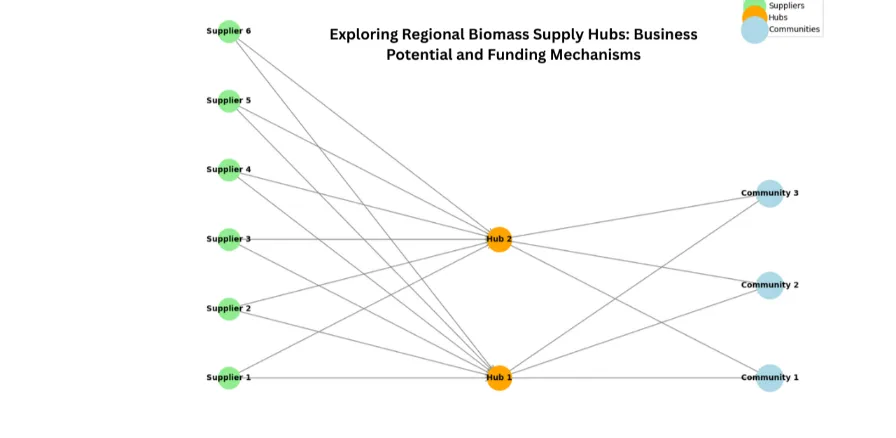
An abstract diagram showing a supply chain with icons representing biomass suppliers, a central hub, and a remote community. The arrows indicate the flow of biomass from suppliers to the hub and then to the community, symbolizing a coordinated network.

Exploring Regional Biomass Supply Hubs: Business Potential and Funding Mechanisms

Regional Biomass Supply Hubs: Business Potential & Funding Strategies

Biomass is becoming a key renewable energy source that can reduce reliance on fossil fuels and cut environmental impacts. While biomass use is common in rural areas, remote communities face unique challenges in adopting it. These include scattered suppliers, high transportation costs, and small-scale energy demand.

Financial benefits of the Biomass hubs in 2025 and Beyond

Market prices for bioenergy products (biofuel, biochar, electricity) have the largest impact on project profitability. For instance, biochar production had a mean NPV of $41.5 million, but profitability dropped sharply with price volatility (Campbell et al., 2018). This growth is driven by increasing environmental concerns, supportive government policies like subsidies and tax incentives, and the push for a circular economy that utilizes waste for energy. Biomass is seen as a way to provide dispatchable, reliable power and reduce greenhouse gas emissions, and is also being used in combined heat and power (CHP) systems and for co-firing with coal to reduce carbon footprints. While challenges like inconsistent feedstock supply and technological limitations exist, continuous innovation and a focus on sustainable sourcing are expected to propel the market forward, with a strong concentration and growth potential in North America, Europe, and especially the Asia-Pacific region.

The solution lies in regional biomass supply hubs. With better coordination, supply chains can be more efficient, cost-effective, and sustainable.

The Anatomy of a Biomass Supply Chain

A biomass supply chain typically has three main layers:

The Anatomy of a Biomass Supply Chain

The anatomy of a biomass supply chain is typically a three-echelon channel. The first echelon consists of biomass suppliers who are responsible for collecting and harvesting the biomass and then selling it to hubs. Their goal is to maximize their profit by determining the selling price of the biomass. The second echelon is made up of hubs, which coordinate the supply and demand sides of the chain, purchasing biomass from suppliers and selling it to energy conversion facilities. Finally, the third echelon includes the energy conversion facilities, which convert the biomass into energy, such as heat and electricity, for end users. These facilities aim to minimize the cost of energy production when deciding how much biomass to purchase and convert.

  1. Suppliers – Farmers, loggers, and other suppliers harvest and sell biomass.
  2. Hubs – Supply hubs play a crucial role by storing, managing, and linking suppliers with buyers.
  3. Energy Converters (Communities) – Facilities or communities that convert biomass into heat and electricity.

Each layer has its own costs, risks, and benefits. But when they work together strategically, the system becomes more efficient and reliable.

Why Strategic Coordination Matters

Without coordination, biomass projects in remote areas struggle with high costs and supply issues. Research shows that a game-theory approach (the Stackelberg model) helps explain how different players—suppliers, hubs, and communities can cooperate.

Three leadership scenarios exist:

  • Suppliers lead the chain
  • Hubs lead the chain
  • Communities lead the chain

In each case, the leader benefits most because they make decisions first. Two strategies make coordination possible:

  • Quantity Discounts – Encourages bulk buying, lowering per-unit costs.
  • Side Payments – Financial incentives from leaders to followers to keep cooperation stable.

Case Study: Lessons from Northern Canada

Remote communities in Northern Canada (Kangigsujuaq, Salluit, and Ivujivik) rely heavily on diesel. Since local biomass is unavailable, they must import pellets.

Based on the provided case study, remote communities in Northern Canada, such as Kangigsujuaq, Salluit, and Ivujivik, face the unique challenge of relying on imported diesel for energy due to the local unavailability of biomass. This dependency highlights the need for a coordinated biomass supply chain, even when the primary feedstock must be shipped from elsewhere. The study’s key finding is that while coordination and shared leadership benefit all participants in the supply chain, the most effective outcomes are achieved when the local communities themselves take the lead. This community-centric approach is crucial for successfully managing the logistics and economic viability of importing biomass pellets, ensuring the supply chain meets their specific needs and ultimately leads to better results.

Community-Led Supply Chains: Unlocking Business Potential

When communities act as leaders in the biomass supply chain, the outcomes are most cost-effective and sustainable.

Key benefits include:

  • Lower Costs: Communities secure biomass at the cheapest rates, cutting energy costs.
  • More Renewable Energy: Biomass becomes more competitive, increasing its share in the local energy mix.
  • Stable Cooperation: Communities can provide side payments to hubs and suppliers, ensuring reliable long-term partnerships.

This leadership model creates the strongest business case for renewable energy projects in remote regions.

Funding Strategies for Biomass Hubs

To make biomass projects financially viable, communities can explore:

  • Government Grants & Subsidies – Many countries offer renewable energy funding.
  • Public-Private Partnerships – Shared investment reduces risks and builds stronger networks.
  • Community Investment Models – Local ownership ensures commitment and long-term success.
  • Carbon Credits & Green Financing – Additional revenue streams from sustainable practices.

Latest Funding Strategies and Financial Performance

Recent research highlights several effective funding strategies for biomass hubs:

  • Bank Loans: Case studies show bank loans as a highly profitable funding option. For example, a 2024 Indonesian biomass project using bank loans achieved an NPV of Rp 8.5 billion, an IRR of 31%, and a payback period of 4 years, offering benefits like risk diversification, tax advantages, and quick fund disbursement .
  • Green Finance: Green finance (GF) is increasingly accessible and supports sustainable innovation, but barriers remain, such as policy uncertainty, limited financial supplier involvement, and short-term financial instruments. Long-term, stable policy frameworks are essential to reduce perceived risks for investors 120.
  • Public-Private Partnerships (PPP): In China, PPP models attract social capital, broaden financing methods, and diversify investment sources, but project profitability often depends on strong policy support and market stability .
  • Government Grants and EU Funds: In the EU, regional and structural funds have covered 15–85% of project costs, with nearly half of projects receiving over 45% co-funding, enabling significant bioenergy infrastructure development .

Opportunity Websites and Resources

  • EU Funding & Tenders Portalhttps://ec.europa.eu/info/funding-tenders/opportunities/portal/
  • Green Finance Platforms: Many countries have national green finance initiatives (e.g., Italy’s Green Economy on Capital Markets ).
  • Development Banks: World Bank, Asian Development Bank, and regional banks offer biomass project funding.
  • Local Government and PPP Platforms: Country-specific portals for PPP opportunities (e.g., China PPP Center).

Conclusion: The Future of Biomass in Remote Communities

Establishing regional biomass supply hubs is not just about logistics—it’s a strategic move for cost savings, energy security, and environmental sustainability.

By taking the lead, communities can build strong, efficient, and financially stable biomass supply chains. With the right funding strategies, this approach unlocks both business potential and long-term clean energy benefits, moving remote regions closer to a sustainable future.

Citations

Campbell, R., Anderson, N., Daugaard, D., & Naughton, H. (2018). Financial viability of biofuel and biochar production from forest biomass in the face of market price volatility and uncertainty. Applied Energyhttps://doi.org/10.1016/J.APENERGY.2018.08.085.

Building Investor Confidence & De-risking Capital Investment in Advanced Biofuel Value Chains

Exploring Regional Biomass Supply Hubs: Business Potential and Funding Mechanisms Read More »

A diverse team of five financial investors reviews holographic data charts in front of a large, glowing, first-of-a-kind (FoAK) advanced biofuel plant and integrated renewable energy complex with solar and wind power at sunset.

Financing Opportunities for First-of-a-Kind (FoAK) Advanced Biofuel Plants: What Investors Need to Know

Powering a Greener Future: Financing Opportunities for First-of-a-Kind (FoAK) Advanced Biofuel Plants

The global push for decarbonization has put advanced biofuels in the spotlight. Unlike first-generation biofuels derived from food crops, First-of-a-Kind (FoAK) advanced biofuel plants utilize non-food sources like agricultural residues, forestry waste, and even municipal solid waste. These fuels are “drop-in” replacements for fossil fuels, meaning they can be used in existing infrastructure and engines, making them a critical component in the transition to a low-carbon economy, especially for hard-to-abate sectors like aviation, shipping, and heavy-duty transport.

What are the possible FoAK Advance biofuels for Financial opportunities

Investing in First-of-a-Kind (FoAK) advanced biofuel plants presents a compelling financial opportunity due to the diversity of technologies and the high demand for sustainable fuels. A significant number of these projects are focused on a variety of feedstocks, going beyond traditional agricultural residues and forestry waste. Key FoAK advanced biofuel plants are emerging that utilize innovative sources like waste from dairy products, which can be converted into bioethanol or bio-oil using fermentation or thermochemical processes. Fast-growing, non-food crops such as genetically optimized poplar trees are another promising feedstock, as their high cellulose and low lignin content make them ideal for conversion into cellulosic ethanol. Other sources include the biodegradable fraction of municipal and industrial waste, which can be processed through technologies like gasification or fast pyrolysis to produce liquid fuels, and even animal fats and used cooking oils, which are hydrotreated to create renewable diesel and sustainable aviation fuel (SAF). These diverse and often localized feedstocks provide investors with a wide range of opportunities to tap into a rapidly growing market while simultaneously addressing waste management and resource efficiency.

Regional and Economical Viability

The regional and economic viability of First-of-a-Kind (FoAK) advanced biofuel plants is highly dependent on the local availability of diverse and low-cost feedstocks. Economically, these projects are most attractive when they can co-locate with a source of waste or a dedicated, fast-growing energy crop. For instance, plants utilizing dairy waste are most viable in regions with a high concentration of dairy farms, as this minimizes transportation costs and provides a reliable, year-round feedstock stream that also offers a solution to an existing waste management problem. Similarly, facilities converting poplar trees or other dedicated energy crops are particularly suited to regions with available marginal land and favorable growing conditions. The economic model is further enhanced by policies that incentivize waste-to-energy projects and by the valorization of co-products, such as bio-fertilizer or renewable electricity generated from the plant’s byproducts, which can be sold back to the grid or used to power the facility, thereby increasing the overall profitability and regional economic benefits.

1- Cellulosic Ethanol

Technique used in manufacturing:

The primary manufacturing techniques are biochemical and thermochemical conversion.

  • Biochemical Process: This involves a pretreatment phase to break down the lignocellulosic material. This is followed by hydrolysis, which uses enzymes or dilute acid to break down cellulose into simple sugars. These sugars are then fermented by microbes into ethanol.
  • Thermochemical Process: This method uses heat and chemicals to convert biomass into syngas, a mixture of hydrogen and carbon monoxide. This syngas is then catalytically converted into ethanol and other liquid products.

Feedstock:

Cellulosic ethanol is produced from lignocellulosic biomass, which is non-food plant material. This includes agricultural residues (like corn stover and wheat straw), herbaceous biomass (like switchgrass), woody biomass (like poplar and pine trees), and municipal solid waste.

Funding Opportunities:

Global investment in cellulosic ethanol has declined in recent years, with a 35% drop in new biofuels power capacity investment in 2015 compared to 2014, reaching $3.1 billion. This decline is largely due to high production costs and the financial instability of pioneering companies, despite successful pilot and demonstration plants in the US, EU, and elsewhere.  Funding is often directed toward projects that demonstrate cost-effective, scalable technologies or offer new insights into commercial viability (Sharma et al., 2022). Cellulosic ethanol remains a promising but under-commercialized biofuel, with future funding opportunities closely tied to technological breakthroughs, integrated biorefinery models, and supportive policy frameworks. The next wave of investment is expected to focus on overcoming persistent cost and scalability barriers while maximizing the value of lignocellulosic biomass.

Regional viability:

This biofuel is most viable in regions with abundant agricultural and forestry resources. The U.S. Midwest, with its vast corn production, is a prime location for utilizing corn stover. The Pacific Northwest and Southeast, with their large forestry industries, are ideal for using woody biomass.

ROI (Return on Investment):

The ROI for cellulosic ethanol plants can be challenging due to high initial capital costs, but it is projected to improve as technology advances and economies of scale are achieved. Recent techno-economic analyses show that cellulosic ethanol production costs typically range from $0.81 to $1.44 per liter (about $3.07–$5.45 per gallon), depending on the process and feedstock used. A meta-analysis of studies found the minimum fuel selling price (MFSP) averages $2.65/gallon, with a wide range from $0.90 to $6.00/gallon, reflecting significant variability in technology, scale, and assumptions. At a selling price of $1.50/L, some models achieve a positive net present value (NPV), but profitability is highly sensitive to process yields and capital costs (Olughu et al., 2023).

2- Biodiesel from Algae

Technique used in manufacturing:

The process involves three main stages:

  1. Cultivation: Microalgae are grown in either open ponds or closed photobioreactors, which provide the necessary sunlight, water, and carbon dioxide.
  2. Harvesting and Oil Extraction: The algae biomass is harvested from the water, and the natural oils (lipids) are extracted. Common methods include oil presses or solvent extraction.
  3. Transesterification: The extracted algal oil is reacted with an alcohol (like methanol) and a catalyst to produce biodiesel.

Feedstock:

Microalgae and macroalgae. A key advantage is that algae can be grown on non-arable land and in a variety of water sources, including wastewater and saline water, which does not compete with food crops.

Funding Opportunities:

Funding opportunities are emerging across several dimensions to address these hurdles. Public funding plays a critical role, with national and regional programs in the US, EU, China, and Brazil supporting research, pilot projects, and demonstration plants, while policies such as renewable fuel standards, tax credits, and capital cost grants enhance economic feasibility and attract private investors. Research and innovation grants prioritize solutions for key bottlenecks, including improving algal strain productivity, lowering cultivation and harvesting costs, and advancing efficient lipid extraction and conversion methods, with additional emphasis on integrating algae cultivation with wastewater treatment and CO₂ capture to reduce costs and deliver environmental benefits. Furthermore, funding is increasingly directed toward biorefinery models that couple biodiesel production with high-value co-products such as biofertilizers, bioplastics, and nutraceuticals, making projects more attractive to both public and private stakeholders by enhancing profitability and sustainability .

Regional viability:

Algae-based biofuel production is most viable in regions with a high number of daylight hours per year, such as tropical or subtropical climates. Access to low-cost water sources (including wastewater) and abundant carbon dioxide (e.g., from industrial emissions) is also crucial for commercial viability.

ROI (Return on Investment):

 Updated techno-economic analyses estimate current algal biodiesel production costs at $0.42–$0.97 per liter ($1.59–$3.67 per gallon), which is still higher than fossil diesel but shows improvement over earlier estimates.

ROI Examples: A recent techno-economic study of a macroalgae-based biodiesel plant reported a return on investment (ROI) of 25.39% and an internal rate of return (IRR) of 31.13%, with a payback period of 3.94 years—though these figures are highly dependent on scale, technology, and local conditions (Ravichandran et al., 2023).

3- Sustainable Aviation Fuel (SAF) from Woody Biomass

Technique used in manufacturing:

One prominent technique is catalytic fast pyrolysis (CFP) followed by hydrotreating. In this process, woody biomass is heated rapidly in the absence of oxygen to produce bio-oil. This stabilized bio-oil is then hydrotreated to remove impurities and upgraded into a drop-in ready sustainable aviation fuel.

Feedstock:

Woody biomass, including forest residues (like treetops, branches, and sawdust), as well as dedicated woody energy crops.

Funding Opportunities:

The current funding landscape is shaped by federal, state, and local programs, with the U.S. Inflation Reduction Act (2022) introducing new federal tax credits that provide a foundational layer of support for SAF producers. However, state-level incentives remain necessary to achieve cost competitiveness; for instance, pilot-scale gasification Fischer-Tropsch (GFT) SAF production in Virginia would require approximately $3.61 per gallon in state incentives, while pyrolysis-based SAF would need around $0.75 per gallon. A mix of funding mechanisms—such as tax credits, loan forgiveness, and direct grants plays a critical role in shaping project economics and ensuring benefits for stakeholders, from feedstock suppliers to conversion facilities. Strategic funding priorities include advancing technology development to improve conversion efficiency, scale up production, and reduce costs across woody biomass-to-SAF pathways, alongside investments in supply chain logistics, facility siting, and blending infrastructure to enable regional deployment. At the same time, policymakers face the challenge of balancing economic feasibility with environmental benefits, as lower-cost pathways do not always deliver the highest greenhouse gas reductions, underscoring the need for carefully designed incentives that maximize both sustainability and market viability (Davis et al., 2024).

Regional viability:

Production of woody biomass SAF is most viable in regions with large, accessible, and sustainably managed forests. This includes areas like the Pacific Northwest, the Southeastern U.S., and parts of Canada and Northern Europe.

ROI (Return on Investment):

Recent techno-economic models estimate SAF from woody biomass costs between $1.92–$2.25 per liter ($7.27–$8.52 per gallon) using the Ethanol-to-Jet (ETJ) pathway, depending on production scale and demand . Fischer-Tropsch (FT) pathways show production costs of $2.31–$2.81 per gallon gasoline equivalent . Integration with existing bioethanol plants or use of economic incentives can reduce costs to as low as $0.40–$0.70 per liter ($1.51–$2.65 per gallon) (Guimarães et al., 2023) Hong et al. (2025).

Cost Drivers: Capital investment accounts for about 77% of total unit cost, with operating costs at 22% . Feedstock price and renewable fuel incentives are the most sensitive variables affecting ROI .

ROI Potential: Standalone woody biomass SAF projects struggle to achieve positive ROI at current market prices without policy support. However, integration with mature biofuel routes and carbon credit incentives can make projects profitable, with some models showing high probabilities (>96%) of profitability at current SAF prices in favorable policy environments .

4- Biogas from Dairy Waste

Technique used in manufacturing:

Anaerobic Digestion is the primary process. This involves placing dairy waste (manure, wastewater, whey) into a sealed, oxygen-free tank called a digester. Microbes naturally break down the organic material, producing a biogas rich in methane, which can be captured and used as fuel.

Feedstock:

Dairy waste, including manure, wastewater, and dairy processing by-products like whey.

Funding Opportunities:

Many countries and regions provide direct subsidies, grants, and cost-share programs to support the construction and operation of anaerobic digesters on dairy farms, helping reduce methane emissions and promote renewable energy. In California, governmental incentive programs partially fund eligible dairy digester projects, while in Poland and other EU countries, subsidies often cover 40–60% of the investment cost for biogas plants, a level of support necessary to ensure satisfactory economic efficiency. In addition to grants and subsidies, soft loans and low-interest financing from government and private sources are available, further encouraging rural and community-level biogas development and improving the overall financial viability of such projects Kusz et al. (2024).

Regional viability:

This biofuel is highly viable in regions with a dense population of dairy farms, such as the U.S. Midwest, California’s Central Valley, and parts of Europe.

ROI (Return on Investment):

Most studies indicate payback periods for anaerobic digestion projects ranging from 4 to 13 years, depending on plant size, technology, co-digestion practices, and the availability of subsidies. For instance, a 400-cow farm in Iran achieved payback in under 4 years, generating annual net incomes of $6,400–$38,000 depending on the scenario, while a 500 kW biogas plant in Poland using dairy manure and straw reported a payback of less than 6 years and €332,000/year more profit compared to conventional dairy farming. In contrast, small-scale plants in Ireland demonstrated longer payback periods of 8–13 years, though capital grants improved their economic feasibility. Internal Rates of Return (IRR) generally range between 9% and 15% for well-designed, subsidized, or co-digestion projects, as seen in a Malaysian on-farm system reporting a 13% IRR with a 7-year payback (Bywater & Kusch-Brandt, 2022). Net Present Value (NPV) also tends to be positive for medium-to-large farms or when co-digestion strategies, such as integrating food waste or straw, are adopted further enhanced by tipping fees that significantly improve overall returns

5- Ethanol from Poplar Trees

Technique used in manufacturing:

The process is similar to cellulosic ethanol from other woody biomass. It involves a pretreatment phase (often with steam or chemicals) to break down the lignin and hemicellulose. This is followed by enzymatic hydrolysis to convert the cellulose into fermentable sugars, which are then fermented into ethanol.

Feedstock:

Hybrid poplar trees, which are cultivated as a fast-growing, short-rotation energy crop.

Funding Opportunities:

Government and research grants for poplar-based ethanol are available through national and regional programs targeting advanced biofuels, such as the USDA NIFA in the US and the EU Renewable Energy Directive II (REDII) in Europe, which support research, demonstration, and pilot projects, particularly those utilizing marginal lands or integrating ecosystem services. Economic analyses and stakeholder assessments emphasize the importance of direct subsidies, capital grants, and policy incentives to ensure competitiveness with fossil fuels and other biomass sources, since purpose-grown poplar often faces higher feedstock costs that make it financially unfeasible without such support. In addition, poplar plantations can benefit from ecosystem service payments through programs that reward land restoration, flood mitigation, or wastewater management, creating diversified revenue streams for growers and enhancing the overall economic viability of poplar-based ethanol production.

Regional viability:

Poplar-based biofuel is most viable in temperate regions with suitable land for short-rotation woody crop plantations, such as the Pacific Northwest and parts of the Midwest in the U.S., as well as certain regions of Canada and Europe.

ROI (Return on Investment):

Production Costs: Recent techno-economic analyses estimate the minimum ethanol selling price (MESP) for poplar ethanol at $1,095/tonne, or roughly $2.65/gallon—comparable to the average for cellulosic ethanol but above current market prices for gasoline and first-generation biofuels .

Profitability: ROI is highly sensitive to feedstock price, plant scale, and technology. Large-scale plants with optimized processes and policy support can achieve positive net present value (NPV) and internal rates of return (IRR), but unsubsidized projects often struggle to be profitable (Pei et al., 2024).

Key Metrics: Payback periods and IRR are rarely reported directly, but positive NPV and profitability are possible in integrated biorefinery models or with strong policy incentives.


ROI, Payback Period, and Funding Opportunities for FoAK Advanced Biofuels

Conclusion

The advanced biofuels and techniques discussed in this report represent a critical step toward a more sustainable energy future. The examples of cellulosic ethanol, algae biodiesel, sustainable aviation fuel from woody biomass, and biofuels from dairy waste and poplar trees highlight the diversity of feedstocks and conversion technologies available. It’s important to note that these are just a few examples; many other promising techniques and feedstocks are being developed and commercialized around the world. As technology continues to improve and policy frameworks evolve, advanced biofuels will play an increasingly vital role in decarbonizing the transportation and industrial sectors.

Citations

Sharma, J., Kumar, V., Prasad, R., & Gaur, N. (2022). Engineering of Saccharomyces cerevisiae as a consolidated bioprocessing host to produce cellulosic ethanol: Recent advancements and current challenges.. Biotechnology advances, 107925 . https://doi.org/10.1016/j.biotechadv.2022.107925.

Olughu, O., Tabil, L., Dumonceaux, T., Mupondwa, E., Cree, D., & Li, X. (2023). Technoeconomic analysis of a fungal pretreatment-based cellulosic ethanol production. Results in Engineeringhttps://doi.org/10.1016/j.rineng.2023.101259.

Ravichandran, P., Rajendran, N., Al-Ghanim, K., Govindarajan, M., & Gurunathan, B. (2023). Investigations on evaluation of marine macroalgae Dictyota bartayresiana oil for industrial scale production of biodiesel through technoeconomic analysis.. Bioresource technology, 128769 . https://doi.org/10.1016/j.biortech.2023.128769.

Davis, C., Sreekumar, S., Altman, R., Clarens, A., Lambert, J., & Colosi, L. (2024). Geospatially Explicit Technoeconomic Assessment of Sustainable Aviation Fuel Production: A Regional Case Study in Virginia. Fuel Communicationshttps://doi.org/10.1016/j.jfueco.2024.100114.

Guimarães, H., Bressanin, J., Motta, I., Chagas, M., Klein, B., Bonomi, A., Filho, M., & Watanabe, M. (2023). Decentralization of sustainable aviation fuel production in Brazil through Biomass-to-Liquids routes: A techno-economic and environmental evaluation. Energy Conversion and Managementhttps://doi.org/10.1016/j.enconman.2022.116547.

Hong, J., Chen, B., Wang, T., & Zhao, X. (2025). A promising technical route for converting lignocellulose to bio-jet fuels based on bioconversion of biomass and coupling of aqueous ethanol: A techno-economic assessment. Fuelhttps://doi.org/10.1016/j.fuel.2024.133670.

Kusz, D., Kusz, B., Wicki, L., Nowakowski, T., Kata, R., Brejta, W., Kasprzyk, A., & Barć, M. (2024). The Economic Efficiencies of Investment in Biogas Plants—A Case Study of a Biogas Plant Using Waste from a Dairy Farm in Poland. Energieshttps://doi.org/10.3390/en17153760.

Bywater, A., & Kusch-Brandt, S. (2022). Exploring Farm Anaerobic Digester Economic Viability in a Time of Policy Change in the UK. Processeshttps://doi.org/10.3390/pr10020212.

Pei, X., Fan, M., Zhang, H., & Xie, J. (2024). Assessment for industrial production of poplar ethanol after analysis of influencing factors and predicted yield. Cellulosehttps://doi.org/10.1007/s10570-024-06236-6

Exploring Regional Biomass Supply Hubs: Business Potential and Funding Mechanisms

Financing Opportunities for First-of-a-Kind (FoAK) Advanced Biofuel Plants: What Investors Need to Know Read More »

Gondola on a European canal with historic architecture, representing Europe’s advanced biofuel market and sustainable transport strategies for 2030.

Europe Advanced Biofuel Market: Business Models and Strategies for 2030

Europe Advanced Biofuel Market: Business Models and Strategies for 2030

As the push for 2030 decarbonization intensifies, the Europe advanced biofuel market is emerging as a critical yet complex pillar for sustainable mobility, balancing high innovation with significant economic hurdles. While cellulosic ethanol and advanced biodiesel face steep carbon abatement costs often exceeding €200 and $300/tCO2eq respectively these next-generation fuels remain indispensable for sectors where electrification is impractical. Driven by evolving EU policies and shifting business models, the market is currently transforming these practical constraints into opportunities for long-term growth, positioning advanced biofuels as a primary engine for reducing greenhouse gas emissions across the continent.

A composite chart showing the distribution of main themes in the blog ‘Decarbonizing European Transport: Advanced Biofuels & New Business Models for 2030

Europe Advanced Biofuel Market: A Sustainable Alternative

The EU’s Renewable Energy Directive (RED II) sets ambitious targets to increase renewable energy use in transport, with a strong focus on advanced biofuels sourced from non-food feedstocks. These include sustainable bio-jet fuels, bio-diesel, hydrotreated vegetable oil (HVO), biomethane, and power-to-liquid (PtL) fuels. Unlike first-generation biofuels that competed with food crops, advanced biofuels harness waste materials, residues, and dedicated energy crops, ensuring environmental and social sustainability.

Advanced biofuels (second-generation, from lignocellulosic materials or waste) currently have higher production costs than both fossil fuels and first-generation biofuels. By 2030, costs may approach those of first-generation biofuels, but only under favorable technological and market conditions (Oehmichen et al., 2021). 

Advanced biofuels can seamlessly integrate into existing fuel infrastructure with minimal modifications, offering a practical decarbonization pathway especially for aviation, maritime shipping, and heavy freight. Early adoption helps companies meet stringent emissions targets while maintaining operational reliability.

Leading Transport Companies Driving the Biofuel Shift

European transport industry leaders are embracing advanced biofuels as part of their sustainability strategies:

  • Aviation: Airlines such as Lufthansa, KLM, and SAS are integrating Sustainable Aviation Fuels (SAFs) into regular flight operations. They are investing in fuel production, partnering with biofuel producers, and exploring PtL technologies to meet and exceed regulatory blend mandates, appealing to eco-conscious travelers.
  • Maritime shipping: Giants like Maersk and CMA CGM are trialing bio-diesel and biomethane for container fleets, developing green corridors, and innovating engine technologies to handle biofuel blends, aiming to drastically cut emissions from global shipping logistics.
  • Road freight: Logistics providers including DHL and DB Schenker are switching to HVO and biomethane for trucks, enabling immediate emissions reductions without the need for new vehicle fleets. They are also investing in refueling infrastructure and waste-to-fuel feedstock projects to secure supply chains.
"Horizontal bar chart showing 12 EU companies' advanced biofuels production capacities totaling 7,706 ktpa. Neste leads with 2,700 ktpa (35%), followed by Preem at 1,730 ktpa (22.4%) and Eni at 1,650 ktpa (21.4%). The top three companies represent 78.8% of total capacity. Other major contributors include UPM (630 ktpa, 8.2%), Cepsa/Bio-Oils (500 ktpa, 6.5%), and Galp (456 ktpa, 5.9%). Smaller projects range from 60-250 ktpa. Includes colorful gradient bars, sustainability icons (recycling and airplane symbols), and key statistics highlighting SAF growth and waste feedstock focus

EU companies lead advanced biofuel production in Europe, with a total represented capacity of 7,706 ktpa across renewable diesel (HVO), sustainable aviation fuel (SAF), advanced ethanol, and related pathways.Different companies such as Neste dominates with 35% share (2,700 ktpa) from Rotterdam expansions, followed by Preem (22%, 1,730 ktpa) and Eni (21%, 1,650 ktpa) leveraging refinery conversions. Smaller but innovative players like UPM (8%, wood-based), Cepsa/Bio-Oils (7%, SAF focus), and Galp (6%) contribute via waste/residue feedstocks.

These companies leverage their purchasing power and brand influence to accelerate the market entry of advanced biofuels, underpinning the broader decarbonization agenda (Motola et al., 2023).

Tackling Public Perception: Building Trust and Awareness

Despite the environmental benefits, public understanding of advanced biofuels remains limited due to past controversies around first-generation biofuels. Transparent communication about sustainable feedstock sourcing especially from waste and residues—is essential to reshape perceptions.

Key public engagement strategies include:

  • Educating consumers on the circular economy benefits where waste is converted into clean energy.
  • Differentiating advanced biofuels clearly from earlier biofuel generations linked to deforestation and food competition.
  • Using credible certifications like ISCC to build trust.
  • Highlighting examples such as flights powered by fuels derived from used cooking oil to boost consumer confidence.

Effective public outreach not only fosters acceptance but also creates consumer-driven demand for sustainable transport options.

Overcoming Marketing Challenges: Making the Invisible Visible

Marketing biofuels faces inherent challenges because the environmental benefit is not physically visible in the vehicle or vessel. Companies must therefore:

  • Use transparent certification to authenticate fuel sustainability.
  • Quantify emissions reductions in relatable terms (e.g., tons of CO2 saved equivalent to cars taken off roads).
  • Collaborate with fuel producers and partners to amplify messaging.
  • Tell engaging stories about fuel production journeys from waste to wheels or wings.
  • Develop “green miles” brands or labeling that enable consumers and businesses to choose and support sustainable fuel use explicitly.

Such approaches help make the value of advanced biofuels visible and compelling across diverse audiences and stakeholders.

Policy Related gaps and Interventions
Value Chain StagePolicy-Related GapProposed Intervention
Biomass SupplyLimited integration of soil quality and soil carbon policies into biomass supply chains.Support carbon farming, biochar use, cover/rotational cropping and agroforestry; deploy flagship regional initiatives to operationalise these practices.
Biomass SupplyLack of uniform definition and classification of degraded land; few initiatives to rehabilitate such land for biomass.Develop an EU-wide definition and classification of degraded land; finance phytoremediation and tailored feedstock premiums to make early low yields viable.
Biomass SupplySlow mobilisation of residues and organic wastes; weak knowledge transfer from existing regional initiatives.Create regional biomass hubs and trade centres; fund logistics and standards for waste/residue mobilisation via ERDF, Cohesion Fund and related instruments.
Conversion PathwaysHigh investment risk and limited access to finance for First-of-a-Kind plants and innovative processes.Use green funds (EU ETS, Just Transition, InvestEU, Cohesion Policy funds) to de‑risk FoAK scale‑up and promote co‑location with existing refineries/biorefineries.
Conversion PathwaysInsufficient support for improving process efficiency, product quality and multi‑product biorefineries.Provide targeted innovation and capital grants for higher‑efficiency conversion, by‑product utilisation and multi‑output biorefineries.
End UseLarge price gap between advanced biofuels and fossil fuels; taxation does not reflect external costs.Increase carbon taxes on fossil fuels; reduce VAT/excise duties for advanced biofuels so that retail prices approach break‑even.
End UseWeak coordination across value‑chain actors and sectors (agriculture, forestry, energy, transport).Create platforms and governance mechanisms for cross‑sector cooperation and rapid feedback on regulation to support advanced biofuel value chains.

The analysis reveals that the advanced biofuel value chain faces interconnected policy gaps across all three stages biomass supply, conversion pathways, and end use requiring an integrated approach. Key interventions must focus on financial de‑risking mechanisms, Ultimately, successful deployment will depend on establishing coordinated governance platforms that align agricultural, industrial, and energy policies, while supporting regional biomass availability and infrastructure adaptation through various funding opportunities.

Financial Incentives: Essential for Market Growth and Investment

Advanced biofuels currently incur higher production costs than fossil fuels, making financial incentives vital to close the price gap and drive scale. Key mechanisms supporting adoption include:

  • Tax reductions or exemptions on sustainable biofuels.
  • Binding blending mandates and tradable renewable fuel certificates.
  • Grants and subsidies for building advanced bio-refineries.
  • Carbon pricing mechanisms such as Emissions Trading Systems expanding to shipping and road transport.
  • Public procurement policies favoring biofuel use in government fleets.

These incentives de-risk investments, stabilize the market, and create financial viability for producers and transport companies alike.

EU-REPORT

Public RDSI Funding and Investments

Public research, development, and innovation (RD&I) funding and investments are a cornerstone of the European Union’s strategy to accelerate the development and deployment of advanced biofuels. At EU level, public funding is mainly running through framework such as Horizon 2020 and Horizon Europe, complemented by national RD&I schemes. These initiatives support the entire biofuel value chain, including sustainable feedstock supply, pre-treatment technologies, conversion pathways, fuel upgrading, and integration into existing transport infrastructures. Between 2020 and 2021, public RD&I in liquid biofuels in the EU averaged around EUR 50 million per year, Showing a steady path to maintaining innovation capacity. A significant increase was observed in 2022, when public funding rose to approximately EUR 250 million, largely allocated to unallocated or cross-cutting biofuel categories.

Technology Readiness for Europe Advanced Biofuel Market

Technological readiness for the European advanced biofuel market is measured by Technology Readiness Level (TRL) framework from 1 to 9, where TRL 1 corresponds to basic principles observed and TRL 9 to an actual system proven in operational conditions. Within this parameter, key pre-treatment and conversion steps relevant for advanced biofuels have already reached high TRL levels, such as pyrolysis of biomass to pyrolysis oil, gasification of biomass and pyrolysis oil to syngas, hydroprocessing of oils, fats and bio-liquid intermediates, transesterification of triglycerides, biomethane from biogas upgrading and catalytic methanation of syngas for synthetic natural gas. Other pre-treatment routes and novel pathways, such as hydrothermal liquefaction to bio-crude, oil extraction from algae, dark and light fermentation to hydrogen, gas fermentation to alcohols, aqueous phase reforming of sugars to hydrogen, fast pyrolysis thermo‑catalytic reforming to drop‑in fuels, lignocellulosic biomass to Fischer–Tropsch fuels, lignocellulosic biomass to ethanol and aquatic biomass to advanced biofuels, are in intermediate TRL ranges and still need optimisation and scale‑up before full commercial deployment.

Securing Sustainable Feedstock Supply Chains

Feedstock availability is the foundation for scaling advanced biofuels sustainably. These sources include:

  • Agricultural and forestry residues (straw, wood chips, thinnings).
  • Used cooking oil and animal fats (waste streams).
  • Municipal solid waste and industrial waste.
  • Algae (emerging R&D feedstock).
  • Dedicated energy crops grown on marginal, non-arable land.

Collaborations between biofuel producers, waste managers, farmers, and forestry industries optimize collection and logistics, while sustainability certifications prevent competition with food production or land-use change. Investment in strategically located bio-refineries near feedstock sources is critical to cost-effective supply chain development.

The Road Ahead: A Transformative Decade for European Transport

Aviation and maritime sectors are prioritized for advanced biofuels due to limited electrification options, but the cost gap with fossil fuels persists. For example, renewable jet fuel costs are projected to remain €7–13/GJ higher than fossil jet fuel by 2030, requiring policy mechanisms to bridge the gap (Carvalho et al., 2021).

By 2030, advanced biofuels will be a cornerstone of Europe’s decarbonized transport ecosystem, especially in sectors where electrification faces barriers. This transition will unlock innovative business models, from integrated green supply chains and circular logistics to carbon offsetting schemes linked to biofuel use.

Europe’s transport industry is poised for a green revolution where advanced biofuels are not just an alternative fuel but a strategic enabler of sustainable economic growth and a cleaner mobility future. The challenge lies in coordinated efforts across policy, industry, public engagement, investment, and innovation to ensure these fuels achieve their full potential.

CITATIONS

De Jong, S., Van Stralen, J., Londo, M., Hoefnagels, R., Faaij, A., & Junginger, M. (2018). Renewable jet fuel supply scenarios in the European Union in 2021–2030 in the context of proposed biofuel policy and competing biomass demand. GCB Bioenergy, 10, 661 – 682. https://doi.org/10.1111/gcbb.12525.

Oehmichen, K., Majer, S., & Thrän, D. (2021). Biomethane from Manure, Agricultural Residues and Biowaste—GHG Mitigation Potential from Residue-Based Biomethane in the European Transport Sector. Sustainabilityhttps://doi.org/10.3390/su132414007.

Carvalho, F., Portugal-Pereira, J., Junginger, M., & Szklo, A. (2021). Biofuels for Maritime Transportation: A Spatial, Techno-Economic, and Logistic Analysis in Brazil, Europe, South Africa, and the USA. Energieshttps://doi.org/10.3390/en14164980.

MOTOLA, V., REJTHAROVA, J., SCARLAT, N., HURTIG, O., BUFFI, M., GEORGAKAKI, A., … & SCHADE, B. (2023). Clean Energy Technology Observatory: Advanced Biofuels in the European Union-2024 Status Report on Technology Development, Trends, Value Chains and Markets.

Financing Opportunities for First-of-a-Kind Advanced Biofuel Plants

Europe Advanced Biofuel Market: Business Models and Strategies for 2030 Read More »

Industrial refinery at dusk with bright lights, representing fossil fuel infrastructure compared to cleaner biomethanol alternatives.

Biomethanol Vs Fossil Fuel: Which Ones Win For The Planet

Biomethanol Vs Fossil Fuel

As the world grapples with a climate crisis and the urgent need for decarbonization, the energy sector is undergoing significant change. One of the key debates is the move from fossil fuels to renewable alternatives. Biomethanol, a renewable form of methanol made from biomass and waste, is becoming a popular choice as a sustainable fuel and chemical feedstock. But how does it compare to traditional fossil fuels? Which option is better for the planet, both environmentally and economically? This analysis looks at the science, benefits, challenges, and future potential of biomethanol versus fossil fuels.

What Are Fossil Fuels?

Fossil fuels coal, oil, and natural gas—are energy sources formed from ancient organic matter over millions of years. They have fueled industrial growth but are now seen as the main contributors to greenhouse gas emissions, air and water pollution, and various environmental and health issues.

Environmental Impact: Biomethanol vs Fossil Fuel

Greenhouse Gas Emissions
Fossil Fuels: Burning fossil fuels releases large amounts of CO₂, methane, and other greenhouse gases. In 2019, fossil fuels were responsible for 74% of U.S. greenhouse gas emissions, with about 25% from public lands. These emissions drive global warming, rising sea levels, and extreme weather.
Biomethanol: Biomethanol can achieve up to 90% reduction in greenhouse gas emissions compared to fossil methanol, and even more when compared to fossil fuels overall. The carbon released during burning was previously absorbed during biomass growth, making it nearly carbon-neutral. Some biomethanol processes, like those using manure or waste, can even lead to net-negative emissions.

Air and Water Pollution
Fossil Fuels: Extracting, refining, and burning fossil fuels emit harmful air pollutants (SO₂, NOₓ, particulates, mercury) and contribute to acid rain, smog, and water pollution from oil spills and fracking. These pollutants damage ecosystems, agriculture, and human health.
Biomethanol: Burning biomethanol produces many fewer air pollutants. It burns cleaner, emitting less SO₂, NOₓ, and particulates, which improves urban air quality and reduces respiratory issues.

Ocean Acidification and Plastic Pollution
Fossil Fuels: At least a quarter of CO₂ from fossil fuels is taken up by oceans, leading to increased acidity and threats to marine life. Fossil fuels are also the primary source of plastics, with over 99% of plastics made from them, resulting in significant plastic pollution and climate problems.
Biomethanol: As a renewable fuel, biomethanol does not contribute to ocean acidification or plastic pollution in the same way. Its production can even use waste streams, decreasing landfill and ocean-bound waste.

Land and Resource Use
Fossil Fuels: Extracting and processing fossil fuels can ruin landscapes, destroy habitats, and contaminate soil and water. Oil spills and mining activities have long-lasting ecological effects.
Biomethanol: Producing biomethanol uses waste and residues, encouraging a circular economy and lessening the need for new resource extraction. However, large-scale production requires careful feedstock management to prevent land use conflicts.

Energy Efficiency and Net Energy Gain
Fossil Fuels: Extracting and processing fossil fuels require a lot of energy, resulting in significant losses along the supply chain. Their net energy gain is decreasing as resources become more challenging to extract.
Biomethanol: Producing biomethanol can be very efficient, especially with waste feedstocks. It is easy to store and transport and can be used in existing infrastructure and engines, making it a practical alternative.

Economic and Social Impacts

Market Costs and Externalities
Fossil Fuels: Market prices for fossil fuels do not reflect their actual environmental and health costs—known as externalities. These include climate change, air and water pollution, and healthcare expenses from pollution-related illnesses. Extreme weather events, rising sea levels, and disaster recovery costs add hundreds of billions to the true cost of fossil fuels.
Biomethanol: While the initial production costs for biomethanol may be higher, its environmental and health advantages can lead to long-term economic savings. As policies increasingly account for carbon pricing and promote renewables, biomethanol is becoming more competitive.

Job Creation and Rural Development
Fossil Fuels: The fossil fuel industry relies heavily on capital and is becoming more automated, leading to job losses as mines and wells close.
Biomethanol: Biomethanol production boosts rural economies by creating jobs in biomass collection, processing, and plant management. It diversifies energy supply chains and reduces reliance on fluctuating fossil fuel markets.

Biomethanol in Transportation and Industry

Transportation
Fossil Fuels: Fuels derived from oil dominate road, air, and sea transport, making up nearly a quarter of global CO₂ emissions. Continuing to use these fuels conflicts with international climate goals.
Biomethanol: Biomethanol serves as a drop-in fuel for cars, trucks, ships, and aviation. It helps decarbonize sectors that are hard to electrify and can blend with gasoline or be used in dedicated engines.

Industry
Fossil Fuels: Fossil methanol and other petrochemicals are used in plastics, fertilizers, and many industrial goods, sustaining the fossil economy.
Biomethanol: Biomethanol serves as a sustainable feedstock for green chemicals and materials. It lowers the carbon footprint of manufacturing and aids the shift to a circular, low-carbon economy.

Health and Environmental Justice

Fossil Fuels: Communities near extraction sites, refineries, and power plants often experience higher rates of asthma, cancer, and other health issues. Fossil fuel pollution disproportionately harms low-income and marginalized communities.
Biomethanol: Cleaner burning and reduced pollution from biomethanol enhance public health and lower healthcare costs, promoting social fairness and environmental justice.

Limitations and Challenges

 Global CO2 Emissions rate(1750-2020)

Biomethanol

  • Feedstock Availability: Large-scale biomethanol production relies on organized and sustainable waste feedstock supply chains, which are still developing in many areas.
  • Production Technology: Efficient conversion methods are still under research and scaling.
  • Land Use: Unsustainable growth could compete with food production or lead to deforestation if not managed properly.

Fossil Fuels

  • Finite Resources: Fossil fuels are non-renewable and becoming harder and more costly to extract.
  • Climate Incompatibility: Ongoing fossil fuel use conflicts with global climate targets and will result in escalating environmental and economic damage.

Regulatory and Policy Landscape

Fossil Fuels: Governments are reducing fossil fuel subsidies, implementing carbon pricing, and introducing stricter emissions standards to speed up the shift to clean energy.
Biomethanol: Policies like the EU Renewable Energy Directive, Fit-for-55, and FuelEU Maritime are encouraging renewable fuels, including biomethanol, giving them an edge over fossil fuels.

The Verdict: Which One is Better for the Planet?

Biomethanol

  • Greatly reduces greenhouse gas emissions—up to 90% versus fossil fuels.
  • Burns cleaner with fewer air and water pollutants.
  • Supports a circular economy and waste reduction.
  • Fosters rural development and job creation.
  • Works with existing infrastructure and vehicles.
  • Becomes more cost-competitive as carbon pricing and regulations grow.

Fossil Fuels

  • Major source of greenhouse gases and pollution.
  • Limited, non-renewable, and subject to unstable markets.
  • Heavy environmental and health-related costs.
  • Incompatible with a sustainable, decarbonized future.

Conclusion:


For the planet, biomethanol clearly outperforms fossil fuels. It provides a sustainable, scalable, and economically viable route to decarbonization, cleaner air and water, and a healthier, more just society. While there are challenges in scaling up production and ensuring a sustainable feedstock supply, the environmental and social benefits of biomethanol far outweigh those of fossil fuels. As policies and markets evolve, biomethanol’s role in the clean energy transition will continue to grow.

Biomethanol Vs Fossil Fuel: Which Ones Win For The Planet Read More »

Airport runway with multiple aircraft, highlighting biomethanol aviation fuel potential.

Is Biomethanol the future of Aviation Fuel? Exploring the Possibilities

Biomethanol the future of Aviation Fuel

The aviation industry is at a critical point. With global air travel rebounding and climate change pressures increasing, the search for sustainable aviation fuels (SAF) is more urgent than ever. Among the promising options, biomethanol a renewable form of methanol made from biomass stands out as a potential game changer. But can biomethanol truly fuel the skies of tomorrow? This blog looks at the possibilities, challenges, and future outlook for biomethanol as a sustainable aviation fuel.

Understanding Biomethanol and Its Role in Aviation

Biomethanol is a type of methanol produced from renewable sources like agricultural waste, forestry waste, municipal solid waste, and biogas. Unlike traditional methanol made from fossil fuels, biomethanol has a much lower carbon footprint, often cutting greenhouse gas emissions by up to 90%.

In aviation, biomethanol can act as a feedstock for making sustainable aviation fuels through processes like methanol-to-jet (MTJ) synthesis. This creates drop-in fuels that work with existing aircraft engines and infrastructure. This flexibility is crucial for speeding up adoption without expensive modifications.

Why Sustainable Aviation Fuels Matter

The aviation industry contributes about 2-3% of global CO₂ emissions, and this share is expected to grow significantly in the coming decades. Unlike road transport, aviation has limited options for electrification because of energy density needs, which makes SAF vital for reducing carbon emissions.

Bar chart for Biomethanol SAF VS Fossil jet fuel GHG emission Reduction

Sustainable aviation fuels lower lifecycle emissions by using renewable feedstocks and modern production technologies. They are compatible with current aircraft and airports, allowing for immediate emissions reductions without compromising safety or performance.

Advantages of Biomethanol as Aviation Fuel Feedstock

1. Feedstock Flexibility and Availability
Biomethanol can be made from various biomass sources, including agricultural waste, forestry residues, and municipal solid waste. This variety ensures a steady, scalable supply chain and minimizes competition with food crops while boosting energy security.

Pie chart of Feedstock sources for Biomethanol production in AVIATION FUELS

2. Lower Carbon Footprint
When produced responsibly, biomethanol can cut greenhouse gas emissions by up to 90% compared to fossil jet fuel. This supports global climate goals and regulatory frameworks like the EU’s ReFuelEU Aviation and the ICAO Carbon Offsetting and Reduction Scheme for International Aviation (CORSIA).

3. Drop-In Fuel Compatibility
Biomethanol-derived synthetic jet fuels can blend with regular jet fuel or be used as 100% SAF in modified engines. This drop-in capability reduces the need for infrastructure changes and helps products enter the market quickly.

4. Supporting Power-to-Liquid (PtL) and E-Fuel Technologies
Producing biomethanol can work alongside renewable hydrogen and captured CO₂ to create e-methanol, an important step for synthetic SAF. This pathway supports a circular carbon economy and boosts fuel sustainability.

5. Economic and Regional Development Benefits
Biomethanol production promotes economic growth in rural areas by creating jobs in biomass collection and processing. It also helps ensure energy independence by using local feedstocks.

Current Developments and Industry Momentum

Several companies and projects are leading the way in biomethanol-based SAF:

  • Metafuels (Switzerland) is building an e-SAF production plant that uses green methanol as feedstock. They aim to comply with European sustainability standards and scale production by the mid-2020s.
  • Johnson Matthey and SunGas Renewables (USA) plan to create over 500,000 metric tonnes of biomethanol a year, enough to power multiple large aircraft.
  • Methanol-to-Jet (MTJ) technology is advancing quickly. Pilot plants are showing that converting biomethanol into high-quality jet fuel is feasible.

Challenges to Overcome

  • Production Cost and Scale: Biomethanol and SAF made from biomethanol currently have higher production costs than fossil jet fuel. Increasing production and improving process efficiency are critical for achieving cost parity.
  • Feedstock Sustainability and Supply Chain: It is crucial to ensure biomass is sourced sustainably without affecting food security or biodiversity. Developing strong, transparent supply chains is a top priority.
  • Regulatory and Certification Hurdles: SAF needs to meet strict aviation fuel standards (e.g., ASTM D7566) and receive regulatory approval. Continued collaboration among industry, regulators, and researchers is required.
  • Infrastructure and Market Adoption: While drop-in compatibility is helpful, investments in fuel distribution, airport storage, and blending facilities are necessary to support the widespread use of SAF.

The Future Outlook for Biomethanol in Aviation

The sustainable aviation fuel market is projected to grow at a compound annual growth rate (CAGR) of about 8.5% through 2035. This growth is driven by policy support, corporate commitments, and technological advances. With its flexible feedstock and potential integration with e-fuels, biomethanol is well-positioned to capture a significant portion of this market.

International initiatives like the EU’s ReFuelEU Aviation, the US Renewable Fuel Standard (RFS), and CORSIA are creating demand for SAF. These programs encourage investments in biomethanol production and MTJ technology.

Biomethanol the Future of Aviation Fuel

Biomethanol presents strong advantages as a sustainable aviation fuel feedstock. It is renewable, versatile, and capable of producing drop-in jet fuels that meet industry standards. While there are challenges in scaling production and cutting costs, ongoing technological advancements and supportive policies are driving progress.

As the aviation industry seeks ways to reach net-zero emissions, biomethanol stands out as a promising option for cleaner skies and a sustainable future for flight.

Projected growth of the SAF PRODUCTION 2035

The Quiet Rise of Biomethanol in Clean Aviation How Waste is Becoming Wings?

While we often hear about electric cars and solar power in the clean energy transition, there’s an unsung hero working behind the scenes to decarbonize aviation: biomethanol. This isn’t about pouring liquid fuel made from corn or wood chips directly into jet engines (though that would be fascinating). Instead, innovative companies are perfecting ways to transform this humble molecule into the sustainable aviation fuel (SAF) that will power our future flights.

The magic happens through “Methanol-to-Jet” (MtJ) technology think of it as alchemy for the 21st century, where companies like Honeywell UOP are turning agricultural waste and captured CO2 into jet fuel through their eFining™ technology. Meanwhile, startups like Switzerland’s Metafuels are building entire “aerobrew” plants (Rotterdam will host their first commercial operation) that can flexibly process different methanol types into SAF.

What makes this particularly exciting? Unlike some biofuels that compete with food crops, biomethanol can be made from municipal trash (thank you, Enerkem for your waste-to-fuel plants) or even recycled industrial emissions. ExxonMobil recently threw its hat in the ring with a proprietary methanol-to-jet process, while engineering firm Topsoe offers MTJet™ technology to anyone serious about making e-fuels.

The aviation industry isn’t just watching they’re actively preparing. While no commercial flights currently run on pure biomethanol-derived SAF (it’s still early days), airlines are hedging their bets. Virgin Atlantic made headlines with a 100% SAF transatlantic demo flight, while United, Emirates, and JetBlue have all inked major SAF supply deals. Over in Nova Scotia, the Simply Blue Group is developing an entire renewable energy park to produce both SAF and biomethanol from green hydrogen by 2026.

The beauty of biomethanol’s role in aviation? It’s not an either/or solution. As Neste’s existing SAF (made from different feedstocks) already powers flights for Alaska Airlines and Ryanair, MtJ technology adds another tool to the toolbox. This diversity matters there’s no single silver bullet for decarbonizing global aviation, but with every new pathway like methanol-to-jet, the industry gets closer to breaking its oil dependence.

Next time you see a plane overhead, consider this: within a decade, its descendants might be flying on fuel brewed from the very waste we’re learning to value rather than discard. Now that’s what we call turning trash into treasure literally.

For deeper dives:

Explore More on Biomethanol:

15 Surprising Applications of Biomethanol You Didn’t Know Were Changing Your Daily Life

Discover unexpected ways biomethanol is already influencing your everyday lifestyle and industries around you.

Biomethanol and Ethanol: Which Renewable Fuel Holds the Key to Our Future?

Compare the advantages of biomethanol and ethanol to understand which fuel will power a greener tomorrow.

Is Biomethanol the future of Aviation Fuel? Exploring the Possibilities Read More »

Small green plant growing from a stack of coins, symbolizing the economic and environmental benefits of biomethanol.

Top 10 Benefits of Biomethanol for Industry and Environment

Top 10 Benefits of Biomethanol for Industry and Environment

As the world focuses on fighting climate change and moving toward sustainable energy, biomethanol is quickly becoming a crucial renewable fuel and chemical source. Made from sustainable biomass, such as agricultural leftovers, municipal solid waste, and industrial by products, biomethanol provides a cleaner option than fossil methanol and offers major environmental and industrial benefits.

This blog explores the top 10 benefits of biomethanol for both industry and the environment. It explains why this adaptable biofuel is gaining traction globally and how it is shaping the future of clean energy and sustainable manufacturing.

Biomethanol, also called renewable methanol or bio-methanol, has the same chemical structure as conventional methanol, but it comes from renewable biomass instead of fossil fuels. It works as a low-carbon fuel, a source for green chemicals, and a hydrogen carrier, playing an important role in reducing carbon emissions across various sectors.

The global biomethanol market was valued at USD 161.12 million in 2024 and is expected to rise to USD 2,118 million by 2032, growing at a rate of 44.5% due to environmental laws, technological progress, and a rising demand for clean fuels.

10 Benefits of Biomethanol

1. Significant Reduction in Greenhouse Gas Emissions
Biomethanol can cut lifecycle greenhouse gas (GHG) emissions by up to 90% when compared to fossil methanol. By using waste biomass and capturing carbon emissions during its production, biomethanol supports global climate goals and helps industries meet strict emission reduction needs.

2. Versatile Feedstock Utilization
Biomethanol production uses a variety of sustainable feedstocks, including agricultural leftovers, forestry waste, municipal solid waste (MSW), biogas, and industrial by products like black liquor from pulp and paper mills. This variety promotes waste valorization and backs circular economy concepts.

3. Renewable Fuel for Multiple Sectors
Biomethanol is a clean-burning fuel that works for transportation such as road, maritime, and aviation as well as power generation and heating. Its compatibility with existing fuel systems and engines makes it easier to adopt than other renewable fuels.

4. Feedstock for Green Chemicals and Materials
In addition to fuel, biomethanol is a key ingredient for making green chemicals like formaldehyde, acetic acid, methyl tert-butyl ether (MTBE), dimethyl ether (DME), and bio-based plastics. This reduces reliance on petrochemical sources and supports sustainable manufacturing.

5. Supports Carbon Capture and Utilization Technologies
Modern biomethanol production incorporates carbon capture and storage (CCS) and direct air capture (DAC) technologies. This allows for negative emissions and further improves its environmental benefits. Biomethanol thus becomes an essential part of net-zero industrial processes.

6. Economic Growth and Job Creation
The biomethanol industry boosts economic development by creating jobs in biomass collection, processing, plant management, and distribution. Investments in biomethanol production plants invigorate rural economies and diversify energy supply systems.

7. Improved Air Quality
Biomethanol combustion produces much lower emissions of nitrogen oxides (NOx), sulfur oxides (SOx), particulate matter, and other pollutants compared to fossil fuels. This leads to cleaner air and lower health risks in cities and industrial zones.

8. Energy Security and Reduced Fossil Fuel Dependence
By making methanol from locally available biomass and waste, countries can lessen their dependence on imported fossil fuels. This improves energy security and stabilizes prices.

9. Scalable and Compatible with Existing Infrastructure
Biomethanol is a liquid under normal conditions, making it easier to store, transport, and distribute with existing fuel systems. It can be mixed with gasoline or used in specific engines and fuel cells, allowing for gradual market entry.

10. Enables Circular Economy and Waste Reduction
Using waste biomass as feedstock not only cuts down landfill waste and open burning, but also turns waste into valuable energy and materials. This aligns with global sustainability goals and waste management plans.

How Biomethanol Is Transforming Industry and Environment

Industrial Applications

  • Chemical Industry: Biomethanol serves as a sustainable source for making essential chemicals and plastics, helping to reduce the carbon footprint of production.
  • Energy Sector: It acts as a renewable fuel for power plants, combined heat and power (CHP) systems, and fuel cells.
  • Transport: Biomethanol fuels cars, trucks, ships, and aircraft, aiding in the decarbonization of hard-to-electrify industries.

Environmental Impact

  • Carbon Emissions: Lifecycle studies show biomethanol’s ability to substantially lower emissions compared to fossil fuels.
  • Waste Management: It offers a valuable use for agricultural and municipal waste, lessening pollution and landfill reliance.
  • Air Quality: Cleaner burning leads to fewer harmful pollutants entering the air.

Challenges and Future Outlook

While biomethanol has many advantages, there are challenges:

  • Production Costs: Right now, the costs are higher than those of fossil methanol but are expected to drop with technology improvements and increased production.
  • Feedstock Supply: There needs to be careful management of sustainable biomass sourcing to prevent competition with food production.
  • Infrastructure Development: More production, storage, and distribution infrastructure is necessary to support growth.

Despite these hurdles, the future for biomethanol looks very promising. Governments around the world are implementing supportive policies, and technological advances are leading to lower costs. The biomethanol market is poised for rapid growth, becoming a key part of the global energy shift.

Biomethanol is a powerful renewable fuel and industrial ingredient that offers substantial benefits for both the industry and the environment. By significantly lowering greenhouse gas emissions and supporting circular economy principles, biomethanol is paving the way for a sustainable, low-carbon future.

As the global demand for clean energy solutions rises, biomethanol’s flexibility, environmental benefits, and economic potential position it as an important player in reducing carbon emissions and tackling climate change.

Bar chaert of Top 10 Benefits of Biomethanol for industry and Environrment

As the world moves toward sustainable solutions, biomethanol is quietly rising as a versatile green champion. This renewable fuel, made from sources like agricultural waste and recycled CO2, is more than just another eco-friendly option. It is creating real economic opportunities that impact everyday lives. Biomethanol powers cleaner cookstoves in rural homes and transforms trash into valuable fuel. It shows that environmental progress can support job creation and community development. Let’s examine how this adaptable molecule is offering new chances for entrepreneurs, improving public health, and converting waste into wealth across various industries.

Biomethanol: How This Green Fuel Can Create Jobs, Cleaner Air & New Business Opportunities

The world is shifting toward sustainable energy, and biomethanol is emerging as a game changer. Unlike traditional methanol (made from fossil fuels), biomethanol is produced from renewable sources like agricultural waste, forestry residues, and even municipal trash. This means it can help reduce pollution, cut waste, and create new jobs benefits that directly impact everyday people.

But how exactly can biomethanol help local businesses, entrepreneurs, and communities?

1. Sustainable Chemicals & Everyday Products

Biomethanol is a versatile chemical building block, meaning it can replace fossil-based methanol in countless products we use daily.

Business & Entrepreneurship Opportunities:

Eco-Friendly Plastics & Packaging

  • Companies can produce biodegradable plastics from biomethanol for food containers, toys, and textiles.
  • Entrepreneur Idea: Launch a brand selling “plant-based plastic” household items, marketed as non-toxic & carbon-neutral.

Green Paints, Adhesives & Cleaning Products

  • Many paints and glues rely on methanol. Switching to biomethanol makes them safer and more sustainable.
  • Entrepreneur Idea: A small business making non toxic art supplies or ecofriendly home cleaners using biomethanol derivatives.

Biodiesel for Local Transport

  • Biodiesel is made by mixing waste cooking oil with biomethanol a perfect community based business.
  • Entrepreneur Idea: A local biodiesel co op that collects used cooking oil from restaurants and converts it into clean fuel.
  • Learn more: ATTRA – Biodiesel Production Basics

Key Companies Leading the Way:

  • BASF – Investing in renewable chemicals (Website)
  • Södra – Produces biomethanol from forestry waste (Bioproducts Page)

2. Clean Energy & Cooking Solutions

Biomethanol can replace dirty fuels in homes and businesses, improving air quality and health.

Business & Entrepreneurship Opportunities:

Methanol-Powered Cookstoves

  • Traditional wood/charcoal stoves cause indoor air pollution, killing millions yearly.
  • Entrepreneur Idea: A social enterprise selling affordable biomethanol stoves in rural areas, paired with locally produced fuel.

Off-Grid Power with Methanol Fuel Cells

  • Small biomethanol fuel cells can power homes, telecom towers, or emergency backup systems.
  • Entrepreneur Idea: A startup offering modular, portable power systems for off-grid communities.

Key Organizations Supporting Clean Energy:

  • Methanol Institute – Promotes methanol as a clean fuel (Website)
  • WHO – Advocates for clean cooking solutions (Website)

3. Turning Trash into Cash: Waste-to-Biomethanol

Instead of burning or dumping waste, we can convert it into biomethanol—creating jobs and reducing pollution.

Business & Entrepreneurship Opportunities:

Local Waste-to-Fuel Plants

  • Small facilities can process farm waste, food scraps, or old paper into biomethanol.
  • Entrepreneur Idea: A community owned plant that pays locals for their organic waste and sells clean fuel.

Waste Collection & Sorting Services

  • A business that collects, sorts, and pre-processes waste for biomethanol production.
  • Example: A company specializing in diverting food waste from landfills to biofuel plants.

Key Companies in Waste to Fuel:

4. Cleaner Shipping & Trucking with Biomethanol

The shipping industry is adopting methanol-powered ships, while trucking fleets explore biofuel blends.

Business & Entrepreneurship Opportunities:

Methanol Fueling Stations at Ports

  • As more ships switch to methanol, bunkering (fueling) services will be in demand.
  • Entrepreneur Idea: A logistics company specializing in green methanol refueling for ships and trucks.

Engine Conversion Kits

  • Retrofitting diesel trucks to run on methanol blends can cut emissions.
  • Entrepreneur Idea: A garage offering methanol conversion services for fleet operators.

Key Players in Green Shipping:

  • Maersk – Building methanol-powered ships (Website)
  • Methanol Institute – Advocates for methanol in transport (Website)

Why Biomethanol Matters for Everyday People

  • Cleaner Air → Fewer respiratory diseases from pollution.
  • Less Waste → More recycling, fewer landfills.
  • Local Jobs → New roles in waste collection, fuel production, and green tech.
  • Cheaper Energy → Biomethanol can stabilize fuel prices by reducing oil dependence.

Final Thoughts: A Circular Economy Fuel

Biomethanol isn’t just a fuel it’s a tool for sustainable development. From cleaner cooking to waste-to-energy plants, it offers real world benefits for communities, businesses, and the planet.

Want to dive deeper? Check out these resources:

The future is green and biomethanol is leading the charge.

Explore More on Biomethanol:

15 Surprising Applications of Biomethanol You Didn’t Know Were Changing Your Daily Life

Discover unexpected ways biomethanol is already influencing your everyday lifestyle and industries around you.

Biomethanol and Ethanol: Which Renewable Fuel Holds the Key to Our Future?

Compare the advantages of biomethanol and ethanol to understand which fuel will power a greener tomorrow.

Top 10 Benefits of Biomethanol for Industry and Environment Read More »