Biofuels & Bioenergy

Explore the latest insights and developments in renewable energy derived from biological sources. . Stay informed about how bioenergy supports a cleaner environment, reduces carbon footprints, and drives the future of green energy.

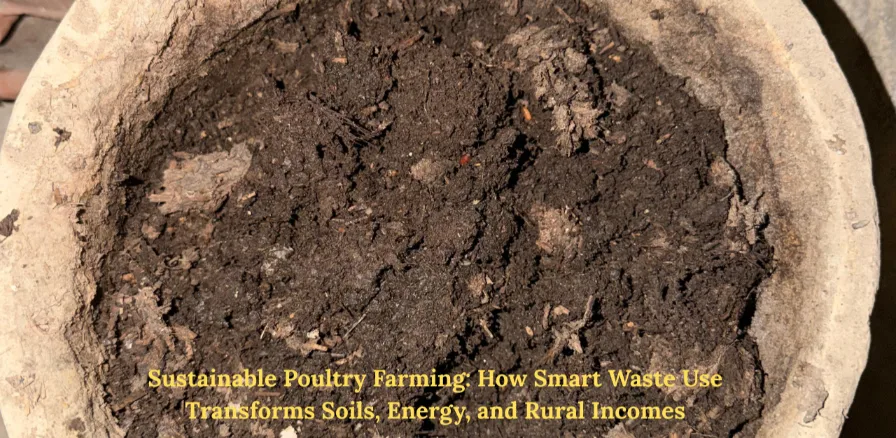
Sustainable poultry waste converted into organic compost in a clay pot, showcasing eco-friendly farming and soil improvement

Sustainable Poultry Farming: How Smart Waste Use Transforms Soils, Energy, and Rural Incomes

Sustainable Poultry Farming

Poultry production is expanding rapidly worldwide, and with it comes a growing stream of manure, litter, feathers, and processing residues that are often viewed only as a disposal problem rather than a strategic resource. When these wastes are managed poorly through open dumping, uncontrolled spreading, or discharge into water bodies they contribute to foul odors, disease risks, nutrient pollution, and greenhouse gas emissions that degrade the environment and harm nearby communities. Yet the same poultry waste, whether generated by small household flocks or large vaccinated commercial operations, contains high levels of organic matter and nutrients that can be transformed through controlled fermentation into biogas for energy and nutrient-rich digestate for soil improvement, supporting both environmental protection and local economic development.

 1 -Household poultry waste Vs vaccinated poultry waste

Household poultry waste usually comes from small backyard flocks and includes manure, bedding, feathers, spilled feed, and kitchen scraps mixed together. This waste stream is often unmanaged or simply dumped on soil, which can create odor, flies, and localized contamination if it accumulates.​

Vaccinated poultry waste mainly arises from commercial facilities and slaughterhouses where birds are regularly vaccinated and processed at scale. This waste is more concentrated, richer in proteins and fats, and often collected as sludge, guts, blood, and feathers, which makes it a high potential substrate for controlled anaerobic digestion but also a serious environmental risk if left untreated.​

From a fermentation point of view, vaccinated poultry waste is typically more homogeneous, has higher organic load, and is already centralized in processing plants, which makes it easier to feed into a biogas plant. Household poultry waste is more dispersed and variable, but it can still be co-digested with other organic materials (like kitchen waste or cattle manure) in community-scale digesters.​

This video shows the poultry waste gathered in a pot and after few days the culture develop and these microrganism ready to part in the fermentation process

2- Statistics of poultry production

Global poultry production has been growing steadily for years, with chicken meat output reaching over 95 million tons in 2018 and forecast to exceed 98 million tons in subsequent years. Major producers include the United States, Brazil, China, and the European Union, where demand for affordable meat and exports have driven expansion of industrial poultry systems.​

In the EU alone, exports of poultry products exceeded 1.8 million tons (carcass equivalent) in 2018, showing how integrated and large the poultry sector has become. This rapid growth translates directly into increasing volumes of manure, processing sludge, feathers, and other co-products that must be managed to avoid environmental damage and to capture their energy potential.​

For countries with fast-growing poultry sectors, such as Poland and many developing economies, poultry waste generation already represents a significant share of agricultural residues available for bioenergy. This creates both a challenge due to pollution risk and an opportunity to convert these residues into biogas and biofertilizers through fermentation (Cybulska et al., 2021).​

3- Environmental impact of poultry waste

Uncontrolled disposal of poultry waste leads to rancidity, spoilage, and uncontrolled decomposition, which releases foul odors, pathogens, and greenhouse gases such as methane and nitrous oxide. Landfills and open heaps of poultry residues can contaminate soil and water through nutrient leaching, as well as create public health concerns around insects, rodents, and disease transmission.​

High-protein wastes like slaughter sludge and droppings can generate significant amounts of ammonia and hydrogen sulfide under anaerobic conditions if not managed, which are toxic to both ecosystems and the microorganisms needed for stable biogas production. Excess nitrogen from these wastes may also disrupt fermentation and lead to process failure when not balanced with high-carbon co-substrates such as straw or plant residues.​

When poultry waste is diverted into well-designed biogas systems, the environmental load is reduced because organic matter is stabilized and emissions are controlled. Digestate from these systems can then be returned to the land as a nutrient source, closing the loop and reducing dependence on synthetic fertilizers while lowering overall pollution.​

4- Fermentation of poultry waste

Methane fermentation (anaerobic digestion) of poultry waste uses bacteria that work without oxygen to convert organic matter into biogas (mainly methane and carbon dioxide) and a stabilized digestate. Poultry processing sludge and manures are attractive substrates because they are rich in proteins and fats, which give high biogas potential when the process is properly controlled.​

In practice, poultry waste is often pre treated mechanically, chemically, or biologically before entering the digester to improve hydrolysis and reduce inhibitors. One effective approach is biological pre-treatment using specially selected bacterial strains that break down fats and proteins and reduce ammonia and hydrogen sulfide formation.​

Laboratory scale studies on centrifuged sludge from poultry processing have shown that optimizing the substrate with bacterial inocula can significantly increase both total biogas production and methane yield compared to untreated sludge. In the cited work, combinations of bacterial strains labeled AC and EG produced much higher methane yields than the control or mixed strain treatments.​

4- Stages of fermentation

The methane fermentation of poultry waste follows four main biological stages, all operating in parallel in the digester.​

  • Hydrolysis: Complex compounds such as proteins, fats, and polysaccharides are broken down by enzymes and water into simpler soluble molecules like amino acids, sugars, and long-chain fatty acids. This step is often rate-limiting for solid poultry residues and can be accelerated by pre-treatment or bioaugmentation.​
  • Acidogenesis: Acid-forming bacteria convert these soluble products into volatile fatty acids (VFAs) such as acetic, propionic, and butyric acids, along with gases like hydrogen and carbon dioxide. These acids lower pH and must be balanced to avoid inhibiting later stages.​
  • Acetogenesis: Specialized bacteria transform higher VFAs and alcohols into mainly acetic acid, hydrogen, and carbon dioxide, which are the key substrates for methane-forming microorganisms. Stability here depends on keeping hydrogen levels low and maintaining favorable pH and nutrient conditions.​
  • Methanogenesis: Methanogenic archaea convert acetic acid, hydrogen, and carbon dioxide into methane, completing the biogas production cycle. These organisms are particularly sensitive to temperature, pH, ammonia, and toxic compounds, so stable operating conditions are critical.​

Maintaining balance between these phases requires careful control of temperature, pH (typically around neutral), and carbon-to-nitrogen ratio, especially with nitrogen-rich poultry wastes. If ammonia levels become too high due to excess protein, methane production can drop sharply and the process may partially or fully collapse.​

5- Economical advantages of the fermentation for local commodity

For local communities, fermenting poultry waste delivers several economic benefits by generating energy, fertilizer, and new service opportunities. Biogas produced from poultry residues can be used for cooking, heating water, or generating electricity, reducing household and farm energy bills and lowering reliance on purchased LPG or grid power.​

Digestate from poultry waste fermentation is rich in nutrients such as nitrogen, phosphorus, and potassium, and can replace a portion of chemical fertilizers in nearby fields. Application of fermented products as fertilizers can increase crop yields by 7–15%, further boosting farm profitability (Zhang et al., 2023). This helps small farmers cut input costs, improve soil organic matter, and potentially increase yields all of which enhance local food security and income.​

On the enterprise side, poultry processors that introduce biogas systems can reduce their waste management fees and potentially sell excess electricity or biomethane, creating a new revenue stream. Treating sludge with optimized bacterial inocula has been shown to significantly improve methane yield, which increases the overall energy output and improves the economic viability of biogas plants.​

At the community level, decentralized digesters that codigest household poultry waste, kitchen waste, and other manures can support local jobs in operation, maintenance, and digestate marketing. Such bioenergy projects support circular economy goals, reduce environmental clean-up costs, and keep more value from the poultry supply chain within the local area instead of losing it through unmanaged waste disposal.

Citations

Cybulska, K., Kołosowska, I., Kramkowski, K., Karpińska, M., Roszkowicz-Ostrowska, K., & Kowalczyk, P. (2021). Improvement of biogas yield by pre-treating poultry waste with bacterial strains. Energies, 14(18), 5601. https://doi.org/10.3390/en14185601

Zhang, L., Ren, J., & Bai, W. (2023). A Review of Poultry Waste-to-Wealth: Technological Progress, Modeling and Simulation Studies, and Economic- Environmental and Social Sustainability. Sustainabilityhttps://doi.org/10.3390/su15075620.

Also checkout

Turning Landfill Liabilities into Liquid Gold — The Promise of Biomethanol Production
Sustainable Poultry Farming: How Smart Waste Use Transforms Soils, Energy, and Rural Incomes Read More »

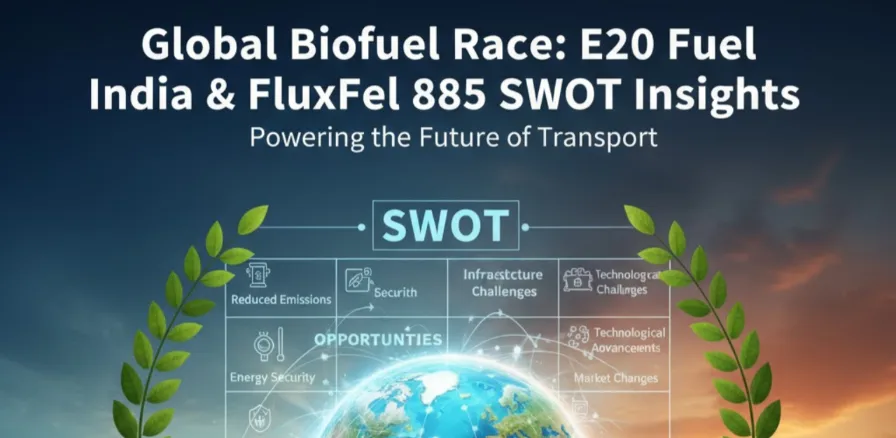
Digital illustration comparing E20 Fuel (India) and FluxFuel E85 biofuel initiatives, featuring two fuel pumps (one labeled 'E20 Fuel' with Indian elements, one labeled 'FluxFuel E85') flanking a glowing globe surrounded by a SWOT analysis diagram (Opportunities, Strengths, Weaknesses, Threats). The background shows a futuristic city skyline and lush greenery.

Global Biofuel Race: E20 Fuel India & FluxFuel E85 SWOT Insights

The Great Green Rush: A SWOT Analysis of the Global Biofuel Race, Featuring E20 Fuel India and FluxFuel E85

The race to decarbonization worldwide is not a sprint; it’s a high stakes, technology driven marathon. At the heart of this competition are advanced biofuels, primarily ethanol and biodiesel, designed to displace fossil fuels. Two prominent players defining the current landscape are E20 fuel India (a 20% ethanol blend rapidly adopted by one of the world’s largest consumer markets) and the international potential of FluxFuel E85 (the 85% ethanol blend that powers Flexible Fuel Vehicles, or FFVs). India targets 20% ethanol blending (E20) by 2025, aiming to cut oil imports and emissions. Production capacity is expanding, but feedstock (sugarcane, grains) may fall short, risking unmet targets and food security concerns (T & K, 2023).

A comprehensive SWOT analysis of these technologies reveals the critical strengths, inherent weaknesses, immense opportunities, and significant threats that will determine their long-term viability in the Global Biofuel Race.

A Sneak Peek on India: The E20 Acceleration

India’s shift to E20 fuel India a blend of 20% ethanol and 80% gasoline is one of the most aggressive biofuel rollouts globally. Initially targeting 2030, the country has significantly fast tracked the E20 implementation, driven by national energy security goals and a massive push to cut its crippling crude oil import bill.

Strengths : Energy choices and GHG Reduction

  • Energy Security and Forex Savings: The primary driver is reducing reliance on imported crude oil. The Ethanol Blending Programme (EBP) has already resulted in billions of dollars in foreign exchange savings, with the revenue now circulating within the domestic agricultural economy.
  • Rural Economic Boost: Ethanol is sourced primarily from agricultural feedstocks (sugarcane, damaged grains, and maize). This provides farmers with a stable secondary income, helping to clear crop debt and improving the economic viability of farmers.
  • Decarbonization Impact: Ethanol is a cleaner burning fuel. Studies revealed that the use of E20 fuel can lead to a significant reduction in lifecycle Greenhouse Gas (GHG) emissions up to 50–65% lower than gasoline, depending on the feedstock. The higher octane number of E20 (up to RON 95) also promotes better anti-knocking properties and performance globally in compatible engines.

Weaknesses : Technical Barriers and Resource origins

  • Vehicle Compatibility and Corrosion: A major weakness is the compatibility of the existing vehicle fleet. While all new cars are E20-compliant, millions of older vehicles lack the specialized material to handle the corrosive nature of the higher ethanol concentration, potentially leading to fuel system damage and leaks.
  • Fuel Efficiency Loss: Ethanol has a lower energy density than pure gasoline, resulting in a reported drop in fuel efficiency (mileage) for non-optimized vehicles, a key concern for consumers.
  • Water and Food Security Concerns: The dependence on water intensive crops like sugarcane raises environmental stress concerns. Furthermore, the diversion of food crops (like rice and maize) to fuel production ignites the contentious “food vs. fuel” debate, risking food inflation and impacting cattle feed supply.

Global Flex-Fuel Standard: The FluxFuel E85 Potential

FluxFuel E85 refers to the high-level blend of 85% ethanol and 15% gasoline, the established standard for Flexible Fuel Vehicles (FFVs) primarily in the US and Brazil. Its potential lies in offering the maximum carbon reduction benefit from ethanol, but its uptake is tightly bound to FFV penetration and infrastructure.

Opportunities (O): Market Expansion and Next-Gen Fuels

  • Global FFV Market Growth: The market for Flex Fuel Engines is projected to grow significantly, driven by stringent global emission regulations and the demand for sustainable automotive technologies. This creates a ready-made market for FluxFuel E85.
  • Second-Generation (2G) Biofuels: The push for E85 accelerates the development and commercialization of 2G ethanol derived from non-food sources (agricultural residues, waste biomass, etc.). This advancement directly addresses the food-vs-fuel conflict inherent in first-generation biofuels. India, for example, is investing in 2G refineries to convert agricultural waste (like parali) into ethanol.
  • Technological Convergence: FFVs(Flex Fuel Vehicles) are increasingly being integrated with hybrid and plug-in hybrid electric vehicle (PHEV) systems, offering a “flex-hybrid” solution that maximizes efficiency while running on low-carbon fuel blends like FluxFuel E85.

Threats (T): Framework and Competition

  • Infrastructure Investment and Availability: The primary constraint for widespread FluxFuel E85 adoption is the lack of ubiquitous E85-compatible fueling stations. Retrofitting existing stations to handle high-ethanol blends is expensive, and distribution infrastructure remains geographically limited.
  • Competition from Electrification (EVs): The most significant long-term threat is the rapid ascent of Battery Electric Vehicles (BEVs). As charging infrastructure matures and battery costs decline, BEVs could eventually leapfrog high-blend ethanol fuels, particularly in the light-duty vehicle segment.
  • Price Parity and Volatility: For FluxFuel E85 to be economically attractive to consumers, its pump price must be sufficiently lower than gasoline to offset the typical 20–30% drop in fuel efficiency (due to ethanol’s lower energy content). Achieving and maintaining this price parity is a constant market challenge, often requiring sustained government subsidies.

Navigating the Biofuel Crossroads

The success of the biofuel race hinges on converting the listed weaknesses and threats into manageable challenges and capitalizing on the opportunities.

For E20 fuel India, the immediate focus must be on mitigating consumer anxiety regarding older vehicles. This involves:

  1. Incentivizing E20 Upgrade Kits: Providing tax breaks or subsidies for owners of non-compliant vehicles to install certified E20-compatible conversion kits.
  2. Maintaining a Low-Blend Option: Temporarily continuing to offer lower-blend gasoline (E0 or E10) at select pumps for non-compliant vehicles, as a customer retention and safety measure.
  3. Sustainable Feedstock Strategy: Aggressively scaling up 2G ethanol production to eliminate the pressure on food crops and water resources.

For the wider adoption of FluxFuel E85, the need is global standardization and infrastructure build-out:

  1. Mandates for FFV Manufacturing: Governments must follow the example of Brazil and actively mandate and incentivize the sale of FFVs to increase the addressable market for E85.
  2. Public-Private Investment: Strategic government investment and tax incentives are crucial to rapidly expand the FluxFuel E85 retail network beyond current concentrations.

The Global Biofuel Race is fundamentally a quest for energy transition a bridge between fossil fuels and a fully decarbonized energy future. The aggressive targets set by players like India, paired with the technological advancements driving higher-blend fuels, make ethanol a pivotal component of this transition. However, its trajectory remains deeply entwined with the ability to manage resource sustainability, consumer adoption, and the fierce competition from electric mobility.

Citations

T, R., & K, P. (2023). Energy Policy – Ethanol Production in INDIA: The Roles of Policy, Price and Demand. International Journal of Advanced Research in Science, Communication and Technology. https://doi.org/10.48175/ijarsct-11140a.

Internal Blog Link

Global Biofuel Race: E20 Fuel India & FluxFuel E85 SWOT Insights Read More »

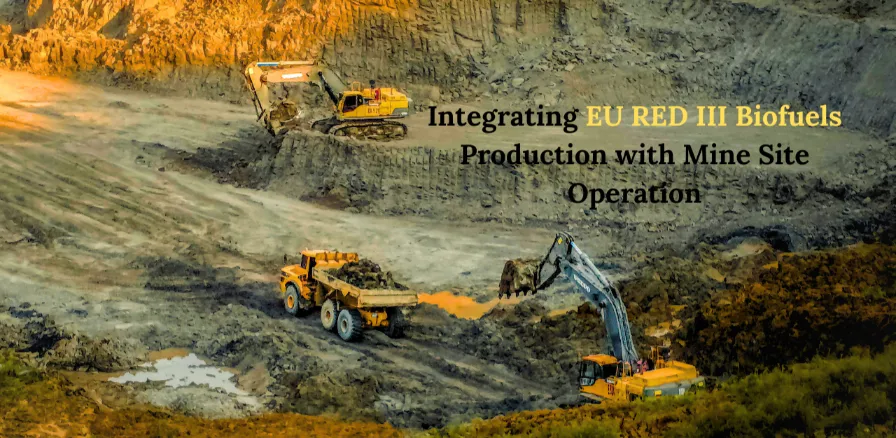
Heavy mining excavator loading a dump truck in an open-pit mine, illustrating the text "Integrating EU RED III Biofuels Production with Mine Site Operation."

The Green Mining Ecosystem: Integrating EU RED III Biofuels Production with Mine Site Operation

Fuelling the Future: How EU RED III Biofuels are Greening the Mining Ecosystem

The worldwide mining industry, always seen through the sneak peek of heavy machinery and significant environmental impact, is now profoundly transform. As global demands for sustainability deepen, a new paradigm is emerging: the Green Mining Ecosystem. Behind This innovative approach to energy, particularly the integration of on-site production of EU RED III biofuels, facilitating a truly sustainable future.

The mandate for Green Mining

Mining operations are energy conservation system, relying mainly primarly on fossil fuels from excavation and transportation to processing and site rehabilitation. This dependence contributes significantly to greenhouse gas emissions and high operational costs, making the shift to greener alternatives not just an environmental requirement but also an economicrequirement. The Green Mining Ecosystem imagines acomprehensive approach where environmental directions, resource efficiency, and renewable energy are weaved into every stage of the mining lifecycle.

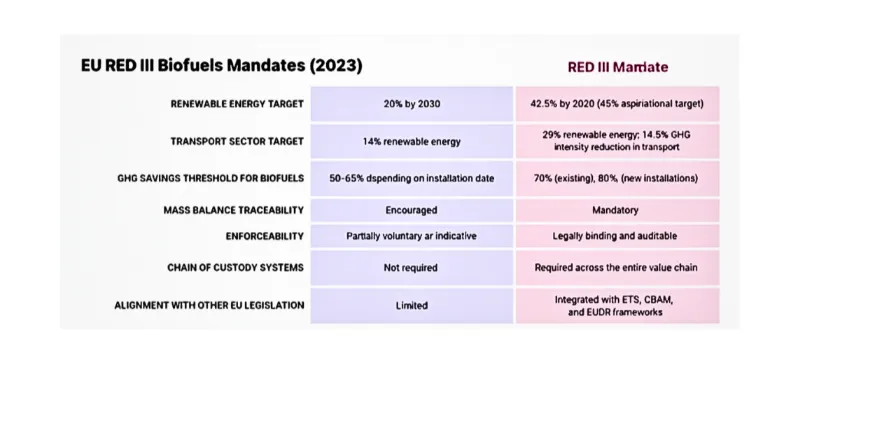
A table titled "EU RED III Biofuels Mandates (2023)" comparing RED II (2018) and RED III (2023) mandates. The RED III column shows: Renewable Energy Target 42.5% by 2020 (45% aspirational), Transport Sector Target 29% renewable energy (14.5% GHG intensity reduction), GHG Savings Threshold for Biofuels 70% (existing) and 80% (new installations), Mass Balance Traceability Mandatory, Enforceability Legally binding and auditable, Chain of Custody Systems Required across the entire value chain, and Alignment with other EU Legislation Integrated with ETS, CBAM, and EUDR frameworks.

What are EU RED III Biofuels and Why Are They Key?

The European Union’s Renewable Energy Directive (RED III) is a legislation that drives the transition to cleaner energy. EU RED III biofuels are liquid or gaseous fuels for transport produced from biomass that meet strict with sustainability and greenhouse gas saving criteria set out in the directive. These criteria ensure that the biofuels genuinely contribute to decarbonization without causing adverse impacts like deforestation or food insecurity.

For the mining sector, embracing EU RED III biofuels means:

  • Significant Emissions Reduction: Replacing diesel and other fossil fuels with EU RED III biofuels directly cuts down emissions from mining vehicles and equipment.
  • Enhanced Energy Security: Producing biofuels on-site reduces dependency on external fuel supply chains, offering greater stability and control over energy costs.
  • Circular Economy Principles: Biofuel production can often utilize waste streams (e.g., agricultural waste from nearby communities, or even certain organic byproducts from mining processes if applicable), encouraging a circular economy model.
  • Regulatory Compliance: Sticking to EU RED III biofuels standards helps mining companies meet increasingly strict environmental regulations and sustainability targets.
  • Utilization of Local Biomass: Studies highlight the feasibility of converting forestry and timber industry waste into biocoal or biofuels for use in energy-intensive mining operations, especially in regions transitioning away from coal . This can help mines meet EU renewable energy targets and reduce reliance on fossil fuels (Paredes et al., 2022).

Incorporating Biofuel Production into the Mining Site Operation

Imagine a mine site that isn’t just extracting minerals but is also a hub for renewable energy production. The EU is a global leader in biogas and biomethane production, with over 10 GW installed capacity and 17,400 biogas plants as of 2015 (Scarlat et al., 2018). This is the vision of the Green Mining Ecosystem. Integration can take several forms:

  1. Sustainable Feedstock Sourcing: This could involve cultivating dedicated energy crops on recovered land, combinning with local agricultural communities for sustainable waste biomass, or exploring algae based biofuel systems in water-rich areas. The key is ensuring the feedstock meets EU RED III biofuels sustainability criteria.
  2. On-Site Conversion Technologies: Advanced biorefineries, which might use processes like gasification, pyrolysis, or anaerobic digestion, can convert biomass into liquid biofuels (e.g., biodiesel, bioethanol) or biogas right at the mine site. This minimizes transportation costs and emissions associated with fuel delivery.
  3. Fleet Conversion and Optimization: Existing mining fleets can be adapted or replaced with vehicles capable of running on EU RED III biofuels. This requires careful planning and investment in new engine technologies or modifications.
  4. Waste-to-Energy Synergies: Beyond direct fuel for vehicles, residual biomass or waste from biofuel production can be used to generate electricity or heat for other mine site operations, further closing the loop on energy sustainability.

Challenges and Opportunities Aspects

While the potential is huge, the fastest growth in ethanol production has been observed in Finland, Ireland, and the Netherlands, while Germany and France remain the largest overall producers incorporating EU RED III biofuels production into mine site operations comes with challenges (Bórawski et al., 2019). These include initial capital investment, ensuring a continous and sustainable feedstock supply, and navigating the complexities of advanced biofuel technologies. The integration of biocoal and advanced biofuels into mining regions can significantly reduce CO₂ emissions and support the EU’s climate and energy targets (Chiaramonti et al., 2021).

However, the opportunities faroverbalance the hurdles. Companies that lead this charge will not only gain a competitive advantage through reduced operational costs and enhanced energy independence but will also significantly boost their environmental credentials and social license to operate. They will be seen as pioneers in building a truly Green Mining Ecosystem, one that respects the planet while still delivering the essential resources our modern world demands.

Conclusion

The vision of a Green Mining Ecosystem powered by on-site EU RED III biofuels production is no longer a distant dream. It’s a tangible pathway to transforming one of the world’s most critical industries into a beacon of sustainability. By embracing innovative energy solutions and adhering to robust environmental standards like those set by EU RED III biofuels, mining can indeed become an integral part of our planet’s green future.

Citations

Paredes, B., Paredes, J., & García, R. (2022). Integration of biocoal in distributed energy systems: A potential case study in the Spanish coal-mining regions. Energyhttps://doi.org/10.1016/j.energy.2022.125833.

Scarlat, N., Dallemand, J., & Fahl, F. (2018). Biogas: Developments and perspectives in Europe. Renewable Energyhttps://doi.org/10.1016/j.renene.2018.03.006.

Bórawski, P., Bełdycka-Bórawska, A., Szymańska, E., Jankowski, K., Dubis, B., & Dunn, J. (2019). Development of renewable energy sources market and biofuels in The European Union. Journal of Cleaner Productionhttps://doi.org/10.1016/j.jclepro.2019.04.242.

Chiaramonti, D., Talluri, G., Scarlat, N., & Prussi, M. (2021). The challenge of forecasting the role of biofuel in EU transport decarbonisation at 2050: A meta-analysis review of published scenarios. Renewable & Sustainable Energy Reviews, 139, 110715. https://doi.org/10.1016/j.rser.2021.110715.

Learn more about HVO Diesel’s role in Sustainable Mining Operations.

The Green Mining Ecosystem: Integrating EU RED III Biofuels Production with Mine Site Operation Read More »

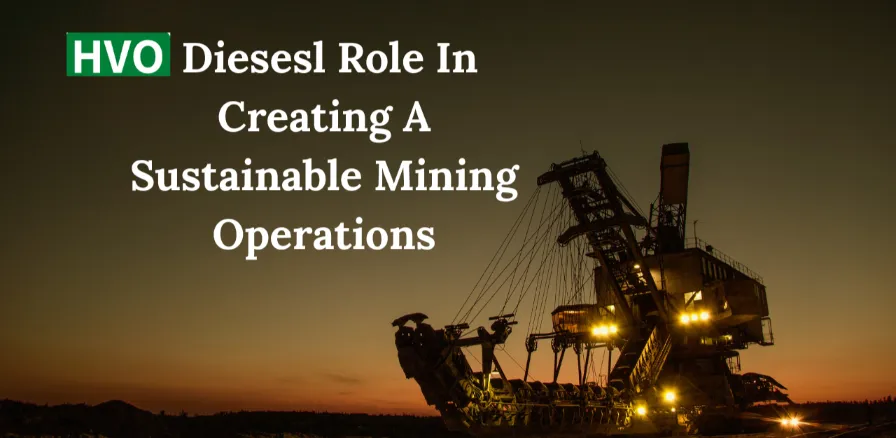
Large mining excavator (shovel or dragline) operating at sunset, with an overlay text reading "HVO Diesel Role In Creating A Sustainable Mining Operations

Hvo Diesel Role In Creating A Sustainable Mining Operations

Fueling the Future: HVO Diesel and the Sustainable Mining Revolution

The global mining industry stands at a critical juncture. Essential for sourcing the materials needed for the clean energy transition (think lithium for batteries and copper for wiring), it must simultaneously confront its own substantial environmental footprint. Diesel fuel, the lifeblood of heavy mining machinery, is a major contributor to greenhouse gas (GHG) emissions. The path to truly sustainable mining operations demands a holistic approach, integrating cleaner fuels with cutting-edge operational philosophies.

Hydrotreated Vegetable Oil (HVO) Diesel a game changer that offers an immediate, ‘drop in’ solution for reducing emissions, acting as a crucial bridge to a fully electrified future. HVO can reduce CO₂ emissions by up to 75–90% compared to fossil diesel, depending on the feedstock and production process (Hor et al., 2022). However, the adoption of HVO must be coupled with the transformative power of principles like Lean, Artificial Intelligence (AI), Value Stream Mapping (VSM), and Multi-Criteria Decision Making (MADM) to achieve genuine operational and environmental sustainability.

The Immediate Impact: HVO Diesel as the Green Bridge

HVO, also known as renewable diesel, is a paraffinic biofuel produced through the hydrotreating of sustainable feedstocks such as waste vegetable oils, animal fats, and residue oils. HVO use results in lower emissions of nitrogen oxides (NOx), hydrocarbons (HC), carbon monoxide (CO), and particulate matter (PM), with reductions of up to 81% for CO and 55% for PM reported in engine tests . Unlike traditional biodiesel, its chemical structure is nearly identical to fossil diesel, making it a perfect “drop-in” replacement meaning it can be used in existing diesel engines and infrastructure without modification.

Key Benefits of HVO in Mining:

  • Significant Emission Reduction: HVO can reduce net lifecycle GHG emissions by up to 90% compared to fossil diesel, depending on the feedstock source. It also dramatically lowers tailpipe emissions of particulate matter and Nitrogen Oxides (NOx).
  • Operational Compatibility: HVO maintains comparable performance to conventional diesel. Mining operators can switch without needing to purchase new machinery, retrain staff, or update maintenance schedules.
  • Superior Stability and Storage: HVO is highly stable, resisting microbial growth and oxidation better than fossil diesel and traditional biodiesel. This is crucial for remote mining sites that require long-term fuel storage for backup power and equipment.
  • All-Weather Performance: Its high cetane number and superior cold-flow properties ensure reliable operation even in the extremely low temperatures often found at mining sites.

By adopting HVO, mining companies can immediately and efficiently reduce their Scope 1 emissions, demonstrating a clear commitment to environmental stewardship while maintaining the operational reliability essential for a heavy-duty industry.

Operational Excellence: The Lean Principle and VSM

VSM is a visual tool used to map material and information flows, identify waste, and streamline processes. When adapted for environmental goals (E-VSM), it helps pinpoint sources of pollution and inefficiency, supporting targeted sustainability improvements (Garza‐Reyes et al., 2018). While HVO addresses the fuel side of sustainability, transforming the process side requires embracing operational excellence philosophies like Lean and Value Stream Mapping (VSM).

The Lean Principle: Eliminating Waste in Mining

The Lean philosophy, originated by Toyota, is centered on maximizing value to the customer while minimizing waste. In mining, “waste” takes many forms that impact both efficiency and environmental harm:

  • Overproduction: Mining more ore than immediately necessary, leading to excess inventory and energy use.
  • Waiting: Equipment downtime, waiting for fuel, maintenance, or rock clearance.
  • Transportation: Unnecessary movement of materials, personnel, and equipment.
  • Inventory: Excessive stockpiles or spare parts storage.
  • Motion: Inefficient vehicle routes or non-value-adding movement by personnel.
  • Defects/Over-processing: Poor drill and blast precision leading to inefficient crushing, or faulty equipment requiring costly rework.

Applying Lean principles involves continuously identifying and eliminating these wastes. For instance, optimizing haul road design to reduce travel distance directly cuts fuel consumption (HVO or otherwise), vehicle wear, and emissions—a double win for efficiency and the environment.

Value Stream Mapping (VSM): Visualizing the Flow

Value Stream Mapping (VSM) is the core Lean tool for visualizing the entire process flow—from exploration to final product shipment identifying non value adding steps, or waste.

By mapping out the current state (including material flow, information flow, and time metrics like cycle time and lead time), mining teams can pinpoint bottlenecks and areas of excessive energy consumption. A VSM exercise might reveal that a specific step, such as material handling at a transfer point, contributes disproportionately to particulate emissions and fuel burn due to slow cycle times or idling. Developing a Future State Map allows the team to design leaner, faster, and more energy-efficient processes.

The Intelligence Factor: AI Integrations

To achieve next-level optimization, Lean and VSM must be powered by Artificial Intelligence (AI). AI integrations in mining operations drive efficiency, predictive maintenance, and real-time decision-making, significantly amplifying sustainability efforts.

AI’s Role in Smart Mining:

  • Predictive Maintenance: AI and machine learning can optimize key mining processes, such as load management, fuel consumption, and equipment efficiency. For example, AI models have reduced haul truck fuel use by 9–12% in surface mines, directly lowering emissions and operational costs (Soofastaei & Fouladgar, 2021).
  • Haulage Optimization: AI algorithms can analyze real-time data on road conditions, truck location, and dump queue lengths to dynamically assign the most efficient routes and speeds. This prevents idling (a huge source of fuel waste) and minimizes travel distance, drastically reducing HVO consumption per ton of material moved.
  • Process Control: AI models can optimize energy-intensive processes like crushing and grinding by autonomously adjusting variables based on ore characteristics. This ensures the least amount of energy (and therefore, less HVO-generated power) is used to achieve the desired output.
  • Safety and Environmental Monitoring: AI can process satellite imagery and drone data to monitor tailings dam stability and detect environmental changes, ensuring compliance and proactive risk mitigation.

AI provides the real time, data driven intelligence required to execute Lean strategies on a massive, dynamic scale, ensuring the operation is consistently running at its lowest carbon and cost intensity.

Strategic Decision-Making: Multi-Criteria Decision Making (MADM)

Switching to HVO and implementing complex digital strategies like AI integration requires careful evaluation of multiple, often conflicting, factors. This is where Multi Criteria Decision Making (MADM) methodologies become essential.

MADM for Sustainable Choices:

MADM tools, such as the Analytic Hierarchy Process (AHP) or TOPSIS, provide a structured, quantitative approach to evaluate complex options. In the context of a sustainable mining transition, MADM helps leadership balance:

  1. Environmental Impact (GHG/Particulate Reduction): The primary sustainability goal.
  2. Economic Cost (Fuel Price, Capital Investment, Maintenance): The bottom line.
  3. Operational Risk (Supply Chain Stability, Performance Loss): Reliability.
  4. Social License to Operate (Community Relations, Regulatory Compliance): Stakeholder value.

For instance, a MADM framework could be used to evaluate: HVO vs. LNG vs. Full Battery Electric Fleets. While HVO is the low-risk, it offers less total decarbonization than electrification. MADM allows the organization to systematically weigh the initial high capital cost and charging infrastructure needs of electric fleets against the immediate emissions reduction and operational ease of HVO, guiding the investment strategy for the next decade.

A Synergy for True Sustainability

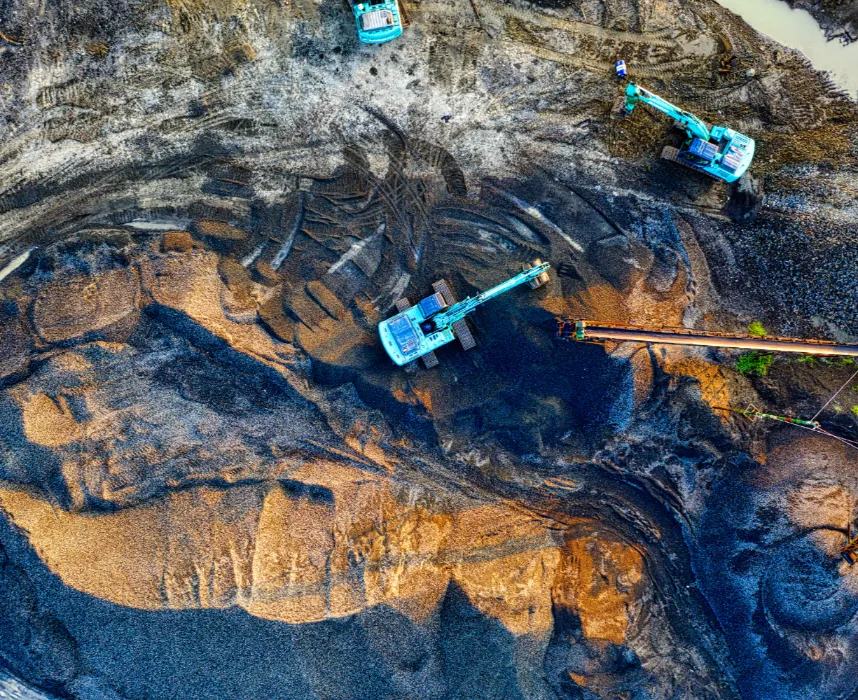
Aerial view of an open-pit mine with several teal-colored excavators and mining equipment working on piles of dark earth and golden-brown aggregate, showing tire tracks and a conveyor belt.

The successful creation of sustainable mining operations hinges on a synergistic blend of technology and philosophy. HVO Diesel offers the immediate, tangible reduction in the largest operational emission source. However, HVO’s full potential is unlocked only when the organization is simultaneously optimized through Lean principles and visualized using VSM, making every liter of cleaner fuel count. This efficiency is then hyper-charged by AI integrations, which drive precision, predictive power, and real-time optimal performance. Finally, MADM provides the necessary framework to make complex, long-term strategic decisions that balance the competing demands of profit, people, and the planet.

By embracing this comprehensive strategy, mining—the essential supplier of the materials for a green world—can finally move beyond its reputation and become a powerful force for a truly sustainable future.

CITATIONS

Hor, C., Tan, Y., Mubarak, N., Tan, I., Ibrahim, M., Yek, P., Karri, R., & Khalid, M. (2022). Techno-economic assessment of hydrotreated vegetable oil as a renewable fuel from waste sludge palm oil.. Environmental research, 220, 115169 . https://doi.org/10.1016/j.envres.2022.115169

Garza‐Reyes, J., Romero, J., Govindan, K., Cherrafi, A., & Ramanathan, U. (2018). A PDCA-based approach to Environmental Value Stream Mapping (E-VSM). Journal of Cleaner Production, 180, 335-348. https://doi.org/10.1016/j.jclepro.2018.01.121

Soofastaei, A., & Fouladgar, M. (2021). Improve Energy Efficiency in Surface Mines Using Artificial Intelligence. Energy Efficiency [Working Title]https://doi.org/10.5772/intechopen.101493.

The adoption of HVO is part of a global movement towards cleaner transport fuels. Countries worldwide are pursuing similar strategies; for instance, you can read more about **India’s Next Green Revolution** focusing on E20 fuel and biomethanol to decarbonize their own transport sector.

Hvo Diesel Role In Creating A Sustainable Mining Operations Read More »

Lush green grass background with text overlay "India Green E20 Fuel & Biomethanol Decarbonise Transport" where E20 is highlighted in a green box.

India Next Green Revolution: E20 Fuel and Biomethanol Dual Role in Decarbonising Transport

India’s push for a “Green Revolution” in transport centers on E20 fuel (20% ethanol blend) and biomethanol as key alternatives to fossil fuels. These biofuels promise to reduce emissions, enhance energy security, and support rural economies, but their widespread adoption faces technical, economic, and resource challenges.

The road to Net Zero by 2070 demands a radical shift in India’s energy matrix, particularly in the ever growing transport sector. As the world’s third largest energy consumer, India’s reliance on imported crude oil not only burdens its foreign exchange reserves but also contributes significantly to greenhouse gas (GHG) emissions. The solution to this dual challenge lies not in a single miracle cure, but in a portfolio of indigenous, renewable, and sustainable fuels. At the heart of this national energy revolution are two game changers: E20 fuel and biomethanol.

The Immediate Accelerator: Understanding E20 Fuel India‘s Mandate

India’s Ethanol Blended Petrol (EBP) Programme is perhaps the most aggressive and successful biofuel initiative in recent history. By advancing the target of 20% ethanol blending in petrol (E20) from 2030 to 2025, India has signaled an unwavering commitment to biofuels.

Effectiveness and Emission Impacts of E20 Fuel

E20 blends can be used in existing petrol engines without major modifications, offering significant reductions in carbon monoxide (CO), hydrocarbons (HC), particulate matter (PM), and particulate number (PN) emissions up to 44% in some cases . However, E20 use often leads to increased nitrogen oxide (NOx) emissions and a slight reduction in fuel economy (about 4%). Long-term studies show minimal impact on engine performance and durability, with a minor reduction in ozone formation potential (Mohamed et al., 2024). 

The Policy Push: Why E20 is a National Imperative

The push for E20 fuel India is driven by a powerful three-pronged strategy:

  • Energy Security and Forex Savings: Blending ethanol, a domestically produced fuel, with petrol significantly reduces the need for crude oil imports. This measure is projected to save billions of dollars in foreign exchange annually, bolstering India’s energy self-reliance and insulating the economy from global oil price volatility.
  • Environmental Gains: Ethanol burns cleaner than pure petrol. The government estimates that the use of E20 fuel can cut carbon monoxide emissions by up to 50% in two-wheelers and 30% in four-wheelers compared to unblended petrol. This is a crucial step in combating urban air pollution and meeting India’s climate targets.
  • Rural Prosperity and Circular Economy: The ethanol supply chain provides a vital link between the agricultural and energy sectors. By procuring ethanol from crops like sugarcane, maize, and surplus/damaged food grains, the programme guarantees stable income for farmers—effectively turning them into ‘Urjadaatas’ (energy providers). This also promotes a circular economy by utilising agricultural surplus and waste.

Navigating the Challenges of Mass Rollout

Despite the significant benefits, the rapid rollout of E20 fuel has encountered a few headwinds that must be addressed for sustained success.

  • Vehicle Compatibility and Consumer Concerns: A major challenge is the millions of vehicles sold before 2023 that were not originally designed or calibrated for a 20% ethanol blend. Consumers have reported issues such as a marginal drop in fuel efficiency (estimated at 1-2% for newer cars and up to 6-7% for older models), as well as concerns about engine wear, corrosion, and warranty voidance. The government and automotive industry are working to ensure that newer models are E20-compliant and to provide clarity on retrofitting older vehicles.
  • The Food vs. Fuel Debate: Although the policy encourages the use of surplus and waste material, a large-scale shift to crop-based ethanol raises questions about land-use changes, water intensity (especially for sugarcane), and potential implications for food security if essential food grains are diverted.
  • Ensuring Sustainability of Feedstock: To mitigate the ‘Food vs. Fuel’ concern, the focus must shift towards second generation (2G) ethanol production, which uses agricultural residues like rice straw, cotton stalk, and bagasse. This not only diversifies feedstock but also addresses the massive problem of agricultural waste burning.

The Long-Term Vision: Biomethanol as the Hydrogen-Ready Fuel

Biomethanol is a leading candidate for liquid organic hydrogen carriers (LOHCs), enabling safe, efficient hydrogen storage and transport (Valentini et al., 2022). While E20 fuel provides an immediate, scalable solution for light-duty vehicles, a truly deep decarbonisation strategy requires exploring high energy density, sustainable fuels for the future, particularly for the hard to abate sectors like long haul trucking and shipping. This is where biomethanol steps in as a vital part of the energy mix.

The Power and Versatility of Biomethanol

Biomethanol is a sustainable version of methanol, chemically identical to its fossil counterpart but produced from renewable sources such as municipal solid waste, agricultural residue (biomass), or captured carbon dioxide CO2 (e-methanol). Its role in India’s green revolution is multifaceted:

  • A Fully Green Fuel for Transport: Methanol can be used directly as an automotive fuel (M15, M85, M100 blends) or to power next-generation engines. It has a high-octane rating, offering superior engine performance, and its combustion results in significantly lower emissions of Sulphur Oxides (SOx), Nitrogen Oxides (NOx), and Particulate Matter compared to diesel.
  • The Best Green Hydrogen Carrier: Biomethanol is a highly efficient and safe liquid carrier for green hydrogen. It can be stored and transported using existing infrastructure and then easily converted into hydrogen on demand via reforming technology. This makes it a practical, immediately available bridge to the hydrogen economy, bypassing the significant logistical challenges of storing and transporting cryogenic or compressed hydrogen.
  • A Chemical Industry Decarbonizer: Beyond fuel, biomethanol is a fundamental building block for hundreds of chemical products, including formaldehyde, acetic acid, and various plastics. Replacing fossil methanol with biomethanol offers a direct path to decarbonising these energy-intensive industrial sectors.

Integrating Biomethanol into India’s Strategy

To fully harness the potential of biomethanol, India must:

  1. Develop Waste-to-Methanol Infrastructure: Incentivise the creation of large-scale facilities that convert municipal solid waste and agricultural residues into biomethanol. This simultaneously solves a waste management crisis and creates an indigenous fuel source.
  2. Pilot Methanol-Driven Fleets: Launch pilot projects for methanol-blended fuel in long-haul trucks, buses, and marine vessels to gather performance data and build public confidence, similar to the initial rollout of the EBP programme.
  3. Establish Clear Blending Standards: While the focus is currently on ethanol, the government should lay the groundwork for methanol blending standards to attract private investment and provide regulatory certainty.

A Dual Strategy for a Decarbonised Future

The Indian transport sector is too large and diverse for a one size fits all solution. The combination of E20 fuel and biomethanol offers a pragmatic, phased approach to decarbonisation:

E20 fuel is the immediate, volume-based solution, leveraging India’s strong agricultural base to transition the existing fleet and provide crucial energy security. Biomethanol represents the next leap—a strategic fuel for the future that can unlock the hydrogen economy and address the emissions from the hardest-to-abate segments. Together, they form the cornerstone of India’s indigenous and sustainable energy policy, paving the way for the nation’s “Next Green Revolution.”

Citations

Mohamed, M., Biswal, A., Wang, X., Zhao, H., Harrington, A., & Hall, J. (2024). Impact of RON on a heavily downsized boosted SI engine using 2nd generation biofuel – A comprehensive experimental analysis. Energy Conversion and Management: Xhttps://doi.org/10.1016/j.ecmx.2024.100557.

Valentini, F., Marrocchi, A., & Vaccaro, L. (2022). Liquid Organic Hydrogen Carriers (LOHCs) as H‐Source for Bio‐Derived Fuels and Additives Production. Advanced Energy Materials, 12. https://doi.org/10.1002/aenm.202103362.

India Next Green Revolution: E20 Fuel and Biomethanol Dual Role in Decarbonising Transport Read More »

A split image featuring a teal background with a "United States of America" seal and the text "Advanced Biofuels: Biomethanol Potential to Decarbonize US Transport" on the left, next to a golden yellow field with visible tire tracks on the right.

Advanced Biofuels: Biomethanol Potential to Decarbonize US Transport

Advanced Biofuels: Biomethanol’s Potential to Decarbonize US Transport A Game Changer for Hard to Subsides Sectors

Introduction: The Urgent Need for Advanced Biofuels

The US transport sector, a bedrock of the national economy, is simultaneously one of the largest emitters of greenhouse gases. While electrification offers a viable path for light-duty vehicles, the “hard-to-abate” sectors—namely, marine shipping, aviation, and heavy-duty trucking—present a formidable challenge. These industries require high energy density liquid fuels that can operate within existing infrastructure and engine technology. This is precisely where advanced biofuels emerge not just as an alternative, but as a necessity.

Advanced biofuels, defined primarily by their sustainable, non-food-crop-based feedstocks (such as agricultural residues, municipal solid waste, and forestry byproducts), offer a path to deep decarbonization. Unlike first-generation biofuels like corn ethanol, these fuels significantly reduce the lifecycle carbon intensity (CI) without competing with the food supply chain. Among the diverse portfolio of next-generation solutions, biomethanol is rapidly gaining recognition as one of the most promising advanced biofuels poised to revolutionize US transport.

This post delves into the specifics of biomethanol, exploring its production pathways, its distinct advantages over other fuels, the critical policy support in the U.S., and the challenges that must be overcome to fully realize its potential to decarbonize US transport.

Biomethanol: The Next Evolution in Advanced Biofuels

Methanol CH3OH is a simple chemical compound that is already a globally traded commodity, used extensively in the production of everyday materials like plastics, paints, and solvents. Biomethanol, or renewable methanol, is chemically identical to its fossil counterpart but is produced exclusively from sustainable biomass and waste streams, offering a profoundly reduced carbon footprint.

Production Pathways: Waste-to-Fuel Excellence

The primary advantage of biomethanol lies in its flexible and sustainable sourcing. Unlike conventional fuels, its production leverages waste-to-fuel technology, creating a circular economy model. Key production pathways include:

  1. Biomass Gasification: This is the most established method. Dry biomass (like wood residue, agricultural waste, or municipal solid waste) is heated in a controlled-oxygen environment to produce “syngas” (a mixture of hydrogen and carbon monoxide). This syngas is then catalytically converted into methanol. This process turns a carbon liability (waste) into a carbon-neutral fuel.
  2. Biogas Conversion: Methane captured from landfills or anaerobic digestion of organic waste (biogas) is reformed into syngas, which is then synthesized into renewable methanol.
  3. Power-to-Methanol (e-Methanol): Though not strictly a biofuel, this process represents a highly sustainable route where captured carbon dioxide CO2 is combined with green hydrogen (produced via electrolysis using renewable electricity) to synthesize methanol. The combination of biomethanol and e-methanol is often grouped under the umbrella of “green methanol,” offering a scalable, fully renewable solution.

This reliance on sustainable feedstocks is why biomethanol is classified as an advanced biofuel and enjoys significant regulatory support under frameworks like the US Renewable Fuel Standard (RFS) and state-level Low Carbon Fuel Standards (LCFS).

California Case Study: Biomethanol for Maritime Decarbonization

A detailed techno-economic and environmental assessment focused on California demonstrates that renewable methanol from forest residues can achieve substantial lifecycle greenhouse gas (GHG) reductions ranging from 38% to 165% compared to conventional shipping fuels. With carbon capture and storage (CCS) during production, biomethanol can even become carbon-negative, with net lifecycle emissions as low as –57 gCO₂eq/MJ. The study uses county level US data for biomass supply and aligns with California’s forest management and climate policies. While biomethanol is currently more expensive than fossil fuels, US and California carbon credit incentives could make it cost-competitive at $150–$300 per ton CO₂eq abated (De Fournas & Wei, 2022).

The Decarbonization Power: Biomethanol’s Unique Advantages

For US transport, biomethanol is more than just a low carbon fuel; it’s a strategically versatile energy carrier that can slot into several segments of the economy with immediate effect.

1. Drastic Reduction in Carbon Intensity (CI)

The most compelling case for biomethanol potential is its environmental performance. Depending on the feedstock and production pathway, renewable methanol can achieve life cycle greenhouse gas (GHG) emission reductions of up to 95% compared to fossil fuels. The carbon released during combustion is essentially the same carbon that was recently sequestered by the biomass source or captured from an industrial process, effectively creating a near neutral carbon loop. The Low Carbon Fuel Standard in California, for instance, provides higher credits for fuels with lower CI scores, directly incentivizing the use of advanced biofuels like biomethanol.

2. Versatility in Hard-to-Abate Sectors

Biomethanol’s liquid state at ambient temperature and pressure makes it significantly easier to store and handle than compressed natural gas (CNG) or cryogenically stored hydrogen H2. This is a massive advantage for:

  • Maritime Shipping: The global maritime industry is rapidly adopting methanol dual-fuel engines. Shipowners are increasingly placing orders for methanol-powered vessels, and biomethanol serves as the perfect advanced biofuel for an immediate, high-volume decarbonization solution. It cuts sulfur oxide (SOx), nitrogen oxide (NOx), and particulate matter emissions dramatically.
  • Heavy-Duty Transport: While electric trucks are emerging, long-haul freight still relies heavily on liquid fuels. Methanol can be blended into gasoline (M85 is a common blend) or used in purpose-built flex-fuel or dual-fuel engines in trucks.
  • Aviation (Future SAF Feedstock): While biomethanol itself isn’t a direct Sustainable Aviation Fuel (SAF), it is an intermediate chemical that can be converted into jet fuel via the Methanol-to-Jet (MTJ) pathway. This makes renewable methanol a critical component in the long-term strategy to scale up sustainable aviation fuel (SAF) production.

3. Infrastructure and “Drop-In” Compatibility

One of the largest hurdles for new fuels is the cost of building new infrastructure. Methanol is a well-established commodity, meaning a global infrastructure for storage and transport (pipelines, terminals, and tankage) is already in place, particularly near major ports and industrial hubs. While dedicated engine changes are required for neat (pure) methanol use, the existing chemical supply chain simplifies the logistics for advanced biofuels distribution, enabling rapid phasing-in compared to completely novel energy carriers.

Policy and Market Tailwinds: Catalyzing US Adoption

The transition to advanced biofuels in the U.S. is being propelled by a powerful combination of ambitious regulatory mandates and significant financial incentives.

The Role of the US Renewable Fuel Standard (RFS)

The RFS program, administered by the Environmental Protection Agency (EPA), requires a minimum volume of renewable fuel to be blended into the nation’s transportation fuel supply. It specifically includes a category for advanced biofuels, offering financial incentives (RIN credits) that help bridge the cost gap between fossil fuels and sustainable alternatives. As the EPA focuses on setting higher, more realistic volumetric obligations, the demand signal for fuels like biomethanol is strengthening.

The Inflation Reduction Act (IRA) and Tax Credits

The passage of the Inflation Reduction Act (IRA) in 2022 provided unprecedented financial backing for clean energy technologies. Crucially, the IRA offers a production tax credit (PTC), specifically the 45Z Clean Fuel Production Credit, which rewards fuels based on their life cycle carbon intensity (CI). Because biomethanol and renewable methanol derived from waste streams have extremely low CI scores, they are highly competitive for these credits, fundamentally improving the economics and attractiveness of new production facility investments in the US. This policy certainty is the crucial factor driving the current boom in planning and investment for advanced biofuels facilities.

State-Level Leadership

Programs like the California Low Carbon Fuel Standard (LCFS) and similar initiatives in states like Oregon and Washington are market drivers. These policies create a premium market for low CI fuels, including renewable methanol, that is essential for early-stage commercialization and technological scaling. They act as laboratories for effective decarbonization strategies that can eventually be adopted nationwide.

Navigating the Challenges: From Lab to Large-Scale Transport

Despite the enormous biomethanol potential, its full deployment in US transport faces several commercial and technical hurdles that require sustained focus from government and industry.

1. Economics and Cost Parity

Currently, the production cost of advanced biofuels, including biomethanol, remains higher than fossil-derived methanol. For California-based biorefineries using forestry residues, the minimum fuel selling price (MFSP) for renewable methanol is higher than fossil shipping fuels. However, with US and California CO₂ abatement credits, biomethanol can become competitive at credit values of $150–$300 per ton CO₂eq abated.

Georgia State Statistics: Sustainable Aviation Fuel (SAF) from Logging Residues

  • Production Cost: The minimum aviation fuel selling price (MASP) for sustainable aviation fuel (SAF) produced from logging residues in Georgia is $2.71/L (Ethanol-to-Jet, ETJ) and $2.44/L (Iso-Butanol-to-Jet, Iso-BTJ). With federal tax credits and Renewable Identification Number (RIN) credits, the MASP can drop to $0.83–$2.29/L (ETJ) and $0.59–$2.04/L (Iso-BTJ).
  • Carbon Intensity: The carbon intensity for these fuels is 758 g CO₂e/L (ETJ) and 976 g CO₂e/L (Iso-BTJ), with carbon savings of 70.6% (ETJ) and 62.1% (Iso-BTJ) compared to conventional aviation fuel.
  • Abatement Cost: The minimum abatement cost is $59/tCO₂e (ETJ) and –$59.3/tCO₂e (Iso-BTJ) with incentives, indicating that Iso-BTJ can be cost-negative (profitable) for carbon abatement under current US policy (Akter et al., 2024). 

2. Sustainable Feedstock Supply

While waste is abundant, the sustainable aggregation and consistent supply of non food biomass and waste streams remain a logistical challenge. The geographical dispersion and varying quality of feedstocks like agricultural residue or municipal solid waste require robust, localized supply chains to ensure production facilities operate efficiently year round. Any increase in demand for advanced biofuels must be met with equally aggressive development of sustainable feedstock sourcing.

3. Competition and Policy Stability

Biomethanol competes with other emerging advanced biofuels like Hydrotreated Vegetable Oil (HVO/renewable diesel) and true synthetic SAFs. Furthermore, policy instability, particularly around the US Renewable Fuel Standard (RFS) and future tax credit extensions, creates investment risk. Investors require long-term policy certainty to commit the billions of dollars necessary to build the infrastructure needed to truly decarbonize US transport.

Conclusion: The Future is Advanced

US-wide analyses show that biofuels, including biomethanol, could supply up to 12% of total final energy demand by 2050, with significant GHG reductions beyond electrification alone. However, large scale adoption will require increased investment, supportive policy, and infrastructure development .

Advanced biofuels, and specifically biomethanol, represent a critical, near term solution for tackling the emissions from the toughest sectors of the US transport economy. Its versatility, deep carbon reduction capabilities, and compatibility with a rapidly adopting global maritime fleet make it an unavoidable pillar of the national decarbonization strategy.

The combination of technological maturity in waste to fuel technology and the robust financial backing provided by the IRA and the US Renewable Fuel Standard (RFS) has set the stage for a dramatic market expansion. As supply chains mature, production costs drop, and new marine and heavy-duty vehicles come online, renewable methanol will shift from a niche alternative to a mainstream commodity.

The path to net-zero emissions requires a mosaic of solutions. For the ships, planes, and long-haul trucks that keep the US transport engine running, the future is liquid, sustainable, and increasingly fueled by advanced biofuels like biomethanol. Investors, policymakers, and industry leaders must continue to collaborate to fully unlock the biomethanol potential and secure a cleaner, more sustainable future.

CITATIONS

De Fournas, N., & Wei, M. (2022). Techno-economic assessment of renewable methanol from biomass gasification and PEM electrolysis for decarbonization of the maritime sector in California. Energy Conversion and Managementhttps://doi.org/10.1016/j.enconman.2022.115440.

Oke, D., Dunn, J., & Hawkins, T. (2024). Reducing Economy-Wide Greenhouse Gas Emissions with Electrofuels and Biofuels as the Grid Decarbonizes. Energy & Fuelshttps://doi.org/10.1021/acs.energyfuels.3c04833.

Akter, H., Masum, F., & Dwivedi, P. (2024). Life Cycle Emissions and Unit Production Cost of Sustainable Aviation Fuel from Logging Residues in Georgia, United States. Renewable Energyhttps://doi.org/10.1016/j.renene.2024.120611.

Related Reading: Investing in Biomethanol

Want to know where the market is heading? Explore investment opportunities and stock trends in advanced biofuels.

View Investment Guide

Advanced Biofuels: Biomethanol Potential to Decarbonize US Transport Read More »

Green fuel pump nozzle filling a white car, symbolizing China's shift to biomethanol and renewable diesel (HVO) for transport decarbonization.

The Rise of Green Fuels in China: Biomethanol Transport and Renewable Diesel (HVO) Driven by Key Incentives

The Rise of Green Fuels in China: Biomethanol Transport and Renewable Diesel (HVO) Driven by Key Incentives

China’s Green Fuel Leap: Policy, Production, and the Race for Transport Decarbonization

National policies, such as the “14th Five-Year Plan for Industrial Green Development,” explicitly promote methanol vehicles and green methanol production, with additional support for HVO and other renewable fuels (Li et al., 2023).China, the world’s largest energy consumer and vehicle market, is on the cusp of a significant transformation in its transport sector. Facing ambitious “Dual Carbon” targets peaking carbon emissions by 2030 and achieving carbon neutrality by 2060 the country is accelerating the adoption of low-carbon energy vectors. While the world often focuses on China’s massive electric vehicle (EV) uptake, a quieter, yet equally powerful, revolution is underway in liquid alternative fuels. This is the Rise of Green Fuels, spearheaded by Biomethanol Transport and Renewable Diesel (HVO), driven by a strategic mix of government incentives, industrial planning, and a global pivot toward maritime and heavy-duty decarbonization.

The shift isn’t just about replacing fossil fuels; it’s about establishing new, sustainable supply chains that leverage China’s unique feedstock resources, from abundant biomass waste to used cooking oil (UCO). This comprehensive overview dives into the powerful policy mechanisms at play, the burgeoning market for these two critical green fuels, and what it all means for the future of global logistics and energy security.

Decoding the Drivers: Why China is Investing in Biomethanol and HVO

China’s renewed focus on advanced biofuels like Biomethanol and Renewable Diesel (HVO) is rooted in strategic priorities that extend beyond simple climate targets.

1. The Dual Carbon Mandate: Peak Emissions and Carbon Neutrality

The overarching climate goals of “Carbon Peak” by 2030 and “Carbon Neutrality” by 2060 are the primary drivers. Decarbonizing the transport sector is crucial, especially for segments less suited to immediate electrification, such as maritime shipping, heavy-duty road transport, and aviation. Both biomethanol and HVO offer pathways to deep emissions reductions, with HVO, in particular, being a high-performance “drop-in” fuel that requires minimal engine modifications.Biobutanol-diesel blends can be used in diesel engines without engine modification, reducing particulate emissions and greenhouse gases by up to 60% compared to fossil diesel (Obergruber et al., 2021).

2. Energy Security and Feedstock Diversification

China imports a significant amount of its crude oil. Developing domestic, non-fossil fuel alternatives enhances energy security.

  • Biomethanol: China has vast resources of coal, coking gas, and biomass/agricultural waste (e.g., corn straw). Policies encourage the conversion of these indigenous feedstocks into methanol, a strategic energy carrier. Furthermore, “Green Methanol” projects are emerging that utilize captured CO2 and green hydrogen, providing a valuable outlet for surplus renewable electricity (wind and solar).
  • HVO/Renewable Diesel: Production heavily relies on Used Cooking Oil (UCO), where China is the world’s largest collector. Policies that promote the safe collection and processing of UCO for fuel production (like the domestic UCO-to-HVO pilot in Beijing’s Haidian district) not only support green fuel output but also address domestic food safety concerns by preventing UCO from re-entering the food supply.

3. Export Market Opportunities: Catering to Global Shipping

The global maritime industry, in particular, is undergoing a rapid decarbonization wave, with giants like Maersk committing to massive green methanol fueled vessel orders.

  • China, with its world class port infrastructure and massive manufacturing base, is strategically positioning itself as a major supplier of marine green fuels.
  • Companies like Goldwind and CIMC Enric are announcing multi-million-tonne biomethanol projects, often securing long term offtake agreements with international shipping lines before even reaching a Final Investment Decision (FID). This export oriented demand acts as a powerful market signal, de-risking domestic production investment.

Key Incentives and Policy Mechanisms at Work

While China’s biofuels market has traditionally lagged in domestic mandates compared to its $\text{EV}$ push, recent policy movements signal a growing regulatory environment that directly favors advanced green fuels.

1. Fiscal and Investment Support

The 14th Five-Year Plan for Bioeconomic Development (2021-2025) lays the framework by encouraging the development of bioenergy and supporting the integrated biochemical industry. Specific incentives include:

  • Direct Subsidies and Tax Breaks: Although explicit mandates for HVO or Biomethanol are not yet nationwide, local governments and pilot projects offer fiscal incentives and consumption tax rebates to producers and consumers of these advanced non-food-based biofuels.
  • Support for Non-Food Feedstocks: The government has historically phased out subsidies for grain-based ethanol (due to food security concerns) and retained or introduced new supports for non-food feedstock projects, which is the foundation of modern biomethanol and (HVO) production. This policy signals a clear preference for sustainability.

2. Pilot Programs and Technology Promotion

Policy often starts with localized testing before nationwide rollout, a classic “test and scale” Chinese approach.

  • Methanol Vehicle Pilots: A six-year pilot program tested methanol-fueled vehicles (M100) across 10 cities, proving the technical feasibility and economic benefits of using methanol for passenger cars, heavy-duty trucks, and buses. This paved the way for policies that encourage the development and manufacturing of methanol-fueled vehicles and the expansion of the fueling infrastructure.
  • HVO Blending Trials: The National Energy Administration (NEA) has announced several biofuel pilot programs. For HVO, this includes local trials aimed at establishing a “closed-loop system” from UCO collection to final blending, such as the (HVO) blending trial for municipal transport in Beijing’s Haidian district. These trials are critical for establishing reliable domestic supply chains and building consumer confidence.

3. Integrating Biofuels into Carbon Pricing

A key structural incentive being explored is the integration of advanced biofuels into China’s Certified Emission Reduction (CCER) carbon trading mechanism.

  • If successful, producers of low-carbon fuels like biomethanol and (HVO) could generate tradeable carbon credits based on their Carbon Intensity (CI) reduction, making them significantly more financially attractive. This “market-pull” mechanism is essential to bridge the current cost gap between green fuels and their fossil equivalents.

Biomethanol: From Waste to Shipping Fuel

Biomethanol, produced from biomass or waste, ranks highest among alternative vehicle fuels in China for its combined energy, environmental, and economic performance. It can reduce CO₂ emissions by up to 59% compared to coal-based methanol and offers cost savings in sectors like marine transport (Wang et al., 2024).

Biomethanol, often referred to as green methanol, is rapidly becoming the dominant alternative fuel for the maritime sector.

Production and GHG Reduction

Biomethanol is produced by gasifying biomass (agricultural waste, forestry residue) to create syngas, which is then converted into methanol. When coupled with green hydrogen or when derived from sustainable biomass, it can achieve a significant reduction in greenhouse gas (GHG) emissions up to 90% compared to fossil fuels.

Key Market Dynamics

  • Rapid Capacity Build-out: Driven by international demand, Chinese firms are announcing a massive pipeline of green methanol projects. Estimates suggest over 30 million tons per year of green methanol capacity is planned, with a significant portion being biomethanol and e-methanol (produced from captured CO2 and green hydrogen).
  • Infrastructure Investment: China’s state-owned giants, including COSCO Shipping and Shanghai International Port Group, have formed alliances to build out the full supply chain: from production bases in Inner Mongolia and the Northeast to dedicated bunker infrastructure at key ports like Shanghai, Ningbo, and Guangzhou. This coordinated national effort is turning potential into reality by ensuring stability of supply.
  • The M-Vehicle Fleet: On the road, China is the global leader in testing and promoting (neat methanol) vehicles, especially in industrial, heavy-duty, and taxi fleets, aiming to maximize the use of its domestic resources and established methanol production base (originally mostly coal-based).

Renewable Diesel (HVO): The High-Performance “Drop-in” Solution

HVO, made from waste oils or non-edible feedstocks, is fully compatible with existing diesel engines and infrastructure. It achieves 60–95% lower CO₂ emissions over its life cycle and can be produced efficiently using advanced hydrotreating and renewable hydrogen (Gomes et al., 2025).

Renewable Diesel (HVO – Hydrotreated Vegetable Oil) is often considered the superior biofuel alternative to traditional FAME-based biodiesel due to its chemical similarity to fossil diesel.

The (HVO) Advantage

HVO is produced by hydrotreating oils and fats (primarily UCO in China’s case) to create a clean, paraffinic hydrocarbon fuel.

  • Drop-in Capability: (HVO) is chemically identical to petroleum diesel, meaning it can be used in any diesel engine without modification. This makes its adoption seamless for existing transport fleets.
  • Superior Performance: (HVO) boasts a high cetane number (better combustion) and excellent cold-weather performance (no gelling), overcoming the stability issues associated with older biodiesel blends.
  • UCO as Feedstock Gold: China’s position as the world’s largest source of UCO feedstock used in both HVO and SAF (Sustainable Aviation Fuel) production gives it a critical advantage. Recent trade friction with the (anti-dumping duties on Chinese biodiesel exports) has further spurred Beijing to encourage domestic consumption and prioritize (UCO) for higher-value, drop-in fuels like (HVO) and (SAF).

Market Shift to Domestic Use

While historically China’s biodiesel and (HVO) production was largely export-oriented the domestic pilot programs and the looming threat of reduced export avenues are forcing a significant market pivot towards internal use. The Beijing pilot, focused on municipal vehicles, represents the blueprint for scaling this high-quality fuel across the country’s vast logistics and heavy-duty transport sectors.

Challenges and the Future Outlook for Green Fuel Adoption

Despite the encouraging policy environment and industrial investment, the expansion of biomethanol and (HVO) is not without its challenges.

The Cost and Scale Hurdle

Green fuel production costs remain a significant obstacle. Green methanol must become more cost competitive with its fossil counterpart, which will require continued technological breakthroughs, scaling up of green hydrogen production, and a higher carbon price signal. The ability of producers to access low cost renewable energy (especially wind and solar) for e-fuel production is critical to cost reduction.

The Feedstock Competition

The available supply of sustainable feedstocks, particularly UCO, is finite and must be allocated between competing demands:

  • HVO/Renewable Diesel
  • Sustainable Aviation Fuel (where China is also rapidly expanding capacity)
  • Marine Bio-bunkering (FAME-based and HVO)

Policy clarity on feedstock prioritization is necessary to ensure stable supply to the most strategically important sectors.

Conclusion: China’s Role in a Global Green Transport Future

China’s commitment to its Dual Carbon targets is fundamentally reshaping its energy mix, creating a powerful engine for the development and commercialization of Biomethanol Transport and Renewable Diesel (HVO). The transition is not instantaneous, but the strategic application of government incentives, pilot programs, and coordinated industrial planning has transformed a niche market into a global powerhouse.

By prioritizing advanced, non-food-based biofuels and building the necessary infrastructure for both domestic use and global export, China is not just solving its own decarbonization challenge. It is setting a decisive course for the future of zero-carbon global logistics and establishing itself as a dominant force in the coming era of green transport fuels. The (HVO) and biomethanol markets are poised for exponential growth, making China a crucial country to watch in the global race to a net-zero future.

CITATIONS

Obergruber, M., Hönig, V., Procházka, P., Kučerová, V., Kotek, M., Bouček, J., & Mařík, J. (2021). Physicochemical Properties of Biobutanol as an Advanced Biofuel. Materials, 14. https://doi.org/10.3390/ma14040914.

Li, C., Jia, T., Wang, S., Wang, X., Negnevitsky, M., Wang, H., Hu, Y., Xu, W., Zhou, N., & Zhao, G. (2023). Methanol Vehicles in China: A Review from a Policy Perspective. Sustainability. https://doi.org/10.3390/su15129201.

Gomes, D., Neto, R., Baptista, P., Ramos, C., Correia, C., & Rocha, R. (2025). A review of advanced techniques in hydrotreated vegetable oils production and life cycle analysis. Biomass and Bioenergy. https://doi.org/10.1016/j.biombioe.2025.107689.

Wang, S., Li, C., Hu, Y., Wang, H., Xu, G., Zhao, G., & Wang, S. (2024). Assessing the prospect of bio-methanol fuel in China from a life cycle perspective. Fuel. https://doi.org/10.1016/j.fuel.2023.130255.

The Rise of Green Fuels in China: Biomethanol Transport and Renewable Diesel (HVO) Driven by Key Incentives Read More »

Scaling Sustainable Transport Lessons From China Biomethanol Revolution

Scaling Sustainable Transport: Lessons From China Biomethanol Revolution

Scaling Sustainable Transport: Lessons From China Biomethanol Revolution

The global push to decarbonize transport is urgent due to climate change and urban air pollution. While electric vehicles (EVs) gain attention, China biomethanol revolution offers a powerful, complementary approach to sustainable transport, especially for heavy duty and maritime sectors. This blog breaks down China’s success in scaling biomethanol as a clean, renewable fuel and what the world can learn from it.

The Urgency of Sustainable Transport in China

China leads in methanol vehicle deployment, with over 30,000 vehicles and nearly 10 billion kilometers traveled. Biomethanol vehicles outperform coal and CO₂ to methanol vehicles in environmental and economic terms. For shipping, methanol is favored for retrofits and new builds due to its compatibility with dual-fuel engines and ease of storage. Single fuel methanol engine technologies are advancing, with spark ignition and pre chamber systems showing promise for efficiency and emissions (Pu et al., 2024). 

China, the world’s largest energy consumer, faces two main challenges in transport:

  • Decarbonizing transport emissions to meet climate goals.
  • Reducing reliance on imported oil for energy security.

China historically used coal to methanol (CTM) but shifted toward biomethanol (from agricultural and waste biomass) and e-methanol (from captured CO₂ and green hydrogen) to align with Carbon Peak (2030) and Carbon Neutrality (2060) targets. EVs can’t meet all transport needs alone, especially for commercial fleets, making biomethanol vital.

Why Biomethanol Is a Game Changer for Clean Mobility

Methanol (CH₃OH) is a clean burning, high octane alcohol fuel. Biomethanol is renewable, produced from biomass, with near zero net carbon emissions. Key benefits driving China’s adoption include:

  • Abundant feedstocks: Agricultural residues and waste provide sustainable local fuel sources.
  • Mature technology: Production and engine adaptation are proven and scalable.
  • Engine compatibility: Methanol fuels work in adapted internal combustion engines (M15, M85 blends, or M100 neat fuel).
  • Cleaner emissions: Methanol combustion reduces particulate matter, SOx, and NOx compared to diesel and gasoline.

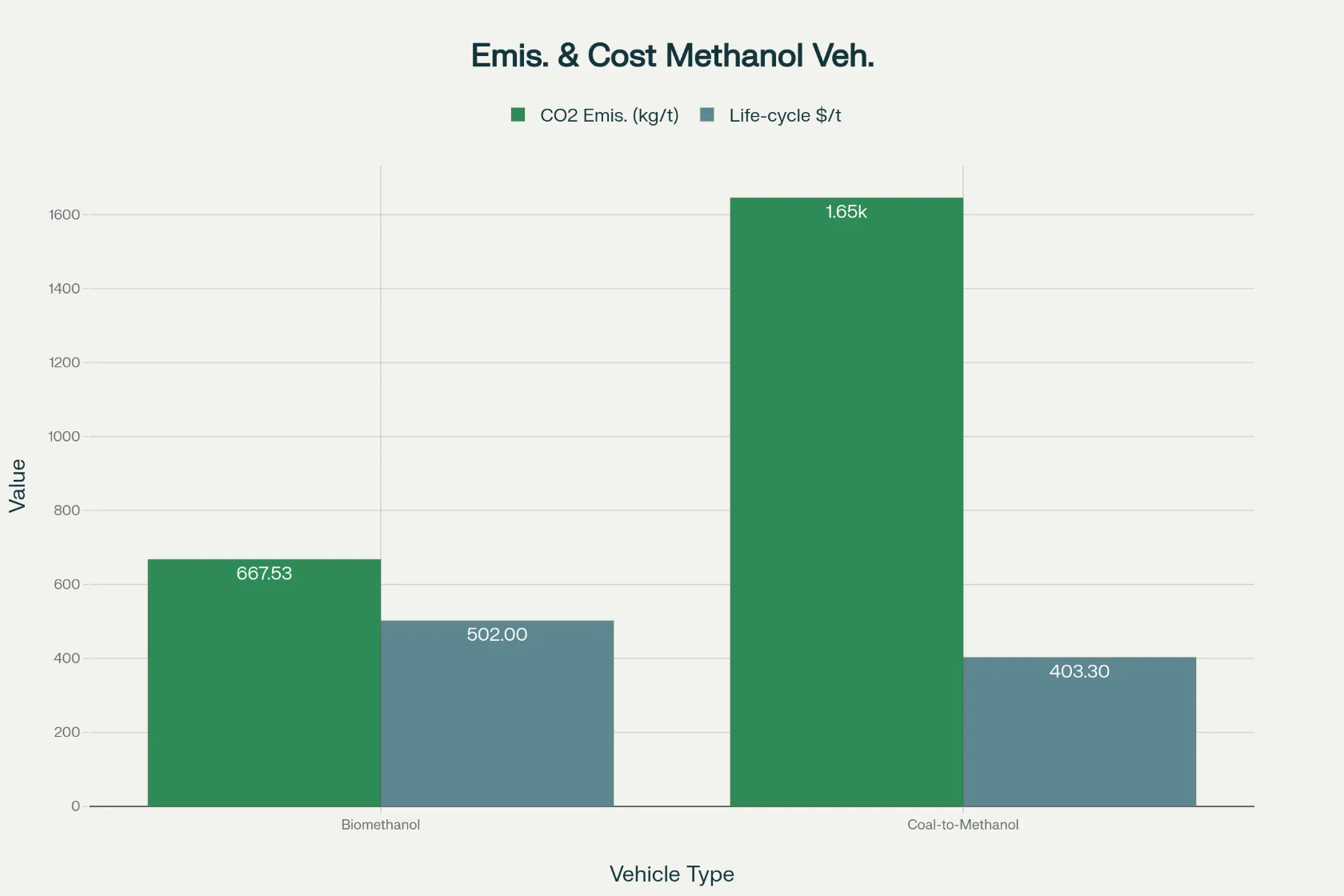
Biomethanol offers significant CO₂ emission reductions up to 59% compared to coal-derived methanol and 54% per km versus conventional diesel in marine applications. While the life cycle cost of biomethanol is about 24% higher than coal to methanol, it can save 14.8% per km in marine operations compared to diesel, making it economically attractive in the long run. In shipping, biomethanol can cut lifecycle GHG emissions by 37%, with operational costs rising by 8–25% (De B. P. Viana et al., 2025).

Effective Policy Driving Biomethanol Growth

China’s government created clear policies to foster methanol fuel adoption:

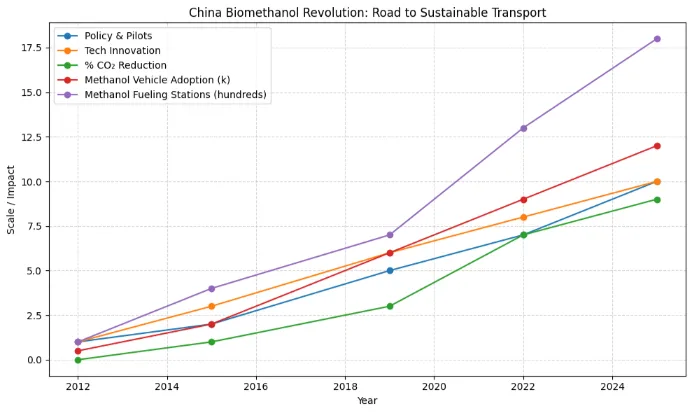
  • Pilot programs (2012): Multi city trials tested M100 fuels in taxis, buses, and trucks, proving safety and efficiency.
  • National promotion (2019): Multi agency policy signaled long term commitment to methanol vehicles.
  • Focus on heavy-duty fleets: Targeted commercial fleets to maximize pollution and fuel impact.
  • Standardization: National fuel and vehicle standards ensured safety and consistency.

Key Technological Innovations

Transitioning methanol from lab to road required solving technical challenges:

  • Dedicated methanol engines: Companies like Geely created optimized M100 engines with better power and efficiency.
  • Corrosion resistance: Specialized fuel system components were developed to handle methanol’s corrosive nature.
  • Cold start technology: Advanced methods ensured engine performance in cold climates.
  • Green methanol production: Scaling biomethanol from biomass and e-methanol from captured CO₂ plus renewable hydrogen.

Building Biomethanol Transport Infrastructure

China overcame the “chicken and egg” problem by:

  • Deploying targeted fueling stations along commercial routes and pilot regions.
  • Leveraging existing liquid fuel infrastructure for cost-efficient storage and distribution.
  • Creating circular economy synergy between agriculture, chemical, and transport sectors.

Environmental and Economic Benefits

The success of biomethanol scaling shows measurable impacts:

  • Carbon reduction: Biomass-based methanol cuts CO₂ emissions by over 59% vs. coal methanol.
  • Air quality: Lower PM, NOx, and SOx emissions improve urban health.
  • Energy security: Domestic biomass feedstock reduces crude oil dependency and price risks.
  • Economic growth: Innovation and jobs grow with methanol vehicle production.
  • Decarbonizing hard-to-abate sectors: Biomethanol fuels trucks and ships where batteries struggle.

Challenges and Solutions

China’s experience highlights key hurdles:

  • Ensuring sustainable biomass feedstocks to avoid deforestation or food conflicts.
  • Transitioning fully away from coal methanol to biogenic and e-fuel pathways for true carbon neutrality.
  • Gaining public acceptance through testing, safety standards, and trusted commercial fleet adoption.

Future of Biomethanol in China Transport

Looking ahead, China emphasizes:

  • E-methanol from renewable hydrogen and captured CO₂ as a carbon neutral fuel cycle.
  • Expanding biomethanol use for heavy duty trucks, marine shipping, and even as a pathway for Sustainable Aviation Fuel (SAF).
, illustrating China’s transition to sustainable transport and the adoption of renewable biomethanol fuel for cleaner mobility.

What the World Can Learn From China Biomethanol Revolution

Five critical lessons emerge for global sustainable transport:

  1. Don’t rely solely on EVs; combine EVs, hydrogen, and biomethanol.
  2. Government-driven policy certainty is vital for scaling investment.
  3. Prioritize early adoption in commercial fleets like taxis and trucks.
  4. Leverage abundant domestic biomass and CO₂ for energy security.
  5. Keep innovating waste-to-fuel and e-fuel technologies for full lifecycle sustainability.

China biomethanol revolution proves that sustainable liquid fuels are essential for large-scale decarbonization. Its strategic approach is a scalable, pragmatic roadmap for countries seeking clean, secure, and economically sound transport solutions worldwide.

Citations

De B. P. Viana, L., Wei, H., Szklo, A., Rochedo, P., & Müller-Casseres, E. (2025). Paving the Way for Low‐Carbon Shipping Fuels in Long‐Haul Trade Routes. International Journal of Energy Researchhttps://doi.org/10.1155/er/8835499.

Pu, Y., Dejaegere, Q., Svensson, M., & Verhelst, S. (2024). Renewable Methanol as a Fuel for Heavy-Duty Engines: A Review of Technologies Enabling Single-Fuel Solutions. Energieshttps://doi.org/10.3390/en17071719.

From Field Waste to Fuel: China’s Rice Straw Biomethanol Revolution – Energy Efficiency, Economic Analysis, and Environmental Benefits

Scaling Sustainable Transport: Lessons From China Biomethanol Revolution Read More »

Farmer collecting rice straw in China for sustainable methanol and biofuel production.

Energy, Economy, and Environment: Biomethanol from Rice Straw in China

Energy, Economy, and Environment: Biomethanol from Rice Straw in China

Imagine mountains of agricultural waste that used to be a problem. Now, they can become a clean burning fuel. This fuel powers vehicles and industries, cleans the air, and supports rural economies. This isn’t a distant dream but a growing reality in China. The country is turning its large amounts of rice straw into biomethanol. China produces a significant portion of the world’s rice, generating nearly 222 million tons of rice straw every year. In the past, much of this waste was disposed of by burning it. This practice had serious environmental consequences. However, a major change is happening. Biomethanol from rice straw is becoming a key part of China’s sustainable development plans. (Ran et al., 2023). This post will delve into China’s motivations for adopting this innovative method, the profound benefits it offers, its inspiring global implications, and the key Chinese companies at the forefront of this green revolution.

Why China Adopted This Method: A Multifaceted Approach

China pivot towards biomethanol from rice straw is driven by a convergence of critical environmental, energy security, and economic imperatives. It represents a pragmatic and visionary solution to several pressing national challenges.

Environmental Imperative: Cleaning the Air and Reducing Emissions

For decades, burning rice straw in open fields has significantly polluted the air in China, especially in farming areas. This practice releases large amounts of particulate matter, nitrogen oxides, and greenhouse gases into the air. This worsens smog, increases respiratory issues, and contributes to climate change. Biomethanol production provides a cleaner alternative. By turning rice straw into a liquid fuel, it removes the need for open burning, which reduces harmful emissions. Additionally, since rice plants absorb CO2 as they grow, using rice straw for biomethanol can be seen as carbon-neutral or even carbon-negative when paired with carbon capture technologies. This process effectively stores carbon that would otherwise be released. China aims to peak CO2 emissions by 2030 and achieve carbon neutrality by 2060, driving the development of low-carbon energy policies (Yang & Lo, 2023).

Energy Security and Diversification: Less Reliance on Imports

China, as a rapidly developing and industrialized nation, faces the persistent challenge of ensuring energy security. Its considerable reliance on imported fossil fuels, particularly oil, creates vulnerabilities in its energy supply chain and subjects its economy to global price fluctuations. The domestic production of biomethanol from rice straw significantly enhances China’s energy independence. By converting an abundant, domestically available agricultural residue into a versatile fuel, China can reduce its reliance on external energy sources, thereby bolstering its national energy security. Biomethanol’s direct applicability in various sectors, especially transportation, allows for a strategic diversification of the energy mix, making the nation less susceptible to geopolitical disruptions affecting oil supplies.

Economic Benefits and Rural Development: Transforming Waste into Wealth

Beyond environmental and energy concerns, the biomethanol initiative offers significant economic advantages, especially for China large rural populations. Rice straw, once seen as waste with disposal costs, is now transformed into a valuable resource. This shift creates new income opportunities for farmers, enabling them to earn money from collecting and selling their agricultural residues. Setting up biomethanol production facilities in rural areas boosts local economies by generating jobs in feedstock collection, transportation, processing, and plant operation. Additionally, a useful byproduct of biomethanol production through anaerobic digestion is digestate. This nutrient-rich organic fertilizer can help reduce farmers’ reliance on costly chemical fertilizers. This improves agricultural sustainability while providing another financial benefit. The relationship between agriculture and energy production supports a strong circular economy in rural areas.

Biomethanol production from rice straw in China offers a sustainable solution. It meets energy needs, cuts greenhouse gas emissions, and effectively uses agricultural waste. Biomethanol yields are around 0.308 kg per kg of rice straw, and the energy efficiency is approximately 42.7% when using gasification technologies. This indicates that China has significant potential for bioenergy from rice straw. Currently, production costs are higher than those of fossil methanol, about 2,685 RMB per ton for a 50,000-ton plant. However, economic competitiveness should improve with policy support, technological innovation, and scaling up.

Using biomethanol from rice straw can reduce carbon emissions by over 70% compared to fossil-based methanol. It also helps decrease air pollution from open-field burning of straw. Improvements in process integration, like combining with renewable electricity, can further boost efficiency and lower lifecycle emissions. Overall, China’s biomethanol pathways show a mix of energy, economic, and environmental benefits Wang, et.al (2024). Continued innovation and supportive policies are essential for wider adoption and lower costs.

Bar Chart for Biomethanol key metrics in China

Inspiring the World: Global Implications of China Biomethanol Success

China is leading the way in scaling biomethanol production from rice straw. This initiative provides a strong and replicable example for other countries dealing with agricultural waste and shifting to renewable energy. The progress made has significant global implications for sustainable development for details..

China’s large agricultural sector and focused efforts on industrializing biomethanol production show that converting agricultural waste into valuable fuel is both possible and cost-effective. This serves as a powerful case study for other rice-producing countries in Asia, Africa, and Latin America, which face similar challenges with agricultural residues and the related environmental and health issues.

China’s efforts also support several United Nations Sustainable Development Goals (SDGs), including SDG 7 (Affordable and Clean Energy), SDG 12 (Responsible Consumption and Production), and SDG 13 (Climate Action). By turning waste into energy and cutting down on pollution, China is showing a real commitment to a more sustainable future. The technological advancements, especially in biomass conversion methods like gasification and anaerobic digestion, being developed in China provide valuable insights and models that can be reused around the world. This encourages a quicker and more effective shift to sustainable energy sources everywhere. The process of converting rice straw into biomethanol reflects the principles of a circular economy. Here, waste is reduced, resources are continually reused, and value is generated from materials that would typically be thrown away.

For a broader understanding of global renewable energy trends and the potential of biomass energy, readers can explore reports from the International Energy Agency (IEA). The IEA regularly publishes comprehensive analyses on the evolving energy landscape, including detailed insights into bioenergy’s role in the global transition to clean energy. https://www.iea.org/

Chinese Companies Leading the Way in Biomethanol from Rice Straw in China

The burgeoning biomethanol industry in China is propelled by a combination of established industrial giants and innovative clean energy companies. These enterprises are not only developing cutting-edge technologies but also forging strategic partnerships to scale up production and meet growing demand.

Among the prominent players, CIMC Enric Holdings Limited stands out for its significant involvement in constructing biomethanol plants. CIMC Enric, a leading intelligent manufacturer in the clean energy industry, has been instrumental in the development of crucial infrastructure for biomethanol production. They are actively engaged in constructing biomethanol facilities in China, with ambitious capacity targets to supply green methanol for various applications, including marine fuel. For more details on their clean energy initiatives, you can visit the CIMC Enric website or consult industry news regarding their green energy projects. (As of recent reports, CIMC Enric is constructing a biomethanol plant in Zhanjiang, Guangdong, targeting an initial annual production of 50,000 tonnes by late 2025, with plans to expand to 200,000 tonnes by 2027. You can find more information through reputable industry news sources that cover their clean energy ventures.)

Another major force in the sector is GoldWind Science & Technology Co., Ltd., a global leader in wind power solutions, which has expanded its portfolio to include biomethanol production. GoldWind has made headlines for its long-term agreements to supply green methanol, notably with shipping giant Maersk. This partnership underscores the growing demand for sustainable marine fuels and GoldWind’s commitment to large-scale green energy production. GoldWind’s innovative approach involves leveraging wind energy to produce both green bio-methanol and e-methanol, showcasing a holistic sustainable energy model. Their official website often features updates on their green energy projects. (GoldWind signed a landmark agreement with Maersk in November 2023 to supply 500,000 tonnes of green methanol annually, with production expected to begin in 2026 at a new facility in Hinggan League, Northeast China. More information can be found on GoldWind’s official news section or through maritime industry news outlets.)

Furthermore, ESGTODAY specializes in agricultural waste treatment, particularly in straw biogas plants and pretreatment technologies, which are foundational to efficient biomethanol production from rice straw. Their expertise in converting agricultural residues into biogas and further refining it into valuable resources positions them as a crucial enabler within this ecosystem. Their focus on sustainable and environmentally friendly agricultural waste management aligns perfectly with China’s biomethanol ambitions. You can explore their technologies at: https://www.esgtoday.com/maersk-signs-its-largest-ever-green-methanol-deal-to-drive-fleet-decarbonization/

These companies, alongside other emerging players and research institutions, are continually pushing the boundaries of technology and scaling up production, signaling a robust and dynamic future for biomethanol in China.

To gain further insights into the broader renewable energy industry in China and the specific contributions of these companies, reports from reputable financial news outlets or clean energy analysis firms can be highly informative.

Challenges and Future Outlook

While China’s biomethanol journey is inspiring, it’s not without its challenges. Logistical hurdles in collecting and transporting vast quantities of diffuse rice straw, the initial capital investment required for large-scale plants, and the ongoing need for technological refinement to optimize conversion efficiency remain important considerations. However, the immense potential of biomethanol from rice straw for China and the world far outweighs these challenges. Continuous research and development, coupled with strong government policy support and private sector investment, are paving the way for further innovation and expansion. This includes advancements in enzyme technologies, more efficient gasification processes, and improved integration with existing infrastructure.

Conclusion

China’s proactive embrace of biomethanol from rice straw represents a truly transformative approach to energy, economy, and environment. By converting what was once considered waste into a valuable, clean-burning fuel, China is not only addressing its own critical environmental concerns and enhancing energy security but also providing a powerful blueprint for sustainable development globally. The economic uplift for rural communities, coupled with the significant reduction in air pollution and greenhouse gas emissions, underscores the multifaceted benefits of this innovation. As Chinese companies continue to lead the way in technological advancements and scale up production, their efforts serve as a beacon, inspiring a global shift towards a greener, more sustainable future powered by ingenuity and collaboration. The journey of rice straw to biomethanol in China is a testament to the power of human innovation in building a truly green future.

Citations

Yang, Y., & Lo, K. (2023). China’s renewable energy and energy efficiency policies toward carbon neutrality: A systematic cross-sectoral review. Energy & Environment, 0958305X2311674. https://doi.org/10.1177/0958305×231167472

Ran, Y., Ghimire, N., Osman, A. I., & Ai, P. (2023). Rice straw for energy and value-added products in China: a review. Environmental Chemistry Letters, 1–32. https://doi.org/10.1007/s10311-023-01612-3

Reducing the lifecycle carbon emissions of rice straw-to-methanol for alternative marine fuel through self-generation and renewable electricity. Energy Conversion and Managementhttps://doi.org/10.1016/j.enconman.2024.119202.

For a detailed life cycle analysis and insights on biomethanol production from corn straw in China, explore the comprehensive study at Biomethanol from Corn Straw in China: A Life Cycle Insight .

Energy, Economy, and Environment: Biomethanol from Rice Straw in China Read More »

Biogas to biomethanol production plant supporting India’s methanol economy and renewable fuel transition

India Methanol Economy: Opportunities and Challenges for Biomethanol from Biogas

India Methanol Economy: Opportunities and Challenges for Biomethanol from Biogas

India is the third largest energy consumer in the world. It faces two big challenges: energy security and reducing carbon emissions. The country wants to lower its substantial oil import bill and meet its goal of net-zero emissions by 2070. This has led to innovative strategies. One key approach is the ‘Methanol Economy.’ Led by NITI Aayog, the nationwide effort aims to replace traditional fossil fuels with locally sourced methanol, especially biomethanol made from biogas. This shift represents a transformative solution that turns waste into valuable resources, offering significant environmental and social advantages.

This blog looks at India’s growing biomethanol sector, its potential, the policy landscape, and the challenges to widespread adoption.

India’s Methanol Economy: National Vision and Strategic Imperatives

NITI Aayog’s Methanol Economy Program
NITI Aayog launched the ‘Methanol Economy’ program in 2016. This initiative aims to change India’s energy landscape. The program supports national goals to:

  • Guide India towards a low-carbon and carbon-neutral future.
  • Significantly reduce the country’s oil import bill: blending 15% methanol (M15) with gasoline could cut crude oil imports by at least 15% and reduce national fuel costs by 30%.
  • Lower greenhouse gas emissions: blending methanol in fuels could cut particulate matter, NOx, and SOx by about 20%, with even greater reductions when using biomethanol from renewable sources.
  • Create jobs: methanol production, distribution, and use can generate up to 5 million jobs.
  • Turn waste into resources: convert abundant waste streams like high ash coal, agricultural residue, and municipal waste into valuable methanol, addressing waste management and sustainability.

Market Status and Demand Growth
India has an installed methanol capacity of 2 million tonnes per year (MTPA). However, it imports over 90% of its demand of 1.8 MTPA, a number expected to keep rising. The Indian methanol market was valued between $1.24 and $1.63 billion in 2024 and could reach $2.75 billion by 2035, growing at a steady annual rate of 4.4-4.9%.

To reduce dependency on imports and stabilize prices, India is investing in new domestic capacity:

Predicted Graphical Representation of India Mthanol market Growth projection (2024-2035)
  • Five methanol plants based on high-ash coal.
  • Five dimethyl ether (DME) plants.
  • One natural gas-based methanol facility (20 MMT/year) in collaboration with Israel.

The focus on self-sufficiency, known as Atmanirbhar Bharat, is driving policies and investment to shift from imports to locally sourced, including renewable, methanol.

Diverse Applications and Market Potential
Methanol’s flexibility makes it vital in India’s changing energy landscape:

  • Transport: it serves as a direct replacement for petrol and diesel (in road, rail, marine). Blends like M-15, M-85, and M-100 have been approved, with pilot programs starting in partnership with Indian Oil and others.
  • Power and Industry: used in diesel generators, boilers, tractors, and commercial vehicles. Indian manufacturers are testing DMFC (Direct Methanol Fuel Cell) applications in areas like telecom.
  • Cooking Fuel: methanol stoves, successfully demonstrated in Assam, provide cleaner, more affordable options for households, reducing annual cooking fuel expenses by 20%.
  • Feedstock: as a basic chemical, methanol helps produce formaldehyde, acetic acid, plastics, paints, and more.
Bar chart for the estimated Biomass Feedstock Potential for Biomethanol

Methanol also works as an efficient hydrogen carrier. It can be easily integrated with existing logistics and storage systems, making it a key link to a future hydrogen economy.

Why Biomethanol from Biogas

Environmental Advantages
Deep Decarbonization: Biomethanol sourced from biogas can cut CO2 emissions by up to 95% and NOx by up to 80% compared to fossil methanol.

Waste Management: India produces over 105 billion tonnes of organic waste each year, but only about 2% gets recycled. Biogas plants utilize agricultural waste, dung, municipal waste, and sewage to turn environmental liabilities into energy assets.

Air Quality: Methanol blends (M15) can lower urban air pollution by up to 40%. Cooking with methanol reduces household air pollution, providing major health benefits, particularly for women.

The process also produces nutrient-rich digestate, decreasing reliance on chemical fertilizers and supporting a strong circular economy.

Economic and Rural Impact
Energy Security: Biomethanol, produced domestically and renewably, reduces dependence on imported fuels and mitigates risks from volatile global markets.

Cost Savings: Production costs for methanol range from Rs 16-21 per litre (renewable/fossil), making it at least 30% cheaper than petrol or diesel.

Rural Development: Farmers earn additional income selling agricultural waste, and local jobs are created across the supply chain from collecting waste to operating plants.

Municipal Resilience: Waste-to-methanol plants lower municipal waste management costs and generate revenue.

Policy and Regulatory Momentum

The Indian government has laid a strong policy foundation for biomethanol through various initiatives:

  • National Biofuel Policy (2018, amended 2022): aims for 20% ethanol (petrol) and 5% biodiesel (diesel) blending by 2030; supports waste-based refineries.
  • GOBARdhan Scheme: turns rural organic waste into biogas/CBG and organic fertilizer, promoting rural entrepreneurship.
  • SATAT Program: plans to set up 5,000 CBG plants by 2024; mandates 1% CBG blending starting in 2025, increasing to 5% by 2028.
  • Methanol Economy Fund: INR 4,000-5,000 crore set aside for encouraging methanol adoption and capacity growth.
  • Green Hydrogen Mission: offers $2.3 billion in subsidies, including incentives for green methanol.
  • State-Level Support: provides additional capital subsidies, tax breaks, and favorable land terms for bioenergy in key states like UP, Gujarat, and MP.

Incentives and Mandates
Capital subsidies (up to 35% for green hydrogen, 30% for biofuels)
Excise/custom waivers, carbon credits, low-interest loans
Direct blending mandates for CBG, DME/LPG, and methanol in fuels
Guaranteed purchase agreements for CBG/methanol producers by oil marketing companies

Despite these initiatives, progress is slow due to regulatory delays, infrastructure challenges, and inconsistent policy execution.

Advances in Technology and Demonstration Projects

There is significant R&D and demonstration activity underway:

  • Thermochemical Conversion: biomass is turned into gas, then into methanol. This method is already effective for coal, but is now being adapted for biogenic feedstock.
  • Biochemical Conversion: organic waste first produces biogas, which is then converted to methanol. This method accommodates various waste streams and is a leading option for rural bio-refineries.
  • Indigenous Innovation: IISc Bangalore and Praj Industries have successfully produced syngas from biomass. BHEL Hyderabad and IIT Delhi are advancing coal-to-methanol pilot projects.
  • International Collaborations: Topsoe’s eSMR Methanol™ (CO2-neutral, biogas-based), NTPC-Tecnimont for commercial green methanol, and major Indian companies like Adani and Reliance are investing in biogas and biomethanol projects.

Pilot municipal projects, such as the one in Gurugram (processing 500 tonnes of waste daily into 50 kiloliters of methanol), demonstrate scalability and local value creation.

Major Challenges for Scaling Biomethanol from Biogas

1. Economic Viability
Cost Disparity: Fossil methanol prices range from $100–250/metric ton, while biomethanol costs $770/metric ton, making price parity a significant challenge for policy.

Energy Content: Methanol has a lower calorific value (22 MJ/kg compared to 45-46 MJ/kg for petrol/diesel), meaning users need a larger volume for the same energy, despite a lower price per litre.

Investment Gaps: Although subsidies and incentives are improving the situation, investor confidence is affected by the developing market and “green premium.”

2. Feedstock Collection, Logistics, and Supply Chain
Aggregation Problems: Only 5,000–7,000 tonnes of biomass are supplied daily to power plants, while 100,000 tonnes are required.

Seasonality/Volatility: The supply of agricultural residues varies, making pricing unpredictable.

Land Use: It is critical to avoid competing with food and agricultural production, focusing instead on non-food, waste-based sources.

3. Technical Hurdles
Biogas Purification: Removing impurities like H2S, CO2, and NH3 is costly and requires a lot of energy.

Conversion Efficiency: Directly converting methane to methanol is still being optimized; most industrial methods are still two-step and require significant investment.

Scaling Up: While demonstration projects show promise, fully commercial deployment is a work in progress.

4. Infrastructure and Distribution
Centralization vs. Decentralization: Biogas and biomethanol production are decentralized, but distribution tends to be centralized, creating logistical challenges.

Storage and Transport: Although methanol is easier to handle than hydrogen, the infrastructure for biomethanol is still under development nationwide.

Conclusion: The Way Forward

India’s biomethanol strategy using biogas represents a forward-thinking approach to turning waste into wealth, which is critical for the country’s sustainable energy future. While there have been significant advancements in policy, technology, and pilot projects, expanding this strategy will depend on:

  • Improving policy consistency and execution.
  • Strengthening supply chains and logistics for feedstock.
  • Accelerating research and development to lower costs and increase efficiency.
  • Providing strong incentives and securing market-based purchase agreements to attract private investment.
  • Encouraging technology transfer and local innovation, fostering collaboration among government, academia, and industry.

By fully utilizing its large biomass resources, enhancing rural livelihoods, and delivering clean, lowcarbon fuel, India can become a leader in biomethanol and biogas while serving as a model for circular, resilient energy economies globally.

Biomethanol from Corn Straw in China: A Life Cycle Insight

India Methanol Economy: Opportunities and Challenges for Biomethanol from Biogas Read More »