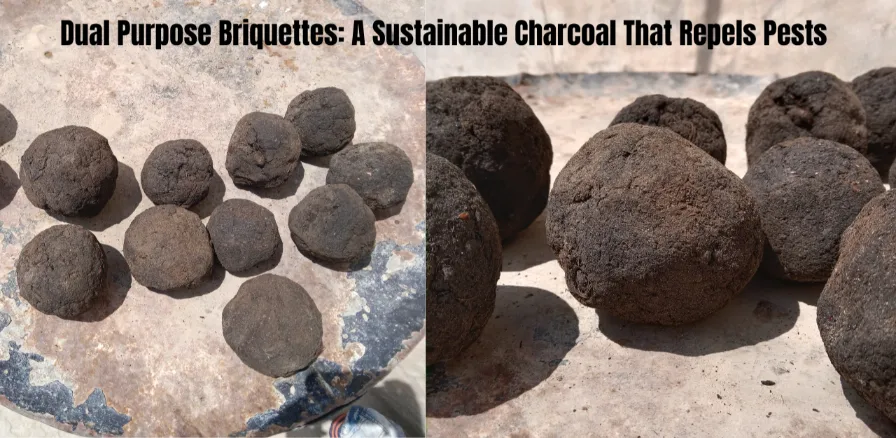
Dual-Purpose Briquettes: A Sustainable Charcoal That Repels Pests
Introduction
In recent years, the demand for sustainable energy sources and eco-friendly agricultural solutions has grown significantly. Farmers, researchers, and environmentalists are constantly seeking innovations that can address multiple challenges. One such promising innovation is A Sustainable Charcoal based briquettes That Repels Pests, a dual-purpose briquette designed to serve both as a fuel source, a natural pesticide and a Biochar.
These briquettes are not just an alternative to traditional charcoal; they represent a shift toward integrated, multifunctional solutions in agriculture and energy systems. By combining biomass waste with natural pest-repelling compounds, these briquettes offer a cleaner, safer, and more efficient approach.
What Are Dual-Purpose Briquettes?
Definition and Concept
Dual-purpose briquettes are compressed blocks of organic materials that function both as fuel and as pest repellents as well as biochar. Unlike conventional charcoal, these briquettes are engineered to use as a briquette, in the fields acts as a pesticide that their smell can repell the insects and pests, and by lying it also acts as Biochar for the health ingrededient for crops and fields.
The main idea behind A Sustainable Charcoal That Repels Pests is to enhance the resource efficiency. Instead of using separate products for fuel and pest control, a single product fulfills many roles, reducing costs and environmental impact.
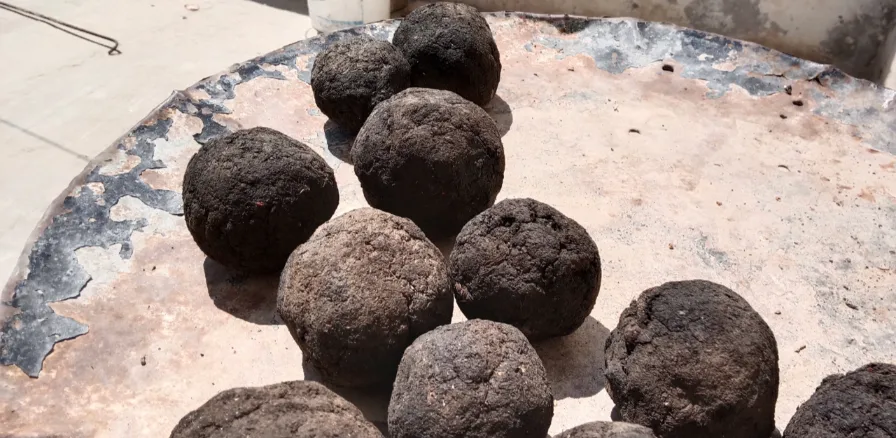
Composition of Briquettes
These briquettes are typically made from:
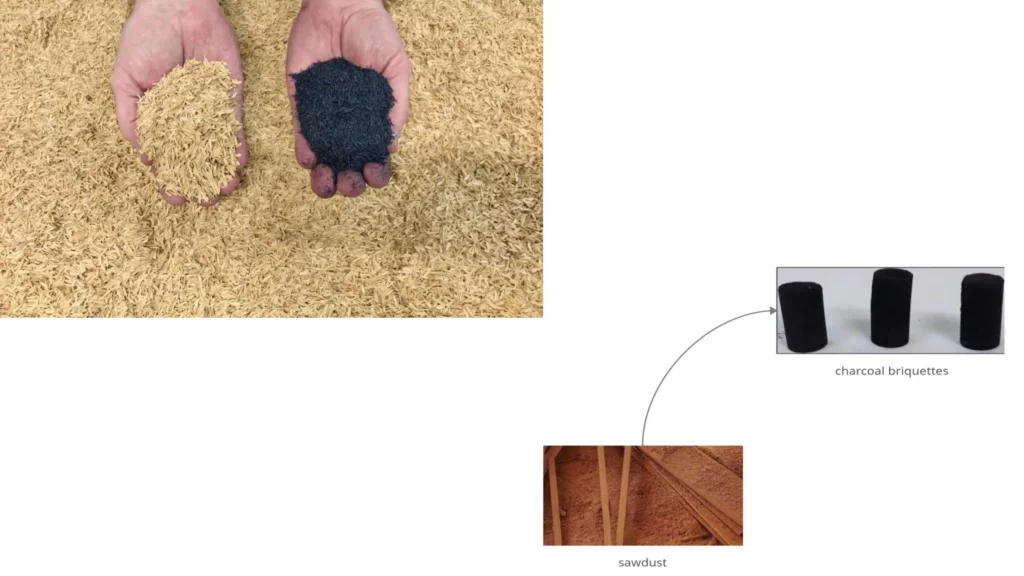
- Agricultural residues (rice husk, sawdust, corn cobs and etc)
- Organic binders: molasses
- Natural pest-repelling additives ( smell of the molasses based compounds that have a pungent smell)
The combination of these materials ensures that the briquettes remain environmentally friendly while providing effective pest control.
Binding Agent
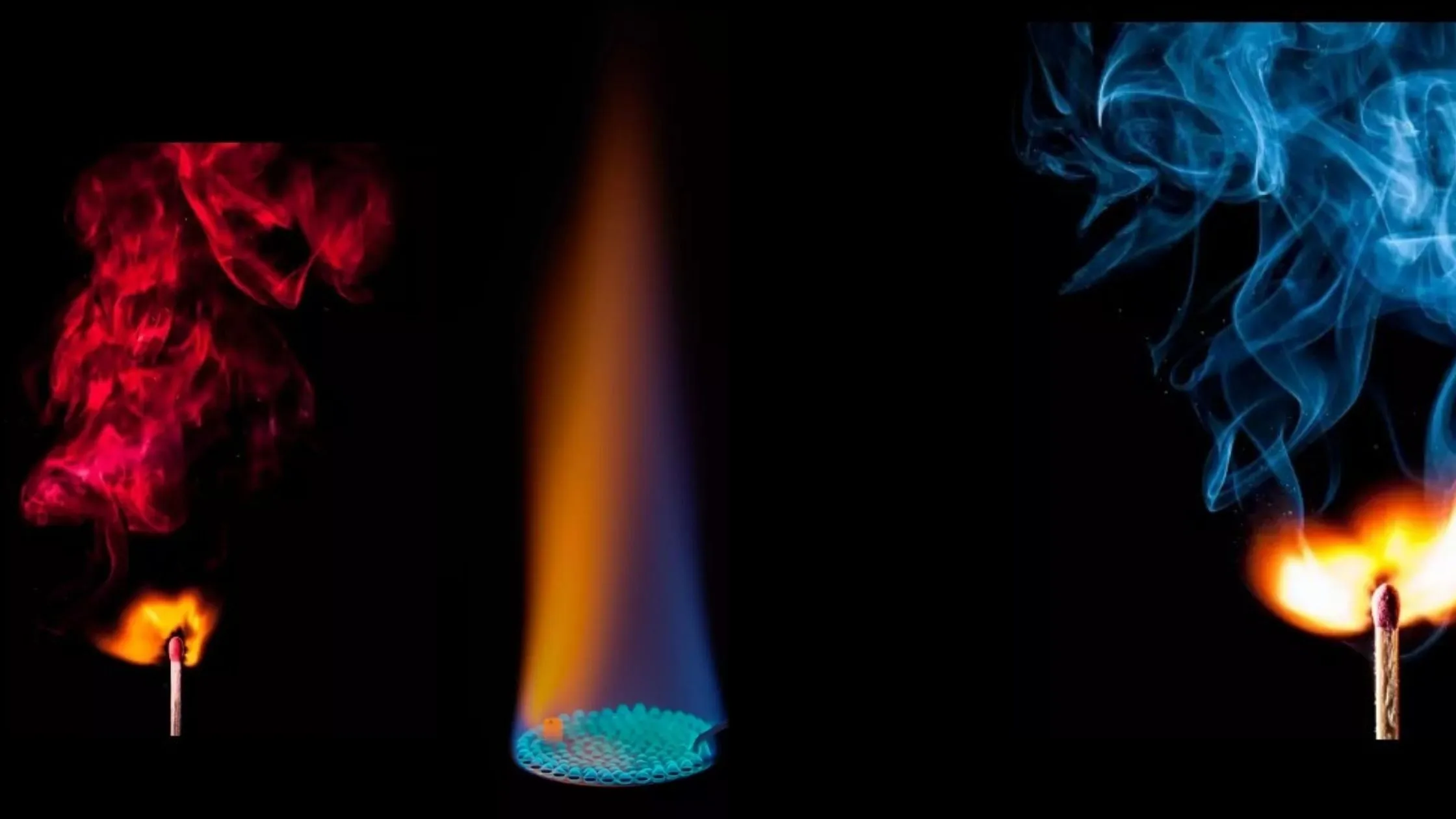
A new binding agent developed by using residues from household vegetables combined with glucose-rich juices, creating a biodegradable and nutrient-based adhesive solution. During fermentation or mild thermal processing, these organic components can generate volatile compounds, including light hydrocarbons and odor-active substances that resemble the smell of butanol and methanol. This distinct odor profile contributes to pest repellence, as many insects are sensitive to such volatile emissions and tend to avoid treated areas. In addition to improving briquette cohesion, this type of binding agent enhances the functional value of A Sustainable Charcoal That Repels Pests by integrating natural, waste-derived pest deterrent properties.
The Need for Sustainable Charcoal Alternatives
Sustainable charcoal alternatives are important because traditional charcoal causes deforestation, pollution, and health problems. These alternatives use agricultural waste and biomass, helping reduce emissions and turning waste into charcoal based Briquettes that can be also used as pesticide and biochar especially in Agriculture sector. They also create jobs and support local economies through small-scale production. In the future, they can improve farming (through biochar), support clean energy, and promote a circular economy.
Environmental Concerns with Traditional Charcoal
Traditional charcoal production contributes significantly to deforestation and carbon emissions. These briquettes contain charcoal-rich compounds with a higher proportion of fixed carbon, which is the main component responsible for a greater calorific value. The presence of carbon, along with low moisture and low ash content, helps the briquettes burn more efficiently and produce more heat energy. In simple terms, the more carbon-based material the briquette contains, the higher its heating value becomes. A Sustainable Charcoal That Repels Pests utilizes waste biomass, reducing the need for cutting down trees and lowering greenhouse gas emissions.
Challenges in Conventional Pest Control
Chemical pesticides, while effective, pose serious risks:
- Soil and water contamination
- Health hazards for farmers
- Development of pest resistance
By integrating pest-repelling properties into charcoal, these briquettes offer a safer and more sustainable alternative.
How A Sustainable Charcoal That Repels Pests Works
Mechanism of Pest Repellence
When the briquettes are placed in the fields, they release pungent smell in the fields while lying on the ground within the fields. These compounds interfere with the sensory systems of insects, making the environment unattractive or hostile to pests. in this way these dual purpose briquettes can save crops from pests and also used as Biochar in the fields that can enhance fertility of the crops as well as of the fields.
Dual Functionality
The briquettes perform two key functions simultaneously:
- Provide heat energy as these are round shaped charcoal based briquettes best renowed for their heating values
- Emit pest-repelling smell that protects crops and used for the soil as biochar
This dual functionality makes them especially useful in rural and agricultural settings.
Raw Materials and Preparation Process
Selection of Biomass
The first step in producing these briquettes is selecting suitable biomass. Common choices include:
- Rice husk
- Sugarcane bagasse
- Groundnut shells
- Sawdust
These materials are abundant, low-cost, and renewable.
Incorporating Pest-Repelling Agents
Natural additives are mixed into the biomass to give the briquettes their pest-repelling properties. Popular choices include:
- Household vegetables, waste of fruits
- Sugar Based syrup for the anaerobic fermentation
- methanol(C₂H₅OH), ethanol(C₂H₅OH) and butanol(C₄H₉OH)
- combined these above chemicals can be used for the purpose of the pest-repelling agent due to their smell that preserves in the briquettes
Briquetting Process
The briquetting process starts by collecting dry biomass materials such as sawdust, or household organic waste. These materials are then carbonized or shredded, mixed with a binding agent, and pressed tightly into a mould or briquetting machine. After compression, the briquettes are dried completely so they become hard, durable, and ready to use as fuel.
Applications in Agriculture
Field Pest Control
Farmers can burn these briquettes near crops to create a protective barrier against insects. The smoke acts as a natural fumigant, reducing pest infestation without harming plants.
Storage Protection
Stored grains are highly vulnerable to pests. Using A Sustainable Charcoal That Repels Pests in storage areas helps prevent insect attacks without chemical residues.
Biochar
These briquettes can be used as biochar simply by lying in the fields for improving soil health, because the carbon-rich material helps retain water, hold nutrients, and support beneficial soil microbes. They can also reduce the need for chemical fertilizers by slowly improving soil fertility and structure over time.
Livestock Areas
These briquettes can also be used in animal shelters to repel flies and mosquitoes, improving animal health and comfort.
Benefits of Using A Sustainable Charcoal That Repels Pests
Using A Sustainable Charcoal That Repels Pests gives several practical benefits for both households and agriculture. It attains an eco-friendly fuel source made from renewable waste materials, helping reduce deforestation and the environmental damage caused by traditional charcoal production. At the same time, its natural pest-repelling properties make it useful in protecting crops, stored grains, and surrounding farm areas from insects without relying heavily on chemical pesticides. This can lower costs for farmers, reduce exposure to harmful chemicals, and support safer, more sustainable farming practices. In addition, because it serves both as a fuel and a pest-control material, it saves time, resources, and effort while promoting cleaner energy use and better waste management.
.
Future Prospects and Research Opportunities
Optimization of Formulations
The future of these briquettes is promising, especially if researchers focus on optimizing the formulation to improve strength, burning time, calorific value, and pest-repelling performance. Fine-tuning the ratio of charcoal, biomass residue, binders, and natural additives can help create a more efficient product that burns cleaner and performs consistently in different conditions.
Integration with Biochar Technology
These briquettes can be adapted to produce biochar, which can enhance soil fertility while retaining pest-repelling properties. Biochar can improve soil health, carbon storage, and nutrient retention while also supporting sustainable waste recycling. In the future, these briquettes could be developed not only as fuel but also as a soil-amending material, creating a dual-purpose system that benefits energy production and agriculture at the same time.
Policy and Support
If these improvements are combined with low-cost local feedstocks and better formulation design, the technology could become more practical for households, farmers, and small industries in the future.
In practical terms, policy can help by offering incentives for using agricultural waste, promoting clean cooking alternatives, and creating clear rules for sustainable production. It can also support research, certification, and extension services so farmers and small producers understand how to make and use these briquettes effectively.
This simple shift demonstrates how a single innovation can address multiple challenges effectively.
Conclusion
The concept of A Sustainable Charcoal That Repels Pests represents a powerful intersection of energy efficiency, environmental responsibility, and agricultural innovation. By transforming agricultural waste into multifunctional briquettes, this approach not only reduces reliance on harmful chemicals but also promotes a circular economy.
As the world moves toward sustainable solutions, such innovations hold immense potential to reshape both energy consumption and farming practices. With further research, awareness, and support, dual-purpose briquettes could become a standard tool for farmers and households alike.
How China is Using Robots and AI in Biofuel Technologies