


Is Biomethanol the Key to Carbon-Neutral Transportation
As the global community accelerates its shift toward cleaner and more sustainable energy sources, the transportation sector remains one of the most difficult to decarbonize. Amid mounting concerns about climate change and growing carbon emissions, biomethanol has gained attention as a promising alternative fuel. But is biomethanol the key to carbon-neutral transportation? Let’s explore its environmental benefits, economic and technological viability, future applications, and the policy support needed for its widespread adoption.
Environmental Benefits of Biomethanol
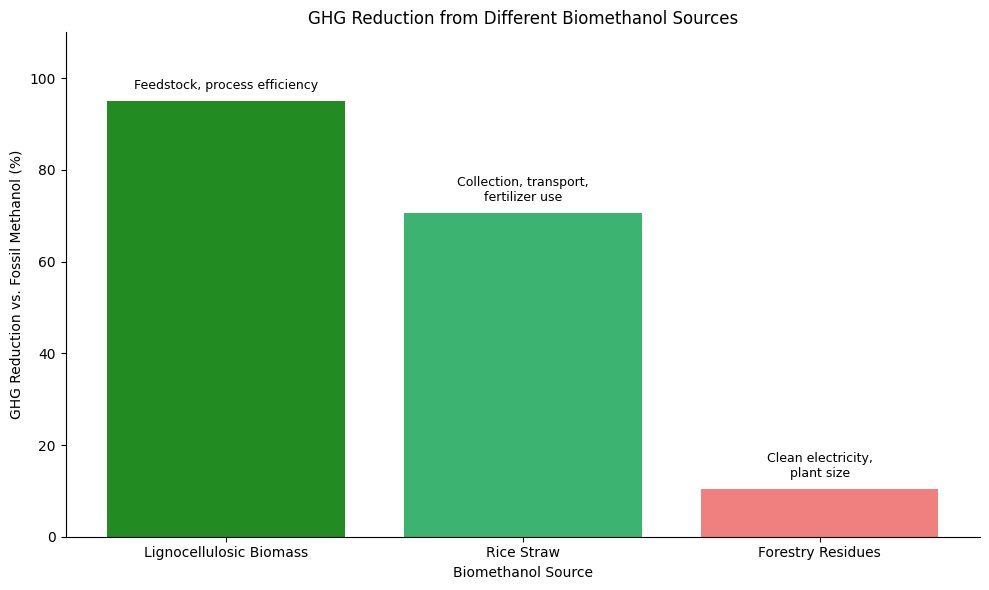
Biomethanol offers remarkable potential to reduce greenhouse gas (GHG) emissions compared to conventional fossil fuels. Studies suggest that it can cut carbon dioxide emissions by up to 95%, while nearly eliminating sulfur oxide emissions and substantially lowering nitrogen oxide levels. This results in cleaner air, reduced smog formation, and a healthier environment overall.
When produced from renewable biomass sources such as rice straw, forestry residues, or lignocellulosic feedstocks biomethanol delivers even stronger sustainability performance. Incorporating clean electricity and optimizing production processes can further reduce its life cycle emissions, positioning it as a leading candidate for carbon neutral fuel.
Additionally, biomethanol can be blended seamlessly with diesel or biodiesel, offering immediate emission reductions without significant modifications to existing engines, fuel storage systems, or refueling infrastructure.
Economic and Technological Viability
While environmentally advantageous, biomethanol currently faces economic challenges due to higher production costs compared to fossil-derived fuels. These costs vary based on factors such as feedstock type, plant capacity, and the integration of renewable hydrogen into production systems.
However, technological innovation is rapidly improving cost efficiency. Advances in hydrothermal gasification, carbon capture integration, and renewable-powered synthesis are driving down emissions and operational expenses. Importantly, biomethanol is already a technologically mature and scalable option, and its long-term potential surpasses that of bioethanol in replacing gasoline despite requiring more energy during production.
Future Applications of Biomethanol
One of biomethanol’s greatest strengths lies in its versatility across transportation modes. It can be used directly in internal combustion engines, as a blend component in fuels, or as a marine fuel. The international shipping industry, in particular, has already begun adopting methanol as a cleaner alternative to heavy fuel oil.
Furthermore, biomethanol shows immense promise for hard to electrify sectors, including aviation, long-haul transport, and heavy-duty vehicles. Its compatibility with existing distribution infrastructure makes it an attractive pathway toward large-scale decarbonization. Future developments in e-fuels, synthesized from captured carbon dioxide and renewable energy, are also likely to position biomethanol at the forefront of sustainable fuel innovation.
Economic and Technological Viability
While environmentally advantageous, biomethanol currently faces economic challenges due to higher production costs compared to fossil-derived fuels. These costs vary based on factors such as feedstock type, plant capacity, and the integration of renewable hydrogen into production systems.
However, technological innovation is rapidly improving cost efficiency. Advances in hydrothermal gasification, carbon capture integration, and renewable-powered synthesis are driving down emissions and operational expenses. Importantly, biomethanol is already a technologically mature and scalable option, and its long-term potential surpasses that of bioethanol in replacing gasoline despite requiring more energy during production.
Real-World Adoption: Where Methanol Is Already Making Progress
Methanol as a fuel is no longer just a laboratory idea. Several major shipping companies have ordered methanol-capable vessels, and ports around the world are building bunkering capacity to supply them. Leading engine manufacturers now offer dual-fuel engines that can run on methanol, giving operators flexibility as green supply grows. In road transport, China has run methanol-fueled vehicles and fleets for years, particularly in regions with abundant methanol production. Pilot plants in Europe and elsewhere are also producing renewable methanol from biomass, biogas, and captured CO₂.
These early projects show that the supply chain, engines, and safety practices are already being developed. What remains is scaling up renewable production so that the methanol being burned is genuinely low-carbon rather than fossil-derived.
Future Applications of Biomethanol
One of biomethanol’s greatest strengths lies in its versatility across transportation modes. It can be used directly in internal combustion engines, as a blend component in fuels, or as a marine fuel. The international shipping industry, in particular, has already begun adopting methanol as a cleaner alternative to heavy fuel oil.
Furthermore, biomethanol shows immense promise for hard-to-electrify sectors, including aviation, long-haul transport, and heavy-duty vehicles. Its compatibility with existing distribution infrastructure makes it an attractive pathway toward large-scale decarbonization. Future developments in e-fuels, synthesized from captured carbon dioxide and renewable energy, are also likely to position biomethanol at the forefront of sustainable fuel innovation. Methanol can also serve as a building block for other products, including sustainable aviation fuel pathways, which widens its role in the energy transition.
Safety, Handling, and Engine Compatibility
Methanol is toxic if swallowed or inhaled in large quantities, and it burns with a nearly invisible flame, so proper handling procedures are essential. It is also more corrosive to certain metals, rubbers, and plastics than gasoline or diesel. The good news is that these issues are well understood after decades of industrial use. Compatible materials, protective equipment, leak detection, and training programs are established practice, and modern methanol engines and fuel systems are designed with them in mind. Compared to hydrogen or liquefied natural gas, methanol’s liquid form at normal temperatures makes storage and bunkering considerably simpler.
Opportunities for Agricultural Economies
Countries with large agricultural sectors have a particular opportunity. Every harvest produces large volumes of residues such as rice straw and wheat straw, which are often burned in open fields, contributing to seasonal smog and air pollution. Converting these residues into biomethanol could turn a pollution problem into an energy resource, creating rural jobs, new income for farmers, and reduced dependence on imported fuels. For developing economies facing high fuel import bills, domestic biomass-based fuel production can strengthen energy security while supporting climate commitments.
Challenges and the Role of Policy Support
Despite its large potential, biomethanol’s widespread commercialization depends on overcoming several challenges:
- Cost Reduction: Continued innovation and scale-up are essential to achieve price parity with conventional fuels.
- Infrastructure Investment: Expanding refueling networks and adapting supply chains will ensure smoother integration into existing systems.
- Feedstock Logistics: Collecting, transporting, and storing bulky biomass sustainably and affordably requires well-organized supply chains.
- Sustainability Safeguards: Feedstocks must come from waste and residues or responsibly managed sources to avoid land-use change and competition with food production.
- Policy Frameworks: Government incentives, renewable fuel mandates, and carbon pricing mechanisms will be critical drivers for market adoption.
Supportive policies that encourage investment, research, and commercial deployment can speed up biomethanol’s contribution to global decarbonization goals. Clear standards, certification of low-carbon fuels, and long-term price signals give investors the confidence to build the large plants this industry needs.
Challenges and the Role of Policy Support
Despite its large potential, biomethanol’s widespread commercialization depends on overcoming several challenges:
- Cost Reduction: Continued innovation and scale-up are essential to achieve price parity with conventional fuels.
- Infrastructure Investment: Expanding refueling networks and adapting supply chains will ensure smoother integration into existing systems.
- Policy Frameworks: Government incentives, renewable fuel mandates, and carbon pricing mechanisms will be critical drivers for market adoption.
Supportive policies that encourage investment, research, and commercial deployment can speed up biomethanol’s contribution to global decarbonization goals.
Conclusion:
So, is biomethanol the key to carbon neutral transportation? The answer leans strongly toward yes. With its impressive emission reductions, scalable technology, and adaptability across various transport modes, biomethanol stands out as a compelling candidate in the clean energy transition.
While challenges related to cost and infrastructure persist, ongoing innovation and government support can unlock its full potential. As countries push toward a zero-carbon future, biomethanol could play a transformative role in reshaping sustainable mobility for generations to come