Bioenergy is renewable energy produced from organic materials (biomass) like plants and waste, used to generate heat, electricity, and fuels while supporting carbon reduction efforts.
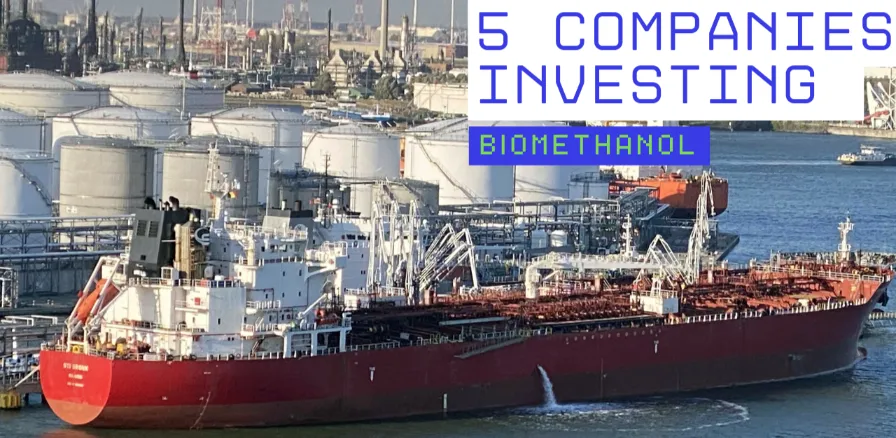
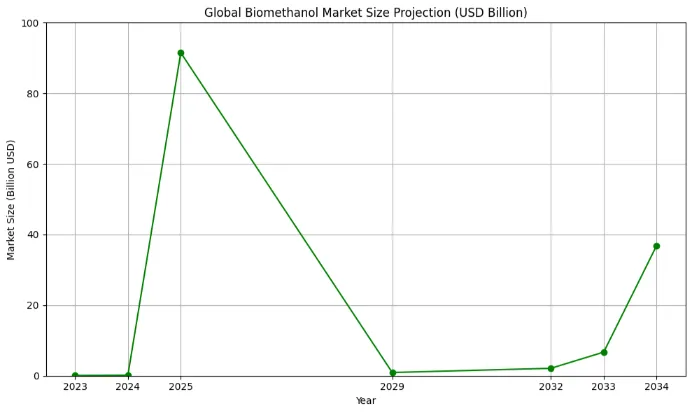
Biomethanol is rapidly gaining traction as a sustainable alternative to fossil fuels, offering significant potential to decarbonize industries that have traditionally been hard to abate. Several leading companies are making strategic investments in biomethanol production and technology, recognizing its role in the global energy transition.
1. British Petroleum (BP)
This article explores five key companies British Petroleum (BP), Maersk, WasteFuel, M2X Energy, and Glocal Greenthat are pioneering investments and innovations in biomethanol to transform energy and industrial landscapes.
BP is one of the most prominent energy companies actively investing in biomethanol as part of its broader strategy to become an integrated energy company with net-zero ambitions by 2050. BP’s commitment to bioenergy is highlighted by its recent $10 million investment in WasteFuel, a California-based biofuels company specializing in converting municipal and agricultural waste into bio-methanol.
BP’s investment is a significant milestone in scaling biomethanol production and integrating it into global energy markets. By focusing on converting waste into low-carbon fuels, BP is addressing both waste management challenges and decarbonization goals, especially in hard-to-abate sectors like maritime shipping.
2. Maersk
Maersk, the world’s largest container shipping company, has been at the forefront of adopting alternative fuels to reduce its carbon footprint. Recognizing the potential of biomethanol as a marine fuel, Maersk has invested heavily in methanol-powered vessels and secured long-term supply agreements to support its decarbonization targets.
Shipping accounts for approximately 90% of global trade and contributes significantly to global emissions. Maersk’s commitment to biomethanol fuels demonstrates the shipping industry’s shift toward sustainable fuel alternatives that are compatible with existing engine technologies and infrastructure.
3. WasteFuel
WasteFuel is a pioneering biofuels company focused on converting municipal and agricultural waste into bio-methanol using proven anaerobic digestion and methanol production technologies. The company’s innovative approach addresses two critical challenges: managing growing global waste volumes and providing low-carbon fuel alternatives.
WasteFuel’s bio-methanol production is positioned to play a vital role in decarbonizing hard-to-abate sectors such as shipping, where electrification is challenging. The company’s projects contribute to reducing global greenhouse gas emissions by offering a renewable, scalable fuel solution.
4. M2X Energy
M2X Energy is an emerging player in the biomethanol sector, focusing on the development and commercialization of renewable methanol production technologies. The company leverages advanced catalytic processes and renewable feedstocks to produce biomethanol with a low carbon footprint.
By focusing on flexible production technologies, M2X Energy supports the decentralization of biomethanol production, enabling local and regional supply chains. This approach helps reduce transportation emissions and supports energy security while advancing the circular economy.
5. Glocal Green
Glocal Green is a clean energy company dedicated to producing sustainable biofuels, including biomethanol, from renewable resources. The company integrates biomass conversion technologies with innovative process optimization to deliver low-carbon fuels for industrial and transportation sectors.
Glocal Green is expanding its footprint by targeting emerging markets with abundant biomass resources, aiming to create sustainable energy ecosystems. Its investments in biomethanol production align with global climate goals and growing demand for renewable fuels.
Conclusion
The transition to a low-carbon future requires innovative solutions and strategic investments across industries. Biomethanol, with its versatility as a fuel and chemical feedstock, is becoming a critical component of this transition. Companies like BP, Maersk, WasteFuel, M2X Energy, and Glocal Green are leading the way by investing in biomethanol technologies and infrastructure that promise to reduce emissions, utilize waste resources, and support sustainable economic growth.
BP’s significant investment in WasteFuel exemplifies how large energy companies are embracing biomethanol to decarbonize shipping and other hard-to-abate sectors. Maersk’s fleet expansion reflects the shipping industry’s commitment to cleaner fuels. Meanwhile, innovators like WasteFuel, M2X Energy, and Glocal Green are advancing the technology and production capacity needed to scale biomethanol globally.
Together, these companies are not only transforming their own operations but also catalyzing a broader shift toward sustainable energy systems worldwide. As biomethanol production scales and supply chains mature, its role in achieving global climate targets will only grow stronger.
Energy is the basic requirement of development, and it is also needed by the existence in almost every aspect of society in the world. As presently the utilization of conventional energy sources can yield a series of problems because of their non-renewable nature. Unfortunately, the world energy consumption depends heavily (80%) upon fossil fuels. Another reason is the utilization of traditional fossil fuels can also be polluting sources that accelerate global warming & climate change, such as the increase of greenhouse gases and of carbon dioxide. The usage of energy to bioenergy advantages & disadvantages is the Solution to present and future problems related to energy utilization and generation. Bioenergy, is the powerful renewable substitution of fossil fuel, to meet the growth of the world population, mitigate global warming and safeguard energy security. In this Blog/Article few methods will discuss how much bioenergy advantages & disadvantages are helpful in current energy consumption practices.
What is Bioenergy
In its simplest form, the energy came from biomass or can produce biologically is known as Bioenergy.
Prospects of Bioenergy advantages & disadvantages
According to (International Energy Agency, 2018), bioenergy was responsible for half of all renewable energy consumed in 2017, proving four times the greater contribution of solar and wind energy combined.Bioenergy features prominently in most recent scenarios for addressing climate change. A key factor is a fact that the regulations in many countries treat biomass as a zero carbon fuel under carbon pricing regimes and for setting climate targets. The development of bioenergy will also be shaped by the presence of competing energy resources and technologies for meeting policy goals such as energy security improvement and climate change mitigation. An important feature of bioenergy regarding climate mitigation option is that it requires land for biomass feedstock cultivation. Land can be used for mitigation of climate change in two steps By enhancing the land’s biospheric carbon (C) stocks (soils and standing biomass) and thereby withdrawing CO2 from the atmosphere. By supplying biomass as a substitute for fossil-based fuels and other products and thereby reducing the emissions of fossil CO2 to the atmosphere. Biomass provides a diverse source of energy, potentially improving energy security as an alternate of oil and natural gas. The usage of domestic bioenergy resources would generally contribute to the diversification of the energy mix. There are few types of disadvantages also which need to be highlighted. But in this blog we just try to sum up the entire v view related to the Bioenergy advantages & disadvantages. Lets understand and try to mitigate these prospects of Bioenergy for future.
Bioenergy advantages & disadvantages
Bioenergy disadvantages
water & Soil
The effects of bioenergy production on water quantity are mainly through the potential water consumption of bioenergy crops and conversion of land use. The soil erosion is also triggered in three main pathways corn acreage expansion, residue removal, and land use change. Both soil and water are the main factors in the generation and production of Bioenergy. Increasing energy mix into bioenergy will affect the quantity, quality, and fertility directly. A significant water quality concern with respect to increasing cultivation of bioenergy crops is nutrient pollution resulting from surface runoff and infiltration to groundwater. Soil erosion, a very common problem, is also a major point of concern in the bioenergy production, because erosion diminishes soil quality and thereby reduces the productivity of natural and agricultural ecosystems.
water & Soil
GHG Emissions
Bioenergy processes can act very differently with regard to GHG emissions. Appreciating where bioenergy can have the greatest impact on GHG emissions reduction relies on both an understanding of the emissions resulting from different bioenergy routes and the importance of bioenergy in reducing emissions in a particular sector. Reduction of emissions like GHG is one of the most important terms considered in bioenergy production. Among the GHGs, CO2 and N2O are two primary components because of their large quantity and multi approaches to production. One of the examples to mitigate is corn cultivation needs much more fertilizer compared with other crops, especially the nitrogen fertilizer,in the soil denitrification process, aggravating N2O emission directly. The other aspect is CO2 emissions resulting from the direct use of biofuels are far less than the utilization of fossil fuel, which has been proven by many studies.
GHG emissions
Biodiversity & Ecosystems
Biodiversity is the main factor related to food production and ecosystem services The impact of biofuel production on biodiversity depends on the initial land use condition, the type of bioenergy production system, and the landscape configuration. Forestry bioenergy advantages & disadvantages can give climate benefits over the next fifty years under 3 terms of conditions: First, when the source of the biomass is waste left over from other operations, Secondly when the goal of the biomass removal is improving the ecosystem through, for example, wildfire risk reduction and last when biomass is grown on land with low carbon stocks that would otherwise remain unused. These few highlighted implications can be the few solutions to improve and protect our Biodiversity and ecosystems.
Biodiversity
Bioenergy Advantages:
Organic wastes
Residues related with wood production processing and sawing, both primary (e.g. branches and twigs from logging) and secondary (sawdust and bark from the wood& furniture industry). In general, increased level of forest management, and makes it possible to utilise a larger part of the forest growth, which is well above the present level of biomass extraction in many countries. Biomass from animal manure. The other organic waste resources conventional energy crops, normally used to produce food and animal feed (e.g. maize, sugar-beet, sugar-cane, rapeseed, oil palm, soybeans) Lignocellulosic energy crops, composed of cellulose, hemicelluloses and lignin (e.g. poplar, willow, eucalyptus, miscanthus, switchgrass). These huge sources can be handled and used to generate energy sustainably by understanding the Bioenergy advantages & disadvantages.
organic waste
Environmental function of bioenergy advantages
Climate change is altering rainfall patterns while water transpiration and evaporation will be increased by rising temperatures. The net effect of this is not easy to predict, and large variations can be expected in regions of the world. The production of bioenergy will be a best option to mitigate the rainfall patterns changed consequences. Biodiversity loss may also occur indirectly, such as when productive land use displaced by energy crops is re-established by converting natural ecosystems into croplands or pastures elsewhere. A bioenergy chain, or route, consists of a series of conversion steps by which a raw biomass feedstock is transformed into a final energy product (heat, electricity, or transport biofuel). There are many potential bioenergy chains as a result of the wide range of raw biomass feedstocks (wood, grass, oil, starch, fat, etc.). Biomass-based power plants. The heat produced by direct biomass combustion in a boiler can be used to generate electricity via a steam turbine or engine. From these turbines and engines the remaining char can be used as a Carbon neutral for Environment.
Environmental Function
Different generations of Feedstock
There are three different ranges of the Feedstock to generate biofuels. First Bioethanol from sugar and starch crops, Second Bioethanol from lignocellulosic feedstocks and third is Biofuels from algae. The by-products obtained from these feedstocks Advanced biofuels with properties closer to gasoline and diesel. such as syndiesel or renewable diesel, which could be blended at much higher levels. They can be used in conventional vehicles to completely displace fossil fuels. These all types of feedstocks can provide both intermediate and final products, i.e. food, feed, chemicals, and materials. They can produce more than one product, each with an existing (or shortly expected) market of acceptable volumes and prices. These are are sustainable: maximising economics, minimising environmental impacts, replacing fossil fuel, while taking socio-economic aspects into account.
Different food generations
China Vs USA in Bioenergy Expedition
As the world is following both these two contries because of their financial approvals recently brought on bioenergy advanatges & disadvantages. Developing bioenergy to displace the conventional fossil fuels for reducing carbon emission and protecting our earth village is great of interest and urgency for China and the world as well. In fact, China’s potential of bioenergy production is tremendous. China is one of the largest agricultural countries in the world and has approximately 130 million hectares (Mha) farmland, yielding above 600 million tons (Mt) of crop residues, which is the potential biofuel production feedstock.
While USA is working tremendously in Bioenergy sector according to the new reports
The U.S. Department of Energy (DOE) has released the 2022 U.S. Energy and Employment Report (USEER), a comprehensive study designed to track and understand employment trends across the energy sector and within key energy technologies.
The biofuel sector experienced positive job growth, increasing 6.7% from 2020 to 2021, outpacing overall U.S. employment, which climbed 2.8% in the same period.
Veterans have a larger representation in the bioenergy electric power generation industry at 11% compared to 6% representation in the U.S. workforce.
Woody biomass is one of only three technologies in which those with disabilities are represented at the same percentage as the U.S. workforce (4%). Corn ethanol and “other biofuels” are the only other technologies with the same representation. These incredible development in both these business and energy tychons unleashed the bioenergy advantages & disadvantages.
Also a domain of bioenergyus.com is available to start a new era of energy mix and propogation.
China Vs USA
Conclusions:
In this Blog/Article their is just only few sneak peaks related to bioenergy advantages and disadvantages discussed. There are many books and research articles explaining all the latest updates. there are few key messages for the decision makers to start and implementing.Several bioenergy routes and techniques have been commercial for decades. However others deserve policy and government support as their technologies still need development before they become competitive. Also, the external benefits of bioenergy (e.g. GHG emission reduction, reduction to fossil fuels dependence) are not appropriately reflected in the market. To get R&D support and investment grants and more technology neutral instruments for example, a greenhouse gas emission reduction objective. At the bioenergy production chain level, sustainability can be safeguarded option by certification mechanisms, which are currently under development. So implications to bioenergy can change the world dilemmas of Global warming and climate change. The best suggestion is to get hand on all individuals to bioenergy advantgaes & disadvantages which will benefit bith present and future.