biogas

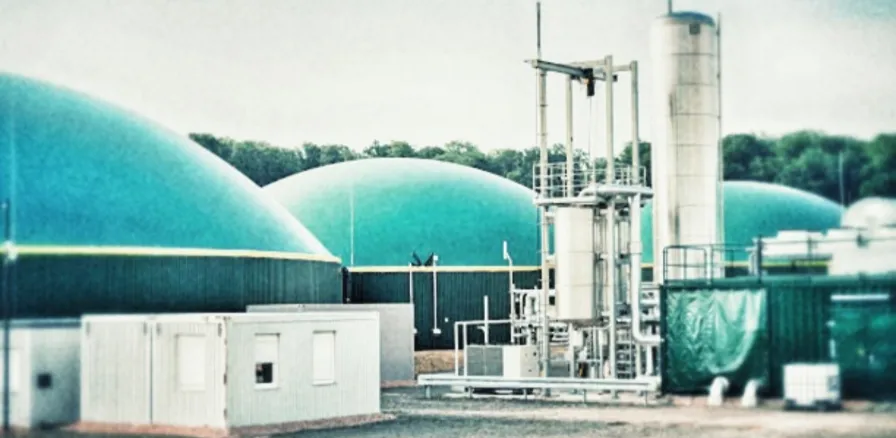
Biogas plant with large storage domes

Biogas to Methanol in India: Prospects and Barriers

Biogas to Methanol in India: A Pathway to a Sustainable and Self Reliant Future

India, with its ambitious goals for a “Methanol Economy” and a commitment to a net-zero future, is at a crossroads. The country’s growing energy demand, along with its large agricultural waste and organic residue, creates a unique chance to turn biogas into a clean, versatile fuel, methanol. However, this change comes with challenges. Although the future looks promising, we need to tackle important social, environmental, and financial obstacles to realize the full potential of this technology. This approach offers a way to transform abundant biogas resources into methanol, a versatile fuel and chemical feedstock, while reducing reliance on fossil fuels and lowering greenhouse gas emissions.

The Promising Prospect: Why Biogas to Methanol?

Methanol is a strategic energy product with multiple applications. It can be used as a clean-burning fuel for transportation (blended with petrol and diesel), a domestic cooking fuel, and a feedstock for various chemicals. Producing methanol from biogas, a product of anaerobic digestion of organic waste, offers a compelling solution to several of India’s pressing problems.  India generates large amounts of agricultural, municipal, and industrial waste, which can be converted to biogas. Using this biogas for methanol production supports waste valorization and a circular economy, turning waste into valuable products Gautam, P., , N., Upadhyay, S., & Dubey, S. (2020). 

First, it offers a way to achieve energy independence. India’s dependence on imported crude oil and natural gas creates a big economic burden. By producing methanol locally from plentiful biomass and organic waste, the country can greatly cut its import costs, which is a main goal of the NITI Aayog’s “Methanol Economy” program.

Second, it tackles the twin problems of waste management and air pollution. India produces millions of tons of agricultural waste and municipal solid waste each year. Much of this is poorly managed, resulting in landfill fires, methane emissions, and stubble burning. These issues lead to serious air pollution, especially in northern India.
Biogas-to-methanol can be economically viable, especially with policy support or carbon tax (Scomazzon, M., Barbera, E., & Bezzo, F. (2024).

Biogas-to-methanol plants can convert this waste into a valuable resource, creating a circular economy. The process also generates high-quality organic manure (digestate), which can replace chemical fertilizers, thereby improving soil health.

Third, it plays a major role in fighting climate change. Methane, the main part of biogas, is a powerful greenhouse gas that has a much greater effect than carbon dioxide over a short period. By capturing and turning biogas into methanol, we stop these emissions from getting into the atmosphere. The methanol we produce is a low-carbon fuel that can replace fossil fuels, which helps cut down greenhouse gas emissions even more.

The Roadblocks: Barriers to Implementation
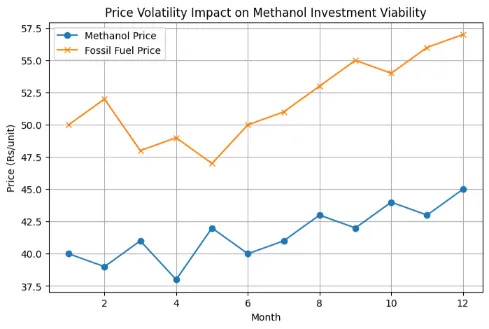
Methanol and fossil fuel price comparison

Despite these clear benefits, several hurdles stand in the way of widespread adoption of biogas-to-methanol technology in India. Policy, technology maturity, and supply chain issues remain challenges in India (Deng et al., 2024).

1. Financial and Economic Barriers

The high initial cost of setting up a biogas-to-methanol plant is probably the biggest challenge. A typical biogas plant already requires a significant investment for small operations. The extra equipment needed for gas upgrading and methanol production increases the costs even more. Lack of financing mechanisms and high upfront costs make it difficult for investors to fund large-scale biogas-to-methanol plants. This is a primary barrier identified by experts across sectors. Long payback periods and limited access to credit discourage private sector participation, especially for small and medium enterprises (Irfan et al., 2022). This makes it hard for project developers, especially smaller ones, to get financing.

Furthermore, the economic viability is heavily dependent on several factors that are often unpredictable. The cost and consistent supply of feedstock (agricultural waste, municipal solid waste, etc.) can be highly volatile. The price of methanol in the market, which is influenced by global fossil fuel prices, can also fluctuate, making it challenging to guarantee a stable return on investment.Targeted subsidies and feed-in tariffs for biogas and methanol production can make projects financially viable, especially for larger plants .

Investment support covering a high percentage of capital costs (up to 90–100%) is necessary for profitability in large-scale projects .

Innovative financing models and public-private partnerships can help mobilize capital and reduce risk  The current low import price of methanol in India also creates a disincentive for local production (Singh, Kalamdhad, & Singh, 2024).

Solutions and Prospects:

  • Policy Support and Subsidies: The government can help by providing capital subsidies and low-interest loans for project developers. This would lower the initial financial burden and draw in private investment.
  • Offtake Guarantees: Implementing a fixed-price offtake mechanism, similar to the SATAT (Sustainable Alternative Towards Affordable Transportation) initiative for compressed biogas (CBG), would provide financial security to project developers and de-risk investments.
  • Creating a Market for By-products: Establishing a robust market for the organic digestate (bio-fertilizer) would create a second revenue stream, improving the overall project economics.
  • Scalability and Decentralization: Comprehensive resource mapping and standardized procedures can reduce uncertainty and attract investment. Developing modular and scalable technologies can allow for smaller, decentralized plants that are more manageable and can cater to local waste streams, reducing transportation costs.Consistent policy frameworks and streamlined regulatory processes are needed to lower barriers and encourage private sector involvement.
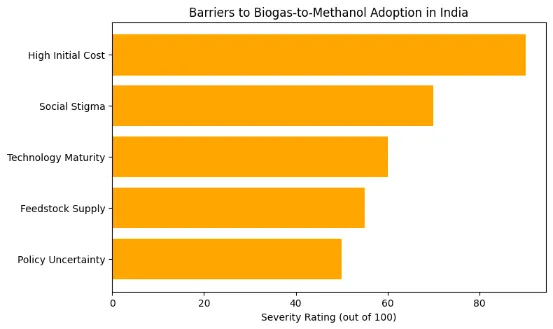
Barriers to biogas adoption in India

2. Social and Cultural Barriers

The social and cultural context in India presents its own set of challenges. One of the primary barriers is the perception and acceptance of using certain types of waste, particularly animal and human waste, as feedstock for energy production. While anaerobic digestion is a well-established and hygienic process, social stigmas and a lack of awareness can hinder community acceptance and feedstock collection.

Additionally, the transition from traditional cooking fuels like firewood and LPG to methanol-based stoves requires behavioral change. In rural areas, where biogas could be a game-changer, the free availability of firewood often makes the financial investment in a biogas system seem unappealing to households, even with subsidies. The lack of awareness about the environmental and health benefits of clean cooking fuels is also a major impediment.

Solutions and Prospects:

  • Public Awareness Campaigns: Educating the public about the scientific process of anaerobic digestion, the hygienic nature of the technology, and the benefits of the resulting bio-fertilizer is critical. Highlighting the health benefits of using clean cooking fuel is also vital.
  • Community Engagement: Involving local communities in the planning and operation of biogas-to-methanol plants can foster a sense of ownership and build trust. This can be facilitated through community-level cooperatives.
  • Incentivizing Clean Cooking: Government programs that offer subsidized methanol cookstoves and a reliable supply of methanol canisters can encourage households to switch from traditional fuels.

3. Environmental and Technical Barriers

While the overall environmental impact of biogas-to-methanol is positive, there are specific challenges that need to be addressed. The process itself can be energy-intensive, and the source of the energy used is a key factor in determining the overall carbon footprint. For example, if the plant relies on fossil fuels for its own power needs, the environmental benefits are diminished. The management of the carbon dioxide (CO₂) separated from the biogas, a significant by-product, is also a critical issue. If vented, it reduces the overall environmental advantage.

Technologically, while the core processes of biogas reforming and methanol synthesis are well-established, their integration on a commercial scale, especially with a focus on efficiency and cost-effectiveness, is an ongoing area of research and development. Issues like the presence of impurities in biogas (such as hydrogen sulfide) can poison catalysts and reduce the efficiency and lifespan of the plant.

Solutions and Prospects:
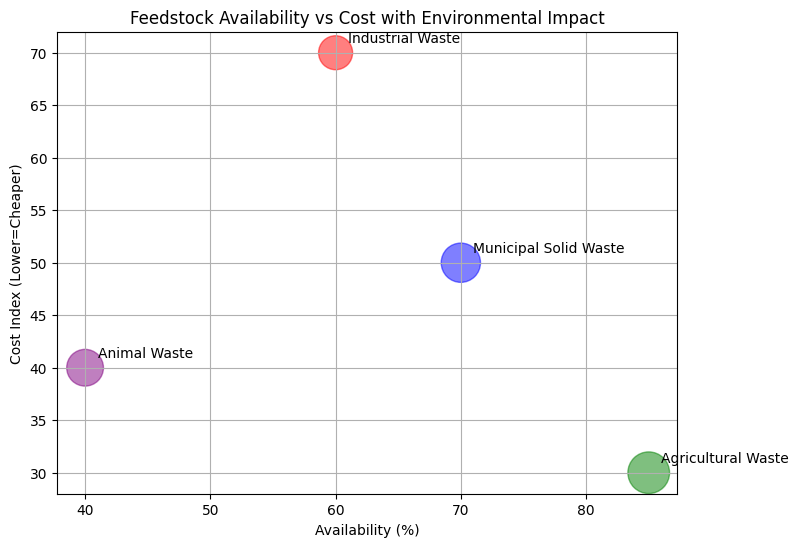
Graph comparing waste types and costs
  • Integration with Renewable Energy: Powering biogas-to-methanol plants with renewable energy sources like solar or wind power would maximize their environmental benefits, ensuring a truly green process.
  • Carbon Capture and Utilization (CCU): Integrating carbon capture technologies to utilize the separated CO₂ for methanol synthesis or other industrial applications (e.g., urea production) is a key solution. This not only enhances the methanol yield but also makes the process more carbon-neutral.
  • Indigenous Technology Development: Investing in research and development to create robust, efficient, and cost-effective indigenous technologies for biogas upgrading and methanol synthesis is crucial. The work being done by institutions like BHEL and IIT Delhi in this area shows promise.
  • Operational Training: Providing technical training to local personnel for the operation and maintenance of the plants will ensure their long-term viability and reduce reliance on external expertise.

Calculating the Benefits: Financial and Environmental Impact

The financial and environmental benefits of a successful biogas-to-methanol ecosystem in India are substantial and multifaceted.

Financial Benefits

  • Reduced Import Bill: NITI Aayog estimates that the “Methanol Economy” can reduce India’s oil import bill by approximately Rs 50,000 crore annually. A significant portion of this saving can be attributed to indigenous methanol production from biomass .
  • Job Creation: The establishment of biogas-to-methanol plants, along with the supporting supply chain for feedstock and distribution, can create millions of jobs, particularly in rural and semi-urban areas. NITI Aayog’s roadmap projects the creation of around 5 million jobs.
  • Rural Economic Development: The ability to sell agricultural residue as feedstock provides a new source of income for farmers, discouraging the practice of stubble burning and empowering rural economies.
  • Savings for Consumers: The use of methanol as a cooking fuel can result in significant savings for households, potentially lowering fuel costs by 20% compared to traditional LPG Ali, S., Yan, Q., Razzaq, A., Khan, I., & Irfan, M. (2022).
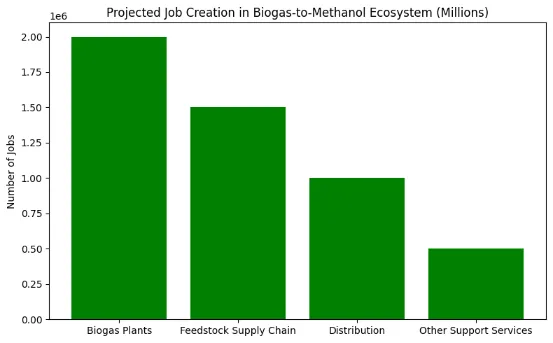
Bar chart of job creation projections

Environmental Benefits

Biogas-to-methanol development in India faces several environmental and technical barriers that limit its large-scale adoption. Addressing these challenges is essential for realizing the full potential of biogas as a sustainable methanol feedstock.
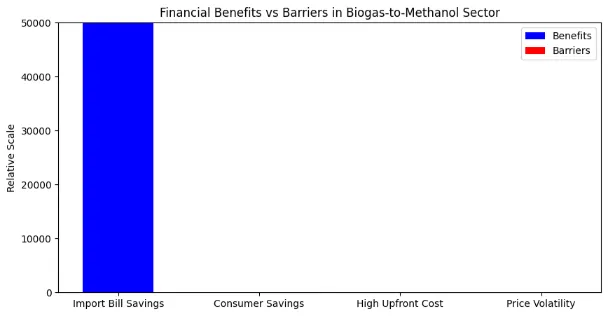
Bar graph comparing financial benefits and barriers
  • Greenhouse Gas Reduction: By preventing methane emissions from waste and replacing fossil fuels, biogas-to-methanol can be a major tool for climate change mitigation. The use of a 15% methanol blend (M15) in gasoline, for example, is estimated to reduce GHG emissions by up to 20%.
  • Improved Air Quality: The elimination of stubble burning and the use of clean-burning methanol fuel in vehicles and cookstoves will significantly reduce particulate matter, SOx, and NOx emissions, leading to a dramatic improvement in urban and rural air quality.
  • Waste Management: The widespread use of anaerobic digestion provides a sustainable and circular solution for managing organic waste, reducing the burden on landfills and improving sanitation.
  • Soil Health: The organic digestate produced as a by-product is a high-quality bio-fertilizer that can improve soil structure and fertility, reducing the need for chemical fertilizers, which have their own significant environmental footprint.
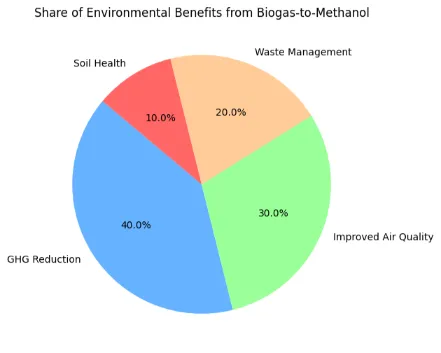
Pie chart of environmental benefits

Conclusion

The path from biogas to methanol in India looks promising. It offers a strong mix of economic, social, and environmental benefits. While there are challenges, such as high initial costs, social acceptance, and technology adoption, these challenges can be overcome. With focused policy support, public awareness efforts, and smart investment in local research and development, India can create a strong and decentralized biogas-to-methanol system. This will help the country reach its goals of energy independence and establishing a “Methanol Economy.” It will also foster a greener, cleaner, and more self-sufficient future for its people. The shift isn’t just about a new fuel; it involves creating a sustainable approach to waste management, energy security, and caring for the environment.

Citations

Bio-methanol as a renewable fuel from waste biomass: Current trends and future perspective. Fuel, 273, 117783. https://doi.org/10.1016/j.fuel.2020.117783.

Alternative sustainable routes to methanol production: Techno-economic and environmental assessment. Journal of Environmental Chemical Engineeringhttps://doi.org/10.1016/j.jece.2024.112674.

Biogas to chemicals: a review of the state-of-the-art conversion processes. Biomass Conversion and Biorefineryhttps://doi.org/10.1007/s13399-024-06343-1.

 Prioritizing and overcoming biomass energy barriers: Application of AHP and G-TOPSIS approaches. Technological Forecasting and Social Changehttps://doi.org/10.1016/j.techfore.2022.121524.

Unravelling barriers associated with dissemination of large-scale biogas plant with analytical hierarchical process and fuzzy analytical hierarchical process approach: Case study of India.. Bioresource technology, 131543 . https://doi.org/10.1016/j.biortech.2024.131543.

Modeling factors of biogas technology adoption: a roadmap towards environmental sustainability and green revolution. Environmental Science and Pollution Research International, 30, 11838 – 11860. https://doi.org/10.1007/s11356-022-22894-0.

Internal Link Card

Rice Straw to Methanol in India

Explore the potential of converting rice straw, a major agricultural waste, into methanol. This article examines the feasibility, emissions, and how this can boost India’s biofuel industry.

Read the Full Article

Biogas to Methanol in India: Prospects and Barriers Read More »
A diverse team of five financial investors reviews holographic data charts in front of a large, glowing, first-of-a-kind (FoAK) advanced biofuel plant and integrated renewable energy complex with solar and wind power at sunset.

Financing Opportunities for First-of-a-Kind (FoAK) Advanced Biofuel Plants: What Investors Need to Know

Powering a Greener Future: Financing Opportunities for First-of-a-Kind (FoAK) Advanced Biofuel Plants

The global push for decarbonization has put advanced biofuels in the spotlight. Unlike first-generation biofuels derived from food crops, First-of-a-Kind (FoAK) advanced biofuel plants utilize non-food sources like agricultural residues, forestry waste, and even municipal solid waste. These fuels are “drop-in” replacements for fossil fuels, meaning they can be used in existing infrastructure and engines, making them a critical component in the transition to a low-carbon economy, especially for hard-to-abate sectors like aviation, shipping, and heavy-duty transport.

What are the possible FoAK Advance biofuels for Financial opportunities

Investing in First-of-a-Kind (FoAK) advanced biofuel plants presents a compelling financial opportunity due to the diversity of technologies and the high demand for sustainable fuels. A significant number of these projects are focused on a variety of feedstocks, going beyond traditional agricultural residues and forestry waste. Key FoAK advanced biofuel plants are emerging that utilize innovative sources like waste from dairy products, which can be converted into bioethanol or bio-oil using fermentation or thermochemical processes. Fast-growing, non-food crops such as genetically optimized poplar trees are another promising feedstock, as their high cellulose and low lignin content make them ideal for conversion into cellulosic ethanol. Other sources include the biodegradable fraction of municipal and industrial waste, which can be processed through technologies like gasification or fast pyrolysis to produce liquid fuels, and even animal fats and used cooking oils, which are hydrotreated to create renewable diesel and sustainable aviation fuel (SAF). These diverse and often localized feedstocks provide investors with a wide range of opportunities to tap into a rapidly growing market while simultaneously addressing waste management and resource efficiency.

Regional and Economical Viability

The regional and economic viability of First-of-a-Kind (FoAK) advanced biofuel plants is highly dependent on the local availability of diverse and low-cost feedstocks. Economically, these projects are most attractive when they can co-locate with a source of waste or a dedicated, fast-growing energy crop. For instance, plants utilizing dairy waste are most viable in regions with a high concentration of dairy farms, as this minimizes transportation costs and provides a reliable, year-round feedstock stream that also offers a solution to an existing waste management problem. Similarly, facilities converting poplar trees or other dedicated energy crops are particularly suited to regions with available marginal land and favorable growing conditions. The economic model is further enhanced by policies that incentivize waste-to-energy projects and by the valorization of co-products, such as bio-fertilizer or renewable electricity generated from the plant’s byproducts, which can be sold back to the grid or used to power the facility, thereby increasing the overall profitability and regional economic benefits.

1- Cellulosic Ethanol

Technique used in manufacturing:

The primary manufacturing techniques are biochemical and thermochemical conversion.

  • Biochemical Process: This involves a pretreatment phase to break down the lignocellulosic material. This is followed by hydrolysis, which uses enzymes or dilute acid to break down cellulose into simple sugars. These sugars are then fermented by microbes into ethanol.
  • Thermochemical Process: This method uses heat and chemicals to convert biomass into syngas, a mixture of hydrogen and carbon monoxide. This syngas is then catalytically converted into ethanol and other liquid products.

Feedstock:

Cellulosic ethanol is produced from lignocellulosic biomass, which is non-food plant material. This includes agricultural residues (like corn stover and wheat straw), herbaceous biomass (like switchgrass), woody biomass (like poplar and pine trees), and municipal solid waste.

Funding Opportunities:

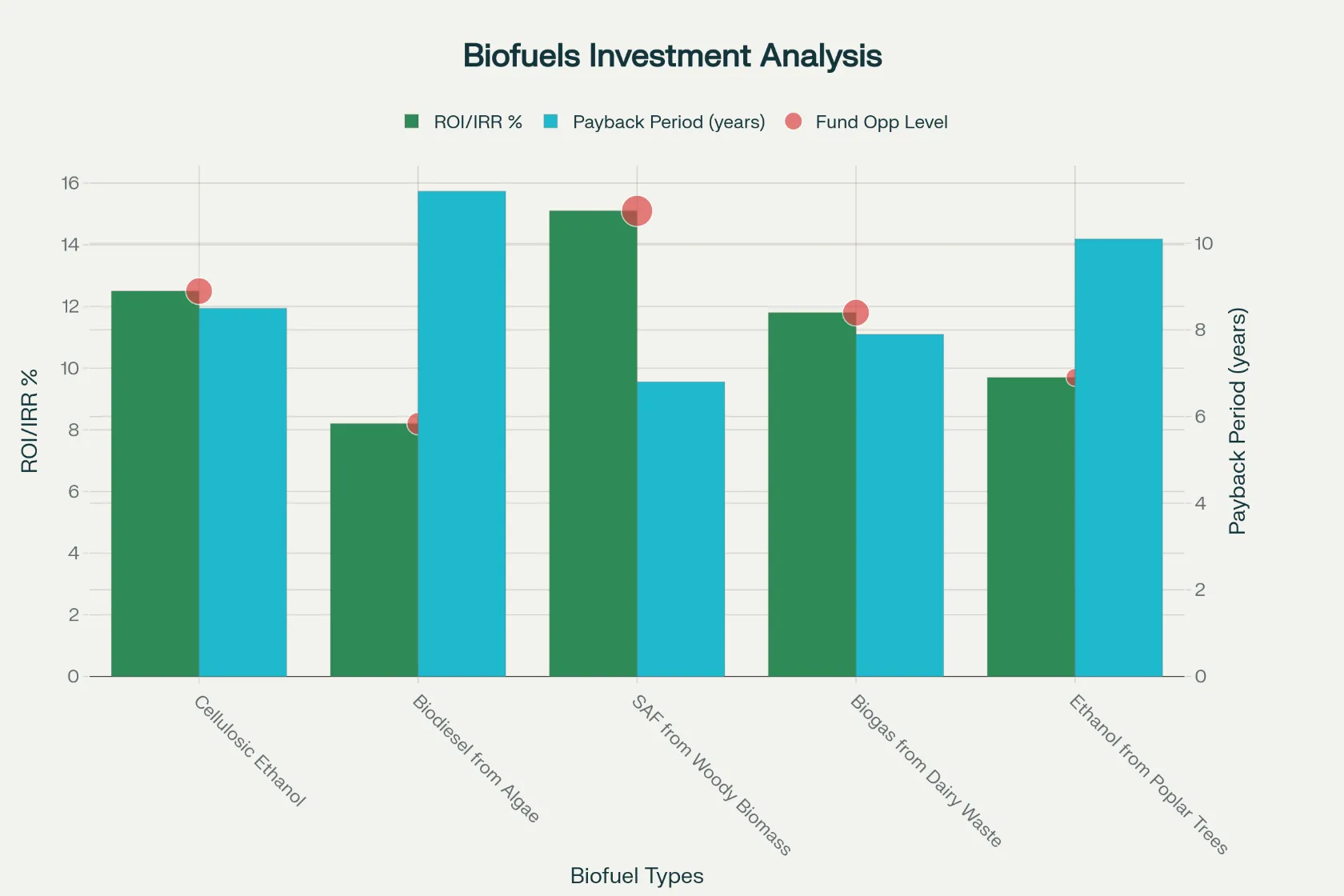
Global investment in cellulosic ethanol has declined in recent years, with a 35% drop in new biofuels power capacity investment in 2015 compared to 2014, reaching $3.1 billion. This decline is largely due to high production costs and the financial instability of pioneering companies, despite successful pilot and demonstration plants in the US, EU, and elsewhere.  Funding is often directed toward projects that demonstrate cost-effective, scalable technologies or offer new insights into commercial viability (Sharma et al., 2022). Cellulosic ethanol remains a promising but under-commercialized biofuel, with future funding opportunities closely tied to technological breakthroughs, integrated biorefinery models, and supportive policy frameworks. The next wave of investment is expected to focus on overcoming persistent cost and scalability barriers while maximizing the value of lignocellulosic biomass.

Regional viability:

This biofuel is most viable in regions with abundant agricultural and forestry resources. The U.S. Midwest, with its vast corn production, is a prime location for utilizing corn stover. The Pacific Northwest and Southeast, with their large forestry industries, are ideal for using woody biomass.

ROI (Return on Investment):

The ROI for cellulosic ethanol plants can be challenging due to high initial capital costs, but it is projected to improve as technology advances and economies of scale are achieved. Recent techno-economic analyses show that cellulosic ethanol production costs typically range from $0.81 to $1.44 per liter (about $3.07–$5.45 per gallon), depending on the process and feedstock used. A meta-analysis of studies found the minimum fuel selling price (MFSP) averages $2.65/gallon, with a wide range from $0.90 to $6.00/gallon, reflecting significant variability in technology, scale, and assumptions. At a selling price of $1.50/L, some models achieve a positive net present value (NPV), but profitability is highly sensitive to process yields and capital costs (Olughu et al., 2023).

2- Biodiesel from Algae

Technique used in manufacturing:

The process involves three main stages:

  1. Cultivation: Microalgae are grown in either open ponds or closed photobioreactors, which provide the necessary sunlight, water, and carbon dioxide.
  2. Harvesting and Oil Extraction: The algae biomass is harvested from the water, and the natural oils (lipids) are extracted. Common methods include oil presses or solvent extraction.
  3. Transesterification: The extracted algal oil is reacted with an alcohol (like methanol) and a catalyst to produce biodiesel.

Feedstock:

Microalgae and macroalgae. A key advantage is that algae can be grown on non-arable land and in a variety of water sources, including wastewater and saline water, which does not compete with food crops.

Funding Opportunities:

Funding opportunities are emerging across several dimensions to address these hurdles. Public funding plays a critical role, with national and regional programs in the US, EU, China, and Brazil supporting research, pilot projects, and demonstration plants, while policies such as renewable fuel standards, tax credits, and capital cost grants enhance economic feasibility and attract private investors. Research and innovation grants prioritize solutions for key bottlenecks, including improving algal strain productivity, lowering cultivation and harvesting costs, and advancing efficient lipid extraction and conversion methods, with additional emphasis on integrating algae cultivation with wastewater treatment and CO₂ capture to reduce costs and deliver environmental benefits. Furthermore, funding is increasingly directed toward biorefinery models that couple biodiesel production with high-value co-products such as biofertilizers, bioplastics, and nutraceuticals, making projects more attractive to both public and private stakeholders by enhancing profitability and sustainability .

Regional viability:

Algae-based biofuel production is most viable in regions with a high number of daylight hours per year, such as tropical or subtropical climates. Access to low-cost water sources (including wastewater) and abundant carbon dioxide (e.g., from industrial emissions) is also crucial for commercial viability.

ROI (Return on Investment):

 Updated techno-economic analyses estimate current algal biodiesel production costs at $0.42–$0.97 per liter ($1.59–$3.67 per gallon), which is still higher than fossil diesel but shows improvement over earlier estimates.

ROI Examples: A recent techno-economic study of a macroalgae-based biodiesel plant reported a return on investment (ROI) of 25.39% and an internal rate of return (IRR) of 31.13%, with a payback period of 3.94 years—though these figures are highly dependent on scale, technology, and local conditions (Ravichandran et al., 2023).

3- Sustainable Aviation Fuel (SAF) from Woody Biomass

Technique used in manufacturing:

One prominent technique is catalytic fast pyrolysis (CFP) followed by hydrotreating. In this process, woody biomass is heated rapidly in the absence of oxygen to produce bio-oil. This stabilized bio-oil is then hydrotreated to remove impurities and upgraded into a drop-in ready sustainable aviation fuel.

Feedstock:

Woody biomass, including forest residues (like treetops, branches, and sawdust), as well as dedicated woody energy crops.

Funding Opportunities:

The current funding landscape is shaped by federal, state, and local programs, with the U.S. Inflation Reduction Act (2022) introducing new federal tax credits that provide a foundational layer of support for SAF producers. However, state-level incentives remain necessary to achieve cost competitiveness; for instance, pilot-scale gasification Fischer-Tropsch (GFT) SAF production in Virginia would require approximately $3.61 per gallon in state incentives, while pyrolysis-based SAF would need around $0.75 per gallon. A mix of funding mechanisms—such as tax credits, loan forgiveness, and direct grants plays a critical role in shaping project economics and ensuring benefits for stakeholders, from feedstock suppliers to conversion facilities. Strategic funding priorities include advancing technology development to improve conversion efficiency, scale up production, and reduce costs across woody biomass-to-SAF pathways, alongside investments in supply chain logistics, facility siting, and blending infrastructure to enable regional deployment. At the same time, policymakers face the challenge of balancing economic feasibility with environmental benefits, as lower-cost pathways do not always deliver the highest greenhouse gas reductions, underscoring the need for carefully designed incentives that maximize both sustainability and market viability (Davis et al., 2024).

Regional viability:

Production of woody biomass SAF is most viable in regions with large, accessible, and sustainably managed forests. This includes areas like the Pacific Northwest, the Southeastern U.S., and parts of Canada and Northern Europe.

ROI (Return on Investment):

Recent techno-economic models estimate SAF from woody biomass costs between $1.92–$2.25 per liter ($7.27–$8.52 per gallon) using the Ethanol-to-Jet (ETJ) pathway, depending on production scale and demand . Fischer-Tropsch (FT) pathways show production costs of $2.31–$2.81 per gallon gasoline equivalent . Integration with existing bioethanol plants or use of economic incentives can reduce costs to as low as $0.40–$0.70 per liter ($1.51–$2.65 per gallon) (Guimarães et al., 2023) Hong et al. (2025).

Cost Drivers: Capital investment accounts for about 77% of total unit cost, with operating costs at 22% . Feedstock price and renewable fuel incentives are the most sensitive variables affecting ROI .

ROI Potential: Standalone woody biomass SAF projects struggle to achieve positive ROI at current market prices without policy support. However, integration with mature biofuel routes and carbon credit incentives can make projects profitable, with some models showing high probabilities (>96%) of profitability at current SAF prices in favorable policy environments .

4- Biogas from Dairy Waste

Technique used in manufacturing:

Anaerobic Digestion is the primary process. This involves placing dairy waste (manure, wastewater, whey) into a sealed, oxygen-free tank called a digester. Microbes naturally break down the organic material, producing a biogas rich in methane, which can be captured and used as fuel.

Feedstock:

Dairy waste, including manure, wastewater, and dairy processing by-products like whey.

Funding Opportunities:

Many countries and regions provide direct subsidies, grants, and cost-share programs to support the construction and operation of anaerobic digesters on dairy farms, helping reduce methane emissions and promote renewable energy. In California, governmental incentive programs partially fund eligible dairy digester projects, while in Poland and other EU countries, subsidies often cover 40–60% of the investment cost for biogas plants, a level of support necessary to ensure satisfactory economic efficiency. In addition to grants and subsidies, soft loans and low-interest financing from government and private sources are available, further encouraging rural and community-level biogas development and improving the overall financial viability of such projects Kusz et al. (2024).

Regional viability:

This biofuel is highly viable in regions with a dense population of dairy farms, such as the U.S. Midwest, California’s Central Valley, and parts of Europe.

ROI (Return on Investment):

Most studies indicate payback periods for anaerobic digestion projects ranging from 4 to 13 years, depending on plant size, technology, co-digestion practices, and the availability of subsidies. For instance, a 400-cow farm in Iran achieved payback in under 4 years, generating annual net incomes of $6,400–$38,000 depending on the scenario, while a 500 kW biogas plant in Poland using dairy manure and straw reported a payback of less than 6 years and €332,000/year more profit compared to conventional dairy farming. In contrast, small-scale plants in Ireland demonstrated longer payback periods of 8–13 years, though capital grants improved their economic feasibility. Internal Rates of Return (IRR) generally range between 9% and 15% for well-designed, subsidized, or co-digestion projects, as seen in a Malaysian on-farm system reporting a 13% IRR with a 7-year payback (Bywater & Kusch-Brandt, 2022). Net Present Value (NPV) also tends to be positive for medium-to-large farms or when co-digestion strategies, such as integrating food waste or straw, are adopted further enhanced by tipping fees that significantly improve overall returns

5- Ethanol from Poplar Trees

Technique used in manufacturing:

The process is similar to cellulosic ethanol from other woody biomass. It involves a pretreatment phase (often with steam or chemicals) to break down the lignin and hemicellulose. This is followed by enzymatic hydrolysis to convert the cellulose into fermentable sugars, which are then fermented into ethanol.

Feedstock:

Hybrid poplar trees, which are cultivated as a fast-growing, short-rotation energy crop.

Funding Opportunities:

Government and research grants for poplar-based ethanol are available through national and regional programs targeting advanced biofuels, such as the USDA NIFA in the US and the EU Renewable Energy Directive II (REDII) in Europe, which support research, demonstration, and pilot projects, particularly those utilizing marginal lands or integrating ecosystem services. Economic analyses and stakeholder assessments emphasize the importance of direct subsidies, capital grants, and policy incentives to ensure competitiveness with fossil fuels and other biomass sources, since purpose-grown poplar often faces higher feedstock costs that make it financially unfeasible without such support. In addition, poplar plantations can benefit from ecosystem service payments through programs that reward land restoration, flood mitigation, or wastewater management, creating diversified revenue streams for growers and enhancing the overall economic viability of poplar-based ethanol production.

Regional viability:

Poplar-based biofuel is most viable in temperate regions with suitable land for short-rotation woody crop plantations, such as the Pacific Northwest and parts of the Midwest in the U.S., as well as certain regions of Canada and Europe.

ROI (Return on Investment):

Production Costs: Recent techno-economic analyses estimate the minimum ethanol selling price (MESP) for poplar ethanol at $1,095/tonne, or roughly $2.65/gallon—comparable to the average for cellulosic ethanol but above current market prices for gasoline and first-generation biofuels .

Profitability: ROI is highly sensitive to feedstock price, plant scale, and technology. Large-scale plants with optimized processes and policy support can achieve positive net present value (NPV) and internal rates of return (IRR), but unsubsidized projects often struggle to be profitable (Pei et al., 2024).

Key Metrics: Payback periods and IRR are rarely reported directly, but positive NPV and profitability are possible in integrated biorefinery models or with strong policy incentives.


ROI, Payback Period, and Funding Opportunities for FoAK Advanced Biofuels

Conclusion

The advanced biofuels and techniques discussed in this report represent a critical step toward a more sustainable energy future. The examples of cellulosic ethanol, algae biodiesel, sustainable aviation fuel from woody biomass, and biofuels from dairy waste and poplar trees highlight the diversity of feedstocks and conversion technologies available. It’s important to note that these are just a few examples; many other promising techniques and feedstocks are being developed and commercialized around the world. As technology continues to improve and policy frameworks evolve, advanced biofuels will play an increasingly vital role in decarbonizing the transportation and industrial sectors.

Citations

Sharma, J., Kumar, V., Prasad, R., & Gaur, N. (2022). Engineering of Saccharomyces cerevisiae as a consolidated bioprocessing host to produce cellulosic ethanol: Recent advancements and current challenges.. Biotechnology advances, 107925 . https://doi.org/10.1016/j.biotechadv.2022.107925.

Olughu, O., Tabil, L., Dumonceaux, T., Mupondwa, E., Cree, D., & Li, X. (2023). Technoeconomic analysis of a fungal pretreatment-based cellulosic ethanol production. Results in Engineeringhttps://doi.org/10.1016/j.rineng.2023.101259.

Ravichandran, P., Rajendran, N., Al-Ghanim, K., Govindarajan, M., & Gurunathan, B. (2023). Investigations on evaluation of marine macroalgae Dictyota bartayresiana oil for industrial scale production of biodiesel through technoeconomic analysis.. Bioresource technology, 128769 . https://doi.org/10.1016/j.biortech.2023.128769.

Davis, C., Sreekumar, S., Altman, R., Clarens, A., Lambert, J., & Colosi, L. (2024). Geospatially Explicit Technoeconomic Assessment of Sustainable Aviation Fuel Production: A Regional Case Study in Virginia. Fuel Communicationshttps://doi.org/10.1016/j.jfueco.2024.100114.

Guimarães, H., Bressanin, J., Motta, I., Chagas, M., Klein, B., Bonomi, A., Filho, M., & Watanabe, M. (2023). Decentralization of sustainable aviation fuel production in Brazil through Biomass-to-Liquids routes: A techno-economic and environmental evaluation. Energy Conversion and Managementhttps://doi.org/10.1016/j.enconman.2022.116547.

Hong, J., Chen, B., Wang, T., & Zhao, X. (2025). A promising technical route for converting lignocellulose to bio-jet fuels based on bioconversion of biomass and coupling of aqueous ethanol: A techno-economic assessment. Fuelhttps://doi.org/10.1016/j.fuel.2024.133670.

Kusz, D., Kusz, B., Wicki, L., Nowakowski, T., Kata, R., Brejta, W., Kasprzyk, A., & Barć, M. (2024). The Economic Efficiencies of Investment in Biogas Plants—A Case Study of a Biogas Plant Using Waste from a Dairy Farm in Poland. Energieshttps://doi.org/10.3390/en17153760.

Bywater, A., & Kusch-Brandt, S. (2022). Exploring Farm Anaerobic Digester Economic Viability in a Time of Policy Change in the UK. Processeshttps://doi.org/10.3390/pr10020212.

Pei, X., Fan, M., Zhang, H., & Xie, J. (2024). Assessment for industrial production of poplar ethanol after analysis of influencing factors and predicted yield. Cellulosehttps://doi.org/10.1007/s10570-024-06236-6

Exploring Regional Biomass Supply Hubs: Business Potential and Funding Mechanisms

Financing Opportunities for First-of-a-Kind (FoAK) Advanced Biofuel Plants: What Investors Need to Know Read More »

Three-panel composite image documenting flood damage: top panel shows a rural village with damaged concrete structures, a circular well, and debris-covered ground; bottom left shows an aerial view of an entire town submerged in floodwater with only rooftops visible; bottom right shows people sitting on collapsed wooden structures surrounded by murky floodwater. White text overlay reads 'A story of damages of flood

Revealing Damages Of Flood and Water Restoration in Pakistan

Damages Of Flood and Water Restoration in Pakistan

Pakistan is a country facing terrible damages of flood and water restoration problems since it came into being. There are many resources that can be used for estimation & evaluation of damages. In this Blog/article author shared their own story for revealing the truth and facts about the damages of floods and how they related to the water restoration problem. According to Author, It was 2011 & 2012 he became Part of the project with a Non government organization Named WWF-PAK(INGO). During the project Author visited physically the entire damaged areas of flood along with Indus river. These areas consist in three different provinces of Pakistan Namely Sindh, Punjab and Kpk(khyber Pakhtunkhawa).

Project Description

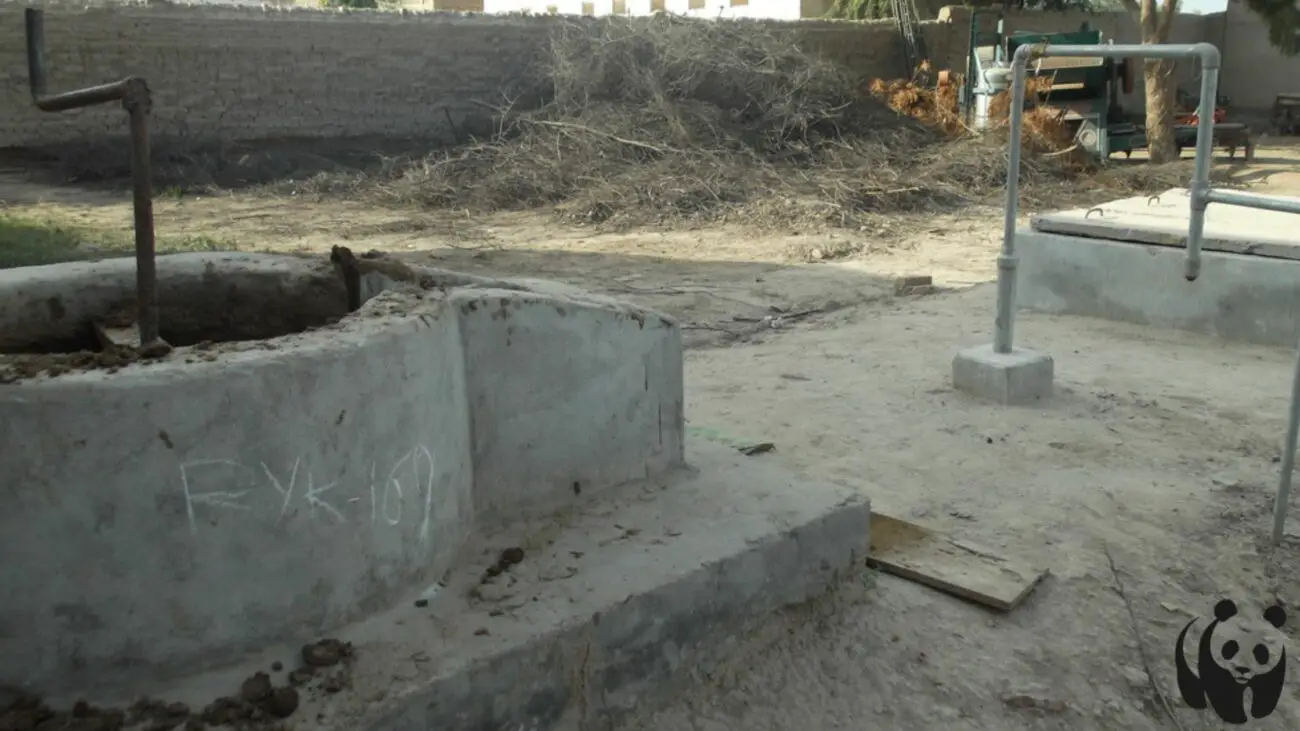
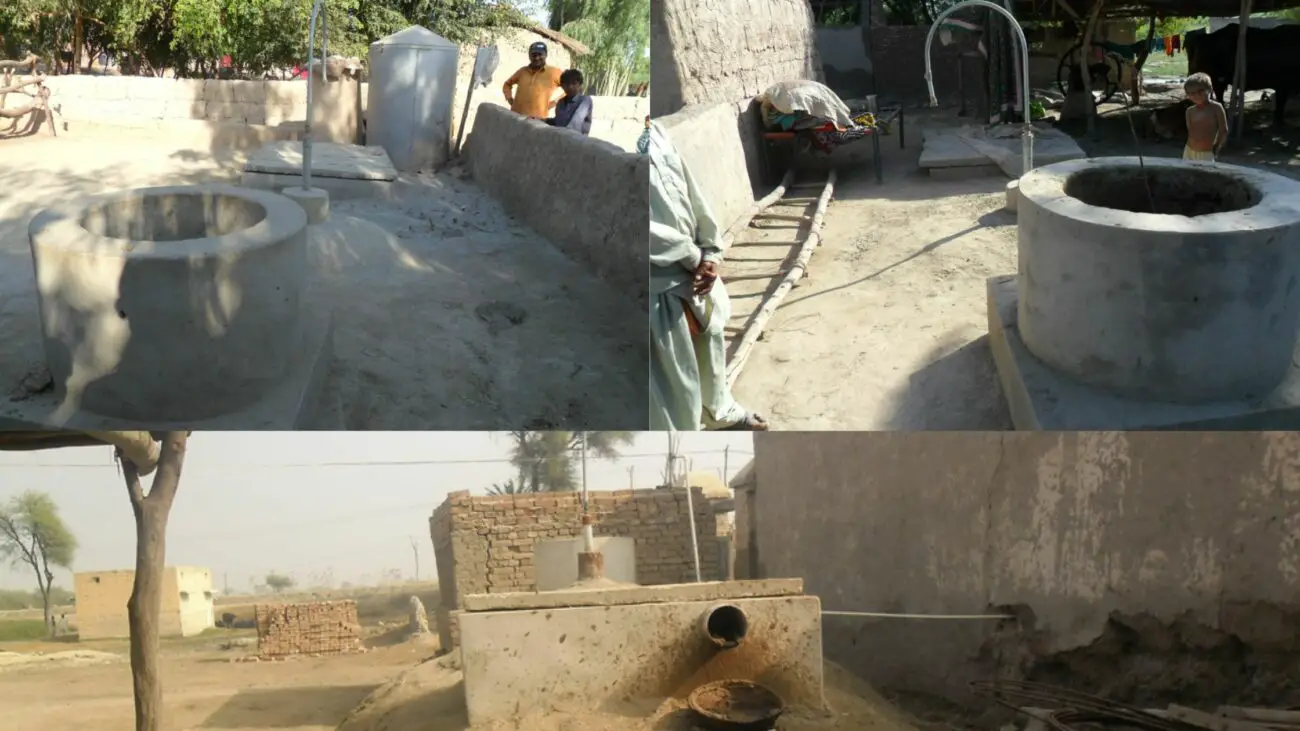
The project was entirely based on Environment cleanness and awareness. In this a Biogas Plant of 6 ft3 was awarded to the Flood affectees who live along the Bank of Indus river. This project having many steps like selection of beneficiaries, evaluation of biomass produced or animal manuer, Construction of biogas plants, commissioning of Biogas plants, filling of Evaluation form based on many exponents & parameters. The project was funded by Dutch government in the flood relief and rehabilitation operations in Pakistan. The mainly project was handed and implemented by the WWF-PAK(INGO) and with a few local small enterprises and NGOS. Author performed duties of Monitoring and evaluation officer for two years traveling along three provinces. In this journey visited 375 Biogas plants physically in remote areas along with Indus river.

Project description
Project description

Biogas Plants

In this section, we will discuss how biogas can help mitigate some of these damages and protect people from future floods. Organic wastes like sewage and food wastes break down into biogas, a renewable energy source. Anaerobic digestion is the process by which bacteria convert organic molecules into methane and carbon dioxide gas. Methane (CH4), carbon dioxide (CO2), and water vapour make up the majority of biogas (H2O). Only minute amounts of other air pollutants, such as nitrous oxide (N2O) or sulfur oxides, are produced by this process (SOx). The Biogas production will reduce the wood used for cooking and heating purposes. The more the trees the minimal the damage of the flood.

Biogas Plants IN PAKISTAN
Biogas Plants

Damages of flood & Water Restoration in Pakistan

Floods are a type of natural calamity that can seriously harm people, property, and infrastructure. Floods can cause significant damage to buildings, infrastructure, and human lives. Numerous factors, such as prolonged periods of heavy rain, snowmelt, collapsed dams or levees, or tsunamis, can result in flooding. The Indus River is one of the major rivers in Pakistan that frequently subjected to flooding. Over 30 million people have been affected by 33 riverine floods that have slammed the Indus since 2000, killed 5000 people, and damaged the local economy by more than $20 billion. This just a sneak peek of the damages of floods in Pakistan.

 AERIAL VIEW OF Damages of flood
Damages of flood & water restoration

Water Restoration

For many decades while the country faced constant flood damage there is still no water restoration system in Pakistan after flood passes. Most of flood water flows directly to the seas. There are very least number of dams in Pakistan that can restore the water. There are many reasons behind the most is a political dilemma in those areas which ruin the entire Indus basin in most areas of Pakistan. Both damages from floods & water restoration problems are interlinked. To understand the whole story Author shares his experience in Revelations.

Revealings and findings Across Provinces

As working across many villages, towns and cities in 3 provinces of Pakistan Experienced many strange and new things. The people who live along the bank of Indus river are mostly live life in Austerity. They have meager income sources. Mostly depends on Agriculture and livestock. These people learnt from past that they are living on the edge of the damages of flood & water restoration. Some villages are only a few feet away from the river bank or River basin. The people of these areas believe that no one can ever help or rehabilitate if they leave these dangerous flood zones. Let’s overview the entire findings of 3 provinces.

Khyber Pakhtunkhwa (KPK)

In these areas, people are mostly attached to the sugar cane Business, growing and cutting trees. They hardly understand the dangers or demerits of the damages of flood and water restoration. Even they don’t really want to understand. They lose belief and trust in Government or Non-government officials just because of the corrupt and mafia-based relief system. This is a major issue but there is one good thing in these areas. The people grow trees in their houses and agricultural lands because there is a huge market for match sticks. Many research papers showed that the KPK was facing less damage of floods as compared to the Sindh and Punjab provinces. The main reason is the number of trees and the interest of people to grow trees for their economic-health resilience. Meanwhile, these people hosted their guests with full zeal and zest.

Punjab

Punjab is the biggest populated province of Pakistan. The Indus basin is touching north to south of Punjab. These including areas Kotaddu,Muzafargarh, Bakhar and Rajanpur and few other areas. The people here in Punjab although more educated than other provinces but these people pretended to be stay affected by flood damages. These areas are known as kacha area. These areas are often neglected by govt. officials and politican due to the criminal expediency and futuristic damages of the flood. Both these factors making people haunted that we will never get a safe and peaceful place that would be the far away from damages of flood. So in short all these factors made them crippled for their struggle of betterment and good livelihood.

Sindh

Sindh is the land of saint and loving people. The floods have had a significant negative impact on Sindh province. As Author witnessed the worst effected areas Sukkur, Ghotki, Jacobabad ,Shikarpur, dadu, Sajwaal and kharipur nathanshah. These areas always hit hard whwether its the flood of 2010 or the flood of 2022. Few common things among these people are they lead very hard life. As they influenced by Austerity, poverty and facing gangs of looters backed by local feudals and Tribes of different castes. The people live in houses of mud and bushes due to the fear of damages of flood and water restoration issues. There was not even a single dispensary in these areas for the people of 1500 to 2000.

Author wants to highlight an Event” Once I was sitting in the remote areas of District sukkur, an old person(patient) comes to a private clinic i was sitting there hosted as a guest, the person treated as doctor was not a doctor neither having medical education. He took the blood of an old patient in a small plastic bag for laboratory analysis. I asked it was wrong. The man replied” dear, this old person not having enough money to go to city’s hospital neither anyone can afford his medical treatment, sooner or later he will die in the same pain, I was just trying to give him a Placebo effect and collect his blood in plastic bag”.This event was like a picture of 12 years old but still reflects the same kind of images and videos in 2022 flood. These loving and innocent peoples are Submerged in the fear of feudalism and racism conflicts. Most of these people were staying nearby the Indus Basin even a few steps.

Conclusion/Recommendations

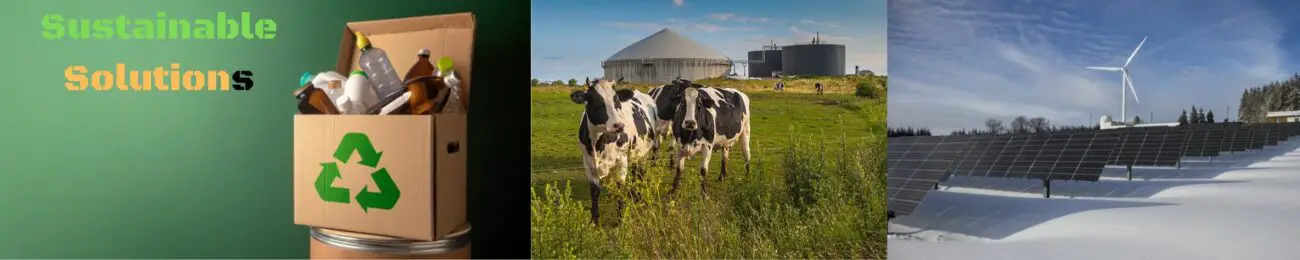
ALL sustainable solutions
Conclusions to solutions

After working for almost Two years on this project few recommendations or suggestions. As mainly the project was based on the commissioning and evaluations of biogas units. Firstly, people in these areas were fully satisfied and happy with the initiative of WWF-PAK(INGO). They took so many benefits like Methane gas for cooking, waste of these plants used as natural Fertilizers for agriculture in these areas. Also these biogas plants were conserving the environment and making it safe and healthy. As of 2022 the flood damage more than half or complete in these same areas as discussed above. It’s the best time for relief and giving people awareness about the merits of biogas plants. The government and non-government organizations should come forward to make it possible for flood victims. This step leads to the mitigation of both environment and damages of floods.

As the political and racist dilemma of these areas, it is hard to make dam or water restoration mechanisms nearby. With the advancement of other renewable energy sources like solar energy, wind energy projects on small scale can benefit for present and futuristic Socio-economic benefits. These peoples are hard worker and culture lover. The best way is to give them proper respect and rehabilitate in a safe place far away from the damage of flood’s zones. Usage of renewables helps to cost less and gives more benefits to environment, Flood victims, and Our dear country.

For more related info & Blogs

Business energy rates
green energy plants
Bioenergy

Revealing Damages Of Flood and Water Restoration in Pakistan Read More »