sustainable fuels

BIOMETHANOL IN MARINE INDUSTRY

Policy Results for Scaling Biomethanol in China Marine Industry

Policy Results for Scaling Biomethanol in China’s Marine Industry

A Deep Dive into Impact, Opportunities, and Global Implications

China’s marine industry is a giant in global shipping and maritime activities. It faces increasing pressure to reduce carbon emissions to meet national and international climate goals. One promising fuel that is gaining popularity is biomethanol, a renewable liquid fuel made from biomass. The Chinese government recognizes its potential and has put in place several policies to promote the production, adoption, and scaling of biomethanol in its large marine sector. This blog post looks at the significant outcomes of these policies. It explores the positive aspects, the growing profitability landscape, innovative marketing and business models, environmental effects, and other important opportunities. Additionally, it discusses how other countries can learn from these methods to create similar sustainable changes in their own marine industries.

The Policy Landscape: Catalyzing Biomethanol Adoption

China’s approach to promoting biomethanol in the marine industry has been multifaceted, encompassing several key policy instruments. These include:

  • National Energy Transition Targets: Experts recommend adopting a dynamic, phased policy approach to support methanol-based transportation. Initially, regions should focus on coal-to-methanol and biomethanol vehicles, leveraging locally available resources. As technologies mature and carbon neutrality targets draw closer, the transition to green methanol solutions such as CO₂-to-methanol should be prioritized. In parallel, strong emphasis should be placed on infrastructure development, including transmission and distribution systems, advancing methanol production processes, and preparing for the integration of next-generation methanol technologies for maritime industry related businesses. learn more
  • Research and Development Funding: Significant government investment has been channeled into research and development initiatives focused on advanced biomethanol production technologies, engine modifications for methanol compatibility, and safety protocols for its use in marine vessels. Investments have facilitated the transition from fossil fuels to methanol, which is projected to capture 70% of the low-carbon fuel market by 2050 (Panchuk et al., 2024). This funding has been crucial in overcoming technological hurdles and improving the viability of biomethanol as a marine fuel. Engine modifications for methanol compatibility have shown promising results, with high efficiency and low emissions in combustion engines (Santasalo-Aarnio et al., 2020).
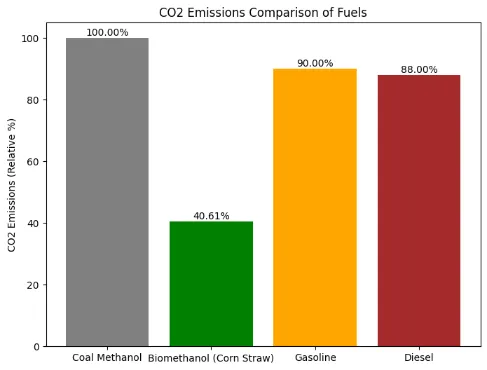
  • Pilot Programs and Demonstrations: Strategic pilot projects have started in important port cities and shipping routes to show the practicality and benefits of biomethanol-powered vessels. Biomethanol can cut CO₂ emissions by over 54% per kilometer in marine applications compared to diesel, and by nearly 60% compared to coal-to-methanol. These real-world trials offer useful data on performance, emissions reduction, and infrastructure needs, which helps build confidence among industry stakeholders. While biomethanol production is more expensive than coal-based methanol, it can reduce operating costs in the maritime sector by nearly 15% per kilometer compared to diesel Wang, S,et.al. (2024). 
  • Incentive Schemes and Subsidies: Financial incentives, such as tax breaks, subsidies for biomethanol production, and preferential treatment for vessels utilizing cleaner fuels, have played a vital role in making biomethanol economically competitive with traditional fossil fuels. Federal programs provide significant financial support for biofuels, including biomethanol, which can cover a substantial portion of production costs. These measures help to offset the initial costs associated with adopting new technologies and fuels.
  • Regulatory Frameworks and Standards: The development of clear regulatory frameworks and safety standards specifically for the use of biomethanol in marine applications provides the necessary certainty for ship owners, operators, and fuel suppliers. Methanol’s low flashpoint necessitates specific safety measures, which are being integrated into existing regulations to mitigate risks associated with its use. These standards cover aspects like fuel quality, storage, handling, and engine modifications.
  • International Collaboration: The International Maritime Organization (IMO) is actively working on regulations to reduce greenhouse gas emissions, which includes the promotion of methanol as a cleaner fuel option (Bilousov et al., 2024). Active participation in international forums and collaborations on maritime decarbonization allows China to learn from global best practices and contribute its own experiences in the adoption of biomethanol.

Maritime Organization (IMO)

Positive Policy Outcomes: A Flourishing Biomethanol Ecosystem

The concerted policy push has yielded significant positive results in scaling biomethanol within China’s marine industry:

  • Increased Biomethanol Production Capacity: Government support and incentives have encouraged investment in biomethanol production facilities. These facilities use various sustainable feedstocks, including agricultural waste, forestry residues, and captured carbon dioxide. This growth in domestic production capacity improves fuel security and lowers dependence on imported fossil fuels.
  • Growing Fleet of Biomethanol-Capable Vessels: The implementation of pilot programs and the availability of financial incentives have encouraged ship owners to invest in newbuilds or retrofit existing vessels to operate on biomethanol.Biomethanol significantly reduces emissions of sulfur oxides (SOx), nitrogen oxides (NOx), particulate matter (PM), carbon dioxide (CO2), and carbon monoxide (CO) compared to conventional marine fuels. For instance, a case study on a tanker vessel showed reductions in SOx by 90%, NOx by 76.80%, PM by 83.49%, CO2 by 6.43%, and CO by 55.63% (Ammar, 2023). This is gradually building a fleet capable of utilizing this cleaner fuel across various vessel types, from coastal ferries to cargo ships.
  • Development of Supply Chain Infrastructure: The successful testing of biomethanol-powered vessels has required the creation of support infrastructure, including bunkering facilities in important ports and efficient transportation networks for the fuel. This infrastructure development is essential for the broad adoption of biomethanol.
  • Technological Advancements: Focused R&D funding has led to important improvements in biomethanol production efficiency, engine technology designed for methanol combustion, and new safety systems. These technological advances make biomethanol a more viable and appealing option as a marine fuel.
  • Reduced Greenhouse Gas Emissions: The most significant environmental benefit of these policies is the demonstrable reduction in greenhouse gas emissions from the marine sector. Carbon emissions from marine fisheries have declined, with 2015 marking a major turning point. Carbon sinks (e.g., seaweed, shellfish) are growing rapidly, further offsetting emissions. Biomethanol, when produced sustainably, offers a significantly lower carbon footprint compared to traditional fossil fuels, contributing to China’s climate goals and improving air quality in port regions. Also learn for more information

The Profitability Proposition: New Economic Opportunities

The scaling of biomethanol in China marine industry is not solely driven by environmental concerns; it also presents significant economic opportunities and the emergence of new profitable business models:

The growing demand for biomethanol is opening up a lucrative market across multiple sectors, from sustainable fuel production and distribution to shipbuilding and waste management. Agricultural and forestry sectors can capitalize by supplying biomass feedstocks, while technology providers benefit from offering advanced production solutions. Using biomethanol can reduce marine sector operating costs by nearly 15% per kilometer compared to diesel, despite higher production costs than coal-based methanol. This is due to lower fuel consumption and improved efficiency in marine applications Harahap, F., Nurdiawati, A., Conti, D., Leduc, S., & Urban, F. (2023).

Simultaneously, the shift to biomethanol fuels opportunities in retrofitting existing vessels and constructing new methanol-powered ships, driving job creation and innovation in marine engineering. Ship owners and fuel producers can also generate carbon credits through sustainable practices, creating an additional revenue stream as carbon pricing gains prominence. Moreover, shipping companies adopting biomethanol can position themselves as green service providers, appealing to eco-conscious clients and securing premium rates. Finally, using waste streams for biomethanol production supports both energy generation and sustainable waste management, contributing to the circular economy and unlocking new business ventures

Marketing and New Ways of Business: Embracing Sustainability

The shift towards biomethanol is fostering innovative marketing strategies and the development of new business models within the marine industry:

  • Sustainability-Focused Branding: Shipping lines are focusing more on their commitment to sustainability. They are promoting cleaner fuels like biomethanol in their branding and marketing. This helps them attract environmentally conscious shippers and consumers..
  • Collaborative Partnerships: The transition needs teamwork along the value chain. This will create new partnerships between fuel producers, technology providers, ship owners, port authorities, and research institutions. Together, they can develop and apply biomethanol solutions..
  • Digital Platforms for Transparency: Digital platforms are emerging to track the environmental performance of shipping, including the use of biomethanol, providing transparency and accountability to stakeholders.
  • Lifecycle Assessment and Reporting: Businesses are adopting comprehensive lifecycle assessment approaches to quantify the environmental benefits of biomethanol, providing data for marketing and regulatory compliance.
  • Integration with Green Corridors: The development of “green corridors,” which are specific shipping routes with dedicated infrastructure for alternative fuels, offers a targeted way to increase the use of biomethanol. It also promotes these routes as low-emission options..

Environmental Effects: A Cleaner Marine Future

The widespread adoption of biomethanol offers significant environmental advantages for China’s marine industry and beyond:

  • Reduced Greenhouse Gas Emissions: As mentioned earlier, sustainably produced biomethanol significantly lowers carbon dioxide emissions compared to conventional marine fuels, contributing to climate change mitigation. While total GHG emissions increased due to production growth, emission intensity (GHG per unit of output) decreased from 7.33 to 6.34 t CO₂-eq/t between 1991 and 2020, indicating improved efficiency and mitigation.
  • Improved Air Quality: The combustion of biomethanol produces significantly lower levels of harmful air pollutants such as sulfur oxides (SOx), nitrogen oxides (NOx), and particulate matter (PM), leading to cleaner air in port cities and coastal regions, benefiting public health.
  • Biodegradability and Reduced Spill Impact: Methanol is readily biodegradable in the marine environment,
    Large-scale seaweed farming sequestered 35.49–72.93 Tg CO₂ from 2003–2021, making a substantial contribution to emission reduction and blue carbon storage Xu, T., Dong, J., & Qiao, D. (2023).
  • Sustainable Feedstock Utilization: Carbon trading pilots have promoted structural upgrades in the marine industry, indirectly supporting emission reductions, especially in provinces close to pilot regions. The marine sector is a major contributor to China’s national economy, with strong inter-industry linkages and employment effects. The adoption of new fuels like biomethanol can further stimulate economic activity and industrial upgrading.
  • Contribution to Ocean Health: By reducing emissions of greenhouse gases and air pollutants, the widespread use of biomethanol can contribute to mitigating ocean acidification and other harmful impacts of shipping on marine ecosystems. Advances in fishing and aquaculture technology have improved efficiency and reduced emissions per unit of production, though further gains depend on boosting technical efficiency.

Other Crucial Prospects and Considerations:

Beyond the immediate benefits, the scaling of biomethanol in China marine industry has other important prospects and considerations:

  • Energy Security: Domestic production of biomethanol from diverse feedstocks enhances China’s energy security and reduces its dependence on imported fossil fuels, which are subject to geopolitical instability and price volatility.
  • Job Creation: The development of a thriving biomethanol ecosystem, encompassing production, distribution, technology development, and vessel operations, creates new jobs in various sectors.
  • Rural Economic Development: Biomethanol production from agricultural residues (like corn straw) creates new markets for rural biomass, supporting rural economies and diversifying income sources for farmers..
  • Land Use and Feedstock Sustainability: Careful thoughts must go into the sustainability of biomethanol feedstocks to prevent negative outcomes like deforestation or competition with food production. Sustainable sourcing practices and improved feedstock technologies are essential..
  • Scalability and Cost Competitiveness: Continued technological advancements and policy support are needed to further improve the scalability and cost competitiveness of biomethanol compared to traditional fuels.

Global Implications: Lessons for the World

China’s experience in scaling biomethanol in its marine industry offers valuable lessons and potential pathways for other nations seeking to decarbonize their maritime sectors:

Strong policy signals, such as clear national targets, supportive regulations, and financial incentives, are essential for speeding up the adoption of alternative fuels like biomethanol and attracting ongoing investment. Government support for research, development, and pilot projects is critical for overcoming technological challenges and building industry confidence. Public-private partnerships that bring together government agencies, industry stakeholders, and research institutions can greatly increase the speed of biomethanol development and deployment. At the same time, planning and investing in bunkering and supply chain infrastructure are vital for enabling large-scale adoption. Using sustainable, non-competing feedstocks helps protect the environment while international collaboration and knowledge sharing can further advance global efforts toward cleaner marine fuel.s.

By studying and potentially adapting the policy frameworks, incentive mechanisms, and collaborative approaches implemented in China, other countries can learn valuable lessons in their own efforts to scale biomethanol and other sustainable fuels within their marine industries. The journey towards a decarbonized maritime sector requires commitment, innovation, and a willingness to learn from global experiences. China’s work with biomethanol provides an interesting case study on how targeted policies can bring real change for a more sustainable future in shipping. As the world steps up its fight against climate change, China’s biomethanol policies suggest great potential for a greener shipping industry.

Citations

Panchuk, A., Panchuk, M., Sładkowski, A., Kryshtopа, S., & Kryshtopa, L. (2024). Methanol Potential as an Environmentally Friendly Fuel for Ships. Naše More (Dubrovnik), 71(2), 75–83. https://doi.org/10.17818/nm/2024/2.5

Santasalo-Aarnio, A., Nyári, J., Wojcieszyk, M., Kaario, O., Kroyan, Y., Magdeldin, M., Larmi, M., & Järvinen, M. (2020). Application of Synthetic Renewable Methanol to Power the Future Propulsion. https://doi.org/10.4271/2020-01-2151

Assessing the prospect of bio-methanol fuel in China from a life cycle perspective. Fuelhttps://doi.org/10.1016/j.fuel.2023.130255.

Bilousov, E. V., Марченко, А. П., Savchuk, V., & Belousova, T. P. (2024). Use of methanol as motor fuel for marine internal combustion engines. Dvigateli Vnutrennego Sgoraniâ, 1, 43–51. https://doi.org/10.20998/0419-8719.2024.1.06

Ammar, N. R. (2023). Methanol as a Marine Fuel for Greener Shipping: Case Study Tanker Vessel. Journal of Ship Production and Design, 1–11. https://doi.org/10.5957/jspd.03220012

Renewable marine fuel production for decarbonised maritime shipping: Pathways, policy measures and transition dynamics. Journal of Cleaner Productionhttps://doi.org/10.1016/j.jclepro.2023.137906.

China’s marine economic efficiency: A meta-analysis. Ocean & Coastal Managementhttps://doi.org/10.1016/j.ocecoaman.2023.106633.

checkout also

a life-cycle insight into biomethanol from corn straw in China

Policy Results for Scaling Biomethanol in China Marine Industry Read More »

Map of China showing biomethanol production from corn straw, highlighting agricultural residue use and life cycle sustainability benefits.

Biomethanol from Corn Straw in China: A Life Cycle Insight

IBiomethanol from Corn Straw in China

The search for sustainable energy solutions is more urgent than ever. Biomethanol from Corn Straw in China is becoming a promising option in the global move away from fossil fuels. A detailed life cycle analysis (LCA) highlights notable environmental benefits, despite some economic challenges, making this biofuel a key part of China’s energy future.

The Green Advantage: Environmental Benefits of Corn Straw Biomethanol

One of the main reasons to support biomethanol from corn straw in China is its significant reduction in environmental impact. Studies show that its production results in 59.39% lower CO2 emissions compared to coal derived methanol. This significant reduction shows corn straw biomethanol’s potential as a cleaner fuel option.

In addition to CO2, studies of corn straw bioenergy show greenhouse gas emissions ranging from 82 to 439 kilograms CO2 equivalent per ton of straw. Other important impact categories include fossil fuel depletion, global warming potential, toxicity, acidification, eutrophication, ozone depletion, photochemical ozone creation potential, and human toxicity potential.

Moreover, analyses reveal that converting corn straw can lower particulate matter emissions by up to 98%. This is particularly important as air quality continues to be a major concern in many areas. Corn straw also outperforms feedstocks like rice and soybean straw in terms of greenhouse gas emissions and energy balance. The flash pyrolysis method, for instance, has achieved coal savings up to 78.02% when processing corn straw.

Across ten different studies, all reported positive effects on greenhouse gas or carbon dioxide emissions, or global warming potential. For example, global warming potential dropped by 10 to 97% when compared to gasoline and 4 to 96% when compared to diesel. Absolute reductions in CO2-equivalent emissions were also significant, with figures surpassing 170 million tonnes annually in some national assessments.

Economic Realities: Costs and Opportunities

While the environmental benefits are evident, the economic situation of biomethanol from corn straw in China is more complex. The production cost of biomethanol from corn straw is reported to be 24.46% higher than that of coal methanol. The cost of biomethanol is around US$502.0 per ton.

However, certain applications show clear economic advantages. In maritime settings, for example, the fuel costs 14.81% less per kilometer than diesel, and it generates 54.01% lower CO2 emissions per kilometer. This indicates that specific industry sectors could take advantage of biomethanol’s cost benefits.

The economic viability also improves with potential by product savings, valued at 23.9 billion RMB in some instances. Additional economic benefits include biomethanol having the lowest emergy per unit of particulate matter and the fact that a carbon tax would benefit bioethanol. Advanced biofuels also offer a new income source for farmers. It is worth noting that economic reporting across studies varied, with many not discussing specific advantages or drawbacks.

Energy Efficiency: A Closer Look

The efficiency of producing biomethanol from corn straw is another key factor examined through life cycle analysis. The production system requires 510,200 megajoules per ton of corn straw. Despite this energy requirement, studies show positive energy balances for biofuels made from corn straw.

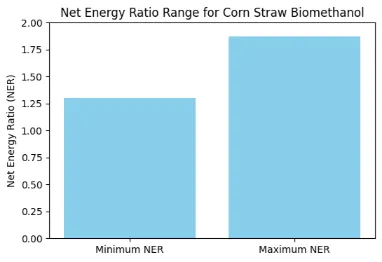
Net energy ratios (NER) for corn straw bioenergy typically range from 1.30 to 1.87. For example, one study indicated a net energy balance (NEB) of 6,902 megajoules per megagram of ethanol and a net energy ratio of 1.30. These numbers demonstrate that corn straw can produce more energy than is used in its production, although efficiency can vary based on the feedstock characteristics and conversion processes used.

Research Behind the Insights: How We Know This

The insights regarding Biomethanol from Corn Straw in China come from thorough academic research. A dedicated search was conducted using the phrase “Biomethanol from Corn Straw in China: A Life Cycle Insight” across over 126 million academic papers. Papers were selected based on specific criteria, including a focus on corn straw as a main feedstock, analysis within the Chinese context, inclusion of life cycle assessment (LCA) data, quantitative information on material flows, energy use, or environmental impacts, and examination of complete production processes grounded in empirical evidence.

A large language model was used for data extraction, gathering detailed insights on LCA methodology, biomass feedstock characteristics, environmental impact metrics, economic cost analysis, and potential industry applications. This systematic method ensures that the findings are solid and thorough.

Regional Perspectives & Future Potential

The studies explored various regions within China, from national-level assessments to analyses of multiple provinces (nine or thirty) and specific provinces like Heilongjiang. This regional variety offers a nuanced view of the potential and challenges in different areas.

Importantly, corn straw has been shown to outperform rice and soybean straw concerning greenhouse gas emissions and energy balance, making it a particularly appealing feedstock. Flash pyrolysis was singled out as the most effective straw treatment for coal savings. The potential for large-scale greenhouse gas reduction is strongest in provinces with abundant surplus stover and efficient supply chains. This suggests that optimizing collection and logistics will be essential to maximize the benefits of biomethanol from corn straw in China.

Conclusion

In conclusion, biomethanol from corn straw in China represents a significant step toward a more sustainable energy future. While the higher production costs compared to coal-derived methanol present challenges, the large reductions in CO2 and particulate matter emissions, combined with promising economic benefits in targeted applications and the potential for valuable by product savings, highlight its importance. Ongoing research and strategic implementation can further unlock the full potential of this renewable resource in China’s energy landscape.

Bar chart of energy ratios
Bar chart of CO2 emissions comparison
Is Biomethanol the Future of Aviation Fuel? Exploring the Possibilities

Biomethanol from Corn Straw in China: A Life Cycle Insight Read More »

Industrial refinery at dusk with bright lights, representing fossil fuel infrastructure compared to cleaner biomethanol alternatives.

Biomethanol Vs Fossil Fuel: Which Ones Win For The Planet

Biomethanol Vs Fossil Fuel

As the world grapples with a climate crisis and the urgent need for decarbonization, the energy sector is undergoing significant change. One of the key debates is the move from fossil fuels to renewable alternatives. Biomethanol, a renewable form of methanol made from biomass and waste, is becoming a popular choice as a sustainable fuel and chemical feedstock. But how does it compare to traditional fossil fuels? Which option is better for the planet, both environmentally and economically? This analysis looks at the science, benefits, challenges, and future potential of biomethanol versus fossil fuels.

What Are Fossil Fuels?

Fossil fuels coal, oil, and natural gas—are energy sources formed from ancient organic matter over millions of years. They have fueled industrial growth but are now seen as the main contributors to greenhouse gas emissions, air and water pollution, and various environmental and health issues.

Environmental Impact: Biomethanol vs Fossil Fuel

Greenhouse Gas Emissions
Fossil Fuels: Burning fossil fuels releases large amounts of CO₂, methane, and other greenhouse gases. In 2019, fossil fuels were responsible for 74% of U.S. greenhouse gas emissions, with about 25% from public lands. These emissions drive global warming, rising sea levels, and extreme weather.
Biomethanol: Biomethanol can achieve up to 90% reduction in greenhouse gas emissions compared to fossil methanol, and even more when compared to fossil fuels overall. The carbon released during burning was previously absorbed during biomass growth, making it nearly carbon-neutral. Some biomethanol processes, like those using manure or waste, can even lead to net-negative emissions.

Air and Water Pollution
Fossil Fuels: Extracting, refining, and burning fossil fuels emit harmful air pollutants (SO₂, NOₓ, particulates, mercury) and contribute to acid rain, smog, and water pollution from oil spills and fracking. These pollutants damage ecosystems, agriculture, and human health.
Biomethanol: Burning biomethanol produces many fewer air pollutants. It burns cleaner, emitting less SO₂, NOₓ, and particulates, which improves urban air quality and reduces respiratory issues.

Ocean Acidification and Plastic Pollution
Fossil Fuels: At least a quarter of CO₂ from fossil fuels is taken up by oceans, leading to increased acidity and threats to marine life. Fossil fuels are also the primary source of plastics, with over 99% of plastics made from them, resulting in significant plastic pollution and climate problems.
Biomethanol: As a renewable fuel, biomethanol does not contribute to ocean acidification or plastic pollution in the same way. Its production can even use waste streams, decreasing landfill and ocean-bound waste.

Land and Resource Use
Fossil Fuels: Extracting and processing fossil fuels can ruin landscapes, destroy habitats, and contaminate soil and water. Oil spills and mining activities have long-lasting ecological effects.
Biomethanol: Producing biomethanol uses waste and residues, encouraging a circular economy and lessening the need for new resource extraction. However, large-scale production requires careful feedstock management to prevent land use conflicts.

Energy Efficiency and Net Energy Gain
Fossil Fuels: Extracting and processing fossil fuels require a lot of energy, resulting in significant losses along the supply chain. Their net energy gain is decreasing as resources become more challenging to extract.
Biomethanol: Producing biomethanol can be very efficient, especially with waste feedstocks. It is easy to store and transport and can be used in existing infrastructure and engines, making it a practical alternative.

Economic and Social Impacts

Market Costs and Externalities
Fossil Fuels: Market prices for fossil fuels do not reflect their actual environmental and health costs—known as externalities. These include climate change, air and water pollution, and healthcare expenses from pollution-related illnesses. Extreme weather events, rising sea levels, and disaster recovery costs add hundreds of billions to the true cost of fossil fuels.
Biomethanol: While the initial production costs for biomethanol may be higher, its environmental and health advantages can lead to long-term economic savings. As policies increasingly account for carbon pricing and promote renewables, biomethanol is becoming more competitive.

Job Creation and Rural Development
Fossil Fuels: The fossil fuel industry relies heavily on capital and is becoming more automated, leading to job losses as mines and wells close.
Biomethanol: Biomethanol production boosts rural economies by creating jobs in biomass collection, processing, and plant management. It diversifies energy supply chains and reduces reliance on fluctuating fossil fuel markets.

Biomethanol in Transportation and Industry

Transportation
Fossil Fuels: Fuels derived from oil dominate road, air, and sea transport, making up nearly a quarter of global CO₂ emissions. Continuing to use these fuels conflicts with international climate goals.
Biomethanol: Biomethanol serves as a drop-in fuel for cars, trucks, ships, and aviation. It helps decarbonize sectors that are hard to electrify and can blend with gasoline or be used in dedicated engines.

Industry
Fossil Fuels: Fossil methanol and other petrochemicals are used in plastics, fertilizers, and many industrial goods, sustaining the fossil economy.
Biomethanol: Biomethanol serves as a sustainable feedstock for green chemicals and materials. It lowers the carbon footprint of manufacturing and aids the shift to a circular, low-carbon economy.

Health and Environmental Justice

Fossil Fuels: Communities near extraction sites, refineries, and power plants often experience higher rates of asthma, cancer, and other health issues. Fossil fuel pollution disproportionately harms low-income and marginalized communities.
Biomethanol: Cleaner burning and reduced pollution from biomethanol enhance public health and lower healthcare costs, promoting social fairness and environmental justice.

Limitations and Challenges

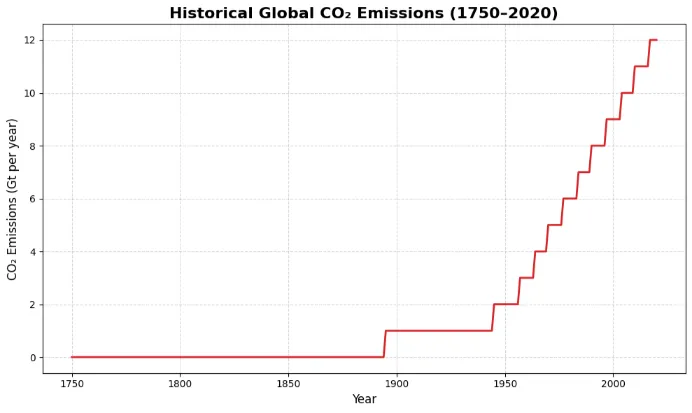
 Global CO2 Emissions rate(1750-2020)

Biomethanol

  • Feedstock Availability: Large-scale biomethanol production relies on organized and sustainable waste feedstock supply chains, which are still developing in many areas.
  • Production Technology: Efficient conversion methods are still under research and scaling.
  • Land Use: Unsustainable growth could compete with food production or lead to deforestation if not managed properly.

Fossil Fuels

  • Finite Resources: Fossil fuels are non-renewable and becoming harder and more costly to extract.
  • Climate Incompatibility: Ongoing fossil fuel use conflicts with global climate targets and will result in escalating environmental and economic damage.

Regulatory and Policy Landscape

Fossil Fuels: Governments are reducing fossil fuel subsidies, implementing carbon pricing, and introducing stricter emissions standards to speed up the shift to clean energy.
Biomethanol: Policies like the EU Renewable Energy Directive, Fit-for-55, and FuelEU Maritime are encouraging renewable fuels, including biomethanol, giving them an edge over fossil fuels.

The Verdict: Which One is Better for the Planet?

Biomethanol

  • Greatly reduces greenhouse gas emissions—up to 90% versus fossil fuels.
  • Burns cleaner with fewer air and water pollutants.
  • Supports a circular economy and waste reduction.
  • Fosters rural development and job creation.
  • Works with existing infrastructure and vehicles.
  • Becomes more cost-competitive as carbon pricing and regulations grow.

Fossil Fuels

  • Major source of greenhouse gases and pollution.
  • Limited, non-renewable, and subject to unstable markets.
  • Heavy environmental and health-related costs.
  • Incompatible with a sustainable, decarbonized future.

Conclusion:


For the planet, biomethanol clearly outperforms fossil fuels. It provides a sustainable, scalable, and economically viable route to decarbonization, cleaner air and water, and a healthier, more just society. While there are challenges in scaling up production and ensuring a sustainable feedstock supply, the environmental and social benefits of biomethanol far outweigh those of fossil fuels. As policies and markets evolve, biomethanol’s role in the clean energy transition will continue to grow.

Biomethanol Vs Fossil Fuel: Which Ones Win For The Planet Read More »

Wooden letter tiles spelling "APPLICATION" on rustic table illustrating biomethanol applications in daily life

15 Surprising Applications Of Biomethanol You Didn’t Know Were Changing Your Daily Life

15 Surprising Applications of Biomethanol You Didn’t Know Were Changing Your Daily Life

Biomethanol, or renewable methanol, is chemically the same as conventional methanol (CH3OH). However, it comes from renewable sources instead of fossil fuels. It is a light, colorless, and biodegradable liquid that has a low carbon footprint. It often cuts greenhouse gas emissions by up to 90% compared to fossil methanol.

Since it is a liquid at room temperature, biomethanol is easier to store and transport than gaseous fuels like hydrogen. This makes it a practical renewable energy carrier and chemical feedstock.

1. Renewable Fuel for Vehicles

Biomethanol can be used directly as a fuel or mixed with gasoline in internal combustion engines. Its high octane rating boosts engine performance and lowers emissions of pollutants such as NOx and particulate matter. It can also help produce biodiesel and other biofuels.

  • Reduces carbon emissions in transportation
  • Works with existing fuel systems
  • Supports sectors where electrification is difficult

2. Cleaner Marine Fuel

The shipping industry uses biomethanol as a low-emission marine fuel. Biomethanol cuts lifecycle CO₂ emissions by up to 95% compared to traditional marine fuels. It can also be used in dual-fuel engines, allowing ships to switch between methanol and conventional fuels.

  • Helps meet IMO and EU emissions goals
  • Easier to store and handle than hydrogen or ammonia
  • Being adopted by major shipping companies worldwide

3. Hydrogen Carrier and Storage Medium

Hydrogen fuels are vital for reducing emissions in many sectors, but they face challenges in storage and transport. Biomethanol serves as a liquid hydrogen carrier, chemically storing hydrogen and releasing it when necessary. This makes hydrogen distribution and use easier.

  • Solves hydrogen storage and transport issues
  • Enables clean hydrogen use in transportation and industry
  • Supports the developing hydrogen economy

4. Feedstock for Chemical Industry

Biomethanol is a key renewable feedstock for making chemicals like formaldehyde, acetic acid, methyl esters, and methylamines. These chemicals are critical in producing plastics, textiles, paints, adhesives, and pharmaceuticals.

  • Reduces reliance on fossil fuels in chemical production
  • Encourages greener manufacturing processes
  • Supports circular economy principles

5. Power Generation and Grid Balancing

Biomethanol is used as a renewable fuel in power plants and combined heat and power (CHP) systems. It provides flexible power to complement intermittent renewables like solar and wind, helping to stabilize the electricity grid.

  • Improves grid reliability
  • Aids renewable energy integration
  • Lowers emissions from power generation

6. Cooking and Heating Fuel

In many areas, biomethanol replaces traditional biomass fuels like wood or charcoal for cooking and heating. It burns cleanly, reducing indoor air pollution and the health risks that come with it.

  • Improves air quality and health outcomes
  • Provides sustainable household energy
  • Reduces deforestation and environmental harm

7. Solvent in Pharmaceuticals and Cosmetics

Biomethanol is used as a solvent in making pharmaceuticals, cosmetics, and personal care products. Its renewable origin lowers the environmental impact of these industries.

  • Supports green chemistry
  • Reduces reliance on petrochemical solvents
  • Enhances sustainability in consumer products

8. Antifreeze and Coolants

Methanol’s antifreeze qualities make biomethanol an eco-friendly alternative for automotive and industrial coolants. It helps prevent freezing and overheating in engines and machinery.

  • Offers biodegradable and less toxic antifreeze
  • Lowers environmental pollution
  • Encourages sustainable maintenance practices

9. Fuel Cells for Portable and Backup Power

Biomethanol powers direct methanol fuel cells (DMFCs), which generate electricity for portable electronics, remote sensors, and emergency backup systems. This offers a clean and efficient power source.

  • Enables off-grid and emergency power
  • Provides higher energy density than batteries in some instances
  • Supports renewable energy use in various applications

10. Agricultural Inputs

Biomethanol is a feedstock for creating bio-based fertilizers and pesticides. This contributes to sustainable agriculture by reducing dependence on fossil-based chemicals.

  • Lowers the environmental effects of farming inputs
  • Promotes a circular bioeconomy using agricultural waste
  • Improves soil health and crop yields sustainably

11. Aviation Fuel Additive

Research is looking into biomethanol as a component in sustainable aviation fuels (SAF). This aims to cut the carbon footprint of air travel by blending with conventional jet fuel.

  • Addresses emissions in hard-to-decarbonize aviation
  • Compatible with existing fuel systems
  • Helps achieve global aviation climate targets

12. Plastic and Polymer Production

Biomethanol is a building block for bio-based plastics and polymers, providing renewable alternatives to petroleum-based materials.

  • Lowers the plastic industry’s carbon footprint
  • Allows for biodegradable and recyclable plastics
  • Supports a circular materials economy

13. Renewable Dimethyl Ether (DME) Production

Biomethanol can be turned into dimethyl ether, a clean-burning fuel used for heating, transportation, and as an aerosol propellant.

  • Offers a versatile, low-emission fuel
  • Can replace diesel and LPG in many uses
  • Expands renewable fuel options

14. Wastewater Treatment

Biomethanol acts as a carbon source in biological wastewater treatment. It helps promote denitrification and reduces nitrogen pollution that leads to toxic algal blooms.

  • Improves water quality
  • Provides a renewable alternative to fossil methanol in treatment
  • Supports sustainable urban infrastructure

15. Laboratory and Industrial Research

Biomethanol is commonly used as a solvent and reagent in labs and industrial research. This enables sustainable scientific innovation.

  • Cuts the environmental impact of research
  • Encourages green chemistry principles
  • Aids in the development of renewable technologies
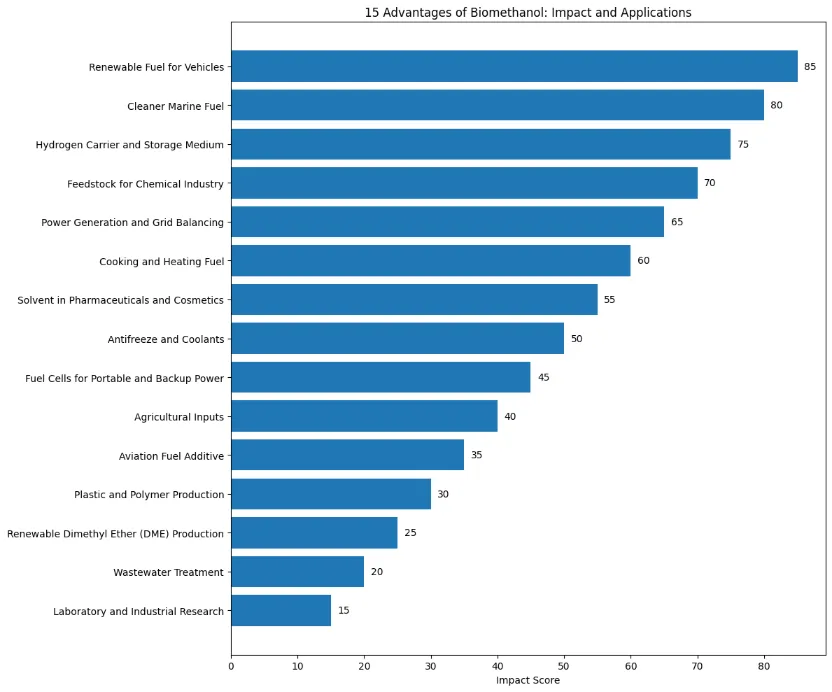
Bar Chart of 15 APPLICATIONS OF THE BIOMETHANOL AND THEIR DESCRIPTION

Biomethanol and Hydrogen Fuels: Partners in the Renewable Energy Shift

While biomethanol is a versatile liquid fuel and chemical feedstock, hydrogen fuels complement it by providing zero-emission energy for sectors that are hard to electrify. Biomethanol’s role as a hydrogen carrier connects current infrastructure with the upcoming hydrogen economy. This allows for cleaner transport, industry, and power generation.

Together, biomethanol and hydrogen fuels form a powerful pair speeding up the global transition to sustainable energy.

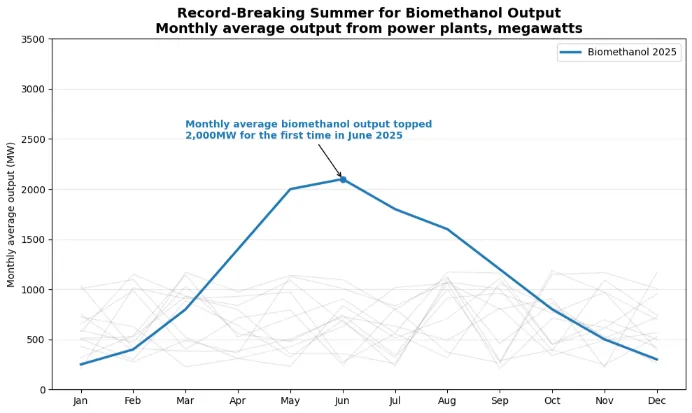
 GRAPH OF THE BIOMETHANOL OUTPUT 2025 FOR POWER AND ENERGY SECTOR

Why Biomethanol Deserves More Attention

Even with its many applications and environmental benefits, biomethanol is often less recognized than electric vehicles or hydrogen fuels. Its compatibility with existing infrastructure, significant emissions reductions, and various industrial uses make it a practical and scalable solution for cutting emissions.

As governments and industries work toward net-zero targets, biomethanol’s importance will only increase, making it a key element in the future of renewable energy.

Conclusion: Biomethanol Is Already Changing Your Life

From powering vehicles and ships to enabling cleaner manufacturing and enhancing household energy, biomethanol is deeply woven into modern life. Along with hydrogen fuels, it plays an important role in the sustainable energy transition, offering real solutions across different sectors.

Recognizing these 15 surprising applications shows biomethanol’s true potential and highlights the need to support its development and use worldwide.

The Biomethanol Advantage: How Small Businesses Are Cutting Emissions While Boosting Profits

Discover how small enterprises are leveraging biomethanol to save money and reduce emissions.

Why Major Investors Are Quietly Pouring Billions into Biomethanol

Explore why big money is flowing into the biomethanol industry and what it means for the future.

15 Surprising Applications Of Biomethanol You Didn’t Know Were Changing Your Daily Life Read More »

Rear view of a modern electric car, representing the comparison between electric vehicles and biomethanol cars.

Electric Vehicles Or Biomethanol Cars Why The Future Of Transportation Isn’t What You Think

Electric Vehicles Or Biomethanol Cars

The future of transportation is a hot topic. It’s often seen as a simple contest between electric vehicles (EVs) and traditional internal combustion engines. However, new technologies like biomethanol-powered cars and hydrogen fuels are changing this view. This blog explores why the future of transportation is more complex and promising than just a basic EV versus gasoline debate. We will look at the roles of biomethanol and hydrogen fuels, their environmental impacts, economic viability, and how they either compete with or complement electric vehicles in creating a sustainable transport system.

Understanding the Contenders: EVs, Biomethanol, and Hydrogen Fuels

Electric Vehicles: The Current Favorite
Electric vehicles have become popular because they produce no tailpipe emissions and have more charging stations. They run on batteries charged mainly with renewable electricity, offering a cleaner alternative to fossil-fuel-powered cars. Their advantages include:

  • Reduced local air pollution
  • Lower operational costs
  • Increasing range and performance

However, EVs face issues like emissions from battery production, raw material extraction, and gaps in charging infrastructure.

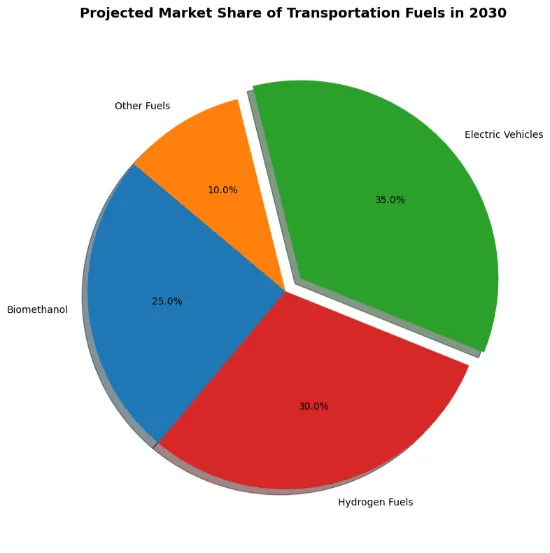
Pie chart of the Market Share of Transportation Fuels in 2030

Biomethanol Cars: The Renewable Liquid Fuel Alternative
Biomethanol is a type of methanol made from renewable sources like agricultural waste or municipal solid waste. It is a liquid fuel that can power modified internal combustion engines or fuel cells. Key benefits include:

  • Compatibility with existing fuel infrastructure and engines with minor modifications
  • High energy density compared to hydrogen, which simplifies storage and transport
  • Potential for up to 90% greenhouse gas reductions compared to fossil fuels

Biomethanol provides a renewable, carbon-reducing option that uses current vehicle technology and fuel distribution networks.

Hydrogen Fuels: The Versatile Energy Carrier
Hydrogen fuels, particularly green hydrogen made from renewables through electrolysis, are attracting attention for their ability to decarbonize hard-to-electrify sectors. Hydrogen fuel cell vehicles emit only water vapor and offer:

  • Fast refueling times
  • Long driving ranges
  • Zero tailpipe emissions

However, hydrogen also faces challenges, including storage issues, high production costs, and a lack of refueling infrastructure.

Lifecycle Environmental Impacts: How Do They Compare?

A key consideration for the future of transportation is the full lifecycle environmental impact, from raw material extraction to end-of-life disposal.

Electric Vehicles
Studies indicate that battery electric vehicles usually have lower lifecycle greenhouse gas emissions than conventional internal combustion vehicles. However, battery production requires a lot of energy and relies on mining important minerals like lithium and cobalt. The carbon intensity of the electricity used for charging also significantly impacts EV emissions.

Biomethanol Vehicles
Biomethanol cars can achieve significant greenhouse gas reductions—up to 90% compared to fossil fuels—due to the renewable materials used in production. The liquid nature of the fuel allows for easier integration with current infrastructure, decreasing emissions related to fuel distribution.

Hydrogen Fuel Cell Vehicles
Hydrogen fuel cell vehicles have nearly zero tailpipe emissions, but the environmental benefits depend heavily on how hydrogen is made. Green hydrogen produced from renewable electricity has the best emissions profile, whereas hydrogen derived from fossil fuels with carbon capture is less sustainable.

Economic and Infrastructure Considerations

Electric Vehicles
The adoption of EVs is rising quickly, supported by growing charging networks and lower battery prices. However, charging times and grid capacity remain issues, especially for long-distance travel and heavy-duty vehicles.

Biomethanol
Biomethanol can use current liquid fuel infrastructure, making it an attractive option for quick deployment. It also provides a solution for sectors where electrification is difficult, such as shipping and heavy transport. Nevertheless, large-scale sustainable biomass supply and effective conversion technologies still need development.

Hydrogen Fuels
The hydrogen infrastructure is still new and expensive, requiring new pipelines, storage, and refueling stations. The production costs for green hydrogen are high but are expected to drop with advances in technology and scale.

Why the Future Isn’t Just EVs: The Case for a Multi-Fuel Future

Complementary Roles

  • Urban and light passenger transport: EVs fit well here, as they handle short trips and have access to charging.
  • Heavy-duty transport and shipping: Biomethanol and hydrogen fuels provide practical solutions where the weight of batteries and charging times limit EV effectiveness.
  • Energy storage and grid balancing: Hydrogen and biomethanol can serve as energy carriers, storing excess renewable electricity and stabilizing the grid.

Sustainability and Resource Efficiency
A diverse range of transport fuels decreases reliance on any single resource or technology. This reduces risks related to raw material shortages, infrastructure issues, and regional differences in renewable energy availability.

Challenges Ahead for Biomethanol and Hydrogen Fuels

  • Feedstock availability: Biomethanol production relies on sustainable biomass supply chains. These need careful management to prevent competition with food production and deforestation.
  • Technology maturity: Effective conversion processes for biomethanol and cost-efficient green hydrogen production are still being developed.
  • Policy and incentives: Strong regulations and financial incentives are essential to speed up adoption and infrastructure growth.

Conclusion: Rethinking the Future of Transportation

While electric vehicles are key to lowering transport emissions, they are not the only solution. Biomethanol and hydrogen fuels offer additional ways to reduce emissions in areas where EVs are limited. Biomethanol’s compatibility with current infrastructure and its potential for significant carbon reduction make it an appealing renewable fuel. Meanwhile, hydrogen fuels are important for heavy transport and industrial use due to their versatility and promise of zero emissions.

The future of transportation will combine various technologies—electric, biomethanol, hydrogen, and more—working together to create a sustainable, resilient, and low-carbon mobility system.

Electric Vehicles Or Biomethanol Cars Why The Future Of Transportation Isn’t What You Think Read More »

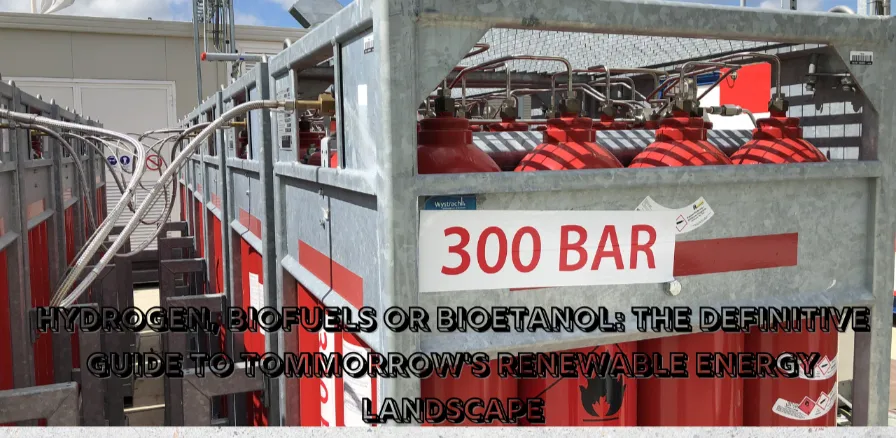
industrial hydrogen storage cylinders labeled “300 BAR” arranged in a metal rack at an energy facility, representing high-pressure gas storage for renewable energy technologies.

Hydrogen, Biofuels Or Bioethanol: The Definitive Guide To Tommorrow  Renewable Energy Landscape

Hydrogen, Biofuels Or Bioethanol

As global energy demands soar and the urgency of climate action intensifies, the search for sustainable, scalable, and economically viable alternatives to fossil fuels is more pressing than ever. In this comprehensive guide, we explore the future of renewable energy through the lens of three of its most promising contenders: hydrogen fuels, biofuels (with a focus on bioethanol), and biomethanol. We’ll examine their benefits, challenges, and the critical role each will play in the evolving energy landscape, with a special emphasis on the keywords: biomethanol and hydrogen fuels.

The Renewable Energy Imperative

The world is at a crossroads. Rising temperatures, volatile fossil fuel markets, and escalating energy consumption have made the transition to renewable energy sources not just an environmental necessity, but an economic and geopolitical imperative. Governments, industries, and consumers are demanding cleaner, more reliable, and more sustainable energy solutions. Among the frontrunners in this race are hydrogen, biofuels (including bioethanol), and the increasingly significant biomethanol.

Hydrogen Fuels: The Rising Star of Clean Energy

What Is Hydrogen Fuel?
Hydrogen fuel is an energy carrier that, when used in fuel cells, produces electricity with water as the only byproduct. There are several types of hydrogen, differentiated by their production methods:

  • Grey Hydrogen: Produced from natural gas, emitting CO₂.
  • Blue Hydrogen: Produced from natural gas with carbon capture and storage.
  • Green Hydrogen: Produced via electrolysis using renewable electricity, emitting no CO₂.

Why Hydrogen Fuels Matter
Hydrogen is emerging as a crucial player in the transition to sustainable energy. Green and low carbon hydrogen are particularly promising for meeting global energy demand and contributing to climate action goals. Hydrogen’s versatility allows it to decarbonize sectors that are hard to electrify, such as heavy industry, shipping, and aviation.

Hydrogen’s Challenges

  • Cost: Green hydrogen is currently more expensive than fossil fuels, though costs are projected to decrease significantly by 2030 as technology matures and scales.
  • Storage and Transport: Hydrogen is challenging to store and transport due to its low energy density and the need for high-pressure or cryogenic systems.
  • Infrastructure: Building a hydrogen economy requires massive investments in infrastructure, including pipelines, fueling stations, and electrolyzers.

The Road Ahead
Despite these challenges, the number of low-emissions hydrogen projects is rapidly increasing, with regulatory frameworks such as the EU’s Hydrogen and Gas Market Package paving the way for broader adoption. As costs fall and infrastructure develops, hydrogen fuels are set to play a pivotal role in the global energy mix.

Biofuels: Powering a Greener Tomorrow

What Are Biofuels?
Biofuels are renewable fuels derived from organic matter (biomass), such as plants, agricultural waste, and even algae. The two main types are:

  • Bioethanol: An alcohol made by fermenting the sugars in crops like corn, sugarcane, and cellulosic biomass.
  • Biodiesel: Produced from vegetable oils, animal fats, or recycled greases.

The Case for Bioethanol
Bioethanol stands out as a biofuel with significant environmental and economic benefits:

  • Greenhouse Gas Reduction: Bioethanol can reduce greenhouse gas emissions by up to 90% compared to gasoline.
  • Economic Opportunities: Especially in developing countries, bioethanol production can boost rural economies, reduce energy imports, and create jobs.
  • Versatility: Bioethanol is already used as a blend in gasoline (e.g., E10, E85), making it a drop-in solution for existing vehicle fleets.

Innovations and Trends


Ongoing research is enhancing bioethanol production efficiency and expanding feedstock options to include algae and seaweed. The United States and Brazil lead the world in bioethanol production, leveraging sugarcane and corn, respectively.

Market Growth
The global bioethanol market is projected to reach a multimillion-dollar valuation by 2030, driven by technological advancements, policy support, and growing demand for sustainable fuels.

Challenges for Bioethanol

  • Feedstock Competition: Balancing land use for food versus fuel remains a concern.
  • Sustainability: Responsible land management and sustainable sourcing are critical to avoid negative environmental impacts.

Biomethanol: The Unsung Hero of the Renewable Revolution


Biomethanol is methanol produced from renewable biomass sources, such as agricultural waste, forestry residues, or even municipal solid waste. It is a clear, colorless liquid with properties nearly identical to conventional methanol, but with a much lower carbon footprint.

Production and Advantages

  • Production Process: Biomethanol is produced by gasifying biomass into syngas, which is then converted into methanol, often with the addition of green hydrogen.
  • Storage and Transport: Unlike hydrogen, biomethanol is easily stored and transported using existing infrastructure, making it an attractive hydrogen carrier and marine fuel.
  • Carbon Reduction: Biomethanol can achieve up to 90% greenhouse gas reductions within both the methanol and hydrogen supply chains.

Biomethanol in the Marine Sector
The shipping industry is under intense pressure to decarbonize. Biomethanol is gaining traction as a marine fuel due to its compatibility with existing engines and infrastructure, as well as its sustainability credentials. In China, over 100 projects are underway to produce more than 30 million tonnes of green methanol annually, with 12 million tonnes dedicated to biomethanol.

Biomethanol vs. E-Methanol

  • E-Methanol: Produced by combining captured CO₂ with green hydrogen, but currently less commercially viable due to higher production costs and less established technology.
  • Biomethanol: More cost-competitive and technologically mature, making it a leading candidate for near-term adoption in shipping and other sectors.

Biomethanol and Hydrogen Fuels: A Powerful Synergy

Biomethanol and hydrogen fuels are not mutually exclusive; in fact, they complement each other in the broader renewable energy ecosystem.

  • Hydrogen Carrier: Biomethanol can serve as a practical hydrogen carrier, facilitating the storage and transport of hydrogen energy over long distances especially by sea where pure hydrogen’s storage challenges are prohibitive.
  • Decarbonizing Industry: Both fuels can be used to decarbonize hard-to-abate sectors, such as chemicals, shipping, and heavy transport.
  • Existing Infrastructure: Biomethanol can leverage current methanol plants, pipelines, and carrier ships, enabling faster deployment compared to building entirely new hydrogen infrastructure.

The Future Outlook: Trends, Opportunities, and Challenges

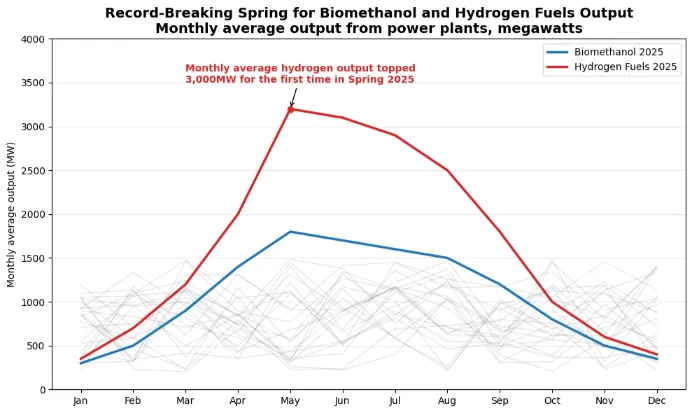
 Graphical representation of Biomethanol And Hydrogen Fuels usage for Power Plants

Market Dynamics

  • Policy Support: Governments are ramping up mandates for biofuel blending and supporting green hydrogen projects, driving investment and innovation.
  • Technology Advancements: Improvements in electrolysis, gasification, and fermentation are making hydrogen fuels, bioethanol, and biomethanol more cost-competitive and sustainable.
  • Global Collaboration: International cooperation is accelerating research, development, and deployment of renewable fuels, particularly in emerging markets.

Key Challenges

  • Scaling Production: Meeting global energy demand will require massive scaling of biomass supply chains, electrolyzer capacity, and supporting infrastructure.
  • Sustainability: Ensuring that feedstock sourcing does not compete with food production or cause deforestation is paramount.
  • Cost Parity: Achieving cost parity with fossil fuels remains a hurdle, though declining renewable electricity prices and technological breakthroughs are narrowing the gap.

Hydrogen fuels, bioethanol, and biomethanol each have their own perks and hurdles. Hydrogen fuels could really help cut down carbon emissions in different industries, but they need a lot of infrastructure and lower costs to really take off.

Bioethanol is already making waves in transportation, especially in places where farming is a big deal. On the other hand, biomethanol is starting to shine as a flexible option—particularly for shipping and carrying hydrogen—because it works well with what we already have and can really help reduce carbon too.

When it comes to renewable energy, there isn’t gonna be just one solution; it’s all about a mix of different technologies working together. If we put our money into fresh ideas, team up globally, and focus on being sustainable, we can create an energy system that’s cleaner, stronger, and fairer for future generations.

So here’s the big takeaway: the combo of biomethanol and hydrogen fuels, along with the solid impact of bioethanol, is gonna be key for the future of renewable energy. Keep yourself updated, get involved, and let’s be part of making energy greener and more sustainable.

Renewable Energy Resources

Recommended Resources for Further Reading

Hydrogen, Biofuels Or Bioethanol: The Definitive Guide To Tommorrow  Renewable Energy Landscape Read More »

Title graphic displaying “The Trillion Dollar Shift: How Biomethanol Is Poised to Dominate” with a gradient background representing renewable energy innovation.

The Trillion Dollar Shift: How Biomethanol Is Poised To Dominate

Revolutionary renewable energy transformation reshaping global markets

The global energy sector is undergoing a significant change. Renewable fuels are becoming essential for a sustainable future. Among these, biomethanol stands out as a key player, likely to cause a trillion-dollar shift in the way industries, transportation, and economies generate power. As the world speeds up its move away from fossil fuels, biomethanol is quickly gaining popularity as a low-carbon alternative that could reshape markets and provide important environmental benefits.

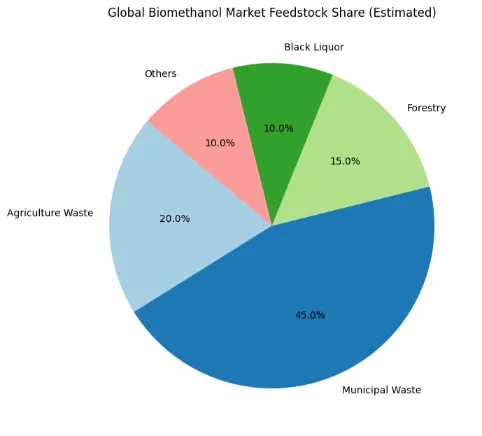
Biomethanol is a renewable version of methanol made from sustainable biomass sources. These sources include agricultural leftovers, forestry waste, municipal solid waste, sewage, and even industrial by-products like black liquor from the pulp and paper industry. Unlike traditional methanol, which comes from fossil fuels, biomethanol has a much lower carbon footprint. This makes it crucial for global efforts to reduce carbon emissions.

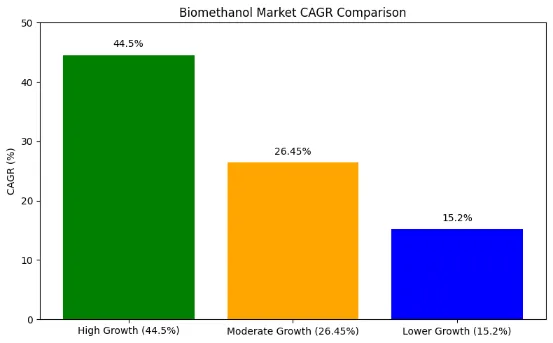
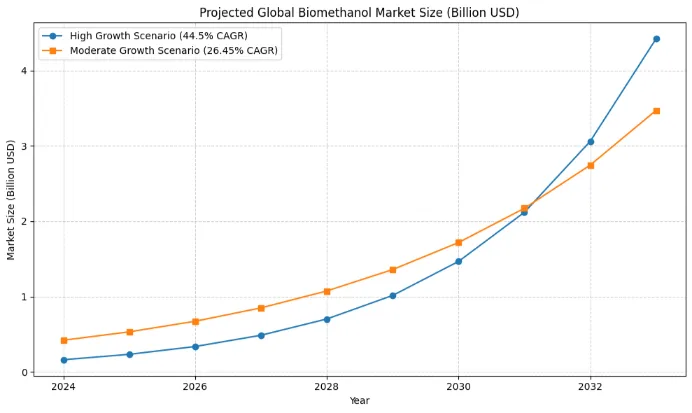
The biomethanol market is growing rapidly. Valued at $161.12 million in 2024, it is expected to rise to $2,118 million by 2032, showing an incredible compound annual growth rate (CAGR) of 44.5%. Broader estimates suggest that the biomethanol fuel market could reach $35 billion by 2033, while the overall renewable methanol market may hit $20.68 billion by 2030. Some forecasts even predict the global biomethanol market could reach $86,150 million by 2033.

Rising Demand for Clean Fuels: Increasing global awareness of climate change and the need to lower greenhouse gas emissions are driving industries and governments to find sustainable alternatives to fossil fuels.

Supportive Government Policies: Tough environmental rules and incentives are boosting investment in biofuels, including biomethanol.

Technological Advances: New developments in biomass gasification, carbon capture, and advanced catalytic processes are making biomethanol production more efficient and affordable.

Versatile Applications: Biomethanol can be used as a feedstock for biofuels, green chemicals, and synthetic materials. It can also be used directly as fuel or blended with gasoline to lower emissions.

1. Environmental Impact


Biomethanol has a much smaller carbon footprint compared to fossil-derived methanol. Its life-cycle emissions are greatly reduced, especially when made from waste materials or used with carbon capture and storage technologies.

2. Versatility Across Sectors


Transportation: Biomethanol can be used as a direct fuel, a gasoline additive, or in biodiesel production, making it important for cleaner road and maritime transport.
Chemicals: Biomethanol is a key ingredient for making acetic acid, formaldehyde, plastics, and other green chemicals.
Energy Storage: With its high energy density and easy storage, biomethanol is being explored as an alternative energy carrier that competes with hydrogen in the developing “Methanol Economy.”

3. Circular Economy and Waste Valorization


By turning municipal solid waste, agricultural leftovers, and other biomass into valuable fuel, biomethanol supports circular economy models and cuts down on landfill use.

4. Compatibility and Infrastructure

 Bar chart of Market BIOMETHANOL CAGR Comparison


Biomethanol can fit into existing fuel systems. It can be used in current engines with minor adjustments and blended with gasoline in various ratios (M10, M15, M85), making it easy for users to transition.

Advanced Gasification & Biorefineries


Modern biorefineries are using advanced gasification methods to convert a variety of feedstocks into biomethanol efficiently. This boosts yields and allows for the use of otherwise hard-to-recycle waste.

Carbon Capture and Utilization


Combining carbon capture and storage (CCS) and direct air capture (DAC) technologies makes biomethanol production even more sustainable. This process uses captured CO₂ as a feedstock, further lowering emissions.

Emerging Production Pathways


New catalytic processes and direct gas fermentation are being created to cut costs and enhance scalability, positioning biomethanol as a truly global option.

By Application


Fuel Blending: The biggest segment is driven by regulations aimed at cutting vehicle emissions and the need for cleaner transportation fuels.
Chemical Manufacturing: Used for creating plastics, formaldehyde, and other chemicals.
Energy Storage and Power Generation: Gaining popularity as an alternative to hydrogen and natural gas.

By Region

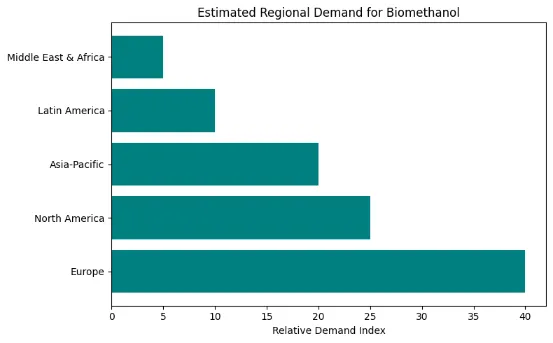
Bar Chart of Regional Biomethanol demand


North America & Europe: Leading the way in adoption, thanks to strong policy support and established biofuel markets.
Asia-Pacific: Set for rapid growth due to rising energy needs, significant investments in renewables, and growing environmental awareness, particularly in China and India.
Emerging Markets: Developing countries are starting to invest in biomethanol infrastructure, recognizing its potential to bypass fossil-based energy systems.

Despite its potential, biomethanol faces several challenges:
High Production Costs: It is currently more expensive to produce biomethanol than fossil-based methanol. This is mainly due to high feedstock costs and the expensive nature of advanced biorefineries.
Feedstock Availability: Sourcing biomass sustainably at scale remains a challenge, especially in areas with limited agricultural or forestry waste.
Infrastructure Needs: Large-scale use requires strong logistics, storage, and distribution networks, which are still developing in many places.
Competition: Biomethanol competes with other biofuels, like biodiesel, and emerging technologies such as hydrogen and electric vehicles.
However, as economies of scale are realized and technologies advance, production costs are expected to drop, making biomethanol more competitive.

pIE Chart of Biomethanol feedstock share (estimated)

Policy and Regulation


Continuing to tighten emissions limits, carbon pricing, and government incentives will be essential for speeding up biomethanol adoption.

Industry Collaboration
Partnerships among technology providers, chemical manufacturers, energy companies, and governments will foster innovation and investment, helping to tackle infrastructure and cost challenges.

Consumer and Corporate Demand
As sustainability becomes a key value for consumers and companies, demand for low-carbon fuels like biomethanol will continue to grow, especially in sectors where electrification is difficult (like shipping, aviation, and heavy industries).

Technological Breakthroughs
Ongoing research and development in feedstock processing, gasification, and carbon capture will make biomethanol even more cost-effective and scalable.

Maritime Shipping: Major shipping companies are testing biomethanol as a marine fuel to meet International Maritime Organization (IMO) targets for reducing sulfur and carbon emissions.
Urban Waste-to-Fuel: Cities are converting municipal solid waste into biomethanol to cut down on landfill use and create local renewable energy.
Green Chemicals: Chemical manufacturers are shifting to biomethanol-based feedstocks to lower their carbon impact and comply with regulations.

The world is on the brink of a trillion-dollar shift, with biomethanol likely to become a key part of the global energy and chemical sectors. Its unique mix of versatility, environmental benefits, and compatibility with current systems makes it a standout option for the clean energy transition. As technology improves and policy support grows, biomethanol is set to take center stage in the renewable fuels market, leading a new era of sustainable growth and climate resilience.

 GRAPHICAL REPRESENTATION OF BIOMETHANOL MARKET SIZE PROJECTED

The Trillion Dollar Shift: How Biomethanol Is Poised To Dominate Read More »

Text graphic reading "Beyond Fossil Feedstock: Biomethanol's Role in Decarbonizing Chemistry" in bold, dark green font with a horizontal line underneath.

Beyond Fossil Feedstock Biomethaol Crucile Role In Decarbonizing The Chemical Industry

Beyond Fossil Feedstock Biomethaol Crucile Role In Decarbonizing The Chemical Industry

As the global chemical industry faces mounting pressure to reduce carbon emissions and transition from fossil fuels, biomethanol has emerged as a game changing solution. Derived from renewable feedstocks such as organic waste and agricultural residues, biomethanol offers a sustainable, low-carbon alternative to traditional fossil-based methanol. This shift not only supports the circular economy but also addresses critical issues like land use and food security, positioning biomethanol as a cornerstone in the decarbonization of the chemical sector.

In this comprehensive blog, we explore the production processes, environmental benefits, industrial applications, and future outlook of biomethanol, highlighting why it is indispensable for a sustainable chemical industry.

Production Techniques

Biomass Gasification and Syngas Conversion
One of the most advanced routes to produce biomethanol is through gasification of biomass or organic waste. This process converts solid biomass into synthesis gas (syngas), a mixture of carbon monoxide, hydrogen, and carbon dioxide. The syngas is then catalytically converted into high purity biomethanol using advanced methanol synthesis technology.

Johnson Matthey, a leader in this field, has developed a robust biomass-to-methanol process that maximizes conversion efficiency and tolerates impurities present in biomass-derived syngas. Their technology can also integrate green hydrogen to boost biomethanol yields and further reduce carbon intensity.

Integration with Pulp Mills and Waste Streams
Another promising production model involves integrating biomethanol synthesis with existing industrial processes. For example, Veolia’s biorefinery in Finland produces CO₂ neutral biomethanol by refining crude sulfate methanol derived from pulp production. This approach leverages the large availability of biomass residues in pulp mills and could be replicated globally, unlocking millions of tons of sustainable feedstock.

Emerging Technologies: Direct CO₂ Hydrogenation
Innovative methods are being explored to produce biomethanol by directly hydrogenating CO₂ with green hydrogen. While currently less cost-competitive than steam reforming, this approach holds promise for decentralized, small scale production facilities, especially when paired with cheap renewable electricity.

How Beyond Fossil Feedstock Biomethaol Crucile Role is Vital for the Chemical Industry

1. Significant Carbon Emission Reductions
Biomethanol production from waste biomass or biogas can drastically cut greenhouse gas emissions compared to fossil methanol. Using renewable feedstocks ensures that the carbon released during methanol use is balanced by the carbon absorbed during biomass growth, achieving near carbon neutrality.

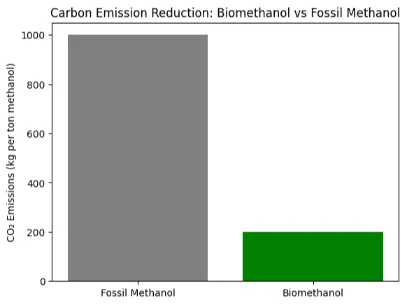
Bar chart of Biomethanaol vs fossil methanol emission reduction

2. Supports Circular Economy and Waste Valorization
By converting organic waste streams such as municipal solid waste, agricultural residues, and industrial by products into valuable methanol, biomethanol production reduces landfill use and methane emissions from waste decomposition. This closes material loops and promotes sustainable resource use.

3. Enables Decarbonization
Methanol is a key feedstock for chemicals and an emerging fuel for sectors difficult to electrify, including maritime shipping and aviation. Biomethanol as a marine fuel can reduce shipping emissions substantially, while its derivatives serve as building blocks for biofuels like SAF, aiding the decarbonization of air transport.

4. Enhances Energy Security
Local biomethanol production reduces dependency on fossil fuel imports and volatile global markets. Industrial symbiosis models, such as pulp mill integration, enable regional economies to leverage existing biomass resources for sustainable chemical feedstock production.

Industrial Applications

  • Chemical Feedstock: Biomethanol is used to manufacture formaldehyde, acetic acid, olefins, and other intermediates essential for producing plastics, paints, adhesives, and textiles.
  • Fuel and Fuel Additive: It serves as a clean burning fuel in internal combustion engines, a marine fuel alternative, and a precursor for biofuels such as biodiesel and methanol to gasoline (MTG).
  • Energy Carrier: Biomethanol can store and transport renewable energy, especially when produced via power-to-X routes combining green hydrogen and CO₂.

Challenges in Biomethanol Adoption

Feedstock Availability and Quality
Scaling biomethanol production depends on a consistent supply of sustainable biomass feedstock. Variability in feedstock composition and availability can affect process efficiency and economics.

Cost Competitiveness
Currently, biomethanol production is more expensive than fossil-based methanol due to feedstock costs and technological maturity. However, innovations like chemical looping gasification and membrane reactors (e.g., the EU-funded BioMeGaFuel project) aim to reduce costs and improve scalability.

Technological Maturity
While gasification and steam reforming technologies are well-established, emerging routes such as direct CO₂ hydrogenation require further development to achieve industrial scale and cost-effectiveness.

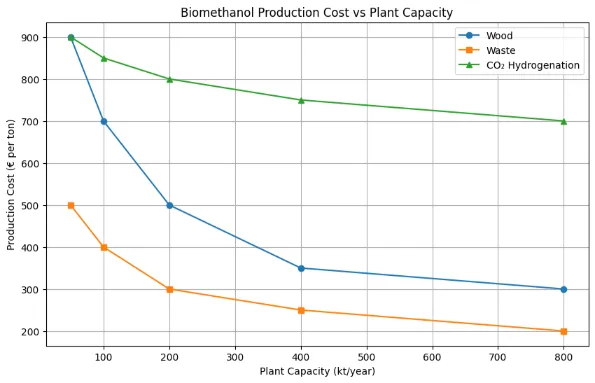
Graphical representation of BIOMETHANOL Production cost vs plants production

The Future of Biomethanol in a Sustainable Chemical Industry

The transition to biomethanol is accelerating, driven by stringent environmental regulations, corporate sustainability commitments, and technological breakthroughs. Collaborative efforts between industry leaders, research institutions, and policymakers are crucial to:

  • Expand biomass supply chains and optimize feedstock logistics.
  • Scale up innovative production technologies that reduce costs and increase efficiency.
  • Develop integrated biorefineries combining biomethanol with green hydrogen and carbon capture.
  • Foster market demand through incentives, carbon pricing, and green procurement policies.

The blend of biomethanol and e-methanol (produced from renewable electricity and CO₂) will likely form the backbone of a defossilized methanol supply chain, enabling the chemical industry to meet ambitious climate targets.

Conclusion

Biomethanol stands at the forefront of the chemical industry’s decarbonization journey. Its ability to transform waste biomass into a versatile, low-carbon feedstock and fuel underscores its pivotal role in achieving a sustainable, circular economy. As production technologies mature and costs decline, biomethanol will become indispensable for reducing greenhouse gas emissions across chemicals, fuels, and hard-to-abate sectors such as shipping and aviation.

Transitioning beyond fossil feedstocks to biomethanol is not just an environmental imperative it is a strategic opportunity to innovate, create resilient supply chains, and lead the chemical industry into a greener future.

ALSO CHECKOUT

Beyond Fossil Feedstock Biomethaol Crucile Role In Decarbonizing The Chemical Industry Read More »
Methanol molecular structure illustrating environmental impacts and chemical composition.

The Environmental Impact of the Methanol

The Environmental Impact of the Methanol

Methanol, a simple alcohol with the chemical formula CH₃OH, is a versatile chemical used in various industries, including fuel production, plastics, and pharmaceuticals. While methanol is often touted as a cleaner alternative to traditional fossil fuels, its environmental impact is a topic of ongoing research and debate. In this blog, we’ll explore the environmental implications of methanol production, usage, and disposal, backed by the latest data and research. By the end, you’ll have a clear understanding of methanol’s role in the global push for sustainability.

What is Methanol?

Methanol, also known as wood alcohol, is a colorless, volatile liquid that can be produced from natural gas, coal, or renewable sources like biomass and carbon dioxide. It is a key ingredient in formaldehyde, acetic acid, and various solvents. In recent years, methanol has gained attention as a potential fuel for vehicles, ships, and power generation due to its lower carbon emissions compared to conventional fuels.

Methanol Chemical Structure

C
O
H
CH3OH (Methanol)

Key Chemical Reactions

2 CH3OH + 3 O2 2 CO2 + 4 H2O
(Combustion)
CO2 + 3 H2 CH3OH + H2O
(Production from CO₂)

Environmental Impact Pathways

Positive Impacts

15% lower CO₂ emissions vs gasoline
Reduces SOx by 90%
Biodegradable in 7-10 days

Negative Impacts

2.5× energy-intensive production
50% higher aquatic toxicity vs ethanol
Atmospheric lifetime: 18 days

Data sources: ACS Sustainable Chemistry (2023), EPA Chemical Fact Sheets

The Environmental Benefits of Methanol

1. Lower Greenhouse Gas Emissions

Methanol burns cleaner than gasoline and diesel, producing fewer pollutants like sulfur oxides (SOx), nitrogen oxides (NOx), and particulate matter. According to a 2023 study published in Nature Energy, methanol-powered vehicles can reduce CO₂ emissions by up to 15% compared to gasoline engines when produced from natural gas. When synthesized from renewable sources, methanol can achieve near-zero carbon emissions.

2. Renewable Methanol Production

Green methanol, produced from biomass or captured CO₂ and hydrogen, is gaining traction as a sustainable alternative. A 2024 report by the International Renewable Energy Agency (IRENA) highlights that renewable methanol could reduce global CO₂ emissions by 1.8 gigatons annually by 2050 if adopted widely in the shipping and aviation industries.

3. Reduced Air Pollution

Methanol’s combustion produces minimal soot and particulate matter, making it an attractive option for urban areas struggling with air quality. Cities like Shanghai have already begun piloting methanol-fueled buses to combat smog.

Environmental Benefits of Algae Biofuels

High Yield Efficiency
Produces 30x more oil per acre than traditional crops
Carbon Negative
Absorbs CO₂ during growth (up to 2kg per 1kg of biomass)
Water Conservation
Can grow in wastewater and saline water
Circular Economy
Utilizes 99% of biomass with zero waste
Pollution Reduction
70% lower CO₂ emissions than petroleum diesel
Land Preservation
Requires 90% less land than soybean biodiesel
Data source: Nature Communications (2023), US DOE Bioenergy Technologies Office

The Environmental Challenges of Methanol

1. Carbon Footprint of Production

While methanol itself burns cleanly, its production process can be carbon-intensive. Most methanol today is produced from natural gas or coal via steam reforming, which releases significant amounts of CO₂. A 2023 study in Environmental Science & Technology found that coal-based methanol production emits 2.5 times more CO₂ than natural gas-based production.

2. Methanol Leakage and Toxicity

Methanol is highly toxic to humans and wildlife. Accidental spills or leaks during transportation can contaminate water sources and soil. Unlike ethanol, methanol does not biodegrade quickly, posing long-term environmental risks.

3. Energy-Intensive Synthesis

The production of green methanol requires large amounts of renewable energy to split water into hydrogen and oxygen. According to a 2024 analysis by the International Energy Agency (IEA), the energy demand for green methanol production could strain renewable energy grids if not managed properly.

Methanol in the Circular Economy

One promising application of methanol is its role in the circular economy. By capturing CO₂ emissions from industrial processes and converting them into methanol, we can create a closed loop system that reduces waste and emissions. Companies like Carbon Recycling International (CRI) are already pioneering this technology, with plants in Iceland producing methanol from captured CO₂ and renewable hydrogen.

Latest Research and Innovations

1. Catalyst Development

Recent advancements in catalyst technology have made methanol production more efficient and less energy-intensive. A 2024 study in Science Advances introduced a new copper-zinc catalyst that reduces the energy required for methanol synthesis by 20%.

2. Methanol as a Marine Fuel

The shipping industry is exploring methanol as a cleaner alternative to heavy fuel oil. Maersk, the world’s largest shipping company, has ordered 12 methanol powered container ships set to launch in 2025. According to Maersk’s 2023 sustainability report, these ships could cut CO₂ emissions by 60% compared to traditional vessels.

3. Carbon-Neutral Methanol Plants

In 2024, the European Union announced funding for the world’s first fully carbon neutral methanol plant in Sweden. The facility will use renewable energy and captured CO₂ to produce methanol, setting a new standard for sustainable chemical production.

The Future of Methanol: Opportunities and Challenges

Methanol has the potential to play a significant role in the global transition to a low carbon economy. However, its environmental benefits depend on how it is produced and used. To maximize its potential, we must:

Invest in Renewable Methanol Production: Governments and private sectors should prioritize funding for green methanol projects.

Improve Safety Measures: Stricter regulations are needed to prevent methanol leaks and spills.

Promote Research and Development: Continued innovation in catalyst technology and production methods is essential to reduce costs and energy consumption.

Conclusion

The environmental impact of methanol is a double edged sword. While it offers significant benefits in terms of reduced emissions and air pollution, its production and toxicity pose serious challenges. By leveraging the latest research and technological advancements, we can harness methanol’s potential as a sustainable energy source while minimizing its drawbacks. As the world moves toward a greener future, methanol could become a key player in the fight against climate change if we use it wisely.

latest post: Renewable Methanol: The Future of Sustainable Energy

The Environmental Impact of the Methanol Read More »