sustainable transport

Lush green grass background with text overlay "India Green E20 Fuel & Biomethanol Decarbonise Transport" where E20 is highlighted in a green box.

India Next Green Revolution: E20 Fuel and Biomethanol Dual Role in Decarbonising Transport

India’s push for a “Green Revolution” in transport centers on E20 fuel (20% ethanol blend) and biomethanol as key alternatives to fossil fuels. These biofuels promise to reduce emissions, enhance energy security, and support rural economies, but their widespread adoption faces technical, economic, and resource challenges.

The road to Net Zero by 2070 demands a radical shift in India’s energy matrix, particularly in the ever growing transport sector. As the world’s third largest energy consumer, India’s reliance on imported crude oil not only burdens its foreign exchange reserves but also contributes significantly to greenhouse gas (GHG) emissions. The solution to this dual challenge lies not in a single miracle cure, but in a portfolio of indigenous, renewable, and sustainable fuels. At the heart of this national energy revolution are two game changers: E20 fuel and biomethanol.

The Immediate Accelerator: Understanding E20 Fuel India‘s Mandate

India’s Ethanol Blended Petrol (EBP) Programme is perhaps the most aggressive and successful biofuel initiative in recent history. By advancing the target of 20% ethanol blending in petrol (E20) from 2030 to 2025, India has signaled an unwavering commitment to biofuels.

Effectiveness and Emission Impacts of E20 Fuel

E20 blends can be used in existing petrol engines without major modifications, offering significant reductions in carbon monoxide (CO), hydrocarbons (HC), particulate matter (PM), and particulate number (PN) emissions up to 44% in some cases . However, E20 use often leads to increased nitrogen oxide (NOx) emissions and a slight reduction in fuel economy (about 4%). Long-term studies show minimal impact on engine performance and durability, with a minor reduction in ozone formation potential (Mohamed et al., 2024). 

The Policy Push: Why E20 is a National Imperative

The push for E20 fuel India is driven by a powerful three-pronged strategy:

  • Energy Security and Forex Savings: Blending ethanol, a domestically produced fuel, with petrol significantly reduces the need for crude oil imports. This measure is projected to save billions of dollars in foreign exchange annually, bolstering India’s energy self-reliance and insulating the economy from global oil price volatility.
  • Environmental Gains: Ethanol burns cleaner than pure petrol. The government estimates that the use of E20 fuel can cut carbon monoxide emissions by up to 50% in two-wheelers and 30% in four-wheelers compared to unblended petrol. This is a crucial step in combating urban air pollution and meeting India’s climate targets.
  • Rural Prosperity and Circular Economy: The ethanol supply chain provides a vital link between the agricultural and energy sectors. By procuring ethanol from crops like sugarcane, maize, and surplus/damaged food grains, the programme guarantees stable income for farmers—effectively turning them into ‘Urjadaatas’ (energy providers). This also promotes a circular economy by utilising agricultural surplus and waste.

Navigating the Challenges of Mass Rollout

Despite the significant benefits, the rapid rollout of E20 fuel has encountered a few headwinds that must be addressed for sustained success.

  • Vehicle Compatibility and Consumer Concerns: A major challenge is the millions of vehicles sold before 2023 that were not originally designed or calibrated for a 20% ethanol blend. Consumers have reported issues such as a marginal drop in fuel efficiency (estimated at 1-2% for newer cars and up to 6-7% for older models), as well as concerns about engine wear, corrosion, and warranty voidance. The government and automotive industry are working to ensure that newer models are E20-compliant and to provide clarity on retrofitting older vehicles.
  • The Food vs. Fuel Debate: Although the policy encourages the use of surplus and waste material, a large-scale shift to crop-based ethanol raises questions about land-use changes, water intensity (especially for sugarcane), and potential implications for food security if essential food grains are diverted.
  • Ensuring Sustainability of Feedstock: To mitigate the ‘Food vs. Fuel’ concern, the focus must shift towards second generation (2G) ethanol production, which uses agricultural residues like rice straw, cotton stalk, and bagasse. This not only diversifies feedstock but also addresses the massive problem of agricultural waste burning.

The Long-Term Vision: Biomethanol as the Hydrogen-Ready Fuel

Biomethanol is a leading candidate for liquid organic hydrogen carriers (LOHCs), enabling safe, efficient hydrogen storage and transport (Valentini et al., 2022). While E20 fuel provides an immediate, scalable solution for light-duty vehicles, a truly deep decarbonisation strategy requires exploring high energy density, sustainable fuels for the future, particularly for the hard to abate sectors like long haul trucking and shipping. This is where biomethanol steps in as a vital part of the energy mix.

The Power and Versatility of Biomethanol

Biomethanol is a sustainable version of methanol, chemically identical to its fossil counterpart but produced from renewable sources such as municipal solid waste, agricultural residue (biomass), or captured carbon dioxide CO2 (e-methanol). Its role in India’s green revolution is multifaceted:

  • A Fully Green Fuel for Transport: Methanol can be used directly as an automotive fuel (M15, M85, M100 blends) or to power next-generation engines. It has a high-octane rating, offering superior engine performance, and its combustion results in significantly lower emissions of Sulphur Oxides (SOx), Nitrogen Oxides (NOx), and Particulate Matter compared to diesel.
  • The Best Green Hydrogen Carrier: Biomethanol is a highly efficient and safe liquid carrier for green hydrogen. It can be stored and transported using existing infrastructure and then easily converted into hydrogen on demand via reforming technology. This makes it a practical, immediately available bridge to the hydrogen economy, bypassing the significant logistical challenges of storing and transporting cryogenic or compressed hydrogen.
  • A Chemical Industry Decarbonizer: Beyond fuel, biomethanol is a fundamental building block for hundreds of chemical products, including formaldehyde, acetic acid, and various plastics. Replacing fossil methanol with biomethanol offers a direct path to decarbonising these energy-intensive industrial sectors.

Integrating Biomethanol into India’s Strategy

To fully harness the potential of biomethanol, India must:

  1. Develop Waste-to-Methanol Infrastructure: Incentivise the creation of large-scale facilities that convert municipal solid waste and agricultural residues into biomethanol. This simultaneously solves a waste management crisis and creates an indigenous fuel source.
  2. Pilot Methanol-Driven Fleets: Launch pilot projects for methanol-blended fuel in long-haul trucks, buses, and marine vessels to gather performance data and build public confidence, similar to the initial rollout of the EBP programme.
  3. Establish Clear Blending Standards: While the focus is currently on ethanol, the government should lay the groundwork for methanol blending standards to attract private investment and provide regulatory certainty.

A Dual Strategy for a Decarbonised Future

The Indian transport sector is too large and diverse for a one size fits all solution. The combination of E20 fuel and biomethanol offers a pragmatic, phased approach to decarbonisation:

E20 fuel is the immediate, volume-based solution, leveraging India’s strong agricultural base to transition the existing fleet and provide crucial energy security. Biomethanol represents the next leap—a strategic fuel for the future that can unlock the hydrogen economy and address the emissions from the hardest-to-abate segments. Together, they form the cornerstone of India’s indigenous and sustainable energy policy, paving the way for the nation’s “Next Green Revolution.”

Citations

Mohamed, M., Biswal, A., Wang, X., Zhao, H., Harrington, A., & Hall, J. (2024). Impact of RON on a heavily downsized boosted SI engine using 2nd generation biofuel – A comprehensive experimental analysis. Energy Conversion and Management: Xhttps://doi.org/10.1016/j.ecmx.2024.100557.

Valentini, F., Marrocchi, A., & Vaccaro, L. (2022). Liquid Organic Hydrogen Carriers (LOHCs) as H‐Source for Bio‐Derived Fuels and Additives Production. Advanced Energy Materials, 12. https://doi.org/10.1002/aenm.202103362.

India Next Green Revolution: E20 Fuel and Biomethanol Dual Role in Decarbonising Transport Read More »

Scaling Sustainable Transport Lessons From China Biomethanol Revolution

Scaling Sustainable Transport: Lessons From China Biomethanol Revolution

Scaling Sustainable Transport: Lessons From China Biomethanol Revolution

The global push to decarbonize transport is urgent due to climate change and urban air pollution. While electric vehicles (EVs) gain attention, China biomethanol revolution offers a powerful, complementary approach to sustainable transport, especially for heavy duty and maritime sectors. This blog breaks down China’s success in scaling biomethanol as a clean, renewable fuel and what the world can learn from it.

The Urgency of Sustainable Transport in China

China leads in methanol vehicle deployment, with over 30,000 vehicles and nearly 10 billion kilometers traveled. Biomethanol vehicles outperform coal and CO₂ to methanol vehicles in environmental and economic terms. For shipping, methanol is favored for retrofits and new builds due to its compatibility with dual-fuel engines and ease of storage. Single fuel methanol engine technologies are advancing, with spark ignition and pre chamber systems showing promise for efficiency and emissions (Pu et al., 2024). 

China, the world’s largest energy consumer, faces two main challenges in transport:

  • Decarbonizing transport emissions to meet climate goals.
  • Reducing reliance on imported oil for energy security.

China historically used coal to methanol (CTM) but shifted toward biomethanol (from agricultural and waste biomass) and e-methanol (from captured CO₂ and green hydrogen) to align with Carbon Peak (2030) and Carbon Neutrality (2060) targets. EVs can’t meet all transport needs alone, especially for commercial fleets, making biomethanol vital.

Why Biomethanol Is a Game Changer for Clean Mobility

Methanol (CH₃OH) is a clean burning, high octane alcohol fuel. Biomethanol is renewable, produced from biomass, with near zero net carbon emissions. Key benefits driving China’s adoption include:

  • Abundant feedstocks: Agricultural residues and waste provide sustainable local fuel sources.
  • Mature technology: Production and engine adaptation are proven and scalable.
  • Engine compatibility: Methanol fuels work in adapted internal combustion engines (M15, M85 blends, or M100 neat fuel).
  • Cleaner emissions: Methanol combustion reduces particulate matter, SOx, and NOx compared to diesel and gasoline.

Biomethanol offers significant CO₂ emission reductions up to 59% compared to coal-derived methanol and 54% per km versus conventional diesel in marine applications. While the life cycle cost of biomethanol is about 24% higher than coal to methanol, it can save 14.8% per km in marine operations compared to diesel, making it economically attractive in the long run. In shipping, biomethanol can cut lifecycle GHG emissions by 37%, with operational costs rising by 8–25% (De B. P. Viana et al., 2025).

Effective Policy Driving Biomethanol Growth

China’s government created clear policies to foster methanol fuel adoption:

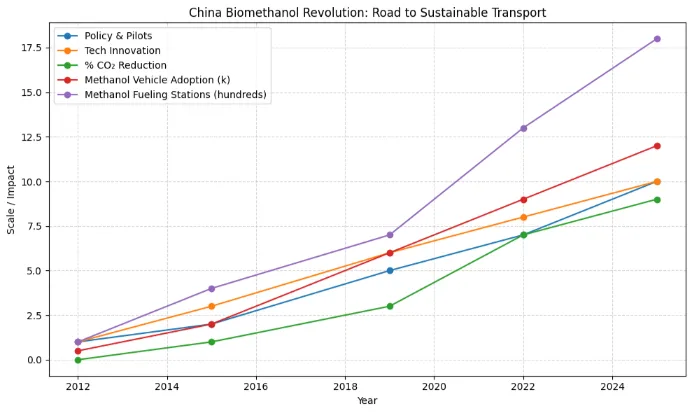
  • Pilot programs (2012): Multi city trials tested M100 fuels in taxis, buses, and trucks, proving safety and efficiency.
  • National promotion (2019): Multi agency policy signaled long term commitment to methanol vehicles.
  • Focus on heavy-duty fleets: Targeted commercial fleets to maximize pollution and fuel impact.
  • Standardization: National fuel and vehicle standards ensured safety and consistency.

Key Technological Innovations

Transitioning methanol from lab to road required solving technical challenges:

  • Dedicated methanol engines: Companies like Geely created optimized M100 engines with better power and efficiency.
  • Corrosion resistance: Specialized fuel system components were developed to handle methanol’s corrosive nature.
  • Cold start technology: Advanced methods ensured engine performance in cold climates.
  • Green methanol production: Scaling biomethanol from biomass and e-methanol from captured CO₂ plus renewable hydrogen.

Building Biomethanol Transport Infrastructure

China overcame the “chicken and egg” problem by:

  • Deploying targeted fueling stations along commercial routes and pilot regions.
  • Leveraging existing liquid fuel infrastructure for cost-efficient storage and distribution.
  • Creating circular economy synergy between agriculture, chemical, and transport sectors.

Environmental and Economic Benefits

The success of biomethanol scaling shows measurable impacts:

  • Carbon reduction: Biomass-based methanol cuts CO₂ emissions by over 59% vs. coal methanol.
  • Air quality: Lower PM, NOx, and SOx emissions improve urban health.
  • Energy security: Domestic biomass feedstock reduces crude oil dependency and price risks.
  • Economic growth: Innovation and jobs grow with methanol vehicle production.
  • Decarbonizing hard-to-abate sectors: Biomethanol fuels trucks and ships where batteries struggle.

Challenges and Solutions

China’s experience highlights key hurdles:

  • Ensuring sustainable biomass feedstocks to avoid deforestation or food conflicts.
  • Transitioning fully away from coal methanol to biogenic and e-fuel pathways for true carbon neutrality.
  • Gaining public acceptance through testing, safety standards, and trusted commercial fleet adoption.

Future of Biomethanol in China Transport

Looking ahead, China emphasizes:

  • E-methanol from renewable hydrogen and captured CO₂ as a carbon neutral fuel cycle.
  • Expanding biomethanol use for heavy duty trucks, marine shipping, and even as a pathway for Sustainable Aviation Fuel (SAF).
, illustrating China’s transition to sustainable transport and the adoption of renewable biomethanol fuel for cleaner mobility.

What the World Can Learn From China Biomethanol Revolution

Five critical lessons emerge for global sustainable transport:

  1. Don’t rely solely on EVs; combine EVs, hydrogen, and biomethanol.
  2. Government-driven policy certainty is vital for scaling investment.
  3. Prioritize early adoption in commercial fleets like taxis and trucks.
  4. Leverage abundant domestic biomass and CO₂ for energy security.
  5. Keep innovating waste-to-fuel and e-fuel technologies for full lifecycle sustainability.

China biomethanol revolution proves that sustainable liquid fuels are essential for large-scale decarbonization. Its strategic approach is a scalable, pragmatic roadmap for countries seeking clean, secure, and economically sound transport solutions worldwide.

Citations

De B. P. Viana, L., Wei, H., Szklo, A., Rochedo, P., & Müller-Casseres, E. (2025). Paving the Way for Low‐Carbon Shipping Fuels in Long‐Haul Trade Routes. International Journal of Energy Researchhttps://doi.org/10.1155/er/8835499.

Pu, Y., Dejaegere, Q., Svensson, M., & Verhelst, S. (2024). Renewable Methanol as a Fuel for Heavy-Duty Engines: A Review of Technologies Enabling Single-Fuel Solutions. Energieshttps://doi.org/10.3390/en17071719.

From Field Waste to Fuel: China’s Rice Straw Biomethanol Revolution – Energy Efficiency, Economic Analysis, and Environmental Benefits

Scaling Sustainable Transport: Lessons From China Biomethanol Revolution Read More »

Green textured background with white text reading 'Carbon Tax & Biofuels: How New Policies Can Cut Costs and Boost Advanced Biofuels' and an icon representing a tax document

Carbon Tax & Biofuels: How New Policies Can Cut Costs and Boost Advanced Biofuels

Making Advanced Biofuels Cost-Competitive with Carbon Taxation

Advanced biofuels, made from non-food sources such as crop residues, forestry waste, and other organic materials, are one of the most promising solutions for cutting greenhouse gas (GHG) emissions in transport and industry. However, their biggest challenge remains high production costs compared to fossil fuels.

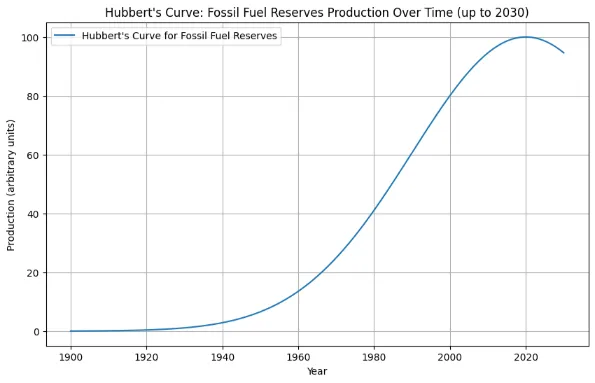
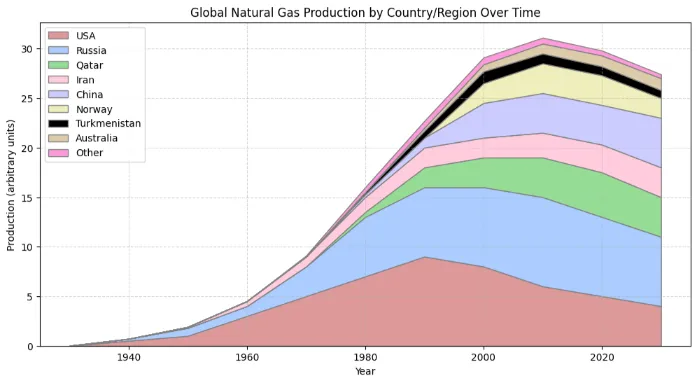
Hubbert's curve showing fossil fuel reserves production from 1900 up to 2030.

Hubbert’s curve showing fossil fuel reserves production from 1900 up to 2030 (Das et al., 2022).

How Carbon Taxation Effects

The empirical findings demonstrate that carbon taxes can be an effective policy instrument for climate mitigation. An increasing number of studies show that carbon taxes can effectively reduce carbon emissions or at least dampen their growth, although the measured effects are often moderate and insufficient to reach current long-term emission goals, largely due to moderate tax rates and generous exemptions for industry. Crucially, the evidence suggests that carbon taxes typically do not negatively affect economic growth, employment, or competitiveness. The macroeconomic outcomes often depend on how revenues are used: recycling revenues via reductions in social security contributions and taxes on labor income is associated with achieving a “double dividend” (environmental and economic benefits), while lump-sum transfers are economically less efficient for this purpose Köppl, A., & Schratzenstaller, M. (2023).

A carbon tax puts a price on greenhouse gas emissions by making polluters pay for the carbon released from fossil fuels. This increases the cost of coal, oil, and gas, while making cleaner options such as advanced biofuels and renewable energy more attractive.

Global evidence shows that carbon taxation:

  • Reduces emissions effectively when tax rates are meaningful.
  • Encourages a clean energy transition without harming long-term economic growth or jobs.
  • Closes the price gap between fossil fuels and biofuels, improving competitiveness.

Smart Tax Regimes to Boost Biofuels

While a simple carbon tax helps, smart tax regimes make it far more effective by directing revenue to clean energy innovation. Key strategies include:

  • Biofuel subsidies and tax credits to reduce production costs (as seen in U.S. Renewable Fuel Standard programs).
  • Research and development (R&D) grants to improve biofuel technologies and cut expenses.
  • Infrastructure investments in storage, logistics, and supply chains for scaling production.
  • Blending mandates that guarantee stable demand and encourage private investment.
  • Revenue recycling by reducing labor or business taxes, creating what economists call the “double dividend”—cleaner energy plus stronger economic growth.

A well-known example is British Columbia’s carbon tax, where revenues were reinvested into lowering other taxes and funding green programs, boosting both climate action and public support.

Insights and Challenges from Global Experience

Policymakers often set low carbon tax rates and grant exemptions to industries in order to ease competitiveness concerns and gain public support. While studies show that carbon taxes generally have little negative effect on firms’ competitiveness, policy design such as exemptions and revenue recycling shapes the outcomes. For example, Norway’s generous exemptions for fossil fuel-intensive industries led to only a modest reduction in CO₂ emissions. Such practices weaken environmental effectiveness and make it harder to reach long-term climate goals, but they help balance the trade-off between effectiveness and acceptance. In some cases, exemptions are linked to conditions, as in Denmark, where reduced rates were tied to energy-saving agreements, resulting in significant emission cuts. Overall, the design of exemptions and tax rates varies across countries, explaining why macroeconomic impacts are often neutral or even positive.

Hubbert curve oil reserves 2020
  • Effectiveness depends on design: higher rates reduce emissions faster, while too many exemptions weaken impact.
  • Revenue use matters: directing funds to low-carbon innovation, public compensation, and energy transition programs increases acceptance.
  • Social fairness is crucial: policies that support lower-income households and ensure transparency win more trust and political backing.
  • Carbon pricing alone is not enough: it must be part of a comprehensive renewable energy policy mix that includes innovation, infrastructure, and regulations.

Conclusion: Carbon Taxation as a Catalyst for Biofuels

The evidence is clear: carbon taxation, when combined with smart tax policies, can make advanced biofuels cost-competitive and accelerate the global transition to a low-carbon economy. By pricing carbon emissions, supporting clean energy investments, and designing fair and transparent revenue use, governments can:

  • Drive sustainable innovation in biofuels.
  • Cut dependence on fossil fuels.
  • Meet climate goals while protecting economic growth and fairness.

To achieve a truly sustainable energy future, To ensure that carbon taxes are environmentally effective and politically feasible, several solutions are suggested, beginning with the implementation of sufficiently high tax rates necessary to adequately trigger emissions reduction and innovation, as current moderate rates are often insufficient to meet long-term goals. Given that carbon taxation alone cannot achieve the profound structural change required for climate neutrality, it must be embedded in a broader policy mix that includes instruments like subsidies, standards, and public infrastructure investments. Revenue recycling is critical for maximizing benefits and gaining public acceptance: policymakers should utilize reductions in taxes on labor income and social security contributions to pursue a potential “double dividend” of environmental and economic benefits, while simultaneously using lump-sum transfers to effectively mitigate regressive effects for lower incomes and boost public acceptance. Furthermore, compensation measures must address not only vertical (income-based) but also horizontal distributional effects (based on socio-demographic factors like location). Finally, securing public support is achieved by providing public information about the positive impact of the tax and the future costs of inaction, and acceptance can be increased by channeling part of the revenues into “environmental projects”. carbon taxation must be embedded in a broader policy package that fosters innovation, builds infrastructure, and ensures public acceptance. Done right, advanced biofuels can become a cornerstone of the clean energy transition.

Citations

Köppl, A., & Schratzenstaller, M. (2023). Carbon taxation: A review of the empirical literature. Journal of Economic Surveys37(4), 1353-1388.

Das, H. S., Salem, M., Zainuri, M. A. A. M., Dobi, A. M., Li, S., & Ullah, M. H. (2022). A comprehensive review on power conditioning units and control techniques in fuel cell hybrid systems. Energy Reports8, 14236–14258.

Also checkout

Leveraging public and private funding for innovation in advanced biofuel conversion pathways

Carbon Tax & Biofuels: How New Policies Can Cut Costs and Boost Advanced Biofuels Read More »

Airport runway with multiple aircraft, highlighting biomethanol aviation fuel potential.

Is Biomethanol the future of Aviation Fuel? Exploring the Possibilities

Biomethanol the future of Aviation Fuel

The aviation industry is at a critical point. With global air travel rebounding and climate change pressures increasing, the search for sustainable aviation fuels (SAF) is more urgent than ever. Among the promising options, biomethanol a renewable form of methanol made from biomass stands out as a potential game changer. But can biomethanol truly fuel the skies of tomorrow? This blog looks at the possibilities, challenges, and future outlook for biomethanol as a sustainable aviation fuel.

Understanding Biomethanol and Its Role in Aviation

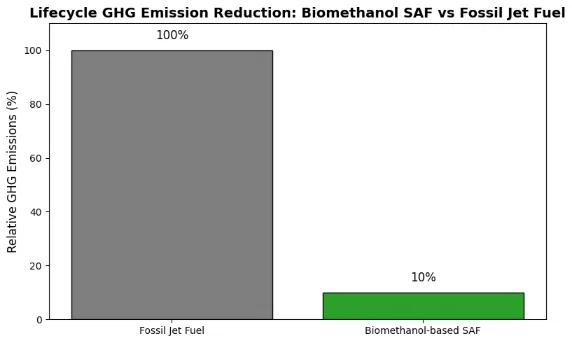
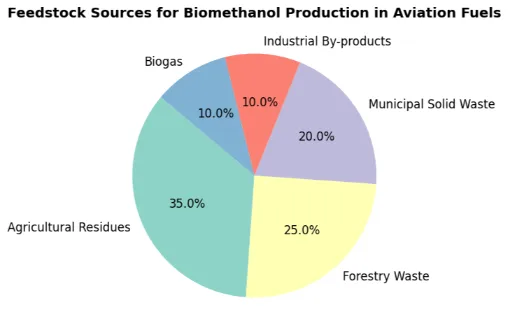
Biomethanol is a type of methanol produced from renewable sources like agricultural waste, forestry waste, municipal solid waste, and biogas. Unlike traditional methanol made from fossil fuels, biomethanol has a much lower carbon footprint, often cutting greenhouse gas emissions by up to 90%.

In aviation, biomethanol can act as a feedstock for making sustainable aviation fuels through processes like methanol-to-jet (MTJ) synthesis. This creates drop-in fuels that work with existing aircraft engines and infrastructure. This flexibility is crucial for speeding up adoption without expensive modifications.

Why Sustainable Aviation Fuels Matter

The aviation industry contributes about 2-3% of global CO₂ emissions, and this share is expected to grow significantly in the coming decades. Unlike road transport, aviation has limited options for electrification because of energy density needs, which makes SAF vital for reducing carbon emissions.

Bar chart for Biomethanol SAF VS Fossil jet fuel GHG emission Reduction

Sustainable aviation fuels lower lifecycle emissions by using renewable feedstocks and modern production technologies. They are compatible with current aircraft and airports, allowing for immediate emissions reductions without compromising safety or performance.

Advantages of Biomethanol as Aviation Fuel Feedstock

1. Feedstock Flexibility and Availability
Biomethanol can be made from various biomass sources, including agricultural waste, forestry residues, and municipal solid waste. This variety ensures a steady, scalable supply chain and minimizes competition with food crops while boosting energy security.

Pie chart of Feedstock sources for Biomethanol production in AVIATION FUELS

2. Lower Carbon Footprint
When produced responsibly, biomethanol can cut greenhouse gas emissions by up to 90% compared to fossil jet fuel. This supports global climate goals and regulatory frameworks like the EU’s ReFuelEU Aviation and the ICAO Carbon Offsetting and Reduction Scheme for International Aviation (CORSIA).

3. Drop-In Fuel Compatibility
Biomethanol-derived synthetic jet fuels can blend with regular jet fuel or be used as 100% SAF in modified engines. This drop-in capability reduces the need for infrastructure changes and helps products enter the market quickly.

4. Supporting Power-to-Liquid (PtL) and E-Fuel Technologies
Producing biomethanol can work alongside renewable hydrogen and captured CO₂ to create e-methanol, an important step for synthetic SAF. This pathway supports a circular carbon economy and boosts fuel sustainability.

5. Economic and Regional Development Benefits
Biomethanol production promotes economic growth in rural areas by creating jobs in biomass collection and processing. It also helps ensure energy independence by using local feedstocks.

Current Developments and Industry Momentum

Several companies and projects are leading the way in biomethanol-based SAF:

  • Metafuels (Switzerland) is building an e-SAF production plant that uses green methanol as feedstock. They aim to comply with European sustainability standards and scale production by the mid-2020s.
  • Johnson Matthey and SunGas Renewables (USA) plan to create over 500,000 metric tonnes of biomethanol a year, enough to power multiple large aircraft.
  • Methanol-to-Jet (MTJ) technology is advancing quickly. Pilot plants are showing that converting biomethanol into high-quality jet fuel is feasible.

Challenges to Overcome

  • Production Cost and Scale: Biomethanol and SAF made from biomethanol currently have higher production costs than fossil jet fuel. Increasing production and improving process efficiency are critical for achieving cost parity.
  • Feedstock Sustainability and Supply Chain: It is crucial to ensure biomass is sourced sustainably without affecting food security or biodiversity. Developing strong, transparent supply chains is a top priority.
  • Regulatory and Certification Hurdles: SAF needs to meet strict aviation fuel standards (e.g., ASTM D7566) and receive regulatory approval. Continued collaboration among industry, regulators, and researchers is required.
  • Infrastructure and Market Adoption: While drop-in compatibility is helpful, investments in fuel distribution, airport storage, and blending facilities are necessary to support the widespread use of SAF.

The Future Outlook for Biomethanol in Aviation

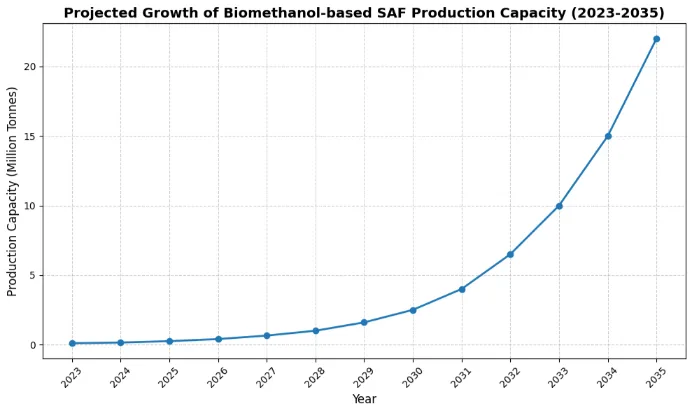
The sustainable aviation fuel market is projected to grow at a compound annual growth rate (CAGR) of about 8.5% through 2035. This growth is driven by policy support, corporate commitments, and technological advances. With its flexible feedstock and potential integration with e-fuels, biomethanol is well-positioned to capture a significant portion of this market.

International initiatives like the EU’s ReFuelEU Aviation, the US Renewable Fuel Standard (RFS), and CORSIA are creating demand for SAF. These programs encourage investments in biomethanol production and MTJ technology.

Biomethanol the Future of Aviation Fuel

Biomethanol presents strong advantages as a sustainable aviation fuel feedstock. It is renewable, versatile, and capable of producing drop-in jet fuels that meet industry standards. While there are challenges in scaling production and cutting costs, ongoing technological advancements and supportive policies are driving progress.

As the aviation industry seeks ways to reach net-zero emissions, biomethanol stands out as a promising option for cleaner skies and a sustainable future for flight.

Projected growth of the SAF PRODUCTION 2035

The Quiet Rise of Biomethanol in Clean Aviation How Waste is Becoming Wings?

While we often hear about electric cars and solar power in the clean energy transition, there’s an unsung hero working behind the scenes to decarbonize aviation: biomethanol. This isn’t about pouring liquid fuel made from corn or wood chips directly into jet engines (though that would be fascinating). Instead, innovative companies are perfecting ways to transform this humble molecule into the sustainable aviation fuel (SAF) that will power our future flights.

The magic happens through “Methanol-to-Jet” (MtJ) technology think of it as alchemy for the 21st century, where companies like Honeywell UOP are turning agricultural waste and captured CO2 into jet fuel through their eFining™ technology. Meanwhile, startups like Switzerland’s Metafuels are building entire “aerobrew” plants (Rotterdam will host their first commercial operation) that can flexibly process different methanol types into SAF.

What makes this particularly exciting? Unlike some biofuels that compete with food crops, biomethanol can be made from municipal trash (thank you, Enerkem for your waste-to-fuel plants) or even recycled industrial emissions. ExxonMobil recently threw its hat in the ring with a proprietary methanol-to-jet process, while engineering firm Topsoe offers MTJet™ technology to anyone serious about making e-fuels.

The aviation industry isn’t just watching they’re actively preparing. While no commercial flights currently run on pure biomethanol-derived SAF (it’s still early days), airlines are hedging their bets. Virgin Atlantic made headlines with a 100% SAF transatlantic demo flight, while United, Emirates, and JetBlue have all inked major SAF supply deals. Over in Nova Scotia, the Simply Blue Group is developing an entire renewable energy park to produce both SAF and biomethanol from green hydrogen by 2026.

The beauty of biomethanol’s role in aviation? It’s not an either/or solution. As Neste’s existing SAF (made from different feedstocks) already powers flights for Alaska Airlines and Ryanair, MtJ technology adds another tool to the toolbox. This diversity matters there’s no single silver bullet for decarbonizing global aviation, but with every new pathway like methanol-to-jet, the industry gets closer to breaking its oil dependence.

Next time you see a plane overhead, consider this: within a decade, its descendants might be flying on fuel brewed from the very waste we’re learning to value rather than discard. Now that’s what we call turning trash into treasure literally.

For deeper dives:

Explore More on Biomethanol:

15 Surprising Applications of Biomethanol You Didn’t Know Were Changing Your Daily Life

Discover unexpected ways biomethanol is already influencing your everyday lifestyle and industries around you.

Biomethanol and Ethanol: Which Renewable Fuel Holds the Key to Our Future?

Compare the advantages of biomethanol and ethanol to understand which fuel will power a greener tomorrow.

Is Biomethanol the future of Aviation Fuel? Exploring the Possibilities Read More »

Title graphic displaying “The Trillion Dollar Shift: How Biomethanol Is Poised to Dominate” with a gradient background representing renewable energy innovation.

The Trillion Dollar Shift: How Biomethanol Is Poised To Dominate

Revolutionary renewable energy transformation reshaping global markets

The global energy sector is undergoing a significant change. Renewable fuels are becoming essential for a sustainable future. Among these, biomethanol stands out as a key player, likely to cause a trillion-dollar shift in the way industries, transportation, and economies generate power. As the world speeds up its move away from fossil fuels, biomethanol is quickly gaining popularity as a low-carbon alternative that could reshape markets and provide important environmental benefits.

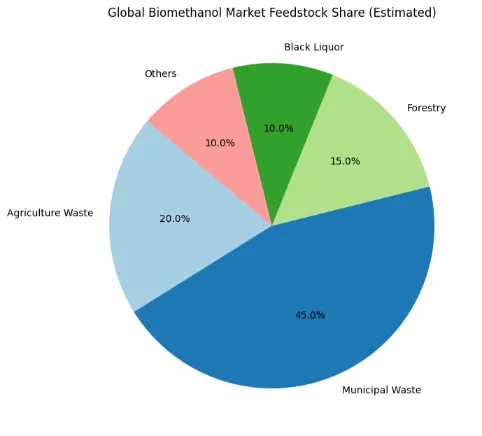
Biomethanol is a renewable version of methanol made from sustainable biomass sources. These sources include agricultural leftovers, forestry waste, municipal solid waste, sewage, and even industrial by-products like black liquor from the pulp and paper industry. Unlike traditional methanol, which comes from fossil fuels, biomethanol has a much lower carbon footprint. This makes it crucial for global efforts to reduce carbon emissions.

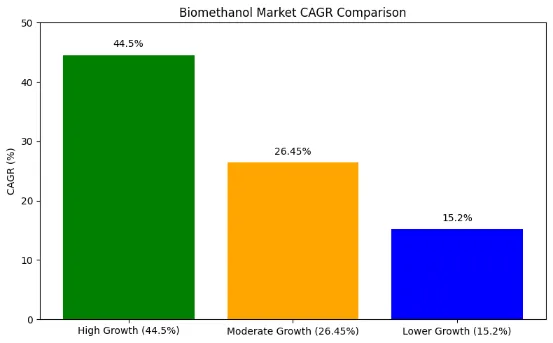
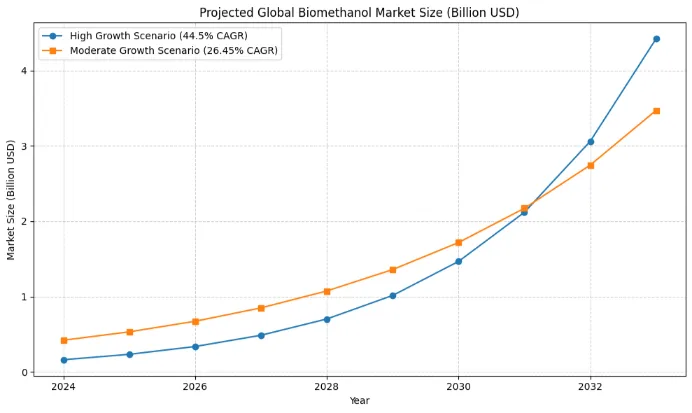
The biomethanol market is growing rapidly. Valued at $161.12 million in 2024, it is expected to rise to $2,118 million by 2032, showing an incredible compound annual growth rate (CAGR) of 44.5%. Broader estimates suggest that the biomethanol fuel market could reach $35 billion by 2033, while the overall renewable methanol market may hit $20.68 billion by 2030. Some forecasts even predict the global biomethanol market could reach $86,150 million by 2033.

Rising Demand for Clean Fuels: Increasing global awareness of climate change and the need to lower greenhouse gas emissions are driving industries and governments to find sustainable alternatives to fossil fuels.

Supportive Government Policies: Tough environmental rules and incentives are boosting investment in biofuels, including biomethanol.

Technological Advances: New developments in biomass gasification, carbon capture, and advanced catalytic processes are making biomethanol production more efficient and affordable.

Versatile Applications: Biomethanol can be used as a feedstock for biofuels, green chemicals, and synthetic materials. It can also be used directly as fuel or blended with gasoline to lower emissions.

1. Environmental Impact


Biomethanol has a much smaller carbon footprint compared to fossil-derived methanol. Its life-cycle emissions are greatly reduced, especially when made from waste materials or used with carbon capture and storage technologies.

2. Versatility Across Sectors


Transportation: Biomethanol can be used as a direct fuel, a gasoline additive, or in biodiesel production, making it important for cleaner road and maritime transport.
Chemicals: Biomethanol is a key ingredient for making acetic acid, formaldehyde, plastics, and other green chemicals.
Energy Storage: With its high energy density and easy storage, biomethanol is being explored as an alternative energy carrier that competes with hydrogen in the developing “Methanol Economy.”

3. Circular Economy and Waste Valorization


By turning municipal solid waste, agricultural leftovers, and other biomass into valuable fuel, biomethanol supports circular economy models and cuts down on landfill use.

4. Compatibility and Infrastructure

 Bar chart of Market BIOMETHANOL CAGR Comparison


Biomethanol can fit into existing fuel systems. It can be used in current engines with minor adjustments and blended with gasoline in various ratios (M10, M15, M85), making it easy for users to transition.

Advanced Gasification & Biorefineries


Modern biorefineries are using advanced gasification methods to convert a variety of feedstocks into biomethanol efficiently. This boosts yields and allows for the use of otherwise hard-to-recycle waste.

Carbon Capture and Utilization


Combining carbon capture and storage (CCS) and direct air capture (DAC) technologies makes biomethanol production even more sustainable. This process uses captured CO₂ as a feedstock, further lowering emissions.

Emerging Production Pathways


New catalytic processes and direct gas fermentation are being created to cut costs and enhance scalability, positioning biomethanol as a truly global option.

By Application


Fuel Blending: The biggest segment is driven by regulations aimed at cutting vehicle emissions and the need for cleaner transportation fuels.
Chemical Manufacturing: Used for creating plastics, formaldehyde, and other chemicals.
Energy Storage and Power Generation: Gaining popularity as an alternative to hydrogen and natural gas.

By Region

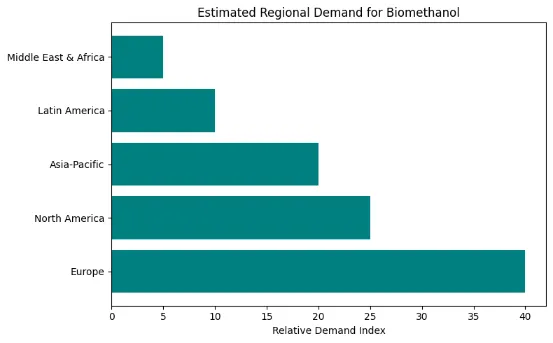
Bar Chart of Regional Biomethanol demand


North America & Europe: Leading the way in adoption, thanks to strong policy support and established biofuel markets.
Asia-Pacific: Set for rapid growth due to rising energy needs, significant investments in renewables, and growing environmental awareness, particularly in China and India.
Emerging Markets: Developing countries are starting to invest in biomethanol infrastructure, recognizing its potential to bypass fossil-based energy systems.

Despite its potential, biomethanol faces several challenges:
High Production Costs: It is currently more expensive to produce biomethanol than fossil-based methanol. This is mainly due to high feedstock costs and the expensive nature of advanced biorefineries.
Feedstock Availability: Sourcing biomass sustainably at scale remains a challenge, especially in areas with limited agricultural or forestry waste.
Infrastructure Needs: Large-scale use requires strong logistics, storage, and distribution networks, which are still developing in many places.
Competition: Biomethanol competes with other biofuels, like biodiesel, and emerging technologies such as hydrogen and electric vehicles.
However, as economies of scale are realized and technologies advance, production costs are expected to drop, making biomethanol more competitive.

pIE Chart of Biomethanol feedstock share (estimated)

Policy and Regulation


Continuing to tighten emissions limits, carbon pricing, and government incentives will be essential for speeding up biomethanol adoption.

Industry Collaboration
Partnerships among technology providers, chemical manufacturers, energy companies, and governments will foster innovation and investment, helping to tackle infrastructure and cost challenges.

Consumer and Corporate Demand
As sustainability becomes a key value for consumers and companies, demand for low-carbon fuels like biomethanol will continue to grow, especially in sectors where electrification is difficult (like shipping, aviation, and heavy industries).

Technological Breakthroughs
Ongoing research and development in feedstock processing, gasification, and carbon capture will make biomethanol even more cost-effective and scalable.

Maritime Shipping: Major shipping companies are testing biomethanol as a marine fuel to meet International Maritime Organization (IMO) targets for reducing sulfur and carbon emissions.
Urban Waste-to-Fuel: Cities are converting municipal solid waste into biomethanol to cut down on landfill use and create local renewable energy.
Green Chemicals: Chemical manufacturers are shifting to biomethanol-based feedstocks to lower their carbon impact and comply with regulations.

The world is on the brink of a trillion-dollar shift, with biomethanol likely to become a key part of the global energy and chemical sectors. Its unique mix of versatility, environmental benefits, and compatibility with current systems makes it a standout option for the clean energy transition. As technology improves and policy support grows, biomethanol is set to take center stage in the renewable fuels market, leading a new era of sustainable growth and climate resilience.

 GRAPHICAL REPRESENTATION OF BIOMETHANOL MARKET SIZE PROJECTED

The Trillion Dollar Shift: How Biomethanol Is Poised To Dominate Read More »