Green Methanol Vehicles in China: Biomethanol Role in Sustainable Transportation
Green Methanol Vehicles in China: The Future of Sustainable Transport
China Clean Fuel Revolution
China stands at a crossroads in its energy transformation, where biomethanol emerges as a game-changing solution for sustainable transportation. As the world’s largest methanol producer and consumer, China currently relies heavily on coal-based methanol – an energy-secure but carbon-intensive option. The shift toward green methanol promises to slash lifecycle carbon emissions by over 65% while completely eliminating harmful sulfur oxide emissions.
The country is making bold strides with more than 100 green methanol projects underway, representing 12 million tonnes of annual production capacity. Industry leaders like GoldWind, CIMC Enric, and Shanghai Electric are driving this transformation. While initial focus centers on marine applications, the benefits will soon extend to road transport as infrastructure develops and economies of scale take effect.
Why Methanol Matters for China Energy Future
With over 408 million vehicles on its roads, China faces immense pressure to balance energy security with environmental responsibility. The nation’s methanol vehicle program, dating back to the 1980s, has evolved through three distinct phases:
- Early Development (1980s-2011): Initial pilots in Shanxi province tested various methanol blends
- Expansion (2012-2018): Government-led trials across 10 cities accumulated 200 million kilometers of real-world testing
- National Rollout (2018-present): Over 30,000 methanol vehicles now operate nationwide
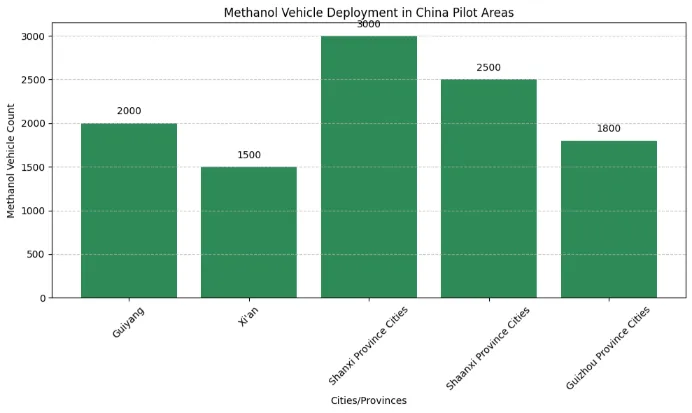
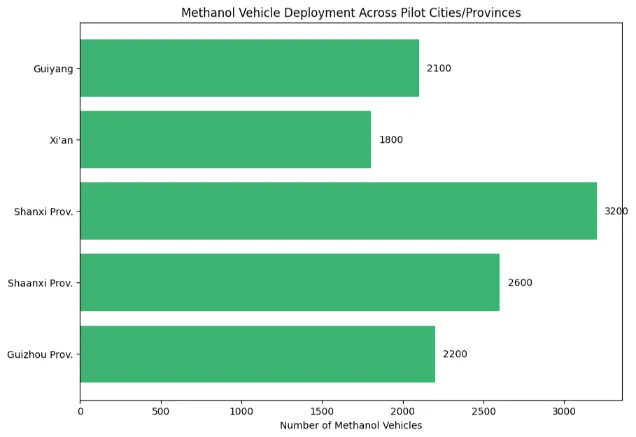
Cities like Guiyang demonstrate methanol’s potential, where 2,000 methanol-powered taxis – about 70% of the city’s fleet – showcase the technology’s viability. Advanced methanol-electric hybrids have already achieved impressive efficiency gains, reducing fuel consumption from 14 liters to just 9.2 liters per 100 kilometers.
From Agricultural Waste to Clean Fuel
China’s biomethanol production leverages abundant domestic resources:
- 829 million tons of agricultural residues (2020 figures)
- 1.87 billion tons of livestock manure
- Growing volumes of municipal solid waste
Major projects are scaling up across the country. GoldWind’s Inner Mongolia facilities will produce 500,000 tonnes annually using straw and wind-powered hydrogen. Shanghai Electric’s Liaoning plant combines wind and biomass inputs, while CIMC Enric’s Guangdong facility focuses on flexible production scaling.
Environmental Advantages Over Conventional Fuels
Biomethanol’s environmental credentials are compelling:
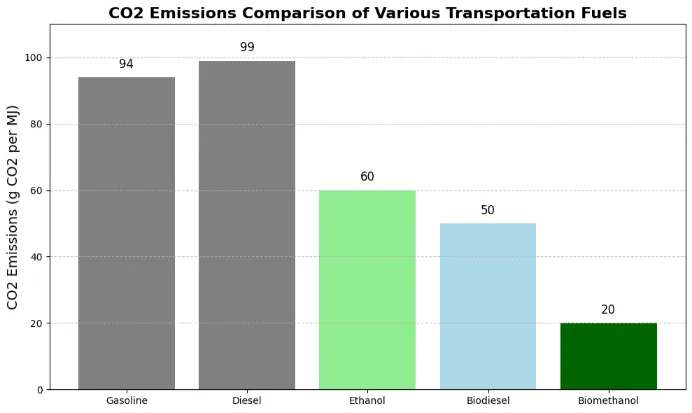
- 65-90% reduction in greenhouse gas emissions compared to fossil fuels
- 80% lower NOx emissions
- Zero sulfur oxide emissions
- Avoids food-vs-fuel conflicts by using waste streams
When compared to electric vehicles in China’s coal-dependent grid, biomethanol often delivers superior full lifecycle emissions performance. It also serves as an efficient hydrogen carrier, bridging today’s combustion engines with tomorrow’s fuel cell vehicles.
Overcoming Economic and Infrastructure Challenges
While methanol fuel costs just 2.16 yuan per liter – less than half the price of gasoline – significant hurdles remain:
- High upfront capital costs for production facilities
- Competition for biomass feedstocks from other biofuel sectors
- Uneven fueling infrastructure concentrated in coal-rich regions
Successful adoption will require:
- National policy coordination to replace fragmented regional approaches
- Targeted financial incentives for producers and consumers
- Strategic feedstock allocation to prevent shortages
- Dedicated “green corridors” with methanol fueling stations
- Public education to build consumer confidence
The Road Ahead
Biomethanol represents a golden opportunity for China to leverage its existing methanol expertise while transitioning to cleaner energy. The technology aligns perfectly with national goals to peak emissions by 2030 and achieve carbon neutrality by 2060.
As production scales up and infrastructure expands, biomethanol’s benefits will extend beyond shipping to transform road transportation. With coordinated policy support and continued technological advancement, China can position itself as a global leader in sustainable fuel solutions.
For those interested in learning more about China’s methanol vehicle program and green fuel initiatives, valuable resources are available from leading research institutions and industry reports. The country’s experience offers important lessons for nations worldwide seeking practical pathways to decarbonize transportation.
Further Reading:
- China’s Bet on Methanol Cars (MIT Tech Review)
- China’s Green Methanol Push (China Daily)
- Sustainable Methanol Production (MDPI)
- Aramco-Methanol Institute Report (Methanol.org)
Biomethanol from Corn Straw: A Life Cycle Insight
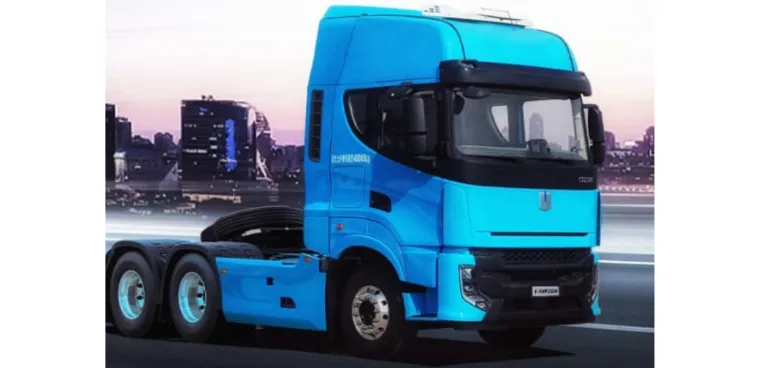
Farizon G Methanol Hybrid Heavy Truck
- Company: Farizon Auto (a Geely Holding Group brand)
- Description: Designed for long-haul logistics, this heavy-duty truck boasts a 1,500 km range and is part of Farizon’s G Truck Product Series. It combines methanol hybrid technology with Geely’s GXA-T architecture, offering reduced operational costs and emissions-free performance 28.
- Key Feature: No AdBlue required—runs solely on renewable methanol.
2. Farizon Homtruck (Methanol REV Tractor)
- Company: Farizon Auto
- Description: A next-gen semi-truck with methanol range-extended electric (REV) technology, featuring a 260kW powertrain and XL flagship cabin. Ideal for green logistics, it holds China’s first M100 methanol engine certification 118.
- Highlight: Used to transport equipment for the 2023 Asian Games, powered by Geely’s zero-carbon methanol 11.
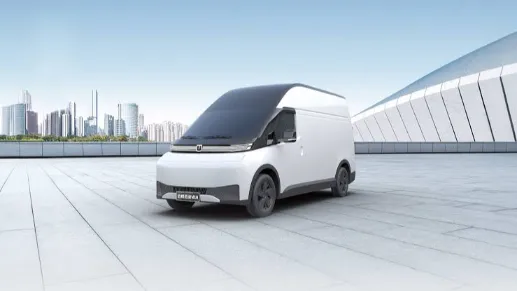
3. Farizon SV (Methanol REV)
- Company: Farizon Auto
- Description: Completes Farizon’s methanol REV lineup, designed for urban and regional freight. Built on the GXA-M architecture, it earned a Euro NCAP Platinum safety rating and is praised for its charging efficiency and cargo space 112.
- Global Reach: Already deployed in Europe, the Middle East, and Asia-Pacific 2.
4. Geely Emgrand Methanol Hybrid
- Company: Geely Auto
- Description: A pioneer in methanol passenger cars, this sedan features a 1.8L flex-fuel engine (methanol/gasoline) and seamless cold-start capability. Tested in Iceland, it reduces CO2 emissions by 70% versus gasoline 107.
- Legacy: The world’s first mass-produced methanol vehicle, with fleets operational in China since 2015 7.
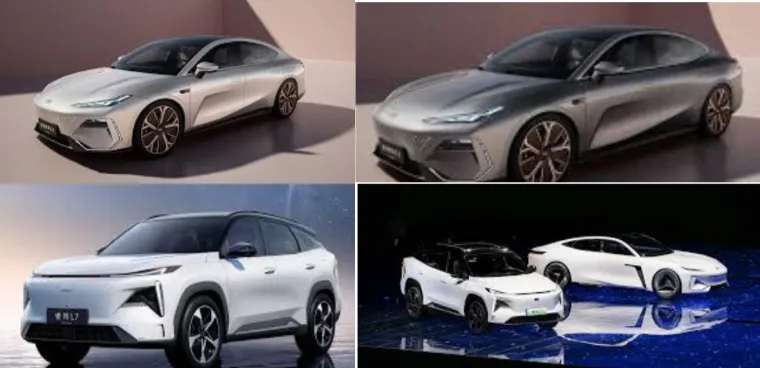
5. Geely Galaxy L6 Super Methanol Hybrid
- Company: Geely Galaxy
- Description: Part of Geely’s “Methanol+Electric” dual-strategy, this plug-in hybrid sedan uses the NordThor 8848 system for a 1,370 km combined range. The 2025 refresh introduces a naturally aspirated methanol variant to rival BYD’s hybrids 123.
- Tech: Features a 13.2-inch AI cockpit and Qualcomm 8155 chip for smart connectivity 3.
Why Methanol? Geely’s Strategic Edge
Geely’s methanol vehicles address critical challenges in decarbonizing transport:
- Infrastructure-Friendly: Liquid methanol requires no expensive storage upgrades 10.
- Performance Parity: Comparable range and power to diesel, with 80% lower PM2.5 emissions 7.
- Global Projects: From Iceland’s CO2-to-methanol plants to Alxa’s 500,000-ton green methanol facility, Geely is building a full supply chain 102.
For more on Geely’s methanol ecosystem, explore their brand page or Farizon’s global portal.
HVO Diesel Role in Creating a Sustainable Mining OperationGreen Methanol Vehicles in China: Biomethanol Role in Sustainable Transportation Read More »