bioethanol

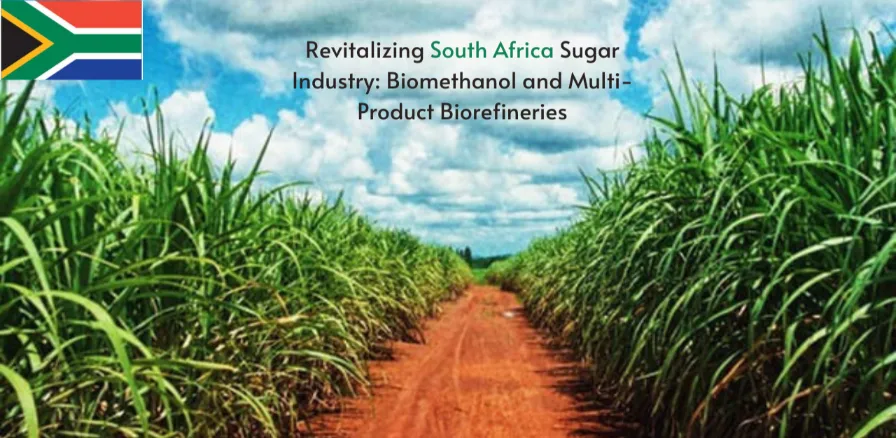
Sugarcane fields in South Africa illustrating biomethanol and multi-product biorefineries for revitalizing the sugar industry

Revitalizing South Africa’s Sugar Industry: Biomethanol and Multi-Product Biorefineries

Revitalizing South Africa’s Sugar Industry: The Promise of Biomethanol and Multi-Product Biorefineries

South Africa’s sugar industry is vital to its rural economy and provides many jobs. For many years, it has generated great value, with sugarcane cultivation and sugar production supporting the lives of over a million people. However, a series of challenges, such as low-cost, subsidized imports, the domestic sugar tax, and climate change, have put the sector in a tough spot. The old way of just producing sugar is no longer viable. To address these issues, researchers are exploring the integration of biorefineries that convert sugarcane and its by-products into a range of value-added products, including biomethanol, bioethanol, chemicals, and electricity.

This is not merely an economic issue; it is a social one. The decline of the sugar industry threatens the stability of entire rural towns in KwaZulu-Natal and Mpumalanga, South africa. As the number of sugarcane farmers has plummeted by 60% and jobs have decreased by an estimated 45% over the past two decades, the need for a radical shift has become undeniable (van der Merwe, 2024).

KwaZulu-Natal and Mpumalanga, South africa

The solution lies not in abandoning the industry, but in a revolutionary transformation: embracing a multi-product biorefinery model (Areeya et al., 2024). This approach goes beyond sugar. It uses the entire sugarcane plant to create a variety of valuable products, including an important renewable fuel: biomethanol. learn also about this south african official site about sugar cane prospective.

The Historical Context: From Prosperity to Precarity

The South African sugar industry has a rich history. The first commercial sugar shipment from Durban occurred in 1850. By 1975, domestic consumption exceeded one million tons. The industry then evolved into a global cost-competitive producer. It served as a major colonial activity that shaped the economy. In the post-apartheid era, it became an important force for land reform and socio-economic development. Since 1994, 21% of freehold land used for cane has been transferred to Black owners.

However, the industry’s resilience has been tested by a series of shocks. The introduction of the Health Promotion Levy (HPL), or “sugar tax,” in 2018 was a major blow, leading to a substantial decline in local demand. At the same time, the influx of heavily subsidized foreign sugar sold at prices lower than production costs has made it hard for local farmers to compete. These challenges, along with increasing operational costs, aging infrastructure, and the severe effects of droughts and floods, have created an unsustainable environment. The annual sugar production in South Africa has declined by nearly 25% over the last 20 years, from 2.75 million to 2.1 million tonnes per annum, forcing the industry to export surplus sugar at a loss (Formann et al., 2020).

Graphical representation of the Decline in sugar industry in South Africa (2000-2020)

The Biorefinery Revolution: A New Blueprint for Sustainability

The traditional sugar mill’s primary product is crystalline sugar, while by-products like molasses and bagasse are often underutilized. Bagasse, the fibrous residue of the sugarcane stalk, is typically burned in low-efficiency boilers to generate steam and power the mill. Molasses, a syrup-like by-product, is used in animal feed or fermented into small quantities of industrial ethanol.

A multi-product biorefinery fundamentally changes this approach. It sees the sugarcane plant as a versatile resource, a “green crude oil,” able to produce not just sugar but also a variety of valuable products. This range of products is essential for finding new revenue sources, stabilizing the industry, and building a more resilient and sustainable value chain.

The South African Sugarcane Value Chain Master Plan to 2030 is a joint effort between the government and industry. It clearly acknowledges the need for diversification. The plan points out opportunities for new products, including:

  • Bioethanol for fuel blending: Offering a cleaner alternative to traditional petrol.
  • Sustainable Aviation Fuel (SAF): A high-value product with significant potential in the global decarbonization of the aviation sector.
  • Bioplastics and biochemicals: Such as polylactic acid (PLA) and succinic acid, which can replace petroleum-based materials.
  • Electricity cogeneration: Utilizing the high energy content of bagasse to generate and export surplus electricity to the national grid.

Biomethanol: The Game-Changer

Among these diversification options, biomethanol is a particularly promising pathway for the South African sugar industry. Methanol is a key ingredient for thousands of chemical products and is becoming a popular fuel source for shipping and other industries aiming to reduce carbon emissions. Made from the thermochemical conversion of biomass like bagasse, biomethanol presents a real, large-scale opportunity.

Biorefinery Pathways and Products

  • Multi-Product Biorefineries: Various scenarios have been modeled for converting sugarcane residues (bagasse and trash) into products such as methanol, ethanol, lactic acid, furfural, butanol, and electricity. Methanol synthesis and ethanol-lactic acid co-production showed strong economic returns, with methanol production also offering the best environmental performance due to low reagent use Petersen, A., Louw, J., & Görgens, J. (2024).
  • Value Addition from Molasses: Single-stage crystallization processes produce A-molasses, which can be converted into high-value products like succinic acid and fructooligosaccharides. Co-production of these products can yield high internal rates of return (up to 56.1%), supporting economic sustainability and job creation Dogbe, E., Mandegari, M., & Görgens, J. (2020). 

Here’s why biomethanol is a perfect fit:

  • Resource Abundance: South Africa processes an average of 19 million tons of sugarcane and 8 million tons of bagasse each year. This provides a consistent and abundant supply of feedstock for biomethanol production.
  • Environmental Benefits: Biogenic methanol from sugarcane offers significant greenhouse gas (GHG) emission reductions compared to fossil fuel-based methanol, contributing to South Africa’s climate change goals.
  • Market Demand: The global demand for green methanol is accelerating, driven by the maritime industry’s need for sustainable fuels. A local production facility could serve both domestic and international markets, creating a new export commodity.
  • Economic Viability: Studies have shown that integrating a biorefinery with an existing sugar mill can lead to a high internal rate of return (IRR), with some scenarios demonstrating an IRR of over 50%. This makes the proposition attractive to potential investors.

The production of biomethanol creates a circular economy within the mill. The energy-rich bagasse, instead of being burned inefficiently, is converted into syngas through gasification. This syngas is then used to synthesize methanol. The leftover waste heat can still be used to generate electricity, maximizing the value obtained from every part of the sugarcane plant.

Lessons from Global Success: The Brazilian Model

South Africa doesn’t need to reinvent the wheel. The Brazilian sugar industry offers a powerful example of successful diversification and revitalization. Facing similar challenges in the 1970s and 80s, Brazil implemented its “Proálcool” program, which mandated the blending of ethanol with petrol (Coelho et al., 2015). This created a captive domestic market for bioethanol, transforming its sugarcane industry from a single-product commodity producer into a global leader in biofuel and sugar production.

Brazil’s success comes from its integrated biorefineries, called “usinas,” that produce both sugar and ethanol. The ability to switch production between the two based on market prices offers a vital buffer against price swings. They also create extra electricity from bagasse, which is sold back to the national grid. This boosts profitability and energy security. This model has shown to be strong and effective, and it offers a clear example of what South Africa can accomplish.

The Path Forward: Policy, Investment, and Innovation

To realize this vision, a concerted effort is needed from all stakeholders:

  • Supportive Policies: The government must provide a stable and predictable policy environment. This includes implementing a mandatory biofuels blending policy to create a secure market for bioethanol and biomethanol. A moratorium on the sugar tax and a more robust anti-dumping policy are also crucial for the industry’s short-term survival. The South African government’s commitment to the Master Plan is a vital step, but swift action is needed to move from a conceptual framework to tangible projects.
  • Investment and Infrastructure: The transition to a biorefinery model requires significant capital investment in new technologies and infrastructure. Public-private partnerships and targeted financial incentives will be essential to attract the necessary funding.
  • Research and Development: Continuous innovation is key. South African research institutions, such as the Sugar Milling Research Institute (SMRI), must continue to explore new product opportunities and optimize conversion processes.

The revitalization of South Africa’s sugar industry is not just about saving a legacy sector; it’s about building a modern, diversified, and sustainable bioeconomy. By embracing a multi-product biorefinery model centered on high-value products like biomethanol, the industry can secure its future, create jobs, and contribute to a greener, more prosperous South Africa. The time for transformation is now.

citations

van der Merwe, M. (2024). How do we secure a future for the youth in South African agriculture? Agrekon. https://doi.org/10.1080/03031853.2024.2341511

Areeya, S., Panakkal, E. J., Kunmanee, P., Tawai, A., Amornraksa, S., Sriariyanun, M., Kaoloun, A., Hartini, N., Cheng, Y., Kchaou, M., Dasari, S., & Gundupalli, M. P. (2024). A Review of Sugarcane Biorefinery: From Waste to Value-Added Products. Applied Science and Engineering Progress. https://doi.org/10.14416/j.asep.2024.06.004

Formann, S., Hahn, A., Janke, L., Stinner, W., Sträuber, H., Logroño, W., & Nikolausz, M. (2020). Beyond Sugar and Ethanol Production: Value Generation Opportunities Through Sugarcane Residues. Frontiers in Energy Research, 8. https://doi.org/10.3389/FENRG.2020.579577

Economic and Environmental Comparison of the Monosodium Glutamate (MSG) Production Processes from A‐Molasses in an Integrated Sugarcane Biorefinery. International Journal of Chemical Engineeringhttps://doi.org/10.1155/2024/2077515.

Revitalizing the sugarcane industry by adding value to A‐molasses in biorefineries. Biofuels, 14. https://doi.org/10.1002/bbb.2122.

Coelho, S. T., Gorren, R. C. R., Guardabassi, P., Grisoli, R. P. S., & Goldemberg, J. (2015). Bioethanol from sugar: the brazilian experience. https://repositorio.usp.br/item/002711539

Revitalizing South Africa’s Sugar Industry: Biomethanol and Multi-Product Biorefineries Read More »

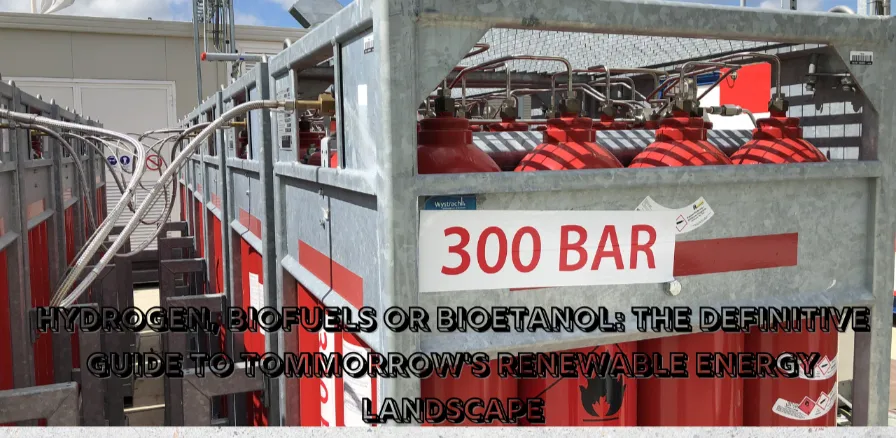
industrial hydrogen storage cylinders labeled “300 BAR” arranged in a metal rack at an energy facility, representing high-pressure gas storage for renewable energy technologies.

Hydrogen, Biofuels Or Bioethanol: The Definitive Guide To Tommorrow  Renewable Energy Landscape

Hydrogen, Biofuels Or Bioethanol

As global energy demands soar and the urgency of climate action intensifies, the search for sustainable, scalable, and economically viable alternatives to fossil fuels is more pressing than ever. In this comprehensive guide, we explore the future of renewable energy through the lens of three of its most promising contenders: hydrogen fuels, biofuels (with a focus on bioethanol), and biomethanol. We’ll examine their benefits, challenges, and the critical role each will play in the evolving energy landscape, with a special emphasis on the keywords: biomethanol and hydrogen fuels.

The Renewable Energy Imperative

The world is at a crossroads. Rising temperatures, volatile fossil fuel markets, and escalating energy consumption have made the transition to renewable energy sources not just an environmental necessity, but an economic and geopolitical imperative. Governments, industries, and consumers are demanding cleaner, more reliable, and more sustainable energy solutions. Among the frontrunners in this race are hydrogen, biofuels (including bioethanol), and the increasingly significant biomethanol.

Hydrogen Fuels: The Rising Star of Clean Energy

What Is Hydrogen Fuel?
Hydrogen fuel is an energy carrier that, when used in fuel cells, produces electricity with water as the only byproduct. There are several types of hydrogen, differentiated by their production methods:

  • Grey Hydrogen: Produced from natural gas, emitting CO₂.
  • Blue Hydrogen: Produced from natural gas with carbon capture and storage.
  • Green Hydrogen: Produced via electrolysis using renewable electricity, emitting no CO₂.

Why Hydrogen Fuels Matter
Hydrogen is emerging as a crucial player in the transition to sustainable energy. Green and low carbon hydrogen are particularly promising for meeting global energy demand and contributing to climate action goals. Hydrogen’s versatility allows it to decarbonize sectors that are hard to electrify, such as heavy industry, shipping, and aviation.

Hydrogen’s Challenges

  • Cost: Green hydrogen is currently more expensive than fossil fuels, though costs are projected to decrease significantly by 2030 as technology matures and scales.
  • Storage and Transport: Hydrogen is challenging to store and transport due to its low energy density and the need for high-pressure or cryogenic systems.
  • Infrastructure: Building a hydrogen economy requires massive investments in infrastructure, including pipelines, fueling stations, and electrolyzers.

The Road Ahead
Despite these challenges, the number of low-emissions hydrogen projects is rapidly increasing, with regulatory frameworks such as the EU’s Hydrogen and Gas Market Package paving the way for broader adoption. As costs fall and infrastructure develops, hydrogen fuels are set to play a pivotal role in the global energy mix.

Biofuels: Powering a Greener Tomorrow

What Are Biofuels?
Biofuels are renewable fuels derived from organic matter (biomass), such as plants, agricultural waste, and even algae. The two main types are:

  • Bioethanol: An alcohol made by fermenting the sugars in crops like corn, sugarcane, and cellulosic biomass.
  • Biodiesel: Produced from vegetable oils, animal fats, or recycled greases.

The Case for Bioethanol
Bioethanol stands out as a biofuel with significant environmental and economic benefits:

  • Greenhouse Gas Reduction: Bioethanol can reduce greenhouse gas emissions by up to 90% compared to gasoline.
  • Economic Opportunities: Especially in developing countries, bioethanol production can boost rural economies, reduce energy imports, and create jobs.
  • Versatility: Bioethanol is already used as a blend in gasoline (e.g., E10, E85), making it a drop-in solution for existing vehicle fleets.

Innovations and Trends


Ongoing research is enhancing bioethanol production efficiency and expanding feedstock options to include algae and seaweed. The United States and Brazil lead the world in bioethanol production, leveraging sugarcane and corn, respectively.

Market Growth
The global bioethanol market is projected to reach a multimillion-dollar valuation by 2030, driven by technological advancements, policy support, and growing demand for sustainable fuels.

Challenges for Bioethanol

  • Feedstock Competition: Balancing land use for food versus fuel remains a concern.
  • Sustainability: Responsible land management and sustainable sourcing are critical to avoid negative environmental impacts.

Biomethanol: The Unsung Hero of the Renewable Revolution


Biomethanol is methanol produced from renewable biomass sources, such as agricultural waste, forestry residues, or even municipal solid waste. It is a clear, colorless liquid with properties nearly identical to conventional methanol, but with a much lower carbon footprint.

Production and Advantages

  • Production Process: Biomethanol is produced by gasifying biomass into syngas, which is then converted into methanol, often with the addition of green hydrogen.
  • Storage and Transport: Unlike hydrogen, biomethanol is easily stored and transported using existing infrastructure, making it an attractive hydrogen carrier and marine fuel.
  • Carbon Reduction: Biomethanol can achieve up to 90% greenhouse gas reductions within both the methanol and hydrogen supply chains.

Biomethanol in the Marine Sector
The shipping industry is under intense pressure to decarbonize. Biomethanol is gaining traction as a marine fuel due to its compatibility with existing engines and infrastructure, as well as its sustainability credentials. In China, over 100 projects are underway to produce more than 30 million tonnes of green methanol annually, with 12 million tonnes dedicated to biomethanol.

Biomethanol vs. E-Methanol

  • E-Methanol: Produced by combining captured CO₂ with green hydrogen, but currently less commercially viable due to higher production costs and less established technology.
  • Biomethanol: More cost-competitive and technologically mature, making it a leading candidate for near-term adoption in shipping and other sectors.

Biomethanol and Hydrogen Fuels: A Powerful Synergy

Biomethanol and hydrogen fuels are not mutually exclusive; in fact, they complement each other in the broader renewable energy ecosystem.

  • Hydrogen Carrier: Biomethanol can serve as a practical hydrogen carrier, facilitating the storage and transport of hydrogen energy over long distances especially by sea where pure hydrogen’s storage challenges are prohibitive.
  • Decarbonizing Industry: Both fuels can be used to decarbonize hard-to-abate sectors, such as chemicals, shipping, and heavy transport.
  • Existing Infrastructure: Biomethanol can leverage current methanol plants, pipelines, and carrier ships, enabling faster deployment compared to building entirely new hydrogen infrastructure.

The Future Outlook: Trends, Opportunities, and Challenges

 Graphical representation of Biomethanol And Hydrogen Fuels usage for Power Plants

Market Dynamics

  • Policy Support: Governments are ramping up mandates for biofuel blending and supporting green hydrogen projects, driving investment and innovation.
  • Technology Advancements: Improvements in electrolysis, gasification, and fermentation are making hydrogen fuels, bioethanol, and biomethanol more cost-competitive and sustainable.
  • Global Collaboration: International cooperation is accelerating research, development, and deployment of renewable fuels, particularly in emerging markets.

Key Challenges

  • Scaling Production: Meeting global energy demand will require massive scaling of biomass supply chains, electrolyzer capacity, and supporting infrastructure.
  • Sustainability: Ensuring that feedstock sourcing does not compete with food production or cause deforestation is paramount.
  • Cost Parity: Achieving cost parity with fossil fuels remains a hurdle, though declining renewable electricity prices and technological breakthroughs are narrowing the gap.

Hydrogen fuels, bioethanol, and biomethanol each have their own perks and hurdles. Hydrogen fuels could really help cut down carbon emissions in different industries, but they need a lot of infrastructure and lower costs to really take off.

Bioethanol is already making waves in transportation, especially in places where farming is a big deal. On the other hand, biomethanol is starting to shine as a flexible option—particularly for shipping and carrying hydrogen—because it works well with what we already have and can really help reduce carbon too.

When it comes to renewable energy, there isn’t gonna be just one solution; it’s all about a mix of different technologies working together. If we put our money into fresh ideas, team up globally, and focus on being sustainable, we can create an energy system that’s cleaner, stronger, and fairer for future generations.

So here’s the big takeaway: the combo of biomethanol and hydrogen fuels, along with the solid impact of bioethanol, is gonna be key for the future of renewable energy. Keep yourself updated, get involved, and let’s be part of making energy greener and more sustainable.

Renewable Energy Resources

Recommended Resources for Further Reading

Hydrogen, Biofuels Or Bioethanol: The Definitive Guide To Tommorrow  Renewable Energy Landscape Read More »