biofuel production

Green agricultural fields under a dramatic cloudy sky with bold headline text reading “From Waste to Wonder: How Biomethanol Production Is Transforming Agricultural Byproducts” overlaid in the center of the image, representing sustainable biofuel production from farm residues.

From Waste To Wonder: How Biomethanol Production Is Transforming Agricultural Byproducts

Understanding Biomethanol Production and Its Importance

Biomethanol is a form of methanol made from renewable sources, mainly biomass like agricultural residues, forestry waste, and organic municipal waste. Unlike traditional methanol made from fossil fuels, biomethanol has a much lower carbon footprint, often reducing greenhouse gas emissions by up to 90%. It serves as a flexible fuel, a chemical source, and a hydrogen carrier, making it crucial for the shift toward sustainable energy.

Agricultural byproducts, including crop stalks, husks, straw, and other organic materials, are plentiful but often underused. Converting these materials into biomethanol not only adds value to waste but also addresses important environmental issues like waste management and carbon emissions.

The Challenge and Opportunity of Agricultural Byproducts

The Problem of Agricultural Waste

Globally, agriculture produces billions of tons of biomass waste every year. Traditionally, much of this waste has been open burned, creating serious air pollution and contributing to climate change. In many areas, poor disposal of agricultural byproducts harms soil health, contaminates water, and reduces biodiversity.

Unlocking Value from Waste

Biomethanol production provides a sustainable way to convert these residues into clean fuel and chemicals. This method supports circular economy ideas by minimizing waste and maximizing resource reuse.

How Biomethanol is Produced from Agricultural Byproducts

The process of creating biomethanol from agricultural waste typically includes these key steps:

1. Feedstock Collection and Preparation

Agricultural residues like corn stover, wheat straw, rice husks, and sugarcane bagasse are gathered and cleaned to remove impurities.

2. Gasification
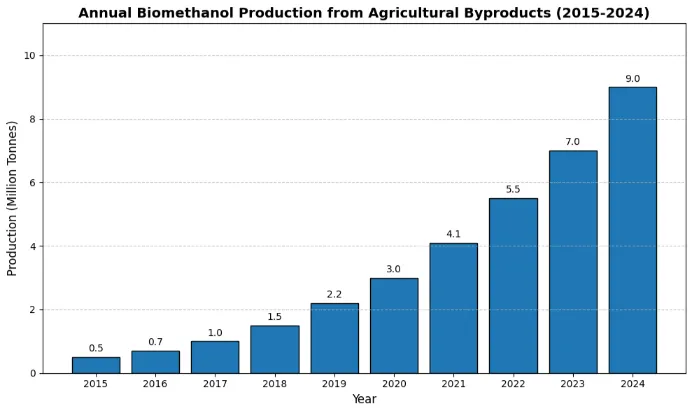
BAR CHART OF ANNUAL BIOMETHANOL PRODUCTION (2015-2024)

The biomass is turned into synthesis gas (syngas), a mix of carbon monoxide (CO), hydrogen (H₂), and carbon dioxide (CO₂), through high-temperature gasification.

3. Methanol Synthesis

The syngas is chemically converted into methanol under controlled temperature and pressure.

4. Purification

The raw methanol is purified to meet fuel or chemical-grade standards.

This process can also be combined with carbon capture and utilization technologies to further cut emissions, increasing the sustainability of biomethanol production.

Environmental Benefits of Biomethanol from Agricultural Byproducts

Significant Carbon Emission Reductions

Using renewable feedstocks instead of fossil fuels, biomethanol production greatly lowers net carbon emissions. When agricultural residues are transformed into biomethanol rather than being burned or left to decay, methane and CO₂ emissions decrease.

Waste Management and Pollution Reduction

Turning agricultural waste into biomethanol helps eliminate open-field burning, a major source of air pollution in many regions. This results in better air quality and health benefits for the public.

Soil and Water Conservation

Using residues for biomethanol production can work alongside sustainable farming practices that keep soil healthy and prevent erosion, unlike excessive burning or removal of residues.

Economic and Social Impact on Rural Communities

Creating New Income Streams

Farmers and rural communities can earn money by selling agricultural byproducts that were once thrown away or burned. This extra source of income helps support livelihoods and rural development.

Job Creation and Local Industry Growth

Biomethanol production facilities boost local economies by creating jobs in areas like feedstock collection, processing, and plant operations. This encourages industry growth in rural areas.

Energy Access and Security

Biomethanol produced locally can improve energy access in rural areas, providing a reliable and cleaner fuel option for cooking, heating, and transportation.

Biomethanol Role in the Renewable Energy Landscape

Transportation Fuel

Biomethanol is a promising renewable fuel for vehicles and can be used directly or blended with gasoline. It offers high octane, cleaner combustion, and works with existing fuel infrastructure.

Marine and Aviation Fuel

The shipping and aviation industries are considering biomethanol as a low-carbon alternative to regular fuels, helping them meet strict emissions standards.

Chemical Industry Feedstock

Biomethanol acts as a renewable base material for making formaldehyde, acetic acid, and bio-based plastics, reducing dependence on petroleum-based chemicals.

Hydrogen Carrier

Biomethanol can efficiently store and transport hydrogen, supporting the growing hydrogen economy and helping to decarbonize hard-to-electrify sectors.

Technological Innovations Driving Biomethanol Production

New Gasification Technologies

Recent gasification methods boost conversion efficiency and allow for a wider variety of agricultural residues to be used.

Integration with Carbon Capture

Linking biomethanol production with carbon capture and utilization enhances sustainability by recycling CO₂ emissions.

Hybrid Production Pathways

Combining biomass gasification with green hydrogen (produced from renewable electricity) allows for “e-methanol” production, further lowering carbon footprints.

Global Examples of Biomethanol from Agricultural Byproducts

  • China: Leads large-scale biomethanol production from agricultural residues like corn stover and wheat straw, helping local economies and clean energy initiatives.
  • Europe: Projects are integrating biomethanol into transport fuel supply chains and chemical manufacturing, focusing on EU Green Deal targets.
  • Brazil: Uses sugarcane bagasse for biomethanol production, supporting its established bioethanol industry.

Challenges and Future Outlook

Feedstock Supply and Sustainability

Ensuring a steady and sustainable supply of agricultural residues without harming soil health is essential.

Economic Competitiveness

Scaling biomethanol production cost-effectively requires new technology and supportive policies.

Infrastructure and Market Development

Building distribution networks and demand for biomethanol fuels and chemicals is critical for broader adoption.

Conclusion: Waste to Wonder Biomethanol Transformative Potential

Biomethanol production from agricultural byproducts shows how innovation can turn environmental challenges into sustainable solutions. By turning waste into clean fuel and useful chemicals, biomethanol supports climate goals, rural development, and a circular economy.

As technology advances and policies come together, biomethanol is set to become a key part of the renewable energy landscape, proving that what was once waste can truly become something valuable.

The Biomethanol Advantage: How Small Businesses Are Cutting Emissions While Boosting Profits

Discover how small enterprises are leveraging biomethanol to save money and reduce emissions.

Why Major Investors Are Quietly Pouring Billions into Biomethanol

Explore why big money is flowing into the biomethanol industry and what it means for the future.

From Waste To Wonder: How Biomethanol Production Is Transforming Agricultural Byproducts Read More »

Aerial view of a golden-yellow agricultural field with parallel crop rows and overlaid text reading “The Science Behind Biomethanol – How It’s Made and Why It Matters,” symbolizing sustainable fuel derived from biomass crops.

The Science Behind Biomethanol: How It Made And Why Its Matter

The Science Behind Biomethanol: How It Made And Why It Matters

Biomethanol is methanol made from renewable biomass sources instead of fossil fuels. Methanol itself is a simple alcohol (CH3OH) often used as a chemical feedstock, solvent, and more recently, as a transportation fuel. When produced from biomass, methanol becomes biomethanol, a sustainable liquid fuel that can greatly lower carbon emissions compared to traditional fossil fuels.

Unlike fossil methanol, which typically comes from natural gas or coal, biomethanol is made from organic waste, agricultural byproducts, wood, and other renewable resources. This renewable origin gives biomethanol a much smaller carbon footprint, making it important for reducing carbon emissions in shipping, road transport, and chemical manufacturing.

Why Biomethanol Matters

  1. Climate Benefits
    Biomethanol can cut lifetime greenhouse gas emissions by up to 60-95% compared to fossil fuels, depending on feedstock and production methods. This makes it a useful tool for meeting international climate goals like the IMO’s 2050 target to halve shipping emissions and the EU’s Fit for 55 initiative.
  2. Versatile Fuel
    Biomethanol is a liquid at room temperature, which makes it easier to store, transport, and use than gaseous fuels like hydrogen or ammonia. It can be employed in existing or modified internal combustion engines and fuel cells, providing flexibility in operations.
  3. Circular Economy
    By using waste products such as agricultural residues, manure, and food waste, producing biomethanol encourages better waste management and creates value from materials that would otherwise decompose and emit methane, a strong greenhouse gas.
  4. Energy Security
    Biomethanol can be made locally from plentiful biomass resources, decreasing reliance on imported fossil fuels and improving energy security for many countries.

How Is Biomethanol Made? The Production Science

Making biomethanol involves turning biomass into a synthesis gas (syngas) mixture, which is then converted into methanol through catalysis. The main production methods are:

1. Biomass Gasification

Feedstock: Woody biomass, agricultural residues, municipal solid waste, and other plant materials.

Process: Biomass is heated at high temperatures (700-1000°C) in a low-oxygen environment to create syngas—a blend of carbon monoxide (CO), hydrogen (H2), and carbon dioxide (CO2).

Methanol Synthesis: The syngas is cleaned and introduced into a catalytic reactor where CO and H2 react under pressure to form methanol.

This thermochemical method is well-established and scalable, allowing for biomethanol production from various biomass sources.

2. Biogas Reforming

Feedstock: Biogas produced from the anaerobic digestion of manure, food waste, sewage sludge, and agricultural waste.

Process: Biogas (mainly methane and CO2) is purified and reformed (via steam reforming or partial oxidation) to produce syngas.

Methanol Synthesis: Similar catalytic conversion of syngas to methanol occurs next.

This method uses organic waste streams, enhancing waste management and cutting methane emissions from decomposition.

3. Hybrid Processes

Emerging technologies combine hydrogen (created through renewable electrolysis) with biogenic CO2 or syngas to produce biomethanol. This method can increase methanol yields and further decrease carbon footprints by utilizing green hydrogen.

Feedstocks for Biomethanol Production

The choice of feedstock is crucial for sustainability and economics. Common feedstocks include:

  • Woody Biomass: Forestry leftovers, wood chips, and sawdust.
  • Agricultural Waste: Straw, husks, corn stover.
  • Organic Waste: Food waste, manure, sewage sludge.
  • Municipal Solid Waste: Biogenic fractions suitable for gasification.
  • Recycled Carbon: CO2 captured from industrial processes mixed with renewable hydrogen.

Using waste and residues avoids competition with food production and supports circular bioeconomy principles.

Technological Advances Improving Biomethanol Production

Recent improvements boost efficiency and output:

  • Gasification Improvements: Advanced gasifiers that better remove tar and clean syngas.
  • Catalyst Development: More durable catalysts that raise methanol yield and lower energy use.
  • Hybrid Systems: The inclusion of renewable hydrogen enhances carbon utilization.
  • Process Integration: Combining gasification, reforming, and methanol synthesis in optimized plants.

These improvements are making biomethanol production more affordable and scalable.

Environmental and Economic Benefits

Lifecycle Emissions Reduction

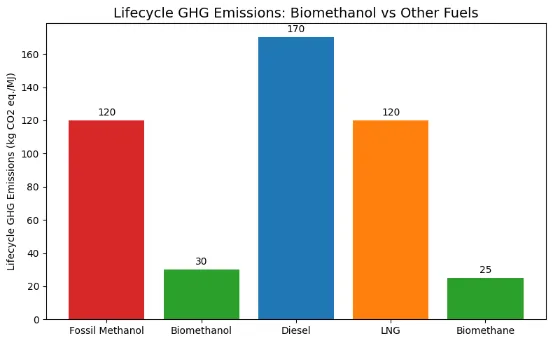
Biomethanol’s lifecycle emissions can be 60-95% lower than fossil methanol, based on feedstock and technology. By diverting waste from landfills and preventing methane emissions, it provides extra climate benefits.

Bar chart of BIOMETHANOL VS other fuels Life cycle of GHG Emissions

Waste Management

Making biomethanol from organic waste streams cuts down on landfill use and related environmental issues like groundwater contamination and methane leakage.

Economic Opportunities

Biomethanol production creates jobs in rural areas, supports agricultural sectors, and encourages new industries focused on waste recovery.

Biomethanol in the Energy Transition

Shipping Fuel

Biomethanol is becoming popular as a marine fuel due to its low emissions and compatibility with dual-fuel engines. Major shipping companies are investing in methanol-powered vessels, backed by growing bunkering infrastructure.

Road Transport

When mixed with gasoline or used in dedicated engines, biomethanol can lower emissions in light and heavy-duty vehicles.

Chemical Industry

Biomethanol serves as a renewable feedstock to produce chemicals, plastics, and synthetic fuels, aiding the decarbonization of industrial sectors.

Challenges and Future Outlook

Feedstock Availability and Logistics

Large-scale biomethanol production requires sustainable biomass supply chains and efficient logistics to gather and process diverse feedstocks.

Cost Competitiveness

While costs are falling, biomethanol is still pricier than fossil fuels. Policy incentives, carbon pricing, and technological advancements will be essential for improving competitiveness.

Regulatory Support

Clear certification frameworks and supportive policies are necessary to encourage biomethanol use and maintain sustainability standards.

Conclusion

Biomethanol stands as a scientifically solid, environmentally sustainable, and economically promising fuel for a low-carbon future. By transforming renewable biomass and waste into a versatile liquid fuel, biomethanol tackles climate change, waste management, and energy security issues all at once. As technology improves and markets expand, biomethanol’s importance in the global energy transition will only grow, making it a crucial part of the clean energy puzzle.

Blog Links

Explore More on Biofuels & Climate Initiatives

The Science Behind Biomethanol: How It Made And Why Its Matter Read More »