biofuels India

Lush green grass background with text overlay "India Green E20 Fuel & Biomethanol Decarbonise Transport" where E20 is highlighted in a green box.

India Next Green Revolution: E20 Fuel and Biomethanol Dual Role in Decarbonising Transport

India’s push for a “Green Revolution” in transport centers on E20 fuel (20% ethanol blend) and biomethanol as key alternatives to fossil fuels. These biofuels promise to reduce emissions, enhance energy security, and support rural economies, but their widespread adoption faces technical, economic, and resource challenges.

The road to Net Zero by 2070 demands a radical shift in India’s energy matrix, particularly in the ever growing transport sector. As the world’s third largest energy consumer, India’s reliance on imported crude oil not only burdens its foreign exchange reserves but also contributes significantly to greenhouse gas (GHG) emissions. The solution to this dual challenge lies not in a single miracle cure, but in a portfolio of indigenous, renewable, and sustainable fuels. At the heart of this national energy revolution are two game changers: E20 fuel and biomethanol.

The Immediate Accelerator: Understanding E20 Fuel India‘s Mandate

India’s Ethanol Blended Petrol (EBP) Programme is perhaps the most aggressive and successful biofuel initiative in recent history. By advancing the target of 20% ethanol blending in petrol (E20) from 2030 to 2025, India has signaled an unwavering commitment to biofuels.

Effectiveness and Emission Impacts of E20 Fuel

E20 blends can be used in existing petrol engines without major modifications, offering significant reductions in carbon monoxide (CO), hydrocarbons (HC), particulate matter (PM), and particulate number (PN) emissions up to 44% in some cases . However, E20 use often leads to increased nitrogen oxide (NOx) emissions and a slight reduction in fuel economy (about 4%). Long-term studies show minimal impact on engine performance and durability, with a minor reduction in ozone formation potential (Mohamed et al., 2024). 

The Policy Push: Why E20 is a National Imperative

The push for E20 fuel India is driven by a powerful three-pronged strategy:

  • Energy Security and Forex Savings: Blending ethanol, a domestically produced fuel, with petrol significantly reduces the need for crude oil imports. This measure is projected to save billions of dollars in foreign exchange annually, bolstering India’s energy self-reliance and insulating the economy from global oil price volatility.
  • Environmental Gains: Ethanol burns cleaner than pure petrol. The government estimates that the use of E20 fuel can cut carbon monoxide emissions by up to 50% in two-wheelers and 30% in four-wheelers compared to unblended petrol. This is a crucial step in combating urban air pollution and meeting India’s climate targets.
  • Rural Prosperity and Circular Economy: The ethanol supply chain provides a vital link between the agricultural and energy sectors. By procuring ethanol from crops like sugarcane, maize, and surplus/damaged food grains, the programme guarantees stable income for farmers—effectively turning them into ‘Urjadaatas’ (energy providers). This also promotes a circular economy by utilising agricultural surplus and waste.

Navigating the Challenges of Mass Rollout

Despite the significant benefits, the rapid rollout of E20 fuel has encountered a few headwinds that must be addressed for sustained success.

  • Vehicle Compatibility and Consumer Concerns: A major challenge is the millions of vehicles sold before 2023 that were not originally designed or calibrated for a 20% ethanol blend. Consumers have reported issues such as a marginal drop in fuel efficiency (estimated at 1-2% for newer cars and up to 6-7% for older models), as well as concerns about engine wear, corrosion, and warranty voidance. The government and automotive industry are working to ensure that newer models are E20-compliant and to provide clarity on retrofitting older vehicles.
  • The Food vs. Fuel Debate: Although the policy encourages the use of surplus and waste material, a large-scale shift to crop-based ethanol raises questions about land-use changes, water intensity (especially for sugarcane), and potential implications for food security if essential food grains are diverted.
  • Ensuring Sustainability of Feedstock: To mitigate the ‘Food vs. Fuel’ concern, the focus must shift towards second generation (2G) ethanol production, which uses agricultural residues like rice straw, cotton stalk, and bagasse. This not only diversifies feedstock but also addresses the massive problem of agricultural waste burning.

The Long-Term Vision: Biomethanol as the Hydrogen-Ready Fuel

Biomethanol is a leading candidate for liquid organic hydrogen carriers (LOHCs), enabling safe, efficient hydrogen storage and transport (Valentini et al., 2022). While E20 fuel provides an immediate, scalable solution for light-duty vehicles, a truly deep decarbonisation strategy requires exploring high energy density, sustainable fuels for the future, particularly for the hard to abate sectors like long haul trucking and shipping. This is where biomethanol steps in as a vital part of the energy mix.

The Power and Versatility of Biomethanol

Biomethanol is a sustainable version of methanol, chemically identical to its fossil counterpart but produced from renewable sources such as municipal solid waste, agricultural residue (biomass), or captured carbon dioxide CO2 (e-methanol). Its role in India’s green revolution is multifaceted:

  • A Fully Green Fuel for Transport: Methanol can be used directly as an automotive fuel (M15, M85, M100 blends) or to power next-generation engines. It has a high-octane rating, offering superior engine performance, and its combustion results in significantly lower emissions of Sulphur Oxides (SOx), Nitrogen Oxides (NOx), and Particulate Matter compared to diesel.
  • The Best Green Hydrogen Carrier: Biomethanol is a highly efficient and safe liquid carrier for green hydrogen. It can be stored and transported using existing infrastructure and then easily converted into hydrogen on demand via reforming technology. This makes it a practical, immediately available bridge to the hydrogen economy, bypassing the significant logistical challenges of storing and transporting cryogenic or compressed hydrogen.
  • A Chemical Industry Decarbonizer: Beyond fuel, biomethanol is a fundamental building block for hundreds of chemical products, including formaldehyde, acetic acid, and various plastics. Replacing fossil methanol with biomethanol offers a direct path to decarbonising these energy-intensive industrial sectors.

Integrating Biomethanol into India’s Strategy

To fully harness the potential of biomethanol, India must:

  1. Develop Waste-to-Methanol Infrastructure: Incentivise the creation of large-scale facilities that convert municipal solid waste and agricultural residues into biomethanol. This simultaneously solves a waste management crisis and creates an indigenous fuel source.
  2. Pilot Methanol-Driven Fleets: Launch pilot projects for methanol-blended fuel in long-haul trucks, buses, and marine vessels to gather performance data and build public confidence, similar to the initial rollout of the EBP programme.
  3. Establish Clear Blending Standards: While the focus is currently on ethanol, the government should lay the groundwork for methanol blending standards to attract private investment and provide regulatory certainty.

A Dual Strategy for a Decarbonised Future

The Indian transport sector is too large and diverse for a one size fits all solution. The combination of E20 fuel and biomethanol offers a pragmatic, phased approach to decarbonisation:

E20 fuel is the immediate, volume-based solution, leveraging India’s strong agricultural base to transition the existing fleet and provide crucial energy security. Biomethanol represents the next leap—a strategic fuel for the future that can unlock the hydrogen economy and address the emissions from the hardest-to-abate segments. Together, they form the cornerstone of India’s indigenous and sustainable energy policy, paving the way for the nation’s “Next Green Revolution.”

Citations

Mohamed, M., Biswal, A., Wang, X., Zhao, H., Harrington, A., & Hall, J. (2024). Impact of RON on a heavily downsized boosted SI engine using 2nd generation biofuel – A comprehensive experimental analysis. Energy Conversion and Management: Xhttps://doi.org/10.1016/j.ecmx.2024.100557.

Valentini, F., Marrocchi, A., & Vaccaro, L. (2022). Liquid Organic Hydrogen Carriers (LOHCs) as H‐Source for Bio‐Derived Fuels and Additives Production. Advanced Energy Materials, 12. https://doi.org/10.1002/aenm.202103362.

India Next Green Revolution: E20 Fuel and Biomethanol Dual Role in Decarbonising Transport Read More »

Biogas to biomethanol production plant supporting India’s methanol economy and renewable fuel transition

India Methanol Economy: Opportunities and Challenges for Biomethanol from Biogas

India Methanol Economy: Opportunities and Challenges for Biomethanol from Biogas

India is the third largest energy consumer in the world. It faces two big challenges: energy security and reducing carbon emissions. The country wants to lower its substantial oil import bill and meet its goal of net-zero emissions by 2070. This has led to innovative strategies. One key approach is the ‘Methanol Economy.’ Led by NITI Aayog, the nationwide effort aims to replace traditional fossil fuels with locally sourced methanol, especially biomethanol made from biogas. This shift represents a transformative solution that turns waste into valuable resources, offering significant environmental and social advantages.

This blog looks at India’s growing biomethanol sector, its potential, the policy landscape, and the challenges to widespread adoption.

India’s Methanol Economy: National Vision and Strategic Imperatives

NITI Aayog’s Methanol Economy Program
NITI Aayog launched the ‘Methanol Economy’ program in 2016. This initiative aims to change India’s energy landscape. The program supports national goals to:

  • Guide India towards a low-carbon and carbon-neutral future.
  • Significantly reduce the country’s oil import bill: blending 15% methanol (M15) with gasoline could cut crude oil imports by at least 15% and reduce national fuel costs by 30%.
  • Lower greenhouse gas emissions: blending methanol in fuels could cut particulate matter, NOx, and SOx by about 20%, with even greater reductions when using biomethanol from renewable sources.
  • Create jobs: methanol production, distribution, and use can generate up to 5 million jobs.
  • Turn waste into resources: convert abundant waste streams like high ash coal, agricultural residue, and municipal waste into valuable methanol, addressing waste management and sustainability.

Market Status and Demand Growth
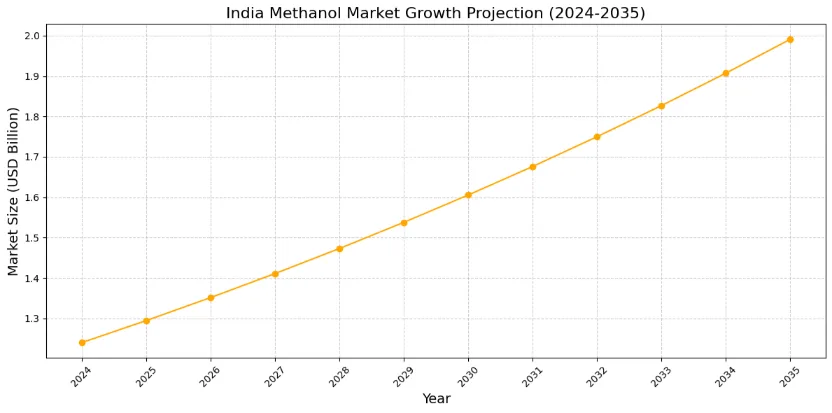
India has an installed methanol capacity of 2 million tonnes per year (MTPA). However, it imports over 90% of its demand of 1.8 MTPA, a number expected to keep rising. The Indian methanol market was valued between $1.24 and $1.63 billion in 2024 and could reach $2.75 billion by 2035, growing at a steady annual rate of 4.4-4.9%.

To reduce dependency on imports and stabilize prices, India is investing in new domestic capacity:

Predicted Graphical Representation of India Mthanol market Growth projection (2024-2035)
  • Five methanol plants based on high-ash coal.
  • Five dimethyl ether (DME) plants.
  • One natural gas-based methanol facility (20 MMT/year) in collaboration with Israel.

The focus on self-sufficiency, known as Atmanirbhar Bharat, is driving policies and investment to shift from imports to locally sourced, including renewable, methanol.

Diverse Applications and Market Potential
Methanol’s flexibility makes it vital in India’s changing energy landscape:

  • Transport: it serves as a direct replacement for petrol and diesel (in road, rail, marine). Blends like M-15, M-85, and M-100 have been approved, with pilot programs starting in partnership with Indian Oil and others.
  • Power and Industry: used in diesel generators, boilers, tractors, and commercial vehicles. Indian manufacturers are testing DMFC (Direct Methanol Fuel Cell) applications in areas like telecom.
  • Cooking Fuel: methanol stoves, successfully demonstrated in Assam, provide cleaner, more affordable options for households, reducing annual cooking fuel expenses by 20%.
  • Feedstock: as a basic chemical, methanol helps produce formaldehyde, acetic acid, plastics, paints, and more.
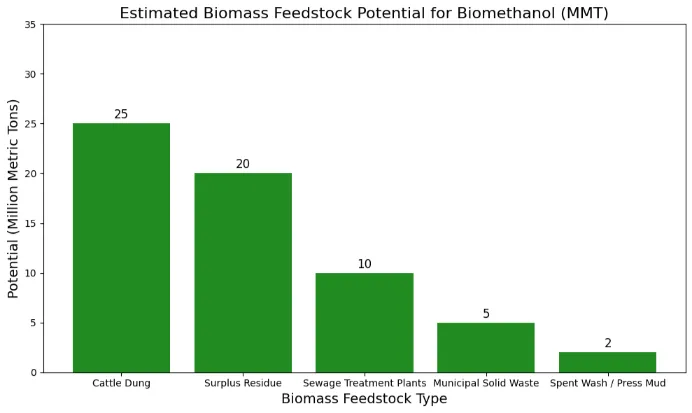
Bar chart for the estimated Biomass Feedstock Potential for Biomethanol

Methanol also works as an efficient hydrogen carrier. It can be easily integrated with existing logistics and storage systems, making it a key link to a future hydrogen economy.

Why Biomethanol from Biogas

Environmental Advantages
Deep Decarbonization: Biomethanol sourced from biogas can cut CO2 emissions by up to 95% and NOx by up to 80% compared to fossil methanol.

Waste Management: India produces over 105 billion tonnes of organic waste each year, but only about 2% gets recycled. Biogas plants utilize agricultural waste, dung, municipal waste, and sewage to turn environmental liabilities into energy assets.

Air Quality: Methanol blends (M15) can lower urban air pollution by up to 40%. Cooking with methanol reduces household air pollution, providing major health benefits, particularly for women.

The process also produces nutrient-rich digestate, decreasing reliance on chemical fertilizers and supporting a strong circular economy.

Economic and Rural Impact
Energy Security: Biomethanol, produced domestically and renewably, reduces dependence on imported fuels and mitigates risks from volatile global markets.

Cost Savings: Production costs for methanol range from Rs 16-21 per litre (renewable/fossil), making it at least 30% cheaper than petrol or diesel.

Rural Development: Farmers earn additional income selling agricultural waste, and local jobs are created across the supply chain from collecting waste to operating plants.

Municipal Resilience: Waste-to-methanol plants lower municipal waste management costs and generate revenue.

Policy and Regulatory Momentum

The Indian government has laid a strong policy foundation for biomethanol through various initiatives:

  • National Biofuel Policy (2018, amended 2022): aims for 20% ethanol (petrol) and 5% biodiesel (diesel) blending by 2030; supports waste-based refineries.
  • GOBARdhan Scheme: turns rural organic waste into biogas/CBG and organic fertilizer, promoting rural entrepreneurship.
  • SATAT Program: plans to set up 5,000 CBG plants by 2024; mandates 1% CBG blending starting in 2025, increasing to 5% by 2028.
  • Methanol Economy Fund: INR 4,000-5,000 crore set aside for encouraging methanol adoption and capacity growth.
  • Green Hydrogen Mission: offers $2.3 billion in subsidies, including incentives for green methanol.
  • State-Level Support: provides additional capital subsidies, tax breaks, and favorable land terms for bioenergy in key states like UP, Gujarat, and MP.

Incentives and Mandates
Capital subsidies (up to 35% for green hydrogen, 30% for biofuels)
Excise/custom waivers, carbon credits, low-interest loans
Direct blending mandates for CBG, DME/LPG, and methanol in fuels
Guaranteed purchase agreements for CBG/methanol producers by oil marketing companies

Despite these initiatives, progress is slow due to regulatory delays, infrastructure challenges, and inconsistent policy execution.

Advances in Technology and Demonstration Projects

There is significant R&D and demonstration activity underway:

  • Thermochemical Conversion: biomass is turned into gas, then into methanol. This method is already effective for coal, but is now being adapted for biogenic feedstock.
  • Biochemical Conversion: organic waste first produces biogas, which is then converted to methanol. This method accommodates various waste streams and is a leading option for rural bio-refineries.
  • Indigenous Innovation: IISc Bangalore and Praj Industries have successfully produced syngas from biomass. BHEL Hyderabad and IIT Delhi are advancing coal-to-methanol pilot projects.
  • International Collaborations: Topsoe’s eSMR Methanol™ (CO2-neutral, biogas-based), NTPC-Tecnimont for commercial green methanol, and major Indian companies like Adani and Reliance are investing in biogas and biomethanol projects.

Pilot municipal projects, such as the one in Gurugram (processing 500 tonnes of waste daily into 50 kiloliters of methanol), demonstrate scalability and local value creation.

Major Challenges for Scaling Biomethanol from Biogas

1. Economic Viability
Cost Disparity: Fossil methanol prices range from $100–250/metric ton, while biomethanol costs $770/metric ton, making price parity a significant challenge for policy.

Energy Content: Methanol has a lower calorific value (22 MJ/kg compared to 45-46 MJ/kg for petrol/diesel), meaning users need a larger volume for the same energy, despite a lower price per litre.

Investment Gaps: Although subsidies and incentives are improving the situation, investor confidence is affected by the developing market and “green premium.”

2. Feedstock Collection, Logistics, and Supply Chain
Aggregation Problems: Only 5,000–7,000 tonnes of biomass are supplied daily to power plants, while 100,000 tonnes are required.

Seasonality/Volatility: The supply of agricultural residues varies, making pricing unpredictable.

Land Use: It is critical to avoid competing with food and agricultural production, focusing instead on non-food, waste-based sources.

3. Technical Hurdles
Biogas Purification: Removing impurities like H2S, CO2, and NH3 is costly and requires a lot of energy.

Conversion Efficiency: Directly converting methane to methanol is still being optimized; most industrial methods are still two-step and require significant investment.

Scaling Up: While demonstration projects show promise, fully commercial deployment is a work in progress.

4. Infrastructure and Distribution
Centralization vs. Decentralization: Biogas and biomethanol production are decentralized, but distribution tends to be centralized, creating logistical challenges.

Storage and Transport: Although methanol is easier to handle than hydrogen, the infrastructure for biomethanol is still under development nationwide.

Conclusion: The Way Forward

India’s biomethanol strategy using biogas represents a forward-thinking approach to turning waste into wealth, which is critical for the country’s sustainable energy future. While there have been significant advancements in policy, technology, and pilot projects, expanding this strategy will depend on:

  • Improving policy consistency and execution.
  • Strengthening supply chains and logistics for feedstock.
  • Accelerating research and development to lower costs and increase efficiency.
  • Providing strong incentives and securing market-based purchase agreements to attract private investment.
  • Encouraging technology transfer and local innovation, fostering collaboration among government, academia, and industry.

By fully utilizing its large biomass resources, enhancing rural livelihoods, and delivering clean, lowcarbon fuel, India can become a leader in biomethanol and biogas while serving as a model for circular, resilient energy economies globally.

Biomethanol from Corn Straw in China: A Life Cycle Insight

India Methanol Economy: Opportunities and Challenges for Biomethanol from Biogas Read More »