biomass conversion

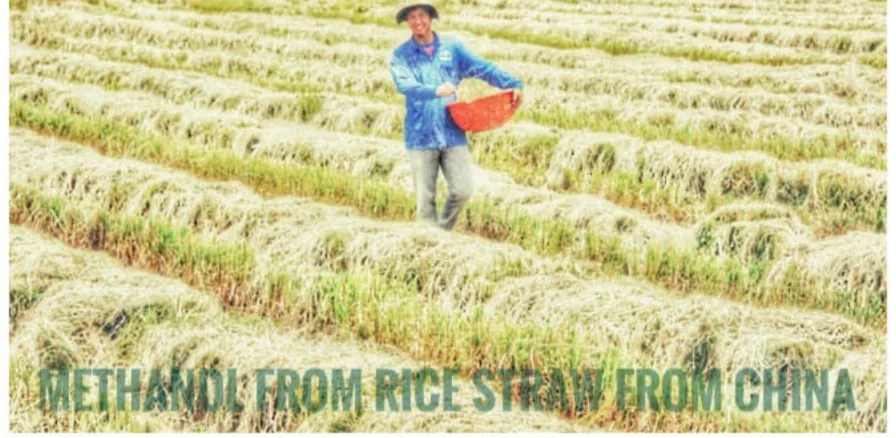
Farmer collecting rice straw in China for sustainable methanol and biofuel production.

Energy, Economy, and Environment: Biomethanol from Rice Straw in China

Energy, Economy, and Environment: Biomethanol from Rice Straw in China

Imagine mountains of agricultural waste that used to be a problem. Now, they can become a clean burning fuel. This fuel powers vehicles and industries, cleans the air, and supports rural economies. This isn’t a distant dream but a growing reality in China. The country is turning its large amounts of rice straw into biomethanol. China produces a significant portion of the world’s rice, generating nearly 222 million tons of rice straw every year. In the past, much of this waste was disposed of by burning it. This practice had serious environmental consequences. However, a major change is happening. Biomethanol from rice straw is becoming a key part of China’s sustainable development plans. (Ran et al., 2023). This post will delve into China’s motivations for adopting this innovative method, the profound benefits it offers, its inspiring global implications, and the key Chinese companies at the forefront of this green revolution.

Why China Adopted This Method: A Multifaceted Approach

China pivot towards biomethanol from rice straw is driven by a convergence of critical environmental, energy security, and economic imperatives. It represents a pragmatic and visionary solution to several pressing national challenges.

Environmental Imperative: Cleaning the Air and Reducing Emissions

For decades, burning rice straw in open fields has significantly polluted the air in China, especially in farming areas. This practice releases large amounts of particulate matter, nitrogen oxides, and greenhouse gases into the air. This worsens smog, increases respiratory issues, and contributes to climate change. Biomethanol production provides a cleaner alternative. By turning rice straw into a liquid fuel, it removes the need for open burning, which reduces harmful emissions. Additionally, since rice plants absorb CO2 as they grow, using rice straw for biomethanol can be seen as carbon-neutral or even carbon-negative when paired with carbon capture technologies. This process effectively stores carbon that would otherwise be released. China aims to peak CO2 emissions by 2030 and achieve carbon neutrality by 2060, driving the development of low-carbon energy policies (Yang & Lo, 2023).

Energy Security and Diversification: Less Reliance on Imports

China, as a rapidly developing and industrialized nation, faces the persistent challenge of ensuring energy security. Its considerable reliance on imported fossil fuels, particularly oil, creates vulnerabilities in its energy supply chain and subjects its economy to global price fluctuations. The domestic production of biomethanol from rice straw significantly enhances China’s energy independence. By converting an abundant, domestically available agricultural residue into a versatile fuel, China can reduce its reliance on external energy sources, thereby bolstering its national energy security. Biomethanol’s direct applicability in various sectors, especially transportation, allows for a strategic diversification of the energy mix, making the nation less susceptible to geopolitical disruptions affecting oil supplies.

Economic Benefits and Rural Development: Transforming Waste into Wealth

Beyond environmental and energy concerns, the biomethanol initiative offers significant economic advantages, especially for China large rural populations. Rice straw, once seen as waste with disposal costs, is now transformed into a valuable resource. This shift creates new income opportunities for farmers, enabling them to earn money from collecting and selling their agricultural residues. Setting up biomethanol production facilities in rural areas boosts local economies by generating jobs in feedstock collection, transportation, processing, and plant operation. Additionally, a useful byproduct of biomethanol production through anaerobic digestion is digestate. This nutrient-rich organic fertilizer can help reduce farmers’ reliance on costly chemical fertilizers. This improves agricultural sustainability while providing another financial benefit. The relationship between agriculture and energy production supports a strong circular economy in rural areas.

Biomethanol production from rice straw in China offers a sustainable solution. It meets energy needs, cuts greenhouse gas emissions, and effectively uses agricultural waste. Biomethanol yields are around 0.308 kg per kg of rice straw, and the energy efficiency is approximately 42.7% when using gasification technologies. This indicates that China has significant potential for bioenergy from rice straw. Currently, production costs are higher than those of fossil methanol, about 2,685 RMB per ton for a 50,000-ton plant. However, economic competitiveness should improve with policy support, technological innovation, and scaling up.

Using biomethanol from rice straw can reduce carbon emissions by over 70% compared to fossil-based methanol. It also helps decrease air pollution from open-field burning of straw. Improvements in process integration, like combining with renewable electricity, can further boost efficiency and lower lifecycle emissions. Overall, China’s biomethanol pathways show a mix of energy, economic, and environmental benefits Wang, et.al (2024). Continued innovation and supportive policies are essential for wider adoption and lower costs.
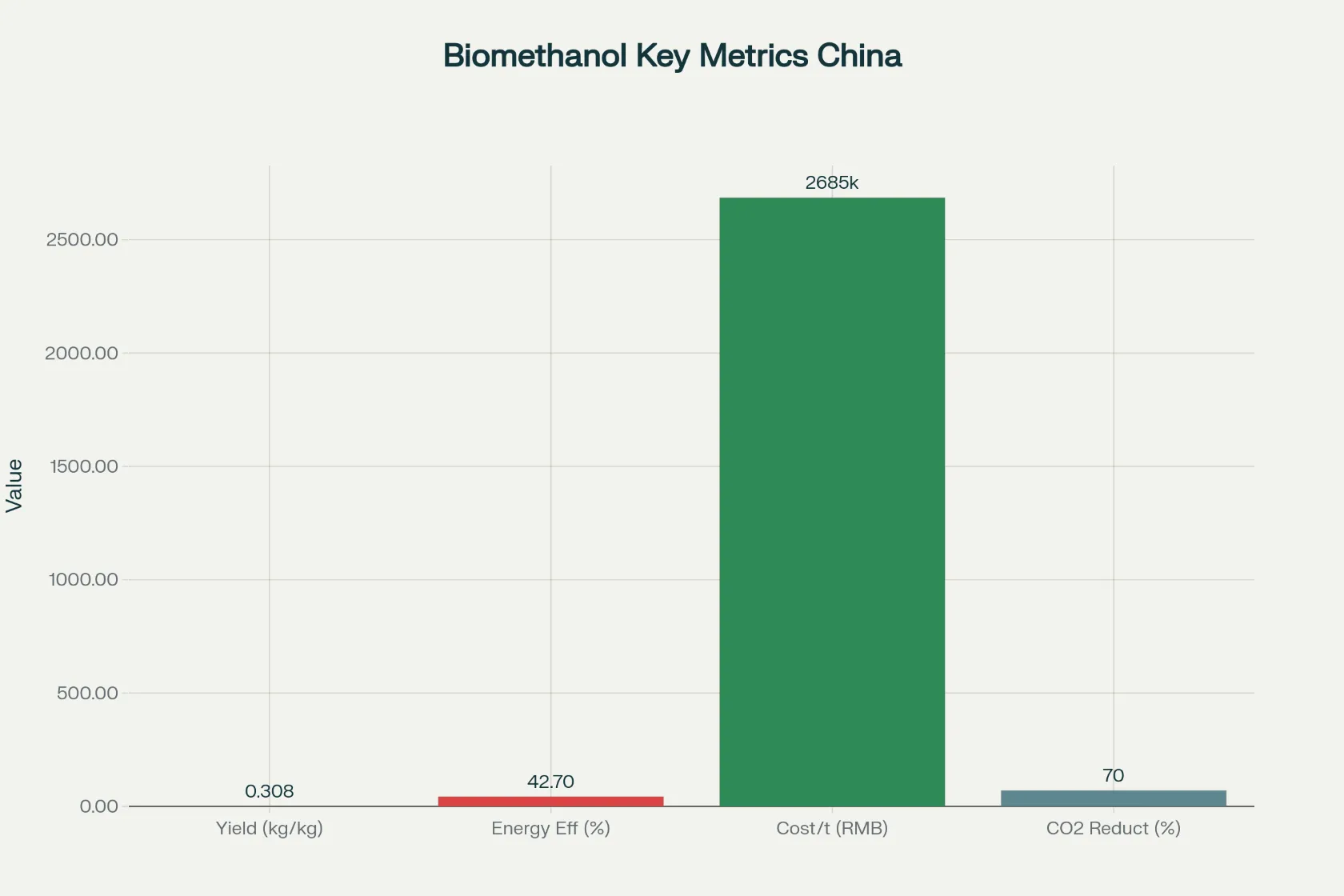
Bar Chart for Biomethanol key metrics in China

Inspiring the World: Global Implications of China Biomethanol Success

China is leading the way in scaling biomethanol production from rice straw. This initiative provides a strong and replicable example for other countries dealing with agricultural waste and shifting to renewable energy. The progress made has significant global implications for sustainable development for details..

China’s large agricultural sector and focused efforts on industrializing biomethanol production show that converting agricultural waste into valuable fuel is both possible and cost-effective. This serves as a powerful case study for other rice-producing countries in Asia, Africa, and Latin America, which face similar challenges with agricultural residues and the related environmental and health issues.

China’s efforts also support several United Nations Sustainable Development Goals (SDGs), including SDG 7 (Affordable and Clean Energy), SDG 12 (Responsible Consumption and Production), and SDG 13 (Climate Action). By turning waste into energy and cutting down on pollution, China is showing a real commitment to a more sustainable future. The technological advancements, especially in biomass conversion methods like gasification and anaerobic digestion, being developed in China provide valuable insights and models that can be reused around the world. This encourages a quicker and more effective shift to sustainable energy sources everywhere. The process of converting rice straw into biomethanol reflects the principles of a circular economy. Here, waste is reduced, resources are continually reused, and value is generated from materials that would typically be thrown away.

For a broader understanding of global renewable energy trends and the potential of biomass energy, readers can explore reports from the International Energy Agency (IEA). The IEA regularly publishes comprehensive analyses on the evolving energy landscape, including detailed insights into bioenergy’s role in the global transition to clean energy. https://www.iea.org/

Chinese Companies Leading the Way in Biomethanol from Rice Straw in China

The burgeoning biomethanol industry in China is propelled by a combination of established industrial giants and innovative clean energy companies. These enterprises are not only developing cutting-edge technologies but also forging strategic partnerships to scale up production and meet growing demand.

Among the prominent players, CIMC Enric Holdings Limited stands out for its significant involvement in constructing biomethanol plants. CIMC Enric, a leading intelligent manufacturer in the clean energy industry, has been instrumental in the development of crucial infrastructure for biomethanol production. They are actively engaged in constructing biomethanol facilities in China, with ambitious capacity targets to supply green methanol for various applications, including marine fuel. For more details on their clean energy initiatives, you can visit the CIMC Enric website or consult industry news regarding their green energy projects. (As of recent reports, CIMC Enric is constructing a biomethanol plant in Zhanjiang, Guangdong, targeting an initial annual production of 50,000 tonnes by late 2025, with plans to expand to 200,000 tonnes by 2027. You can find more information through reputable industry news sources that cover their clean energy ventures.)

Another major force in the sector is GoldWind Science & Technology Co., Ltd., a global leader in wind power solutions, which has expanded its portfolio to include biomethanol production. GoldWind has made headlines for its long-term agreements to supply green methanol, notably with shipping giant Maersk. This partnership underscores the growing demand for sustainable marine fuels and GoldWind’s commitment to large-scale green energy production. GoldWind’s innovative approach involves leveraging wind energy to produce both green bio-methanol and e-methanol, showcasing a holistic sustainable energy model. Their official website often features updates on their green energy projects. (GoldWind signed a landmark agreement with Maersk in November 2023 to supply 500,000 tonnes of green methanol annually, with production expected to begin in 2026 at a new facility in Hinggan League, Northeast China. More information can be found on GoldWind’s official news section or through maritime industry news outlets.)

Furthermore, ESGTODAY specializes in agricultural waste treatment, particularly in straw biogas plants and pretreatment technologies, which are foundational to efficient biomethanol production from rice straw. Their expertise in converting agricultural residues into biogas and further refining it into valuable resources positions them as a crucial enabler within this ecosystem. Their focus on sustainable and environmentally friendly agricultural waste management aligns perfectly with China’s biomethanol ambitions. You can explore their technologies at: https://www.esgtoday.com/maersk-signs-its-largest-ever-green-methanol-deal-to-drive-fleet-decarbonization/

These companies, alongside other emerging players and research institutions, are continually pushing the boundaries of technology and scaling up production, signaling a robust and dynamic future for biomethanol in China.

To gain further insights into the broader renewable energy industry in China and the specific contributions of these companies, reports from reputable financial news outlets or clean energy analysis firms can be highly informative.

Challenges and Future Outlook

While China’s biomethanol journey is inspiring, it’s not without its challenges. Logistical hurdles in collecting and transporting vast quantities of diffuse rice straw, the initial capital investment required for large-scale plants, and the ongoing need for technological refinement to optimize conversion efficiency remain important considerations. However, the immense potential of biomethanol from rice straw for China and the world far outweighs these challenges. Continuous research and development, coupled with strong government policy support and private sector investment, are paving the way for further innovation and expansion. This includes advancements in enzyme technologies, more efficient gasification processes, and improved integration with existing infrastructure.

Conclusion

China’s proactive embrace of biomethanol from rice straw represents a truly transformative approach to energy, economy, and environment. By converting what was once considered waste into a valuable, clean-burning fuel, China is not only addressing its own critical environmental concerns and enhancing energy security but also providing a powerful blueprint for sustainable development globally. The economic uplift for rural communities, coupled with the significant reduction in air pollution and greenhouse gas emissions, underscores the multifaceted benefits of this innovation. As Chinese companies continue to lead the way in technological advancements and scale up production, their efforts serve as a beacon, inspiring a global shift towards a greener, more sustainable future powered by ingenuity and collaboration. The journey of rice straw to biomethanol in China is a testament to the power of human innovation in building a truly green future.

Citations

Yang, Y., & Lo, K. (2023). China’s renewable energy and energy efficiency policies toward carbon neutrality: A systematic cross-sectoral review. Energy & Environment, 0958305X2311674. https://doi.org/10.1177/0958305×231167472

Ran, Y., Ghimire, N., Osman, A. I., & Ai, P. (2023). Rice straw for energy and value-added products in China: a review. Environmental Chemistry Letters, 1–32. https://doi.org/10.1007/s10311-023-01612-3

Reducing the lifecycle carbon emissions of rice straw-to-methanol for alternative marine fuel through self-generation and renewable electricity. Energy Conversion and Managementhttps://doi.org/10.1016/j.enconman.2024.119202.

For a detailed life cycle analysis and insights on biomethanol production from corn straw in China, explore the comprehensive study at Biomethanol from Corn Straw in China: A Life Cycle Insight .

Energy, Economy, and Environment: Biomethanol from Rice Straw in China Read More »
A Chinese biorefinery plant with a field of rice straw at sunset

China Rice Straw Biomethanol: Energy, Cost & Emissions”

China Rice Straw Biomethanol: Energy, Cost & Emissions

From Field Waste to Fuel: China Rice Straw Biomethanol Revolution with Rice Straw

China has a vast agricultural output and has long faced challenges with crop residue disposal. Rice straw is particularly noteworthy due to its large volume, often causing environmental problems like open burning that significantly pollutes the air. Increasingly, this agricultural byproduct is seen as a valuable resource for producing biomethanol, Rice straw-to-biomethanol conversion achieves energy efficiencies around 42.7% for methanol synthesis via gasification , with yields of 0.308 kg methanol per kg rice straw 1. Alternative bioenergy routes, such as biodiesel from rice straw, report even higher energy efficiencies (up to 56.1%). This blog explores China’s efforts in harnessing rice straw for biomethanol production, focusing on its energy efficiency, economic viability, and environmental impact.

The Biomethanol Promise: A Sustainable Alternative

Biomethanol is a flexible alcohol produced from various biomass sources, including agricultural residues like rice straw. The real cost of biomethanol production is estimated at 2,685 RMB/ton (with economic and environmental costs separated) for a 50,000-ton plant . This is currently higher than coal-based methanol due to high investment and operational costs. However, cost reductions are possible through technological improvements, renewable electricity integration, and policy incentives . For comparison, biodiesel from rice straw is reported at CNY 3.03/kg, with payback periods of 7–9 years depending on market prices. It creates a sustainable energy source and helps solve the environmental problems tied to agricultural waste disposal (Wang et al., 2024).

China Move into Rice Straw Biomethanol: A National Necessity

China is committed to cutting carbon emissions and improving energy security. This has led to considerable investments and research in renewable energy technologies. Acknowledging the potential of its agricultural sector, the Chinese government actively supports the conversion of agricultural waste into valuable products like biomethanol. Many pilot and commercial projects across the country demonstrate the feasibility and scalability of this initiative.

The Energy Balance: How Efficient is Rice Straw Biomethanol?

To assess the energy efficiency of rice straw biomethanol production, we need to look at the total energy input necessary for the entire process. This includes collecting the feedstock, pretreating it, and finally synthesizing and purifying the methanol.

Feedstock Collection and Transportation: After harvesting rice, the rice straw needs to be collected from the fields and transported to the biorefinery. The energy used in this stage depends on collection methods, transportation distances, and the density of the baled straw. Improving logistics and using efficient transport systems are essential to reduce energy use.

Pretreatment: Raw rice straw contains cellulose, hemicellulose, and lignin, which are complex structures. Pretreatment is crucial to breaking down these components, making the cellulose and hemicellulose easier to convert later. Many pretreatment methods exist, including physical (like steam explosion, milling), chemical (like dilute acid, alkaline), and biological (like enzymatic hydrolysis). Choosing the most efficient and cost-effective method is key.

Conversion: The pretreated rice straw is then processed into syngas (a mix of carbon monoxide, hydrogen, and carbon dioxide) or sugars, depending on the method used.

  • Gasification: In this thermochemical process, the pretreated biomass is heated at high temperatures in a controlled environment with limited oxygen or steam to create syngas. The syngas must be cleaned before entering a methanol synthesis reactor.
  • Hydrolysis and Fermentation: This method involves enzymatic hydrolysis of pretreated cellulose and hemicellulose into fermentable sugars. Microorganisms then convert these sugars into bio-alcohols, including methanol.

The efficiency of this conversion stage relies heavily on the chosen technology and the optimization of process settings.

Methanol Synthesis and Purification: If syngas is used, it is catalytically converted to methanol in a synthesis reactor. The resulting crude methanol must undergo distillation to achieve fuel-grade quality. Both synthesis and purification require energy.

Overall Energy Balance: Studies on rice straw-to-biomethanol pathways show varying energy outcomes depending on specific technologies and the efficiency of each stage. Improvements in pretreatment methods, better gasification or fermentation techniques, and optimized methanol synthesis catalysts will continue to enhance the overall energy efficiency. Ideally, the energy output as biomethanol should greatly exceed the total energy input needed for production.

The Cost Factor: Can Rice Straw Biomethanol Compete?

The economic feasibility of rice straw biomethanol is crucial for its broader acceptance. Various factors influence production costs:

Feedstock Cost: Rice straw is often viewed as waste with little or negative value because of disposal expenses. Building a reliable supply chain for large-scale biomethanol production will incur costs linked to collection, baling, storage, and transportation. These costs vary by location, farming practices, and rice crop density.

Pretreatment and Conversion Technology Costs: The investments and operational costs associated with the selected pretreatment and conversion technologies impact overall production costs significantly. More advanced technologies may have higher initial costs but can lower operational expenses through reduced energy use or improved yields.

Chemicals and Utilities: The production process requires several chemicals and utilities like water and electricity, affecting operating costs. Improving resource use and examining renewable energy sources for biorefinery operations can help cut these costs.

Scale of Production: Larger biomethanol plants usually benefit from economies of scale, resulting in lower unit production costs compared to smaller facilities. Government support and incentives for developing large biorefineries can enhance cost competitiveness.

By-product Valorization: Many processes for producing rice straw biomethanol create valuable by-products, such as lignin for energy or materials, and process leftovers that can be used as fertilizers. Using these by-products can provide additional income and improve the overall economic viability.

Comparison with Fossil Methanol: The competitiveness of rice straw biomethanol ultimately depends on its production cost against conventional methanol from natural gas. Changes in fossil fuel prices and carbon pricing can affect this comparison. As biomass conversion technologies advance and production scales up, biomethanol’s cost is expected to become more competitive.

Emissions Reduction: The Environmental Benefit of Rice Straw Biomethanol

One key reason to pursue rice straw biomethanol is its ability to significantly lower greenhouse gas emissions when compared to fossil fuels.

Avoiding Open Burning: Using rice straw for biomethanol provides a sustainable alternative to open burning, which releases large amounts of pollutants like particulate matter and carbon monoxide, worsening air quality and climate change.

Carbon Neutral Potential: Biomass is labeled a renewable resource because plants absorb carbon dioxide through photosynthesis, which is re-released during biomass conversion to energy or fuel. If the entire lifecycle of rice straw biomethanol production is managed sustainably, with minimal fossil fuel use, net carbon emissions can be far lower than those from fossil methanol.

Lifecycle Assessment: A thorough lifecycle assessment (LCA) is essential for evaluating the environmental impact of rice straw biomethanol. Lifecycle assessments show that rice straw biomethanol can reduce GHG emissions by 59–76% compared to fossil-based methanol, meeting or exceeding EU Renewable Energy Directive III standards . The largest emission reductions are achieved by using renewable electricity and optimizing upstream agricultural practices . Sensitivity analyses highlight the importance of reducing energy consumption in pre-processing steps (Wang et al., 2023).

Displacing Fossil Fuels: Switching from fossil methanol to biomethanol in different applications, like fuel blending and direct fuel use in specialized engines, can help cut overall greenhouse gas emissions in these sectors.

Soil Health Benefits: In some cases, removing excess rice straw from fields can improve soil health by preventing the buildup of decomposing material, which can create anaerobic conditions and release methane, a potent greenhouse gas. However, sustainable management of straw that considers nutrient recycling and soil carbon is essential.

Challenges and Opportunities for China Rice Straw Biomethanol Industry

Rice straw biomethanol in China faces several challenges. There is a need for a strong supply chain with efficient collection, storage, and transport systems. Further research and development are necessary to improve technology and increase production. Efforts must also focus on making it cost-competitive through innovations, economies of scale, and supportive government actions. A consistent policy and regulatory framework that includes subsidies and renewable fuel blending mandates is vital. It is equally important to ensure environmental sustainability by managing resources, waste, and emissions responsibly.

Despite these hurdles, rice straw biomethanol offers significant opportunities. It can reduce dependence on imported fossil fuels. It provides a sustainable solution for managing agricultural waste. It can also create new jobs and promote economic growth in rural areas. Additionally, it plays a crucial role in reducing greenhouse gas emissions, supporting China’s goals for climate change mitigation and carbon neutrality.

Conclusion: A Sustainable Pathway for China Rice Straw Biomethanol Energy Future

China’s innovative approach to using rice straw for biomethanol production marks a vital step toward a more sustainable energy future. By converting an agricultural waste product into a valuable renewable fuel, China is tackling environmental issues while promoting a circular economy in agriculture. Challenges related to energy efficiency, cost, and technology optimization still exist, but the benefits of rice straw biomethanol in terms of emissions reduction and energy security are considerable. Continued innovation, supportive government policies, and smart investments will be critical to realizing the full potential of this promising renewable fuel and fostering a greener, sustainable China.

CITATIONS

Reducing the lifecycle carbon emissions of rice straw-to-methanol for alternative marine fuel through self-generation and renewable electricity. Energy Conversion and Managementhttps://doi.org/10.1016/j.enconman.2024.119202.

Assessing the prospect of bio-methanol fuel in China from a life cycle perspective. Fuelhttps://doi.org/10.1016/j.fuel.2023.130255.

also read the latest about

Policy Recommendations for Scaling Biomethanol in China’s Marine Industry

Learn how targeted policies, incentives, and regulatory support can accelerate biomethanol adoption in China’s marine and shipping sectors.

China Rice Straw Biomethanol: Energy, Cost & Emissions” Read More »

A diverse team of five financial investors reviews holographic data charts in front of a large, glowing, first-of-a-kind (FoAK) advanced biofuel plant and integrated renewable energy complex with solar and wind power at sunset.

Financing Opportunities for First-of-a-Kind (FoAK) Advanced Biofuel Plants: What Investors Need to Know

Powering a Greener Future: Financing Opportunities for First-of-a-Kind (FoAK) Advanced Biofuel Plants

The global push for decarbonization has put advanced biofuels in the spotlight. Unlike first-generation biofuels derived from food crops, First-of-a-Kind (FoAK) advanced biofuel plants utilize non-food sources like agricultural residues, forestry waste, and even municipal solid waste. These fuels are “drop-in” replacements for fossil fuels, meaning they can be used in existing infrastructure and engines, making them a critical component in the transition to a low-carbon economy, especially for hard-to-abate sectors like aviation, shipping, and heavy-duty transport.

What are the possible FoAK Advance biofuels for Financial opportunities

Investing in First-of-a-Kind (FoAK) advanced biofuel plants presents a compelling financial opportunity due to the diversity of technologies and the high demand for sustainable fuels. A significant number of these projects are focused on a variety of feedstocks, going beyond traditional agricultural residues and forestry waste. Key FoAK advanced biofuel plants are emerging that utilize innovative sources like waste from dairy products, which can be converted into bioethanol or bio-oil using fermentation or thermochemical processes. Fast-growing, non-food crops such as genetically optimized poplar trees are another promising feedstock, as their high cellulose and low lignin content make them ideal for conversion into cellulosic ethanol. Other sources include the biodegradable fraction of municipal and industrial waste, which can be processed through technologies like gasification or fast pyrolysis to produce liquid fuels, and even animal fats and used cooking oils, which are hydrotreated to create renewable diesel and sustainable aviation fuel (SAF). These diverse and often localized feedstocks provide investors with a wide range of opportunities to tap into a rapidly growing market while simultaneously addressing waste management and resource efficiency.

Regional and Economical Viability

The regional and economic viability of First-of-a-Kind (FoAK) advanced biofuel plants is highly dependent on the local availability of diverse and low-cost feedstocks. Economically, these projects are most attractive when they can co-locate with a source of waste or a dedicated, fast-growing energy crop. For instance, plants utilizing dairy waste are most viable in regions with a high concentration of dairy farms, as this minimizes transportation costs and provides a reliable, year-round feedstock stream that also offers a solution to an existing waste management problem. Similarly, facilities converting poplar trees or other dedicated energy crops are particularly suited to regions with available marginal land and favorable growing conditions. The economic model is further enhanced by policies that incentivize waste-to-energy projects and by the valorization of co-products, such as bio-fertilizer or renewable electricity generated from the plant’s byproducts, which can be sold back to the grid or used to power the facility, thereby increasing the overall profitability and regional economic benefits.

1- Cellulosic Ethanol

Technique used in manufacturing:

The primary manufacturing techniques are biochemical and thermochemical conversion.

  • Biochemical Process: This involves a pretreatment phase to break down the lignocellulosic material. This is followed by hydrolysis, which uses enzymes or dilute acid to break down cellulose into simple sugars. These sugars are then fermented by microbes into ethanol.
  • Thermochemical Process: This method uses heat and chemicals to convert biomass into syngas, a mixture of hydrogen and carbon monoxide. This syngas is then catalytically converted into ethanol and other liquid products.

Feedstock:

Cellulosic ethanol is produced from lignocellulosic biomass, which is non-food plant material. This includes agricultural residues (like corn stover and wheat straw), herbaceous biomass (like switchgrass), woody biomass (like poplar and pine trees), and municipal solid waste.

Funding Opportunities:

Global investment in cellulosic ethanol has declined in recent years, with a 35% drop in new biofuels power capacity investment in 2015 compared to 2014, reaching $3.1 billion. This decline is largely due to high production costs and the financial instability of pioneering companies, despite successful pilot and demonstration plants in the US, EU, and elsewhere.  Funding is often directed toward projects that demonstrate cost-effective, scalable technologies or offer new insights into commercial viability (Sharma et al., 2022). Cellulosic ethanol remains a promising but under-commercialized biofuel, with future funding opportunities closely tied to technological breakthroughs, integrated biorefinery models, and supportive policy frameworks. The next wave of investment is expected to focus on overcoming persistent cost and scalability barriers while maximizing the value of lignocellulosic biomass.

Regional viability:

This biofuel is most viable in regions with abundant agricultural and forestry resources. The U.S. Midwest, with its vast corn production, is a prime location for utilizing corn stover. The Pacific Northwest and Southeast, with their large forestry industries, are ideal for using woody biomass.

ROI (Return on Investment):

The ROI for cellulosic ethanol plants can be challenging due to high initial capital costs, but it is projected to improve as technology advances and economies of scale are achieved. Recent techno-economic analyses show that cellulosic ethanol production costs typically range from $0.81 to $1.44 per liter (about $3.07–$5.45 per gallon), depending on the process and feedstock used. A meta-analysis of studies found the minimum fuel selling price (MFSP) averages $2.65/gallon, with a wide range from $0.90 to $6.00/gallon, reflecting significant variability in technology, scale, and assumptions. At a selling price of $1.50/L, some models achieve a positive net present value (NPV), but profitability is highly sensitive to process yields and capital costs (Olughu et al., 2023).

2- Biodiesel from Algae

Technique used in manufacturing:

The process involves three main stages:

  1. Cultivation: Microalgae are grown in either open ponds or closed photobioreactors, which provide the necessary sunlight, water, and carbon dioxide.
  2. Harvesting and Oil Extraction: The algae biomass is harvested from the water, and the natural oils (lipids) are extracted. Common methods include oil presses or solvent extraction.
  3. Transesterification: The extracted algal oil is reacted with an alcohol (like methanol) and a catalyst to produce biodiesel.

Feedstock:

Microalgae and macroalgae. A key advantage is that algae can be grown on non-arable land and in a variety of water sources, including wastewater and saline water, which does not compete with food crops.

Funding Opportunities:

Funding opportunities are emerging across several dimensions to address these hurdles. Public funding plays a critical role, with national and regional programs in the US, EU, China, and Brazil supporting research, pilot projects, and demonstration plants, while policies such as renewable fuel standards, tax credits, and capital cost grants enhance economic feasibility and attract private investors. Research and innovation grants prioritize solutions for key bottlenecks, including improving algal strain productivity, lowering cultivation and harvesting costs, and advancing efficient lipid extraction and conversion methods, with additional emphasis on integrating algae cultivation with wastewater treatment and CO₂ capture to reduce costs and deliver environmental benefits. Furthermore, funding is increasingly directed toward biorefinery models that couple biodiesel production with high-value co-products such as biofertilizers, bioplastics, and nutraceuticals, making projects more attractive to both public and private stakeholders by enhancing profitability and sustainability .

Regional viability:

Algae-based biofuel production is most viable in regions with a high number of daylight hours per year, such as tropical or subtropical climates. Access to low-cost water sources (including wastewater) and abundant carbon dioxide (e.g., from industrial emissions) is also crucial for commercial viability.

ROI (Return on Investment):

 Updated techno-economic analyses estimate current algal biodiesel production costs at $0.42–$0.97 per liter ($1.59–$3.67 per gallon), which is still higher than fossil diesel but shows improvement over earlier estimates.

ROI Examples: A recent techno-economic study of a macroalgae-based biodiesel plant reported a return on investment (ROI) of 25.39% and an internal rate of return (IRR) of 31.13%, with a payback period of 3.94 years—though these figures are highly dependent on scale, technology, and local conditions (Ravichandran et al., 2023).

3- Sustainable Aviation Fuel (SAF) from Woody Biomass

Technique used in manufacturing:

One prominent technique is catalytic fast pyrolysis (CFP) followed by hydrotreating. In this process, woody biomass is heated rapidly in the absence of oxygen to produce bio-oil. This stabilized bio-oil is then hydrotreated to remove impurities and upgraded into a drop-in ready sustainable aviation fuel.

Feedstock:

Woody biomass, including forest residues (like treetops, branches, and sawdust), as well as dedicated woody energy crops.

Funding Opportunities:

The current funding landscape is shaped by federal, state, and local programs, with the U.S. Inflation Reduction Act (2022) introducing new federal tax credits that provide a foundational layer of support for SAF producers. However, state-level incentives remain necessary to achieve cost competitiveness; for instance, pilot-scale gasification Fischer-Tropsch (GFT) SAF production in Virginia would require approximately $3.61 per gallon in state incentives, while pyrolysis-based SAF would need around $0.75 per gallon. A mix of funding mechanisms—such as tax credits, loan forgiveness, and direct grants plays a critical role in shaping project economics and ensuring benefits for stakeholders, from feedstock suppliers to conversion facilities. Strategic funding priorities include advancing technology development to improve conversion efficiency, scale up production, and reduce costs across woody biomass-to-SAF pathways, alongside investments in supply chain logistics, facility siting, and blending infrastructure to enable regional deployment. At the same time, policymakers face the challenge of balancing economic feasibility with environmental benefits, as lower-cost pathways do not always deliver the highest greenhouse gas reductions, underscoring the need for carefully designed incentives that maximize both sustainability and market viability (Davis et al., 2024).

Regional viability:

Production of woody biomass SAF is most viable in regions with large, accessible, and sustainably managed forests. This includes areas like the Pacific Northwest, the Southeastern U.S., and parts of Canada and Northern Europe.

ROI (Return on Investment):

Recent techno-economic models estimate SAF from woody biomass costs between $1.92–$2.25 per liter ($7.27–$8.52 per gallon) using the Ethanol-to-Jet (ETJ) pathway, depending on production scale and demand . Fischer-Tropsch (FT) pathways show production costs of $2.31–$2.81 per gallon gasoline equivalent . Integration with existing bioethanol plants or use of economic incentives can reduce costs to as low as $0.40–$0.70 per liter ($1.51–$2.65 per gallon) (Guimarães et al., 2023) Hong et al. (2025).

Cost Drivers: Capital investment accounts for about 77% of total unit cost, with operating costs at 22% . Feedstock price and renewable fuel incentives are the most sensitive variables affecting ROI .

ROI Potential: Standalone woody biomass SAF projects struggle to achieve positive ROI at current market prices without policy support. However, integration with mature biofuel routes and carbon credit incentives can make projects profitable, with some models showing high probabilities (>96%) of profitability at current SAF prices in favorable policy environments .

4- Biogas from Dairy Waste

Technique used in manufacturing:

Anaerobic Digestion is the primary process. This involves placing dairy waste (manure, wastewater, whey) into a sealed, oxygen-free tank called a digester. Microbes naturally break down the organic material, producing a biogas rich in methane, which can be captured and used as fuel.

Feedstock:

Dairy waste, including manure, wastewater, and dairy processing by-products like whey.

Funding Opportunities:

Many countries and regions provide direct subsidies, grants, and cost-share programs to support the construction and operation of anaerobic digesters on dairy farms, helping reduce methane emissions and promote renewable energy. In California, governmental incentive programs partially fund eligible dairy digester projects, while in Poland and other EU countries, subsidies often cover 40–60% of the investment cost for biogas plants, a level of support necessary to ensure satisfactory economic efficiency. In addition to grants and subsidies, soft loans and low-interest financing from government and private sources are available, further encouraging rural and community-level biogas development and improving the overall financial viability of such projects Kusz et al. (2024).

Regional viability:

This biofuel is highly viable in regions with a dense population of dairy farms, such as the U.S. Midwest, California’s Central Valley, and parts of Europe.

ROI (Return on Investment):

Most studies indicate payback periods for anaerobic digestion projects ranging from 4 to 13 years, depending on plant size, technology, co-digestion practices, and the availability of subsidies. For instance, a 400-cow farm in Iran achieved payback in under 4 years, generating annual net incomes of $6,400–$38,000 depending on the scenario, while a 500 kW biogas plant in Poland using dairy manure and straw reported a payback of less than 6 years and €332,000/year more profit compared to conventional dairy farming. In contrast, small-scale plants in Ireland demonstrated longer payback periods of 8–13 years, though capital grants improved their economic feasibility. Internal Rates of Return (IRR) generally range between 9% and 15% for well-designed, subsidized, or co-digestion projects, as seen in a Malaysian on-farm system reporting a 13% IRR with a 7-year payback (Bywater & Kusch-Brandt, 2022). Net Present Value (NPV) also tends to be positive for medium-to-large farms or when co-digestion strategies, such as integrating food waste or straw, are adopted further enhanced by tipping fees that significantly improve overall returns

5- Ethanol from Poplar Trees

Technique used in manufacturing:

The process is similar to cellulosic ethanol from other woody biomass. It involves a pretreatment phase (often with steam or chemicals) to break down the lignin and hemicellulose. This is followed by enzymatic hydrolysis to convert the cellulose into fermentable sugars, which are then fermented into ethanol.

Feedstock:

Hybrid poplar trees, which are cultivated as a fast-growing, short-rotation energy crop.

Funding Opportunities:

Government and research grants for poplar-based ethanol are available through national and regional programs targeting advanced biofuels, such as the USDA NIFA in the US and the EU Renewable Energy Directive II (REDII) in Europe, which support research, demonstration, and pilot projects, particularly those utilizing marginal lands or integrating ecosystem services. Economic analyses and stakeholder assessments emphasize the importance of direct subsidies, capital grants, and policy incentives to ensure competitiveness with fossil fuels and other biomass sources, since purpose-grown poplar often faces higher feedstock costs that make it financially unfeasible without such support. In addition, poplar plantations can benefit from ecosystem service payments through programs that reward land restoration, flood mitigation, or wastewater management, creating diversified revenue streams for growers and enhancing the overall economic viability of poplar-based ethanol production.

Regional viability:

Poplar-based biofuel is most viable in temperate regions with suitable land for short-rotation woody crop plantations, such as the Pacific Northwest and parts of the Midwest in the U.S., as well as certain regions of Canada and Europe.

ROI (Return on Investment):

Production Costs: Recent techno-economic analyses estimate the minimum ethanol selling price (MESP) for poplar ethanol at $1,095/tonne, or roughly $2.65/gallon—comparable to the average for cellulosic ethanol but above current market prices for gasoline and first-generation biofuels .

Profitability: ROI is highly sensitive to feedstock price, plant scale, and technology. Large-scale plants with optimized processes and policy support can achieve positive net present value (NPV) and internal rates of return (IRR), but unsubsidized projects often struggle to be profitable (Pei et al., 2024).

Key Metrics: Payback periods and IRR are rarely reported directly, but positive NPV and profitability are possible in integrated biorefinery models or with strong policy incentives.


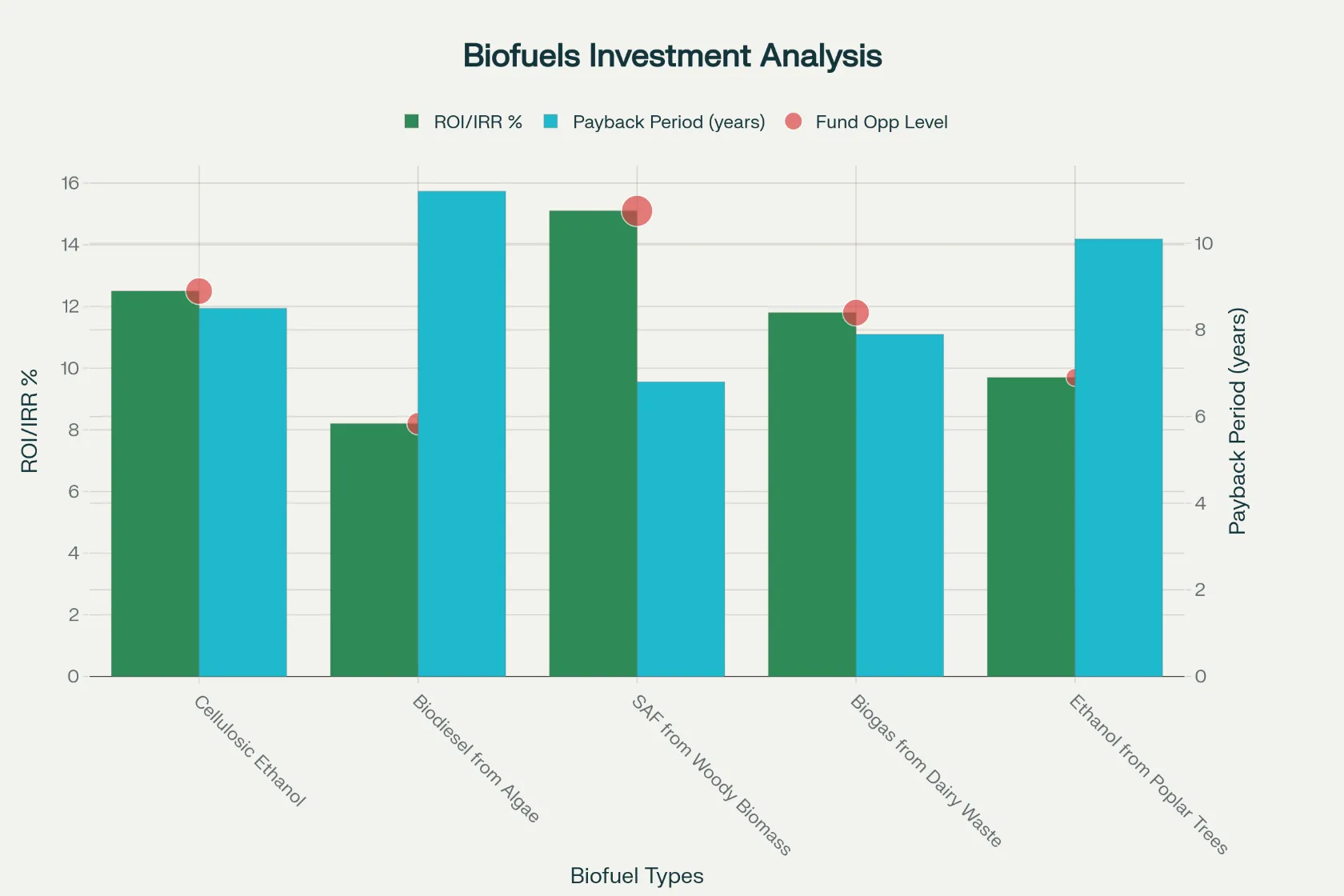
ROI, Payback Period, and Funding Opportunities for FoAK Advanced Biofuels

Conclusion

The advanced biofuels and techniques discussed in this report represent a critical step toward a more sustainable energy future. The examples of cellulosic ethanol, algae biodiesel, sustainable aviation fuel from woody biomass, and biofuels from dairy waste and poplar trees highlight the diversity of feedstocks and conversion technologies available. It’s important to note that these are just a few examples; many other promising techniques and feedstocks are being developed and commercialized around the world. As technology continues to improve and policy frameworks evolve, advanced biofuels will play an increasingly vital role in decarbonizing the transportation and industrial sectors.

Citations

Sharma, J., Kumar, V., Prasad, R., & Gaur, N. (2022). Engineering of Saccharomyces cerevisiae as a consolidated bioprocessing host to produce cellulosic ethanol: Recent advancements and current challenges.. Biotechnology advances, 107925 . https://doi.org/10.1016/j.biotechadv.2022.107925.

Olughu, O., Tabil, L., Dumonceaux, T., Mupondwa, E., Cree, D., & Li, X. (2023). Technoeconomic analysis of a fungal pretreatment-based cellulosic ethanol production. Results in Engineeringhttps://doi.org/10.1016/j.rineng.2023.101259.

Ravichandran, P., Rajendran, N., Al-Ghanim, K., Govindarajan, M., & Gurunathan, B. (2023). Investigations on evaluation of marine macroalgae Dictyota bartayresiana oil for industrial scale production of biodiesel through technoeconomic analysis.. Bioresource technology, 128769 . https://doi.org/10.1016/j.biortech.2023.128769.

Davis, C., Sreekumar, S., Altman, R., Clarens, A., Lambert, J., & Colosi, L. (2024). Geospatially Explicit Technoeconomic Assessment of Sustainable Aviation Fuel Production: A Regional Case Study in Virginia. Fuel Communicationshttps://doi.org/10.1016/j.jfueco.2024.100114.

Guimarães, H., Bressanin, J., Motta, I., Chagas, M., Klein, B., Bonomi, A., Filho, M., & Watanabe, M. (2023). Decentralization of sustainable aviation fuel production in Brazil through Biomass-to-Liquids routes: A techno-economic and environmental evaluation. Energy Conversion and Managementhttps://doi.org/10.1016/j.enconman.2022.116547.

Hong, J., Chen, B., Wang, T., & Zhao, X. (2025). A promising technical route for converting lignocellulose to bio-jet fuels based on bioconversion of biomass and coupling of aqueous ethanol: A techno-economic assessment. Fuelhttps://doi.org/10.1016/j.fuel.2024.133670.

Kusz, D., Kusz, B., Wicki, L., Nowakowski, T., Kata, R., Brejta, W., Kasprzyk, A., & Barć, M. (2024). The Economic Efficiencies of Investment in Biogas Plants—A Case Study of a Biogas Plant Using Waste from a Dairy Farm in Poland. Energieshttps://doi.org/10.3390/en17153760.

Bywater, A., & Kusch-Brandt, S. (2022). Exploring Farm Anaerobic Digester Economic Viability in a Time of Policy Change in the UK. Processeshttps://doi.org/10.3390/pr10020212.

Pei, X., Fan, M., Zhang, H., & Xie, J. (2024). Assessment for industrial production of poplar ethanol after analysis of influencing factors and predicted yield. Cellulosehttps://doi.org/10.1007/s10570-024-06236-6

Exploring Regional Biomass Supply Hubs: Business Potential and Funding Mechanisms

Financing Opportunities for First-of-a-Kind (FoAK) Advanced Biofuel Plants: What Investors Need to Know Read More »

Small green plant growing from a stack of coins, symbolizing the economic and environmental benefits of biomethanol.

Top 10 Benefits of Biomethanol for Industry and Environment

Top 10 Benefits of Biomethanol for Industry and Environment

As the world focuses on fighting climate change and moving toward sustainable energy, biomethanol is quickly becoming a crucial renewable fuel and chemical source. Made from sustainable biomass, such as agricultural leftovers, municipal solid waste, and industrial by products, biomethanol provides a cleaner option than fossil methanol and offers major environmental and industrial benefits.

This blog explores the top 10 benefits of biomethanol for both industry and the environment. It explains why this adaptable biofuel is gaining traction globally and how it is shaping the future of clean energy and sustainable manufacturing.

Biomethanol, also called renewable methanol or bio-methanol, has the same chemical structure as conventional methanol, but it comes from renewable biomass instead of fossil fuels. It works as a low-carbon fuel, a source for green chemicals, and a hydrogen carrier, playing an important role in reducing carbon emissions across various sectors.

The global biomethanol market was valued at USD 161.12 million in 2024 and is expected to rise to USD 2,118 million by 2032, growing at a rate of 44.5% due to environmental laws, technological progress, and a rising demand for clean fuels.

10 Benefits of Biomethanol

1. Significant Reduction in Greenhouse Gas Emissions
Biomethanol can cut lifecycle greenhouse gas (GHG) emissions by up to 90% when compared to fossil methanol. By using waste biomass and capturing carbon emissions during its production, biomethanol supports global climate goals and helps industries meet strict emission reduction needs.

2. Versatile Feedstock Utilization
Biomethanol production uses a variety of sustainable feedstocks, including agricultural leftovers, forestry waste, municipal solid waste (MSW), biogas, and industrial by products like black liquor from pulp and paper mills. This variety promotes waste valorization and backs circular economy concepts.

3. Renewable Fuel for Multiple Sectors
Biomethanol is a clean-burning fuel that works for transportation such as road, maritime, and aviation as well as power generation and heating. Its compatibility with existing fuel systems and engines makes it easier to adopt than other renewable fuels.

4. Feedstock for Green Chemicals and Materials
In addition to fuel, biomethanol is a key ingredient for making green chemicals like formaldehyde, acetic acid, methyl tert-butyl ether (MTBE), dimethyl ether (DME), and bio-based plastics. This reduces reliance on petrochemical sources and supports sustainable manufacturing.

5. Supports Carbon Capture and Utilization Technologies
Modern biomethanol production incorporates carbon capture and storage (CCS) and direct air capture (DAC) technologies. This allows for negative emissions and further improves its environmental benefits. Biomethanol thus becomes an essential part of net-zero industrial processes.

6. Economic Growth and Job Creation
The biomethanol industry boosts economic development by creating jobs in biomass collection, processing, plant management, and distribution. Investments in biomethanol production plants invigorate rural economies and diversify energy supply systems.

7. Improved Air Quality
Biomethanol combustion produces much lower emissions of nitrogen oxides (NOx), sulfur oxides (SOx), particulate matter, and other pollutants compared to fossil fuels. This leads to cleaner air and lower health risks in cities and industrial zones.

8. Energy Security and Reduced Fossil Fuel Dependence
By making methanol from locally available biomass and waste, countries can lessen their dependence on imported fossil fuels. This improves energy security and stabilizes prices.

9. Scalable and Compatible with Existing Infrastructure
Biomethanol is a liquid under normal conditions, making it easier to store, transport, and distribute with existing fuel systems. It can be mixed with gasoline or used in specific engines and fuel cells, allowing for gradual market entry.

10. Enables Circular Economy and Waste Reduction
Using waste biomass as feedstock not only cuts down landfill waste and open burning, but also turns waste into valuable energy and materials. This aligns with global sustainability goals and waste management plans.

How Biomethanol Is Transforming Industry and Environment

Industrial Applications

  • Chemical Industry: Biomethanol serves as a sustainable source for making essential chemicals and plastics, helping to reduce the carbon footprint of production.
  • Energy Sector: It acts as a renewable fuel for power plants, combined heat and power (CHP) systems, and fuel cells.
  • Transport: Biomethanol fuels cars, trucks, ships, and aircraft, aiding in the decarbonization of hard-to-electrify industries.

Environmental Impact

  • Carbon Emissions: Lifecycle studies show biomethanol’s ability to substantially lower emissions compared to fossil fuels.
  • Waste Management: It offers a valuable use for agricultural and municipal waste, lessening pollution and landfill reliance.
  • Air Quality: Cleaner burning leads to fewer harmful pollutants entering the air.

Challenges and Future Outlook

While biomethanol has many advantages, there are challenges:

  • Production Costs: Right now, the costs are higher than those of fossil methanol but are expected to drop with technology improvements and increased production.
  • Feedstock Supply: There needs to be careful management of sustainable biomass sourcing to prevent competition with food production.
  • Infrastructure Development: More production, storage, and distribution infrastructure is necessary to support growth.

Despite these hurdles, the future for biomethanol looks very promising. Governments around the world are implementing supportive policies, and technological advances are leading to lower costs. The biomethanol market is poised for rapid growth, becoming a key part of the global energy shift.

Biomethanol is a powerful renewable fuel and industrial ingredient that offers substantial benefits for both the industry and the environment. By significantly lowering greenhouse gas emissions and supporting circular economy principles, biomethanol is paving the way for a sustainable, low-carbon future.

As the global demand for clean energy solutions rises, biomethanol’s flexibility, environmental benefits, and economic potential position it as an important player in reducing carbon emissions and tackling climate change.

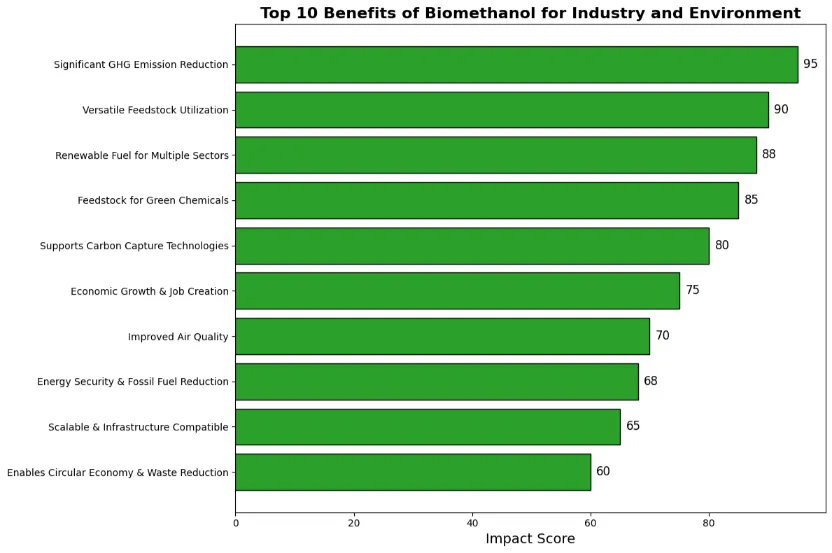
Bar chaert of Top 10 Benefits of Biomethanol for industry and Environrment

As the world moves toward sustainable solutions, biomethanol is quietly rising as a versatile green champion. This renewable fuel, made from sources like agricultural waste and recycled CO2, is more than just another eco-friendly option. It is creating real economic opportunities that impact everyday lives. Biomethanol powers cleaner cookstoves in rural homes and transforms trash into valuable fuel. It shows that environmental progress can support job creation and community development. Let’s examine how this adaptable molecule is offering new chances for entrepreneurs, improving public health, and converting waste into wealth across various industries.

Biomethanol: How This Green Fuel Can Create Jobs, Cleaner Air & New Business Opportunities

The world is shifting toward sustainable energy, and biomethanol is emerging as a game changer. Unlike traditional methanol (made from fossil fuels), biomethanol is produced from renewable sources like agricultural waste, forestry residues, and even municipal trash. This means it can help reduce pollution, cut waste, and create new jobs benefits that directly impact everyday people.

But how exactly can biomethanol help local businesses, entrepreneurs, and communities?

1. Sustainable Chemicals & Everyday Products

Biomethanol is a versatile chemical building block, meaning it can replace fossil-based methanol in countless products we use daily.

Business & Entrepreneurship Opportunities:

Eco-Friendly Plastics & Packaging

  • Companies can produce biodegradable plastics from biomethanol for food containers, toys, and textiles.
  • Entrepreneur Idea: Launch a brand selling “plant-based plastic” household items, marketed as non-toxic & carbon-neutral.

Green Paints, Adhesives & Cleaning Products

  • Many paints and glues rely on methanol. Switching to biomethanol makes them safer and more sustainable.
  • Entrepreneur Idea: A small business making non toxic art supplies or ecofriendly home cleaners using biomethanol derivatives.

Biodiesel for Local Transport

  • Biodiesel is made by mixing waste cooking oil with biomethanol a perfect community based business.
  • Entrepreneur Idea: A local biodiesel co op that collects used cooking oil from restaurants and converts it into clean fuel.
  • Learn more: ATTRA – Biodiesel Production Basics

Key Companies Leading the Way:

  • BASF – Investing in renewable chemicals (Website)
  • Södra – Produces biomethanol from forestry waste (Bioproducts Page)

2. Clean Energy & Cooking Solutions

Biomethanol can replace dirty fuels in homes and businesses, improving air quality and health.

Business & Entrepreneurship Opportunities:

Methanol-Powered Cookstoves

  • Traditional wood/charcoal stoves cause indoor air pollution, killing millions yearly.
  • Entrepreneur Idea: A social enterprise selling affordable biomethanol stoves in rural areas, paired with locally produced fuel.

Off-Grid Power with Methanol Fuel Cells

  • Small biomethanol fuel cells can power homes, telecom towers, or emergency backup systems.
  • Entrepreneur Idea: A startup offering modular, portable power systems for off-grid communities.

Key Organizations Supporting Clean Energy:

  • Methanol Institute – Promotes methanol as a clean fuel (Website)
  • WHO – Advocates for clean cooking solutions (Website)

3. Turning Trash into Cash: Waste-to-Biomethanol

Instead of burning or dumping waste, we can convert it into biomethanol—creating jobs and reducing pollution.

Business & Entrepreneurship Opportunities:

Local Waste-to-Fuel Plants

  • Small facilities can process farm waste, food scraps, or old paper into biomethanol.
  • Entrepreneur Idea: A community owned plant that pays locals for their organic waste and sells clean fuel.

Waste Collection & Sorting Services

  • A business that collects, sorts, and pre-processes waste for biomethanol production.
  • Example: A company specializing in diverting food waste from landfills to biofuel plants.

Key Companies in Waste to Fuel:

4. Cleaner Shipping & Trucking with Biomethanol

The shipping industry is adopting methanol-powered ships, while trucking fleets explore biofuel blends.

Business & Entrepreneurship Opportunities:

Methanol Fueling Stations at Ports

  • As more ships switch to methanol, bunkering (fueling) services will be in demand.
  • Entrepreneur Idea: A logistics company specializing in green methanol refueling for ships and trucks.

Engine Conversion Kits

  • Retrofitting diesel trucks to run on methanol blends can cut emissions.
  • Entrepreneur Idea: A garage offering methanol conversion services for fleet operators.

Key Players in Green Shipping:

  • Maersk – Building methanol-powered ships (Website)
  • Methanol Institute – Advocates for methanol in transport (Website)

Why Biomethanol Matters for Everyday People

  • Cleaner Air → Fewer respiratory diseases from pollution.
  • Less Waste → More recycling, fewer landfills.
  • Local Jobs → New roles in waste collection, fuel production, and green tech.
  • Cheaper Energy → Biomethanol can stabilize fuel prices by reducing oil dependence.

Final Thoughts: A Circular Economy Fuel

Biomethanol isn’t just a fuel it’s a tool for sustainable development. From cleaner cooking to waste-to-energy plants, it offers real world benefits for communities, businesses, and the planet.

Want to dive deeper? Check out these resources:

The future is green and biomethanol is leading the charge.

Explore More on Biomethanol:

15 Surprising Applications of Biomethanol You Didn’t Know Were Changing Your Daily Life

Discover unexpected ways biomethanol is already influencing your everyday lifestyle and industries around you.

Biomethanol and Ethanol: Which Renewable Fuel Holds the Key to Our Future?

Compare the advantages of biomethanol and ethanol to understand which fuel will power a greener tomorrow.

Top 10 Benefits of Biomethanol for Industry and Environment Read More »

Green agricultural fields under a dramatic cloudy sky with bold headline text reading “From Waste to Wonder: How Biomethanol Production Is Transforming Agricultural Byproducts” overlaid in the center of the image, representing sustainable biofuel production from farm residues.

From Waste To Wonder: How Biomethanol Production Is Transforming Agricultural Byproducts

Understanding Biomethanol Production and Its Importance

Biomethanol is a form of methanol made from renewable sources, mainly biomass like agricultural residues, forestry waste, and organic municipal waste. Unlike traditional methanol made from fossil fuels, biomethanol has a much lower carbon footprint, often reducing greenhouse gas emissions by up to 90%. It serves as a flexible fuel, a chemical source, and a hydrogen carrier, making it crucial for the shift toward sustainable energy.

Agricultural byproducts, including crop stalks, husks, straw, and other organic materials, are plentiful but often underused. Converting these materials into biomethanol not only adds value to waste but also addresses important environmental issues like waste management and carbon emissions.

The Challenge and Opportunity of Agricultural Byproducts

The Problem of Agricultural Waste

Globally, agriculture produces billions of tons of biomass waste every year. Traditionally, much of this waste has been open burned, creating serious air pollution and contributing to climate change. In many areas, poor disposal of agricultural byproducts harms soil health, contaminates water, and reduces biodiversity.

Unlocking Value from Waste

Biomethanol production provides a sustainable way to convert these residues into clean fuel and chemicals. This method supports circular economy ideas by minimizing waste and maximizing resource reuse.

How Biomethanol is Produced from Agricultural Byproducts

The process of creating biomethanol from agricultural waste typically includes these key steps:

1. Feedstock Collection and Preparation

Agricultural residues like corn stover, wheat straw, rice husks, and sugarcane bagasse are gathered and cleaned to remove impurities.

2. Gasification

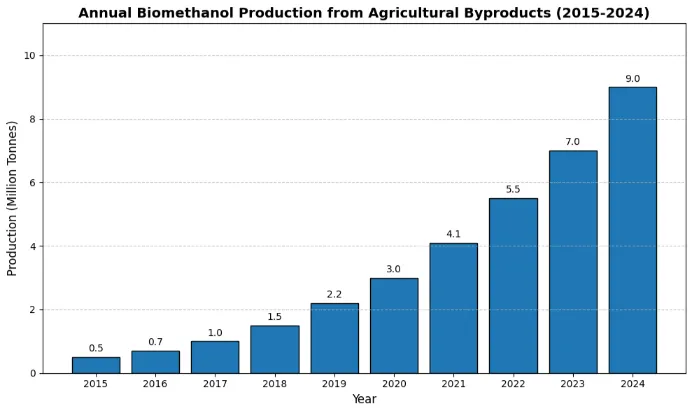
BAR CHART OF ANNUAL BIOMETHANOL PRODUCTION (2015-2024)

The biomass is turned into synthesis gas (syngas), a mix of carbon monoxide (CO), hydrogen (H₂), and carbon dioxide (CO₂), through high-temperature gasification.

3. Methanol Synthesis

The syngas is chemically converted into methanol under controlled temperature and pressure.

4. Purification

The raw methanol is purified to meet fuel or chemical-grade standards.

This process can also be combined with carbon capture and utilization technologies to further cut emissions, increasing the sustainability of biomethanol production.

Environmental Benefits of Biomethanol from Agricultural Byproducts

Significant Carbon Emission Reductions

Using renewable feedstocks instead of fossil fuels, biomethanol production greatly lowers net carbon emissions. When agricultural residues are transformed into biomethanol rather than being burned or left to decay, methane and CO₂ emissions decrease.

Waste Management and Pollution Reduction

Turning agricultural waste into biomethanol helps eliminate open-field burning, a major source of air pollution in many regions. This results in better air quality and health benefits for the public.

Soil and Water Conservation

Using residues for biomethanol production can work alongside sustainable farming practices that keep soil healthy and prevent erosion, unlike excessive burning or removal of residues.

Economic and Social Impact on Rural Communities

Creating New Income Streams

Farmers and rural communities can earn money by selling agricultural byproducts that were once thrown away or burned. This extra source of income helps support livelihoods and rural development.

Job Creation and Local Industry Growth

Biomethanol production facilities boost local economies by creating jobs in areas like feedstock collection, processing, and plant operations. This encourages industry growth in rural areas.

Energy Access and Security

Biomethanol produced locally can improve energy access in rural areas, providing a reliable and cleaner fuel option for cooking, heating, and transportation.

Biomethanol Role in the Renewable Energy Landscape

Transportation Fuel

Biomethanol is a promising renewable fuel for vehicles and can be used directly or blended with gasoline. It offers high octane, cleaner combustion, and works with existing fuel infrastructure.

Marine and Aviation Fuel

The shipping and aviation industries are considering biomethanol as a low-carbon alternative to regular fuels, helping them meet strict emissions standards.

Chemical Industry Feedstock

Biomethanol acts as a renewable base material for making formaldehyde, acetic acid, and bio-based plastics, reducing dependence on petroleum-based chemicals.

Hydrogen Carrier

Biomethanol can efficiently store and transport hydrogen, supporting the growing hydrogen economy and helping to decarbonize hard-to-electrify sectors.

Technological Innovations Driving Biomethanol Production

New Gasification Technologies

Recent gasification methods boost conversion efficiency and allow for a wider variety of agricultural residues to be used.

Integration with Carbon Capture

Linking biomethanol production with carbon capture and utilization enhances sustainability by recycling CO₂ emissions.

Hybrid Production Pathways

Combining biomass gasification with green hydrogen (produced from renewable electricity) allows for “e-methanol” production, further lowering carbon footprints.

Global Examples of Biomethanol from Agricultural Byproducts

  • China: Leads large-scale biomethanol production from agricultural residues like corn stover and wheat straw, helping local economies and clean energy initiatives.
  • Europe: Projects are integrating biomethanol into transport fuel supply chains and chemical manufacturing, focusing on EU Green Deal targets.
  • Brazil: Uses sugarcane bagasse for biomethanol production, supporting its established bioethanol industry.

Challenges and Future Outlook

Feedstock Supply and Sustainability

Ensuring a steady and sustainable supply of agricultural residues without harming soil health is essential.

Economic Competitiveness

Scaling biomethanol production cost-effectively requires new technology and supportive policies.

Infrastructure and Market Development

Building distribution networks and demand for biomethanol fuels and chemicals is critical for broader adoption.

Conclusion: Waste to Wonder Biomethanol Transformative Potential

Biomethanol production from agricultural byproducts shows how innovation can turn environmental challenges into sustainable solutions. By turning waste into clean fuel and useful chemicals, biomethanol supports climate goals, rural development, and a circular economy.

As technology advances and policies come together, biomethanol is set to become a key part of the renewable energy landscape, proving that what was once waste can truly become something valuable.

The Biomethanol Advantage: How Small Businesses Are Cutting Emissions While Boosting Profits

Discover how small enterprises are leveraging biomethanol to save money and reduce emissions.

Why Major Investors Are Quietly Pouring Billions into Biomethanol

Explore why big money is flowing into the biomethanol industry and what it means for the future.

From Waste To Wonder: How Biomethanol Production Is Transforming Agricultural Byproducts Read More »

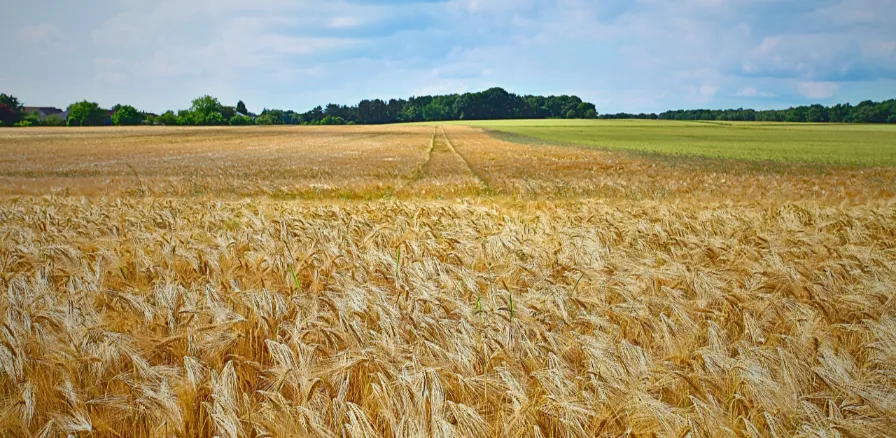
Aerial view of a golden-yellow agricultural field with parallel crop rows and overlaid text reading “The Science Behind Biomethanol – How It’s Made and Why It Matters,” symbolizing sustainable fuel derived from biomass crops.

The Science Behind Biomethanol: How It Made And Why Its Matter

The Science Behind Biomethanol: How It Made And Why It Matters

Biomethanol is methanol made from renewable biomass sources instead of fossil fuels. Methanol itself is a simple alcohol (CH3OH) often used as a chemical feedstock, solvent, and more recently, as a transportation fuel. When produced from biomass, methanol becomes biomethanol, a sustainable liquid fuel that can greatly lower carbon emissions compared to traditional fossil fuels.

Unlike fossil methanol, which typically comes from natural gas or coal, biomethanol is made from organic waste, agricultural byproducts, wood, and other renewable resources. This renewable origin gives biomethanol a much smaller carbon footprint, making it important for reducing carbon emissions in shipping, road transport, and chemical manufacturing.

Why Biomethanol Matters

  1. Climate Benefits
    Biomethanol can cut lifetime greenhouse gas emissions by up to 60-95% compared to fossil fuels, depending on feedstock and production methods. This makes it a useful tool for meeting international climate goals like the IMO’s 2050 target to halve shipping emissions and the EU’s Fit for 55 initiative.
  2. Versatile Fuel
    Biomethanol is a liquid at room temperature, which makes it easier to store, transport, and use than gaseous fuels like hydrogen or ammonia. It can be employed in existing or modified internal combustion engines and fuel cells, providing flexibility in operations.
  3. Circular Economy
    By using waste products such as agricultural residues, manure, and food waste, producing biomethanol encourages better waste management and creates value from materials that would otherwise decompose and emit methane, a strong greenhouse gas.
  4. Energy Security
    Biomethanol can be made locally from plentiful biomass resources, decreasing reliance on imported fossil fuels and improving energy security for many countries.

How Is Biomethanol Made? The Production Science

Making biomethanol involves turning biomass into a synthesis gas (syngas) mixture, which is then converted into methanol through catalysis. The main production methods are:

1. Biomass Gasification

Feedstock: Woody biomass, agricultural residues, municipal solid waste, and other plant materials.

Process: Biomass is heated at high temperatures (700-1000°C) in a low-oxygen environment to create syngas—a blend of carbon monoxide (CO), hydrogen (H2), and carbon dioxide (CO2).

Methanol Synthesis: The syngas is cleaned and introduced into a catalytic reactor where CO and H2 react under pressure to form methanol.

This thermochemical method is well-established and scalable, allowing for biomethanol production from various biomass sources.

2. Biogas Reforming

Feedstock: Biogas produced from the anaerobic digestion of manure, food waste, sewage sludge, and agricultural waste.

Process: Biogas (mainly methane and CO2) is purified and reformed (via steam reforming or partial oxidation) to produce syngas.

Methanol Synthesis: Similar catalytic conversion of syngas to methanol occurs next.

This method uses organic waste streams, enhancing waste management and cutting methane emissions from decomposition.

3. Hybrid Processes

Emerging technologies combine hydrogen (created through renewable electrolysis) with biogenic CO2 or syngas to produce biomethanol. This method can increase methanol yields and further decrease carbon footprints by utilizing green hydrogen.

Feedstocks for Biomethanol Production

The choice of feedstock is crucial for sustainability and economics. Common feedstocks include:

  • Woody Biomass: Forestry leftovers, wood chips, and sawdust.
  • Agricultural Waste: Straw, husks, corn stover.
  • Organic Waste: Food waste, manure, sewage sludge.
  • Municipal Solid Waste: Biogenic fractions suitable for gasification.
  • Recycled Carbon: CO2 captured from industrial processes mixed with renewable hydrogen.

Using waste and residues avoids competition with food production and supports circular bioeconomy principles.

Technological Advances Improving Biomethanol Production

Recent improvements boost efficiency and output:

  • Gasification Improvements: Advanced gasifiers that better remove tar and clean syngas.
  • Catalyst Development: More durable catalysts that raise methanol yield and lower energy use.
  • Hybrid Systems: The inclusion of renewable hydrogen enhances carbon utilization.
  • Process Integration: Combining gasification, reforming, and methanol synthesis in optimized plants.

These improvements are making biomethanol production more affordable and scalable.

Environmental and Economic Benefits

Lifecycle Emissions Reduction

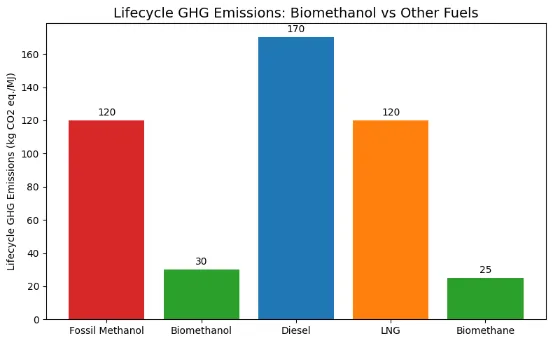
Biomethanol’s lifecycle emissions can be 60-95% lower than fossil methanol, based on feedstock and technology. By diverting waste from landfills and preventing methane emissions, it provides extra climate benefits.

Bar chart of BIOMETHANOL VS other fuels Life cycle of GHG Emissions

Waste Management

Making biomethanol from organic waste streams cuts down on landfill use and related environmental issues like groundwater contamination and methane leakage.

Economic Opportunities

Biomethanol production creates jobs in rural areas, supports agricultural sectors, and encourages new industries focused on waste recovery.

Biomethanol in the Energy Transition

Shipping Fuel

Biomethanol is becoming popular as a marine fuel due to its low emissions and compatibility with dual-fuel engines. Major shipping companies are investing in methanol-powered vessels, backed by growing bunkering infrastructure.

Road Transport

When mixed with gasoline or used in dedicated engines, biomethanol can lower emissions in light and heavy-duty vehicles.

Chemical Industry

Biomethanol serves as a renewable feedstock to produce chemicals, plastics, and synthetic fuels, aiding the decarbonization of industrial sectors.

Challenges and Future Outlook

Feedstock Availability and Logistics

Large-scale biomethanol production requires sustainable biomass supply chains and efficient logistics to gather and process diverse feedstocks.

Cost Competitiveness

While costs are falling, biomethanol is still pricier than fossil fuels. Policy incentives, carbon pricing, and technological advancements will be essential for improving competitiveness.

Regulatory Support

Clear certification frameworks and supportive policies are necessary to encourage biomethanol use and maintain sustainability standards.

Conclusion

Biomethanol stands as a scientifically solid, environmentally sustainable, and economically promising fuel for a low-carbon future. By transforming renewable biomass and waste into a versatile liquid fuel, biomethanol tackles climate change, waste management, and energy security issues all at once. As technology improves and markets expand, biomethanol’s importance in the global energy transition will only grow, making it a crucial part of the clean energy puzzle.

Blog Links

Explore More on Biofuels & Climate Initiatives

The Science Behind Biomethanol: How It Made And Why Its Matter Read More »