energy transition

Industrial refinery at dusk with bright lights, representing fossil fuel infrastructure compared to cleaner biomethanol alternatives.

Biomethanol Vs Fossil Fuel: Which Ones Win For The Planet

Biomethanol Vs Fossil Fuel

As the world grapples with a climate crisis and the urgent need for decarbonization, the energy sector is undergoing significant change. One of the key debates is the move from fossil fuels to renewable alternatives. Biomethanol, a renewable form of methanol made from biomass and waste, is becoming a popular choice as a sustainable fuel and chemical feedstock. But how does it compare to traditional fossil fuels? Which option is better for the planet, both environmentally and economically? This analysis looks at the science, benefits, challenges, and future potential of biomethanol versus fossil fuels.

What Are Fossil Fuels?

Fossil fuels—coal, oil, and natural gas—are energy sources formed from ancient organic matter over millions of years. They have fueled industrial growth but are now seen as the main contributors to greenhouse gas emissions, air and water pollution, and various environmental and health issues.

Environmental Impact: Biomethanol vs. Fossil Fuels

Greenhouse Gas Emissions
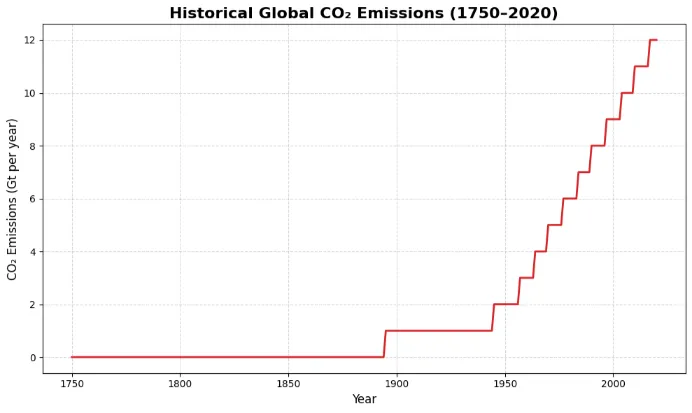
Fossil Fuels: Burning fossil fuels releases large amounts of CO₂, methane, and other greenhouse gases. In 2019, fossil fuels were responsible for 74% of U.S. greenhouse gas emissions, with about 25% from public lands. These emissions drive global warming, rising sea levels, and extreme weather.
Biomethanol: Biomethanol can achieve up to 90% reduction in greenhouse gas emissions compared to fossil methanol, and even more when compared to fossil fuels overall. The carbon released during burning was previously absorbed during biomass growth, making it nearly carbon-neutral. Some biomethanol processes, like those using manure or waste, can even lead to net-negative emissions.

Air and Water Pollution
Fossil Fuels: Extracting, refining, and burning fossil fuels emit harmful air pollutants (SO₂, NOₓ, particulates, mercury) and contribute to acid rain, smog, and water pollution from oil spills and fracking. These pollutants damage ecosystems, agriculture, and human health.
Biomethanol: Burning biomethanol produces many fewer air pollutants. It burns cleaner, emitting less SO₂, NOₓ, and particulates, which improves urban air quality and reduces respiratory issues.

Ocean Acidification and Plastic Pollution
Fossil Fuels: At least a quarter of CO₂ from fossil fuels is taken up by oceans, leading to increased acidity and threats to marine life. Fossil fuels are also the primary source of plastics, with over 99% of plastics made from them, resulting in significant plastic pollution and climate problems.
Biomethanol: As a renewable fuel, biomethanol does not contribute to ocean acidification or plastic pollution in the same way. Its production can even use waste streams, decreasing landfill and ocean-bound waste.

Land and Resource Use
Fossil Fuels: Extracting and processing fossil fuels can ruin landscapes, destroy habitats, and contaminate soil and water. Oil spills and mining activities have long-lasting ecological effects.
Biomethanol: Producing biomethanol uses waste and residues, encouraging a circular economy and lessening the need for new resource extraction. However, large-scale production requires careful feedstock management to prevent land use conflicts.

Energy Efficiency and Net Energy Gain
Fossil Fuels: Extracting and processing fossil fuels require a lot of energy, resulting in significant losses along the supply chain. Their net energy gain is decreasing as resources become more challenging to extract.
Biomethanol: Producing biomethanol can be very efficient, especially with waste feedstocks. It is easy to store and transport and can be used in existing infrastructure and engines, making it a practical alternative.

Economic and Social Impacts

Market Costs and Externalities
Fossil Fuels: Market prices for fossil fuels do not reflect their actual environmental and health costs—known as externalities. These include climate change, air and water pollution, and healthcare expenses from pollution-related illnesses. Extreme weather events, rising sea levels, and disaster recovery costs add hundreds of billions to the true cost of fossil fuels.
Biomethanol: While the initial production costs for biomethanol may be higher, its environmental and health advantages can lead to long-term economic savings. As policies increasingly account for carbon pricing and promote renewables, biomethanol is becoming more competitive.

Job Creation and Rural Development
Fossil Fuels: The fossil fuel industry relies heavily on capital and is becoming more automated, leading to job losses as mines and wells close.
Biomethanol: Biomethanol production boosts rural economies by creating jobs in biomass collection, processing, and plant management. It diversifies energy supply chains and reduces reliance on fluctuating fossil fuel markets.

Biomethanol in Transportation and Industry

Transportation
Fossil Fuels: Fuels derived from oil dominate road, air, and sea transport, making up nearly a quarter of global CO₂ emissions. Continuing to use these fuels conflicts with international climate goals.
Biomethanol: Biomethanol serves as a drop-in fuel for cars, trucks, ships, and aviation. It helps decarbonize sectors that are hard to electrify and can blend with gasoline or be used in dedicated engines.

Industry
Fossil Fuels: Fossil methanol and other petrochemicals are used in plastics, fertilizers, and many industrial goods, sustaining the fossil economy.
Biomethanol: Biomethanol serves as a sustainable feedstock for green chemicals and materials. It lowers the carbon footprint of manufacturing and aids the shift to a circular, low-carbon economy.

Health and Environmental Justice

Fossil Fuels: Communities near extraction sites, refineries, and power plants often experience higher rates of asthma, cancer, and other health issues. Fossil fuel pollution disproportionately harms low-income and marginalized communities.
Biomethanol: Cleaner burning and reduced pollution from biomethanol enhance public health and lower healthcare costs, promoting social fairness and environmental justice.

Limitations and Challenges
Biomethanol

  • Feedstock Availability: Large-scale biomethanol production relies on organized and sustainable waste feedstock supply chains, which are still developing in many areas.
  • Production Technology: Efficient conversion methods are still under research and scaling.
  • Land Use: Unsustainable growth could compete with food production or lead to deforestation if not managed properly.

Fossil Fuels

  • Finite Resources: Fossil fuels are non-renewable and becoming harder and more costly to extract.
  • Climate Incompatibility: Ongoing fossil fuel use conflicts with global climate targets and will result in escalating environmental and economic damage.

Regulatory and Policy Landscape

Fossil Fuels: Governments are reducing fossil fuel subsidies, implementing carbon pricing, and introducing stricter emissions standards to speed up the shift to clean energy.
Biomethanol: Policies like the EU Renewable Energy Directive, Fit-for-55, and FuelEU Maritime are encouraging renewable fuels, including biomethanol, giving them an edge over fossil fuels.

The Verdict: Which One is Better for the Planet?

Biomethanol

  • Greatly reduces greenhouse gas emissions—up to 90% versus fossil fuels.
  • Burns cleaner with fewer air and water pollutants.
  • Supports a circular economy and waste reduction.
  • Fosters rural development and job creation.
  • Works with existing infrastructure and vehicles.
  • Becomes more cost-competitive as carbon pricing and regulations grow.

Fossil Fuels

  • Major source of greenhouse gases and pollution.
  • Limited, non-renewable, and subject to unstable markets.
  • Heavy environmental and health-related costs.
  • Incompatible with a sustainable, decarbonized future.

Conclusion:


For the planet, biomethanol clearly outperforms fossil fuels. It provides a sustainable, scalable, and economically viable route to decarbonization, cleaner air and water, and a healthier, more just society. While there are challenges in scaling up production and ensuring a sustainable feedstock supply, the environmental and social benefits of biomethanol far outweigh those of fossil fuels. As policies and markets evolve, biomethanol’s role in the clean energy transition will continue to grow.

 Global CO2 Emissions rate(1750-2020)

Biomethanol Vs Fossil Fuel: Which Ones Win For The Planet Read More »

A bright yellow, illuminated lightbulb floating above a row of six dark, unlit lightbulbs on a black background. Overlaying text asks: "BIOMETHANOL AND ETHANOL: WHICH RENEWABLE FUEL HOLDS THE KEY TO OUR FUTURE."

Biomethanol And Ethanol: Which Renewable Fuel Holds The Key To Our Future

Introduction

As the world moves away from fossil fuels, we need to find out which renewable fuels can truly offer a cleaner and more sustainable future. Biomethanol and ethanol are two of the main candidates often compared for their potential to reduce emissions in transport and power industries, while also helping countries achieve climate goals. So, which of these biofuels is better suited to lead us toward a low-carbon future? In this guide, we will look into the science, sustainability, economics, and real-world impacts of biomethanol and ethanol. This will help you understand which fuel could be vital for our energy transition.

What Are Biomethanol and Ethanol?

Biomethanol
Biomethanol is a renewable type of methanol made from biomass, including agricultural waste, municipal solid waste, or captured carbon dioxide. Unlike traditional methanol, which comes from natural gas, biomethanol offers a sustainable and low-carbon option that can be used as fuel, a hydrogen carrier, and a chemical feedstock.

Ethanol
Ethanol is an alcohol fuel mainly produced from plant materials like corn, sugarcane, and cellulosic materials. It is widely used as a gasoline additive or substitute, especially in the United States and Brazil. Ethanol is also a key part of many national renewable fuel plans.

Environmental Impact: Which Is Greener?

Biomethanol

  • Greenhouse Gas Reduction: Biomethanol can cut greenhouse gas emissions by up to 90% compared to fossil-derived methanol.
  • Feedstock Flexibility: It can be made from non-food biomass and waste, which helps avoid land-use changes and food security issues.
  • Carbon Circularity: Advanced facilities are using carbon capture and utilization to make biomethanol with nearly zero carbon emissions.

Ethanol

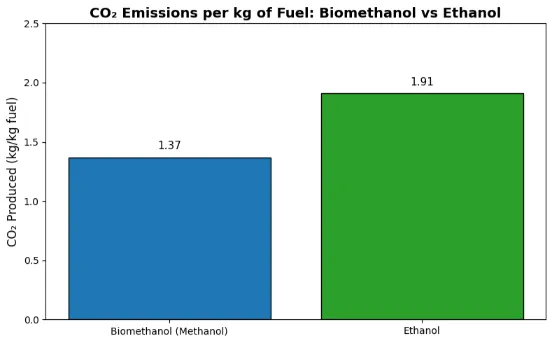
  • Lower Carbon Footprint: Ethanol has a much lower carbon footprint than gasoline and produces fewer pollutants when burned.
  • Food vs. Fuel Debate: Most ethanol comes from food crops, which raises concerns about diverting resources from food production and increasing food prices.
  • Land and Water Use: Ethanol production needs a lot of arable land and water, which can strain resources and affect biodiversity.

Verdict: Biomethanol generally provides better environmental benefits, especially when made from waste or non-food biomass, leading to lower emissions and less resource competition.

Production and Feedstock: Circularity vs. Competition

Biomethanol

  • Feedstock: Uses agricultural residues, forestry waste, municipal solid waste, and captured CO₂, supporting a circular economy.
  • Technology: Produced through gasification and fermentation, with ongoing improvements in efficiency and carbon capture methods.
  • Scalability: Supply chains for feedstocks and conversion technologies are still being developed, but there’s strong potential for large-scale, sustainable production, particularly in areas with plenty of waste biomass.

Ethanol

  • Feedstock: Mainly produced from food crops (corn, sugarcane), with some growth in cellulosic ethanol using crop residues and grasses.
  • Technology: Established fermentation processes, but they are energy-intensive and sometimes use fossil fuels for processing.
  • Scalability: Well-established in major markets, but growth is limited by land, water, and food security issues.

Verdict: Biomethanol’s use of waste and non-food feedstocks gives it an advantage in sustainability and scalability, while ethanol’s production methods are more established and widespread.

Energy Efficiency and Performance

Biomethanol

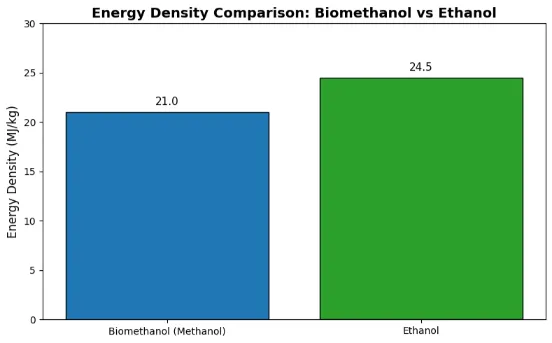
  • Energy Density: Higher than ethanol but lower than gasoline, making it a good choice for blending and direct use in modified engines.
  • Combustion: Provides cleaner combustion and reduces emissions of NOx and particulates, which is better for both vehicles and stationary power.
  • Infrastructure: Can be mixed with gasoline or used in methanol fuel cells and is compatible with existing storage and distribution systems.

Ethanol

  • Energy Density: Lower than both gasoline and methanol, which may reduce vehicle range unless engines are adjusted for ethanol.
  • Combustion: Burns cleaner than gasoline but can increase evaporative emissions; engine compatibility may be a challenge for higher blends.
  • Infrastructure: Commonly used as a gasoline additive (E10, E85), but high blends need engine modifications and specialized infrastructure.

Verdict: Biomethanol has a slight edge in energy density and flexibility, especially for next-generation engines and fuel cells.

Economic Factors: Cost, Investment, and Market Growth

Biomethanol

  • Cost-Competitive: As technology improves and waste feedstock supply chains develop, biomethanol is becoming more cost-competitive with fossil fuels and other renewables.
  • Market Growth: The global biomethanol market is expected to hit $9 billion by 2030, growing at a rate of 7% from 2023 to 2030.
  • Investment: Attracting significant investments, particularly in Europe and Asia-Pacific, where policies support low-carbon fuels and rapidly growing infrastructure.

Ethanol

  • Established Markets: Ethanol is already a multi-billion-dollar industry, especially in the US and Brazil.
  • Subsidies and Mandates: Its growth has been driven by government mandates and subsidies, but the sector faces more scrutiny over sustainability and resource use.
  • Price Volatility: Ethanol prices can fluctuate due to crop yields, weather changes, and commodity markets, leading to price uncertainty.

Verdict: Ethanol has the advantage of an established market, but biomethanol is quickly catching up as a scalable, sustainable, and economically viable alternative.

Applications: Where Do They Fit?

Biomethanol

  • Transportation: Used as a direct fuel, mixed with gasoline, or as a hydrogen carrier for fuel cell vehicles.
  • Industry: Serves as a feedstock for chemicals like formaldehyde and acetic acid, supporting greener manufacturing.
  • Power Generation: Used in methanol fuel cells for clean electricity production.
  • Marine and Aviation: Emerging as a low-carbon option for marine and aviation fuel, helping to decarbonize hard-to-reduce sectors.

Ethanol

  • Transportation: Commonly used as a gasoline additive or substitute, particularly in flex-fuel vehicles.
  • Industry: A feedstock for various chemicals, but less versatile compared to methanol derivatives.
  • Rural Development: Supports rural economies and creates jobs in agricultural areas.

Verdict: Biomethanol’s versatility across transport, industry, and power makes it a more adaptable option for the energy transition, while ethanol’s strength lies in established automotive markets.

Challenges and Limitations

Biomethanol

  • Feedstock Logistics: Large-scale production relies on reliable, sustainable supply chains, which are still not fully developed in many areas.
  • Conversion Technology: Ongoing research is needed to improve conversion efficiency and lower costs.
  • Policy Support: Needs strong policy frameworks and incentives to compete with established fossil fuels and ethanol subsidies.

Ethanol

  • Food vs. Fuel: Dependence on food crops raises ethical and economic issues, especially in regions facing food insecurity.
  • Land and Water Use: High resource needs can lead to deforestation, habitat loss, and water shortages.
  • Engine Compatibility: High ethanol blends can cause engine wear and require infrastructure upgrades.

Verdict: Both fuels face challenges, but biomethanol’s issues are more about technology and logistics, while ethanol’s are linked to resource conflict and environmental impact.

The Future Outlook: Which Fuel Holds the Key?

Biomethanol
Driven by innovation, policy support, and the demand for truly sustainable fuels, biomethanol is set for rapid growth. Its ability to use waste feedstocks, cut greenhouse gas emissions by up to 90%, and fit into existing infrastructures makes it a strong candidate for the future of renewable energy. As more countries and companies invest in circular economy solutions, biomethanol’s role is expected to grow in transport, industry, and power generation.

Ethanol
Ethanol will continue to be an important part of the renewable fuel mix, especially in regions with established production and infrastructure. However, its long-term growth may be limited by resource challenges and sustainability issues. Advances in cellulosic ethanol and integration with other biofuels could improve its environmental profile, but competition for land and water will remain a concern.

Conclusion: Biomethanol or Ethanol?

Both biomethanol and ethanol are crucial for the global energy transition, providing significant emissions reductions and supporting economic development. However, biomethanol’s adaptability, lower environmental impact, and fit with a circular economy make it a more promising option for a sustainable future. As technology improves and policies evolve, biomethanol is likely to become more central in decarbonizing transport, industry, and power—opening new pathways to a low-carbon world.

BIOMETHANOL ENERGY DENSITY

Biomethanol emissiions

Related Reads on Biomethanol:

From Waste to Wonder: How Biomethanol Production is Transforming Agricultural Byproducts

Explore how agricultural waste is being turned into clean fuel through innovative biomethanol production.

The Biomethanol Advantage: How Small Businesses Are Cutting Emissions While Boosting Their Bottom Line

Discover how small businesses are saving money and going green with biomethanol solutions.

Biomethanol And Ethanol: Which Renewable Fuel Holds The Key To Our Future Read More »

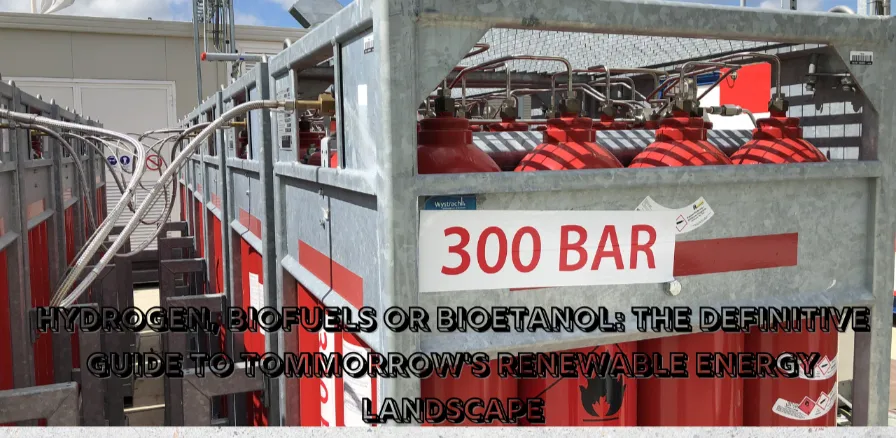
ndustrial hydrogen storage cylinders labeled “300 BAR” arranged in a metal rack at an energy facility, representing high-pressure gas storage for renewable energy technologies.

Hydrogen, Biofuels Or Bioethanol: The Definitive Guide To Tommorrow  Renewable Energy Landscape

Hydrogen, Biofuels Or Bioethanol

As global energy demands soar and the urgency of climate action intensifies, the search for sustainable, scalable, and economically viable alternatives to fossil fuels is more pressing than ever. In this comprehensive guide, we explore the future of renewable energy through the lens of three of its most promising contenders: hydrogen fuels, biofuels (with a focus on bioethanol), and biomethanol. We’ll examine their benefits, challenges, and the critical role each will play in the evolving energy landscape, with a special emphasis on the keywords: biomethanol and hydrogen fuels.

The Renewable Energy Imperative

The world is at a crossroads. Rising temperatures, volatile fossil fuel markets, and escalating energy consumption have made the transition to renewable energy sources not just an environmental necessity, but an economic and geopolitical imperative. Governments, industries, and consumers are demanding cleaner, more reliable, and more sustainable energy solutions. Among the frontrunners in this race are hydrogen, biofuels (including bioethanol), and the increasingly significant biomethanol.

Hydrogen Fuels: The Rising Star of Clean Energy

What Is Hydrogen Fuel?
Hydrogen fuel is an energy carrier that, when used in fuel cells, produces electricity with water as the only byproduct. There are several types of hydrogen, differentiated by their production methods:

  • Grey Hydrogen: Produced from natural gas, emitting CO₂.
  • Blue Hydrogen: Produced from natural gas with carbon capture and storage.
  • Green Hydrogen: Produced via electrolysis using renewable electricity, emitting no CO₂.

Why Hydrogen Fuels Matter
Hydrogen is emerging as a crucial player in the transition to sustainable energy. Green and low carbon hydrogen are particularly promising for meeting global energy demand and contributing to climate action goals. Hydrogen’s versatility allows it to decarbonize sectors that are hard to electrify, such as heavy industry, shipping, and aviation.

Hydrogen’s Challenges

  • Cost: Green hydrogen is currently more expensive than fossil fuels, though costs are projected to decrease significantly by 2030 as technology matures and scales.
  • Storage and Transport: Hydrogen is challenging to store and transport due to its low energy density and the need for high-pressure or cryogenic systems.
  • Infrastructure: Building a hydrogen economy requires massive investments in infrastructure, including pipelines, fueling stations, and electrolyzers.

The Road Ahead
Despite these challenges, the number of low-emissions hydrogen projects is rapidly increasing, with regulatory frameworks such as the EU’s Hydrogen and Gas Market Package paving the way for broader adoption. As costs fall and infrastructure develops, hydrogen fuels are set to play a pivotal role in the global energy mix.

Biofuels: Powering a Greener Tomorrow

What Are Biofuels?
Biofuels are renewable fuels derived from organic matter (biomass), such as plants, agricultural waste, and even algae. The two main types are:

  • Bioethanol: An alcohol made by fermenting the sugars in crops like corn, sugarcane, and cellulosic biomass.
  • Biodiesel: Produced from vegetable oils, animal fats, or recycled greases.

The Case for Bioethanol
Bioethanol stands out as a biofuel with significant environmental and economic benefits:

  • Greenhouse Gas Reduction: Bioethanol can reduce greenhouse gas emissions by up to 90% compared to gasoline.
  • Economic Opportunities: Especially in developing countries, bioethanol production can boost rural economies, reduce energy imports, and create jobs.
  • Versatility: Bioethanol is already used as a blend in gasoline (e.g., E10, E85), making it a drop-in solution for existing vehicle fleets.

Innovations and Trends


Ongoing research is enhancing bioethanol production efficiency and expanding feedstock options to include algae and seaweed. The United States and Brazil lead the world in bioethanol production, leveraging sugarcane and corn, respectively.

Market Growth
The global bioethanol market is projected to reach a multimillion-dollar valuation by 2030, driven by technological advancements, policy support, and growing demand for sustainable fuels.

Challenges for Bioethanol

  • Feedstock Competition: Balancing land use for food versus fuel remains a concern.
  • Sustainability: Responsible land management and sustainable sourcing are critical to avoid negative environmental impacts.

Biomethanol: The Unsung Hero of the Renewable Revolution

What Is Biomethanol?
Biomethanol is methanol produced from renewable biomass sources, such as agricultural waste, forestry residues, or even municipal solid waste. It is a clear, colorless liquid with properties nearly identical to conventional methanol, but with a much lower carbon footprint.

Production and Advantages

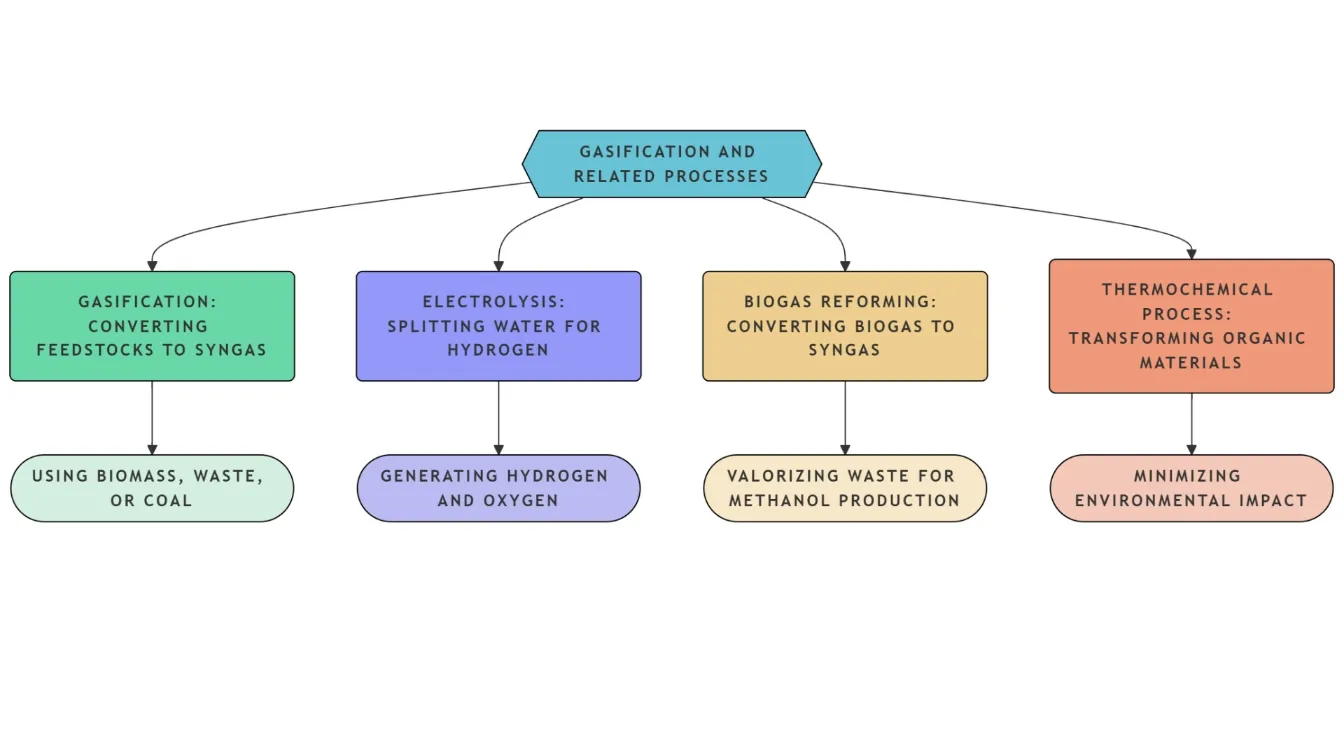
  • Production Process: Biomethanol is produced by gasifying biomass into syngas, which is then converted into methanol, often with the addition of green hydrogen.
  • Storage and Transport: Unlike hydrogen, biomethanol is easily stored and transported using existing infrastructure, making it an attractive hydrogen carrier and marine fuel.
  • Carbon Reduction: Biomethanol can achieve up to 90% greenhouse gas reductions within both the methanol and hydrogen supply chains.

Biomethanol in the Marine Sector
The shipping industry is under intense pressure to decarbonize. Biomethanol is gaining traction as a marine fuel due to its compatibility with existing engines and infrastructure, as well as its sustainability credentials. In China, over 100 projects are underway to produce more than 30 million tonnes of green methanol annually, with 12 million tonnes dedicated to biomethanol.

Biomethanol vs. E-Methanol

  • E-Methanol: Produced by combining captured CO₂ with green hydrogen, but currently less commercially viable due to higher production costs and less established technology.
  • Biomethanol: More cost-competitive and technologically mature, making it a leading candidate for near-term adoption in shipping and other sectors.

Biomethanol and Hydrogen Fuels: A Powerful Synergy

Biomethanol and hydrogen fuels are not mutually exclusive; in fact, they complement each other in the broader renewable energy ecosystem.

  • Hydrogen Carrier: Biomethanol can serve as a practical hydrogen carrier, facilitating the storage and transport of hydrogen energy over long distances especially by sea where pure hydrogen’s storage challenges are prohibitive.
  • Decarbonizing Industry: Both fuels can be used to decarbonize hard-to-abate sectors, such as chemicals, shipping, and heavy transport.
  • Existing Infrastructure: Biomethanol can leverage current methanol plants, pipelines, and carrier ships, enabling faster deployment compared to building entirely new hydrogen infrastructure.

The Future Outlook: Trends, Opportunities, and Challenges

Market Dynamics

  • Policy Support: Governments are ramping up mandates for biofuel blending and supporting green hydrogen projects, driving investment and innovation.
  • Technology Advancements: Improvements in electrolysis, gasification, and fermentation are making hydrogen fuels, bioethanol, and biomethanol more cost-competitive and sustainable.
  • Global Collaboration: International cooperation is accelerating research, development, and deployment of renewable fuels, particularly in emerging markets.

Key Challenges

  • Scaling Production: Meeting global energy demand will require massive scaling of biomass supply chains, electrolyzer capacity, and supporting infrastructure.
  • Sustainability: Ensuring that feedstock sourcing does not compete with food production or cause deforestation is paramount.
  • Cost Parity: Achieving cost parity with fossil fuels remains a hurdle, though declining renewable electricity prices and technological breakthroughs are narrowing the gap.

Hydrogen fuels, bioethanol, and biomethanol each have their own perks and hurdles. Hydrogen fuels could really help cut down carbon emissions in different industries, but they need a lot of infrastructure and lower costs to really take off.

Bioethanol is already making waves in transportation, especially in places where farming is a big deal. On the other hand, biomethanol is starting to shine as a flexible option—particularly for shipping and carrying hydrogen—because it works well with what we already have and can really help reduce carbon too.

When it comes to renewable energy, there isn’t gonna be just one solution; it’s all about a mix of different technologies working together. If we put our money into fresh ideas, team up globally, and focus on being sustainable, we can create an energy system that’s cleaner, stronger, and fairer for future generations.

So here’s the big takeaway: the combo of biomethanol and hydrogen fuels, along with the solid impact of bioethanol, is gonna be key for the future of renewable energy. Keep yourself updated, get involved, and let’s be part of making energy greener and more sustainable.

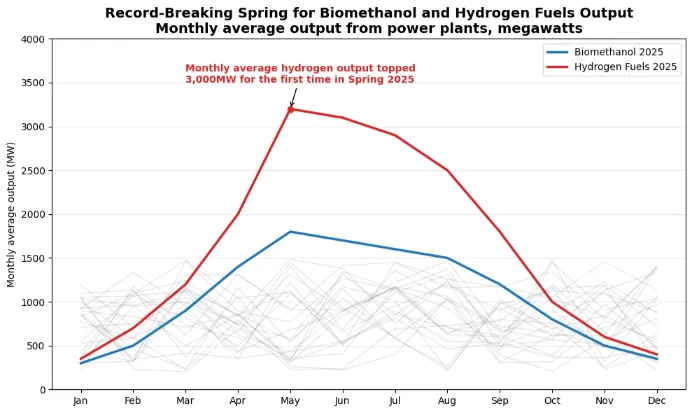
Biomethanol And Hydrogen Fuels
Renewable Energy Resources

Recommended Resources for Further Reading

Hydrogen, Biofuels Or Bioethanol: The Definitive Guide To Tommorrow  Renewable Energy Landscape Read More »

Title graphic displaying “The Trillion Dollar Shift: How Biomethanol Is Poised to Dominate” with a gradient background representing renewable energy innovation.

The Trillion Dollar Shift: How Biomethanol Is Poised To Dominate

Revolutionary renewable energy transformation reshaping global markets

The global energy sector is undergoing a significant change. Renewable fuels are becoming essential for a sustainable future. Among these, biomethanol stands out as a key player, likely to cause a trillion-dollar shift in the way industries, transportation, and economies generate power. As the world speeds up its move away from fossil fuels, biomethanol is quickly gaining popularity as a low-carbon alternative that could reshape markets and provide important environmental benefits.

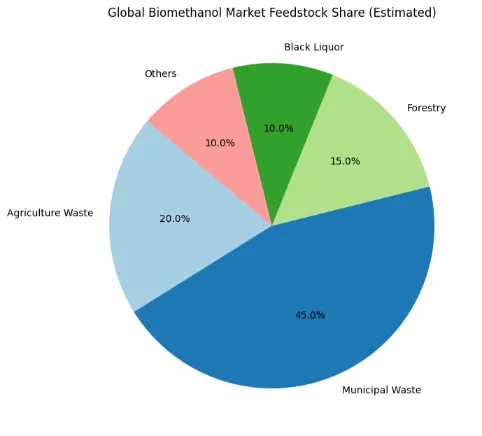
Biomethanol is a renewable version of methanol made from sustainable biomass sources. These sources include agricultural leftovers, forestry waste, municipal solid waste, sewage, and even industrial by-products like black liquor from the pulp and paper industry. Unlike traditional methanol, which comes from fossil fuels, biomethanol has a much lower carbon footprint. This makes it crucial for global efforts to reduce carbon emissions.

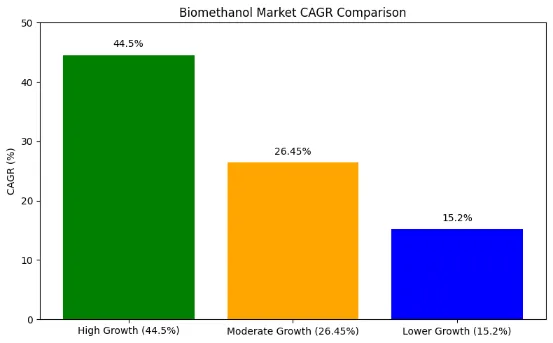
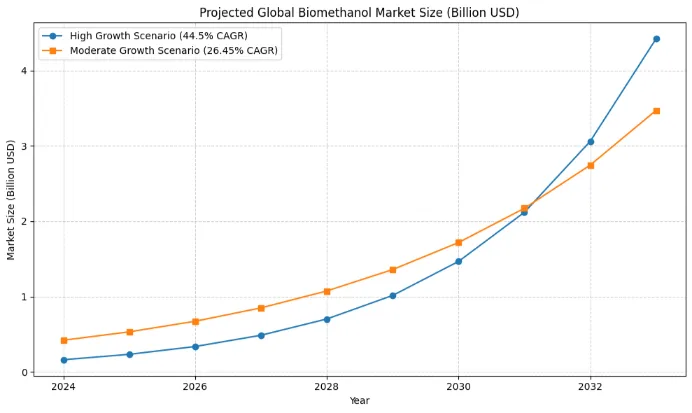
The biomethanol market is growing rapidly. Valued at $161.12 million in 2024, it is expected to rise to $2,118 million by 2032, showing an incredible compound annual growth rate (CAGR) of 44.5%. Broader estimates suggest that the biomethanol fuel market could reach $35 billion by 2033, while the overall renewable methanol market may hit $20.68 billion by 2030. Some forecasts even predict the global biomethanol market could reach $86,150 million by 2033.

Rising Demand for Clean Fuels: Increasing global awareness of climate change and the need to lower greenhouse gas emissions are driving industries and governments to find sustainable alternatives to fossil fuels.

Supportive Government Policies: Tough environmental rules and incentives are boosting investment in biofuels, including biomethanol.

Technological Advances: New developments in biomass gasification, carbon capture, and advanced catalytic processes are making biomethanol production more efficient and affordable.

Versatile Applications: Biomethanol can be used as a feedstock for biofuels, green chemicals, and synthetic materials. It can also be used directly as fuel or blended with gasoline to lower emissions.

1. Environmental Impact


Biomethanol has a much smaller carbon footprint compared to fossil-derived methanol. Its life-cycle emissions are greatly reduced, especially when made from waste materials or used with carbon capture and storage technologies.

2. Versatility Across Sectors


Transportation: Biomethanol can be used as a direct fuel, a gasoline additive, or in biodiesel production, making it important for cleaner road and maritime transport.
Chemicals: Biomethanol is a key ingredient for making acetic acid, formaldehyde, plastics, and other green chemicals.
Energy Storage: With its high energy density and easy storage, biomethanol is being explored as an alternative energy carrier that competes with hydrogen in the developing “Methanol Economy.”

3. Circular Economy and Waste Valorization


By turning municipal solid waste, agricultural leftovers, and other biomass into valuable fuel, biomethanol supports circular economy models and cuts down on landfill use.

4. Compatibility and Infrastructure

 BIOMETHANOL CAGR


Biomethanol can fit into existing fuel systems. It can be used in current engines with minor adjustments and blended with gasoline in various ratios (M10, M15, M85), making it easy for users to transition.

Advanced Gasification & Biorefineries


Modern biorefineries are using advanced gasification methods to convert a variety of feedstocks into biomethanol efficiently. This boosts yields and allows for the use of otherwise hard-to-recycle waste.

Carbon Capture and Utilization


Combining carbon capture and storage (CCS) and direct air capture (DAC) technologies makes biomethanol production even more sustainable. This process uses captured CO₂ as a feedstock, further lowering emissions.

Emerging Production Pathways


New catalytic processes and direct gas fermentation are being created to cut costs and enhance scalability, positioning biomethanol as a truly global option.

By Application


Fuel Blending: The biggest segment is driven by regulations aimed at cutting vehicle emissions and the need for cleaner transportation fuels.
Chemical Manufacturing: Used for creating plastics, formaldehyde, and other chemicals.
Energy Storage and Power Generation: Gaining popularity as an alternative to hydrogen and natural gas.

By Region

 Regional Biomethanol demand


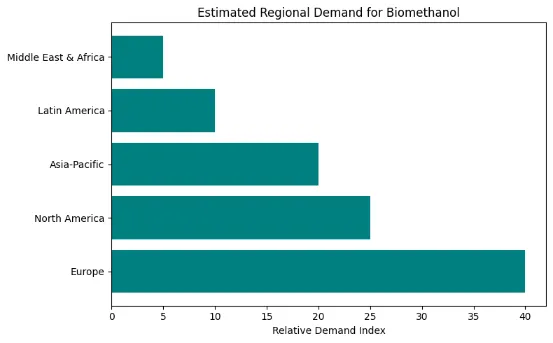
North America & Europe: Leading the way in adoption, thanks to strong policy support and established biofuel markets.
Asia-Pacific: Set for rapid growth due to rising energy needs, significant investments in renewables, and growing environmental awareness, particularly in China and India.
Emerging Markets: Developing countries are starting to invest in biomethanol infrastructure, recognizing its potential to bypass fossil-based energy systems.

Despite its potential, biomethanol faces several challenges:
High Production Costs: It is currently more expensive to produce biomethanol than fossil-based methanol. This is mainly due to high feedstock costs and the expensive nature of advanced biorefineries.
Feedstock Availability: Sourcing biomass sustainably at scale remains a challenge, especially in areas with limited agricultural or forestry waste.
Infrastructure Needs: Large-scale use requires strong logistics, storage, and distribution networks, which are still developing in many places.
Competition: Biomethanol competes with other biofuels, like biodiesel, and emerging technologies such as hydrogen and electric vehicles.
However, as economies of scale are realized and technologies advance, production costs are expected to drop, making biomethanol more competitive.

Policy and Regulation


Continuing to tighten emissions limits, carbon pricing, and government incentives will be essential for speeding up biomethanol adoption.

Industry Collaboration
Partnerships among technology providers, chemical manufacturers, energy companies, and governments will foster innovation and investment, helping to tackle infrastructure and cost challenges.

Consumer and Corporate Demand
As sustainability becomes a key value for consumers and companies, demand for low-carbon fuels like biomethanol will continue to grow, especially in sectors where electrification is difficult (like shipping, aviation, and heavy industries).

Technological Breakthroughs
Ongoing research and development in feedstock processing, gasification, and carbon capture will make biomethanol even more cost-effective and scalable.

Maritime Shipping: Major shipping companies are testing biomethanol as a marine fuel to meet International Maritime Organization (IMO) targets for reducing sulfur and carbon emissions.
Urban Waste-to-Fuel: Cities are converting municipal solid waste into biomethanol to cut down on landfill use and create local renewable energy.
Green Chemicals: Chemical manufacturers are shifting to biomethanol-based feedstocks to lower their carbon impact and comply with regulations.

The world is on the brink of a trillion-dollar shift, with biomethanol likely to become a key part of the global energy and chemical sectors. Its unique mix of versatility, environmental benefits, and compatibility with current systems makes it a standout option for the clean energy transition. As technology improves and policy support grows, biomethanol is set to take center stage in the renewable fuels market, leading a new era of sustainable growth and climate resilience.

bIOMETHANOL MARKET SIZE
biomethanol feedstock share

The Trillion Dollar Shift: How Biomethanol Is Poised To Dominate Read More »

Laboratory setup with a biomethanol molecular model, glass pipette, and measuring cylinder, illustrating biomethanol applications and benefits.

Your Comprehensive Guide to Biomethanol: Application Benefits and the Path to a Sustainable Future

Introduction

As the world intensifies its search for sustainable energy alternatives, biomethanol has emerged as a promising biofuel that addresses both environmental and economic concerns. This comprehensive guide explores what biomethanol is, its production process, key applications, environmental and economic benefits, and its pivotal role in shaping a sustainable future.

What is Biomethanol?

Biomethanol is a renewable and sustainable methanol derived from biomass feedstocks like agricultural residues, forest byproducts, and organic waste. Unlike fossil-fuel-derived conventional methanol, biomethanol uses carbon-rich feedstocks that belong to the natural carbon cycle, resulting in a cleaner and more sustainable source of energy and chemicals.

How is Biomethanol Produced?

The production of biomethanol involves several advanced processes designed to maximize resource utilization and minimize environmental impact. The typical production stages include:

1. Feedstock Collection
Biomass sources like crop residues (e.g., rice straw, bagasse), wood chips, and organic waste are collected.

2. Pre-treatment
Biomass is pre-treated to break down complex structures and prepare it for gasification.

3. Gasification
The pre-treated biomass is processed into synthesis gas (syngas) a blend of carbon monoxide, carbon dioxide, and hydrogen via high temperature gasification.

4. Syngas Cleaning
Syngas is purified to eliminate impurities in order to efficiently synthesize methanol.

5. Methanol Synthesis
The purified syngas is catalytically converted to yield biomethanol.

New technologies today employ waste CO₂ from fermentation and hydrogen generated through water electrolysis (renewables-powered) to further maximize yields, developing a closed carbon loop that has a very low greenhouse gas footprint.

Principal Uses of Biomethanol

Biomethanol’s flexibility allows for its utilization in many fields:

Transportation Fuel
Biomethanol may be mixed with gasoline or diesel or directly used in converted engines to provide an alternative, low-carbon vehicle fuel.

Chemical Industry
It is used as a feedstock for the manufacture of formaldehyde, acetic acid, and other chemicals, facilitating the greening of supply chains.

Power Generation
Biomethanol has applications in fuel cells and turbines for power generation, particularly in decentralized rural areas.

Marine and Aviation Fuels
While tightening regulations on emissions make alternatives more important, biomethanol is increasingly seen as a cleaner fuel for shipping and possibly for aviation.

Environmental Benefits of Biomethanol

Significant Greenhouse Gas Reduction
Biomethanol production and use offer a marked reduction in greenhouse gas emissions compared to fossil-based methanol. Studies show that the carbon footprint of biomethanol from rice straw is as low as 0.347 kg CO₂e per kg, far lower than conventional methanol. The closed carbon cycle ensures that carbon released during combustion is offset by the carbon absorbed during biomass growth, supporting net-zero emissions goals.

Waste-to-Value Conversion
Biomethanol production utilizes agricultural and forestry residues, transforming waste materials into valuable energy resources. This not only reduces landfill use but also mitigates methane emissions from decomposing organic matter.

Lower Air and Marine Pollution
Compared to traditional fuels, biomethanol combustion results in lower emissions of sulfur oxides, nitrogen oxides, and particulate matter, contributing to improved air and water quality.

Economic Advantages of Biomethanol

Energy Security and Rural Development
By tapping into locally available biomass, regions can reduce their dependence on imported fossil fuels. Decentralized biomethanol plants can stimulate rural economies, create jobs, and support local energy resilience.

Optimized Resource Utilization
Advanced process modeling and supply chain optimization minimize production costs and emissions, making biomethanol an economically viable alternative even at smaller scales. The integration of byproducts like lignin and surplus bagasse further enhances overall efficiency and profitability.

Support for Circular Economy
Biomethanol production exemplifies circular economy principles by closing resource loops, maximizing the value extracted from waste, and reducing the need for virgin raw materials.

Challenges and Considerations

While biomethanol presents clear benefits, several challenges remain:

  • Feedstock Logistics: Efficient collection, transport, and processing of biomass are critical to economic viability.
  • Technology Maturity: Gasification and syngas cleaning technologies require further refinement to ensure consistent quality and scalability.
  • Policy and Incentives: Supportive regulatory frameworks and incentives are essential to accelerate adoption and investment in biomethanol infrastructure.

Biomethanol vs. Conventional Methanol: A Comparison

AspectBiomethanolConventional Methanol
SourceBiomass (renewable)Natural gas/coal (fossil)
Carbon FootprintLow (closed carbon cycle)High (net CO₂ emissions)
Environmental ImpactReduced GHG, air, and marine pollutionHigher emissions, pollution
Economic ImpactSupports local economies, jobsCentralized, fossil-dependent
Resource UtilizationWaste-to-value, circular economyLinear, resource-intensive

The Path Forward: Biomethanol and a Sustainable Future

Biomethanol is poised to play a transformative role in the global energy transition. Its ability to reduce greenhouse gas emissions, valorize waste, and support rural development aligns with the United Nations Sustainable Development Goals and national net-zero ambitions.

Key Steps for Widespread Adoption

  • Investment in R&D: Continued innovation in gasification, syngas cleaning, and catalytic synthesis will drive down costs and improve efficiency.
  • Policy Support: Governments can accelerate deployment through mandates, incentives, and support for pilot projects.
  • Infrastructure Development: Building integrated supply chains and distribution networks will ensure reliable feedstock supply and product delivery.
  • Public Awareness: Educating stakeholders about biomethanol’s benefits will foster acceptance and demand.

Conclusion

Biomethanol stands at the nexus of environmental stewardship and economic opportunity. By leveraging abundant biomass resources and advanced conversion technologies, it offers a sustainable pathway to cleaner fuels, reduced emissions, and resilient energy systems. As countries and industries strive for net-zero emissions and a circular economy, biomethanol’s role will only grow more vital fueling not just vehicles and industries, but also the global journey toward a sustainable future.

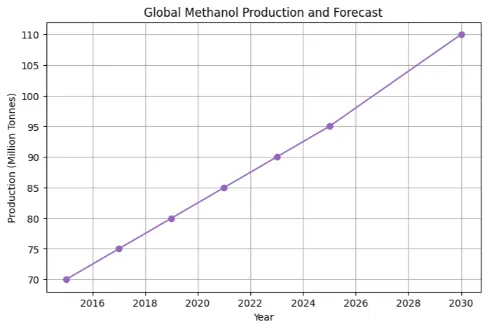
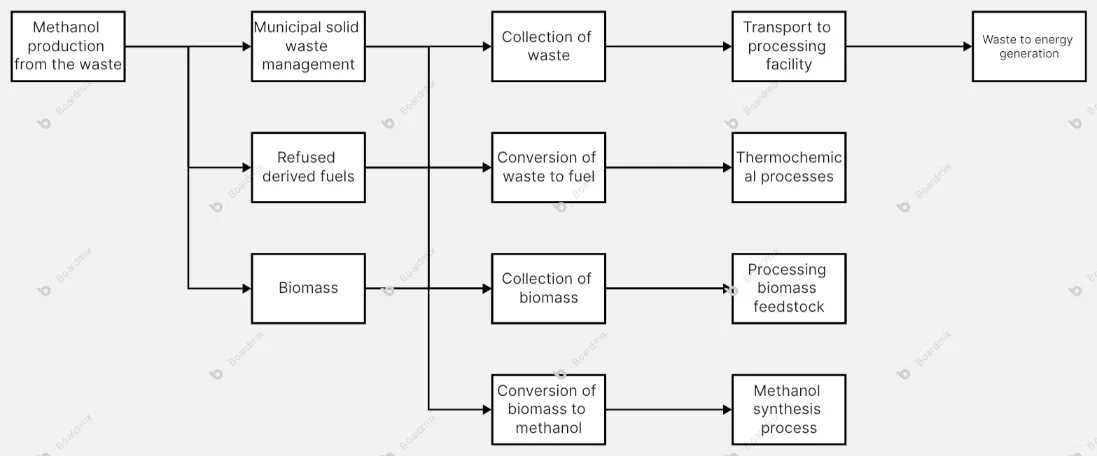
Global Methanol Production and Forecasting

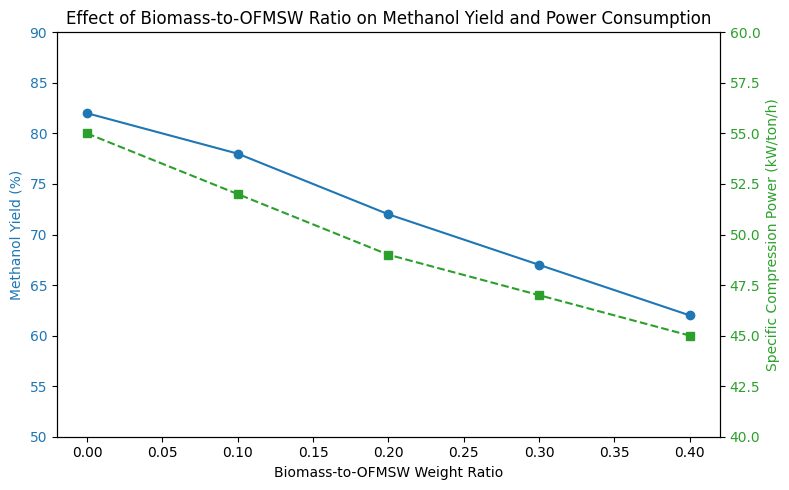
Effect of Biomass to OFMSW on methanol yield and Power Consumption
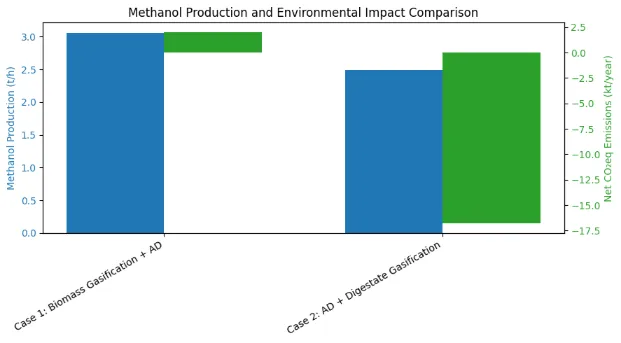
methanol Production and ENVIRONMENTAL IMPACTS
Biomethanol Insights | Latest Articles

Biomethanol Insights

Explore the latest developments and applications of biomethanol as a sustainable fuel alternative

Industry Investments

5 Companies Investing in the Biomethanol Revolution

Discover the leading companies betting big on biomethanol as the sustainable fuel of the future.

Read Article
Industry Impact

5 Industries That Could Be Transformed by Biomethanol

Explore how biomethanol could revolutionize multiple sectors and support sustainable transformation.

Read Article
Transportation

Is Biomethanol the Key to Carbon-Neutral Transportation?

A deep dive into how biomethanol could support decarbonizing transport networks.

Read Article

Exploring sustainable energy solutions for a cleaner tomorrow

Join us in the journey toward a greener future

Your Comprehensive Guide to Biomethanol: Application Benefits and the Path to a Sustainable Future Read More »