maritime decarbonization

Green fuel pump nozzle filling a white car, symbolizing China's shift to biomethanol and renewable diesel (HVO) for transport decarbonization.

The Rise of Green Fuels in China: Biomethanol Transport and Renewable Diesel (HVO) Driven by Key Incentives

The Rise of Green Fuels in China: Biomethanol Transport and Renewable Diesel (HVO) Driven by Key Incentives

China’s Green Fuel Leap: Policy, Production, and the Race for Transport Decarbonization

National policies, such as the “14th Five-Year Plan for Industrial Green Development,” explicitly promote methanol vehicles and green methanol production, with additional support for HVO and other renewable fuels (Li et al., 2023).China, the world’s largest energy consumer and vehicle market, is on the cusp of a significant transformation in its transport sector. Facing ambitious “Dual Carbon” targets peaking carbon emissions by 2030 and achieving carbon neutrality by 2060 the country is accelerating the adoption of low-carbon energy vectors. While the world often focuses on China’s massive electric vehicle (EV) uptake, a quieter, yet equally powerful, revolution is underway in liquid alternative fuels. This is the Rise of Green Fuels, spearheaded by Biomethanol Transport and Renewable Diesel (HVO), driven by a strategic mix of government incentives, industrial planning, and a global pivot toward maritime and heavy-duty decarbonization.

The shift isn’t just about replacing fossil fuels; it’s about establishing new, sustainable supply chains that leverage China’s unique feedstock resources, from abundant biomass waste to used cooking oil (UCO). This comprehensive overview dives into the powerful policy mechanisms at play, the burgeoning market for these two critical green fuels, and what it all means for the future of global logistics and energy security.

Decoding the Drivers: Why China is Investing in Biomethanol and HVO

China’s renewed focus on advanced biofuels like Biomethanol and Renewable Diesel (HVO) is rooted in strategic priorities that extend beyond simple climate targets.

1. The Dual Carbon Mandate: Peak Emissions and Carbon Neutrality

The overarching climate goals of “Carbon Peak” by 2030 and “Carbon Neutrality” by 2060 are the primary drivers. Decarbonizing the transport sector is crucial, especially for segments less suited to immediate electrification, such as maritime shipping, heavy-duty road transport, and aviation. Both biomethanol and HVO offer pathways to deep emissions reductions, with HVO, in particular, being a high-performance “drop-in” fuel that requires minimal engine modifications.Biobutanol-diesel blends can be used in diesel engines without engine modification, reducing particulate emissions and greenhouse gases by up to 60% compared to fossil diesel (Obergruber et al., 2021).

2. Energy Security and Feedstock Diversification

China imports a significant amount of its crude oil. Developing domestic, non-fossil fuel alternatives enhances energy security.

  • Biomethanol: China has vast resources of coal, coking gas, and biomass/agricultural waste (e.g., corn straw). Policies encourage the conversion of these indigenous feedstocks into methanol, a strategic energy carrier. Furthermore, “Green Methanol” projects are emerging that utilize captured CO2 and green hydrogen, providing a valuable outlet for surplus renewable electricity (wind and solar).
  • HVO/Renewable Diesel: Production heavily relies on Used Cooking Oil (UCO), where China is the world’s largest collector. Policies that promote the safe collection and processing of UCO for fuel production (like the domestic UCO-to-HVO pilot in Beijing’s Haidian district) not only support green fuel output but also address domestic food safety concerns by preventing UCO from re-entering the food supply.

3. Export Market Opportunities: Catering to Global Shipping

The global maritime industry, in particular, is undergoing a rapid decarbonization wave, with giants like Maersk committing to massive green methanol fueled vessel orders.

  • China, with its world class port infrastructure and massive manufacturing base, is strategically positioning itself as a major supplier of marine green fuels.
  • Companies like Goldwind and CIMC Enric are announcing multi-million-tonne biomethanol projects, often securing long term offtake agreements with international shipping lines before even reaching a Final Investment Decision (FID). This export oriented demand acts as a powerful market signal, de-risking domestic production investment.

Key Incentives and Policy Mechanisms at Work

While China’s biofuels market has traditionally lagged in domestic mandates compared to its $\text{EV}$ push, recent policy movements signal a growing regulatory environment that directly favors advanced green fuels.

1. Fiscal and Investment Support

The 14th Five-Year Plan for Bioeconomic Development (2021-2025) lays the framework by encouraging the development of bioenergy and supporting the integrated biochemical industry. Specific incentives include:

  • Direct Subsidies and Tax Breaks: Although explicit mandates for HVO or Biomethanol are not yet nationwide, local governments and pilot projects offer fiscal incentives and consumption tax rebates to producers and consumers of these advanced non-food-based biofuels.
  • Support for Non-Food Feedstocks: The government has historically phased out subsidies for grain-based ethanol (due to food security concerns) and retained or introduced new supports for non-food feedstock projects, which is the foundation of modern biomethanol and (HVO) production. This policy signals a clear preference for sustainability.

2. Pilot Programs and Technology Promotion

Policy often starts with localized testing before nationwide rollout, a classic “test and scale” Chinese approach.

  • Methanol Vehicle Pilots: A six-year pilot program tested methanol-fueled vehicles (M100) across 10 cities, proving the technical feasibility and economic benefits of using methanol for passenger cars, heavy-duty trucks, and buses. This paved the way for policies that encourage the development and manufacturing of methanol-fueled vehicles and the expansion of the fueling infrastructure.
  • HVO Blending Trials: The National Energy Administration (NEA) has announced several biofuel pilot programs. For HVO, this includes local trials aimed at establishing a “closed-loop system” from UCO collection to final blending, such as the (HVO) blending trial for municipal transport in Beijing’s Haidian district. These trials are critical for establishing reliable domestic supply chains and building consumer confidence.

3. Integrating Biofuels into Carbon Pricing

A key structural incentive being explored is the integration of advanced biofuels into China’s Certified Emission Reduction (CCER) carbon trading mechanism.

  • If successful, producers of low-carbon fuels like biomethanol and (HVO) could generate tradeable carbon credits based on their Carbon Intensity (CI) reduction, making them significantly more financially attractive. This “market-pull” mechanism is essential to bridge the current cost gap between green fuels and their fossil equivalents.

Biomethanol: From Waste to Shipping Fuel

Biomethanol, produced from biomass or waste, ranks highest among alternative vehicle fuels in China for its combined energy, environmental, and economic performance. It can reduce CO₂ emissions by up to 59% compared to coal-based methanol and offers cost savings in sectors like marine transport (Wang et al., 2024).

Biomethanol, often referred to as green methanol, is rapidly becoming the dominant alternative fuel for the maritime sector.

Production and GHG Reduction

Biomethanol is produced by gasifying biomass (agricultural waste, forestry residue) to create syngas, which is then converted into methanol. When coupled with green hydrogen or when derived from sustainable biomass, it can achieve a significant reduction in greenhouse gas (GHG) emissions up to 90% compared to fossil fuels.

Key Market Dynamics

  • Rapid Capacity Build-out: Driven by international demand, Chinese firms are announcing a massive pipeline of green methanol projects. Estimates suggest over 30 million tons per year of green methanol capacity is planned, with a significant portion being biomethanol and e-methanol (produced from captured CO2 and green hydrogen).
  • Infrastructure Investment: China’s state-owned giants, including COSCO Shipping and Shanghai International Port Group, have formed alliances to build out the full supply chain: from production bases in Inner Mongolia and the Northeast to dedicated bunker infrastructure at key ports like Shanghai, Ningbo, and Guangzhou. This coordinated national effort is turning potential into reality by ensuring stability of supply.
  • The M-Vehicle Fleet: On the road, China is the global leader in testing and promoting (neat methanol) vehicles, especially in industrial, heavy-duty, and taxi fleets, aiming to maximize the use of its domestic resources and established methanol production base (originally mostly coal-based).

Renewable Diesel (HVO): The High-Performance “Drop-in” Solution

HVO, made from waste oils or non-edible feedstocks, is fully compatible with existing diesel engines and infrastructure. It achieves 60–95% lower CO₂ emissions over its life cycle and can be produced efficiently using advanced hydrotreating and renewable hydrogen (Gomes et al., 2025).

Renewable Diesel (HVO – Hydrotreated Vegetable Oil) is often considered the superior biofuel alternative to traditional FAME-based biodiesel due to its chemical similarity to fossil diesel.

The (HVO) Advantage

HVO is produced by hydrotreating oils and fats (primarily UCO in China’s case) to create a clean, paraffinic hydrocarbon fuel.

  • Drop-in Capability: (HVO) is chemically identical to petroleum diesel, meaning it can be used in any diesel engine without modification. This makes its adoption seamless for existing transport fleets.
  • Superior Performance: (HVO) boasts a high cetane number (better combustion) and excellent cold-weather performance (no gelling), overcoming the stability issues associated with older biodiesel blends.
  • UCO as Feedstock Gold: China’s position as the world’s largest source of UCO feedstock used in both HVO and SAF (Sustainable Aviation Fuel) production gives it a critical advantage. Recent trade friction with the (anti-dumping duties on Chinese biodiesel exports) has further spurred Beijing to encourage domestic consumption and prioritize (UCO) for higher-value, drop-in fuels like (HVO) and (SAF).

Market Shift to Domestic Use

While historically China’s biodiesel and (HVO) production was largely export-oriented the domestic pilot programs and the looming threat of reduced export avenues are forcing a significant market pivot towards internal use. The Beijing pilot, focused on municipal vehicles, represents the blueprint for scaling this high-quality fuel across the country’s vast logistics and heavy-duty transport sectors.

Challenges and the Future Outlook for Green Fuel Adoption

Despite the encouraging policy environment and industrial investment, the expansion of biomethanol and (HVO) is not without its challenges.

The Cost and Scale Hurdle

Green fuel production costs remain a significant obstacle. Green methanol must become more cost competitive with its fossil counterpart, which will require continued technological breakthroughs, scaling up of green hydrogen production, and a higher carbon price signal. The ability of producers to access low cost renewable energy (especially wind and solar) for e-fuel production is critical to cost reduction.

The Feedstock Competition

The available supply of sustainable feedstocks, particularly UCO, is finite and must be allocated between competing demands:

  • HVO/Renewable Diesel
  • Sustainable Aviation Fuel (where China is also rapidly expanding capacity)
  • Marine Bio-bunkering (FAME-based and HVO)

Policy clarity on feedstock prioritization is necessary to ensure stable supply to the most strategically important sectors.

Conclusion: China’s Role in a Global Green Transport Future

China’s commitment to its Dual Carbon targets is fundamentally reshaping its energy mix, creating a powerful engine for the development and commercialization of Biomethanol Transport and Renewable Diesel (HVO). The transition is not instantaneous, but the strategic application of government incentives, pilot programs, and coordinated industrial planning has transformed a niche market into a global powerhouse.

By prioritizing advanced, non-food-based biofuels and building the necessary infrastructure for both domestic use and global export, China is not just solving its own decarbonization challenge. It is setting a decisive course for the future of zero-carbon global logistics and establishing itself as a dominant force in the coming era of green transport fuels. The (HVO) and biomethanol markets are poised for exponential growth, making China a crucial country to watch in the global race to a net-zero future.

CITATIONS

Obergruber, M., Hönig, V., Procházka, P., Kučerová, V., Kotek, M., Bouček, J., & Mařík, J. (2021). Physicochemical Properties of Biobutanol as an Advanced Biofuel. Materials, 14. https://doi.org/10.3390/ma14040914.

Li, C., Jia, T., Wang, S., Wang, X., Negnevitsky, M., Wang, H., Hu, Y., Xu, W., Zhou, N., & Zhao, G. (2023). Methanol Vehicles in China: A Review from a Policy Perspective. Sustainability. https://doi.org/10.3390/su15129201.

Gomes, D., Neto, R., Baptista, P., Ramos, C., Correia, C., & Rocha, R. (2025). A review of advanced techniques in hydrotreated vegetable oils production and life cycle analysis. Biomass and Bioenergy. https://doi.org/10.1016/j.biombioe.2025.107689.

Wang, S., Li, C., Hu, Y., Wang, H., Xu, G., Zhao, G., & Wang, S. (2024). Assessing the prospect of bio-methanol fuel in China from a life cycle perspective. Fuel. https://doi.org/10.1016/j.fuel.2023.130255.
The Rise of Green Fuels in China: Biomethanol Transport and Renewable Diesel (HVO) Driven by Key Incentives Read More »

symbolizing the transformation of agricultural waste into shipping fuel.

China Path to Low Carbon Shipping: Biomethanol Fuel from Corn Straw

China Path to Low Carbon Shipping: Biomethanol Fuel from Corn Straw

The colossal cargo ships that traverse our oceans play a vital role in global trade, carrying 80% of the world’s goods. However, their reliance on heavy fuel oil significantly contributes to greenhouse gas emissions, complicating the fight against climate change. As the need for decarbonization intensifies across various industries, China is taking a bold and innovative approach in its maritime sector. Moving past traditional solutions, the country is using an unexpected resource—corn straw—to produce biomethanol, a promising low-carbon fuel that could transform shipping and set a global example for a greener maritime future.

From Field Waste to Fueling Giants: An Innovation Rooted in the Earth

Picture the expansive fields in China’s agricultural regions, where harvests provide not only food but also substantial amounts of leftover biomass corn straw. For years, this byproduct was either left to rot or burned, causing air pollution and wasting a potential resource. Now, imagine a process that combines traditional agricultural waste with modern green technology, revitalizing this seemingly discarded material. China is creatively repurposing corn straw to create biomethanol, a liquid fuel with a much lower carbon footprint than conventional marine fuels.

This innovative strategy addresses several challenges at once. It provides a sustainable alternative to fossil fuels in a sector known for its difficulty in reducing carbon emissions. It also creates economic incentives for farmers to gather and supply corn straw, turning waste into a prized resource and potentially bolstering rural economies. Most importantly, it places China in a leading role in green shipping, showing its dedication to climate goals and showcasing its technological strength.

The conversion of corn straw into biomethanol is an interesting chemical process. The lignocellulosic biomass of corn straw, which contains cellulose, hemicellulose, and lignin, undergoes several complex steps:

  • Pretreatment: First, the raw corn straw is pretreated to break down its structure, allowing easier access to cellulose and hemicellulose. Various methods, including physical, chemical, and biological pretreatments, are used to optimize this stage.
  • Gasification: Next, the pretreated biomass is heated in a controlled environment with limited oxygen, undergoing gasification. This process converts the organic material into syngas, a mixture mainly made up of carbon monoxide (CO), hydrogen (H₂), and carbon dioxide (CO₂).
  • Syngas Cleaning and Conditioning: The raw syngas contains impurities that can hinder the next catalytic stage. Therefore, it is carefully cleaned to remove particulates, sulfur compounds, and other contaminants, while also adjusting the hydrogen to carbon monoxide ratio for optimal methanol synthesis.
  • Methanol Synthesis: The core of the process involves converting the conditioned syngas into methanol through a catalytic reaction, typically utilizing a catalyst such as copper, zinc oxide, and alumina, all while applying high pressure and temperature. The resulting methanol is then purified through distillation to meet fuel-grade standards.

Although the technical details are intricate, the basic idea is straightforward: capture carbon from agricultural waste and switch it into a cleaner fuel. This reflects the principles of a circular economy, where waste is minimized and resources are used efficiently.

A Triple Win: Sustainability, Circularity, and Climate Action

China’s commitment to using corn straw-based biomethanol for shipping is not only a technical achievement; it’s also a strong message about its dedication to sustainability and climate action. The environmental benefits are numerous:

China is exploring the use of corn straw-derived biomethanol as a marine fuel to decarbonize its shipping sector, aiming for a “triple win” of sustainability, circularity, and climate action. This approach leverages abundant agricultural residues, reduces greenhouse gas emissions, and supports rural economies.

Environmental and Climate Benefits

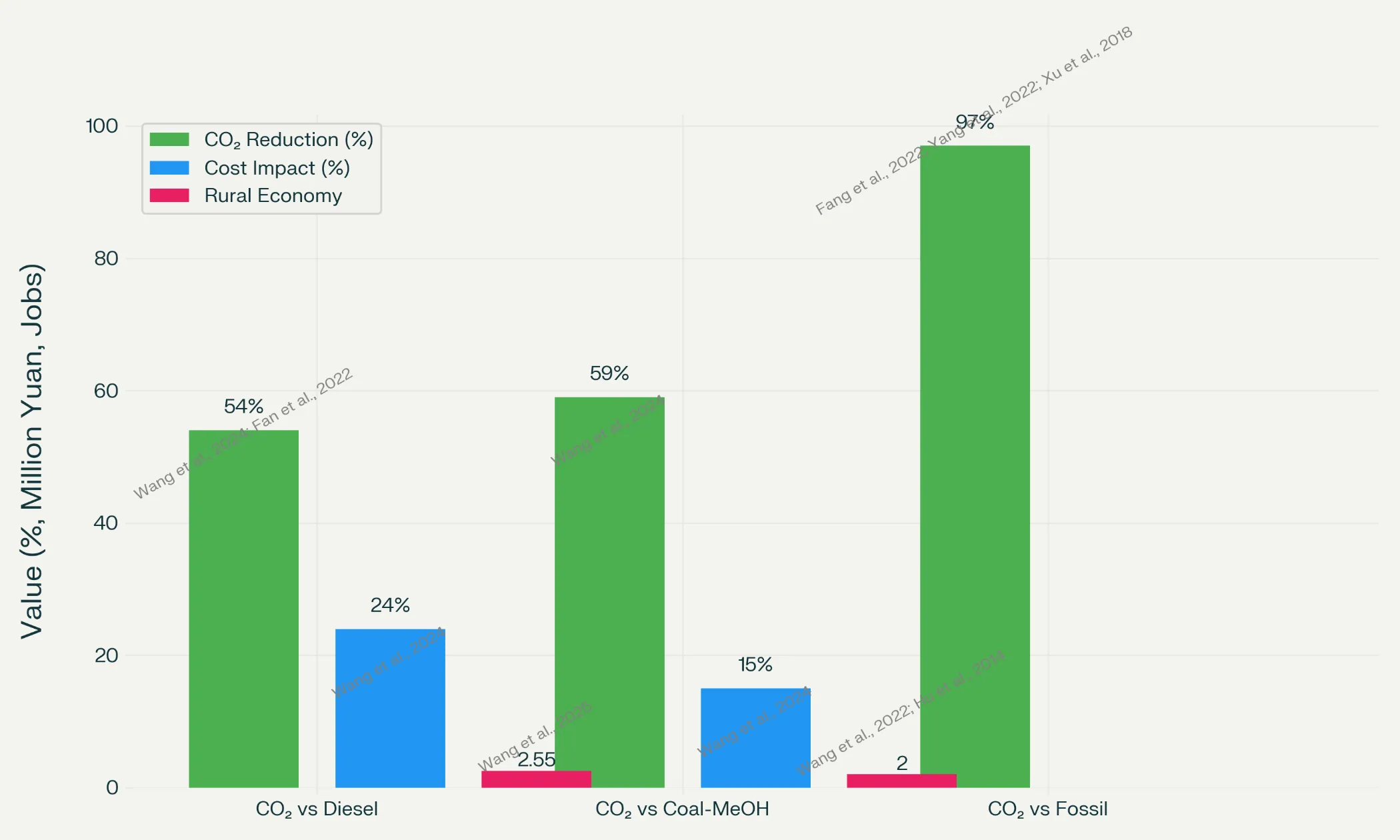
Biomethanol from corn straw can reduce CO₂ emissions by 54–59% per kilometer compared to conventional marine diesel, and by 59% compared to coal-to-methanol, making it a strong candidate for low-carbon shipping (Wang et al., 2024; Fan et al., 2022). Life cycle assessments show that using crop straw for bioenergy can cut greenhouse gas emissions by up to 97% compared to fossil fuels, depending on the conversion pathway and region (Fang et al., 2022; Yang et al., 2022; Xu et al., 2018). Integrating renewable electricity or self-generation at methanol plants can further lower emissions, meeting stringent EU standards (Wang et al., 2024).

Economic and Social Impacts

While biomethanol production costs are about 24% higher than coal-based methanol, its use in shipping can reduce per-kilometer costs by nearly 15% compared to diesel (Wang et al., 2024). Each million yuan invested in straw-based biofuels can generate 2.55 million yuan in economic output and create nearly two full-time jobs, supporting rural development and supply chain actors (Wang et al., 2025; Wang et al., 2022; Hu et al., 2014).

Circularity and Supply Chain Considerations

Circular economy principles are advanced by converting agricultural waste into fuel, reducing open-field burning and pollution (Li et al., 2024; Hu et al., 2014). Efficient supply chain management—including feedstock collection, transport, and processing—is critical for maximizing sustainability and economic returns (Wang et al., 2022; Yang et al., 2022). Onboard carbon capture and closed-loop fuel cycles could further enhance circularity, though they currently increase costs (Charalambous et al., 2025).

PaperFocusKey InsightYear
(Wang et al., 2024)Biomethanol LCAMajor CO₂ and cost savings in shipping2024
(Wang et al., 2025)Triple-bottom-lineEconomic, social, and environmental benefits2025
(Charalambous et al., 2025)Circular marine fuelsOnboard carbon capture feasibility2025
(Wang et al., 2022)Supply chain modelingOptimizing straw logistics and profits2022

Figure 1: biomethanol, supply chains, and climate impacts.

Corn straw-based biomethanol offers significant climate, economic, and circularity benefits for China’s shipping sector. While challenges remain in cost and supply chain optimization, the approach aligns with national sustainability and decarbonization goals, supporting a robust “triple win” strategy.

In addition to environmental benefits, this initiative brings significant economic and social advantages. Farmers in corn-producing areas can earn extra income by supplying corn straw, which promotes rural economic growth. The expansion of the biomethanol industry can create new jobs in production, logistics, and research. Shipping companies that switch to biomethanol can enhance their environmental image, attracting eco-conscious customers while complying with increasingly strict international emission regulations.

Corn Straw Biomethanol Shipping Chart: Bar chart illustrating environmental, economic, and cost benefits of using corn straw biomethanol for low-carbon shipping in China

Humanizing the Green Transition

The journey from cornfield to cargo ship involves more than just technological progress; it’s a narrative filled with human effort. Imagine Mr. Li, a farmer in Shandong province, who once saw leftover corn stalks as a nuisance. Thanks to local cooperatives and bioenergy firms, his corn straw now has value, adding to his financial security. He realizes his work contributes to a larger cause a cleaner future for his nation.

On the industrial side, consider the engineers at a cutting-edge biorefinery, diligently perfecting the biomethanol production process. They are motivated by the challenge of scaling production, enhancing efficiency, and ensuring the biofuel’s quality meets the shipping industry’s demands. Their creativity is what drives this green shift.

Think about Captain Zhang, steering a large container ship across the South China Sea. His vessel runs on a mix of conventional fuel and biomethanol, serving as a pilot project that showcases the viability of this alternative fuel in real-world situations. He knows that the future of his industry depends on embracing cleaner energy sources and feels proud to be part of this groundbreaking initiative.

These individual and collective efforts highlight the complex nature of this transition, showing how innovation at the technological level can yield real benefits for communities and industries.

Navigating the Technical Seas: Production, Efficiency, and Scalability

While the potential of corn straw-based biomethanol is substantial, understanding its technical elements is vital. The conversion efficiency, the energy balance throughout the entire value chain (from harvesting to burning), and the scalability of production are important factors.

Current methods for turning lignocellulosic biomass into biomethanol are constantly improving to enhance yields and cut costs. Research focuses on optimizing pretreatment techniques, improving gasification and catalytic processes, and developing stronger, more affordable catalysts.

Scalability is also crucial. China is a major corn producer, generating large amounts of corn straw each year. However, logistical issues involving the collection, storage, and transportation of this distributed resource need to be resolved to ensure a steady supply of feedstock for large scale biomethanol operations. Investing in infrastructure, such as collection networks, storage facilities, and transportation systems, is crucial.

Additionally, biomethanol’s compatibility with existing ship engines and fueling infrastructure provides a major benefit. It can be used in modified conventional engines with minimal alterations, making the transition less disruptive and more cost-effective compared to other alternative fuels that might necessitate entirely new engine designs and fuel delivery methods.

A Global Compass: Setting a Course for International Shipping

China’s groundbreaking work in using corn straw for biomethanol production could have a significant impact beyond its borders. The International Maritime Organization (IMO) has set ambitious goals for lowering greenhouse gas emissions from global shipping, aiming for at least a 50% reduction by 2050 compared to 2008 levels while pushing for full elimination as soon as possible this century. To meet these objectives, the industry needs a varied range of low-carbon and zero-carbon fuels.

China’s innovative approach serves as a strong example for other countries with significant agricultural biomass resources. Regions that produce large quantities of crops like wheat, rice, or sugarcane could potentially adopt similar technologies to make sustainable biofuels from their agricultural waste.

Moreover, developing standards and regulations for biomethanol as a marine fuel, partly driven by China’s early adoption, could facilitate broader acceptance and use in the global shipping industry. Collaboration in research, technology sharing, and the establishment of international best practices will be key to unlocking the full potential of this and other sustainable biofuels.

Charting a Greener Horizon: The Future is Fueled by Innovation

The quest to decarbonize global shipping is a complex and challenging effort, but China’s use of corn straw to create biomethanol offers hope. It showcases the strength of human creativity, the opportunities within a circular economy, and a nation’s commitment to a more sustainable future.

This is more than a technological breakthrough; it represents a fundamental shift. It indicates a transition away from a “take-make-dispose” approach towards a more sustainable and circular model. It highlights the connections among different sectors—agriculture, energy, and transportation—as they work together toward a shared goal: a healthier planet.

China’s journey toward low-carbon shipping, fueled by the innovation of converting corn straw into biomethanol, shows how human resourcefulness can address some of the world’s most pressing challenges. It is a story about turning waste into value and leveraging nature’s bounty to drive global trade in a cleaner, more sustainable manner. As the world observes, this pioneering effort could very well steer shipping toward a greener future, one in which the giants of the sea navigate a horizon illuminated by sustainable biofuels.

Looking ahead, the outlook for biomethanol in shipping seems bright. Ongoing advancements in production methods, supportive government actions, and rising demand for eco-friendly transportation options will likely drive further growth in this sector. The image of massive cargo ships powered in part by energy collected from humble corn stalks is not just a dream; it is a real possibility taking shape in China’s fields and ports.

👉 Read more: Biomethanol from Corn Straw in China: A Life-Cycle Insight

References

Wang, C., Wang, Z., Feng, M., Liu, J., Chang, Y., & Wang, Q. (2025). Assessing the triple-bottom-line impacts of crop straw-based bio-natural gas production in China: An input‒output-based hybrid LCA model. Energy. https://doi.org/10.1016/j.energy.2025.134789

Wang, S., Li, C., Hu, Y., Wang, H., Xu, G., Zhao, G., & Wang, S. (2024). Assessing the prospect of bio-methanol fuel in China from a life cycle perspective. Fuel. https://doi.org/10.1016/j.fuel.2023.130255

Charalambous, M., Negri, V., Kamm, V., & Guillén-Gosálbez, G. (2025). Onboard Carbon Capture for Circular Marine Fuels. ACS Sustainable Chemistry & Engineering, 13, 3919 – 3929. https://doi.org/10.1021/acssuschemeng.4c08354

Wang, S., Yin, C., Jiao, J., Yang, X., Shi, B., & Richel, A. (2022). StrawFeed model: An integrated model of straw feedstock supply chain for bioenergy in China. Resources, Conservation and Recycling. https://doi.org/10.1016/j.resconrec.2022.106439

Fang, Y., Zhang, S., Zhou, Z., Shi, W., & Xie, G. (2022). Sustainable development in China: Valuation of bioenergy potential and CO2 reduction from crop straw. Applied Energy. https://doi.org/10.1016/j.apenergy.2022.119439

Fan, A., Xiong, Y., Yang, L., Zhang, H., & He, Y. (2022). Carbon footprint model and low–carbon pathway of inland shipping based on micro–macro analysis. Energy. https://doi.org/10.1016/j.energy.2022.126150

Li, T., Wei, G., Liu, H., Zhu, Y., Lin, Y., & Han, Q. (2024). Comparative Assessment of the Environmental and Economic Performance of Two Straw Utilization Pathways in China. BioEnergy Research. https://doi.org/10.1007/s12155-024-10784-x

Yang, Y., Liang, S., Yang, Y., Xie, G., & Zhao, W. (2022). Spatial disparity of life-cycle greenhouse gas emissions from corn straw-based bioenergy production in China. Applied Energy. https://doi.org/10.1016/j.apenergy.2021.117854

Wang, D., Zhang, J., Chen, Q., Gu, Y., Chen, X., & Tang, Z. (2024). Reducing the lifecycle carbon emissions of rice straw-to-methanol for alternative marine fuel through self-generation and renewable electricity. Energy Conversion and Management. https://doi.org/10.1016/j.enconman.2024.119202

Hu, J., Lei, T., Wang, Z., Yan, X., Shi, X., Li, Z., He, X., & Zhang, Q. (2014). Economic, environmental and social assessment of briquette fuel from agricultural residues in China – A study on flat die briquetting using corn stalk. Energy, 64, 557-566. https://doi.org/10.1016/J.ENERGY.2013.10.028

Xu, X., Yang, Y., & Xiao, C. (2018). Energy balance and global warming potential of corn straw-based bioethanol in China from a life cycle perspective. International Journal of Green Energy, 15, 296 – 304. https://doi.org/10.1080/15435075.2017.1382361

China Path to Low Carbon Shipping: Biomethanol Fuel from Corn Straw Read More »

Colorful fishing boats anchored in a coastal harbor with a seaside town and hills in the background, illustrating sustainable maritime transport with biomethanol.

How Biomethanol Is Paving The Way For Sustainable Maritime Transport

Sustainable Maritime Transport

The maritime industry is changing as it faces increasing pressure to lessen its environmental impact. The International Maritime Organization (IMO) has set ambitious goals to reduce carbon emissions by 40% by 2030 and by 70% by 2050 compared to 2008 levels. As a result, the search for sustainable fuels has intensified. Among the promising options, biomethanol stands out as a versatile, scalable, and cleaner alternative to traditional marine fuels.

This blog looks at how biomethanol is transforming maritime transport, its environmental and operational benefits, the challenges ahead, and why it is likely to become a key component of sustainable shipping.

It can be used directly as a marine fuel or as a feedstock to create other renewable fuels like dimethyl ether (DME) and biodiesel. Its liquid state at room temperature makes it easier to store and handle compared to gases like hydrogen or ammonia.

The Urgency for Sustainable Maritime Fuels

Shipping is responsible for nearly 3% of global greenhouse gas emissions, with heavy fuel oil (HFO) traditionally powering most vessels. HFO is highly polluting and emits sulfur oxides (SOx), nitrogen oxides (NOx), particulate matter, and CO₂. To meet the IMO’s decarbonization goals, the industry needs to move away from fossil fuels to low- or zero-carbon options.

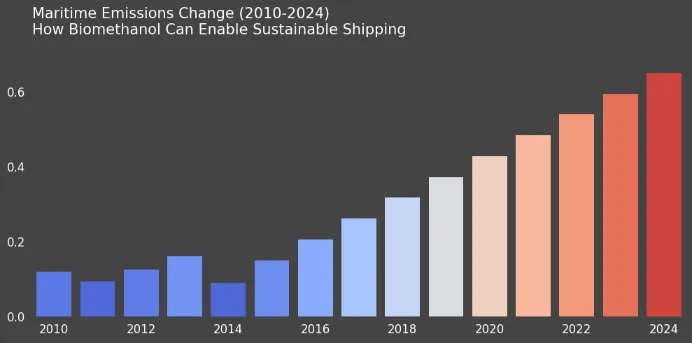
 Bar Chart of Biomethanol Is Paving The Way For Sustainable Maritime Transport".

Biomethanol is gaining popularity because it provides a practical way to reduce emissions without a complete overhaul of existing ship engines and infrastructure.

Advantages of Biomethanol in Maritime Transport

1. Significant Carbon Emission Reductions
Biomethanol cuts lifecycle CO₂ emissions by up to 95% compared to conventional marine fuels. This makes it a strong option for meeting IMO and EU emissions targets, including the EU’s Fit for 55 package and FuelEU Maritime regulation, which requires gradual emissions reductions for ships arriving at EU ports.

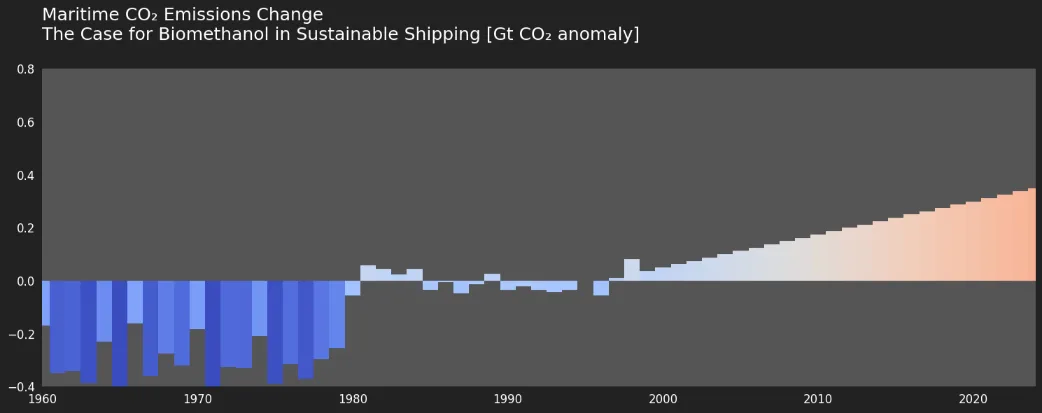
Graphical respresentation of the Emission Control with Biomethanol in Maritime Shipping

2. Compatibility with Existing and New Engines
Many shipbuilders now provide dual-fuel engines that can run on both methanol and traditional fuels. This flexibility allows operators to transition gradually, reducing operational risks and costs. Retrofitting existing vessels is also possible, which speeds up adoption.

3. Easier Storage and Handling
Biomethanol is liquid at normal conditions and can be stored in standard tanks without the need for cryogenic or high-pressure systems. This reduces infrastructure costs and simplifies bunkering logistics at ports.

4. Feedstock Diversity and Circular Economy Alignment
Biomethanol can come from various sustainable sources, including forestry residues, agricultural waste, and municipal solid waste. This decentralized production can support local economies and lessen dependence on fossil fuel imports.

5. Regulatory and Market Momentum
Governments around the world are encouraging biomethanol use with subsidies, emissions trading schemes, and mandates. Early adopters like Maersk and Norway’s NCL Vestland vessel are already operating bio-methanol-powered ships, gaining operational experience and credibility in the market.

How Biomethanol Production Works for Maritime Fuel

Producing biomethanol involves gasifying biomass to create synthesis gas (a mix of CO, H₂, and CO₂), which is then converted into methanol. This process can incorporate carbon capture and utilization (CCU) technologies to further lower emissions.

The resulting biomethanol fuel meets strict marine fuel standards and can be blended or used directly in methanol-capable engines.

Global Developments and Industry Adoption

  • Norway: In April 2025, Norway launched the NCL Vestland, its first biomethanol-powered feeder ship, marking a significant step in sustainable shipping.
  • Maersk: The shipping giant has expanded its fleet of methanol-enabled vessels and secured long-term biomethanol supply agreements, showing strong industry commitment.
  • China: New biomethanol plants are being built to supply the maritime sector, driven by increasing demand in Asia.
  • Europe: The EU’s FuelEU Maritime regulation is promoting rapid regulatory adoption and infrastructure development for biomethanol bunkering.

Challenges Facing Biomethanol Adoption in Shipping

Production Scale and Cost
Current biomethanol production capacity is smaller than the scale required for global shipping fuel needs. Production costs remain higher than those of fossil marine fuels, which calls for ongoing technological improvements and economies of scale.

Infrastructure Development
Expanding bunkering facilities and supply chains is essential. Ports globally must invest in methanol storage and fueling infrastructure to meet growing demand.

Policy and Market Uncertainty
While regulatory frameworks are improving, inconsistent policies across regions can create market uncertainty, potentially hindering investment and adoption.

The Future Outlook: Biomethanol as a Maritime Fuel of Choice

The biomethanol market is expected to grow rapidly, reaching USD 2.1 billion by 2032 with a CAGR of 44.5% from 2025 to 2032. This growth is driven by environmental regulations, sustainability goals, technological advancements, and circular economy initiatives.

As the maritime industry works to reduce carbon emissions, biomethanol provides a scalable, flexible, and cleaner fuel option that aligns with global climate objectives. Early adopters are gaining advantages through operational experience and compliance with regulations, positioning biomethanol as a vital part of sustainable maritime transport.

Conclusion

Biomethanol is more than just an alternative marine fuel it is changing the future of shipping. Its environmental benefits, compatibility with existing engines, and fit with circular economy principles make it a practical and effective tool for the maritime sector’s journey toward decarbonization.

With ongoing investment, policy support, and infrastructure development, biomethanol is ready to lead the way for sustainable, low-carbon maritime transport, helping the world’s shipping fleets operate cleaner and greener.

Related Reads on Biomethanol:

From Waste to Wonder: How Biomethanol Production is Transforming Agricultural Byproducts

Explore how agricultural waste is being turned into clean fuel through innovative biomethanol production.

The Biomethanol Advantage: How Small Businesses Are Cutting Emissions While Boosting Their Bottom Line

Discover how small businesses are saving money and going green with biomethanol solutions.

How Biomethanol Is Paving The Way For Sustainable Maritime Transport Read More »

An aerial view of a large container ship sailing across a wide body of water, leaving a white wake behind it. A distant shoreline with low hills and buildings is visible on the horizon. Overlaying text asks: "Clean Shipping's Secret Weapon? Why Biomethanol Is Gaining Momentum On The Seas."

Clean Shipping Secret Weapons? Why Biomethanol Is Gaining Momentum On The Seas

Clean Shipping Secret Weapons

The global shipping industry, which contributes nearly 3% of all greenhouse gas emissions, is facing growing pressure to reduce its carbon footprint and meet international targets set by the International Maritime Organization (IMO) and local initiatives like the EU’s Fit for 55 package. As traditional marine fuels come under increasing regulatory and societal scrutiny, the sector is urgently looking for sustainable alternatives. Among various “clean” fuels, biomethanol is standing out as a strong option that could dramatically change shipping’s carbon emissions and operational practices.

Why Biomethanol? The Shipping Industry’s Secret Weapon

1. Decarbonization Powerhouse
Biomethanol can cut CO2 emissions by 60% to 95% compared to traditional marine fuels, depending on the feedstock and production method. For instance, Maersk’s recent supply agreement with LONGi Green Energy Technology guarantees biomethanol with at least 65% lower lifecycle GHG emissions than fossil fuels.

2. Regulatory Tailwinds
The EU’s FuelEU Maritime Regulation and the Emissions Trading System (ETS) are creating competitive conditions for bio- and e-methanol, making them financially attractive compared to fossil marine fuels. Non-compliance costs for fossil fuels are set to rise from €39 per tonne in 2025 to €1,997 per tonne by 2050, encouraging quicker adoption of sustainable alternatives.

3. Technological Readiness and Infrastructure
Methanol is already handled and bunkered in over 120 ports around the world. This makes the switch to biomethanol relatively simple compared to other alternative fuels. Major shipbuilders and engine manufacturers are producing dual-fuel vessels that can operate on both conventional and green methanol.

4. Operational Flexibility
Biomethanol can be blended with regular methanol or used as a primary fuel in dual-fuel engines. This gives shipping companies flexibility during the transition, reducing the risk of becoming locked into a single technology and supporting gradual fleet decarbonization.

Latest Facts and Figures: Biomethanol Rapid Rise

Market Growth

  • Market Size: The global biomethanol market was valued at $95.2 million in 2023 and is projected to reach $925.84 million by 2029, showing a remarkable CAGR of 46.1%.
  • Green Methanol Ships: The green methanol ships market is anticipated to grow from $4.29 billion in 2025 to $30.98 billion by 2035, at a CAGR of 21.9% from 2025 to 2035.
  • Vessel Orders: DNV predicts the number of methanol-fueled vessels will increase from 50 in 2024 to over 360 by 2028, with major companies like Maersk and X-Press Feeders leading the way.

Emissions Impact

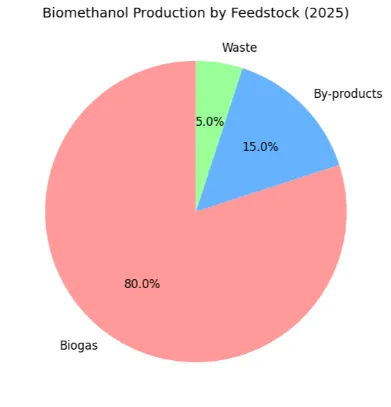
Pie Chart of Biomethanol 2025 production by Feedstock
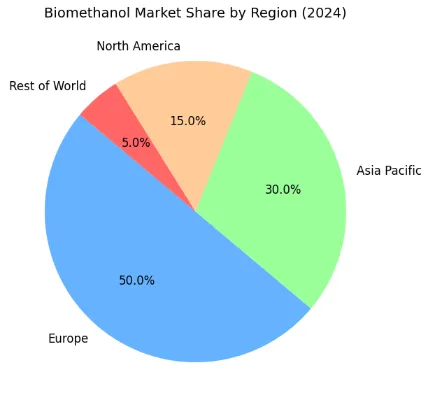
Pie chart of Biomethanol market share 2024
  • Lifecycle Emissions: Biomethanol can reduce lifecycle GHG emissions by up to 65% compared to conventional marine fuels.
  • Net-Zero Voyages: The world’s first net-zero voyage using a mix of ISCC-certified bio-methanol and natural gas-based methanol was completed by Methanex and MOL’s Cajun Sun in early 2023, proving its feasibility.

Regulatory and Infrastructure Developments

  • FuelEU Maritime: Emission reduction targets for shipping escalate every five years, starting at 2% in 2025 and reaching 80% by 2050, which can be met through methanol blends.
  • Bunkering Hubs: Ports like Rotterdam, Singapore, Bremen, Bremerhaven, Shanghai, and Ulsan are actively working on developing or expanding methanol bunkering infrastructure.
  • Simultaneous Operations: In May 2025, Singapore’s X-Press Feeders achieved the first simultaneous refueling of a container ship with bio-methanol while loading cargo, showcasing operational maturity and efficiency.

Case Studies: Biomethanol in Action

1. Maersk’s Methanol Fleet
Maersk, the largest container shipping company globally, aims for carbon neutrality by 2050. All new container vessels will feature dual-fuel engines that can run on green methanol. As of late 2024, Maersk operates seven methanol dual-fuel ships and has secured supply agreements for bio-methanol to meet 50% of its fleet’s needs by 2027.

2. Cajun Sun’s Net-Zero Voyage
In early 2023, the dual-fuel tanker Cajun Sun, operated by Methanex’s Waterfront Shipping and chartered from MOL, completed the first net-zero trans-Atlantic voyage using a blend of bio-methanol and natural gas-based methanol. The 18-day journey from Geismar, U.S., to Antwerp, Belgium, proved that net-zero emissions are currently achievable with biomethanol.

3. X-Press Feeders’ Operational Milestone
In May 2025, X-Press Feeders in Singapore completed the world’s first simultaneous refueling of a container ship with bio-methanol while loading cargo, cutting turnaround time and emissions. The company is adding 14 dual-fuel vessels that can operate on both regular fuel and green methanol, built by Yangzijiang Shipbuilding.

Economic and Environmental Analysis

Cost Competitiveness

  • Current Costs: Currently, biomethanol’s levelized cost of shipping (LCOS) is higher than diesel, but with carbon pricing and regulatory penalties on fossil fuels, it is expected to become more competitive, potentially falling below diesel and LNG in some cases.
  • EU Market Pricing: The average maximum price for biomethanol is estimated to be €1,193 per tonne from 2025 to 2050, while e-methanol is projected at €2,238 per tonne from 2025 to 2033 and €1,325 per tonne from 2034 to 2050.

Environmental Impact

  • GHG Reductions: Biomethanol can lower lifecycle GHG emissions by 37% to 65%, depending on the route, feedstock, and operational methods.
  • Lifecycle Analysis: Studies indicate that with carbon taxes and regulatory incentives, biomethanol’s environmental and economic performance outperforms that of diesel and LNG.

Challenges and Barriers

1. Supply and Scalability
Though biomethanol is growing quickly, production capacity is still behind demand, particularly under strict sustainability criteria. A significant increase in sustainable biofuel production is necessary to meet the shipping industry’s long-term requirements.

2. Feedstock Sustainability
Finding enough sustainable biomass without affecting food production or ecosystems is a concern. Environmental groups caution that increased biofuel demand could lead to land-use changes and raise food prices if not carefully managed.

3. Cost and Policy Uncertainty
While new regulations are generating incentives, high costs and limited supply might slow down adoption if not addressed through coordinated policy and industry efforts.

The Road Ahead: Biomethanol Role in Clean Shipping

Regulatory Momentum
With the IMO and EU imposing strict emissions targets and penalties, biomethanol is set to be an important compliance tool for shipping companies wanting to avoid hefty fines and meet global decarbonization goals.

Industry Collaboration
More collaboration among shipowners, suppliers, and policymakers is crucial to increase production, stabilize costs, and ensure a sustainable supply chain.

Technological Innovation
Improvements in dual-fuel engine technology, bunkering infrastructure, and supply chain efficiency are making biomethanol a viable, near-term option for clean shipping.

Conclusion: Biomethanol Momentum Is Real

Biomethanol has moved beyond being a niche option. It is quickly scaling, technologically ready, and becoming more cost-competitive for the shipping industry’s efforts to reduce carbon emissions. With strong regulatory backing, successful operational examples, and growing investment, biomethanol is set to be key in the future of clean shipping.

Blog Links

Explore More on Biofuels

Clean Shipping Secret Weapons? Why Biomethanol Is Gaining Momentum On The Seas Read More »