
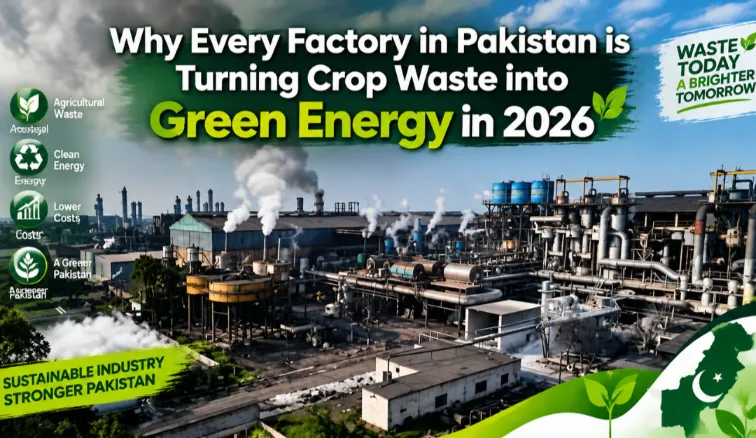

The energy sector is undergoing a significant transformation in Pakistan’s industries. The high cost of electricity, reliance on imported fuels, environmental issues, and the importance of having a consistent energy supply have spurred industries to look for renewable options. Agricultural waste to green energy is one of the most promising solutions.
Pakistan is an agriculture-based economy with huge quantities of crop residues being produced annually. The waste materials like sugarcane bagasse, rice husk, wheat straw, cotton residues and other agricultural by-products were traditionally regarded as waste. But today, the materials are being turned into useful sources of electricity, heat and steam and even industrial fuel with the help of modern biomass technologies.
The transition to crop waste energy is not only lowering costs for factories but it is also making sustainable manufacturing, waste management and clean industrial development possible. Punjab and Sindh sugar mills are already implementing bagasse based energy systems, and rice-processing industry is implementing rice husk energy systems.
What is meant by “Crop Waste Energy”?
Renewable energy from organic materials used in agriculture is called crop waste energy or biomass energy. Industries can utilise crop residues for beneficial energy production instead of burning or dumping them.
In Pakistan, the major biomass resources used for agricultural applications include sugarcane bagasse, rice husk, wheat straw, maize residues, cotton stalks, food-processing residues and animal wastes. These materials can be utilized to generate electricity, industrial heat, steam and biogas through combustion, biomass boilers, gasification and anaerobic digestion technologies.
Biomass can be used as a locally available source of energy that helps mitigate dependence on traditional energy sources and boost energy security for the factory when located in areas where food production takes place.
Agricultural waste can be converted into green energy by using different methods.
The conversion process starts with gathering and preparing agriculture wastes. Collected biomass is dried, processed and delivered to the energy generation plants.
Biomass can be combusted in a controlled environment within a specially designed biomass boiler in a combustion system. The heat created produces steam which can be used in industrial uses or to create electricity using turbines. Gasification technology converts the biomass material into combustible gases which can be utilized for power generation.
Another way of making biogas is called anaerobic digestion, which uses microorganisms to break down the organic waste. The technologies help industries convert agricultural waste to useful energy and minimize environmental impacts from open burning.
What is propelling the Pakistani factories to biomass energy in 2026?
In Pakistan, energy is one of the key considerations in the decision making process of industries. The industries that use manufacturing like sugar, food processing, paper production and agriculture-based industries need constant energy supplies.
Because of their need to achieve lower operating costs, more reliable fuel supply, greater control over production costs, and less reliance on imported fuel, factories are turning to solutions for energy.
Industries have the opportunity to utilize the local resources with biomass energy, as agricultural residues are available throughout the country thus reducing reliance on outside energy sources.
The agriculture sector plays a crucial role in generating green electricity in Pakistan.In Pakistan, the agriculture sector is playing a vital role in the production of green electricity.
The agriculture sector of Pakistan generates huge amount of biomass resources in every year. These are valuable resources forRenewable Energy generation.
Sugarcane Waste (Bagasse)
Sugarcane is one of the major crops of Pakistan. The fibrous material left after sugarcane has been juiced, known as bagasse, can be burned in biomass boilers. Bagasse based cogeneration systems are widely adopted by sugar mills for generating steam and electricity for their factories. If needed, more power can also be fed into the grid.
Rice Husk Energy
Pakistan is one of the big rice-producing nations particularly in the province of Punjab and Sindh. Rice mills produce considerable amount of rice husk, which can be processed to produce electricity, heat energy and biomass fuel. Rice husk was thought of as a waste problem, but now it is an economic opportunity for producing energy.
Other Crop Residues
Other energy potential crops include wheat straw, cotton stalks and maize residues. These materials can be collected and processed in such a way that they provide a substitute to open burning.
What are the problems crop waste energy can solve in Pakistan?
Crop waste energy has the potential to solve various economic and environmental problems of the industrial sector of Pakistan.
1. Reduce Energy Costs in the industry.
Energy is an important operating expense for industries. The factories will save on dependence on electricity supply, diesel generators, furnace oil and imported fuels by generating energy from agricultural waste. Biomass systems provide industries with greater control over their energy expenses.
2. Helps Decrease Air Pollution
Agricultural residues are a source of open burning which generates air pollution, green house gases and low air quality. Turning crop waste into power offers farmers a way to dispose of waste and for industries to get renewable fuel.
3. Develops new farm income opportunities
Farmers can new gain economic opportunities from biomass energy. Agricultural residues like rice husk, wheat straw, sugarcane wastes and corn residues can be another source of income to industries when offered.
Crop waste energy is being used in the following industries in Pakistan:
Sugar Industry
Sugar mills consume a huge amount of biomass energy among all industries in Pakistan, due to the natural disposal of huge quantities of bagasse in sugar mills. Bagasse fired boilers are used to produce steam and electricity and to enhance waste utilization.
Rice Processing Industry
The utilization of rice husk based systems for steam generation, drying and electricity generation is gaining huge momentum in rice mills of Punjab and Sindh.
Textile Industry
The textile industry in Pakistan needs constant energy to spin, dye, process and manufacture. The possibilities of sustainable textile production by the use of biomass boilers are being investigated.
Food Processing Industry
Organic wastes from the fruit processing, vegetables, and dairy activities are produced by food industries. These wastes can be transformed to biogas and heat energy.
Biomass Energy is a cleaner alternative to fossil fuels for Pakistani factories.The advantages of Biomass Energy for Pakistani Factories are: an alternative to fossil fuels that is cleaner.
Energy from biomass is a substitute for importing fuel and uses resources from farming that are available in the area. It helps to ensure energy security, local economic development, and minimizing fuel vulnerability.
It also facilitates green manufacturing through assisting industries to enhance their sustainability performance, meet environmental requirements, and gain competitive edge in international markets.
The circular economy approach is transforming the waste disposal system into a new system where waste is transformed into energy and value, through biomass.
The challenges of developing Crop Waste Energy in Pakistan?
Although Pakistan has potential biomass resources, there are some obstacles in the country such as low collection system, storage, transportation system and processing infrastructures.
Waste materials from agricultural activities are frequently present in the rural area which leads to high collection cost. Significant capital spending also is needed for biomass energy projects on the boilers, gasifiers, generators, and storage facilities.
Seasonal availabilities are another challenge as cropped residues occur only during certain periods. To ensure year round fuel availability, efficient storage systems are needed.
Government Support and Renewable Energy Policies
To develop biomass energy, the cooperation between government institutions, farmers and industries is necessary.
Government policies and measures such as renewable energy subsidies, financing resources, technical tools, and enhanced agricultural waste collection can facilitate the uptake of these technologies.
The farmers can enter into the business of biomass supplier, the factories can turn into energy producer and the government can offer policy support to build an effective rural energy economy.
Crop Waste Energy – A Possible Alternative to Industrial Sector of Pakistan?
The use of crop waste is a significant potential for Pakistan’s renewable energy sector. With the continuous improvement of biomass technology and its economic competitiveness, more industries are projected to use agricultural waste energy system.
Several renewable energy options like solar, biomass, wind and energy efficiency options are likely to be part of Pakistan’s industrial energy mix in the future.
Pollution reduction, helping farmers, enhancing sustainability in industry and building cleaner energy systems are some of the benefits that can be achieved in Pakistan through such conversion of waste from agriculture into energy.
Frequently Asked Questions
What is Biomass energy? in Pakistan?
Energy that is derived from the waste materials of agriculture and organic matter, which are renewable. Rice husk and sugarcane bagasse are the main sources of biomass in Pakistan.
Why is crop waste being used as a source of energy in factories?
Crop waste can be utilized in factories for several reasons: It can help lower energy expenses, it is a reliable fuel source, it promotes better waste management, and it can aid in achieving renewable energy targets.
In Pakistan which is the common waste product of a crop is used?
Agricultural residues which are commonly used for energy production include sugarcane bagasse and rice husks.
Is biomass an alternative to traditional fuels?
When appropriate technology is used, biomass can be used to replace some of the conventional fuels used in industrial heating and electricity generation.
Does biomass have a positive impact on the environment?
Managing biomass energy can help to reduce open burning, promote sustainable waste management and minimise environmental impacts.
Conclusion
Agricultural waste is no longer just a by-product any longer in Pakistan. Crop residues are now being seen as renewable energy resources for industries in 2026.
Bagasse, a by-product of sugar production, is being used by sugar mills, husk, a by-product of rice production is being tapped by rice industries while other industries are looking at possibilities of using biomass to cut cost and enhance sustainability.
The conversion of waste to energy is an opportunity for industry, farmers and the environment. If the technology of biomass can be developed and pertinent policies implemented, crop wastes can be one of Pakistan’s major renewable energy sources.being seen as renewable energy resources for industries in 2026.
Bagasse, a by-product of sugar production, is being used by sugar mills, husk, a by-product of rice production is being tapped by rice industries while other industries are looking at possibilities of using biomass to cut cost and enhance sustainability.
The conversion of waste to energy is an opportunity for industry, farmers and the environment. If the technology of biomass can be developed and pertinent policies implemented, crop wastes can be one of Pakistan’s major renewable energy sources.
The transition from waste to energy represents a powerful opportunity: supporting farmers, reducing pollution, lowering industrial costs, and creating a cleaner energy future for Pakistan.
As more industries adopt biomass technology, crop waste may become one of the country’s most valuable renewable energy resources.