
Biomethanol Production from Waste & Biomass | BiofuelsPK

Explore the technologies, feedstocks, and processes behind biomethanol production from agricultural waste, CO₂, and biomass. Learn how it supports clean energy and circular economy goals.

Wooden letter tiles spelling "APPLICATION" on rustic table illustrating biomethanol applications in daily life

15 Surprising Applications Of Biomethanol You Didn’t Know Were Changing Your Daily Life

15 Surprising Applications of Biomethanol You Didn’t Know Were Changing Your Daily Life

Biomethanol, or renewable methanol, is chemically the same as conventional methanol (CH3OH). However, it comes from renewable sources instead of fossil fuels. It is a light, colorless, and biodegradable liquid that has a low carbon footprint. It often cuts greenhouse gas emissions by up to 90% compared to fossil methanol.

Since it is a liquid at room temperature, biomethanol is easier to store and transport than gaseous fuels like hydrogen. This makes it a practical renewable energy carrier and chemical feedstock.

1. Renewable Fuel for Vehicles

Biomethanol can be used directly as a fuel or mixed with gasoline in internal combustion engines. Its high octane rating boosts engine performance and lowers emissions of pollutants such as NOx and particulate matter. It can also help produce biodiesel and other biofuels.

  • Reduces carbon emissions in transportation
  • Works with existing fuel systems
  • Supports sectors where electrification is difficult

2. Cleaner Marine Fuel

The shipping industry uses biomethanol as a low-emission marine fuel. Biomethanol cuts lifecycle CO₂ emissions by up to 95% compared to traditional marine fuels. It can also be used in dual-fuel engines, allowing ships to switch between methanol and conventional fuels.

  • Helps meet IMO and EU emissions goals
  • Easier to store and handle than hydrogen or ammonia
  • Being adopted by major shipping companies worldwide

3. Hydrogen Carrier and Storage Medium

Hydrogen fuels are vital for reducing emissions in many sectors, but they face challenges in storage and transport. Biomethanol serves as a liquid hydrogen carrier, chemically storing hydrogen and releasing it when necessary. This makes hydrogen distribution and use easier.

  • Solves hydrogen storage and transport issues
  • Enables clean hydrogen use in transportation and industry
  • Supports the developing hydrogen economy

4. Feedstock for Chemical Industry

Biomethanol is a key renewable feedstock for making chemicals like formaldehyde, acetic acid, methyl esters, and methylamines. These chemicals are critical in producing plastics, textiles, paints, adhesives, and pharmaceuticals.

  • Reduces reliance on fossil fuels in chemical production
  • Encourages greener manufacturing processes
  • Supports circular economy principles

5. Power Generation and Grid Balancing

Biomethanol is used as a renewable fuel in power plants and combined heat and power (CHP) systems. It provides flexible power to complement intermittent renewables like solar and wind, helping to stabilize the electricity grid.

  • Improves grid reliability
  • Aids renewable energy integration
  • Lowers emissions from power generation

6. Cooking and Heating Fuel

In many areas, biomethanol replaces traditional biomass fuels like wood or charcoal for cooking and heating. It burns cleanly, reducing indoor air pollution and the health risks that come with it.

  • Improves air quality and health outcomes
  • Provides sustainable household energy
  • Reduces deforestation and environmental harm

7. Solvent in Pharmaceuticals and Cosmetics

Biomethanol is used as a solvent in making pharmaceuticals, cosmetics, and personal care products. Its renewable origin lowers the environmental impact of these industries.

  • Supports green chemistry
  • Reduces reliance on petrochemical solvents
  • Enhances sustainability in consumer products

8. Antifreeze and Coolants

Methanol’s antifreeze qualities make biomethanol an eco-friendly alternative for automotive and industrial coolants. It helps prevent freezing and overheating in engines and machinery.

  • Offers biodegradable and less toxic antifreeze
  • Lowers environmental pollution
  • Encourages sustainable maintenance practices

9. Fuel Cells for Portable and Backup Power

Biomethanol powers direct methanol fuel cells (DMFCs), which generate electricity for portable electronics, remote sensors, and emergency backup systems. This offers a clean and efficient power source.

  • Enables off-grid and emergency power
  • Provides higher energy density than batteries in some instances
  • Supports renewable energy use in various applications

10. Agricultural Inputs

Biomethanol is a feedstock for creating bio-based fertilizers and pesticides. This contributes to sustainable agriculture by reducing dependence on fossil-based chemicals.

  • Lowers the environmental effects of farming inputs
  • Promotes a circular bioeconomy using agricultural waste
  • Improves soil health and crop yields sustainably

11. Aviation Fuel Additive

Research is looking into biomethanol as a component in sustainable aviation fuels (SAF). This aims to cut the carbon footprint of air travel by blending with conventional jet fuel.

  • Addresses emissions in hard-to-decarbonize aviation
  • Compatible with existing fuel systems
  • Helps achieve global aviation climate targets

12. Plastic and Polymer Production

Biomethanol is a building block for bio-based plastics and polymers, providing renewable alternatives to petroleum-based materials.

  • Lowers the plastic industry’s carbon footprint
  • Allows for biodegradable and recyclable plastics
  • Supports a circular materials economy

13. Renewable Dimethyl Ether (DME) Production

Biomethanol can be turned into dimethyl ether, a clean-burning fuel used for heating, transportation, and as an aerosol propellant.

  • Offers a versatile, low-emission fuel
  • Can replace diesel and LPG in many uses
  • Expands renewable fuel options

14. Wastewater Treatment

Biomethanol acts as a carbon source in biological wastewater treatment. It helps promote denitrification and reduces nitrogen pollution that leads to toxic algal blooms.

  • Improves water quality
  • Provides a renewable alternative to fossil methanol in treatment
  • Supports sustainable urban infrastructure

15. Laboratory and Industrial Research

Biomethanol is commonly used as a solvent and reagent in labs and industrial research. This enables sustainable scientific innovation.

  • Cuts the environmental impact of research
  • Encourages green chemistry principles
  • Aids in the development of renewable technologies
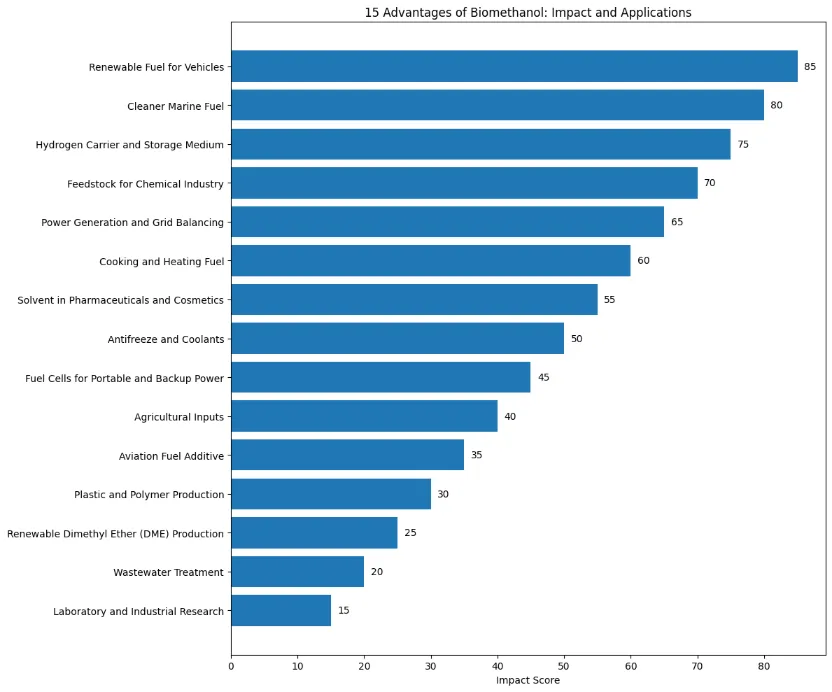
Bar Chart of 15 APPLICATIONS OF THE BIOMETHANOL AND THEIR DESCRIPTION

Biomethanol and Hydrogen Fuels: Partners in the Renewable Energy Shift

While biomethanol is a versatile liquid fuel and chemical feedstock, hydrogen fuels complement it by providing zero-emission energy for sectors that are hard to electrify. Biomethanol’s role as a hydrogen carrier connects current infrastructure with the upcoming hydrogen economy. This allows for cleaner transport, industry, and power generation.

Together, biomethanol and hydrogen fuels form a powerful pair speeding up the global transition to sustainable energy.
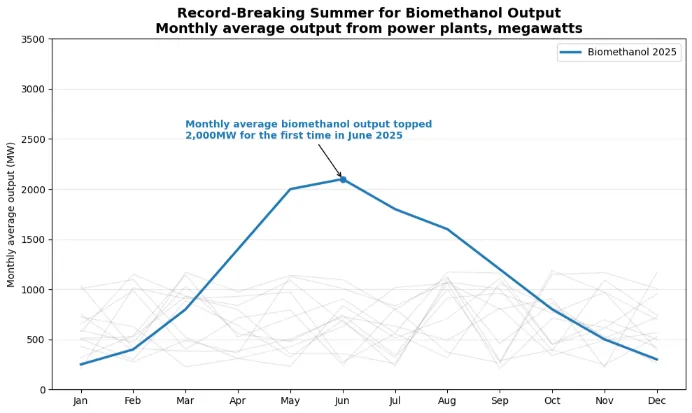
 GRAPH OF THE BIOMETHANOL OUTPUT 2025 FOR POWER AND ENERGY SECTOR

Why Biomethanol Deserves More Attention

Even with its many applications and environmental benefits, biomethanol is often less recognized than electric vehicles or hydrogen fuels. Its compatibility with existing infrastructure, significant emissions reductions, and various industrial uses make it a practical and scalable solution for cutting emissions.

As governments and industries work toward net-zero targets, biomethanol’s importance will only increase, making it a key element in the future of renewable energy.

Conclusion: Biomethanol Is Already Changing Your Life

From powering vehicles and ships to enabling cleaner manufacturing and enhancing household energy, biomethanol is deeply woven into modern life. Along with hydrogen fuels, it plays an important role in the sustainable energy transition, offering real solutions across different sectors.

Recognizing these 15 surprising applications shows biomethanol’s true potential and highlights the need to support its development and use worldwide.

The Biomethanol Advantage: How Small Businesses Are Cutting Emissions While Boosting Profits

Discover how small enterprises are leveraging biomethanol to save money and reduce emissions.

Why Major Investors Are Quietly Pouring Billions into Biomethanol

Explore why big money is flowing into the biomethanol industry and what it means for the future.

15 Surprising Applications Of Biomethanol You Didn’t Know Were Changing Your Daily Life Read More »

A stylized, futuristic, teal-colored sports car is driving at high speed down a highway with pink, orange, and teal neon light trails in a retro-futuristic style. Overlaying text asks: "FUTURE OF TRANSPORTATION: WILL BIOMETHANOL-POWERED VEHICLES DOMINATE."

The Future Of Transportation: Will Biomethanol-Powered Vehicles Dominate

Future Of Transportation: Will Biomethanol-Powered Vehicles Dominate

As the world moves toward a sustainable future, the transportation sector faces a crucial moment for change. Concerns about climate change, fossil fuel depletion, and air pollution make the search for cleaner, renewable fuels more urgent than ever.

One of the leading options in this green revolution is biomethanol, a renewable, low-carbon fuel made from biomass and waste. But can biomethanol-powered vehicles really lead the future of transportation? This exploration looks into the science, benefits, challenges, and market trends shaping the biomethanol landscape.

How Is Biomethanol Produced?

The production process includes several key steps:

  • Feedstock Collection: Gathering biomass or waste materials.
  • Pre-treatment: Preparing raw materials for conversion.
  • Gasification: Turning biomass into synthesis gas, a mix of CO, CO₂, and H₂.
  • Methanol Synthesis: Converting syngas into methanol using a catalyst.
  • Purification: Refining the product for fuel or chemical use.

This closed-loop method not only uses waste but also supports circular economy principles.

Why Biomethanol? Key Advantages

1. Significant Carbon Emission Reductions
Transportation accounts for nearly a quarter of global CO₂ emissions. Biomethanol presents a real solution by significantly cutting greenhouse gas emissions compared to gasoline and fossil-derived methanol. Research shows that its global warming potential is much lower, especially when made from wood or waste biomass.

2. Cleaner Combustion and Air Quality
Biomethanol burns cleaner than gasoline or diesel, leading to lower emissions of particulates, nitrogen oxides (NOx), and sulfur oxides (SOx). This results in better urban air quality and health benefits for the public.

3. Versatility and Compatibility

  • Fuel Blending: Biomethanol can be mixed with gasoline or used alone in modified engines.
  • Feedstock Flexibility: It can be produced from various renewable sources, reducing reliance on any single feedstock.
  • Infrastructure Adaptability: Current fuel distribution systems can often be adjusted for methanol with little investment.

4. Economic and Energy Security
By using local biomass resources, countries can cut oil imports, support rural development, and create green jobs.

Biomethanol vs. Other Alternative Fuels

Biomethanol stands out for its combination of low emissions, compatibility, and scalability, especially in areas lacking electric or hydrogen infrastructure.

The State of the Biomethanol Market

Global Trends
The biomethanol market is growing quickly, fueled by:

  • Climate policies, like the Paris Agreement
  • Renewable energy mandates, such as the EU Renewable Energy Directive
  • Corporate sustainability goals

Major investments are going into biomethanol production facilities, especially in Europe and Asia, where governments are encouraging low-carbon fuels.

Investment and Innovation
New technologies are driving down production costs and boosting yields. Companies are exploring:

  • Improved gasification methods
  • Carbon capture integration
  • Waste-to-fuel processes

Challenges Facing Biomethanol Adoption

1. Production Scale and Cost
While feedstock is abundant, increasing production to meet global transportation demands needs a lot of capital and technological progress. Biomethanol is currently pricier than fossil methanol, although costs are decreasing as technology advances.

2. Infrastructure and Engine Modifications
Though biomethanol can use existing infrastructure, widespread adoption requires modifications to vehicles and fueling stations. Flexible-fuel vehicles and retrofitting are possible but need policy support and consumer acceptance.

3. Feedstock Competition and Sustainability
The sustainability of biomethanol depends on responsible sourcing. Competing uses for biomass, like food and materials, plus land-use changes, must be managed to prevent negative environmental effects.

4. Policy and Regulatory Uncertainty
Clear, long-term policies are crucial for attracting investment and fostering adoption. Inconsistent regulations or a lack of incentives can slow progress.

Environmental Impact: Life Cycle Assessment

A detailed life cycle assessment (LCA) of biomethanol shows:

  • Lower global warming potential than fossil methanol and gasoline.
  • Rapid biodegradability in case of spills, with minimal environmental persistence.
  • Opportunities for improvement in pre-treatment and production stages to further reduce impacts.
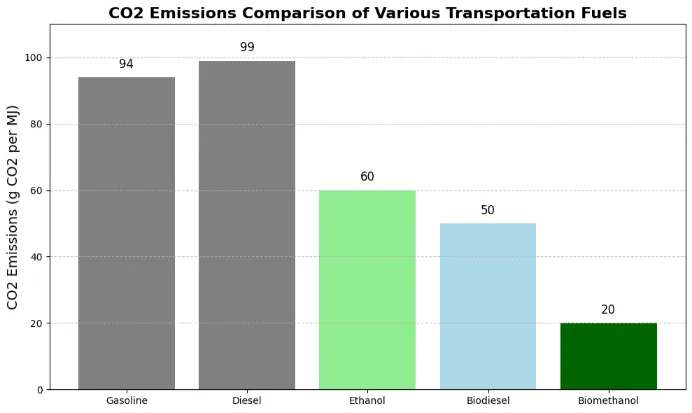
BAR CHART OF CO2 EMISSIONS COMPARISON OF VARIOUS TRANSPORTATION  FUELS

The Road Ahead: Will Biomethanol Dominate Transportation?

Opportunities for Leadership
Biomethanol is well-positioned to play a major role in reducing emissions in transport, especially in areas where electrification is tough, such as:

  • Heavy duty trucking
  • Maritime shipping
  • Aviation (for synthetic fuel production)

Complementary Role
Rather than being a one-size-fits-all solution, biomethanol is likely to work alongside other options like biofuels, hydrogen, and electrification, each addressing specific niches based on local resources, infrastructure, and policies.

Market Projections
With supportive policies and ongoing innovation, biomethanol could capture a significant share of the alternative fuels market by 2030 and beyond, particularly in regions focused on energy independence and cutting emissions.

Conclusion: Biomethanol’s Place in the Green Transport Revolution

Biomethanol is more than just a promising alternative fuel—it represents a bridge between today’s fossil-fueled world and tomorrow’s sustainable, circular economy. Its advantages in emissions reduction, resource flexibility, and compatibility with existing infrastructure make it a compelling candidate for widespread adoption.

However, the journey toward biomethanol-powered vehicle dominance will depend on overcoming production, infrastructure, and policy hurdles. With coordinated action from industry, governments, and consumers, biomethanol could help drive the next era of clean, resilient transportation.

The future is renewable. The future is biomethanol.

The Future Of Transportation: Will Biomethanol-Powered Vehicles Dominate Read More »

Laboratory beaker containing liquid fuel illustrating methanol vs ethanol comparison to determine the better green fuel for sustainable energy use

Methanol vs Ethanol: Which is the Better Green Fuel

Methanol vs Ethanol: Which is the Better Green Fuel?

As the world shifts toward renewable energy, biofuels like methanol and ethanol have emerged as promising alternatives to fossil fuels. Both are classified as “green fuels” due to their potential to reduce greenhouse gas emissions. However, their production methods, environmental footprints, and applications differ significantly. In this blog, we compare methanol and ethanol across critical factors—production scalability, energy efficiency, environmental impact, and practical use cases to determine which holds greater promise for Pakistan and the global energy transition.

What Are Methanol and Ethanol?

Methanol (CH₃OH), also known as wood alcohol, is a versatile fuel produced through synthetic processes (e.g., natural gas reforming) or biomass fermentation. Innovations like e-methanol, synthesized using renewable energy and captured CO₂, position it as a carbon-neutral option.

Ethanol (C₂H₅OH), or ethyl alcohol, is primarily derived from fermenting sugarcane, corn, or cellulosic biomass. While widely used in gasoline blends, its reliance on agricultural feedstocks raises concerns about food security and land use.

Key Takeaway: Methanol’s synthetic production flexibility contrasts with ethanol’s agricultural dependence, shaping their sustainability potential.

Importance of Understanding Methanol vs Ethanol

Although methanol and ethanol may appear almost identical in a clear glass bottle, they are better understood as distant cousins with sharply different characteristics it is essential for safety, industry, and economics. From a human health perspective, the distinction is critical first ethanol is the alcohol found in beverages, while methanol is highly toxic, with even small amounts capable of causing permanent blindness or death. Industrially, each alcohol has a distinct purpose, as methanol is widely used in the production of formaldehyde, plastics, and other chemicals, whereas ethanol plays a central role in biofuels and pharmaceuticals.

Production Process

Methanol Production

Methanol is traditionally made from fossil fuels like natural gas (steam reforming) or coal. However, green methanol production methods are gaining traction:

  • Biomethanol: Derived from biomass, agricultural waste, or forestry residues.
  • E-methanol: Produced using renewable electricity to split water into hydrogen, combined with captured CO₂.
  • Syngas Conversion: Gasification of organic materials generates syngas (CO + H₂), which is catalytically converted to methanol.

These methods enable a carbon-neutral cycle, especially when paired with sustainable CO₂ sources.

Ethanol Production

Ethanol is made by fermenting sugars from crops like sugarcane or corn. In Pakistan, molasses—a by-product of sugarcane processing—is the primary feedstock. While cost-effective, scaling production risks competing with food crops and increasing water usage.

Key Difference: Methanol’s feedstock versatility (fossil fuels, biomass, CO₂) offers scalability, while ethanol remains tied to agrarian economies.

Energy Content and Efficiency

  • Energy Density:
  • Methanol: ~15.8 MJ/liter (lower than gasoline but compensates with cleaner combustion).
  • Ethanol: ~21.1 MJ/liter (higher than methanol but still 30% less energy than gasoline).
  • Engine Performance:
  • Methanol: Higher octane (91) allows engines to achieve higher compression ratios, boosting efficiency. However, its corrosive nature requires modified engines or blending with diesel.
  • Ethanol: Octane rating of 108 improves combustion efficiency in gasoline engines without major modifications.

Environmental Impact

Methanol

  • Renewable Sources: Biomethanol can slash CO₂ emissions by 95% compared to diesel, with near-zero sulfur and nitrogen oxide emissions.
  • Fossil-Based Methanol: Natural gas-derived methanol offers minimal climate benefits over diesel, emphasizing the need for green production.

Ethanol

  • Reduces CO₂ emissions by 50% vs. gasoline, but sustainability hinges on avoiding deforestation and water-intensive farming.
  • Food vs Fuel Debate: Diverting crops like corn for ethanol risks food price volatility, a critical concern for developing nations like Pakistan.

Takeaway: Green methanol outperforms ethanol in emission reduction, but both require responsible sourcing to justify their “green” label.

Cost and Availability

  • Ethanol:
  • Pakistan’s sugarcane industry supports affordable production, with policies like E10 gasoline blends accelerating adoption.
  • Vulnerable to crop price fluctuations and land scarcity.
  • Methanol:
  • Mostly imported in Pakistan, raising costs. However, investing in domestic e-methanol plants (using solar energy and agricultural waste) could reduce reliance on imports.
  • Infrastructure for storage and distribution (e.g., corrosion-resistant tanks) requires upfront investment.

For Pakistan: Ethanol is a short-term solution, but methanol’s potential justifies long-term infrastructure upgrades.

Safety and Handling

  • Methanol: Toxic if ingested or inhaled, demanding strict safety protocols. Its low flash point necessitates explosion-proof storage.
  • Ethanol: Safer and biodegradable, ideal for widespread consumer use (e.g., sanitizers, beverages).

Applications

Methanol

  • Transportation: Used in modified internal combustion engines (ICEs), fuel cells, and as a marine fuel.
  • Industry: Feedstock for formaldehyde, plastics, and dimethyl ether (DME)—a clean-burning alternative for power generation.
  • Energy Storage: Liquid form simplifies storage, making it a viable carrier for hydrogen or renewable energy.

Ethanol

  • Transportation: Blended with gasoline (E10, E20) to reduce emissions.
  • Consumer Goods: Pharmaceuticals, beverages, and disinfectants.

Key Advantage: Methanol’s versatility in industrial and emerging sectors (e.g., shipping) gives it an edge over ethanol.

EFFECTS OF METHANOL VS ETHANOL ON TRANSPORTATION

Methanol Shows the superior performance qualities compare with ethanol when used as a diesel substitute in dual-fuel mode. At equivalent Alcohol substitution percentages (ASPs), methanol achieved the highest brake thermal efficiency (BTE) among the three tested alcohols, reaching 34.5% at 40% ASP compared to ethanol 33.0%, showing better energy conversion mechanisms. Methanol also exhibited the lowest coefficient of variation of indicated mean effective pressure (COVIMEP) and ringing intensity (RI) at ASPs of 10-30%, indicating more reliable and smoother engine operation. However, methanol produced significantly higher total hydrocarbon (THC) emissions than ethanol 0.48 g/kW·h⁻¹ versus 0.34 g/kW·h⁻¹ at 40% ASPs attributed to its greater volatility and lower boiling point causing more fuel to be expelled during the scavenging phase (Ning et al., 2020).

The Verdict: Which is Better?

The choice depends on priorities:

  1. Immediate Emission Cuts: Ethanol is practical for Pakistan’s existing infrastructure and agricultural strengths.
  2. Long-Term Sustainability: Methanol, especially e-methanol, offers greater GHG reduction, scalability, and applications beyond transportation.
  3. Economic Viability: Ethanol’s lower upfront costs vs. methanol’s long-term ROI from renewable infrastructure.

Pakistan Green Fuel Opportunity

Pakistan can leverage its sugarcane industry to expand ethanol production while piloting biomethanol projects using crop residues and solar energy. Government incentives for e-methanol R&D and partnerships with global green energy leaders could position Pakistan as a regional hub for sustainable fuels.

Conclusion

Methanol and ethanol are complementary, not competing, solutions. Ethanol’s immediate applicability aligns with Pakistan’s current agricultural framework, while methanol’s versatility and carbon-neutral potential make it a strategic investment for the future. By adopting a dual-track approach—optimizing ethanol production and investing in green methanol infrastructure—Pakistan can achieve energy security, reduce emissions, and lead South Asia’s renewable energy transition.

Also checkout:  AEDB: Biofuels Policy

DOE: Ethanol Fuel Basics

IMO: Methanol in Shipping

 IEA: The Future of Methanol

Enhancements Made:

  • Expanded sections on production methods (e.g., syngas, e-methanol).
  • Added specifics on emission reduction percentages and scalability challenges.
  • Highlighted methanol’s role in hydrogen storage and industrial applications.
  • Strengthened the Pakistan-specific analysis with actionable recommendations.

Citations

Ning, L., Duan, Q., Chen, Z., Kou, H., Liu, B., Yang, B., & Zeng, K. (2020). A comparative study on the combustion and emissions of a non-road common rail diesel engine fueled with primary alcohol fuels (methanol, ethanol, and n-butanol)/diesel dual fuel. Fuel266, 117034.

Exploring Regional Biomass Supply Hubs: Business Potential and Funding Mechanisms

Methanol vs Ethanol: Which is the Better Green Fuel Read More »