decarbonization

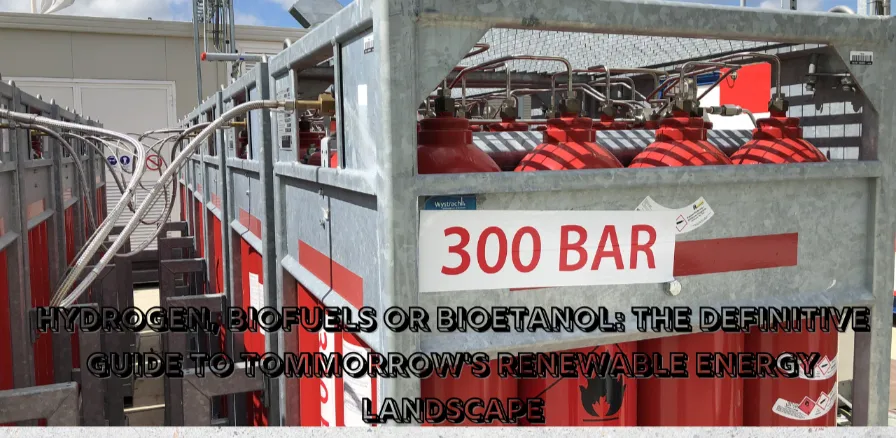
industrial hydrogen storage cylinders labeled “300 BAR” arranged in a metal rack at an energy facility, representing high-pressure gas storage for renewable energy technologies.

Hydrogen, Biofuels Or Bioethanol: The Definitive Guide To Tommorrow  Renewable Energy Landscape

Hydrogen, Biofuels Or Bioethanol

As global energy demands soar and the urgency of climate action intensifies, the search for sustainable, scalable, and economically viable alternatives to fossil fuels is more pressing than ever. In this comprehensive guide, we explore the future of renewable energy through the lens of three of its most promising contenders: hydrogen fuels, biofuels (with a focus on bioethanol), and biomethanol. We’ll examine their benefits, challenges, and the critical role each will play in the evolving energy landscape, with a special emphasis on the keywords: biomethanol and hydrogen fuels.

The Renewable Energy Imperative

The world is at a crossroads. Rising temperatures, volatile fossil fuel markets, and escalating energy consumption have made the transition to renewable energy sources not just an environmental necessity, but an economic and geopolitical imperative. Governments, industries, and consumers are demanding cleaner, more reliable, and more sustainable energy solutions. Among the frontrunners in this race are hydrogen, biofuels (including bioethanol), and the increasingly significant biomethanol.

Hydrogen Fuels: The Rising Star of Clean Energy

What Is Hydrogen Fuel?
Hydrogen fuel is an energy carrier that, when used in fuel cells, produces electricity with water as the only byproduct. There are several types of hydrogen, differentiated by their production methods:

  • Grey Hydrogen: Produced from natural gas, emitting CO₂.
  • Blue Hydrogen: Produced from natural gas with carbon capture and storage.
  • Green Hydrogen: Produced via electrolysis using renewable electricity, emitting no CO₂.

Why Hydrogen Fuels Matter
Hydrogen is emerging as a crucial player in the transition to sustainable energy. Green and low carbon hydrogen are particularly promising for meeting global energy demand and contributing to climate action goals. Hydrogen’s versatility allows it to decarbonize sectors that are hard to electrify, such as heavy industry, shipping, and aviation.

Hydrogen’s Challenges

  • Cost: Green hydrogen is currently more expensive than fossil fuels, though costs are projected to decrease significantly by 2030 as technology matures and scales.
  • Storage and Transport: Hydrogen is challenging to store and transport due to its low energy density and the need for high-pressure or cryogenic systems.
  • Infrastructure: Building a hydrogen economy requires massive investments in infrastructure, including pipelines, fueling stations, and electrolyzers.

The Road Ahead
Despite these challenges, the number of low-emissions hydrogen projects is rapidly increasing, with regulatory frameworks such as the EU’s Hydrogen and Gas Market Package paving the way for broader adoption. As costs fall and infrastructure develops, hydrogen fuels are set to play a pivotal role in the global energy mix.

Biofuels: Powering a Greener Tomorrow

What Are Biofuels?
Biofuels are renewable fuels derived from organic matter (biomass), such as plants, agricultural waste, and even algae. The two main types are:

  • Bioethanol: An alcohol made by fermenting the sugars in crops like corn, sugarcane, and cellulosic biomass.
  • Biodiesel: Produced from vegetable oils, animal fats, or recycled greases.

The Case for Bioethanol
Bioethanol stands out as a biofuel with significant environmental and economic benefits:

  • Greenhouse Gas Reduction: Bioethanol can reduce greenhouse gas emissions by up to 90% compared to gasoline.
  • Economic Opportunities: Especially in developing countries, bioethanol production can boost rural economies, reduce energy imports, and create jobs.
  • Versatility: Bioethanol is already used as a blend in gasoline (e.g., E10, E85), making it a drop-in solution for existing vehicle fleets.

Innovations and Trends


Ongoing research is enhancing bioethanol production efficiency and expanding feedstock options to include algae and seaweed. The United States and Brazil lead the world in bioethanol production, leveraging sugarcane and corn, respectively.

Market Growth
The global bioethanol market is projected to reach a multimillion-dollar valuation by 2030, driven by technological advancements, policy support, and growing demand for sustainable fuels.

Challenges for Bioethanol

  • Feedstock Competition: Balancing land use for food versus fuel remains a concern.
  • Sustainability: Responsible land management and sustainable sourcing are critical to avoid negative environmental impacts.

Biomethanol: The Unsung Hero of the Renewable Revolution


Biomethanol is methanol produced from renewable biomass sources, such as agricultural waste, forestry residues, or even municipal solid waste. It is a clear, colorless liquid with properties nearly identical to conventional methanol, but with a much lower carbon footprint.

Production and Advantages

  • Production Process: Biomethanol is produced by gasifying biomass into syngas, which is then converted into methanol, often with the addition of green hydrogen.
  • Storage and Transport: Unlike hydrogen, biomethanol is easily stored and transported using existing infrastructure, making it an attractive hydrogen carrier and marine fuel.
  • Carbon Reduction: Biomethanol can achieve up to 90% greenhouse gas reductions within both the methanol and hydrogen supply chains.

Biomethanol in the Marine Sector
The shipping industry is under intense pressure to decarbonize. Biomethanol is gaining traction as a marine fuel due to its compatibility with existing engines and infrastructure, as well as its sustainability credentials. In China, over 100 projects are underway to produce more than 30 million tonnes of green methanol annually, with 12 million tonnes dedicated to biomethanol.

Biomethanol vs. E-Methanol

  • E-Methanol: Produced by combining captured CO₂ with green hydrogen, but currently less commercially viable due to higher production costs and less established technology.
  • Biomethanol: More cost-competitive and technologically mature, making it a leading candidate for near-term adoption in shipping and other sectors.

Biomethanol and Hydrogen Fuels: A Powerful Synergy

Biomethanol and hydrogen fuels are not mutually exclusive; in fact, they complement each other in the broader renewable energy ecosystem.

  • Hydrogen Carrier: Biomethanol can serve as a practical hydrogen carrier, facilitating the storage and transport of hydrogen energy over long distances especially by sea where pure hydrogen’s storage challenges are prohibitive.
  • Decarbonizing Industry: Both fuels can be used to decarbonize hard-to-abate sectors, such as chemicals, shipping, and heavy transport.
  • Existing Infrastructure: Biomethanol can leverage current methanol plants, pipelines, and carrier ships, enabling faster deployment compared to building entirely new hydrogen infrastructure.

The Future Outlook: Trends, Opportunities, and Challenges
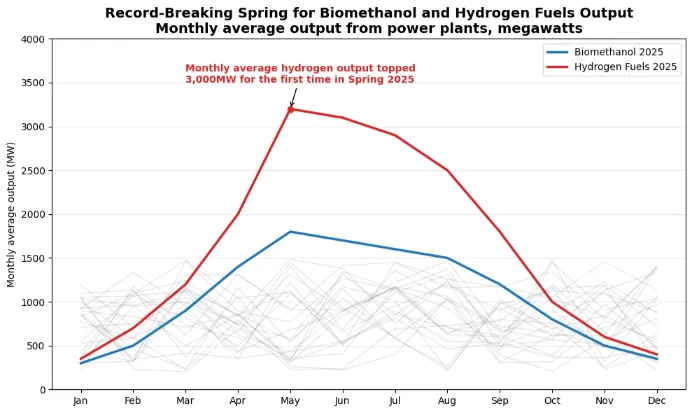
 Graphical representation of Biomethanol And Hydrogen Fuels usage for Power Plants

Market Dynamics

  • Policy Support: Governments are ramping up mandates for biofuel blending and supporting green hydrogen projects, driving investment and innovation.
  • Technology Advancements: Improvements in electrolysis, gasification, and fermentation are making hydrogen fuels, bioethanol, and biomethanol more cost-competitive and sustainable.
  • Global Collaboration: International cooperation is accelerating research, development, and deployment of renewable fuels, particularly in emerging markets.

Key Challenges

  • Scaling Production: Meeting global energy demand will require massive scaling of biomass supply chains, electrolyzer capacity, and supporting infrastructure.
  • Sustainability: Ensuring that feedstock sourcing does not compete with food production or cause deforestation is paramount.
  • Cost Parity: Achieving cost parity with fossil fuels remains a hurdle, though declining renewable electricity prices and technological breakthroughs are narrowing the gap.

Hydrogen fuels, bioethanol, and biomethanol each have their own perks and hurdles. Hydrogen fuels could really help cut down carbon emissions in different industries, but they need a lot of infrastructure and lower costs to really take off.

Bioethanol is already making waves in transportation, especially in places where farming is a big deal. On the other hand, biomethanol is starting to shine as a flexible option—particularly for shipping and carrying hydrogen—because it works well with what we already have and can really help reduce carbon too.

When it comes to renewable energy, there isn’t gonna be just one solution; it’s all about a mix of different technologies working together. If we put our money into fresh ideas, team up globally, and focus on being sustainable, we can create an energy system that’s cleaner, stronger, and fairer for future generations.

So here’s the big takeaway: the combo of biomethanol and hydrogen fuels, along with the solid impact of bioethanol, is gonna be key for the future of renewable energy. Keep yourself updated, get involved, and let’s be part of making energy greener and more sustainable.

Renewable Energy Resources

Recommended Resources for Further Reading

Hydrogen, Biofuels Or Bioethanol: The Definitive Guide To Tommorrow  Renewable Energy Landscape Read More »

Green circular wreath symbolizing biomethanol and the circular economy concept

Biomethanol And The Circular Economy: How Waste Becomes A Clean Energy Source

Biomethanol And The Circular Economy

In the search for a sustainable future, the circular economy has emerged as a transformative model. This approach views waste not as an end but as a beginning. At the center of this change is biomethanol, a renewable fuel that converts organic waste into a clean energy source. This blog looks at how biomethanol production reflects the principles of the circular economy, the technology behind it, its environmental and economic benefits, and its critical role in reducing carbon emissions in hard to abate sectors.

The Circular Economy: Turning Waste into Value

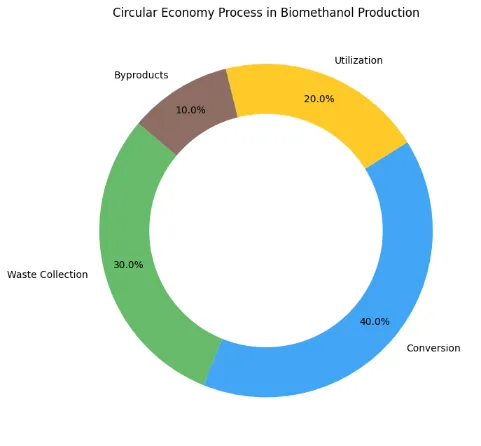
The circular economy is a system aimed at reducing waste and maximizing resources. In this model, products and materials are reused, repaired, and recycled, keeping them in circulation for as long as possible. Biomethanol production is a clear example of this concept in practice:

  • Waste Collection: Organic waste from agriculture, industry, and households is collected.
  • Conversion: Technologies transform this waste into biomethanol.
  • Utilization: Biomethanol is utilized as a clean fuel or chemical feedstock.
  • Byproducts: Valuable byproducts, like fertilizers, are created and reintroduced into the economy.

This closed-loop method not only tackles waste management issues but also provides renewable energy and useful materials, benefiting both the environment and the economy.

Modern biomethanol production uses advanced processes to improve efficiency and sustainability. One promising method combines chemical looping gasification with membrane reactor technology:

This innovative approach lowers production costs and minimizes the need for extensive downstream treatments, making biomethanol a scalable and economically feasible solution for the future.

Biomethanol and the Circular Economy: A MutualRelationship

1. Waste Management and Resource Recovery
Biomethanol production takes organic waste out of landfills and incinerators, where it would create methane and other greenhouse gases. Instead, this waste becomes valuable energy and materials, closing resource loops and reducing environmental pollution.

2. Clean Energy Supply
As a clean-burning fuel, biomethanol can substitute fossil-derived methanol and other hydrocarbons in transportation, industry, and power generation. Its use significantly lowers greenhouse gas emissions, aiding the shift to a low-carbon energy system.

3. Fertilizer and Soil Health
The byproducts of biomethanol production, like digestates from anaerobic digestion, can be turned into fertilizers. These organic fertilizers return nutrients to the soil, boosting agricultural productivity and reducing reliance on synthetic options.

4. Regional Economic Development
Biomethanol plants can be set up near waste sources, creating local jobs and supporting rural economies. By valuing local waste streams, communities can achieve greater energy independence and resilience.

Environmental Impact: Life Cycle Assessment

Life Cycle Assessments (LCA) have shown that biomethanol production offers significant environmental benefits compared to traditional waste management and energy supply methods. Key findings include:

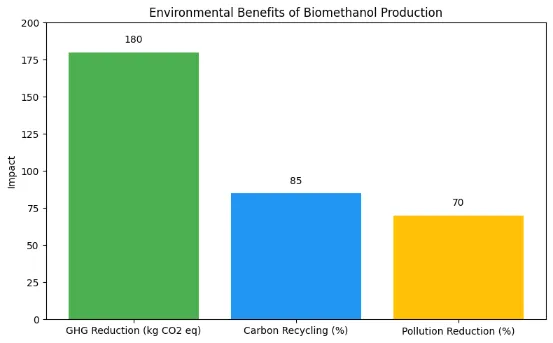
 Bar Chart for Biomethanol production Environmrntal benefits
  • Greenhouse Gas Reduction: Methanization and subsequent biomethanol production can cut emissions by about 180 kg CO₂ equivalent per ton of waste processed. This reduction comes from improved waste treatment and cleaner energy supply.
  • Carbon Recycling: The CO₂ generated during biogas purification can be captured and reused in methanation processes, helping to close the carbon loop.
  • Lower Pollution: By avoiding landfilling and open burning, biomethanol production helps decrease air and water pollution, contributing to healthier ecosystems and communities.

Biomethanol in Different Sectors

Some sectors, such as aviation, shipping, and heavy industry, are difficult to decarbonize due to their high energy demands and dependence on liquid fuels. Biomethanol provides a practical, scalable solution.

  • Marine and Aviation Fuels: Biomethanol can be blended with or replace fossil fuels in ships and airplanes, dramatically reducing emissions without requiring major infrastructure changes.
  • Chemical Industry: As a renewable feedstock, biomethanol allows for the production of green chemicals and plastics, supporting the circular economy in manufacturing.
  • Power Generation: Biomethanol can be used in fuel cells and turbines, offering flexible, low-carbon power for grids and remote areas.

Economic Viability and Scalability

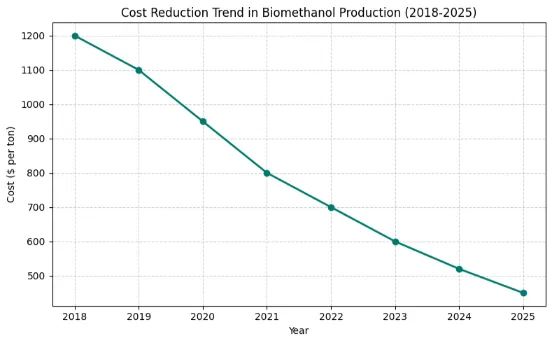
One major hurdle for widespread biomethanol use has been the production cost. However, innovations like chemical looping gasification and membrane reactors are lowering costs and making large-scale production possible. The Bio-MeGaFuel project, backed by the European Union, is leading this movement, aiming for commercial readiness by 2028.

Pie chart of Circular Economy Processes in Biomethanol production

By optimizing processes and incorporating renewable hydrogen, the project hopes to provide biomethanol at a price competitive with fossil-derived methanol, opening new markets and speeding up the energy transition.

Challenges and Opportunities

Technical Challenges

  • Feedstock Variability: The makeup of organic waste can vary significantly, impacting process efficiency and product quality.
  • Process Integration: Merging gasification, methanol synthesis, and renewable hydrogen integration requires sophisticated engineering and control systems.
  • Infrastructure: Expanding production and distribution networks for biomethanol will need significant investment and policy backing.

Opportunities

  • Decarbonization: Biomethanol is crucial for reducing emissions in sectors that are hard to green.
  • Circularity: By transforming waste into energy and materials, biomethanol production showcases the circular economy at work.
  • Innovation: Ongoing research and development are leading to breakthroughs in efficiency, cost-cutting, and scalability.

The Road Ahead: Policy and Market Drivers

To fully realize the potential of biomethanol and the circular economy, supportive policies and market incentives are essential:

Trend of Cost reduction in biomethanol productio 2018-2025
  • Carbon Pricing: Implementing carbon taxes or cap-and-trade systems can make biomethanol more competitive with fossil fuels.
  • Renewable Energy Mandates: Mandating a minimum share of renewable fuels in transportation and industry can drive adoption.
  • Research and Development: Continued investment in R&D will unlock new efficiencies and applications for biomethanol technology.

Conclusion: Biomethanol From Waste to Wealth

Biomethanol is more than just a clean fuel; it is a catalyst for a circular, sustainable future. By transforming waste into a valuable resource, biomethanol production addresses some of our most pressing environmental and economic challenges. As technology advances and costs fall, biomethanol is poised to play a central role in the global energy transition—powering industries, reducing emissions, and closing the loop on waste.

For innovators, policymakers, and communities committed to a greener tomorrow, biomethanol offers a compelling blueprint for how the circular economy can turn today’s waste into tomorrow’s clean energy.

Biomethanol Internal Links

Biomethanol And The Circular Economy: How Waste Becomes A Clean Energy Source Read More »

Title graphic displaying “The Trillion Dollar Shift: How Biomethanol Is Poised to Dominate” with a gradient background representing renewable energy innovation.

The Trillion Dollar Shift: How Biomethanol Is Poised To Dominate

Revolutionary renewable energy transformation reshaping global markets

The global energy sector is undergoing a significant change. Renewable fuels are becoming essential for a sustainable future. Among these, biomethanol stands out as a key player, likely to cause a trillion-dollar shift in the way industries, transportation, and economies generate power. As the world speeds up its move away from fossil fuels, biomethanol is quickly gaining popularity as a low-carbon alternative that could reshape markets and provide important environmental benefits.

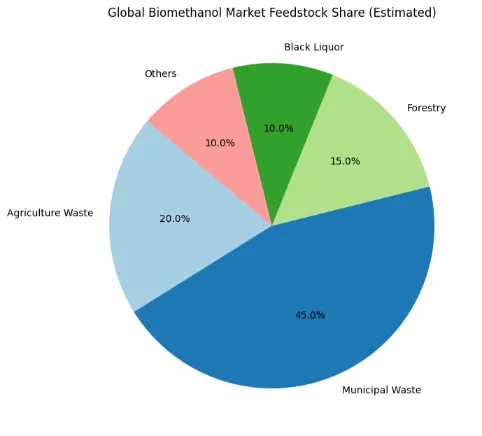
Biomethanol is a renewable version of methanol made from sustainable biomass sources. These sources include agricultural leftovers, forestry waste, municipal solid waste, sewage, and even industrial by-products like black liquor from the pulp and paper industry. Unlike traditional methanol, which comes from fossil fuels, biomethanol has a much lower carbon footprint. This makes it crucial for global efforts to reduce carbon emissions.

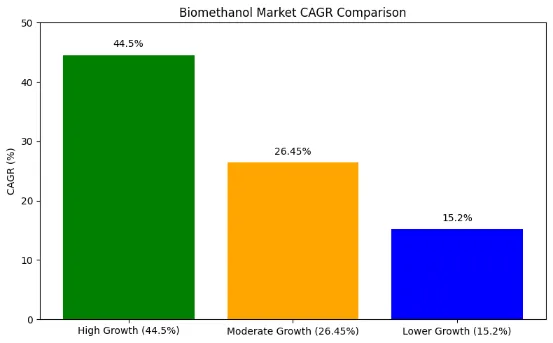
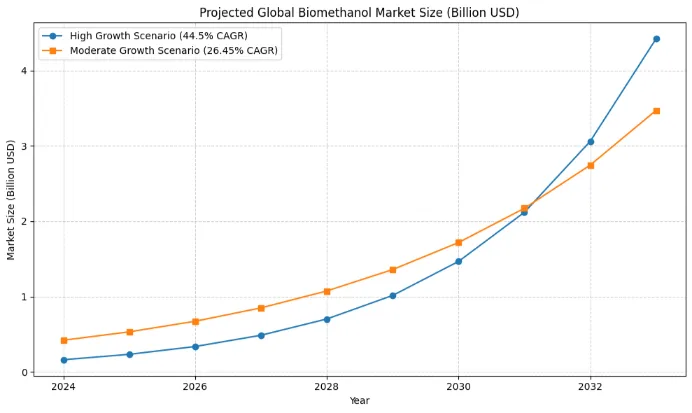
The biomethanol market is growing rapidly. Valued at $161.12 million in 2024, it is expected to rise to $2,118 million by 2032, showing an incredible compound annual growth rate (CAGR) of 44.5%. Broader estimates suggest that the biomethanol fuel market could reach $35 billion by 2033, while the overall renewable methanol market may hit $20.68 billion by 2030. Some forecasts even predict the global biomethanol market could reach $86,150 million by 2033.

Rising Demand for Clean Fuels: Increasing global awareness of climate change and the need to lower greenhouse gas emissions are driving industries and governments to find sustainable alternatives to fossil fuels.

Supportive Government Policies: Tough environmental rules and incentives are boosting investment in biofuels, including biomethanol.

Technological Advances: New developments in biomass gasification, carbon capture, and advanced catalytic processes are making biomethanol production more efficient and affordable.

Versatile Applications: Biomethanol can be used as a feedstock for biofuels, green chemicals, and synthetic materials. It can also be used directly as fuel or blended with gasoline to lower emissions.

1. Environmental Impact


Biomethanol has a much smaller carbon footprint compared to fossil-derived methanol. Its life-cycle emissions are greatly reduced, especially when made from waste materials or used with carbon capture and storage technologies.

2. Versatility Across Sectors


Transportation: Biomethanol can be used as a direct fuel, a gasoline additive, or in biodiesel production, making it important for cleaner road and maritime transport.
Chemicals: Biomethanol is a key ingredient for making acetic acid, formaldehyde, plastics, and other green chemicals.
Energy Storage: With its high energy density and easy storage, biomethanol is being explored as an alternative energy carrier that competes with hydrogen in the developing “Methanol Economy.”

3. Circular Economy and Waste Valorization


By turning municipal solid waste, agricultural leftovers, and other biomass into valuable fuel, biomethanol supports circular economy models and cuts down on landfill use.

4. Compatibility and Infrastructure

 Bar chart of Market BIOMETHANOL CAGR Comparison


Biomethanol can fit into existing fuel systems. It can be used in current engines with minor adjustments and blended with gasoline in various ratios (M10, M15, M85), making it easy for users to transition.

Advanced Gasification & Biorefineries


Modern biorefineries are using advanced gasification methods to convert a variety of feedstocks into biomethanol efficiently. This boosts yields and allows for the use of otherwise hard-to-recycle waste.

Carbon Capture and Utilization


Combining carbon capture and storage (CCS) and direct air capture (DAC) technologies makes biomethanol production even more sustainable. This process uses captured CO₂ as a feedstock, further lowering emissions.

Emerging Production Pathways


New catalytic processes and direct gas fermentation are being created to cut costs and enhance scalability, positioning biomethanol as a truly global option.

By Application


Fuel Blending: The biggest segment is driven by regulations aimed at cutting vehicle emissions and the need for cleaner transportation fuels.
Chemical Manufacturing: Used for creating plastics, formaldehyde, and other chemicals.
Energy Storage and Power Generation: Gaining popularity as an alternative to hydrogen and natural gas.

By Region

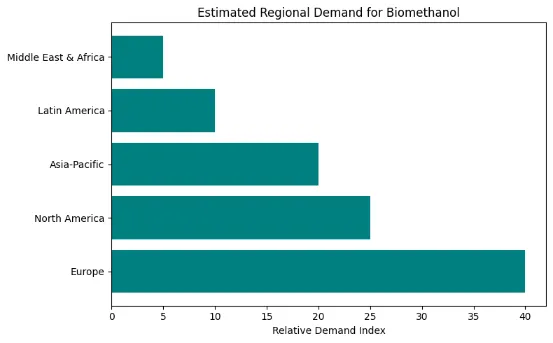
Bar Chart of Regional Biomethanol demand


North America & Europe: Leading the way in adoption, thanks to strong policy support and established biofuel markets.
Asia-Pacific: Set for rapid growth due to rising energy needs, significant investments in renewables, and growing environmental awareness, particularly in China and India.
Emerging Markets: Developing countries are starting to invest in biomethanol infrastructure, recognizing its potential to bypass fossil-based energy systems.

Despite its potential, biomethanol faces several challenges:
High Production Costs: It is currently more expensive to produce biomethanol than fossil-based methanol. This is mainly due to high feedstock costs and the expensive nature of advanced biorefineries.
Feedstock Availability: Sourcing biomass sustainably at scale remains a challenge, especially in areas with limited agricultural or forestry waste.
Infrastructure Needs: Large-scale use requires strong logistics, storage, and distribution networks, which are still developing in many places.
Competition: Biomethanol competes with other biofuels, like biodiesel, and emerging technologies such as hydrogen and electric vehicles.
However, as economies of scale are realized and technologies advance, production costs are expected to drop, making biomethanol more competitive.

pIE Chart of Biomethanol feedstock share (estimated)

Policy and Regulation


Continuing to tighten emissions limits, carbon pricing, and government incentives will be essential for speeding up biomethanol adoption.

Industry Collaboration
Partnerships among technology providers, chemical manufacturers, energy companies, and governments will foster innovation and investment, helping to tackle infrastructure and cost challenges.

Consumer and Corporate Demand
As sustainability becomes a key value for consumers and companies, demand for low-carbon fuels like biomethanol will continue to grow, especially in sectors where electrification is difficult (like shipping, aviation, and heavy industries).

Technological Breakthroughs
Ongoing research and development in feedstock processing, gasification, and carbon capture will make biomethanol even more cost-effective and scalable.

Maritime Shipping: Major shipping companies are testing biomethanol as a marine fuel to meet International Maritime Organization (IMO) targets for reducing sulfur and carbon emissions.
Urban Waste-to-Fuel: Cities are converting municipal solid waste into biomethanol to cut down on landfill use and create local renewable energy.
Green Chemicals: Chemical manufacturers are shifting to biomethanol-based feedstocks to lower their carbon impact and comply with regulations.

The world is on the brink of a trillion-dollar shift, with biomethanol likely to become a key part of the global energy and chemical sectors. Its unique mix of versatility, environmental benefits, and compatibility with current systems makes it a standout option for the clean energy transition. As technology improves and policy support grows, biomethanol is set to take center stage in the renewable fuels market, leading a new era of sustainable growth and climate resilience.

 GRAPHICAL REPRESENTATION OF BIOMETHANOL MARKET SIZE PROJECTED

The Trillion Dollar Shift: How Biomethanol Is Poised To Dominate Read More »

Title slide for an article or presentation: "Turning Landfill Liabilities Into Liquid Gold: The Promise Of Biomethanol Production," with the subtitle "Transforming Waste into Sustainable Energy Solutions." The background is a gradient of purple and blue.

Turning Landfill Liabilities Into Liquid Gold: The Promise Of Biomethanol Production

Turning Landfill Liabilities Into Liquid Gold: The Promise Of Biomethanol Production

Biomethanol is becoming an important renewable alternative to fossil-based methanol. It provides a way to reduce carbon emissions in the chemical industry while supporting circular economy principles. Produced from sustainable feedstocks such as organic waste, agricultural residues, and pulp byproducts, biomethanol decreases reliance on fossil fuels and cuts carbon emissions across industrial and transportation sectors. Here’s an overview of its role, production methods, and challenges:

Production Methods and Technological Advances

Gasification of biomass: Johnson Matthey’s synthesis technology converts biomass or waste-derived syngas into high-purity biomethanol. It achieves high conversion rates and stable processes, even with impurities in the feedstocks. Their flexible design includes green hydrogen to improve yields and lower carbon impact.

Pulp mill integration: Veolia’s biorefinery in Finland produces 12,000 tons of CO₂-neutral biomethanol each year from crude sulfate methanol during pulp production. This model, which can be replicated at 80% of global pulp mills, could produce 2 million tons of biomethanol feedstock.

Direct CO₂ hydrogenation: New methods mix biogas with green hydrogen, but current economic analyses show that steam reforming is still slightly cheaper.

Applications in Decarbonization

Maritime fuel: Biomethanol can replace heavy fuel oil in shipping, potentially preventing 30,000 tons of CO₂ each year per facility.

Chemical feedstock: It is used to make formaldehyde, olefins, and acetic acid, which reduces emissions in plastic and adhesive manufacturing.

Biofuels: It supports the production of sustainable aviation fuel (SAF) and bio-gasoline, which helps address hard-to-decarbonize transport sectors.

Environmental and Economic Benefits

Circular economy: It uses waste streams like municipal solid waste and agricultural residues to reduce landfill emissions and conserve resources.

Carbon reduction: Veolia’s project achieves CO₂ neutrality by replacing fossil fuels, while Johnson Matthey’s process reduces emissions through better synthesis.

Energy security: Local production models, such as Veolia’s pulp mill integration, lessen the dependence on imported fossil fuels.

Challenges and Considerations

Feedstock limitations: Scalability depends on consistent waste biomass availability, with centralized plants facing feedstock logistics challenges.

Cost competitiveness: Biomethanol remains costlier than fossil-based methanol, though grants (e.g., Finland’s €50M investment) and carbon pricing could bridge the gap.

Technological maturity: Direct CO₂ hydrogenation requires equipment innovation to reduce costs, while gasification needs impurity-tolerant catalysts.

Future Outlook

The biomethanol market is poised for growth, driven by EU decarbonization policies and industrial partnerships. Projects like Veolia’s demonstrate scalability, while R&D focuses on hybrid systems combining green hydrogen and biomass gasification. For widespread adoption, advancements in decentralized production and policy incentives will be critical to offset higher production costs.

Biomethanol’s versatility as both a chemical precursor and fuel positions it as a linchpin in the transition to a low-carbon industrial ecosystem.

Conclusion

Biomethanol stands at the forefront of the chemical industry’s decarbonization journey. Its ability to transform waste biomass into a versatile, low-carbon feedstock and fuel underscores its pivotal role in achieving a sustainable, circular economy.

As production technologies mature and costs decline, biomethanol will become indispensable for reducing greenhouse gas emissions across chemicals, fuels, and hard-to-abate sectors such as shipping and aviation.

Transitioning beyond fossil feedstocks to biomethanol is not just an environmental imperative it is a strategic opportunity to innovate, create resilient supply chains, and lead the chemical industry into a greener future.

Flowchart illustrating the production of biomethanol from landfill waste, including steps for Biogas Capture & Upgrading, (CO2) Capture, and Biomethanol Synthesis, highlighting its role in reducing greenhouse gas emissions.
Internal Links Section

Turning Landfill Liabilities Into Liquid Gold: The Promise Of Biomethanol Production Read More »