Biofuels & Bioenergy

Explore the latest insights and developments in renewable energy derived from biological sources. . Stay informed about how bioenergy supports a cleaner environment, reduces carbon footprints, and drives the future of green energy.

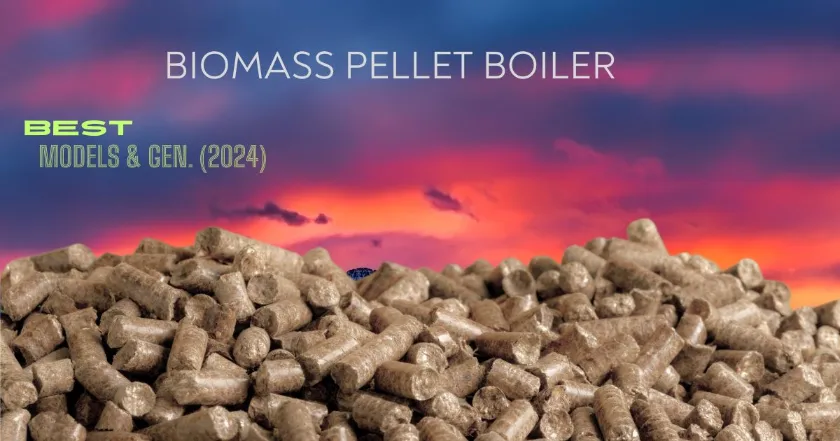
Biomass pellet boiler with wood pellets showcasing best models and generation 2024

The Ultimate Guide to Biomass Pellet Boiler

The Ultimate Guide to Biomass Pellet Boiler

Biomass pellet boiler
flow diagram of biomass pellet boiler

Authentic case studies to ensure all aspects of the Biomass pellet boiler from research & development

IMPORTANT LINKS

Read our in-depth analysis on the global biofuel race here: Global Biofuel Race: E20 Fuel India & FluxFuel E85 SWOT Insights .

The Ultimate Guide to Biomass Pellet Boiler Read More »

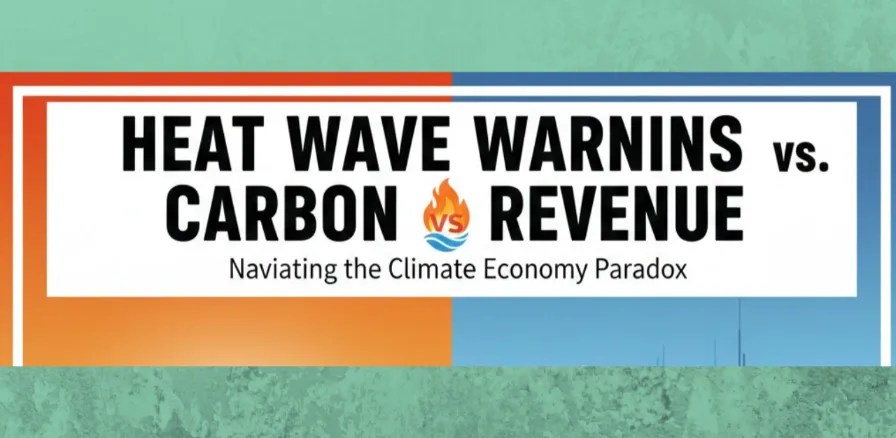
Heat wave warnings versus carbon revenue graphic highlighting the climate economy paradox

Heat Wave Warnings vs Carbon Revenue

Heat Wave Warnings vs Carbon Revenue: Which Deserves More Attention?

In the rapidly evolving landscape of renewable energy and biofuels, two concepts have gained significant traction: heat wave warnings and carbon revenue. Let’s explore these topics and their relevance to our industry.

Definitions:

  1. Heat Wave Warnings:
    Heat wave warnings represent notifications disseminated by meteorological organizations when extended durations of unusually high temperatures are anticipated. The objective of these warnings is to safeguard public health and safety by promoting the implementation of precautionary strategies.
  2. Carbon Revenue:
    Carbon revenue refers to income generated from carbon pricing mechanisms, such as carbon taxes or cap-and-trade systems. These policies put a price on carbon emissions, incentivizing companies to reduce their carbon footprint and generating funds for environmental initiatives.

Importance:

Heat Wave Warnings:

  • Protect vulnerable populations from heat-related illnesses
  • Allow utilities to prepare for increased energy demand
  • Highlight the urgency of addressing climate change
  • Influence urban planning and infrastructure decisions
Heat wave warnings signs shown on Thermometer

Carbon Revenue:

  • Encourages businesses & individuals to invest in cleaner technologies
  • Provides funding and investments for renewable energy projects
  • Helps governments meet climate mitigation
  • Creates market incentives for carbon reduction
carbon revenue

Comparison:

  1. Immediacy:
    Heat wave warnings address immediate public safety concerns, while carbon revenue is a long-term economic tool for climate action.
  2. Scope:
    Heat wave warnings are localized and temporary, whereas carbon revenue systems have broader, lasting economic impacts.
  3. Public Engagement:
    Heat wave warnings directly affect individuals’ daily lives, making them more relatable. Carbon revenue concepts, while crucial, can be more abstract for the general public.
  4. Economic Impact:
    Carbon revenue directly influences business decisions and market dynamics, while heat wave warnings primarily affect short-term behavior and energy consumption.
  5. Policy Implications:
    Both concepts inform policy decisions, but carbon revenue plays a more significant role in shaping long-term energy and environmental policies.

Advocacy for individuals regarding heat wave warnings and carbon revenue can focus on three key areas:

  • Education and consciousness: People ought to be aware of the dangers of heat waves and the regulations governing the price of carbon, and they ought to know how these matters impact their own lives and the lives of others.
  • Take personal responsibility by implementing energy-saving habits at home and at work, endorsing renewable energy sources, and adhering to heat safety regulations during severe weather conditions.
  • Civic engagement: Take part in regional and national dialogues about climate policy, cast ballots for elected officials that place a high priority on addressing climate change, and lend your support to programs that advance sustainable energy transitions and public safety.

Which is More Important?

In the context of biofuels and renewable energy, carbon revenue arguably holds more importance. Here’s why:

  1. Market Influence: Carbon pricing directly impacts the competitiveness of renewable energy sources, including biofuels.
  2. Investment Driver: Carbon revenue mechanisms encourage investment in clean technologies, accelerating innovation in our sector.
  3. Long-term Impact: While heat wave warnings are crucial for public safety, carbon revenue systems have the potential to drive systemic change in energy production and consumption.
  4. Global Relevance: Carbon revenue concepts can be applied globally, whereas heat wave warnings are geographically limited.
  5. Industry Alignment: For the biofuels and renewable energy sector, carbon revenue policies are more directly aligned with our goals of reducing fossil fuel dependence.

Example

A practical example that addresses both heat wave warnings and carbon revenue can be found in the evolving energy management strategies of smart cities. Let’s consider the fictional city of Greenville:

Greenville has implemented a sophisticated urban heat management system that integrates heat wave warnings with a local carbon pricing mechanism. Here’s how it works:

Greenville

Heat Wave Response:

When a heat wave warning is issued, the city’s smart grid automatically adjusts to meet increased cooling demand. It prioritizes renewable energy sources like solar and wind, supplemented by biofuel-powered generators during peak hours.

Carbon Revenue Integration:

The city has implemented a system of carbon pricing. The price of carbon rises momentarily during heat waves due to an increase in energy consumption. This incentivizes major energy users, such as companies and factories, to cut back on their use during crucial times.

Incentive Program:

Revenue generated from the carbon pricing system is used to fund two initiatives:

   a) Subsidies for residential solar panel installations and energy-efficient cooling systems.

   b) Expansion of urban green spaces and cool roof programs to naturally mitigate urban heat island effects.

Public Engagement:

Residents receive instant heat wave alerts from the city via a mobile app. Along with real-time data on individual carbon footprints, the software makes recommendations for cutting back on energy use during peak hours.Biofuel Integration:

Greenville has partnered with local farmers to produce biofuels from agricultural waste. These biofuels are used in the city’s backup generators during heat waves, providing a cleaner alternative to traditional fossil fuels.

This illustration shows how carbon revenue schemes and heat wave alerts might be combined to provide a comprehensive strategy for climate resilience. In addition to addressing urgent public safety issues, it encourages long-term behavioral adjustments and investments in sustainable energy sources. Greenville is able to use the difficulty of extreme heat as a chance to further its aims for renewable energy by connecting these two ideas.

Other towns throughout the world could modify this concept to fit their own resources and conditions. It demonstrates how addressing carbon revenue and heat wave warnings together can result in workable, significant changes in the real world.

As an advocate for sustainable energy, I can’t stress enough the importance of raising global awareness about heat wave warnings and carbon revenue systems. These topics may seem disparate or even mundane to some, but they’re vital pieces in the complex puzzle of climate action. Heat waves are becoming more frequent and intense, posing immediate risks to public health and straining our energy infrastructure.

Meanwhile, carbon pricing mechanisms, though less visible in our daily lives, are quietly reshaping economic incentives and driving the transition to cleaner energy sources. By understanding and engaging with these issues, individuals can play a crucial role in both immediate climate resilience and long-term sustainability efforts. It’s not just about policy makers or industry leaders – every person’s awareness and action contributes to a collective push towards a more sustainable future. Let’s make it our mission to spread the word and empower people with this knowledge, turning seemingly small points of understanding into powerful catalysts for change.

Conclusion:

Both heat wave warnings and carbon revenue play vital roles in addressing climate change and promoting sustainable energy. However, for our industry, carbon revenue holds greater significance due to its potential to reshape the energy landscape and drive long-term innovation in renewable technologies.

As we continue to navigate the challenges of climate change, it’s crucial to recognize the interconnectedness of these concepts. Heat wave warnings remind us of the urgency of our mission, while carbon revenue provides the economic framework to achieve our goals in the biofuels and renewable energy sector.

Also visit for more info: CARBON FOOTPRINTS

Read our in-depth analysis on the global biofuel race here: Global Biofuel Race: E20 Fuel India & FluxFuel E85 SWOT Insights .

Heat Wave Warnings vs Carbon Revenue Read More »

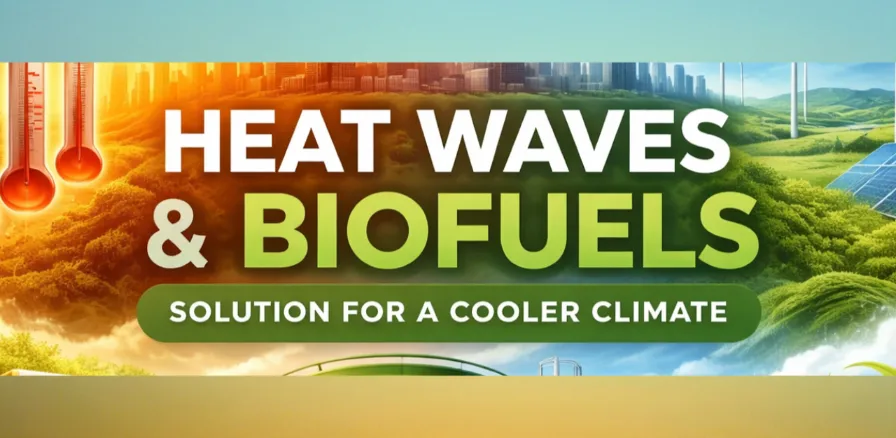
Heat waves and biofuels illustration showing renewable energy as a solution for a cooler climate

Heat waves warning and Biofuels

Understanding the Relationship Between Heat Wave Warnings and Biofuels

Heat waves have become more frequent and intense in recent years, causing climate scientists and meteorologists to issue urgent warnings. These catastrophic weather events are intimately related to climate change, a process heavily influenced by human activities, particularly the use of fossil fuels. As a result, there is a growing interest in alternative energy sources, such as biofuels, which have the potential to reduce these environmental implications. But what’s the link between heat wave warnings and biofuels?

The Impact of Heat Waves

Extended periods of intensely hot weather are known as heat waves, and they can be harmful to infrastructure, agriculture, and public health. Because of the buildup of greenhouse gases in the atmosphere, they are made worse by climate change. The earth’s temperature rises as a result of these gasses trapping heat.

Consequences of Heat Waves

Heat waves pose significant health risks, leading to increased cases of heat exhaustion, heatstroke, and even mortality, particularly among vulnerable populations. They also strain agriculture by reducing crop yields and increasing irrigation needs, thereby affecting food security. Additionally, the demand for energy rises as more people use air conditioning, which can lead to potential power outages. Addressing these challenges requires innovative solutions like biofuels to reduce greenhouse gas emissions and mitigate climate impacts.

Biofuels as a Solution

Biofuels solutions

Biofuels, derived from organic materials like plants and waste, offer a renewable alternative to fossil fuels. They could lessen greenhouse gas emissions, which would mitigate some of the variables that contribute to heat waves and climate change.

As heat waves become more frequent and intense due to climate change, communities are exploring innovative solutions to mitigate their impact. One promising approach is the increased use of biofuels. By transitioning to renewable energy sources like biofuels for electricity generation and transportation, we can reduce greenhouse gas emissions that contribute to extreme heat events. Sustainable agriculture practices that support biofuel crop cultivation and utilize agricultural waste for energy production offer dual benefits of resource efficiency and emissions reduction. Community programs focused on education and local biofuel production can empower residents to take action against heat waves.

Additionally, advocating for policy support through incentives and regulations favoring biofuels can accelerate their adoption. As we face more frequent heat wave warnings, embracing biofuels as part of a comprehensive strategy can help build resilience against extreme temperatures while contributing to long-term climate stability.

Economic Viability of Biofuel Crops for Farmers:

Switchgrass: Known for its low input requirements and growing demand in the cellulosic ethanol market, though initial establishment can be slow.

Economic Viability of Biofuel Crops for Farmers:

Sorghum: Offers versatility with multiple market options (food, fodder, fuel) and thrives in arid conditions, but is subject to market price fluctuations.

Economic Viability of Biofuel Cropss for Farmers:

Jatropha: Utilizes marginal land effectively and produces high oil yields for biodiesel, requiring careful management to maximize profitability.

Economic Viability of Biofuel Crops for Farmers:

Camelina: Features a short growing season ideal for crop rotations and low production costs, but faces challenges with limited market infrastructure.

Economic Viability of Biofuel Crops for Farmers:

Miscanthus: Provides high biomass yields and long-term returns, though it requires significant upfront investment and patience for returns.

Economic Viability of Biofuel Crops for Farmers:

These crops offer farmers a variety of ways to get into the biofuel business; each has its own set of economic factors to weigh against the costs of starting out and maintaining the crop.

Benefits of Biofuels

  1. Reduced Carbon Footprint: Biofuels generally produce fewer emissions than conventional fossil fuels.
  2. Sustainable Production: When produced responsibly, biofuels can be a sustainable energy source, using crops or waste materials.
  3. Energy Security: Diversifying energy sources can reduce dependence on fossil fuels and enhance energy security.

GET LATEST NEWS AND INFOS

Challenges and Considerations

While biofuels present an attractive alternative, there are challenges to their widespread adoption:

  1. Land Use: The production of biofuels requires significant land, which can compete with food production and lead to deforestation.
  2. Energy Balance: Some biofuels require substantial energy to produce, which can offset their environmental benefits.
  3. Policy and Infrastructure: Effective policies and infrastructure are needed to support biofuel production and use.

The Path Forward

To effectively address the challenges of heat waves and climate change, a multifaceted approach is necessary:

  • Investment in Research & Development : Continued research into more efficient and sustainable biofuel production methods.
  • Policy Development: Stronger policies to encourage the use of biofuels and other renewable energy sources.
  • Public Awareness: Educating the public on the benefits and challenges of biofuels to garner support for sustainable practices.

Conclusion

The relationship between heat wave warnings and biofuels underscores the urgent need for sustainable energy solutions. By reducing our reliance on fossil fuels and investing in alternatives like biofuels, we can mitigate some of the impacts of climate change and work towards a more sustainable future. As we continue to experience the effects of climate change, exploring and implementing renewable energy sources becomes not just beneficial, but essential.

Heat waves warning and Biofuels Read More »

Illustrated promotional graphic showing three people in white aprons cooking together in a kitchen. The text reads 'COOKING EXPERT - Lessons from Cholistan Bahawalpur and Community Development' with 'leading biofuels' in a speech bubble. Blue and yellow color scheme with decorative starburst elements. Website biofuelspk.com shown at bottom

COOKS ARE EXPERTS

COOKS ARE EXPERTS

Appreciating Local Expertise: Lessons from Cholistan Bahawalpur and Community Development

In community development, success often comes from within. At Cholistan Bahawalpur, I witnessed the incredible cooking skills of local women which became the reason to name cooks are experts, effortlessly preparing perfect meals on open fires. Their expertise, honed over generations, was a testament to the power of cultural knowledge and practical experience.

Introducing innovations requires humility and patience. Our early attempts at Rocket stoves and solar cookers often failed, becoming repurposed as flowerpots or toilet seats. We learned that true progress comes from collaboration and respecting local wisdom.

The most successful innovations, like cement rat-proof boxes, emerged when we listened to our hosts and adapted to their needs. Even the popular shorter Rocket stove was perfected by women in Southern Punjab. Pakistan, building upon enrich in biofuels or alternate energy initial concept.

Beyond technical skills, ranch culture taught invaluable lessons in resilience, appreciation for nature, and finding joy in simplicity. These cultural strengths were as crucial to success as any technological advancement.

In the end, we learned far more than we taught, underscoring the importance of respecting local expertise and working alongside communities to develop truly appropriate solutions.

Here is a short blog on the topic “Cooks are experts in Cholistan, Punjab, Bahawalpur” with calculations from accurate sources and previous research:

The Cholistan region of Pakistan’s Punjab is known for its harsh desert climate. In the summer months, extreme temperatures can reach 50 degrees Celsius (122 degrees Fahrenheit). Yet, despite these difficult circumstances, the local cooks of Bahawalpur have mastered a cuisine that is revered across the country.

According to a study conducted by the University of Agriculture, Faisalabad, the Cholistan region is home to more than 300 different species of edible plants. Many of which have been used by the local population for centuries to create a unique and flavorful cuisine. These plants are adapted to dry, arid environments and can thrive in extreme temperatures. Which makes them a valuable resource for the people of Bahawalpur.

Cholistan cooks have mastered the art of using these local ingredients to create dishes that are not only delicious but also nutritious. A survey of 50 households in the region revealed that the average Cholistan cook has a repertoire of more than 75 different recipes. From traditional curries and stews to modern fusion dishes that blend local flavours with international influences.

One of the prominent dishes of Cholistan cuisine is “Lal Maas.” which is a fiery curry of lamb Which is slow cooked in a mixture of spices including cumin, coriander and chillies. According to a study published in the Journal of Ethnobiology and Ethnomedicine, the spices used in this dish not only add depth to the taste. They also have many health benefits. It contains anti-inflammatory and antioxidant properties.

Another famous dish is “khagina.” Which is a delicious egg-based dish. Which is often served with freshly baked naan roti. Cholistan cooks have perfected the technique of cooking eggs in a way that results in a fluffy, creamy texture that melts in the mouth.

The success of Cholistan cooks can be attributed to their deep understanding of the local environment and their ability to adapt traditional cooking methods to the unique challenges posed by the desert climate. As one cook explained, “We’ve learned to work with the ingredients that are available to us. And to make dishes that not only nourish our body. They also celebrate the flavours of our land.

With their exquisite culinary skills and their dedication to preserving the rich culinary heritage of the Cholistan region, the cooks of Bahawalpur have become famous throughout Pakistan and beyond. His story is a testament to the power of local knowledge and the enduring resilience of human intelligence in the face of the most challenging environmental conditions.

The Potential in these regions to utilize bioenergy or biofuels in incredible. Most of the commodities in the region are unable to get the basic necessities of living due to poor Governess so author personally visited many areas and found the bioenergy potential.

Read our in-depth analysis on the global biofuel race here: Global Biofuel Race: E20 Fuel India & FluxFuel E85 SWOT Insights .

COOKS ARE EXPERTS Read More »

Three-panel instructional image showing the biochar production process: left panel displays dry biomass materials including cardboard and organic waste on sandy ground; top right shows a metal drum stove with a chimney pipe used for pyrolysis; bottom right shows the final product of black biochar pieces. Text overlay reads 'How to make Biochar

How to make Biochar

How to make Biochar

A mature living tree may take in more than 48 pounds of carbon dioxide in a single year. 20 litres of biochar may be captured in a single Burlap bag. This show much biochar is overall important & more is how to make biochar. In addition to lowering the quantity of carbon released into the atmosphere, biochar formed during the thermochemical breakdown of biomass serves as an eco-friendly substitute for activated carbon and other carbon-containing products. In this blog/article few simple & cheap techniques will be discussed on how to make biochar.

Importance

Actually “Biochar is a solid material obtained from the carbonization of biomass”. Fossil fuel combustion releases CO2, which contributes to climate change and global warming as well as the creation of air pollutants like sulfur and nitrogen oxides. Having the properties of adsorption makes it highly applicable in water purification, and air purification against heavy metals and pollutants. As a catalyst, it has immense applications like in the production of biodiesel, cleaning of syngas, air pollution control and many others. The best and the classic usage in Soil amendment and agriculture made biochar a tonic for both soil and agriculture conservation. So focusing on the many benefits of biochar, it’s been so necessary to learn and understand the whole process.

Importance of Biochar shown in agricultural fields
importance of Biochar

Raw materials

The moisture content of dry biomass, such as some wood species and agricultural leftovers, is low (less than 30%). However, wet biomass with a high moisture content (greater than 30%) usually refers to reliable biomass resources such as sewage sludge, algae, vegetable wastes, animal wastes, and so far.
Additional classifications for biomass include intentionally grown biomass (i.e., energy crops) and Food waste, sewage sludge, the organic (municipal solid waste) MSW component, agroforestry residues, and animal manure are all examples of waste biomass. All the above and many others are raw materials that can be easily converted into biochar.

DIFFERENT FEEDSTOCKS as a fuel for Biochar
RAW MATERIALS

How to make Biochar

Few days ago author rushed up in the morning and at the outside kitchen saw dry pieces of bread, and a few organic waste materials. This waste sold by people to Scrap related business owners. Author, have been studying and working on biofuels, bioenergy and biochar. At that moment rather than selling this item why I don’t turn them into biochar. This was a wonderful idea regarding entrepreneurship. So Author sets a drum fills the drum with dry bread and started carbonization. So here is the main point turning any organic waste into biochar is Eco-friendly and sustainable. Additionally, making it by a cheaper way.

A drum with holes at the bottom and a jet fan is all the equipment used in making biochar. This video shows the entire settings of equipment and technique.

Pyrolyzer Used to Make Biochar
Cheapest way to Produce Activated carbon & Biochar

Production of Biochar

Although there are many ways to produce biochar. Biomass is thermochemically converted to form biochar. Pyrolysis, torrefaction (dry or wet), gasification, and hydrothermal processing are all examples of thermochemical processes. For the synthesis of biochar, it is crucial to select the appropriate method and operational parameters (such as temperature, vapor and solid residence duration, heating rate, and reaction environment). Here the simple method of torrefaction was used also known as hydrothermal carbonization. Few kilograms of any type of cellulose-based material or organic waste can be used as raw material.

Procedure Of Making Biochar

These include a few little steps

Gathering of bread in dry form as raw material

Put the raw material in Drum and insert the chimney for a fast & Smokeless reaction.

Start combustion and it takes 8-10hr to turn completely into char.

The last product is Biochar(Powdered form & slump form).

Procedure Of Making Biochar

Benefits of “How to make Biochar”

For so many reasons the techniques lead to how to make biochar is very futuristic, full of potential regarding Businesses and a sustainable environment.

Biochar fixes carbon by taking it out of the atmosphere and putting it into soil and products for human use.
Following are the most unique benefits of biochar.

Drought conditions by holding water in the soil.

Fertilizer shortages by holding nutrients in the soil.

Dead soil by improving conditions for beneficial soil microbes.

smelly manure and compost by supporting good microbes, balancing C:N and retaining nutrients.

Polluted soil by immobilizing heavy metals and other contaminants.

flooding by improving rainwater infiltration.

Eutrophication by absorbing nitrogen in water bodies.

Drinking water by filtering out contaminants.

Building material impacts when used as a substitute for resource-intensive components of asphalt, concrete and other building materials.

Human health and well-being as an ingredient in health and beauty products and for management of human sanitation.

Animal health when used as an animal feed supplement and for manure management and sanitation. These benefits definitely lead to understanding the worth of “Black Gold”.

Benefits of "How to make Biochar"
Benefits of “How to make Biochar”

Cost & Estimation

Following the given particulars are a few equipments required for “How to make Biochar”. This is the cheapest to make biochar. This mentioned amount is in PKR(Pakistan Currency). All it takes almost 20$ to start the project and anybody can preserve Environment and soil.

Sr NoParticulars    Amount
1Cost of Drum950
2Cost of jet fan700
3Cost of wiring 150
Table 1.1: Cost and estimation

Concept of Jet fan

The Jet-Fan was created based on the principles of fluidized bed combustion. The simplest form of combustion or gasification involves the suspension of fuel particles in a fluid bed of ash and other particulate materials (sand, limestone, etc.) that is hot, bubbling, and through which jets of air are blown (under air) to supply the oxygen needed for combustion or gasification. Rapid heat transmission and chemical reactions occur within the bed as a result of the fast and intimate mixing of gas and solids that results. The jet fan has immense benefits. It can be used for Making charcoal, charcoal briquettes, activated carbon and lump charcoal.

Concept of Jet fan
Concept of Jet fan

Entrepreneurship

Although How to make biochar is not only a making product and start selling. Its a complete entrepreneurship in itself. It took all essential elements required for the generation of sustainable development. The most beneficial parts are the waste management, soil enhancer, remedy for soil, carbon neutral, air purifier, water purifier and many more. All these elements are interlinked with each other. Together these elements can save the climate, environment, and nature. One of the best entrepreneur practices is to start working on environment and climate change in 2022. For many reason the for starting a business and establish an industry. The best potential idea nowadays is understand and starts working on how to make biochar.

Conclusion

The most important fact and the finding was the making of biochar is very easy and cheap. Anyone can start making biochar from their home. The main postulate is to understand how much it’s essential for the future and present. Understanding its pros and cons is a thing that can change the world with little effort. CFC gases, Emissions, GHG gases, water contamination, soil and minerals deficiencies, climate change, environment are the leading global issues.

The mitigation is needed due to alarming situation. Everybody has to take part to save the world and upcoming generations. In all these needs and demands Starting “How to make biochar” is the best way to participate in the global campaign to save the world. As a part of the environment and nature another aspect its potential business. Many developed and developing countries initiates start-ups & start investing in Biochar manufacturing on large scale. In last “With the single bag of Biochar, you can transform 792 tons of atmospheric CO₂ into organic carbon for soil health and quality”.

For more related & best blogs

Damages Of Flood & Water Restoration
Business energy rates


How to make Biochar Read More »

Wind turbines and a glowing light bulb symbolizing renewable green energy production.

Importance of Green Energy Plants

Importance of Green Energy Plants:

Energy in its all forms is very vital and important for growth and development. As we listen to these terms clean energy, renewable energy, green energy, and many more. There is a slight difference between these forms of energy. As clean energy is a form of energy that never pollute the environment while Green energy comes entirely from natural sources. it is the form of energy generated from nature such as wind, water, solar and
tidal that aimed to reduce environmental destruction. The main purpose of the study is to highlight the importance of green energy plants and another aim is living plants should be fully utilized as a part of the energy resources to generate energy.

Energy from green energy Plants

Most of the people are familiar to green energy is a technology that produces electricity from resources such as water, wind, sunlight, and waves. it is an Application to generate a power system and minimize the adverse effects resulting from human daily activities to the environment. Green energy is the use of products, equipment, and techniques that are intended to preserve nature and reduce the negative impact on life. Green energy is alsp known as green electricity. As it come from the living green plants. There are several types of green plants that have a great potential to be used in power generation. Plants have become most valuable after the findings of electrical potential inside trees while reducing (CO2). Many trees having excitable membranes through electrical excitations in the form of actions. Electrochemical conduction and another process of excitation in living plants arose at early stages in connection with the need of broadcast of a signal about external stimulation changes from a part of the biological structure to another (nerve impulses). In higher plants, the trend of excitation or electric potentials may be data carriers in intercellular communication within the climate changes.

Energy from green energy Plants

Potential of Energy In Green energy Plants

The potential of energy in green energy plants having a natural process. The up and down of electrical signals generated when electrodes are inserted into plants, as a result of wounded action potentials, eventually stabilizes when allowed to rest. Normally, this reaction only makes small changes in membrane conduction or ion distribution along channels to flow of electrons or electric flows. In this way These types of renewable energies should have been commercialized,could be able to produce an adequate amount of energy to supply consumers. The uprising of technology also leads to the production of low-powered portable devices. These devices may be used by farmers and people related to agriculture and forestry professions.

Potential  In Green energy Plants
Potential In Green energy Plants

Types & Names of Green energy plants

There are several types of plants in the world can produce energy through electrodes. Meanwhile is it not possible to mention all the names and nomenclature of trees and plants in a single blog/article. The importance is the awareness of new expedition towards Green energy. Few names are Garcinia Subelliptica, Gliricidia Sepium, Murraya Paniculata and many more. All these belong to different types of families according to nomenclature of plants.

Procedure to generate Green energy

By inserting half an inch of aluminum roofing nails into tree and a copper water pipe seven inches into the ground can produce electricity 0.8V – 1.2V. The existing circuit needs to be adjusted very well. The voltage difference has been used in attempts to monitor plant activity and generated energy. In Fig. the procedure can be easily seen. By Embedding electrodes to the tree to harvest energy can be very easy and safe.

Procedure to generate Green energy

Importance of green energy

Harvesting electric energy from living plants should be increased to create green energy consumption society. The green plants energy is best of renewable energy resource, utilizing living plants to solve the issues like lack of availability of power supply in remote areas and underdeveloped countries. These emerging renewable energies will proved to reduce the cost of power generation as compared to conventional fossil fuel energy. This will able to provides sustainable energy solutions and services, which available from indigenous sources. The green energy plants can easily helps to reduce worst climate changes like forest fire. In many countries, the number of forests is declining.This is due to the deforestation activities from human and natural causes such as forest fire,global warming and climate change. Therefore, the green energy plants system is best to monitor the surrounding heat and humidity. As many more Demanding of these green energy plants leads to a reduction of pollution and leaning towards green energy environment. Therefore as the live tree has been discovered to be able to generate source of electricity, it cannot be overthrown as their potential can be used as a power source for low as well as high-powered devices.

Eenergy plants features
Energy plants features

Future of green energy plants

These living plants as an appealing source of renewable energy. Although there are many implications needed to make it more reliable and viable. There are several factors that affect the energy generation of plants, including temperature, moisture, soil pH, electrode types, and environment properties. in the context of research & development lot of work has been done in the plant energy harvest managed into production of electrical voltages of few millivolts to hundreds of millivolts. So for both policy making and research concerns this renewable source is the best option for futuristic development and sustainability.

Go Green
Go Green

Important features

In order to note the most important feature of the voltage and current generated by the living plants,copper rods and carbon steel rods were used as an electric absorber metal located around the roots of the tree. So, the selection of plant and electrode which resists damage and aging become an important aspect. Notably, ceaseless and robust plants that can withstand severe climate conditions with good electrical characteristics can accomplish better results. Living plant power output is highly influenced by many parameters e.g: temperature, PH, moisture contents, light, soil nutrition, conductivity and etc., and environmental climate.

Important features of Green Energy
Important features

Climate change and Green energy

Mainly it is a technology application in power generation system and minimizes the adverse effects resulting from human daily activities to the environment. Since the first industrial revolution the environment and climate is abruptly affected by the human development. The other important factor is the usage of fossil fuels without any mitigation plans. Green energy plants or production of energy from living plants is the solution of these issues. The plants and trees can fight the climate change and global warming in best sustainable way. In recent floods, in South asian countries prove that the trees minimize the damage of the floods. The trees also save many lives and houses of People near by the rivers and canals. These floods and changing rain patterns can only be overcome through the growing plants and trees. This step leads to the to produce green electricity for houses and for other purposes. So people all over the world should save the world Because in the End No one Takes care Of You.

Climate change
Climate change

Green energy Economics

Many countries recognize the Boom of a green energy economy and are creating incentives at policy levels to ensure that they are soon manufacturing the energy devices. Huge Investments in a green energy economy can potentially establish the infrastructure of a new paradigm that changes the current entire global scenario. In green energy strategies domestic energy resource uses, such as solar irradiation, minimize the length of the supply chain and can lower the risk of political dependence, security conflicts, and environmental harm. In terms of the total jobs creation the relative contributions of the Green energy sectors will be emerging and revolutionary. As green energy economy depends on the construction of machineries such as wind turbines, solar panels, and even geothermal and tide/wave equipments. In its latest form the trees are also the biggest potential as other green energy economics.

Green energy Economics

Conclusions

There is no doubt that all renewable energy sources are very close or going to be sustainable. This is also a fact that green energy sources are best out of all. So the same attention and incentives should be laud upon the Green energy plants. There is a huge potential because there are trees on every corner of the world where people living. The harvesting of green energy plants will lead to solve many issues in urban as well as rural areas. The problems of energy or electricity shortage, climate change, global warming, socio-economic resilience and many more can be addressed. So its a time to learn and research this technique from home and plants tree. This will be the best option to get sustainability and Save the world.

To get more from related Blogs/Articles

Sawdust from Waste to Wealth

The Route to Solar Energy


Importance of Green Energy Plants Read More »

Bioenergy advantages and disadvantages illustrated with logs designed as batteries

Energy to Bioenergy Advantages & Disadvantages

Bioenergy Advantages & Disadvantages

Energy is the basic requirement of development, and it is also needed by the existence in almost every aspect of society in the world. As presently the utilization of conventional energy sources can yield a series of problems because of their non-renewable nature. Unfortunately, the world energy consumption depends heavily (80%) upon fossil fuels. Another reason is the utilization of traditional fossil fuels can also be polluting sources that accelerate global warming & climate change, such as the increase of greenhouse gases and of carbon dioxide. The usage of energy to bioenergy advantages & disadvantages is the Solution to present and future problems related to energy utilization and generation.
Bioenergy, is the powerful renewable substitution of fossil fuel, to meet the growth of the world population, mitigate global warming and safeguard energy security. In this Blog/Article few methods will discuss how much bioenergy advantages & disadvantages are helpful in current energy consumption practices.

What is Bioenergy

In its simplest form, the energy came from biomass or can produce biologically is known as Bioenergy.

Prospects of Bioenergy advantages & disadvantages

According to (International Energy Agency, 2018), bioenergy was responsible for half of all renewable energy consumed in 2017, proving four times the greater contribution of solar and wind energy combined.Bioenergy features prominently in most recent scenarios for addressing climate change. A key factor is a fact that the regulations in many countries treat biomass as a zero carbon fuel under carbon pricing regimes and for setting climate targets. The development of bioenergy will also be shaped by the presence of competing energy resources and technologies for meeting policy goals such as energy security improvement and climate change mitigation. An important feature of bioenergy regarding climate mitigation option is that it requires land for biomass feedstock cultivation. Land can be used for mitigation of climate change in two steps By enhancing the land’s biospheric carbon (C) stocks (soils and standing biomass) and thereby withdrawing CO2 from the atmosphere. By supplying biomass as a substitute for fossil-based fuels and other products and thereby reducing the emissions of fossil CO2 to the atmosphere. Biomass provides a diverse source of energy, potentially improving energy security as an alternate of oil and natural gas. The usage of domestic bioenergy resources would generally contribute to the diversification of the energy mix. There are few types of disadvantages also which need to be highlighted. But in this blog we just try to sum up the entire v view related to the Bioenergy advantages & disadvantages. Lets understand and try to mitigate these prospects of Bioenergy for future.

Bioenergy advantages & disadvantages

Bioenergy disadvantages

water & Soil

The effects of bioenergy production on water quantity are mainly through the potential water consumption of bioenergy crops and conversion of land use. The soil erosion is also triggered in three main pathways corn acreage expansion, residue removal, and land use change. Both soil and water are the main factors in the generation and production of Bioenergy. Increasing energy mix into bioenergy will affect the quantity, quality, and fertility directly. A significant water quality concern with respect to increasing cultivation of bioenergy crops is nutrient pollution resulting from surface runoff and infiltration to groundwater. Soil erosion, a very common problem, is also a major point of concern in the bioenergy production, because erosion diminishes soil quality and thereby reduces the productivity of natural and agricultural ecosystems.

water & Soil
water & Soil

GHG Emissions

Bioenergy processes can act very differently with regard to GHG emissions. Appreciating where bioenergy can have the greatest impact on GHG emissions reduction relies on both an understanding of the emissions resulting from different bioenergy routes and the importance of bioenergy in reducing emissions in a particular sector. Reduction of emissions like GHG is one of the most important terms considered in bioenergy production.
Among the GHGs, CO2 and N2O are two primary components because of their large quantity and multi approaches to production. One of the examples to mitigate is corn cultivation needs much more fertilizer compared with other crops, especially the nitrogen fertilizer,in the soil denitrification process, aggravating N2O emission directly. The other aspect is CO2 emissions resulting from the direct use of biofuels are far less than the utilization of fossil fuel, which has been proven by many studies.

GHG emissions

Biodiversity & Ecosystems

Biodiversity is the main factor related to food production and ecosystem services The impact of biofuel production on biodiversity depends on the initial land use condition, the type of bioenergy production system, and the landscape configuration. Forestry bioenergy advantages & disadvantages can give climate benefits over the next fifty years under 3 terms of conditions: First, when the source of the biomass is waste left over from other operations, Secondly when the goal of the biomass removal is improving the ecosystem through, for example, wildfire risk reduction and last when biomass is grown on land with low carbon stocks that would otherwise remain unused. These few highlighted implications can be the few solutions to improve and protect our Biodiversity and ecosystems.

Biodiversity
Biodiversity

Bioenergy Advantages:

Organic wastes

Residues related with wood production processing and sawing, both primary (e.g. branches and twigs from logging) and secondary (sawdust and bark from the wood& furniture industry). In general, increased level of forest management, and makes it possible to utilise a larger part of the forest growth, which is well above the present level of biomass extraction in many countries. Biomass from animal manure. The other organic waste resources conventional energy crops, normally used to produce food and animal feed (e.g. maize, sugar-beet, sugar-cane, rapeseed, oil palm, soybeans) Lignocellulosic energy crops, composed of cellulose, hemicelluloses and lignin (e.g. poplar, willow, eucalyptus, miscanthus, switchgrass). These huge sources can be handled and used to generate energy sustainably by understanding the Bioenergy advantages & disadvantages.

organic waste
organic waste


Environmental function of bioenergy advantages

Climate change is altering rainfall patterns while water transpiration and evaporation will be increased by
rising temperatures. The net effect of this is not easy to predict, and large variations can be expected in regions of the world. The production of bioenergy will be a best option to mitigate the rainfall patterns changed consequences. Biodiversity loss may also occur indirectly, such as when productive land use displaced by energy crops is re-established by converting natural ecosystems into croplands or pastures elsewhere. A bioenergy chain, or route, consists of a series of conversion steps by which a raw biomass feedstock is transformed into a final energy product (heat, electricity, or transport biofuel). There are many potential bioenergy chains as a result of the wide range of raw biomass feedstocks (wood, grass, oil, starch, fat, etc.). Biomass-based power plants. The heat produced by direct biomass combustion in a boiler can be used to generate electricity via a steam turbine or engine. From these turbines and engines the remaining char can be used as a Carbon neutral for Environment.

Environmental Function

Different generations of Feedstock

There are three different ranges of the Feedstock to generate biofuels. First Bioethanol from sugar and starch crops, Second Bioethanol from lignocellulosic feedstocks and third is Biofuels from algae. The by-products obtained from these feedstocks Advanced biofuels with properties closer to gasoline and diesel. such as syndiesel or renewable diesel, which could be blended at much higher levels. They can be used in conventional vehicles to completely displace fossil fuels. These all types of feedstocks can provide both intermediate and final products, i.e. food, feed, chemicals, and materials. They can produce more than one product, each with an existing (or shortly expected) market of acceptable volumes and prices. These are are sustainable: maximising economics, minimising
environmental impacts, replacing fossil fuel, while taking socio-economic aspects into account.

Different food generations

China Vs USA in Bioenergy Expedition

As the world is following both these two contries because of their financial approvals recently brought on bioenergy advanatges & disadvantages. Developing bioenergy to displace the conventional fossil fuels for reducing carbon emission and protecting our earth village is great of interest and urgency for China and the world as well. In fact, China’s potential of bioenergy production is tremendous. China is one of the largest agricultural countries in the world and has approximately 130 million hectares (Mha) farmland, yielding above 600 million tons (Mt) of crop residues, which is the potential biofuel production feedstock.

While USA is working tremendously in Bioenergy sector according to the new reports

The U.S. Department of Energy (DOE) has released the 2022 U.S. Energy and Employment Report (USEER), a comprehensive study designed to track and understand employment trends across the energy sector and within key energy technologies.

  1. The biofuel sector experienced positive job growth, increasing 6.7% from 2020 to 2021, outpacing overall U.S. employment, which climbed 2.8% in the same period.
  2. Veterans have a larger representation in the bioenergy electric power generation industry at 11% compared to 6% representation in the U.S. workforce.
  3. Woody biomass is one of only three technologies in which those with disabilities are represented at the same percentage as the U.S. workforce (4%). Corn ethanol and “other biofuels” are the only other technologies with the same representation. These incredible development in both these business and energy tychons unleashed the bioenergy advantages & disadvantages.

Also a domain of bioenergyus.com is available to start a new era of energy mix and propogation.

China Vs USA
China Vs USA

Conclusions:

In this Blog/Article their is just only few sneak peaks related to bioenergy advantages and disadvantages discussed. There are many books and research articles explaining all the latest updates. there are few key messages for the decision makers to start and implementing.Several bioenergy routes and techniques have been commercial for decades. However others deserve policy and government support as their technologies still need development before they become competitive. Also, the external benefits of bioenergy (e.g. GHG emission reduction, reduction to fossil fuels dependence) are not appropriately reflected in the market. To get R&D support and investment grants and more technology neutral instruments for example, a greenhouse gas emission reduction objective. At the bioenergy production chain level, sustainability can be safeguarded option by certification mechanisms, which are currently under development. So implications to bioenergy can change the world dilemmas of Global warming and climate change. The best suggestion is to get hand on all individuals to bioenergy advantgaes & disadvantages which will benefit bith present and future.

Also get more info from

bioenergy potential
bioenergy potential
case study
case study

Energy to Bioenergy Advantages & Disadvantages Read More »

Affiliate marketing concept with wooden blocks and plant symbolizing growth in energy sector

The laud of Affiliates marketing and energy

laud of Affiliates marketing and energy

The term “The laud of the affiliate marketing and energy” is a very broad term. In this term, there are so many new things, full of entrepreneurship, greatly profound all levels of the new type of marketing. As there are so many companies and enterprises whether small or big producing energy of different types. In all these forms of energy, the most advanced and valuable is renewable energy. In this type, there are so many types of companies working to make sustainable products for users that make an overall healthy environment.

Now let’s see how can we swap both renewable energy with affiliate marketing. First, let’s see what actually is Affiliate marketing and how it can be a better option rather than other types of affiliate services.

Affiliate marketing

It is a model of advertising in which a company compensates third-party publishers to generate traffic or leads to the company’s products and services. The third-party publishers are affiliates, and the commission fee incentivizes them to find ways to promote the company.

Affiliate Market

Swap Between Affiliates marketing and Energy

The most important is how affiliate marketing relates to energy or renewable energy. there are so many types of blogs/articles are readily available. I tried to give people my own true example with proof. To assure people that its very easy to swap between Affiliate marketing & energy sources for earning money and make environment friendly. It’s almost 9 years since started working on renewables. My first project was on biogas. I learned many things from it. After that I served few years in an ethanol/ Alcohol production plant. After this, I start my own unit of briquettes production from sawdust or furniture market wastes. This implications makes easy to understand how much renewable sources are cheap. Another thing is how much these can benefit any individual or enterprise. To understand how affiliates can make swap between any energy sources is very simple. The promotion of renewable energy sources are very vital and full potential entrepreneur. In this promotion of affiliates, anyone can earn money as well as make their environment clean as well as increase in their own knowledge. Now many companies and enterprises working on the energy sector for so many years. From their it can be very to easy to find their names and search for the affiliates links. These afilliate Marketing links provide a sufficient commission on their sales as well as referral programs. These Links are readily available on many Affiliate marketing websites Like Cj affiliates and Flexoffers. Another way to interlink these links to online services mainly those providing website-related services in which there is 100X potential because these are readily available and so much renowned and easy to get paid in almost all regions of the world. Its almost five month ago when I launched my own website Named biofuelspk.com. This website contains articles/blogs related to biofuels and renewable energy resources. In building my own website i used so many services which are very famous and having good repute. There are Like Go daddy, Vultr, and many others. Almost all have their own affiliate links available on their website. One can easily register and can promote these links in any kind of blog or post by using social media. The author used these links in blogs/articles on Renewables and biofuels. So it’s really easy to understand and implement how anyone can interlink affiliate marketing with renewables or energy-related available links to earn money and make the environment friendly.

Energy and Affiliate Marketing
Energy & Marketing

Renewables affiliates programs

Promoting Renewables energy affiliate programs can help you earn a decent income. if anybody has a social media or blog audience, you can partner with companies via Renewable energy affiliate programs and increase your income. Social media and websites both are the most effective technique to promote anything in this era of time. Be valued first on social media and then make your website related renewables affiliate links it gives so much benefit. There is a complete range of affiliate links that can give so much benefits here are solur.com , and many others that are profoundly useable and having valued products. As the world is showing great concerns about climate, environment, global warming etc. Almost everybody heard about the words or terms so its the future right now everybody must understand the potential of the business and to understand it as an important part of sustainable development. so in this regard, this reflects the great importance of the Laud of affiliate marketing & energy. There are few more sub-branches of renewable energy panoply are in the market right now discussed following.

Renewable Energy Related Programs
Renewables program

Solar Energy

The Solar affiliate programs make the most of growing demand and even though it is still in its early stages, there are already a fair amount of programs out there and it can be a little difficult to find but has great potential to earn and learn. These offer a great deal for affiliates, with a large commission fee earned per sale of products. They don’t say much else about their affiliate program, with more details only granted to confirmed affiliate publishers. That said, what information there is to know makes for a pretty sweet deal already. Although there is a long road ahead for this industry, more and more innovations occurred often with each passing day. With every breakthrough, the world gets one step closer to a healthier & wealthier planet. One quickly growing breakthrough is solar power here are the few links solar panels, Foldable solar panels, Solar smartwatch, Sun power solar.

Solar energy Panels
Solar energy

Biofuels

There are many types of biofuels readily available for the sake of affiliates. Firstly, understand the biofuels range there are many types of biofuels such as biogas, biodiesel, ethanol, methanol, butanol etc. The biofuels are the emerging solutions to fossil fuels and can decrease the carbon footprints which leads to immense issues for the environment & climate. Now the most interesting aspect is the marketing and business dynamics of ethanol/alcohol. The alcohol affiliate programs are a great way to earn money. In only 2021, the global sales volume of alcohol was worth more than $1.5 trillion. By 2025, it’s expected to reach almost $2.3 trillion., you should find a wealth of marketing opportunities to exploit as soon as possible. There are so many affiliate programs readily available for alcohol companies such as Wineshop, alcoholic breathalyzer, biofuel based conditioner so its also a great opportunity.

Biofuels and affiliate marketing
Biofuels

Wind energy

The wind is used to generate electricity using the kinetic energy produced by air in motion. This can be transformed into electrical energy using wind turbines or wind energy conversion systems. Wind first hits a turbine’s blades, causing them to rotate and turn the turbine connected to them. That changes the kinetic energy to rotational energy, by moving a shaft that is connected to a generator, thereby producing electrical energy through electromagnetism. Wind power is one of the fastest-growing renewable energy technologies. Usage is on the rise worldwide, in part because costs are falling. Global installed wind-generation capacity onshore and offshore has increased by a factor of almost 75 in the past two decades, jumping from 7.5 gigawatts (GW) in 1997 to some 564 GW by 2018, according to data compiled by Irena. So there is upcoming huge potential growth in businesses related to wind energy. As soon as we headed forward towards wind energy affiliate programs will profoundly benefits who understand first. The wind energy products of small and big size are readily available in many websites such as vertical wind turbine, wind mill toy for kids, small wind turbines.

Wind energy
wind energy

Sustainable Products

The promotion of sustainable product consumption and its production are important aspects of sustainable development, which depends on achieving long-term economic growth that is consistent with environmental and country’s growth. The term, “sustainable” refers to both the environmental (pollution, waste, resource use) and social (health, welfare) characteristics of products.It focuses on consumption by households and governments. The government policies in this regard focus on stemming the environmental impacts of unsustainable industrial production practices, primarily through regulations and taxes. Promoting sustainable products is equally important to limit negative environmental. There is a complete range of products available on many platforms such as Amazon associates and a few discussed above. All these have great commission criteria and includes ad banners, short urls, and all necessary items related to proper marketing. Few of these are shown with links Aqua joe, Solur, Thermacell E, as many as sustainable products are available with affiliate links. The available statics shows that as compared to e-services these having a lower rate of earning. The most important point that laud of affiliate marketing and energy is an opportunity that reflects the people who understand the values of the environment Or the consequences of environmental issues. it may also show great interest in people of different engineering and technical background.

Interlinking E-services & Energy

The concept of e-services represents one prominent application of utilizing the use of information and communication technologies in different areas. So in digital world or world of social media its not easy to start or finish an awareness or any kind of campaign with e-services. As the idea behind interlinking e-services & energy is to make an opportunity 50X more effective in a way to promote and market both e-services like vultr, systeme.io, and many more. These services are well known and people are working on it very profoundly. By getting both types of affiliate programs one can easily get as much as he understands the laud between affiliate marketing and energy.

Email marketing and energy relationship
E services

Email Marketing

Email marketing has been around forever, and for good reason. It’s the most direct and effective way of connecting with the people of your interest by lead generations and many other ways. All these help to make an effective marketing strategy so as much as we propagate or advertise our links so maximum we can earn. For this reason alone, email should be a key pillar in the proposed digital marketing strategy with energy affiliates.” Not doing any email marketing is like leaving money laying out on the table”. So in Author’s review, the best and free service is systeme.io. This service is unique and best for beginners as it is completely free and has almost all the tools as compared to paid services. Build sales funnels, send emails, create and manage online courses, run affiliate programs, build a website, and automate almost every aspect of your marketing.

Conclusions

As mentioned the whole story above it is very clear that how a dilemma of affiliate marketing and energy can transform both environment and financial status. Another, interesting fact that people related to any field or discipline can easily become a part of that movement because for our coming generations. By understanding and promoting things related to clean and sustainable world we can earn both health & wealth. This also will impact to the change in lifestyle because our health is compromised due to our lifestyle. The sustainable products will eventually become helpful in changing the lifestyle by understanding their pros and cons. It almost happened when the earn and learning about the environment becomes a profession. As there are huge figures and graphs available on the internet that show the upcoming market trends of renewables and sustainable products that can be used in houses and offices.

For more information follow https://biofuelspk.com/the-nexus-of-renewables-to-energy-impediment/, https://biofuelspk.com/sawdust-from-waste-to-wealth/ ,

The laud of Affiliates marketing and energy Read More »

A collage showing wood chips, agricultural waste, two men holding a bag of finished biochar, and a high-heat combustion fire.

A Case Study of the Expedition of Biomass Energy

Expedition of Biomass Energy

The Expedition of biomass energy such as composite briquettes of sawdust becomes a good source of renewable energy for household cooking. This product contains so many benefits. A broad biomass range includes wood waste from forest-based industries crop residues food and paper industries residue municipal solid waste. it can be utilized in different energy types such as heat electricity combined heat& power and some other types of bioenergy. Biomass is referred to all biological matters including all kinds of substances originating from living organisms and it’s the 3rd largest energy source of the world. Since understanding the application and viability of the briquettes. The author started working five years ago. The author starts by simply making briquettes in a pot by mixing the char with starch(binding agent). Then used later these briquettes to fry an egg for breakfast. In this blog Author shares, it entire effort to show the world, especially developing countries. in this Blog/article a case study of the expedition of biomass energy short brief is discussed. By implementing more or less you will become part of the movement to fight against climate change & save the world before it’s too late.

Collection of Raw material

The input material for the production of quality briquettes was collected from the three main markets of Bahawalpur. To gather the data for the average production of the briquettes. 07- Days field visit and collection of waste performed. No statistical analysis was made before it for the collection and usage of this fraction of waste for recycled and reused sustainably. There are 3 main points used for the analysis of the physical composition, type, and generation of industrial waste.
1) By using primary data to make an empirical approachability
2) Questionnaire
3) Using controlled and monitored data from existing waste management
system.

collection of raw material

Converting raw material into Biomass energy

The collected sawdust was spread and cleaned from metallic scrap and other contaminations with the help of sieves and magnets. Thereafter the raw material is loaded into the pyrolyzer. The sawdust ignited with the help of match stick and then covered from the top. The small holes in the drum control the combustion air. The size of the holes in the drum reduces the excess amount of oxygen thus causing slow carbonization in the drum. The whole process was referred to the slow pyrolysis. The process takes 7 to 8 hrs up to the complete carbonization of the feed.

charcoal briquette
charcoal briquette

Making equipment for Expedition of biomass energy

The collected waste from different furniture markets gathered and by using briquette machine. The charcoal briquettes were produced. The cylindrical shape of briquettes made them easy to handle, store and use. The
briquettes were packed in the 40kg polyethylene bag for storage purposes. The shape of the briquettes gave them a good shutter index value. The amount of sawdust used and no of briquettes produced was a cost-effective element of the study. The biomass waste can be used sustainably to fulfilling the all postulates of the integrated solid waste management.

Equipment & machine
Equipment & machine

Briquette Machine (Expedition of biomass energy)

The machine was modified in the local wood workshop with main parts main frame which was made of wood, molding unit, safety block and 2 hp motor. The prepared feed made from char and starch as a binding agent is the form of lump so the meat mince machine modified as it was highly suitable and easily locally available for the production of the briquettes. As the char and starch mixed together became the agglomeration form so the modified machine with the 1 HP motor can easily operate to form the cylindrical-shaped charcoal briquettes.

Safety block

The safety aspect of the machine is considered. To meet the safety for workers a block of woods is installed at backside of the motor where rotary wheel and extruder were connected. The wooden blocks were arranged in that manner the machine become easy to open for maintenance and will protect the operators from sudden accidental injuries. The main cause of injuries was mainly occurred at rotary wheel sections due to human errors or mechanical troubleshooting.

Evaluation of the Potential of Briquettes

The evaluation of bioenergy refers to the calorific value of the product and its sustainable household usage for the cooking and space heating is the main aspect of the utilization of this specific waste into charcoal briquettes. The next phase of the study, the household usage of these briquettes and the burning rate of the charcoal briquettes shows the bioenergy potential. The burning rate test was performed on 01-liter water boiling and 01 egg frying. The
time and Number of briquettes used in boiling and frying were noted. The rate of burning leads to the find the applicability of these briquettes in household usage and also the economic aspect of the briquette production against the traditional used wood and charcoal for cooking and space heating, especially in rural areas where people don’t have access of natural gas and cheaper fuels. The burning rate test was performed on the iron stove in which briquettes were placed and ignited with match sticks. The number of briquettes and time taken to boil the water noted.

Evaluation and Practical outcomes
Evaluation

Promotion of Briquetting Technique

This success leads author to promote and develop a strong community, which can also promote and adopt this sustainable technique in different regions of world as well as in Pakistan. The First priority is to explode the expedition of biomass energy. the As country has a frail economy so government does not really admire or support such sustainable development. so Author decide to promote and implement this whole success story on his own. The best way to implement this is through social media and website making. so Author made a Website named biofuelspk.com. The making of a website is a difficult task but By using WordPress for the main interface. The next step is Webhosting for the best Webhosting experience Author used Vultr.com. In this site, many articles have been written for the purpose of promoting bioenergy, biofuels and other renewable sources. All the blogs/articles have different kinds of techniques that are sustainable and address benefits of both climate change and global warming issues. The main Blogs/articles named the nexus of renewables to energy impediment , Epic tips and tweaks for indoor sustainability There are so many other platforms which author used from social media you may try to get more Youtube channel, Biofuels,Bioenergy Potential, wealth of waste. In starting moment or struggle for become the part of the moment one’s should understand the power and applications of social media. without it any effort or struggle in any form movement will be ruined because it is the best opportunity to share your work with the world.

Conclusions

As the world’s environment going critical day by day. it is our duty to show some part of the moment for their inhaling and betterment. As time passed it is getting worse. so above mentioned case study is a little part of the entire world that the world actually doing for many years. This blog/ article a case study of the expedition of biomass energy will give you the basic guideline for how to start acting from your home. All the techniques and tips are performed by Author highly efficient and cheap to adopt in any kind of dwelling. watch visit the given links and become a part of the World’s emerging and leading problem.

For insights into China’s low-cost, high-gain approach to biomethanol production, check out our detailed article: Fueling Profits: The Chinese Model for Low-Cost, High-Gains Biomethanol .

A Case Study of the Expedition of Biomass Energy Read More »

A collage on a black background showing a match with red smoke, a blue and orange gas stove flame, and a match with blue smoke.

Epic Tips and Tweaks for Indoor Sustainability

Epic Tips and Tweaks for Indoor Sustainability

In this study, a few best practices and tips are shown that would help to retain Indoor Sustainability. This is one of the serious issues that the world still facing due to the lack of socio-economic resilience. This type of pollution refers to dust, dirt, or gases in the air inside buildings. Pollutants could be harmful to breathing. Indoor air pollution has been linked to lung diseases like asthma and lung cancer.

Indoor Sustainability

It refers to the air quality within and around buildings and house’s best Products. Especially as it relates to the health and comfort of occupants. Understanding and controlling common pollutants indoors can help reduce your risk of indoor health concerns. Health effects from indoor air pollutants may be shown soon after exposure or, possibly, years later.

Sneak peak of different pollutants

Following are a few sources that are major causes of indoor Pollution

  1. Fuel-burning combustion appliances
  2. Tobacco products
  3. Products for household cleaning and maintenance, personal care, or hobbies
  4. Central heating and cooling systems and humidification devices
  5. Excess moisture
  6. Outdoor sources such as:
    1. Pesticides
    2. Outdoor air pollution.

Tips and tweaks for Indoor Sustainability

Here author suggested research-based tips and tweaks to reduce indoor Pollution. These important implications will enhance the awareness to people in the world to understand and also to obstruct the hazardous effects of indoor pollution.

1– The best formula to evaluate environment vs cooking is a circular chart that helps to evaluate.

Cooking evaluation chart

2– Experiments have shown that elevated temperatures shorten the combustion time for CO and PM 2.5. The following graph shows how the slight implementation gives the best results in understanding Time vs Temperature.

Combustion time graph

3-If the primary air supplied to a charcoal fire in stoves is reduced close to zero, the fuel will still keep burning. When the air supply is increased, the firepower will also increase.

4– Burning off the volatile compounds in wood consumes and wastes between 50% and 80% of the energy!

5– Hot, fast-flowing gasses transfer heat most efficiently. This is the chart for determining the thermal efficiency of the Biomass stove.

Thermal efficiency vs Fire power

The temperature of the hot gas above the wood is typically around 1100ºC. As the volatiles rise, they react with other volatile molecules forming soot and smoke and simultaneously burning as they mix with oxygen. Some 213 different compounds have so far been identified among these volatiles. If a cold object, such as a pot is placed close to the fire. It will cool and stop the combustion of some of these volatiles, leaving a thick black smoke.”

Volatile components
7. The clean-burning of Biomass consists of a few steps listed below
  • The stove body and interior (including the combustion chamber) are low mass and insulative. The heat from the fire goes into the cooking process and is not diverted into the stove.
  • The heat transfer efficiency is close to optimal resulting in over 40% thermal efficiency. One successful technique is to combine moderate firepower (2.5kW) with very small channel gaps (6mm) around the pot. Burning fewer wood results in fewer emissions.
  • Emissions are reduced by increasing combustion efficiency. An appropriate amount of wood gas is made. The rate of reactions is controlled by adjusting the primary air or by metering the fuel.
  • A zone of mixing of air, gases, smoke, and flame is created using jets of secondary air. The jets of secondary air can be powered by natural draft in a Top Lit Up Draft stove or by forced draft in both Rocket and TLUD stoves.
  • The amount of flame,air,and wood gas entering the zone of mixing is adjusted until close to optimal combustion efficiency is obtained. Emissions in the exhaust stream can be further reduced with a catalyst. Removing the emissions from the living space in a chimney is mandatory comply with new WHO guidelines.
  • The sixth step is the last and ultimate step. The prototype stove moves through an iterative development process by testing one change at a time under the emissions hood. The Water Boiling Test and the Controlled Cooking Test are both used to evolve a stove that is clean burning, fuel efficient, and cooks as well or better than the local model. The cooking function of the stove is designed by local users. The market viability of the product is determined by field testing involving stakeholders such as distributors, manufacturers, funders, consumers, etc. Market testing precedes and informs manufacturing.

8– In-house Cooking the World Health Organization Indoor Air Guidelines figure that 25% of the total emissions going up a chimney end up inside the house becausestoves and chimneys are leaking that much into the room air.

9– There are a number of methods to reduce personal exposure to household air pollution. it is associated with using biomass fuel for the daily cooking and heating taking place in nearly 40% of global households. These most commonly include

  • Increasing ventilation rates,
  • Installing a chimney
  • The use of cleaner fuels and cook stoves.

10– Open fires made with moister wood and operated with less protection from the wind can score as low as 5%. The operator and the conditions of use largely determine the effectiveness of the operation. Stoves have to be tested with careful repetition in order to achieve statistical confidence in the results. Because there are so many differences between laboratory and field results, it is difficult to use the results of laboratory testing to predict exactly how stoves will perform in the real world.

Chimney effect

11– Emissions reduced By filters, When cookstoves are operated inside an enclosure from which smoke is pulled through an inexpensive furnace filter before exiting to the outside, the personal exposure levels, room concentrations, and external pollution are reduced.

Filter

12– Ventilation can be part of, or a primary intervention strategy Stove performance. The usage must be considered together, as lower performing stoves can result in similar or greater fuel savings than a higher performing stove. If the lower performing stove has considerably higher displacement of the baseline stove.“There are multiple performance-usage scenarios for achieving modest indoor air quality improvements.”A systematic laboratory study showed that ventilation can reduce indoor concentrations of PM2.5 by as much as 60%. Also, median indoor PM2.5 concentrations were half as much for those cooking outdoors compared to indoors.

13. Combustion pattern in cooking stoves: In each case, the same principle applies: All the wood gas must go into the hot flames and Be well mixed there with air. For a long enough time for complete combustion to occur.

14. Size the combustion chamber for charcoal Briquettes stoves: Whatever fuel is loaded into the stove will be burned at a rate proportional to the amount of air made available to it. In most cases, more fuel loaded means more firepower because there is always excess air. The fuel is exposed to the air above it! When cooking small amounts of food, when not much power is required, load a small amount of fuel into the stove, or use a stove with a small combustion chamber. For cooking lots of food at once, use a stove with a big combustion chamber.

Charcoal stove

15. Charcoal stoves efficiency: The primary air supply to a charcoal fire can be reduced close to zero and the fuel will keep burning. Once the air supply is increased, the firepower will increase. Normally there is a spike in pollutants when the air supply is increased sharply, but it will stabilize once the firepower comes back up.

16. Fixing high heat and jets of secondary air to burn the Carbon Monoxide: Insulate the stove body to get higher temperatures in the combustion chamber and to lose less heat into the body of the stove. Put the pot close to the charcoal this will maximize heat transfer from radiation. Use a pot skirt with small channel gaps between the pot and stove. 8mm usually works well. This will maximize convective heat transfer. Maintain constant cross-section area throughout the stove. This will help to keep the velocity of the draft high assisting heat transfer efficiency.& Get more information about Bioenergy. Get your free ebook related to Bioenergy Potential.

Jet air in combustion chamber

17. The jet-flame reduces emissions and makes more efficient use of larger and even moist wood pieces. The jet flame also compatible with three stone fires and earthen stove for indoor Sustainability.

18. Obstruction of stove pollution: By increasing air exchange rates, chimneys, hay boxes, and improved combustion and heat transfer efficiency in stoves, etc. can decrease concentrations of PM 2.5 in kitchens. Certainly, combining the most applicable and locally effective interventions seems to make the most sense.

Stove Pollution

19. Exchange rate Vs Emissions rate in kitchen for indoor sustainability. The single zone box model was used to derive the WHO emissions rates targets that meet the WHO indoor air quality guidelines. The model predicts that at an air exchange rate of 15/hr and a cooking time of 4 hours an average emissions rate of 1.75 mg/min is needed to achieve an average indoor air concentration of 35 ug/m3 over a 24 hr period. Doubling the air exchange rate to 30/hr would allow an emissions rate of 3.5 mg/min.

emission rate in kitchen

20. WHO Recommendation for women in kitchen: It was confirmed that the WHO measured concentrations at a height of 1.6 m above the floor, but it was determined that it overpredicted the measured concentration by 23 to 63% at a height of 1.3 meters, and between 83 and 151% at a height of 1 meter. A height of 1.3 m can be associated with the breathing position of a standing woman of average stature, and a height of 1 m can be associated with her sitting position. Using the correction from the paper the health-protecting emissions rate at a height of 1.3 meters and an air exchange rate of 30/hr would be between 4.3 and 5.7 mg/min. At 1 meter the emissions rate could be between 6.4 and 8.7 mg/min.

WHO recommendation women in kitchen

Conclusions:

These are the few implications that can help in reducing indoor pollution. These all postulates are gathered from deep analysis of different newsletters, research journals, thesis or dissertation, and many resources. These 20 techniques also lead to the manure of new research topics. Finally, these all steps can make indoor Sustainability & obstruct the hazardous effects of smoke during Cooking. In short, these important steps lead to Indoor Sustainability development.

For related articles biofuelspk

You may find it helpful by following the links which give immense information & data regarding indoor sustainability

Related videos

Epic Tips and Tweaks for Indoor Sustainability Read More »